Yiting Shen (2026). Designing for Reminiscence in Digital Photo Systems for Older Adults: A Scoping Review. In: Human Factors in Aging and Special Needs. AHFE Open Access, vol. 214, pp. 96–106. https://doi.org/10.54941/ahfe1007577
Photographs have long been regarded as important cues for autobiographical reminiscence and as conversational anchors that facilitate social interaction among older adults. However, as recording practices shift from physical artifacts to large-scale fragmented digital assets, older users increasingly encounter cognitive load and interaction barriers during browsing, organizing, and sharing. Consequently, traditional album models centered on storage and retrieval are becoming insufficient, and digital photo systems are evolving from simple content repositories into interactional media that support cognitive assistance and social engagement. Although various photo-support systems for older adults have been proposed, existing research predominantly focuses on individual prototypes or short-term experimental contexts, lacking a comprehensive synthesis of technological pathways and underlying design logic. To address this gap, this study adopts a scoping review methodology following the PRISMA-ScR reporting guideline, systematically examining literature across human–computer interaction, gerontology, cognitive psychology, and design research. The review addresses two research questions: (Q1) What technological pathways can be identified in photo-support systems for older adults? (Q2) What core functional dimensions should digital photo systems embody to support older users? The findings identify three primary technological pathways: conversational AI systems that transform photos into interactive cues for reminiscence, embodied interface systems characterized by tangible and touch-based interactions, and immersive narrative systems enabled by AR/XR technologies. In addition, the review synthesizes three core functional dimensions that contribute to older adults’ well-being: memory support, emotional support, and social connection. Based on these findings, the study proposes three design implications: reframing systems from “photo searching” toward “storytelling,” preserving user agency beyond automated organization, and transforming one-way sharing into a “family co-creation” model to foster sustained intergenerational communication and collaborative narration.
As a visual medium closely associated with autobiographical memory, personal photographs facilitate memory retrieval and narrative elaboration among older adults (Sun et al., 2025), but also function as conversational anchors in storytelling and social interaction. Previous research has indicated that, compared with abstract verbal cues, photographs as concrete visual materials
Designing for Reminiscence in Digital Photo Systems for Older Adults 97 are more likely to stimulate memory retrieval and facilitate detailed event recall and narrative development (Benoit et al., 2015; Petrelli & Whittaker, 2010). Thus, photographs serve not merely as records of past events (Axtell & Munteanu, 2019), but as important mediators of psychological well-being and social participation in later life (Lindley, 2012; Rodriguez et al., 2009).
With the widespread adoption of digital photography and mobile devices, photographs have shifted from physical prints to easily reproducible and shareable digital files (Axtell & Munteanu, 2019; West et al., 2007). At the same time, online platforms and cloud-based storage systems have transformed photo preservation and sharing practices (Li et al., 2019a; Lotfi et al., 2023), moving from physical albums to digital ecosystems (Zhang et al., 2025).
In this review, “older adults” refers to individuals aged 60 and above, including both cognitively healthy individuals and those with mild cognitive impairment. Despite the increased capacity and accessibility afforded by digital storage, older adults continue to face challenges in operational understanding, content organization, and meaningful social use (Zhang et al., 2025). Meanwhile, existing research has largely focused on isolated prototypes or short-term experimental contexts, lacking a systematic synthesis of technological pathways and underlying design logics. Consequently, how digital photo systems can move beyond storage-oriented models to optimize interaction experiences and promote well-being in later life remains insufficiently articulated.
Based on the above background and research gaps, this study adopts a scoping review methodology following the PRISMA-ScR guidelines and addresses two core research questions: RQ1) What technological pathways can be identified in existing photo-
support systems for older adults? RQ2) What core functional dimensions should digital photo systems embody to support older adults?
By integrating literature from human–computer interaction, gerontology, cognitive psychology, and design research, this study aims to construct a comprehensive framework encompassing technological pathways, functional dimensions, and design implications, thereby providing a reference for the role transformation of digital photo systems in aging contexts.
METHODOLOGY
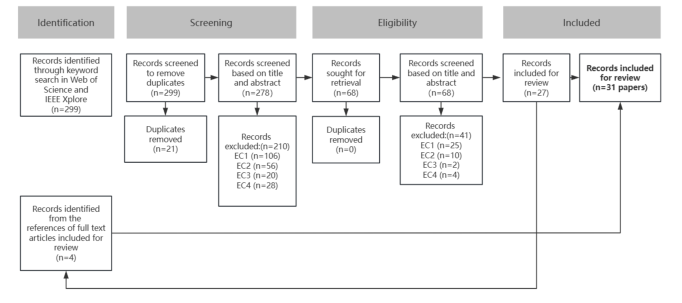
To address the research questions, this study adopted a scoping review methodology, which is particularly suitable for mapping the breadth and heterogeneity of evidence in emerging interdisciplinary fields. To enhance transparency and reproducibility, the review process followed established methodological guidelines for scoping reviews and adhered to the PRISMA- ScR framework, which guided the stages of literature identification, screening, eligibility assessment, and inclusion.
Literature searches were conducted in Web of Science and IEEE Xplore, ensuring interdisciplinary coverage across human–computer interaction, engineering, and design research. The search strategy was structured around four conceptual components: (1) reminiscence-related activities, (2) photo-based media, (3) older adult populations, and (4) system or interaction design contexts.
98 Shen This concept-block based approach is consistent with prior scoping reviews examining technology-mediated reminiscence and digital storytelling among older adult populations. For example, L. Xu et al., (2023)DST: digital storytelling structured their search strategy around thematic keyword clusters (e.g., older adults, reminiscence/life review/life story, and digital storytelling) and combined these components using Boolean operators across databases, demonstrating a systematic concept-block retrieval method similar to that adopted in the present study.
The following Boolean search string was applied: (reminiscence* OR “life review” OR “life story” OR storytelling OR narrative) AND (photo* OR “family photo*” OR “personal photo*” OR lifelogging) AND (“older adult*” OR elder* OR aging OR ageing OR “later life”) AND (system OR interface OR interaction OR design OR prototype OR usability)
Searches were limited to peer-reviewed journal articles and conference proceedings published in English. The final database search was conducted in February 2026.
Explicit inclusion and exclusion criteria were predefined to ensure consistency in study selection.
Table 1: Inclusion criteria.
Table available in the original PDF paper.
Code Inclusion Criterion Description IC1 Target Population Studies involving older adults or aging-related populations.
IC2 Digital Photo Systems Systems utilizing digital photographs as core interaction media.
IC3 Interactive Component Studies presenting a system, prototype, or interaction mechanism.
IC4 Memory or Narrative Context Systems supporting reminiscence, storytelling, or photo-based engagement.
Table 2: Exclusion criteria.
Table available in the original PDF paper.
Code Exclusion Criterion Description EC1 Medical/Clinical Only Studies focusing purely on clinical or therapeutic outcomes without system design, interaction mechanisms, or interface components.
EC2 Non-Digital Albums Studies examining only physical photo albums without digital interaction or technological mediation.
EC3 Non-Aging Population Studies not involving older adults or aging- related contexts.
EC4 Algorithm-Only Papers Technical or computational papers lacking user interaction, system implementation, or reminiscence-related context.
Designing for Reminiscence in Digital Photo Systems for Older Adults 99 Records were imported into a reference management tool for duplicate removal, followed by title and abstract screening and full-text assessment based on the predefined IC/EC criteria.
Screening was conducted in a structured and iterative manner. In cases of uncertainty, full-text review was performed to ensure alignment with the inclusion criteria.
Figure 1: The PRISMA flow diagram summarizing the study selection process.
To further ensure reporting completeness and transparency, this review primarily adhered to the PRISMA-ScR reporting guideline. In addition, the PRISMA 2020 checklist was consulted as a supplementary reporting reference to cross-verify the explicit documentation of search strategies, eligibility criteria, and selection procedures.
IDENTIFICATION AND CLASSIFICATION OF TECHNOLOGICAL PATHWAYS Using inductive thematic coding, system descriptions were analyzed to identify recurring technological and interaction patterns. Specifically, detailed information was extracted regarding hardware forms (e.g., touchscreens, physical buttons, sensors), interaction modalities (e.g., voice input, gesture recognition, multimodal fusion), and underlying technical supports (e.g., knowledge graphs, generative AI, XR rendering). Through the subsequent coding and clustering of these features, three distinct technological pathways were identified, as presented in Table 3.
Table 3: Classification of technological pathways.
Table available in the original PDF paper.
Representative Examples and Description
Technological Pathway
1. Conversational AI Systems
Conversational AI systems transform photographs into interactive cues. Based on image recognition, natural language processing, knowledge graphs, logical reasoning, and machine learning technologies, these systems analyse features of static photos and convert them into interactive prompts. (Wang et al., 2024).
(Continued)
Table 3: Continued.
Table available in the original PDF paper.
Representative Examples and Description
Technological Pathway Example 1: Bono-06 – Through knowledge graphs and voice interaction, photographs are transformed into conversational memory prompts, supporting older adults in recalling people, places, and events (Tokunaga et al., 2021).
Example 2: Chatbot – The chatbot initiates conversations using family photos and generates goal-oriented questions based on image content, maintaining structured dialogue while emphasizing key visual details to encourage users to share meaningful past experiences (Chung et al., 2025).
2. Embodied / Tangible Interface Systems (TUI)
Tangible physical devices lower technological barriers through simple and intuitive operations, enabling older adults with limited technical experience to engage in digital photo reminiscence activities (West et al., 2007; Li et al., 2019; Sarki et al., 2015).
Example 1: Slots-Memento – Inspired by slot machine interaction, users pull the handle up or down to switch photos and press a button to record stories. Older adults showed strong interest in its intuitive operation Example 2: Story-Me – A slot-machine-like tangible device supports intergenerational storytelling. Older adults switch between photos or trigger questions by pulling a handle and record voice stories via button interaction, while younger family members provide photos and trigger questions through a mobile application, enabling collaborative intergenerational narration (C. Li et al., 2019b).
3. Immersive AR/ VR Narrative Systems
Immersive AR/VR storytelling represents an emerging technological pathway that enhances photo-based narration through three- dimensional environments. Compared to two-dimensional interfaces, 3D technologies allow storytellers and listeners to interact within immersive spaces, providing richer multimodal information exchange.
Example 1: VR-based systems – VR offers a unique platform for simulating co-located photo-sharing activities in virtual spaces, similar to nostalgic experiences enjoyed by older adults in projects such as School Days.
Example 2: AR-based systems – 3D models are used to present detailed aspects of old photographs, helping storytellers explain related people or events while enabling spatial annotations and story recording (Z. Li et al., 2023).
THREE CORE FUNCTIONAL DIMENSIONS OF DIGITAL ALBUMS Memory Support Function
Multiple studies have indicated that photographs function not only as recording media in reminiscence activities but also as retrieval cues. Compared with abstract verbal prompts, photographs as concrete visual materials are more likely to trigger memory retrieval and facilitate detailed event recall and narrative elaboration (Benoit et al., 2015; Petrelli & Whittaker, 2010). At the cognitive
Designing for Reminiscence in Digital Photo Systems for Older Adults 101 mechanism level, Xu et al., (2020), through an fMRI study based on lifelogging photographs, found that photo-review training increased the production of episodic details in older adults’ autobiographical memory and was associated with activation changes in default mode network regions under training conditions, further supporting the critical role of visual cues in memory retrieval.
Based on these cognitive foundations, some interactive systems have begun to use photographs as media for memory support. The GoodTimes system links photographs with people, places, and time through knowledge graphs and integrates voice interaction to support reminiscence and storytelling. In a usability study involving 13 older adults aged 58–84, most participants reported that the system helped them recall personal experiences and elicited positive emotional responses (Wang et al., 2024).
Emotional Support Function Reminiscence is not only a memory activity but also a process of meaning construction. Van House (2011) pointed out that during the organization and narration of family archives and photographs, individuals reinterpret past experiences and connect the past with the present, thereby achieving the integration of identity narratives. This process transforms photographs from mere memory cues into media for identity construction. In the PADSIP intergenerational digital storytelling project, participants demonstrated improvements in identity validation during the collaborative creation and sharing of life stories, and repeatedly mentioned experiences of “being heard and understood” in interviews (Lee et al., 2025). This suggests that collaborative storytelling centered on photographs not only strengthens memory expression but also effectively promotes emotional self-affirmation and relational bonding.
Emotional support in existing research is primarily manifested through two mechanisms. The first is making reminiscence more “accessible.” Several studies employ structured prompts or conversational guidance to help older users initiate memory recall more smoothly. For example, Chorus of the Past uses a multi-agent dialogue system to continuously pose questions around photographs and nostalgic objects, guiding older adults to gradually elaborate their memories (Sun et al., 2025). Findings show that participants demonstrated higher engagement and emotional involvement during interactions. The second mechanism is making reminiscence more “immersive,” that is, enhancing participation through spatial cues and multimodal experiences. RemVerse integrates generative AI with VR environments to reconstruct historical streetscapes and dynamic interaction mechanisms. Research indicates that immersive experiences enhance older adults’ sense of involvement and willingness to express themselves (Li et al., 2025).
Social Connection Support Function In studies of digital photo systems, social connection support primarily focuses on collaborative social interactions centered on shared memories through photographs and is manifested at two levels: first, strengthening interaction within family and intimate relationship networks; second, promoting connections between older adults and broader social contexts beyond the family.
102 Shen At the intra-family level, representative practices include the Story-Me system, which integrates tangible interaction devices with mobile applications to support ongoing storytelling and memory preservation between older adults and their children, thereby alleviating social isolation among older adults in institutional settings (Li et al., 2019). Similarly, Photo Alive! proposed by Sarki et al. (2015) embeds voice messages into family photographs to encourage interaction among family members, bridging intergenerational communication gaps. Such designs not only increase the frequency of interaction but also enhance older adults’ sense of companionship and participation through mechanisms of “being responded to,” transforming photographs into relational connectors within family networks.
At the level beyond the family, the goal-oriented photo-based chatbot system proposed supports caregivers in uploading photographs and reviewing conversation summaries (Chung et al., 2025), thereby establishing communication channels between older adults and caregivers.
DISCUSSION AND DESIGN IMPLICATIONS Reframing from Retrieval to Narrative Activation
Multiple studies have shown that photographs function not only as recording media in reminiscence activities but also as external retrieval cues. Compared with abstract verbal stimuli, concrete visual materials are more likely to trigger event-level memory retrieval and facilitate narrative elaboration (Cabeza et al., 2018; Westmacott et al., 2004). Therefore, when designing photo systems for older adults, the positioning of the system should shift from “searching for photos” to “telling stories, “Organizing interaction around the reminiscence process rather than image management.
Design Implication 1: When designing digital photo systems for older adults, it is important to consider that older users often find it difficult to actively search through thousands of photos. Systems can proactively present photographs with narrative potential and treat AI-guided questioning as a core interaction mechanism. Based on semantic associations such as people, places, and events, the system can automatically generate progressive questions that gradually activate memory. By combining guided prompts with timely conversational responses, the system can enhance older adults’ engagement and participation.
Balancing Automation and User Agency In terms of information organization, automation and manual curation should form a switchable and collaborative relationship rather than a substitutive one. Research shows that automatic classification reduces operational burden, yet users still prefer to edit and reorganize content in order to maintain their personal narrative structure (Wang et al., 2024).
Design Implication 2: When designing digital photo systems for older adults, particular attention should be paid to organizing key information such as time, place, people, and events. Existing manual annotation tools are often perceived as cumbersome, while automated approaches relying solely on timestamps or
Designing for Reminiscence in Digital Photo Systems for Older Adults 103 location data may fail to adequately cover older photos lacking metadata. Systems should therefore provide lightweight and editable organizational tools, such as automatically generated yet modifiable tags, and support voice input or simplified text entry for supplementary descriptions. Preserving an appropriate level of user participation within automated organization helps reduce cognitive burden while maintaining older adults’ understanding of and engagement with their personal memories.
Supporting Intergenerational Co-Narration The social value of photo systems for older adults lies more in the interactive processes surrounding photographs than in one-way content dissemination (Van House, 2011). In intergenerational digital storytelling systems, older adults typically act as storytellers, while younger family members participate in memory activation by asking questions or providing commemorative photographs, thereby forming a collaborative narrative relationship (Li et al., 2019b).
Design Implication 3: When designing digital photo systems for older adults, the focus should not be limited to one-way publishing and browsing mechanisms. Instead, systems should support the construction of collaborative interaction environments. For example, enabling remote synchronized viewing modes allows family members in different locations to view the same photo simultaneously and engage in voice narration. Lightweight response mechanisms, such as voice messages, can lower the barrier to participation for older adults and encourage sustained interaction. In this way, digital albums can shift from being tools for individual reminiscence to interactive media that support shared family storytelling and social connection.
CONCLUSION
This study systematically reviewed research on digital photo systems for older adults. The findings indicate that existing technological pathways have gradually shifted from interface-based tool design toward interactive system frameworks centered on the process of reminiscence. Conversational AI systems, embodied interaction interfaces, and immersive AR/XR narratives expand the functional boundaries of digital albums from three perspectives: linguistic guidance, embodied operation, and contextual reconstruction (RQ1).
At the functional level, this study further integrates previously fragmented design practices into three core functional dimensions: memory support, emotional support, and social connection support (RQ2), thereby revealing the comprehensive value structure of digital photo systems in aging contexts.
As digital photographs increasingly become important interfaces for everyday memory, the design of related systems can no longer be limited to issues of information organization or interface optimization. Instead, in the context of continuously advancing technological assistance, greater attention should be given to older adults’ user experience. Beyond supporting memory, digital photo systems should also create new interactive conditions for emotional expression and the maintenance of social relationships.
REFERENCES
Axtell, B., & Munteanu, C. (2016). Speech-Enabled Intelligent Mobile Interfaces to Support Older Adults’ Storytelling Around Digital Family Pictures. In C. Stephanidis (Ed.), HCI International 2016 – Posters’ Extended Abstracts (Vol. 617, pp. 401–406). Springer International Publishing. Axtell, B., & Munteanu, C. (2019a). Back to Real Pictures: A Cross-generational
Understanding of Users’ Mental Models of Photo Cloud Storage. Proceedings of the ACM on Interactive, Mobile, Wearable and Ubiquitous Technologies, 3(3), 1–24. Axtell, B., & Munteanu, C. (2019b). PhotoFlow in Action: Picture-Mediated Reminiscence Supporting Family Socio-Connectivity. Extended Abstracts of the 2019 CHI Conference on Human Factors in Computing Systems, 1–4. Cabeza, R., Albert, M., Belleville, S., Craik, F. I. M., Duarte, A., Grady, C. L.,
Lindenberger, U., Nyberg, L., Park, D. C., Reuter-Lorenz, P. A., Rugg, M. D., Steffener, J., & Rajah, M. N. (2018). Maintenance, reserve and compensation: The cognitive neuroscience of healthy ageing. Nature Reviews. Neuroscience, 19(11), 701–710. Chung, R., Ng, K., & Shum, C. (2025). A Goal-Oriented Chatbot for Engaging the Elderly Through Family Photo Conversations. 2025 IEEE 49th Annual Computers, Software, and Applications Conference (COMPSAC), 2020–2025. Cyril Naves, S. (2012). IMPACT-Intelligent Memory Pool Assisted Cognition Tool:
A Cueing device for the Memory Impaired. International Journal of Information Technology Convergence and Services, 2(2), 47–54. De Paolis, L. T., Arpaia, P., & Sacco, M. (Eds.). (2026). Extended Reality: International Conference, XR Salento 2025, Otranto, Italy, June 17–20, 2025, Proceedings, Part III (Vol. 15739). Springer Nature Switzerland. Heinz, M., Benton, N., & Gleissner, L. (2023). Older Adults Documenting Purpose
and Meaning Through Photovoice and Narratives. The Gerontologist, 63(8), 1289–1299. Iwamoto, M., Kuwahara, N., & Morimoto, K. (2015). Evaluation of the Impact on the Emotion of Young People Listening Attentively in at the Time of Using a Photograph of the Memory of the Elderly. 2015 3rd International Conference on Applied Computing and Information Technology/2nd International Conference on Computational Science and Intelligence, 195–200. Jiang, L., Siriaraya, P., Choi, D., & Kuwahara, N. (2021). A Library of Old Photos
Supporting Conversation of Two Generations Serving Reminiscence Therapy. Frontiers in Psychology, 12, 704236. Lazar, A., Thompson, H., & Demiris, G. (2014). A Systematic Review of the Use of Technology for Reminiscence Therapy. Health Education & Behavior, 41(1_ suppl), 51S-61S. Lee, L. Z. Y., Dulk, T. D., Silver, M., & Bhar, S. (2025). Feasibility, acceptability
and preliminary effectiveness of an intergenerational digital storytelling program for improving identity validation and generativity in older adults. Australasian Journal on Ageing, 44(2), e70021. Li, C., Hu, J., Hengeveld, B., & Hummels, C. (2019a). Slots-Memento: Facilitating Intergenerational Memento Storytelling and Preservation for the Elderly. Proceedings of the Thirteenth International Conference on Tangible, Embedded, and Embodied Interaction, 359–366. Li, R., Li, J., Sun, J., Wu, Z., Li, Z., Wang, Z., Kan, G. L., & Fan, M. (2025). RemVerse:
Supporting Reminiscence Activities for Older Adults through AI-Assisted Virtual Reality. Proceedings of the ACM on Interactive, Mobile, Wearable and Ubiquitous Technologies, 9(3), 1–25.
Designing for Reminiscence in Digital Photo Systems for Older Adults 105 Li, Z., Feng, L., Liang, C., Huang, Y., & Fan, M. (2023). Exploring the Opportunities
of AR for Enriching Storytelling with Family Photos between Grandparents and Grandchildren. Proceedings of the ACM on Interactive, Mobile, Wearable and Ubiquitous Technologies, 7(3), 1–26. Lindley, S. E. (2012). Before I Forget: From Personal Memory to Family History.
Human–Computer Interaction, 27(1–2), 13–36. Lotfi, F., Beheshti, A., Farhood, H., Pooshideh, M., Jamzad, M., & Beigy, H. (2023).
Storytelling with Image Data: A Systematic Review and Comparative Analysis of Methods and Tools. Algorithms, 16(3), 135. Petrelli, D., & Whittaker, S. (2010). Family memories in the home: Contrasting physical and digital mementos. Personal and Ubiquitous Computing, 14(2), 153–169. Rau, P.-L. P. (Ed.). (2021). Cross-Cultural Design. Applications in Cultural Heritage,
Tourism, Autonomous Vehicles, and Intelligent Agents: 13th International Conference, CCD 2021, Held as Part of the 23rd HCI International Conference, HCII 2021, Virtual Event, July 24–29, 2021, Proceedings, Part III (Vol. 12773). Springer International Publishing. Robert, P., Benoit, M., Rachid, G., Pierre-David, P., Emmanuelle, C., Valeria, M., Chaurasia, G., & George, D. (2015). Is it possible to use highly realistic virtual reality in the elderly? A feasibility study with image-based rendering. Neuropsychiatric Disease and Treatment, 557. Rodríguez, M. D., Gonzalez, V. M., Favela, J., & Santana, P. C. (2009). Home-based
communication system for older adults and their remote family. Computers in Human Behavior, 25(3), 609–618. Sarki, R., Haeun, J., & Kwon, Y.-M. (2015). Design and implementation of web-based elderly friendly tangible photo technique. 2015 Tenth International Conference on Digital Information Management (ICDIM), 194–197. Sun, J., Zhang, Z., Wang, M., Li, N., Lu, Z., Xiang, Y., Zhang, L., Zhang, Y., Wang, Q., &
Fan, M. (2025). Chorus of the Past: Toward Designing a Multi-agent Conversational Reminiscence System with Digital Artifacts for Older Adults. Proceedings of the 2025 CHI Conference on Human Factors in Computing Systems, 1–22. Tokunaga, S., Takata, S., Tamura, K., & Otake-Matsuura, M. (2022). Annotation System for Dialogue Datasets of Older Adult’s with Photos and Storytelling. In E. Pardede, P. Delir Haghighi, I. Khalil, & G. Kotsis (Eds.), Information Integration and Web Intelligence (Vol. 13635, pp. 447–452). Springer Nature Switzerland. Tokunaga, S., Tamura, K., & Otake-Matsuura, M. (2021). A Dialogue-Based System
with Photo and Storytelling for Older Adults: Toward Daily Cognitive Training. Frontiers in Robotics and AI, 8, 644964. Van House, N. A. (2011). Personal photography, digital technologies and the uses of the visual. Visual Studies, 26(2), 125–134. Wang, X., Li, J., Liang, T., Hasan, W. U., Zaman, K. T., Du, Y., Xie, B., & Tao, C.
(2024). Promoting Personalized Reminiscence Among Cognitively Intact Older Adults Through an AI-Driven Interactive Multimodal Photo Album: Development and Usability Study. JMIR Aging, 7, e49415. West, D., Quigley, A., & Kay, J. (2007). MEMENTO: A digital-physical scrapbook for memory sharing. Personal and Ubiquitous Computing, 11(4), 313–328. Westmacott, R., Black, S. E., Freedman, M., & Moscovitch, M. (2004). The contribution
of autobiographical significance to semantic memory: Evidence from Alzheimer’s disease, semantic dementia, and amnesia. Neuropsychologia, 42(1), 25–48.
P.-J., & Lim, J.-H. (2020). Neural correlates of retrieval-based enhancement of autobiographical memory in older adults. Scientific Reports, 10(1), 1447. Zhang, Z., Xu, L., Wang, X., Zhang, X., & Fan, M. (2025). Understanding and Co-designing Photo-based Reminiscence with Older Adults. Proceedings of the ACM on Human-Computer Interaction, 9(2), 1–30.
LISTED IN THE AHFE DIGITAL BOOKSTORE CATALOGUE
Explore the complete digital volume
Human Factors in Aging and Special Needs
Read this individual research paper free through the original publisher, or explore the full digital proceedings book.
ISBN 978-1-964867-90-8
Explore this ISBN in the AHFE Bookstore ↗Listed in the July 2026 bookstore catalogue; search by ISBN to confirm current availability · Digital book purchase optional