Henrijs Kalkis, Zenija Roja, Anatolijs Roganovs, Romualds Razuks, Nora Kaufmane (2026). Psychosocial Workload and Multidimensional Fatigue in Computer-Intensive Office Work: An Integrative Review of Scientific Literature. In: Social and Occupational Ergonomics. AHFE Open Access, vol. 228, pp. 69–80. https://doi.org/10.54941/ahfe1007937
1 University of Latvia, Faculty of Economics and Social Sciences, Aspazijas blvd.5, LV 1050, Riga, Latvia ↗
2 University of Latvia, Faculty of Medicine and Life Sciences, Department of Human, Factors and Work Environment, Jelgavas street 1, LV 1004, Riga, Latvia ↗
Computer-intensive office work is increasingly shaped by digitalization, hybrid work arrangements, and rising cognitive demands, which elevate psychosocial risks and may contribute to multidimensional fatigue. This study aimed to synthesize scientific evidence on psychosocial workload and multidimensional fatigue in computer-intensive office work through an integrative review. A PRISMA-guided search and selection process was applied across major databases (PubMed, Scopus, Web of Science, ScienceDirect, ProQuest, Wiley Online Library, Springer), using combinations of keywords related to workload, psychosocial factors, computer work, cognitive strain, and fatigue. Peer-reviewed English-language full-text studies from the last 15 years were included. The reviewed literature consistently links high job demands, time pressure, low job control, limited social support, role ambiguity, and technostress to increased work-related fatigue—most strongly to mental and emotional fatigue, with downstream effects on concentration, recovery (including sleep disturbances), productivity, presenteeism, and error likelihood. Evidence also indicates that psychosocial risks interact with ergonomic exposures (prolonged sitting, static postures, inadequate workstations, insufficient breaks), amplifying musculoskeletal complaints and reinforcing fatigue-related impairments. Overall, psychosocial workload in computer-intensive office settings is a robust correlate of multidimensional fatigue, while the predominance of cross-sectional designs highlights the need for more causal, confounder-controlled research and targeted intervention evaluation.
Over the last decade, the nature of work in modern offices has changed significantly due to digitalization, increased cognitive demands, hybrid working arrangements, and higher performance requirements. Work- related psychosocial risks has a significant role in today’s and tomorrow’s labour market across various sectors of the economy (Schulte et al., 2020). Office workers are increasingly exposed to psychosocial risks that can Received February 6, 2026; Revised April 8, 2026; Accepted April 24, 2026; Available online July 20, 2026
cause psychological and physical harm to workers if they are not properly controlled and managed (Bolis et al., 2024). These risks include cognitive demands, heavy physical and psychoemotional workload, time pressure, limited control over work, insufficient social support, role ambiguity, ethical conflicts, and an unfavourable organisational climate (Leka et al., 2015). Research shows that psychosocial risks are closely related to fatigue at work, which is perceived as a multidimensional framework, including physical fatigue (reduced physical energy), mental fatigue (impaired concentration and cognitive endurance), and emotional fatigue (emotional exhaustion and reduced motivation) (Frone et al., 2018; Moyano-Díaz et al., 2024). This multidimensional perspective is particularly relevant in computer-intensive office work, where prolonged attention, prolonged sitting, and frequent task changes, as well as insufficient support from management and colleagues, contribute to both cognitive strain and physical discomfort.
In recent years, there has been a growing trend toward remote working, especially among office workers. This has contributed to the negative impact of physical risks on employees’ health, such as non-ergonomic workplaces that promote work-related musculoskeletal disorders (WRMSDs), as well as the negative impact of psychosocial risks. When working remotely, employees often lack support from management and colleagues, and frequently have to make difficult decisions alone, which can lead to psycho-emotional stress (Kanwal et al., 2024). Having studied Information technology (IT) workers, the authors concluded that long working hours on a computer, overtime and an indifferent attitude towards health are directly linked to work- related stress, fatigue and musculoskeletal disorders (Zheng et al., 2023). Empirical evidence shows that psychosocial risks rarely occur in isolation. They interact with physical and ergonomic factors, such as inadequate workstations, prolonged static postures, and insufficient breaks, exacerbating fatigue and complaints of musculoskeletal health problems. This interaction is particularly pronounced in office environments, which are characterised by prolonged work at a monitor and limited movement. As a result, fatigue manifests itself both as a health consequence and as an early warning sign of reduced performance and the likelihood of errors. Forced working postures, unhealthy habits, inappropriate workstation design, and psychosocial risks at work are just some of the main causes of health problems for office workers (Putsa et al., 2022; Prasetya et al., 2024). The most common health complaints are pain or discomfort in the neck and shoulder area, as well as in the arms and wrists, which often increase the risk of developing vision, musculoskeletal, and psychological problems (Medin-Ceylan et al., 2023; Dessie et al., 2023; Lee & Park, 2022). Mental and physical workload contribute to multidimensional fatigue encompassing cognitive, emotional, and physical components (Hopstaken et al., 2015; Meyer & Hünefeld, 2018). This is a complex condition that causes physiological and psychological exhaustion and a decline in functional capacity, which in turn negatively affects an individual’s work efficiency and health (Li et al., 2024).
The aim of the study was to perform integrative review of scientific literature on psychosocial workload and multidimensional fatigue in computer-intensive office work.
METHODS AND MATERIALS Source of Information
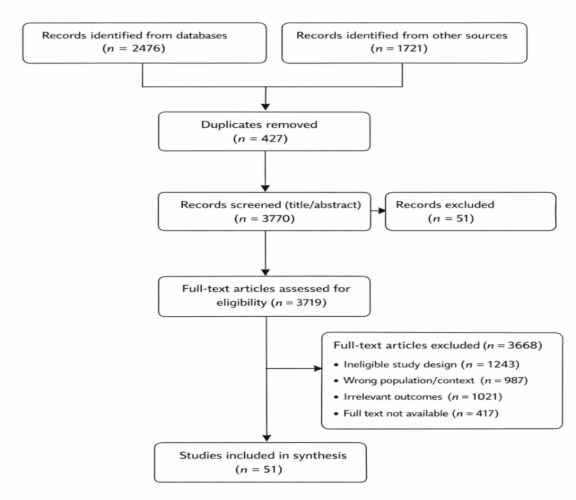
This study is an integrative scientific literature review with a PRISMA-guided search and study selection process (see. Fig. 1). An integrative scientific literature review was conducted using the following databases: PubMed, Scopus, Web of Science, ScienceDirect, ProQuest, Wiley Online Library, Springer. The following keywords were used in combination: ‘workload’, ‘multidimensional’, ‘mental’, ‘fatigue’, ‘computer work’, ‘cognitive strain’, ‘work intensity’, and ‘musculoskeletal risk’. For example, the search string for the PubMed database looked like this: “computer work” or “computer- intensive work”) and (“mental fatigue” or “multidimensional fatigue” or “cognitive strain”) and (“psychosocial” or “job demands” or “social support” or “job control”). The following publications were included: peer- reviewed scientific articles in English over the last 15 years; the research context was work-related; the articles covered physical/mental workload and fatigue (including cognitive/mental fatigue) and/or health-related disorders in computer-intensive office work. Exclusion criteria: conference abstract collections, presentations, and articles not published in full text.
Entries were collected from the specified databases, duplicates were identified/removed, then titles and abstracts were screened, followed by full- text evaluation according to inclusion/exclusion criteria.
Figure 1: Prisma flow diagram of included studies.
RESULTS AND DISCUSSION
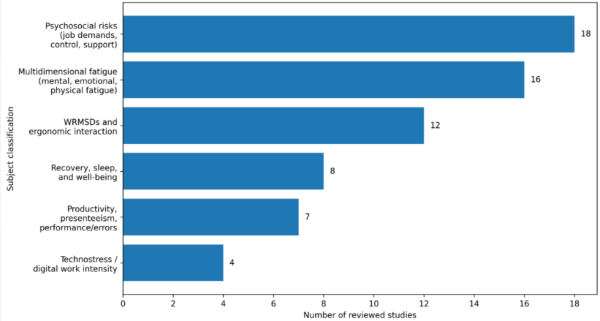
The reviewed literature indicates that psychosocial workload and multidimensional fatigue in computer-intensive office work are examined across several recurring thematic domains, most notably psychosocial risks at work, multidimensional fatigue outcomes, and psychosocial–ergonomic interactions (see Figure 2). The two principal domains identified are analysed separately to provide a more focused synthesis of the evidence: Psychosocial Risks at Work and Multidimensional Fatigue at Work.
Figure 2: Subject classification and reviewed studies.
As shown in Figure 2, the reviewed literature was primarily focused on psychosocial risks, multidimensional fatigue, and psychosocial–ergonomic interactions, whereas fewer studies specifically addressed recovery-related outcomes, productivity consequences, and technostress.
Psychosocial Risks at Work Psychosocial risks are recognised as one of the main risks at work that threaten today’s workers in the labour market (Schulte et al., 2020), including office workers. In 2023, the European Union information agency for occupational safety and health defined psychosocial risks at work as “aspects of work that are linked to the experience of stress at work and can have significant implications for worker safety and health” (EU OSHA, 2023). The rapid development of information and communication technologies, digitalisation, robotics, flexible forms of work and work requirements have contributed to the presence of psychosocial risks, which must be given serious attention when caring for the health and safety of employees at work (Leka et al., 2015). Nowadays, computers are used in practically all professions, as digitisation is necessary to ensure process flexibility and product personalisation (Menon et al., 2020). The authors note that psychosocial risks can lead to the development of stress-related health problems (Sun et al., 2022), including cardiovascular disease (Stadin et al., 2016), depression and anxiety (Madsen et al., 2017), and even increased mortality (Taouk et al., 2020). Other studies, based on surveys of office workers, have also concluded that psychosocial risks at work and low social support can contribute to stress and even insomnia, as well as negatively affect work efficiency (Furuichi et al., 2020).
Psychosocial Workload and Multidimensional Fatigue in Computer-Intensive Office Work 73 Another survey on psychosocial risks indicates that psychosocial risks related to employee absenteeism due to illness are mainly linked to freedom of decision-making, self-reformation opportunities, job diversity, and job evaluation (Anttila et al., 2024).
Several publications have highlighted the link between psychosocial risks at work and WRMSDs. In many earlier publications, only physical risks at work, i.e., static work postures and strain on individual body parts, which cause pain or discomfort in the long term, were considered significant WRMSD risks for office workers. However, several recent studies have demonstrated the link between psychosocial risks and Work Related Musculoskeletal Disorders (WRMSDs) (Liu et al., 2020; Nicolakakis et al., 2017; Mateos-Gonzalez et al., 2023). Prolonged exposure to stress causes discomfort or even pain in certain parts of the body, which can manifest as mental and physical health problems (Arnsten & Shanafelt, 2021), as confirmed by electromyographic examinations (Johanson et al., 2011; Jabłońska et al., 2021; Esmaeili & Askari, 2020). Scientists point out that working at a computer in a static position for long periods of time puts particular strain on the neck and shoulder area, wrists, and hands. This, in turn, increases the risk of developing visual, musculoskeletal, and psychological health problems (Dessie et al., 2018; Medin-Ceylan et al., 2023). This fixed position often causes lower back pain in individuals, which is caused by increased pressure on the vertebrae during prolonged sitting (Padula et al., 2017). A study on the impact of stress on WRMSD has shown that educating employees about ergonomic risks at work is also important. However, long-term improvements require engineering and administrative measures, including workstation setup tailored to the employee’s comfort, appropriate lighting, and suitable chairs and footrests (Can Yildiz & Turkay, 2025). Psychosocial risks at work, such as lack of support from managers or colleagues, little control, and high demands at work, are the most common risks mentioned in publications related to WRMSDs (Bezzina, 2023). Studies have also concluded that WRMSDs are often the result of the interaction between physical and psychosocial risks (Celik et al., 2018; Patel et al., 2024). However, other authors deny that WRMSDs are related to psychosocial risks for computer users, namely, neck pain does not show a significant trend in relation to high job demands, low autonomy, restricted decision-making, and insufficient support from colleagues or management (Keown, & Tuchin, 2018). Psychosocial risks at work often lead to absenteeism (Russo et al., 2021), presenteeism at work (Navarro et al., 2018; Anttila et al., 2024), and early retirement due to disability (Leineweber et al., 2019). Recently, there has been an increasing number of publications reflecting the impact of technostress on employees. Scientists conclude that technostress significantly affects not only a person’s social life, but also their psychophysical health (Dragano & Lunau, 2020).
Multidimensional Fatigue at Work Fatigue is a multidimensional phenomenon with a profound impact on performance, health, and well-being (Lane et al., 2025). Fatigue is associated with work overload and lack of leisure time, frequent overtime, frequent
conflicts at work, shift work, piecework, and often even with the inactivity of colleagues (Rose et al., 2017; Latief & Mandiri, 2025). Studies have shown that this can lead to cognitive impairment, reduced workability, sleep disorders, and even unhealthy eating habits, as well as musculoskeletal health problems and cardiovascular health disorders. (Sutherland et al., 2023; Montgomery & Lainidi, 2022; Ghaisani & Susilowati, 2025; Roja et al., 2018). The interaction between mental and physical fatigue increases the risk of errors at work, which in turn affects overall work performance (Arefian et al., 2025; Fan & Smith, 2020; Fan & Smith, 2017; Sadeghniiat-Haghighi & Yazdi, 2015), and this is particularly true for those employed in the IT sector (Wang et al., 2018). Prolonged exposure to stressors causes burnout, which manifests itself as emotional exhaustion, depersonalisation and a reduced sense of personal accomplishment (Singh et al., 2023; Babiker et al., 2024; Edú-Valsania et al., 2022). Organisational and task-related psychosocial risks show a stronger and more stable association with mental and emotional fatigue than with physical fatigue (Bolis et al., 2024; Frone et al., 2018). Emotional fatigue, often described as emotional exhaustion, is one dimension of fatigue. It is often associated with an employee’s heightened sensitivity to the internal “microclimate” of the organisation, i.e., perceived injustice, ethical conflicts and discrepancies between the organisation’s values and employees’ expectations (Bolis et al., 2024). The literature has demonstrated a link between workload, work pace, long working hours, mental health problems, and fatigue (Niedhammer et al., 2021; Lee & Park, 2022).
A study on physical and mental fatigue (Wang et al., 2018) has shown that occupational stress, burnout, and musculoskeletal overload increase the risk of fatigue, while sleeping for more than 7 hours reduces fatigue. When working intensively without breaks, work-related fatigue is inevitable, as confirmed by other studies. A study on occupational stress, cumulative fatigue, and the prevalence of WRMSDs among information technology workers (Zheng et al., 2023) showed that employees in the IT sector experience symptoms of occupational stress related to fatigue much more than those working in other sectors, because they work overtime, have insufficient support from management and colleagues, face high psychological demands, and have limited decision-making freedom, which is consistent with the findings of other authors (Allison et al., 2022; Nikunlaakso et al., 2022). Scientists have proven that prolonged work in terms of years and overtime, as well as sleep problems, contribute to stress (Siu et al., 2020; Sun et al., 2022; Lin et al., 2023; Zhang et al., 2022), which can lead to cumulative fatigue over a longer period of time. It is no secret that constant and prolonged fatigue exacerbates physical and psychological health problems in employees (Lock et al., 2018). A consistent trend observed in studies shows that organisational and task- related psychosocial risks have a stronger and more stable association with mental and emotional fatigue than with physical fatigue (Bolis et al., 2024; Frone et al., 2018). Heavy workloads and limited time to complete tasks are associated with mental fatigue, which can manifest itself in reduced concentration, cognitive endurance, and sustained attention. Limited control over the work to be done and limited freedom in decision-making have been repeatedly linked to both mental and emotional fatigue (Bolis
Psychosocial Workload and Multidimensional Fatigue in Computer-Intensive Office Work 75 et al., 2024). In computer-intensive office work, psychosocial stress (high demands, time constraints, low control over work, insufficient support from management and colleagues, role ambiguity, and technostress components) create persistent cognitive and emotional tension, which increases the risk of multidimensional fatigue. Such fatigue in this context manifests itself not only as subjective exhaustion, but also as impaired concentration, decreased cognitive endurance, sleep disturbances, and reduced productivity (e.g., presenteeism), which are particularly significant in office work involving prolonged attention and frequent task changes. Empirical data indicate that psychosocial risks often interact with ergonomic factors (prolonged sitting, static postures, insufficient breaks), exacerbating both fatigue and musculoskeletal complaints, which in turn create a vicious circle of discomfort/ pain and mental exhaustion. Studies with office/IT workers quantitatively show a link between occupational stress, cumulative fatigue, and WRMSDs, as well as between stress due to high job demands and WRMSDs symptoms. This indicates that managing psychosocial stress is essential for reducing fatigue and promoting health and work performance.
Overall, the analysis indicates a consistent link between psychosocial stress (demands, control, support, work intensity/technostress) and increased fatigue (especially mental/emotional) in computer-intensive work. A review of the literature shows that several studies have analysed the factors of management, organisation and task complexity in relation to the health problems and fatigue of office workers, in line with the realities of modern office work.
CONCLUSIONS
The scientific articles analysed indicate that psychosocial load in computer-intensive office work is consistently associated with increased multidimensional fatigue, which can manifest in various ways. This can lead to a decline in concentration, emotional exhaustion, and disorders affecting recovery, which can lead to reduced productivity, presenteeism, and a higher risk of errors in everyday digital tasks. At the same time, several studies also highlight the interrelationship between stress, cumulative fatigue, and musculoskeletal complaints, indicating that psychosocial factors should not be assessed in isolation from physical workload and workplace ergonomics.
Scientific research is dominated by cross-sectional studies, which differ in their methods of investigating fatigue and psychosocial factors, and do not always consistently analyse possible confounding factors (e.g., ergonomics, working hours, sleep, individual health). Therefore, future studies will focus on analysing the causal relationship between fatigue and psychosocial risks at work. They will also aim to identify the psychosocial stress indicators that most influence mental fatigue, and the most beneficial intervention mechanisms in computer-intensive work environments.
ACKNOWLEDGMENT
This research has been supported by the project “Impact of fatigue as a multidimensional variable on the performance of office workers in relation with psycho-emotional risks at work”, Agreement No. lzp-2024/1-0098.
REFERENCES
Allison, P., Tiesman, H.M., Wong, I.S., Bernzweig, D., James, L., James, S.M., Navarro, K.M. & Patterson, P.D. (2022). Working hours, sleep, and fatigue in the public safety sector: A scoping review of the research. American Journal of Industrial Medicine, 65, 878–897. Anttila, A., Nuutinen, M., Van, Gils M., Pekki, A. & Sauni, R. (2024). Associations
of depressive symptoms and psychosocial working conditions with sickness absences in a Finnish cohort of 11,495 employees. Preventive Medicine Reports, 47, 102899. https://doi.org/10.1016/j.pmedr.2024.102899 Arefian, S., Laybidi, M.I., Vahedi, M., Melloh, M. & Mokhtarinia, H.R. (2025).
Impact of mental and physical workload on work function in office workers with musculoskeletal disorders. BMC Musculoskelet Disorders, 26(1), 867. https://doi. org/10.1186/s12891-025-09147-0 Arnsten, A. F. T., & Shanafelt, T. (2021). Physician Distress and Burnout: The Neurobiological Perspective. Mayo Clinic Proceedings, 96 (3), 763–769. https:// doi.org/10.1016/j.mayocp.2020.12.027. Babiker, M., Merisalu, E., Roja, Z. & Kalkis, H. (2025). Prospective effects of artificial
intelligence on burnout syndrome: Reducing risks and enhancing psychological well-being. Sigurnost, 67 (2), 135–141. https://doi.org/10.31306/s.67.2.4, https:// hrcak.srce.hr/333018 Bezzina, A., Austin, E., Nguyen, H. & James, C. (2023). Workplace Psychosocial Factors and Their Association With Musculoskeletal Disorders: A Systematic Review of Longitudinal Studies. Workplace Health & Safety, 71(12),578–588. https://doi.org/10.1177/21650799231193578 Bolis I., Sigahi T. F. A. C., & Morioka S. N. (2024). Raising psychosocial risks in
real-world work environments: A proposal for a detailed and quick questionnaire with direct application by workers. Safety Science, 170, 106356. https://doi. org/10.1016/j.ssci.2024.106439. Can Yildiz, R. & Turkay, M. (2025). Effect of Ergonomic Training on Musculoskeletal Pain in Blue-Collar Workers at a University. European Journal of Public Health, 35(Suppl. 4) ckaf161.1958. https://doi.org/10.1093/eurpub/ckaf161.1958 Celik, S., Celik, K., Dirimese, E., Taşdemir, N., Arik, T. & Büyükkara, İ. (2018).
Determination of pain in musculoskeletal system reported by office workers and the pain risk factors. International Journal of Occupational Medicine and Environmental Health, 31(1), 91–111. https://doi.org/10.13075/ ijomeh.1896.00901 Dessie, A., Adane, F., Nega, A., Wami, S.D. & Chercos, D.H. (2018). Computer Vision Syndrome and Associated Factors among Computer Users in Debre Tabor Town, Northwest Ethiopia. Journal of Environmental and Public Health, 2018, 4107590. doi: 10.1155/2018/4107590. PMID: 30305823; PMCID: PMC6165611.] Dragano, N. & Lunau, T. (2020). Technostress at work and mental health: concepts
and research results. Current Opinion in Psychiatry, 33(4), 407–413. https://doi. org/10.1097/YCO.0000000000000613 Edú-Valsania, S., Laguía, A. & Moriano, J.A. (2022). Burnout: A review of theory and measurement. International Journal of Environmental Research and Public Health, 19(3), 1780. Esmaeili, H. & Askari, Z. (2020). Effect of trunk muscles fatigue on the trajectory of
center of pressure during walking. Studies in Sport Medicine, 12 (28), 183–202. https://doi.org/10.22089/SMJ.2021.10394.1489 EU-OSHA. (2023) Psychosocial Factors. Europen Agency for Safety and Health at Work. https://osha.europa.eu/en/themes/psychosocial-risks
Psychosocial Workload and Multidimensional Fatigue in Computer-Intensive Office Work 77 Fan, J. & Smith, A.P. (2017). The impact of workload and fatigue on performance. In
Longo, L. & Leva, M. (Eds.) Human mental workload: Models and applications (Communications in Computer and Information Science, Vol. 726, pp. 90–105). Springer. Fan, J. & Smith, A. P. (2020). Effects of occupational fatigue on cognitive performance of staff from a train operating company: A field study. Frontiers in Psychology, 11, 558520. Frone, M.R., Reis, D., Ottenstein, C. (2018). A German version of the Three-
Dimensional Work Fatigue Inventory (3D-WFI): Factor structure, internal consistency, and correlates. Stress Health, 34(5), 674–680. https://doi.org/10.1002/ smi.2828 Furuichi, W., Shimura, A., Miyama, H., Seki, T., Ono, K., Masuya, J. & Inoue, T. (2020). Effects of Job Stressors, Stress Response, and Sleep Disturbance on Presenteeism in Office Workers. Neuropsychiatric Disease and Treatment, 16, 1827–1833. https://doi.org/10.2147/NDT.S258508 Ghaisani, D.A. & Susilowati, I. H. (2025). Risk Factors for Occupational Fatigue
in Construction Workers: A Systematic Review. Journal of Indonesian Social Sciences, 6(1), pp. 22–35. Hopstaken, J. F., van der Linden, D., Bakker, A. B., & Kompier, M. A. J. (2015).
A multifaceted investigation of the link between mental fatigue and task disengagement. Psychophysiology, 52(3), 305–315. Jabłońska, M., Mączyński, J., Fryzowicz, A. & Ogurkowska, M. B. (2021).
Electromyographic assessment of muscle fatigue after the Biering-Sorensen test in subjects with low back pain who underwent the McKenzie treatment. Acta of Bioengineering and Biomechanics, 23 (3), 87–96. https://doi.org/10.37190/abb- 01823-2021-03 Johanson, E., Brumagne, S., Janssens, L., Pijnenburg, M., Claeys, K. & Pääsuke, M.
(2011). The effect of acute back muscle fatigue on postural control strategy in people with and without recurrent low back pain. European Spine Journal, 20 (12), 2152–2159. https://doi.org/10.1007/s00586-011-1825-3 Kanwal, N., bin Isha, A.S.N. & Ali, K. (2024). New ways of working: A comparative empirical analysis appertaining to health and wellbeing and psychosocial hazards. Techology Analysis & Strategic Management, 1–14. Keown, G. A., & Tuchin, P. A. (2018). Workplace factors associated with neck pain
experienced by computer users: a systematic review. Journal of manipulative and physiological therapeutics, 41(6), 508–529. Lane, A. M., Micklewright, D., & Meijen, C. (2025). Understanding Fatigue: A Psychological Framework for Health and Performance. Sci, 7(4), 162. https://doi. org/10.3390/sci7040162 Latief, A.M.J. & Mandiri, B. (2025). Work Fatigue in The Mining Industry: A
Literature Review Of Factors, Impacts, And Measurement Strategies. Journal of Health Technology Sciences, 2(1), pp. 1–15. Lee, J., & Park, S. (2022). The impact of screen time on fatigue in tech industry professionals. Journal of Technology and Human Factors, 11(3), 201–215. https:// doi.org/10.1080/123456789.2022.1234567 Leineweber, C., Marklund, S., Aronsson, G. & Gustafsson, K. (2019). Work-related
psychosocial risk factors and risk of disability pension among employees in health and personal care: A prospective cohort study. International Journal of Nursing Studies, 93, 12–20. https://doi.org/10.1016/j.ijnurstu.2018.10.009 Leka, S., Jain, A., Iavicoli S. & Di Tecco, C. (2015). An evaluation of the policy context on psychosocial risks and mental health in the workplace in the European Union: Achievements, challenges, and the future, BioMed Research International, 2015, 213089. https://doi.org/10.1155/2015/213089
Lin, Y.J., Shih, T.S., Wu, W.T. & Guo, Y.L.L. (2023). The association of job fatigue with mental disorders among bus drivers. Scandinavian Journal of Work, Environment and Health, 49, 75–83. Liu, H. C., Cheng, Y., & Ho, J. J. (2020). Associations of ergonomic and psychosocial
work hazards with musculoskeletal disorders of specific body parts: A study of general employees in Taiwan. International Journal of Industrial Ergonomics, 76, 102935. https://doi.org/10.1016/J.ERGON.2020.102935 Li, M., Ma, Z., Yan, R., & Yin, J. (2024). The Impact of Physiological and Psychological Fatigue on Work Efficiency: A Case Study of Parcel Sorting Work. Sensors, 24(18), 5989. https://doi.org/10.3390/s24185989 Lock, A.M., Bonetti, D.L. & Campbell, A.D.K. (2018). The psychological and
physiological health effects of fatigue. Occupational Medicine, 68, 502–511. Madsen, I.E.H., et al. (2017). Job strain as a risk factor for clinical depression: Systematic review and meta-analysis with additional individual participant data. Psychological Medicine, 47 (8), 1342–1356. https://doi.org/10.1017/ S003329171600355X Mateos-González, L, Rodríguez-Suárez, J, Llosa, JA, Agulló-Tomás, E. & Herrero,
J. (2023). Influence of Job Insecurity on Musculoskeletal Disorders: A Mediation Model with Nursing Aides. International Journal of Environmental Research and Public Health, 20(2), 1586. https://doi.org/10.3390/ijerph20021586 Medin-Ceylan, C., Korkmaz, M.D., Sahbaz, T. & Karacay B. C. (2023). Risk factors of neck disability in computer-using office workers: A cross-sectional study. International Journal of Occupational Safety and Ergonomics, 29(1), 44–49. https://doi.org/10.1080/10803548.2021.2021712 Menon, S., Salvatori, A. & Zwysen, W. (2020). The effect of computer use on work
discretion and work intensity: Evidence from Europe. British Journal of Industrial Relations, 58(4), 1004–1038. https://doi.org/10.1111/bjir.12504 Meyer, S.C., & Hünefeld, L. (2018). Challenging cognitive demands at work, related working conditions, and employee well-being. International Journal of Environmental Research and Public Health, 15(12), 2911. Montgomery, C., & Lainidi, M. (2022). The effects of work-related fatigue on
professional performance. Journal of Applied Psychology, 107(1), 102–11. Moyano-Díaz E, Vargas-Garrido H, Méndez-Campos D. A Spanish version of the Three-Dimensional Work Fatigue Inventory (3D-WFI): Factor structure, internal consistency, and criterion validity. BMC Public Health. 24(1), 1603. https://doi. org/10.1186/s12889-024-19120-6 Navarro, A., Salas-Nicás, S., Moncada, S., Llorens, C. & Molinero-Ruiz, E. (2018).
Prevalence, associated factors and reasons for sickness presenteeism: A cross- sectional nationally representative study of salaried workers in Spain. BMJ Open, 8, e021212. https://doi.org/10.1136/bmjopen-2017-021212 Nicolakakis, N., Stock, S. R., Abrahamowicz, M., Kline, R. & Messing, K. (2017).
Relations between work and upper extremity musculoskeletal problems (UEMSP) and the moderating role of psychosocial work factors on the relation between computer work and UEMSP. International Archives of Occupational and Environmental Health, 90(8), 751–764. https://doi.org/10.1007/S00420-017- 1236-9 Niedhammer, I., Bertrais, S. & Witt, K. (2021). Psychosocial work exposures and health outcomes: A meta-review of 72 literature reviews with meta-analysis. Scandinavian Journal of Work, Environment and Health, 47(7), 489–508. https:// doi.org/10.5271/sjweh.3968
Psychosocial Workload and Multidimensional Fatigue in Computer-Intensive Office Work 79 Nikunlaakso, R., Selander, K., Oksanen, T. & Laitinen, J. (2022). Interventions to
reduce the risk of mental health problems in health and social care workplaces: A scoping review. Journal of Psychiatric Research, 152, 57–69. Padula, R.S., Comper, M.L.C., Sparer, E. H., et al. (2017). Job rotation designed to prevent musculoskeletal disorders and control risk in manufacturing industries: A systematic review. Applied Ergonomics, 58, 386–397. Patel, S. H., Chandra, S. & Veerkumar, V. (2024). Musculoskeletal discomfort
experienced by the office staff: A Hindrance in efficient work performance. Madhya Pradesh Journal of Social Sciences, 29:1, (ii). Prasetya, T.A., Al Mamun, A., Rahmania, A., Ahmed, M., Uddin, A.S., Nilamsari, N.
& Wardani, R.W. (2024). Prevalence and associated risk factors of musculoskeletal disorders among information technology (IT) professionals: A systematic review. Narra Journal, 4(3), e1100. https://doi.org/10.52225/narra.v4i3.1100 Putsa, B., Jalayondeja, W., Mekhora, K., Bhuanantanondh, P. & Jalayondeja, C.
Factors associated with reduced risk of musculoskeletal disorders among office workers: A cross-sectional study 2017 to 2020. BMC Public Health. 22(1), 1503. https://doi.org/10.1186/s12889-022-13940-0 Roja, Z., Kalkis, H., Roja, I. & Zalkalns, J. (2018). Work Related Musculoskeletal Disorders (WRMSD) in Construction Workers and Main Causes. In: Goonetilleke, R. & Karwowski, W. (eds), Advances in Physical Ergonomics and Human Factors. (vol. 602). Springer. https://doi.org/10.1007/978-3-319-60825-9_31 Rose, D.M., Seidler, A., Nübling, M., Latza, U., Brähler, E., Klein, E.M., Wiltink,
J., Michal, M., Nickels, S., Wild, P.S., König, J., Claus, M., Letzel, S. & Beutel, M.E. (2017). Associations of fatigue to work-related stress, mental and physical health in an employed community sample. BMC Psychiatry, 17(1), 167. https:// doi.org/10.1186/s12888-017-1237-y Russo, S., Ronchetti, M., Di Tecco, C., Valenti, A., Jain, A., Mennini, F.S., Leka, S. & Iavicoli, S. (2021). Psychosocial factors and work-related outcomes. Scandinavian Journal of Work, Environment & Health, 47 (4), 318–327. https:// doi.org/10.5271/sjweh.3948 Sadeghniiat-Haghighi, K., & Yazdi, Z. (2015). Fatigue management in the workplace.
Industrial Psychiatry Journal, 24(1), 12–17. Schulte P.A., et al. (2020). Potential scenarios and hazards in the work of the future: A systematic review of the peer-reviewed and gray literatures, Annals of Work Exposures and Health, 64 (8), 786–816. https://doi.org/10.1093/ANNWEH/ WXAA051 Siu, O.L., Cooper, C.L., Roll, L.C. & Lo, C. (2020). Occupational Stress and Its
Economic Cost in Hong Kong: The Role of Positive Emotions. International Journal of Environmental Research and Public Health, 17, 8601. Singh, T., Johnston, A.C., D’Arcy, J. & Harms, P.D. (2023). Stress in the cybersecurity profession: a systematic review of related literature and opportunities for future research. Organizational Cybersecurity Journal, 3(2), 100–26. Stadin, M., Nordin, M., Broström, A., et al. (2016). Information and communication
technology demands at work: The association with job strain, effort-reward imbalance and self-rated health in different socio-economic strata. International Archives of Occupational and Environmental Health, 89, 1049–1058. Sun, R., Zhang, C., Lv, K. & Lan, Y. (2022). Identifying the risk features for occupational stress in medical workers: A cross-sectional study. International Archives of Occupational and Environmental Health, 95, 451–464. Sutherland, C., Smallwood, A., Wootten, T. & Redfern, N. (2023). Fatigue and its
impact on performance and health. British Journal of Hospice Medicine, 84(2), 1–8. https://doi.org/10.12968/hmed.2022.0548
Taouk, Y., Spittal, M.J., LaMontagne, A.D. & Milner, A.J. (2020). Psychosocial work stressors and risk of all-cause and coronary heart disease mortality: A systematic review and meta-analysis. Scandinavian Journal of Work, Environment and Health, 46 (1), 19–31. https://doi.org/10.5271/sjweh.3854 Wang, J., Li, S., Liu, X.M., Ji, Y.Q. (2018). Factors associated with fatigue in the
employees of internet companies. Zhonghua Lao Dong Wei Sheng Zhi Ye Bing Za Zhi, 36(12), 904–907. https://doi.org/10.3760/cma.j.issn.1001-9391.2018.12.005 Zhang, S., Jiang, J., Hao, L., Yu, Y., Zhang, Q. & Meng, H. (2022). What matters most? Network analysis of mental health, recovery experiences, sleep, and fatigue among career firefighters. Stress and Health, 39, 663–672. Zheng, B., Chen, F., Wang, J., Deng, H., Li, J., Zhou, C., & Ye, M. (2023). The
Prevalence and Correlated Factors of Occupational Stress, Cumulative Fatigue, and Musculoskeletal Disorders among Information Technology Workers: A Cross-Sectional Study in Chongqing, China. Healthcare, 11(16), 2322. https:// doi.org/10.3390/healthcare11162322
LISTED IN THE AHFE DIGITAL BOOKSTORE CATALOGUE
Explore the complete digital volume
Social and Occupational Ergonomics
Read this individual research paper free through the original publisher, or explore the full digital proceedings book.
ISBN 979-8-950676-04-8
Explore this ISBN in the AHFE Bookstore ↗Listed in the July 2026 bookstore catalogue; search by ISBN to confirm current availability · Digital book purchase optional