Xiaoran Han, Tomi Bgt Suovuo, Uzair Irshad, Teijo Lehtonen, Tuomas Mäkilä, Erkki Sutinen (2026). The Paradox of Presence: Asymmetric Interaction in Mixed Reality Distance Performance Art Education. In: Human-Computer Interaction & Emerging Technologies. AHFE Open Access, vol. 233, pp. 228–237. https://doi.org/10.54941/ahfe1007522
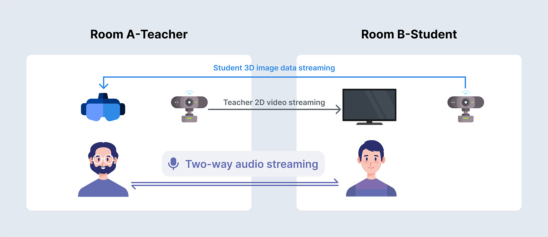
Addressing the challenge of limited presence in distance education for the performing arts, this qualitative case study evaluates the use of Microsoft HoloLens 2 in one-on-one performance art instruction. It examines its impact on instructional effectiveness, student–teacher interaction, and technology acceptance. The study utilised an asymmetric model: the teacher wore HoloLens 2 to observe a 3D image of the student, while the student observed the teacher through a 2D screen. The core findings revealed a paradoxical experience: the technology enhanced spatial perception and movement-guidance accuracy, yet suffered from inherent limitations in conveying nonverbal cues, such as eye contact, creating emotional and sensory distance while increasing perceived physical proximity. The study also identified adaptive strategies adopted by teachers and students to overcome technological constraints, alongside variations in subjective experience due to system stability and individual differences. It is concluded that practical experience with HoloLens 2, a benchmark device, highlights the paradox of applying MR technology in professional contexts. Its effectiveness depends not only on comprehensive sensory support at the hardware level, but also on the co-evolution of users and pedagogy. This study offers insights for the future design and application of related technologies.
With the accelerating digital transformation of education worldwide, distance learning has become the norm. However, for performing arts disciplines such as theatre and dance, which rely heavily on body language, spatial perception, and emotional resonance, traditional online modes of teaching and learning (e.g., videoconferencing) have revealed their fundamental limitations. These platforms flatten three-dimensional, dynamic performances onto a two- dimensional screen, making it impossible for teachers to accurately assess students’ performance skills and body coordination, and difficult for students to understand the three-dimensionality of the teacher’s demonstration, thus severely diminishing the Presence of the teacher-student relationship.
The Paradox of Presence: Asymmetric Interaction in Mixed Reality Distance 229 Against this backdrop, Mixed Reality (MR) technology offers a breakthrough in this dilemma, as it has the potential to re-establish the missing spatial dimension of remote interactions by seamlessly overlaying virtual information onto the user’s real physical environment. Microsoft HoloLens 2, the benchmark enterprise MR device of its era, enables the wearer to observe and interact with a remote person or object as a 3D hologram in their own real space, opening revolutionary possibilities for solving the fundamental pain point of teaching skills remotely.
This study examines the real-world use of HoloLens 2 in distance theatre education through a detailed qualitative case study. Studying its application in a concrete pedagogical context, therefore, provides valuable insights into the affordances, limitations, and design implications of mixed reality systems for embodied distance learning.
Guided by this aim, the study explores how mixed reality reshapes pedagogical effectiveness, perceived presence, and teacher–student experience in distance theatre education through the following research questions: RQ1: How does mixed reality–mediated instruction influence pedagogical effectiveness and perceived presence in distance theatre education, compared to conventional videoconferencing?
RQ2: How do teachers experience observing, sensing, and responding to students’ performances when teaching through a mixed reality system?
RQ3: How do students experience learning and instructional modelling in an asymmetric mixed reality configuration, where immersive perception is limited to the teacher?
RQ4: What usability, comfort, and technological constraints shape teachers’ and students’ adaptation to mixed reality–mediated instruction?
Related Work
The core of theatre education lies not only in the transmission of knowledge but in Embodied Practice that unfolds within a shared physical space through physical interaction, emotional exchange, and immediate feedback (Anthony, 2013; Boal, 2008; Flynn, 2025). When such a pedagogical model, which is highly dependent on physical coexistence, is transferred to an online setting, its core practical skills transfer faces significant challenges.
Traditional online tools such as videoconferencing inevitably flatten three- dimensional, dynamic performances onto two-dimensional screens, leading to critical Embodiment Loss (Chew, 2022; Roberts et al., 2009; Cegys and Weijdom, 2020). Teachers are unable to accurately perceive the centre of gravity of the student’s body, muscle tension, small displacements in space, and the rhythm of breathing, which are key information for performance instruction (Parker-Starbuck and Mock, 2011; Guichard, 2003). Beyond perceptual limitations, this flattening of the body also diminishes Kinaesthetic Empathy, the teacher’s ability to experience and interpret students’ physical state through embodied resonance (Artpradid, 2023). In addition, non-verbal synchrony, such as shared rhythm and breathing, and physical proxemics, which contribute to trust and relational attunement, are severely constrained in remote settings (Ellis, 1992). Together, these losses constitute a fundamental
dilemma for distance theatre education and create an urgent need for new technological paradigms that can transcend the limitations of the 2D screen.
Efforts to overcome the barriers of remote embodied interaction have a long history at the intersection of art and technology. Early practices in networked performance and telematic arts explored how internet-based systems could support real-time collaboration across distance, offering important conceptual foundations for later developments. In education contexts, virtual world platforms such as Second Life have enabled users to interact in shared digital environments through avatars, providing a sense of co-presence and spatial continuity (Warburton, 2009; Bulu, 2012). However, these approaches are fundamentally limited by the representational nature of avatars. Pre-programmed or semi-automated avatars struggle to convey the subtle dynamics, emotional expressiveness, and idiosyncratic movements of the real human body, reducing interaction to a low-fidelity simulation that falls short of the demands of professional theatre training.
The limitation of avatar-based systems has drawn attention to technologies capable of transmitting real bodily data with high fidelity. Within this context, eXtended Reality (XR) technologies (including Virtual Reality (VR), Augmented Reality (AR) and Mixed Reality (MR)) have emerged as promising tools for embodied learning. Their immersive quality has been explored in fields such as dance education, virtual choreography, and movement-based training, where spatial awareness and bodily engagement are central (Li, 2025; Cisneros et al., 2019; Wang, 2024). Among these technologies, Mixed Reality is particularly relevant for distance theatre education because it does not replace the physical environment with a fully virtual one. Instead, it integrates virtual elements into the user’s real space, offering the possibility of creating a shared spatial experience while preserving physical context. This hybrid quality suggests that MR may fundamentally reconfigure tele- mentoring by allowing remote participants to appear within one another’s physical environments in three-dimensional form.
Understanding the pedagogical implications of MR requires engagement with the theory of presence. Presence is defined as the subjective feeling of “being there” in the environment presented by a medium, and is often conceptualised as comprising multiple dimensions, including spatial presence, social presence, and co-presence (Lombard and Jones, 2015; Slater, 2009; Lombard and Ditton, 1997; Steuer, 1992; Biocca and Harms, 2002). While MR technologies are generally assumed to enhance spatial presence through three-dimensional representation, it remains unclear whether they can simultaneously support the non-verbal cues, such as eye contact and facial micro-expressions, that are essential for social presence. This tension is particularly salient in theatre education, where emotional attunement and interpersonal responsiveness are integral to learning.
Equally relevant is the theory of embodied cognition, which posits that cognition and learning are not abstract thinking activities, but are deeply rooted in the interaction between the body and the environment. From the perspective of Situated Learning, effective learning cannot be achieved without real practical “situations” and the “tools” used in them. In this study, HoloLens 2 is not only a display device, but also a mediating tool
The Paradox of Presence: Asymmetric Interaction in Mixed Reality Distance 231 that profoundly changes the activity system of teacher-student interaction. Its effectiveness in supporting remote embodied learning is a central criterion for assessing its pedagogical value (Slater, 2009; Varela, Thompson and Rosch, 1991; Lave and Wenger, 1991).
Despite its theoretical promise, HoloLens 2 must also be understood as a concrete technological product with known limitations. Studies in fields such as medicine and engineering have identified recurring challenges, including issues of ergonomics and comfort during prolonged use, a restricted field of view that requires frequent head movement, and increased cognitive load resulting from the simultaneous processing of virtual and physical information (Palihawadana, 2023; Vovk et al., 2018). These known technical limitations form the practical context that must be examined in this study.
METHOD
This study adopts a qualitative case study design to investigate how mixed reality reshapes teaching and learning experiences in distance performance arts education (Yin, 2009). A case study approach is particularly suited to this research because it allows for a detailed examination of an emerging socio-technical practice situated within a real-world educational context, where the boundaries between technology, pedagogy, and interaction are intertwined.
The research was conducted at a Finnish university of applied sciences and involved one performance arts teacher and three students enrolled in a performance-related programme (see Table 1). Participants were selected through purposive sampling to ensure that all had direct experience with the instructional setting and the mixed reality system under investigation. The small-scale configuration enabled close observation of interactional dynamics and embodied teaching practices.
During the study, the teacher and students were in separate classrooms. The teacher wore a Microsoft HoloLens 2 and observed students as real-time three-dimensional representations captured by 3D cameras, while students viewed the teacher’s demonstrations through a large two-dimensional screen as shown in Figure 1. Each one-on-one instructional session lasted approximately 30 minutes and focused on performance exercises and guided practice. Audio and video were transmitted bidirectionally and fully recorded.
Pseudonym Role Professional Background T1 Teacher Performing Arts
S1 Student Performing Arts Education S2 Student Performing Arts Education
S3 Student Performing Arts Education Multiple qualitative data sources were collected to capture the complexity of the teaching and learning experience. These included: 1) audio–video recordings of three one-on-one instructional sessions (approximately 90 minutes in total), which were fully transcribed to document moment-to-moment interaction; and 2) semi-structured post-session interviews with the teacher (approximately 30 minutes) and with each student (approximately 20–30 minutes), focusing on perceived presence, instructional clarity, and technology experience; and 3) post-course written reflections provided by the teacher, in which instructional strategies and technological challenges were retrospectively discussed. All data were collected in Finnish and later translated for analysis.
Data were analysed using Braun and Clarke’s (2006) six-step thematic analysis. Two researchers independently familiarised themselves with the data, generated initial codes, and iteratively developed and refined themes through comparison and discussion. Triangulation across interviews, written reflections, and classroom interaction data was employed to enhance analytical credibility and trustworthiness.
Ethical approval was obtained from the relevant university ethics committee, and all participants provided informed consent. Data were anonymised and handled in accordance with institutional and EU data protection regulations.
RESULT
Analysis indicates that the use of HoloLens 2 substantially enhanced teachers’ ability to perceive students’ bodily movement and spatial coordination in distance instruction. Compared to conventional videoconferencing, the three-dimensional representation enabled more accurate observation of posture, alignment, and movement trajectories, allowing teachers to identify performance-related issues that would otherwise remain obscured. This enhanced perceptual access directly supported performance-based assessment and feedback. The results are presented below by theme: 1) Technology- Enhanced Teaching and Learning Presence; 2) Sensory and Non-Verbal Communication Limitations; 3) Dynamic Interaction in Technology- Mediated Environment; and 4) Technological Awareness and Adaptability.
The improved spatial perception translated into more timely and focused instructional feedback. When the system functioned reliably, teacher–student interaction was described as fluid, with immediate corrections and iterative adjustments occurring during practice rather than after completion. Students reported that instructions were easier to follow and that feedback felt more precise, contributing to a learning experience perceived as closer to in-person teaching than to conventional online classes.
The Paradox of Presence: Asymmetric Interaction in Mixed Reality Distance 233 Despite these benefits, the findings also reveal notable limitations in sensory and non-verbal communication. Participants consistently reported the absence of eye contact, touch, and full-body visibility, which constrained emotional expression and relational attunement. In particular, the head- mounted display obscured facial cues, and a partial body representation limited teachers’ ability to observe lower-body posture and weight distribution—elements critical to theatre training.
In response to these constraints, teachers and students actively adapted their interactional practices. Students valued the increased freedom of movement afforded by the mixed reality setup compared to static videoconferencing, which better supported performance-oriented activities. When communication breakdowns occurred due to latency or technical instability, participants employed explicit verbal clarification, repeated instructions, and repair questions to maintain instructional continuity. Teachers also adjusted their pedagogy by relying more heavily on bodily demonstration and exaggerated gestures to compensate for missing non-verbal cues.
Experiences of the mixed reality system varied across individuals. Some students reported heightened engagement and reassurance stemming from their awareness that the teacher perceived them in three dimensions, while others experienced the system as functionally similar to a conventional screen-based setup. Individual differences in technological awareness and sensitivity to non-verbal cues shaped the degree of immersion and presence experienced. Even minor technical disturbances, such as audio delay, were sufficient to disrupt concentration and draw attention back to the mediating technology, underscoring the fragility of MR-mediated interaction.
DISCUSSION
The findings demonstrate that mixed reality can meaningfully reconstruct aspects of presence and physicality in distance performance arts education. In contrast to conventional videoconferencing, the use of HoloLens 2 enabled teachers to perceive students’ bodily movement and spatial coordination in three dimensions, supporting more precise observation and instruction. This enhanced perceptual access directly addresses the problem of embodiment loss widely identified in distance performance education and aligns with theories of embodied cognition, which emphasise that learning emerges through situated bodily engagement rather than abstract visual observation alone.
The ability to perceive students’ bodies in three-dimensional space allowed teachers to move beyond merely “seeing” performances on a screen toward a form of spatially grounded “perceiving.” This shift contributed to more focused and efficient instruction, as teachers could identify movement inaccuracies, posture, and spatial relationships that are difficult to discern in two-dimensional video. In this sense, mixed reality partially restores the feedback loop central to performance pedagogy and narrows the experiential gap between remote and co-present instruction.
One of the most significant contributions of this study is the identification of what can be described as asymmetric presence. Although students viewed the teacher through a conventional two-dimensional display, their awareness that
the teacher was observing them in an immersive three-dimensional environment appeared to enhance their own sense of psychological closeness and engagement. Presence, therefore, was not solely determined by the perceptual richness of the medium on the receiving end, but also by participants’ understanding of how they were being perceived. This finding extends existing theories of presence by suggesting that presence can be constructed relationally and can “radiate” across asymmetric technological configurations, rather than being a simple function of technological immersion on both sides.
At the same time, the study reveals a clear paradox of presence. While spatial presence and observational accuracy were enhanced, social and emotional presence were often diminished. Teachers and students consistently reported limitations in sensory and non-verbal communication, particularly the absence of eye contact, touch, and full-body visibility. For performance education, which relies heavily on emotional transmission, kinaesthetic empathy, and bodily resonance, these absences introduced a new form of distance. The head- mounted display obscured facial expressions, and partial body representations constrained holistic perception of posture and movement, limiting the depth of affective connection between teacher and student.
These findings highlight that mixed reality does not simply “add” presence, but redistributes it across sensory channels. Visual-spatial information was amplified, while tactile, affective, and subtle non-verbal cues were reduced or lost. As a result, mixed reality simultaneously reconstructed physical proximity and introduced new invisible barriers to emotional connection. This tension underscores the limits of current MR systems in supporting the full spectrum of embodied and relational dimensions required for performance education.
Importantly, teachers and students were not passive recipients of these technological constraints. Instead, they actively negotiated the medium through adaptive and compensatory strategies. Students valued the increased freedom of movement afforded by the MR setup compared to static videoconferencing, which better supported the dynamic nature of performance practice. When communication breakdowns occurred, both parties engaged in repair strategies such as explicit verbal clarification, repeated instructions, and exaggerated gestures. Teachers adapted their pedagogical approach by relying more heavily on bodily demonstration to compensate for missing non-verbal cues. These adaptations illustrate that effective MR-mediated teaching emerges through the co-evolution of technology, pedagogy, and human agency rather than through technological affordances alone.
The study also demonstrates that experiences of mixed reality are highly subjective and unevenly distributed across users. While some students experienced heightened reassurance and engagement due to their awareness of being perceived in three dimensions, others perceived the system as functionally like a conventional screen-based setup. Individual differences in technological awareness, reliance on specific non-verbal cues, and tolerance for technical disturbances shaped the degree to which presence was sustained. Even minor issues such as audio latency were sufficient to disrupt immersion and draw attention back to the technology itself, revealing the fragility of MR-mediated presence and its dependence on system stability.
The Paradox of Presence: Asymmetric Interaction in Mixed Reality Distance 235 Overall, this study presents a nuanced view of mixed reality in distance performance education. Mixed reality can meaningfully enhance spatial perception and instructional precision, yet it simultaneously introduces new challenges for emotional and social presence. Recognising this paradox is essential for both educators and designers, as it highlights that the future effectiveness of MR in embodied learning contexts depends not only on increasing immersion but also on addressing asymmetries in perception, restoring non-verbal communication channels, and supporting adaptive pedagogical practices.
CONCLUSION
This study investigated the use of mixed reality in distance theatre education through a qualitative case study of an asymmetric instructional configuration using Microsoft HoloLens 2. By examining teacher and student experiences in one-on-one performance instruction, the study explored how mixed reality reshapes pedagogical effectiveness, perceived presence, and interaction in comparison to conventional videoconferencing.
The findings indicate that mixed reality can enhance teachers’ spatial perception of students’ movement and bodily coordination, supporting more precise observation and instructional feedback. At the same time, limitations in sensory and non-verbal communication constrained emotional and social presence, revealing a paradoxical redistribution of presence across perceptual channels. The concept of asymmetric presence proposed in this study highlights how presence can be relationally constructed, shaped not only by how individuals perceive others, but also by how they understand themselves to be perceived within a technologically mediated interaction.
From a practical perspective, the study underscores the importance of pedagogical adaptation when integrating mixed reality into distance performance education. Educators must actively compensate for missing non-verbal cues, while system stability and ergonomic considerations remain critical for sustaining mediated presence. Although the study is limited by its small sample size and the discontinuation of the core device, it offers transferable insights for the design of future mixed reality systems and pedagogical practices aimed at supporting embodied learning across distance.
Future research could extend this work by applying the framework to emerging MR platforms, such as enterprise applications for Apple Vision Pro or other new devices, and conducting longitudinal studies to examine how adaptive teaching practices stabilise over time, and exploring other forms of physically grounded distance learning, such as dance or physical training. By foregrounding both the possibilities and the paradoxes of mixed reality, this study offers insights for the design of future technologies and pedagogies that seek to support embodied learning across distance.
ACKNOWLEDGMENT
This work has been partially funded by the Research Council of Finland, under grant 343364.
REFERENCES
Anthony, K. A. (2013). Process drama: A medium for creating a hospitable space for learning through reverent listening [Master’s thesis, University of Nebraska– Lincoln]. Artpradid, V. (2023). Kinesthetic empathic witnessing in relation to embodied and
extended cognition in inclusive dance audiences. Cogent Arts & Humanities, 10(1), 2181486. Biocca, F., & Harms, C. (2002). Defining and measuring social presence: Contribution to the networked minds theory and measure. Proc. 5th Annual International Workshop on Presence (PRESENCE 2002), 7–36. Boal, A. (2008). Theatre of the Oppressed. Pluto Press. Braun, V., & Clarke, V. (2006). Using thematic analysis in psychology. Qualitative
Research in Psychology, 3(2), 77–101. Bulu, S. T. (2012). Place presence, social presence, co-presence, and satisfaction in virtual worlds. Computers & Education, 58(1), 154–161. Cegys, P., & Weijdom, J. (2020). Mixing realities: Reflections on presence and
embodiment in intermedial performance design of Blue Hour VR. Theatre and Performance Design, 6(1–2), 81–101. Chew, Y. W. (2022). Performing presence with the teaching-body via videoconferencing: A postdigital study of the teacher’s face and voice. Postdigital Science and Education, 4(2), 394–421. Cisneros, R. E., Wood, K., Whatley, S., Buccoli, M., Zanoni, M., & Sarti, A. (2019).
Virtual reality and choreographic practice: The potential for new creative methods. Body, Space & Technology, 18(1), 1–32. Ellis, M. E. (1992). Perceived proxemic distance and instructional videoconferencing: Impact on student performance and attitude (ED354558). ERIC. Flynn, R. M. (2025). Drama as embodied learning: Moving from theory into action.
ArtsPraxis, 12(1). Guichard, J. (2003). [Review of the book The Actor Speaks: Voice and the Performer, by P. Rodenburg]. Theatre Topics, 13(2), 255–256. Lave, J., & Wenger, E. (1991). Situated Learning: Legitimate Peripheral Participation.
Cambridge University Press. Li, M. (2025). Breaking boundaries: Enhancing dance learning through virtual reality innovation. Education and Information Technologies, 30(2), 1607–1634. Lombard, M., & Ditton, T. (1997). At the heart of it all: The concept of presence.
Journal of Computer-Mediated Communication, 3(2), JCMC321. Lombard, M., & Jones, M. T. (2015). Defining presence. In M. Lombard, F.
Biocca, J. Freeman, W. A. IJsselsteijn, & R. J. Schaevitz (Eds.), Immersed in Media: Telepresence Theory, Measurement & Technology (pp. 13–34). Springer. Palihawadana, S. (2023). Cognitive overload in mixed-reality interactions: A qualitative analysis [Master’s thesis, Umeå University]. Parker-Starbuck, J., & Mock, R. (2011). Researching the body in/as performance. In
B. Kershaw & H. Nicholson (Eds.), Research Methods in Theatre and Performance (pp. 210–235). Edinburgh University Press. Roberts, D., Duckworth, T., Moore, C., Wolff, R., & O’Hare, J. (2009). Comparing the end to end latency of an immersive collaborative environment and a video conference. Proc. 13th IEEE/ACM International Symposium on Distributed Simulation and Real Time Applications (DS-RT), 89–94. Slater, M. (2009). Place illusion and plausibility can lead to realistic behaviour in
immersive virtual environments. Philosophical Transactions of the Royal Society B: Biological Sciences, 364(1535), 3549–3557.
The Paradox of Presence: Asymmetric Interaction in Mixed Reality Distance 237 Steuer, J. (1992). Defining virtual reality: Dimensions determining telepresence.
Journal of Communication, 42(4), 73–93. Varela, F. J., Thompson, E., & Rosch, E. (1991). The Embodied Mind: Cognitive Science and Human Experience. MIT Press. Vovk, A., Wild, F., Guest, W., & Kuula, T. (2018). Simulator sickness in augmented
reality training using the Microsoft HoloLens. CHI ‘18, 1–9. Wang, Z. (2024). Artificial intelligence in dance education: Using immersive technologies for teaching dance skills. Technology in Society, 77, 102579. Warburton, S. (2009). Second Life in higher education: Assessing the potential for
and the barriers to deploying virtual worlds in learning and teaching. British Journal of Educational Technology, 40(3), 414–426. Yin, R. K. (2009). Case Study Research: Design and Methods (4th ed.). Sage.
Read this individual research paper free through the original publisher, or explore the full digital proceedings book.
ISBN 979-8-950676-09-3
Explore this ISBN in the AHFE Bookstore ↗Listed in the July 2026 bookstore catalogue; search by ISBN to confirm current availability · Digital book purchase optional