Samah Elkhateeb, Hassan Mostafa (2026). AI Integration and Risk Identification in Advanced Architectural Design Studios. In: Human Systems Engineering and Design (IHSED2026): Future Trends and Applications. AHFE Open Access, vol. 237, pp. 903–914. https://doi.org/10.54941/ahfe1008228
Generative Artificial Intelligence (AI) is rapidly changing architectural practice. However, advanced design studios at the senior and graduate levels still rely on traditional pedagogical approaches of manual ideation, desk critique, and jury defense. This research explores the influence of AI integration on the student design experience in advanced studios and the possible risks it provides for the cultivation of critical thinking and creative agency. We employed a sequential mixed-method design. It consisted of (i) a literature review on AI in higher education, creative cognition, and studio pedagogy; (ii) semi-structured interviews with senior studio instructors; and (iii) a structured risk-assessment survey adapted from ISO 31000:2018 distributed to senior architectural students. Thirty things in three categories, AI Studio Environment, Pedagogical Context, and Design Competencies, were rated on five-point probability and impact scales. The findings show a profile dominated by opportunities, with 27 of the 30 aspects (90%) identified as opportunities and only three elements (equity in subscription cost, AI literacy of instructors, and curricular framework) identified as low-to-moderate dangers. No threats were identified in the Design Competencies cluster. The main possible use of associate AI with definite critical agency, with the studio's fundamental role being retained in the context of AI, but only if the institutional infrastructure is raised to a similar level. The paper offers a three-tiered agenda for transformation for educators and program developers.
The emergence of AI-powered design tools ranging from generative image platforms to large language models capable of spatial reasoning has created a pivotal moment for architectural education. While the profession rapidly adopts these technologies, studio-based education, particularly at the senior and graduation level, has largely maintained traditional pedagogical models centered on hand drafting, manual ideation, and instructor-led critique.
This widening gap between professional practice and academic studio culture raises a question of urgent scholarly importance:
Received May 16, 2026 Revised June 14, 2026 Accepted July 2, 2026 Available online September 25, 2026
904 Elkhateeb and Mostafa How does AI integration transform the student design experience in advanced architectural studios, and what risks does it introduce into the cultivation of critical thinking and creative agency?
This paper argues that advanced studios, where students synthesize multiple competencies into a professionally resolved proposal represent the most consequential context in which to examine AI’s dual role: as a powerful design instrument and as a potential disruptor of the very cognitive skills that architectural education is fundamentally designed to develop.
LITERATURE REVIEW
The question of how AI should be integrated into architectural design education cannot be answered by examining any single body of research. The review is organised around four interconnected areas: AI in educational contexts, creative agency in design, architectural studio pedagogy, and risk identification in technology-integrated learning environments.
AI in Educational Contexts Generative AI tools such as Midjourney, Gemini, DALL·E, and ChatGPT have spread across higher education faster than researchers have been able to study them, raising urgent concerns about academic integrity (Cotton et al., 2024). Studies show that students who rely on AI tools tend to think less independently and engage less deeply with learning tasks, replacing the productive cognitive effort that consolidates learning (Stadler et al., 2024). Equity is a parallel concern; AI tools are not equally available to all students, and uncritical adoption may reinforce rather than reduce existing inequalities (Selwyn, 2022). The cumulative message is that the conditions of AI use matter more than its mere presence.
AI and Creative Agency in Design Creativity in design is understood as developing through reflective practice rather than acquired by tool use. Frameworks such as COFI (Rezwana & Maher, 2023) describe AI as ranging from a generative aide to a co-creative partner. Empirical findings, however, are mixed: exposing students to AI imagery during ideation can narrow their thinking and reduce variety and originality (Wadinambiarachchi et al., 2024), and unreflective use tends to yield visually impressive but intellectually shallow outcomes (Zhou & Lee, 2024). AI does not simply expand creative ability; it reshapes the creative process itself, with outcomes that depend on how the technology is taught, framed, and supervised.
Architectural Design Studio Pedagogy The design studio is the principal learning environment in architectural education, where students develop technical skills, professional judgment, and design sensibility through reflective engagement with real design
AI Integration and Risk Identification in Advanced Architectural Design Studios 905 problems. Earlier digital tools (CAD, BIM, parametric software) supported drawing and modelling; generative AI is qualitatively different in that it can produce design ideas itself, raising new questions about authorship, learning, and assessment (Özorhon et al., 2025). Yet research on AI in architectural education has focused almost entirely on introductory and early-year courses, leaving the senior and graduation studio where students must synthesise everything they have learned into a fully resolved proposal comparatively under-examined. This gap motivates the present study.
Risk Identification in AI-Integrated Learning Environments As AI technologies have become more common in educational environments, researchers have increasingly relied on structured risk assessment approaches to better understand and classify the challenges associated with their use. One commonly referenced framework is ISO 31000:2018, which approaches risk as the potential effect of uncertainty on specific objectives and evaluates risks based on two main dimensions: the likelihood of occurrence and the severity of impact. These risks are often rated on a scale from 1 (very low) to 5 (very high), allowing researchers to compare different types of risks and identify which issues may have the greatest influence on the learning process. In educational research, this framework has been used not mainly as a compliance tool, but as a structured method for analysing and categorising AI-related concerns (International Organization for Standardization, 2018).
When applied to AI in education, this kind of framework reveals several recurring categories of risk across the literature. These risks are commonly grouped into four main categories: cognitive risks, including reduced independent thinking and skill atrophy; pedagogical risks, such as the homogenisation of student work and the decline of reflective practice; equity risks, particularly unequal access to AI tools and digital resources; and assessment risks, especially the difficulty of evaluating student performance when the extent of AI contribution is unclear (Holmes et al., 2023). In the context of the advanced architectural design studio, where judgment, authorship, and iterative thinking are central learning outcomes, each of these risk categories carries weight. Together, they provide the analytical lens through which the present study examines the challenges of AI integration at this level.
Synthesis and Theoretical Framework Two tensions structure the present study. The first is between AI as opportunity and AI as risk: the same tools that accelerate exploration can dilute thinking and obscure authorship, with outcomes contingent on the conditions of use. The second is between studio traditions of hand-craft and iteration and the demands of contemporary practice in which AI fluency is increasingly expected. Neither tension admits a blanket policy; both call for an evidence-based, risk-sensitive approach. The four ISO-derived risk categories; cognitive, pedagogical, equity, and assessment serve as the analytical lens for the empirical phases that follow.
RESEARCH METHODOLOGY The study employs a sequential mixed-method design comprising three integrated phases that triangulate findings across theory, expert insight, and quantified student data. Phase 1; literature review, Searches were conducted in Scopus, Web of Science, ERIC, and Google Scholar across three intersecting bodies of work: AI in higher education, AI’s effects on creative agency and design cognition, and architectural design studio pedagogy. The review establishes the theoretical framework and identifies a clear gap: while AI in early-stage education is widely studied, no structured risk-identification framework exists for AI integration in studio-based architectural learning at the senior level.
Phase 2; Semi-structured interviews. Studio instructors teaching at the senior or graduation level were selected through purposive sampling (current senior-studio teaching, ≥ 5 years of studio experience, direct exposure to students using AI). Interviews of 45–60 minutes were recorded, transcribed, and analysed. Three overarching domains emerged and became the categorical structure of the student survey: (1) AI Studio Environment (facilities, infrastructure, AI software); (2) Pedagogical Context (instructors, curriculum, learning outcomes shaping critical thinking and creative agency); and (3) Design Competencies and Studio Deliverables (every component of the resolved proposal, from concept generation to jury defence). Phase 3; Structured risk-assessment survey. Adapted from ISO 31000:2018, the instrument contains 30 items across the three categories and twelve sub- categories: eight items in Category 1 (E1–E8), eight in Category 2 (P1–P8), and fourteen in Category 3 (D1–D14). For each item, respondents rated Probability (1 = Very Unlikely to 5 = Very Likely) and Impact (1 = Negligible to 5 = Critical). A composite Risk Score was computed as P × I (range 1–25). Items with mean Probability ≥ 3 were classified as Opportunities; items below 3 as Threats. The survey was offered in English and Arabic, included a worked example and scoring guidance, and was distributed anonymously via Google Forms to senior architectural students. The complete instrument is provided in the Appendix.
Results
The results are discussed in relation to the key question raised by the abstract: how the inclusion of AI changes the student design experience in advanced studios and what hazards it poses to the learning process. The methodological convention defined in the v6 survey instrument is used throughout the document: Items with mean Probability below 3 are categorized as Threats and items with mean Probability of 3 or higher are categorized as Opportunities. The Risk Score for each item is the product of the mean Probability and the mean Impact (P × I), a composite measure that ranges between 1 and 25 and operationalises the dual concern of likelihood and consequence that the abstract defines as key to the risk framing.
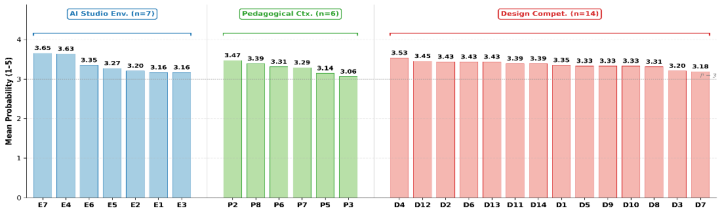
Figure 1: All opportunities ranked by mean probability.
Figure 1 ranks the 27 Opportunity items in order of decreasing mean Probability in each of the three risk categories in this study: AI Studio Environment (n = 7), Pedagogical Context (n = 6) and Design Competencies (n = 14). From the category level, the leaders of the Environment cluster are E7 (3.65) and E4 (3.63), the leaders of the Pedagogical cluster are P2 (3.47) and P8 (3.39), and the leaders of the Design Competencies cluster are D4 (3.53) and D12 (3.45). The three category leaders are clustered closely together between 3.47 and 3.65, suggesting that students perceive opportunity to be widely spread rather than narrowly localized in the studio.
The actual composition of each category cluster matters. The best-rated items in Environment cluster combine the usage of AI with critical or generative agency (E7, E4) while the equity of access and infrastructure (E1, E3) fall to the floor. Studio instruction on design judgment and authorship integrity (P2, P8) leads the Pedagogical cluster, with teacher framing of AI use (P5, P3) near the bottom. The elements for all 14 Design Competencies are over the 3.0 Opportunity threshold, ranging from D4 (3.53) to D7 (3.18), demonstrating that students see the incorporation of AI as positively benefiting their whole repertoire. This figure supports the paper’s recommendation that decisions on the deployment of AI in design education should cultivate this holistic approach across all three domains, rather than adopting or confining AI as a tool category.
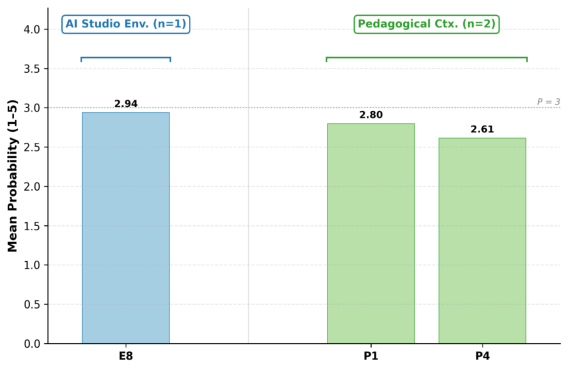
Figure 2: All threats ranked by mean probability.
Figure 2 shows the three Threat items grouped in the previously defined category-grouped pattern. The previous holistic ranking hid that threats are limited to the clusters of AI Studio Environment (n = 1) and Pedagogical Context (n = 2), whereas the cluster of Design Competencies is free from threats. One environmental danger, E8 (cost equity, 2.94) and two pedagogical risks, P1 (instructor AI literacy, 2.80) and P4 (curriculum framework, 2.61). All three are just below the threshold for the category 3.0, meaning that even threats are not considered extremely improbable. They are the least threats, meaning perceived inadequacies that pupils think is there, but are not. This calibrated lens points to inconsistent and insufficient institutional responses to AI, as risk perception is as much a product of unpredictability as it is of oversight.
In this picture it is important the thematic consistency of these three pieces and the vacant bracket of Design Competencies next to them. E8, P1 and P4 are not about student interaction with AI, but rather about institutional infrastructure (equity of subscription costs, instructor proficiency, and curriculum development, respectively). There are no hazardous features in the Design Competencies cluster and students do not feel that the incorporation of AI takes away any of their fourteen core design talents, from site analysis to technical drawing to jury presentation. Taken together, the two readings show that there is an immature teaching framework in regard to the AI competencies that students are already integrating into their work, which they see as fundamentally sound. This small but coherent hazard cluster provides the empirical basis for the promise in the abstract to offer “evidence-based insights to guide decisions regarding AI implementation in studio-based learning environments.” These are the three decision moments where institutional action would have the most impact on students’ risk profiles.
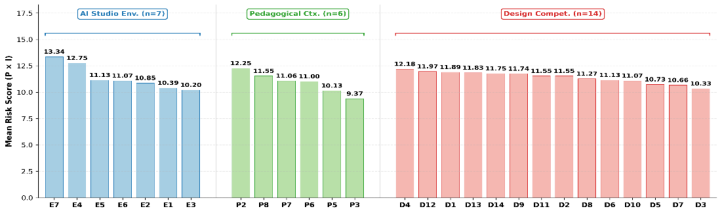
Figure 3: All opportunities ranked by risk score P × I.
In Figure 3 the 27 Opportunity items are ranked according to the composite Risk Score (P × I). Impact is used in the ranking process instead of using Probability only. The dominating codes in the Environment cluster are E7 (13.34) and E4 (12.75). In the Pedagogical cluster, P2 (12.25) and P8 (11.55) dominate, while in the Design Competencies cluster, D4 (12.18) and D12 (11.97) dominate. In each category the opportunity is greater than 9 D1 (11.89) and D13 (11.83) are a major rise in the Design cluster in
AI Integration and Risk Identification in Advanced Architectural Design Studios 909 terms of Impact strength, whereas E5 (11.13) and E6 (11.07) are secondary opportunities in the Environment cluster when repercussions are considered.
The category-grouped ranking, evaluated against the research objective stated in the abstract, indicates the best leverage of each area for pedagogical intervention rather than ordering hierarchically. Specific domain practices such as critical evaluation of outputs in the Environment domain (E7), design- thinking-oriented desk critiques in the Pedagogical domain (P2), and personal interpretive reasoning in site analysis in the Design Competencies domain (D4) integrate student-level critical engagement with explicit pedagogical or environmental support. If the goal is not to improve AI acceptability generally or in a single domain, but to enhance the opportunity element of AI integration, then programs should undertake concurrent interventions in all three clusters by bolstering the category leader in each.
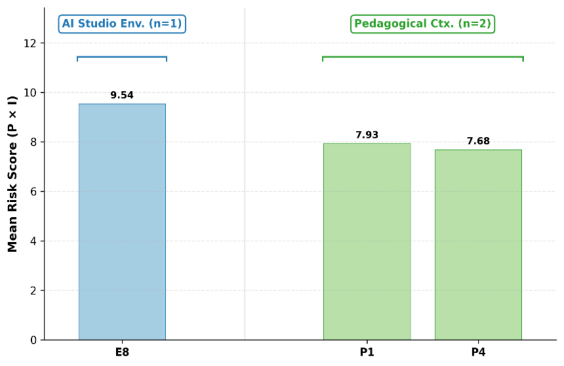
Figure 4: All threats ranked by risk score P × I.
The three Threat items are shown in Figure 4, ordered by their composite Risk Score (P × I) inside each cluster. The Environment cluster has one item, E8 (cost equity), with a score of 9.54; the Pedagogical cluster has two items, P1 (instructor AI literacy), with a score of 7.93, and P4 (curriculum framework), with a score of 7.68; the Design Competencies cluster has no items. All three aggregate ratings fall well inside the Low-to-Moderate bracket, suggesting this cohort does not perceive AI integration as a High or Critical threat. Again, the unused Design Competencies category is important: the Risk Score formulation that best fits built-environment risk-management principles does not identify any design-competency elements as threats. Conclusion. This is important for the paper. The danger cluster is real and thematically coherent. But it is about institutional infrastructure and not about design, and the proposals should be framed as institutional transformation as a corrective, not as a crisis intervention.
After E8 (9.54) in the Environment cluster, P1 (7.93) and P4 (7.68) in the Pedagogical cluster provide a pragmatic hierarchy of institutional action, compatible with the two domains in which the hazards arise. The
910 Elkhateeb and Mostafa E8 environment-cluster danger is the most likely to occur and has the largest impact; therefore, subscription and access procedures should be given priority. The two pedagogical-cluster risks are Instructor AI literacy (P1) which is consistent with the literature on AI in education and curricular reform (P4) which is the biggest structural and long-term challenge. There is no Design-Competencies threat in this composite ranking, indicating that there is no need to remediate student design activities. The whole reform agenda is upstream, in the surrounding environment and pedagogy. The three goals clearly express the abstract’s dedication to providing evidence- based assistance to educators and program designers.
DISCUSSION
Figures 1-4 jointly support a cohesive interpretation of the survey data. Figures 1 and 3 show the 27 Opportunity items by Probability and aggregate Risk Score correspondingly. The students’ responses show that the students mostly consider the AI integration within the advanced architectural design studios as an opportunity rich phenomenon, with 27 out of 30 evaluated items (90%) over the 3.0 level and designated as Opportunities. Moreover, the dimension of opportunity is evenly divided across the three risk categories: AI Studio Environment (n = 7), Pedagogical Context (n = 6), and Design Competencies (n = 14). For example, Figures 2 and 4 only present three Threat items, which are all placed in the Environment (E8) and Pedagogical (P1, P4) clusters, respectively, and the Design Competencies cluster also does not show any threats. The format of the four charts fundamentally reframes the study’s initial concern with AI as “a potential disruptor of the critical thinking and creative agency that studio education is fundamentally intended to cultivate,” therefore moving the emphasis from AI itself to institutional preparedness to support critically engaged AI use.
The evidence at the student level given in these four figures shows that critical agency and the instrumental use of AI are not incompatible but rather intertwined in practice. The top categories in Probability (Figure 1) and overall Risk Score (Figure 3). Specifically, E7 (critical interrogations of AI output), P2 (desk critiques based on design thinking), and D4 (individual interpretive reasoning for site analysis) are the components that link AI use to student critical engagement or instructional support, rather than instrumental claims about what AI is capable of.
CONCLUSION
The research showed that AI integration in advanced architectural design studios is mainly viewed as an opportunity rather than a threat. The research adopted a mixed-method approach including literature review, interviews with instructors and student surveys. The research indicated that 90% of the identified AI-related issues were positive in terms of studio environment, pedagogy and design competencies. The findings show that AI does not diminish students’ critical thinking or design skills. Rather, students continue to exhibit strong creative agency when AI is used critically and reflectively.
AI Integration and Risk Identification in Advanced Architectural Design Studios 911 The main challenges encountered were not about student performance, but about the level of institutional readiness, including unequal access to AI tools, a lack of AI skills among instructors, and the absence of explicit curricular frameworks for AI integration. The study emphasizes the continued importance of critical evaluation of AI outputs, desk critiques in the context of design and interpretative reasoning in architectural education. The paper proposes a tripartite institutional approach: equal access to AI technologies, improved AI literacy and assessment methods among faculty, and formal AI training integrated into architectural curricula. In conclusion, it finds that the success of AI integration lies with educational frameworks that allow for reflective, transparent, and justifiable AI use rather than constraining student engagement. The study also indicates future research in broader geographic contexts, long-term professional effects and AI-assisted integrated design submissions.
ETHICAL CONSIDERATIONS Participation in both the interview and survey phases was voluntary and fully anonymous. All interview participants provided informed consent prior to interview. Survey respondents were informed that their responses would be used solely for academic research purposes, and completion of the survey was taken as implicit consent to participation.
ACKNOWLEDGMENT
The authors would like to acknowledge the university of Business & Technology (UBT) for funding this research, as well as acknowledge the instructors who participated in the semi structure interview, and senior architecture students for their participation in the survey.
REFERENCES
Cotton, D. R. E., Cotton, P. A., & Shipway, J. R. (2024). Chatting and cheating: Ensuring academic integrity in the era of ChatGPT. Innovations in Education and Teaching International, 61(2), 228–239. https://doi.org/10.1080/14703297.2023 .2190148 Holmes, W., Stracke, C. M., Chounta, I.-A., Allen, D., Baten, D., Dimitrova, V.,
Havinga, B., Norrmen-Smith, J., & Wasson, B. (2023). AI and Education. A View Through the Lens of Human Rights, Democracy and the Rule of Law. Legal and Organizational Requirements (N. Wang, G. Rebolledo-Mendez, V. Dimitrova, N. Matsuda, & O. C. Santos, Eds.). Semantic Scholar; Springer Nature Switzerland. https://doi.org/10.1007/978-3-031-36336-8_12 International Organization for Standardization. (2018). ISO 31000:2018 — Risk management — Guidelines. https://www.iso.org/standard/65694.html Özorhon, G., Nitelik Gelirli, D., Lekesiz, G., & Müezzinoğlu, C. (2025). AI-assisted
architectural design studio (AI-a-ADS): How artificial intelligence joins the architectural design studio? International Journal of Technology and Design Education, 35, 1999–2023. https://doi.org/10.1007/s10798-025-09975-0
912 Elkhateeb and Mostafa Rezwana, J., & Maher, M. L. (2023). Designing creative AI partners with COFI:
A framework for modeling interaction in human-AI co-creative systems. ACM Transactions on Computer-Human Interaction, 30(5), 67. https://doi. org/10.1145/3519026 Selwyn, N. (2022). The future of AI and education: Some cautionary notes. European Journal of Education, 57(4), 620–631. https://doi.org/10.1111/ejed.12532 Stadler, M., Bannert, M., & Sailer, M. (2024). Cognitive ease at a cost: LLMs reduce
mental effort but compromise depth in student scientific inquiry. Computers in Human Behavior, 160, 108386. https://doi.org/10.1016/j.chb.2024.108386 Wadinambiarachchi, S., Kelly, R. M., Pareek, S., Zhou, Q., & Velloso, E. (2024). The effects of generative AI on design fixation and divergent thinking. In Proceedings of the 2024 CHI Conference on Human Factors in Computing Systems (pp. 1–18). ACM. https://doi.org/10.1145/3613904.3642919 Zhou, E., & Lee, D. (2024). Generative artificial intelligence, human creativity, and
Studio Facilities AI-equipped labs, rendering stations, and digital fabrication facilities expand what I can realistically produce in the design studio.
E2 1 AI Studio Environment
Studio Facilities Cloud-based AI infrastructure and institutional digital resources allow me to access advanced tools regardless of my personal device’s capabilities.
E3 1 AI Studio Environment
Studio Facilities AI-enabled facilities are equally accessible to all students in my studio cohort, regardless of individual financial resources or prior digital experience.
E4 1 AI Studio Environment
AI Software & Tools
Generative image tools (Midjourney, DALL-E, Adobe Firefly) meaningfully expand the range of design concepts I am able to explore during ideation.
E5 1 AI Studio Environment
AI Software & Tools
AI-integrated CAD and BIM tools reduce repetitive technical tasks and redirect my cognitive effort toward design judgement.
E6 1 AI Studio Environment
AI Software & Tools
AI rendering and environmental simulation tools strengthen the rigour and evidence base of my design decisions.
E7 1 AI Studio Environment
AI Software & Tools
I critically evaluate AI-generated outputs before incorporating them into my design work, rather than accepting them as a substitute for my own judgement.
E8 1 AI Studio Environment
AI Software & Tools
The financial cost of AI software subscriptions does not create a performance disadvantage between students within the same studio cohort.
(Continued)
Category Sub-Category Statement
Item Code
Cat. No.
P1 2 Pedagogical Context
Studio Instructors
My studio instructors demonstrate sufficient AI literacy to guide me in using these tools effectively, critically, and in ways aligned with design education objectives.
P2 2 Pedagogical Context
Studio Instructors
Desk crit sessions focus on the quality of my design thinking and conceptual agency, even when AI tools have been used to produce outputs.
P3 2 Pedagogical Context
Studio Instructors
My instructors encourage a reflective and intentional approach to AI use rather than banning it or ignoring its presence.
P4 2 Pedagogical Context
Curriculum My curriculum includes formal instruction that equips me with a critical framework for evaluating when and how AI tools should be used.
P5 2 Pedagogical Context
Curriculum Studio briefs require critical and reflective engagement with AI tools rather than treating them as a shortcut.
P6 2 Pedagogical Context
Learning Outcomes
My critical thinking and design judgment have developed through my engagement with AI tools, rather than being diminished or bypassed.
P7 2 Pedagogical Context
Learning Outcomes
I feel confident in my ability to design independently without AI assistance when required.
P8 2 Pedagogical Context
Learning Outcomes
I am able to navigate questions of authorship, disclosure, and academic integrity related to AI use with confidence.
D1 3 Design Competencies
Concept Generation
AI tools enhance my ability to generate, diversify, and critically evaluate initial design concepts while preserving my own creative direction.
D2 3 Design Competencies
Concept Generation
The design concepts I develop with AI assistance are spatially and contextually viable - not merely visually stimulating outputs.
D3 3 Design Competencies
Site Analysis AI-assisted mapping and simulation tools deepen the rigour of my site analysis and contextual design response.
D4 3 Design Competencies
Site Analysis My site analysis reflects my own interpretive reasoning, even when AI tools have been used to gather or visualise data.
(Continued)
Category Sub-Category Statement
Item Code
Cat. No.
D5 3 Design Competencies
Design Development
AI-assisted parametric modelling expands spatial complexity while maintaining my understanding of the geometry produced.
D6 3 Design Competencies
Design Development
I can clearly explain and spatially defend every element of my design - including AI-assisted components - during critique and juries.
D7 3 Design Competencies
Technical Resolution
AI drafting tools improve technical precision without replacing my understanding of construction and spatial resolution.
D8 3 Design Competencies
Technical Resolution
My technical drawings accurately reflect a spatially resolved design, not one that appears resolved only through AI representation.
D9 3 Design Competencies
Visualisation AI rendering tools allow me to communicate design intent more powerfully and accurately to a jury or professional audience.
D10 3 Design Competencies
Visualisation My visual AI-generated outputs truthfully represent my design proposal rather than creating a misleading impression of sophistication.
D11 3 Design Competencies
Written Argumentation
AI language tools improve clarity and academic register of my written design arguments while preserving my own position.
D12 3 Design Competencies
Written Argumentation
The written content I submit reflects my own design thinking - not AI-generated text submitted as my own work.
D13 3 Design Competencies
Jury Defence I can clearly articulate and defend my full design proposal - including AI-assisted components - when questioned by a jury.
D14 3 Design Competencies
Jury Defence My final jury presentation after using AI tools demonstrates a coherent multi- competency proposal reflecting my own synthesis of ideas.
FIND THE COMPLETE VOLUME IN THE AHFE DIGITAL BOOKSTORE
Explore the complete digital volume
Human Systems Engineering and Design (IHSED2026): Future Trends and Applications
Read this individual research paper free through the original publisher, or explore the full digital proceedings book.