A. Huntera, N. Bourgeoisb, R. Langloisb (2021). The Impact of Motion Induced Interruptions on Cognitive Performance. In: Advances in Human Aspects of Transportation: Part I. AHFE Open Access, vol. 15. https://doi.org/10.54941/ahfe100623
This paper takes a preliminary look at the direct effects of Motion Induced Interruptions (MIIs) on cognitive perfor-mance. Understanding the direct and indirect effects of motion on cognitive performance is becoming increasingly important as crewing limitations and job requirements increase operator workload. In addition, we explored the suitability of mobile tablet technology in motion environments. To do this, participants performed a data logging task using a tablet and traditional pen/paper while experiencing ship motion. MIIs occurred in sea states 4 and 5 on the Beaufort Scale. MIIs had an impact on the number of data transcriptions, but not the accuracy of data transcriptions. Performance accuracy and number of transcriptions were lower when participants used the tablet. The results of this experiment indicate that MIIs should be considered as a form of task distraction that results in increased time on task. As mobile technologies allow for more operator mobility MIIs are likely to become a larger issue. Future research will continue to investigate the impact of MIIs and motion on cognitive task performance. Answering these questions will allow us to offer mitigation strategies with potential implications on operator technology interaction, crewing and operator guidelines.
Royal Canadian Navy (RCN) operations rooms are manned by personnel with various command and control (C2) responsibilities. Inherently C2, and associated duties, are cognitively demanding and involve tasks requiring the assimilation, analysis and recording of information. In order to understand how to optimize performance at sea, we first need to understand the effect that shipboard motion has on cognitive performance. Previous research by Colwell (2000), found that approximately 14% of NATO Standing Naval Forces Atlantic fleet (STANAVFORLANT) personnel believed that ship motion impacted concentration, 10% believed it increased task completion time, 5% believed it increased errors, and 8% believed that motion impacted decision making and memory. While these numbers may seem low, the impact of ship motion on balance and personnel movement was also rated between 11- 14%. With respect to the severity of motion Brown (1985), as cited by Dobie (2003), suggests that sea state 5 and above diminishes crew fighting effectiveness.
Due to the physiological impact that motion has on fatigue and motion sickness, it is difficult to parse out these confounds to determine if motion alone impacts cognitive performance. In fact, the American British Canadian and Dutch (ABCD) Human Performance At Sea (HPAS) working group, based on research by Holcombe-Conwell and Holcombe (1996) as cited in Colwell (2005), along with Wertheim (1998) are of the opinion that ship motion does not have a direct impact on cognitive performance and that detriments in performance are a result of indirect physiological issues. Figure 1 has been adapted from Colwell (2005) to show the indirect and direct paths that can impact cognitive performance, with the indirect path being the most likely reason for detriments in cognitive performance.
Physiological Symptoms Indirect Effect
Ship Motion Cognitive Performance
Direct Effect
Figure 1. Indirect and direct pathways that motion effects cognitive performance (adapted from Colwell, 2005).
Figure available in the original PDF paper.
More recent work points to direct effects of motion on performance. For instance, Matsangas (2005) found that even participants presenting with minor physiological effects of motion experienced a decline in multitasking performance. Further, Yu, Yank, Katsumata, Villard, Kennedy and Stoffregen (2010) found that sway motion at sea has an impact on visual tasks. These researchers hypothesize that eye fixations are impacted by ship motion making visual vigilance tasks at sea difficult. Taken together these results, and others like them, suggest that the relationship between ship motion and cognitive performance is not always mediated by physiological symptoms. Understanding both the direct and indirect effects of motion is becoming more important as crewing limitations are becoming a reality and technological advances are placing demands on cognitive performance.
Motion Inducted Interruptions (MIIs) An MII is defined as an adjustment in stance to maintain balance in response to ship motion (Graham, 1989). The purpose of this research was to explore the direct impact of MIIs on cognitive performance. This experiment also presents a unique opportunity to isolate MIIs to assess the specific impact they have on accuracy and task comple- tion. Most of the interruption literature has investigated the impact of task based interruptions such as being inter- rupted by a phone call or writing an email. In these situations, Altmann and Trafton (2002) propose a memory for goals theory to explain interruption recovery which states that the cognitive impact of an interruption is correlated with the amount of time it takes an individual to recover from the interruption and continue their task. An MII is expected to result in the affected individual ceasing their primary task to adjust their stance and maintain balance. The maintenance of balance becomes a secondary task which is expected to disrupt performance of the primary task. There are varying levels of ship motion which are all likely have some level of impact on performance even when there is no MII present. While the purpose of this experiment was to look specifically at MIIs it is worth pointing out that research suggests that maintenance of balance requires attentional resources. In situations where an individual is performing a difficult task the body actually sways less than when they perform an easy task. It has been suggested that this result is a function of attention being directed to the task so the body is simply “locked down” into a position that minimizes the need for attention to balance (Stoffregen, Villard & Yu, 2009).
Given that we cannot control sea states we are limited in our ability control when an MII happens. Having said that, orientation of the body in relation to the centerline of the ship provides some way to manipulate the probability of an MII occurring. When oriented towards the bow at 0 degrees individuals typically show less sway than when they are oriented at 45 or 90 degrees. In a laser aiming task Chen and Stoffregen (2012) found that performance was most accurate when the participants were facing towards the bow. These researchers were not interested in MIIs but they do point out that MIIs occurred exclusively when participants were standing at 90 degrees to the centerline.
Mobile Technology Mobile computing has changed how and where we do things. With respect to the RCN there is an advantage to in- troducing mobile technology to aid with a variety of tasks. For instance, DRDC Atlantic research lab recently de- veloped an android app for use in training periscope watch officers in the Victoria Class Submarines (Personal Communication, 2014). Another area that mobile technology lends itself well to is for data recording tasks which are now completed using pen and paper. As the advantages of mobile computing become more obvious we expect to see these technologies adapted on platforms to support various tasks. Environment can have a large impact on how technology is utilized and how well suited it is for certain tasks, especially environments that might be considered extreme such as being at sea. Another thing to consider is how the introduction of a tablet into this work domain could redefine how operators work. Providing them with a tablet or other mobile device is likely to result in some operators moving around the ship or control room instead of sitting at a console. While this isn’t necessarily a bad thing, the freedom to stand and move freely will mean that they will experience more MIIs. For the current research we were interested in understanding the impact of MIIs on performance along with the use of touch based tablet technology in motion environments.
The current research provided an opportunity to explore the human factors issues surrounding the use of touch tech- nology in motion environments. Chourasia and colleagues (2013) found differences in time to completion and accu- racy between tablet users that were standing versus tablet users that were sitting. This resulted in more accurate and quicker performance for those in the sitting condition. These researchers also indicated that button size had an im- pact on performance in participants who are standing but not for those who are sitting. These effects were found when participants were standing on stationary ground not in an environment that moves making it important to in- vestigate these findings in motion based environments. The impact of motion on technology has been demonstrated by Yau and colleagues (2011). These researchers tested participant performance and reaction time on a target acqui- sition task using a trackball where they manipulated the position of the target on the interface. They also manipulat- ed motion of the platform. They found a speed-accuracy trade-off for this task especially when the motion simulator platform pitched and rolled. They also found that the speed accuracy trade-off was greater when targets followed a diagonal track on the interface. The speed accuracy trade-off decreased when targets followed a horizontal track. The above mentioned research points to the fact that environmental considerations need to be made when imple- menting new technologies and interfaces. For instance, it is possible that motion is likely to impact fine motor skills which could in turn impact the use of a touch screen (Dobie, 2003).
Current Research The aim of the current research was to examine the impact that MIIs have on cognitive performance. It was hypoth- esized that trials that contained MIIs would result in decreased performance both in accuracy and number of data transcriptions completed. Complete control over MIIs was not possible, but we used orientation towards centreline as a way to induce MIIs. At a more theoretical level we hoped to evaluate MIIs in view of the memory for goals theory to see if motion based interruptions have the same impact on cognition as task based interruptions. Given the scarcity of sea time we also wanted to do a preliminary evaluation of tablet use vs. pen and paper usage in motion environments. This research was an exploratory first step under a larger project that aims at determining what cog- nitive tasks are likely to be impacted by motion. Our aim in determining the impact of MIIs and motion on cognitive performance is to eventually outline mitigation strategies that can be used to decrease the impact of motion and MIIs on operator performance.
Methods
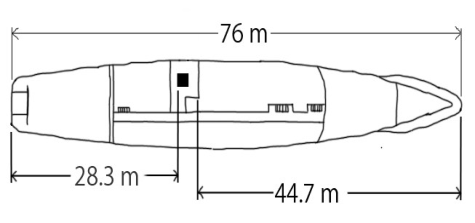
Canadian Forces Auxiliary Vessel (CFAV) Quest Q-348 Sea Trial CFAV Quest is the research vessel utilized by Defence Research Development Canada (DRDC) primarily for the study of open ocean acoustic research. Quest is manned by a civilian crew with accommodations for 21 scientific staff. During the Q-348 trial there were two concurrent, yet unrelated, research projects occurring onboard. Research priority was given to the wave data collection research project with the objectives of the MII project being second- ary. The primary experiment required QUEST to navigate at various speeds and patterns around a set of preplaced buoys, so manipulating course and speed for this experiment was not possible. Figure 2 (a) shows a picture of Quest (b) shows a schematic of the location of the lab area on Quest that was used for this experiment.
Figure 2. (a) CFAV Quest (b) location of the laboratory used for this experiment on board CFAV Quest (from Bourgeois, Langlois, & Hunter, 2014).
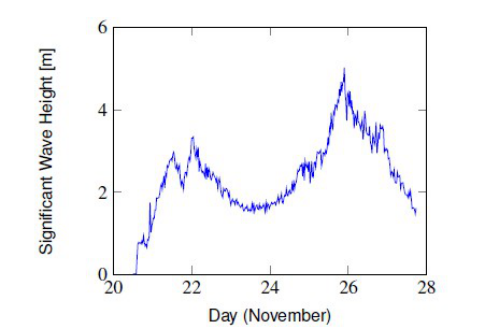
The trial took place in an area known as the Emerald Basin approximately 50nm off of the coast of Halifax, Nova Scotia in the Atlantic Ocean between Nov 20th- Nov 28th, 2012. Wave height data measured during the trial can be seen below in Figure 3.
Figure 3. Buoy measured significant wave height (m) during the Q-348 trial (from Bourgeois, Langlois, & Hunter, 2014).
Given that we were looking to capitalize on motion induced interruptions our optimal data collection conditions were during rougher sea conditions which occurred primarily on Nov 21, 22, 26 and 27.
Participant Recruitment Participants were recruited from the scientific staff and the Quest crew. 13 participants volunteered to take part in the experiment. Out of the 13 participants, 11 had data that was deemed suitable for analysis. Data from two participants was deleted because there was an issue with the experimental equipment during their session.
Procedures and Equipment Each participant arranged an appointment time that was convenient for them. Experimental sessions were aimed at taking advantage of higher sea states. When participants arrived at their appointment a member of the research team explained the objectives of the experiment, the tasks and all associated risks. Afterwards they were asked to review and sign the informed consent form. All participants were aware that they had the right to withdraw without penalty at any time.
The aims of this research were twofold- one was to collect postural stability data in response to MIIs while the other goal was to evaluate the impact of ship motion on cognitive performance. Each experimental session lasted for 90 minutes. The actual data collection time lasted approximately 40 minutes. The remainder of the time was spent setting-up and calibrating the postural stability measurement equipment.
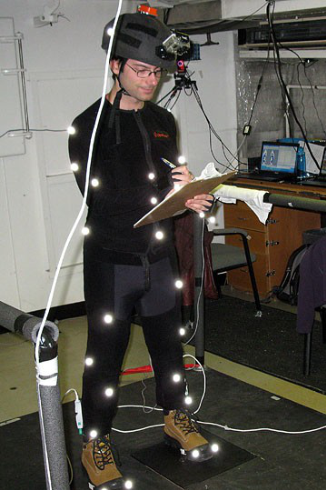
Each participant was asked to wear a Natural Point Opti-track full body motion capture system with reflective makers to record the position of the body. Participants also wore a helmet with a GoPro camera and an Xsens inertial sensor attached to it that captured when what the participants saw during the experiment. Participants were also asked to place a wired Tekscan F1-scan insole into their shoe to measure changes in foot pressure. Participants stood with their left foot on an ATI industrial six degree of freedom load cell for the duration of their session. The load cell also measured changes in foot pressure in response to motion. The majority of the equipment used in this experiment was required for the postural stability research goals. A more detailed account of the equipment and goals of the postural stability data can be found in Bourgeois, Langlois and Hunter (2014). Body motion was also recorded with a Microsoft Kinect with iPi Recorder software and the Optitrack cameras which were placed around the laboratory.
Figure 4. Set-up of the experimental equipment as modelled by one of the experimenters (from Bourgeois, Langlois & Hunter, 2014).
(a) (b) Figure 5. (a) View of the experimental task from the GoPro camera. (b) Tekscan F1-scan insole (from Bourgeois, Langlois & Hunter, 2014) While standing on a load cell platform, participants were asked to perform a data transcription task. This task required them to search a list of 3-digit numbers, find the odd numbers and transcribe the odd numbers into an adjacent column. They performed this task for 3 minutes using a tablet (iPad) and 3 minutes using traditional pen, paper clipboard set-up. There was no limit to the number of transcriptions that the participants could do so they were never finished prior to the 3 minutes. Participants performed the transcription tasks while oriented at 0, 45 and 90 degrees in relation to the ships centerline. All attempts were made to start the trial at a time that would limit changes in ship heading and speed for each set of orientations. Given the nature of this experiment it was not possible to control this across participants.
RESULTS
For the number of data transcriptions a 2 (data entry: pen/paper, tablet) x 3 (orientation: 0, 45, 90) x 4 (MII: None, 1-2, 3-4, 5-6) Mixed Model ANOVA was completed where MII was the between subjects factor. The results of the analysis indicate a significant effect of data entry (pen/paper; tablet) F (1, 7) = 37.26, p<.001 and a marginally signification effect of MII (None, 1-2, 3-4, 5-6) F (3, 7) = 4.10, p=.05 where more MIIs resulted in fewer transcriptions. It is expected that with more participants MII would be significant at the p<.05 level. For the accuracy (percent of correct transcriptions) MII was not significant, but device F (1, 7) = 9.28, p<.05 was significant where tablet performance was worse than pen and paper performance. Orientation was not significant and there were no significant interaction effects.
DISCUSSION
The marginally significant effect of MIIs on task completion is in line with the PAQ results from Colwell (2000) where crew members indicated that shipboard motion results in a tasks taking longer than required. Increased task completion time, in the absence of motion sickness, seems to be a valid direct effect of motion on cognitive performance when MIIs are present. This result is in line with the memory for goals theory which states that each interruption has a resumption lag where participants require time to recover and recall what they were doing. The lack of significant results for accuracy of performance is also in line with the interruptions literature in that the accuracy of easy primary tasks does not tend to decline but speed of task completion does decline. We also found that MIIs with only occurred in sea states 4 and 5 when they were oriented at 90 and 45 degrees to the centerline. Orientation in this experiment was not significant, but the lack of significant results may be confounded by the fact that orientation was not counterbalanced across participants.
With respect to the use of tablets in motion environments the preliminary results indicate that the tablet condition had more errors and fewer transcriptions. While we are not able to indicate if this is a result of motion it does appear as though data transcription tasks using a tablet was not as effective as traditional pen and paper methods. Future experiments should investigate if this is specific to motion environments. Wertheim (1998) does point out that fine motor skills are impacted by motion suggesting the requirement to steady the hand to precisely hit a button on a touch screen in motion environments is more difficult than it is on land. Other interface modifications such as increasing button size, as suggested by Chourasia and colleagues (2013), should be investigated. A comparison between the use of a touch screen and the use of stylus should be considered in future experiments.
CONCLUSIONS
Determining how exactly ship motion and MIIs affect cognitive performance in limited and sustained RCN opera- tions is an important question. This experiment was one of the first to provide evidence towards a direct effect of motion on performance. Defining the impact that ship motions, including MIIs have on specific cognitive perfor- mance over short and long durations, such as memory capacity, visual vigilance, precision, mental acuity, and pos- tural stability, will be the focus of future experiments. Given gaps in the current literature, we hope to perform a series of pilot experiments to isolate the cognitive aspects that are likely to be influenced by ship motions. The cur- rent research was an exploratory first step in this process. Future plans will aim to evaluate the specific effects of ship motion on performance so that we can eventually provide relevant long and short-term mitigation strategies to optimize RCN capabilities.
REFERENCES
Altmann E. M., Trafton J. G. (2002) Memory for goals: An activation-based model, Cognitive Science, 26 39-83. Bourgeois, Langlois, & Hunter (2014). Quest Q-348 Sea Trial: Human Postural Stability Studies. To be presented at the International Conference of Control, Dynamic Systems, and Robotics. Ottawa, ON, Canada, May 15-16. Chen, F., & Stoffregen, T.A. (2012). Specificity of postural sway to the demands of a precision task at sea. Journal of
Experimental Psychology: Applied, 18 (.2). pp. 203-212. Chourasia, A.O., Wiegmann, D.A., Chen, K.B., Irwin, C.B., & Sesto, M.E. (2013). Effect of sitting or standing on touch screen performance and touch characteristics. Human Factors. 55 (4) 789-802. Colwell, J.L, (2000). “NATO performance assessment questionnaire (PAQ): Problem severity and correlation for ship motions,
fatigue, seasickness and task performance” (2000-142) Dartmouth, NS, DREA Technical Memorandum. Colwell, J.L. (2005). Modeling ship motion effects on human performance for real time simulation. Naval Engineers Journal.
117 (1) 77-90. Conwell Holcombe, S., & Holcombe, F. D. (1996). Motion effects on cognitive performance: experiments at the Naval Biodynamics Laboratory. (CRDKNSWC-HD- 1423-02). Carderock Division, Naval Surface War-fare Center. Dobie, T. (2003). Critical significance of human factors in ship design. Presented at RVOC Meeting, Large Lakes Observatory,
University of Minnesota. Retrieved from http://www.unols.org/meetings/2003/200310rvo/200310rvoap23.pdf Dobie, T. (2000) The Importance of the Human Element in Ship Design. Presented at the Ship Structure Symposium on ship structures for the new millennium: supporting quality in shipbuilding. June 13-14 Crystal City, VA, USA. retrieved from http://www.shipstructure.org/pdf/2000symp06.pdf Graham, R.I., (1989). Motion-induced interruptions as ship operability criteria. Naval Engineers Journal. 102 (2) 65-72. Matsangas, P. (2013). The Effect of Mild Motion Sickness and Sopite Syndrome on Multitasking Cognitive Performance.
(Doctoral dissertation). Naval Post Graduate School, Monterey, California. Retrieved from http://hdl.handle.net/10945/32865 Riley, M., Baker, A.A., & Schmit, J.M. (2003). Inverse relation between postural variability and difficulty of a concurrent shortterm memory task. Brain Research Bulletin, 62 191-195. Stoffregen, T. A., Villard, S., & Yu, Yawen. (2009). Body sway at sea for two visual tasks and three stance widths. Aviation,
Space and Environmental Medicine, 80(12) 1039-1043. Wertheim, A.H. (1998) Working in a moving environment. Ergonomics. 41 (12) 1845-1858. Yau, Y.J., Chao, C.J., Feng, W.Y., & Hwang, S.L. (2011). The effects of platform motion and target orientation on the performance of trackball manipulation. Ergonomics, 54(8), 745-754.
Yu, Y., Yank, J. R., Katsumata, Y., Villard, S., Kennedy, R. S., & Stoffregen, T. A. (2010). Visual vigilance performance and standing posture at sea. Aviation, Space, and Environmental Medicine, 81 375-382.
LISTED IN THE AHFE DIGITAL BOOKSTORE CATALOGUE
Explore the complete digital volume
Advances in Human Aspects of Transportation: Part I
Read this individual research paper free through the original publisher, or explore the full digital proceedings book.
ISBN 978-1-4951-2097-8
Explore this ISBN in the AHFE Bookstore ↗Listed in the July 2026 bookstore catalogue; search by ISBN to confirm current availability · Digital book purchase optional