Guy Walker, Malcolm Calvert (2021). Driver Behaviour at Roadworks. In: Advances in Human Aspects of Transportation: Part I. AHFE Open Access, vol. 15. https://doi.org/10.54941/ahfe100629
Road networks around the world are reaching a critical stage in their lifecycle. Typically constructed in the 1960’s and 70’s, many of the structures, now over forty years old, require increasingly significant levels of maintenance in order to ensure their continued integrity and performance. Many national transport authorities while planning ahead for this use traffic microsimulation models to help them predict the likely effects of associated roadwork on traffic flow. The challenge faced is that these models consistently under-predict traffic flows, and the resultant queue lengths, even though there is nothing fundamentally different from a speed or lane restriction for roadworks compared to those used in other normal circumstances. The reasons for this over-prediction or under-prediction are that ‘real’ traffic behaves differently from ‘modelled’ traffic. This paper explores these differences with reference to a case study example, reviews the psychological literature for explanatory factors, and uses this to propose new guidelines for how models should be designed and calibrated for improved accuracy. In the case study presented in this paper, approximately a lane’s worth of capacity is being lost due to ‘soft’ driver behaviour factors. This paper helps to explain why this is happening and how it can be recovered.
There is relatively little practical information about how driver behaviour, and the resulting impact on wider traffic conditions, differs with the Traffic Management (TM) in place. The purpose of this paper is to report on an observational study of live traffic conditions in which these behaviours and impacts were manifest, and a research study that sought to uncover the underlying issues.
Traffic Management (TM) is provided at roadworks principally to protect contractors and plant operating on the site. Its secondary function is to control traffic through and around the roadworks. Advanced warning signage ahead of the roadworks informs drivers of the works ahead and any action to take, such as reductions in speed, instructions to stay in or change lanes, and indications of when to merge and/or turn. Barriers and cones are deployed to temporarily reconfigure the road layout, offer protection to site workers and provide unambiguous visual cues for drivers. Extensive guidance on how these traffic management measures should be implemented are given in various guidance documents (e.g. Highways Agency, 2009).
Roadworks, and their associated Traffic Management, have an impact on traffic conditions. Given the often congested situation experienced on many strategic road networks, these effects can propagate dramatically if not fully understood prior to the work taking place. The method adopted to anticipate these effects, and the eventual design and scheduling of individual roadwork activities, is to undertake traffic microsimulation studies.
Modelling provides information about potential delays prior to the implementation of TM at roadworks. Modelling can also allow the proposed TM layout to be optimised prior to implementation to ensure that delays are minimized. For these models to work accurately it is critical to have an understanding of how driver behaviour at roadworks may differ from "normal" circumstances. There is anecdotal evidence that these differences are significant and, if so, the effects on capacity, delays, safety and emissions could also be significant (e.g. see Jin, Saito & Eggett, 2008; Khattack, Khattack & Council, 2002; Lee, 2009; Lepert & Brillet, 2009; Li & Bai, 2008; Weng & Meng, 2011 & 2012; Zhang, Batterman & Dion, 2011). The first step, therefore, is to test this assumption with reference to a live Traffic Management scenario.
Case Study of Arkleston Bridge Strengthening Works, Glasgow, Scotland Like many cities around the world, Glasgow (in Scotland, UK) has a strategic road network constructed largely in the 1960’s and 70’s. Many of the structures are currently 40 or more years old and approaching a critical phase in their life cycle. In order to ensure the performance and integrity of these structures, a major programme of maintenance is now required. Like most other cities, traffic flows have increased substantially in the intervening 40 years. The need to carefully plan these maintenance activities, and their associated Traffic Management, is therefore critical.
Transport Scotland (TS) uses a large scale strategic microsimulation model (the Clyde Strategic Microsimulation Model [CSMM]: SIAS, 2011) as a platform for testing proposed roadworks scenarios in a number of future years. “Microsimulation differs from traditional highway assignment modelling methods in two distinct ways. Fundamentally, microsimulation models the actions and interactions of individual vehicles, in simulated time steps typically less than 1 second, as they travel through a road network. Traditional models on the other hand assign a matrix of trips to a network calculating average journey times across timeframes of 1 hour or more, using empirical relationships between flow and theoretical capacity. Through its focus on simulating individual vehicles, microsimulation is capable of providing a real time visual display, which represents the second key distinction compared to traditional models.” (Wood, 2012, p. 339). Before undertaking any testing, TS requested that the approach was ‘validated’ by using the system to model a previous works scenario and compare the resulting traffic flows and conditions with observed data. This validation exercise retrospectively examined the impact of a major maintenance site, comparing the observed impact with the modelled impact predicted using the CSMM.
The Arkleston Bridge Strengthening Works took place between 17th July and 8th September 2009 on the principle route into Glasgow from the West. Traffic Management (TM) measures were implemented on both the eastbound and westbound carriageways for the duration, with full closures and associated diversions implemented where appropriate during night works. The Traffic Management measures included a temporary speed limit of 40mph, reduction of the main carriageway from 3 lanes to 2 lanes and cylinders added to the on-ramp of one of the junctions to prevent early merging, reducing the effective ramp length by approximately 75%.
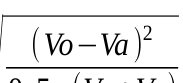
Traffic count data from the permanent Automated Traffic Count (ATC) sites within the study area were obtained for the period January 2006 to February 2009. Further data was provided for the area local to the Arkleston Bridge Strengthening Works for the remainder of 2009. In order to establish the impact of the roadworks on traffic conditions, speeds from the ATC sites in the locality of the works were provided in addition to the count data. The traffic counts showed that flows decreased significantly during the roadworks, most notably eastbound in the AM peak hour and westbound in the PM peak hour. The GEH statistic has been used for the comparisons. This was developed along with the acceptability guidelines specified in the Design Manual for Roads and Bridges (DMRB, Highways Agency, 2004) specifically for the comparison of hourly modelled and observed flows. Both relative and absolute differences are taken into account when calculating the GEH value as follows:
Equation reproduced from the original PDF.
Where Vo = Observed Traffic Flow and Va = Assigned Traffic Flow The DMRB suggests that a GEH value of less than five represents a satisfactory match between modelled and observed traffic flows. It can be noted that lower flows are observed on the westbound carriageway in the AM peak hour and the eastbound carriageway in the PM peak hour. In these scenarios the flow comparisons are generally good, with the GEH values representing a satisfactory match between modelled and observed scenarios. The highest flows are observed on the eastbound carriageway in the AM peak hour, and the westbound carriageway in the PM peak hour. The comparison of modelled and observed flows is poor for these critical flows. The modelled flows are generally much higher than the observed flows, for example the flow on the M8 Eastbound approaching J28 in the AM peak hour is around 1300 vehicles too high, resulting in a GEH value of 23.3. In other words, at critical times of day the model is predicting that more traffic will pass through the roadworks than is actually the case.
Is the discrepancy between modeled and observed flows, and the associated driver behaviour, typical? According to the Highway Capacity Manual (2004) the average capacity reduction in traffic flow with two lanes open from a total of three is 25%. The observed data from the Arkleston Bridge Strengthening Case Study shows an average capacity reduction of 21.75% with two lanes opened from a total of three. This similarity suggests that the impact on traffic flow of the TM is typical of the impact in other location. More importantly, current modeling approach does is not sufficiently represent the driver behaviour which gives rise to this observable loss of approximately an extra lane of capacity.
Driver Behaviour in a Traffic Management Situation When faced with a TM situation in which traffic is expected to merge into a reduced number of lanes, the simplest manifestation of transportation engineering theory will predict the following: the available lanes will become fully occupied on an ‘All Or Nothing’ (AON) basis with individual drivers choosing to travel in the lane that offers the optimum utility with respect to travel time and cost. Parameters such as travel time change rapidly in response to live travel conditions and, according to the rubric of AON, so will driver behaviour. The individual driver, faced with a choice of lanes to travel in, will choose a different lane whenever the travel time (or other cost variable(s)) of remaining where they are become exceeded, and will continue to change lanes as long as cost is optimised. By these simple means the traffic stream will organise itself such that all available lanes will become maximally loaded. As the data in the previous section indicates, this is not the case in practice. The effects observed in real-life situations are non-linear and strongly hint at other, more complex processes being in play. A simple approach to driver behaviour at road works does not take account of:
The fact that drivers do not have complete information on cost variables such that they can make an optimum decision (e.g. Dogan, Steg & Delhomme, 2011)
Even if they did have complete information, an optimum decision at an individual level will be guided by other motivations and objectives, and may not be optimal from a transportation engineering perspective (e.g. Sivak, 2002)
The TM situation represents a change in the perceptual environment and this, in turn, interacts with driver’s expectations, allocation of attention and decisions about expected and required behaviour
Driver behaviour at the collective level of the total traffic stream affects how individual drivers will behave
Behaviours taking place in a TM situation are culturally embedded (i.e. cars that are arranged in a line are in a queue and there are expected norms and standards of behaviour governing how people ‘should’ queue)
The following sections provide an initial exploration of these issues.
Unwritten Rules of the Road In addition to economic factors such as cost and utility, driver behaviour is also governed by so called ‘norms’ or collective expectations “that define the boundaries of appropriate social behaviour in particular settings” (Antony, Manstead & Semin, 1996). Collective similarities in driver behaviour are well established in the scientific literature: for example, sounding the horn to communicate annoyance to other road users is more prevalent in Greece and Turkey than it is in Finland and Sweden (Warner et al., 2011), while lesser or fewer ‘aggressive violations’ are performed by Finnish, British and Dutch drivers compared to those in Iran (Lajunen, Parker & Summala, 2004). The wider collection of norms that help to define the boundaries of social behaviour in all its aspects is referred to as culture. Culture is formally defined as: “The system of information that codes the manner in which [drivers] in an organised group [traffic stream] interact with [other drivers] and [the road] environment” (Reber, 1995, p. 177). Culture is important in a Transportation Engineering context because it is linked to behaviour (e.g. Elliott, Armitage & Baughan, 2005; Ozkan et al., 2006). The dominant model that describes this culture-behaviour relationship is the Theory of Planned Behaviour (Azjen, 1991).
Under the Theory of Planned Behaviour the main determinant of actual driver behaviour is an intention to perform it, for example, “I am going to move into the inside lane at the earliest opportunity”. Of course, drivers do not perform every behaviour they intend to perform because of the modifying influence of other factors. The first of these modifications takes place when the intention to perform a behaviour is subject to a negative or positive evaluation, or in other words, the driver’s attitude towards it. Attitudes are informed by beliefs and expectations that certain positive or negative outcomes will arise in the future, so for example, “if I get into lane one early I won’t get stranded in the outside lanes”. These beliefs, in turn, are further modified by the driver’s assessment of whether the intended behaviour corresponds to acceptable behaviour norms in the eyes of other people: “if I don’t get into lane one early then I will invite a lot of unwanted attention and aggression from other drivers, who will think I am trying to push-in”. A critical point is that expectations of negative emotions (such as unwanted attention/aggression from other motorists) have a significantly adverse effect on whether a behaviour is performed, often despite ‘objective’ evidence to the contrary such as explicit instructions to ‘use both lanes’ or ‘merge in turn’.
The Theory of Planned Behaviour has been used in several transportation contexts (e.g. Elliot, Armitage & Baughan, 2005; Palat & Delhomme, 2012; Paris & Van den Broucke, 2008 etc.) and is premised on the idea that in order to change behaviours a worthwhile strategy is to understand the underlying beliefs and target them (rather than the behavior itself). Analysis of these underlying beliefs is typically accessed via questionnaire and/or survey methods such as the Driving Style Questionnaire (French, Elander & West, 1993), Driver Behaviour Questionnaire (Lajunen & Summala, 2003) and others. This prior research can be usefully applied to the problem of TM in order to reveal underlying culture-belief-behaviour relationships and target them effectively.
The Effect of Other People in the Traffic Stream Addressing the issue of TM from a cultural perspective helps to foreground the role of driver’s beliefs in future states and the opinions of other people in the immediate traffic stream. Driving is clearly a ‘social’ activity that is performed in close proximity to, and to varying degrees in close cooperation with, other drivers (Fleiter, Lennon & Watson, 2010; Stradling, 2007). In motorway/freeway driving in particular, the presence of other drivers is very important. Research shows that in this setting a large component of driver situational awareness is devoted to the behaviour of other motorists (e.g. Walker, Stanton & Chowdhury, 2012; Engstrom, Johansson & Ostlund, 2005) and that drivers’ attention-level is closely related to their use of the rear view mirror (Pastor, Tajero & Roca, 2006). These effects do not occur noticeably on lesser-classes of road, thus the ‘social’ aspect of motorway/freeway driving is particularly marked.
If other motorist’s behaviour in this ‘social environment’ is important, then so are the expectations and beliefs about how those ‘other people’ view ‘your’ behaviour. How individual drivers present themselves to others has been shown to have an important inhibiting or amplifying effect on behaviour, to such an extent that it can be a more powerful determinate of driver behaviour than other environmental, engineering and even enforcement-based Human Aspects of Transportation I (2021) interventions (Havarneanu & Havarneau, 2012; Edwards, 1999). The effect of other people’s views on individual behaviours is referred to as conformity: “the tendency to allow one’s opinions, attitudes and actions and even perceptions to be affected by prevailing opinions, attitudes, actions and perceptions” (Reber, 1995, p. 152). Evidence for the effect of collective, conformity-based behaviours can be seen in numerous transport studies. Drivers behave differently approaching junctions when following, or being followed, by others; they tend to go faster and brake later (e.g. Sato & Akamatsu, 2007; Raney, 1999; Yousif & Al-Obaedi, 2011). In large traffic streams such as those found on congested motorways/freeways, the influence of surrounding traffic gives rise to inadequate speed adaptations in poor weather. In other words, drivers ‘feel under pressure from other drivers to keep up’ and do not slow down sufficiently when it is wet (Edwards, 1999; Brackstone, Sultan & McDonald, 2002; Brackstone, Waterson & McDonald, 2009). Numerous studies highlight this ‘social pressure from others’, whether actual or inferred (e.g. Fleiter, Lennon & Watson, 2010) and it is highly relevant to the problem of TM. Some forms of social pressure work in favourable inhibiting directions (e.g. people that the driver knows, such as passengers, tend to inhibit speed (Fleiter, Lennon & Watson, 2009); whilst in other situations, with ‘anonymous other drivers’, it has the reverse effect (e.g. early-merging in response to upcoming TM).
From a modelling perspective it has been observed that certain driver behaviours follow a form of ‘contagion’ model. Drivers tend to underestimate the speed of anonymous others (e.g. Walton & Bathurst, 1998; Redelmeier & Tibshirani, 1999), yet they wish to conform to what they perceive is the behavioural norm. Because drivers underestimate the speed of others they tend to increase their own speed too much in order to do this, which other drivers, who also want to conform to the behavioural norm, also underestimate, and so the entire traffic stream tends to speed up (Connolly & Aberg, 1993). Similar ‘contagion effects’ are evident for other driver behaviours, such as blocking late mergers from joining a queue.
At the root of contagion models of behaviour is the need to conform to what are perceived as acceptable standards of behaviour and to avoid the negative consequences of ‘social rejection’. In a transport context, social rejection would take the form of a breakdown in cooperative behaviours, with other drivers rejecting attempts to change lanes, demonstrating negative feelings, becoming aggressive and so forth. Social rejection also brings with it negative feelings of embarrassment, a mismanaged self-presentation in which other drivers will make ‘errors of attribution’. Attribution can be defined as, “a tendency of people observing the action of another to interpret those actions as a sign of or as resulting from an internal disposition or trait” (Reber, 1995, p. 68). Because of attribution, drivers will follow large trucks at shorter headways based on “a popular belief that truck drivers (being professionals and having their livelihood depend on their driving, or more accurately, their accident avoiding skills) are less likely to misjudge any situation, anticipating and ‘reading’ the road far earlier and more accurately than any car driver.” (Brackstone, Waterson & McDonald, 2008, p. 140). Further research shows the perceived status of the ‘horn honker’ (an attribution based on the vehicle being driven) determines the length and duration of the ‘honk’ (Doob & Gross, 1968), drivers of large four-wheel drive vehicles engage in different, sometimes more risky behaviours than drivers of ‘normal’ cars (e.g. Bener et al. 2008) and that there are age-related differences in skill (e.g. Borowsky, Oron- Gilad & Parmet, 2009), and so on.
Research on aggression has shown clearly that attribution errors, whereby behaviours are seen to refer to traits exhibited by certain ‘types’ of individuals, frequently lead to self-presentation failures and the elicitation of aggressive responses (e.g. Walters & Cooner, 2001). Drivers actively seek to avoid aversive emotions such as embarrassment or aggression (e.g. Schmidt-Daffy, 2013). To do this they seek to control the way other drivers perceive them by exhibiting some behaviours (i.e. conforming to what the rest of the traffic stream is doing) whilst suppressing others (i.e. ignoring instructions to do something different such as ‘late-merge’). This phenomenon, though not often captured when studying the role of human factors in driving behavior is certainly the case, as the need to project a particular ‘image of oneself’ through particular driving behaviours is undertaken to avoid failures in self presentation. This offers an explanation for the reluctance of drivers in TM situations to late-merge; they do not want to be perceived as ‘the type of driver’ who would do that which, in many countries, would be an ‘inconsiderate’ type of driver. Social Learning (Akers, 1998) provides an explanation for how large scale driving behaviours like these feedback into the wider ‘driving culture’, which themselves become norms and expected standards of behaviour for everyone in the traffic stream to conform to.
Driving Styles Another approach is to consider ‘decision making style’, or the “way individuals habitually approach decision problems and use information” (French et al., 1993, p. 627). A long standing research goal has been to extract ‘situationally independent’ measures of decision making style and to relate these to accident rates and other indicators of actual driver behaviour. Measures such as the Driving Style Questionnaire (DSQ; French et al., 1993) and Driver Behaviour Questionnaire (DBQ; Lajunen & Summala, 2003) have resulted from this research and in the course of their development numerous insights into population-wide driving style parameters have been revealed. The Driving Style Questionnaire (DSQ), for example, grants access to six behavioural parameters, (i.e. Speed, Calmness, Planning, Focus, Social resistance and Deviance), all of which correlate significantly with accident rates and behaviours. In a study of 711 UK drivers the extent to which these factors were present in the traffic stream is revealed. The findings for driving style, if they are assumed to hold for an entire traffic stream, suggest certain tendencies towards driving fast (rather than slowly) and fairly modest levels of social resistance (suggesting a tendency to be influenced by others). These, then, are ‘situationally independent’ indicators of decision making style that drivers bring with them to UK TM sites which, in turn, could be helpful in defining behaviour change strategies.
The approach to TM sites sees the various latent driver behaviour factors resident in the traffic stream become active. Driver’s situational awareness prepares them to take notice of what other traffic is doing, with norms and expected standards of behaviour encouraging some behaviours and inhibiting others. Driving style preferences towards greater (rather than lesser) speed influences the behaviour of other drivers, who ‘feel under pressure from others’ due to low levels of social resistance. Social norms that dictate acceptable behaviours in queuing situations also come into play with drivers trying to avoid ‘social exclusion’ and ‘attribution errors’. As a result, despite engineering interventions such as signs, and enforcement interventions such as speed cameras and police patrols, the typical situation is one where drivers move into a desired travel lane too early – the so-called ‘early merge’ phenomenon - thus reducing capacity and throughput significantly (as seen in the reported case study). This section provides psychological insights into why drivers do this.
Effects of Congestion TM typically creates congestion. This has the effect of changing an important facet of the driving environment; it places more ‘other drivers’ in closer proximity, thus activating powerful social processes which affect behaviour (e.g. Wang, Quddus & Ison, 2009). In addition, driver’s intentions to perform desired behaviours (according to the Theory of Planned Behaviour) are increasingly thwarted by the proximity of other vehicles and a more crowded road-space which, psychological theory informs us, leads to elevated levels of frustration within the traffic stream.
The ‘frustration-aggression’ hypothesis puts forward the idea that when drivers experience frustration they will exhibit aggression in the form of action aimed at harming another person (Hewstone, Stroebe & Stephenson, 1996; Dollard et al., 1939; Shinar, 1998). In the case of driving this spans the full range of aggressive acts, from refusing to allow another driver into a queue of traffic (Walters & Cooner, 2001) through to extreme acts of so-called ‘road rage’ (e.g. Joint, 1995). Anger and aggression in driving is common. When surveyed, in the region of 80-90% of drivers reported some form of aggressive behaviour, from sounding the horn through to chasing other drivers (e.g. Parker, Lajunen & Stradling, 1998; Underwood et al., 1999; Gonzalez-Iglesias, Gomez-Fraguela & Luengo-Martin, 2012).
Certain environmental conditions are required for particular aggressive acts, conditions that the congestion and queuing in advance of TM sites provides. The first of these is the effect of crowding. Evidence is mixed but it is clear that increased traffic densities lead to greater extents of thwarted behavioural intentions This has been shown in some studies to increase aggressive acts and/or behaviours related to exiting from the situation entirely (from late merging to revised travel plans; Baron & Richardson, 1994; Shinar, 1998). The second condition is referred to as ‘aversive arousal’ or the experience of negative emotions and the way this leads people to avoid or react to situations that give rise to them (e.g. Schmidt-Daffy, 2013). One of the principle ways in which congestion and queuing at TM sites gives rise to ‘aversive arousal’ is in respect to elevated levels of anxiety, some key reasons for which can be presented.
The Psychology of Queuing Drivers are notoriously intolerant of having their intention to ‘drive’ (or move forward towards their destination) thwarted, despite showing high levels of ‘wait tolerance’ in other settings (Maister, 2005). This gives rise to marked peculiarities in preferences, such as drivers preferring a more congested (i.e. slower) mainline flow than a longer wait at a ramp meter (Levinson et al., 2006; Wu, McDonald & Chatterjee, 2007), or considering approximately two minutes to be the maximum acceptable waiting time at railway level crossings, with 18% of drivers willing to drive around the barriers after 15 minutes (Ellinghuas & Steinbrecher, 2006). Studies reveal that congestion and queuing leads to particular sources of driver frustration/anxiety which are highly relevant to TM situations (Maister, 2005; Mann, 1970):
Occupied time feels shorter than unoccupied time: waiting in a traffic queue is ‘unoccupied time’ that cannot be easily filled with other useful or distracting activities. The perception of time is entirely subjective and influenced by emotional states such as frustration. An unoccupied wait in a traffic queue increases the onset of driver frustration and anxiety, an aversive emotional state that drivers will try to avoid.
Drivers want to get started: the early merge phenomenon leads to queues that are often longer than the overt signs of a TM site. This means that for waiting drivers the cause of the queue (i.e. the road works) is not evident and the experience of the TM site has not yet begun. Put another way, “pre-process waits are perceived as longer than in- process waits” (Maister, 2005, p. 4) meaning that waiting tolerance increases once drivers are actually ‘in’ the road works.
Anxiety makes waits seem longer: ‘choosing the right queue’ is a significant source of anxiety and a major factor in the early merge phenomenon. Drivers seek to avoid anxiety through a process of ‘anticipated regret’. They anticipate the negative consequences of late-merging and this serves as a disincentive to change their behaviour from an ‘early-merge’ strategy. This process is referred to specifically as ‘hyperbolic discounting’. Drivers are willing to accept a lesser reward that arrives more quickly (i.e. immediate reduced anxiety arising from early- merging) rather than a bigger reward that will happen later (i.e. potentially faster journey times, but more anxiety, through late-merging).
Uncertain waits are longer than known, finite waits: another significant source of anxiety is how long the wait will be, and evidence suggests that drivers prefer longer definite waiting times (i.e. “delay of ten minutes”) rather than vague queue information (i.e. “congestion ahead”). Creating an expectation, however, can be problematic when it is not met. Anxiety increases rapidly once the ten minutes of advertised wait time passes, for example.
Unexplained waits are longer than explained waits: anxiety and frustration levels will be reduced if drivers can be made to understand the causes of their delay. “The lack of an explanation is one of the prime factors adding to a [driver’s] uncertainty about the length of the wait” (Maister, 2005). Another key fact is simply that ‘waiting is demoralising’; waiting in ignorance more so. Indeed, an important source of frustration is a driver having their status as ‘a paying customer’ diminished, with aggressive behaviours often being an attempt to re-establish this status.
Unfair waits are longer than equitable waits: “The feeling that somebody has successfully ‘cut in front’ of you causes even the most patient customer to become furious” (Sasser, Olsen & Wycoff, 1979). This is a particular problem in motorway traffic streams. A powerful illusion is created by the fact that drivers spend more time being overtaken than they do overtaking, thus giving rise to the faulty perception that other travel lanes are moving faster even though the ‘average’ speed across lanes is approximately equal (Redelmeier & Tibshirani, 1999). The design principle to be extracted from this is that “whatever priority rules apply, the service provider must make vigorous efforts to ensure that these rules match the [driver’s] sense of equity, either by adjusting the rules or by actively convincing the [driver] that the rules are indeed appropriate” (Maister, 2005, p. 7).
The more valuable the ‘service’ the longer the driver will wait: drivers will find waiting for something of little value, such as permission to continue on what will likely be a similarly congested and unsatisfying journey, to be particularly intolerable (Maister, 2005). In other words, the subsequent level of service often has low value to drivers and this is often reflected in the strategies they will employ in recurring situations like this. Studies reveal, for example, that drivers faced with congestion “will progress from lower-cost, short-term strategies to higher-cost, longer-term ones as dissatisfaction persists or recurs (Raney, Mokhtarian & Salomon, 2000, p. 141). This offers some insight into anecdotal observations that ‘lane blocking behaviour’ only emerges later in time, in response to high-cost strategies such as late merging becoming more popular among the queuing traffic.
For the reasons discussed above, advice aimed at increasing the efficiency of TM zones will not always be followed. This is not to say that drivers are unaware of signs and instructions (e.g. Bai, Finger & Li, 2010; Horberry, Anderson & Regan, 2006; Beacher, Fontaine & Garber, 2004 etc.) more that these social psychological factors intervene to significantly attenuate the desired response (Havarneanu & Havarneanu, 2012; Long & Gentry, 2012).
Experiments in Early and Late Merging A number of studies have been performed to analyse the relative benefits of different merging strategies in advance of TM sites. These strategies are defined broadly as follows:
The Early Merge Strategy: This follows work performed by the Indiana Department of Transport and is a system which “encourages drivers to merge into the open lane sooner than they usually would and before arriving at the end of a queue” (Hossinger & Berger, 2012, p. 153). The rationale behind this strategy is that by organising the traffic stream well in advance of the lane-drop it avoids the problem of ‘disruptive flow’ caused by late merging, and the concomitant problems of accidents and driver frustration.
The Late Merge Strategy: This follows work performed by various other US Departments of Transport (notably Pennsylvania and Minnesota) and is a system which “encourages drivers to stay on the open or dropping lane until they reach the merge point” (Hossinger & Berger, 2012, p. 153). The rationale behind this strategy is that more of the available road space can be used for ‘queue storage’, reducing queue length and driver frustration.
Neither of these strategies are ideal in all circumstances, and it is important to note that the studies are based on US roads with the associated norms, driving styles and behaviours therein. The Early Merge strategy reduces the number of traffic conflicts but reduces capacity by approximately 5% (McCoy & Pesti, 2001). The Late Merge strategy is more effective at peak times, but there is evidence that in off peak times drivers arrive at the lane-drop more quickly (which is potentially hazardous) and that the strategy is affected by the number of heavy goods vehicles in the traffic stream. It is for this reason that Austrian studies have tested the feasibility of a ‘Dynamic Late Merge Concept’ in which the strategies switch; early-merge during off peak times and late-merge in congested conditions. The important point to note is that for the social psychological reasons above, their effects when applied to other contexts are far from assured.
CONCLUSIONS
The findings of this research identify the strong influence that social psychological factors have on driver behaviour. The research also shows that TM scenarios tend to increase the strength and likelihood of these factors occurring. None of this would be a concern were it not for the fact that it results in significantly different traffic conditions to those that are predicted. In effect, somewhere in the region of an extra lane of capacity is lost due to these ‘soft’ factors. With an increasingly pressing need to adequately model the effects of large scale maintenance interventions on ageing infrastructure, these effects have to be captured.
Creating microsimulation models which assume traffic responds to roadworks in the same way it responds to other ‘normal’ situations leads to inaccuracies in the model outputs. Modelled drivers do not differentiate between a TM layout and the same layout in ‘normal’ circumstances whereas drivers in real-life do make this distinction. It is important to understand how these modelled drivers do behave before considering ways to amend that behaviour in a TM scenario. The following modelling guidelines for achieving this can be put forward: Driver Responses to TM Signage
In the Clyde Strategic Microsimulation Model (CSMM), and others based on the same underlying software, each change in the network (e.g. a reduction in the number of lanes available to drivers) is projected upstream. The modeled drivers, therefore, become aware of a change and are able to react to it before they reach it. The distance a change can be projected upstream can be defined by the programmer. When a modeled driver becomes aware of a change in the network they make a decision about what they want to do. In the case of the Arkleston Bridge Strengthening Works, if a driver is in the outside lane and becomes aware that this lane will close further downstream they will decide to move into an open lane on the inside. In uncongested conditions this manoeuvre is relatively straightforward as there is plenty of road space for the driver to move into. In congested conditions a driver may be unable to find the road space which enables them to move to an inside line. This is when the critical difference between the modelled behaviour and observed behaviour during TM occurs. In the model, if the driver is unable to move from the outside lane to an inside lane they will carry on in the outside lane and continue to assess whether their desired manoeuvre is possible. This will last until the driver reaches the closed lane and has no choice but to move into an inside lane. In effect, then, the model leads to late merging behaviours which, due to the social psychological reasons dealt with in this paper, do not emerge in practice.
In real-life, as a result of the social psychological factors already discussed in this paper, a driver will tend to stop and wait for another driver in the inside lane to let them in, often much earlier than the merge point itself. This illustrates that the reason for the difference between observed and modelled driver behaviour is not primarily to do with a driver’s awareness of the TM (and therefore not primarily to do with the TM signage itself) but rather how a driver behaves in response to their awareness of the TM. The findings of the literature review, and the differences between the observed and modelled flows and speeds approaching the Arkleston Bridge Strengthening Works, both strongly suggest that in congested conditions drivers get into lane significantly in advance of any signs informing them of lane closures. In other words the awareness of the TM in congested conditions may come via the observed queue rather than the signage.
One way to represent this behaviour in the model would be to assume that drivers were aware of the roadworks before they reached the TM signage. This could be achieved in the microsimulation model by increasing the signposting distance beyond the distance specified in the TM design. This would result in drivers being aware of the TM earlier but would not necessarily result in a change in their behaviour (as it depends on the amount and proximity of other traffic).
Predetermining a Modelled Flow The findings of the literature review and the differences between the observed and modelled flows in the case study suggest that there is a correlation between the reduction in flow per lane and the reduction in the number of lanes as a result of TM. One approach to modelling would be to focus on the reduction in flow and use appropriate modelling techniques to represent this reduction. For example, a model could assume a flow reduction of 25% per lane and ensure that at the highest flows this reduction was achieved. This method, although crude, would not involve any further software development.
Amending Modelled Driver Behaviour The most robust approach to modelling driver behaviour at roadworks would be to robustly strongly represent the social psychological factors discussed in this paper. The impact of this in modelling terms would be, if a driver is unable to find the road space which enables them to move to an inside line they would wait for the opportunity to do so, rather than carry on in the outside lane and continue to assess whether their desired manoeuvre is possible. In future it may also be possible to apply different levels of ‘social resistance’, ‘queuing norms’ and other features, depending upon the region the model is representing.
This coupling of theoretical knowledge to practical modeling tools is more achievable than it might first appear, as this review has aimed to demonstrate. The potential payoff for the modeling community is a much better understanding of how these ‘soft’ factors propagate through the system as a whole, and moreover, how to turn them into an advantage. One line of enquiry which is not expressed in the early and late merging experiments would be to focus attention on the causes of driver behaviour (the social psychological factors) rather than the symptoms (the behaviour itself). Is it possible to influence a driver’s attitudes or beliefs and therefore the behavioural outcome? If so, it could enable more maintenance to be performed, more quickly, with reduced impacts on the wider network, Human Aspects of Transportation I (2021) and with reduced costs. In effect, a Human Factors perspective could, in a very real sense, help to regain the lost lane of capacity resulting from real-world driver behaviour.
ACKNOWLEDGEMENTS
The work reported in this paper was funded by the Scottish Road Research Board (SRRB).
REFERENCES
Allpress, J.A., & Leland, L.S. (2010). Reducing traffic speed within roadwork sites using obtrusive perceptual countermeasures.
Accident; analysis and prevention, 42(2), 377–83. Bai, Y., Finger, K., & Li, Y. (2010). Analyzing motorists’ responses to temporary signage in highway work zones. Safety Science, 48(2), 215–221. Beacher, A. G., Fontaine, M. D. & Garber, N. J. (2004). Evaluation of the late merge work zone traffic control strategy.
Charlottesville, VA: Virginia Transportation Research Council. Beacher, A., Fontaine, M., & Garber, N. (2004). Evaluation of the late merge work zone traffic control strategy. Report VTRC- 05-R6 Virginia Transportation Council, (August). Bener, A., Al Maadid, M. G. a., Özkan, T., Al-Bast, D. a. E., Diyab, K. N., & Lajunen, T. (2008). The impact of four-wheel drive
on risky driver behaviours and road traffic accidents. Transportation Research Part F: Traffic Psychology and Behaviour, 11(5), 324–333. Bernhardt, K.L.S., M.R. Virkler, and N.M. Shaik (2001). Evaluation of Supplementary Traffic Control Measures for Freeway Work-zone Approaches. Paper presented at the 80th Annual Meeting of the Transportation Research Board, Washington, D.C. Borowsky, A., Oron-Gilad, T., & Parmet, Y. (2009). Age and skill differences in classifying hazardous traffic scenes.
Transportation Research Part F: Traffic Psychology and Behaviour, 12(4), 277–287. Brackstone, M., Sultan, B., & McDonald, M. (2002). Motorway driver behaviour: studies on car following. Transportation Research Part F: Traffic Psychology and Behaviour, 5(1), 31–46. Brackstone, M., Waterson, B., & McDonald, M. (2009). Determinants of following headway in congested traffic. Transportation
Research Part F: Traffic Psychology and Behaviour, 12(2), 131–142. Highways Agency (2004). Design Manual for Roads and Bridges. London: Highways Agency. Dogan, E., Steg, L., & Delhomme, P. (2011). The influence of multiple goals on driving behavior: the case of safety, time saving, and fuel saving. Accident; analysis and prevention, 43(5), 1635–43. Doob, A. N., & Gross, A. E. (1968). Status of frustrator as an inhibitor of horn-honking responses. The Journal of Social
Psychology, 76, 213-218. Edwards, J. (1999). Speed adjustment of motorway commuter traffic to inclement weather. Transportation Research Part F: Traffic Psychology and Behaviour, 2 (1), 1-14. Elliott, M.A., Armitage, C.J., & Baughan, C.J. (2005). Exploring the beliefs underpinning drivers’ intentions to comply with
speed limits. Transportation Research Part F: Traffic Psychology and Behaviour, 8(6), 459–479. Engström, J., Johansson, E., & Östlund, J. (2005). Effects of visual and cognitive load in real and simulated motorway driving.
Transportation Research Part F: Traffic Psychology and Behaviour, 8(2), 97–120. Fleiter, J. J., Lennon, A., & Watson, B. (2010). How do other people influence your driving speed? Exploring the “who” and the “how” of social influences on speeding from a qualitative perspective. Transportation Research Part F: Traffic Psychology and Behaviour, 13(1), 49–62. French, D. J., West, R. J., Elander, J. & Wilding, J. M. (1993). Decision-making style, driving style, and self-reported
involvement in road traffic accidents. Ergonomics, 36(6), 627-644. González-Iglesias, B., Gómez-Fraguela, J.A., & Luengo-Martín, M.Á. (2012). Driving anger and traffic violations: Gender differences. Transportation Research Part F: Traffic Psychology and Behaviour, 15(4), 404–412. Havârneanu, G.M., & Havârneanu, C.E. (2012). When norms turn perverse: Contextual irrationality vs. rational traffic violations.
Transportation Research Part F: Traffic Psychology and Behaviour, 15(2), 144–151. Heaslip, K. & Collura, J. (2009). Evaluation of Work-Zone Design Features to Aid Older Drivers. Transportation Research Board 88th Annual Meeting, January 11-15, 2009, 36–41. Retrieved from http://trid.trb.org/view.aspx?id=881575 Highways Agency. (2009). Network Maintenance Manual. Retrieved January 16, 2012, from
http://www.dft.gov.uk/ha/standards/nmm_rwsc/index.htm Horberry, T., Anderson, J., & Regan, M. a. (2006). The possible safety benefits of enhanced road markings: A driving simulator evaluation. Transportation Research Part F: Traffic Psychology and Behaviour, 9(1), 77–87. Hössinger, R., & Berger, W. J. (2012). Comprehension of new instructions for car drivers in merging areas. Transportation
Research Part F: Traffic Psychology and Behaviour, 15(2), 152–161. Huang, Q., & Shi, J. (2008). Optimizing work zones for two-lane urban road maintenance projects. Tsinghua Science & Technology, 13(5), 644–650. Jin, T.G., Saito, M., & Eggett, D.L. (2008). Statistical comparisons of the crash characteristics on highways between construction time and non-construction time. Accident; analysis and prevention, 40(6), 2015–23. Khattak, A.J., Khattak, A.J., & Council, F.M. (2002). Effects of work zone presence on injury and non-injury crashes. Accident; analysis and prevention, 34(1), 19–29. Lajunen, T., Parker, D., & Summala, H. (1999). Does traffic congestion increase driver aggression? Transportation Research
Part F: Traffic Psychology and Behaviour, 2, 225–236. Lee, H.-Y. (2009). Optimizing schedule for improving the traffic impact of work zone on roads. Automation in Construction, 18(8), 1034–1044. Lepert, P., & Brillet, F. (2009). The overall effects of road works on global warming gas emissions. Transportation Research Part
D: Transport and Environment, 14(8), 576–584. Levinson, D., Harder, K., Bloomfield, J., & Carlson, K. (2006). Waiting tolerance: Ramp delay vs. freeway congestion.
Transportation Research Part F: Traffic Psychology and Behaviour, 9(1), 1–13. Li, Y., & Bai, Y. (2008). Development of crash-severity-index models for the measurement of work zone risk levels. Accident; analysis and prevention, 40(5), 1724–31. Long, S., Gentry, L., & Bham, G.H. (2012). Driver perceptions and sources of user dissatisfaction in the implementation of
variable speed limit systems. Transport Policy, 23, 1–7. Mann, L. (1970). The psychology of waiting lines. American Scientist, 58, 390-398 McCoy, P.T., and G. Pesti (2000). Dynamic Late Merge Control Concept for Work Zones on Rural Interstate Highways. Paper presented at the 80th Annual Meeting of the Transportation Research Board, Washington, D.C. McCoy, P.T., G. Pesti, and P.S. Byrd (1999). Alternative Information to Alleviate Work Zone-Related Delays. SPR-PL-
1(35)P513. University of Nebraska, Lincoln. Morgan, J. F., Duley, A. R., & Hancock, P. A. (2010). Driver responses to differing urban work zone configurations. Accident; analysis and prevention, 42(3), 978–85. Özkan, T., Lajunen, T., Chliaoutakis, J. E., Parker, D., & Summala, H. (2006). Cross-cultural differences in driving behaviours:
A comparison of six countries. Transportation Research Part F: Traffic Psychology and Behaviour, 9(3), 227–242. Palat, B., & Delhomme, P. (2012). What factors can predict why drivers go through yellow traffic lights? An approach based on an extended Theory of Planned Behavior. Safety Science, 50(3), 408–417. Paris, H., and Van den Broucke, S. (2008). Measuring cognitive determinants of speeding: An application of the theory of
planned behaviour. Transportation Research Part F: Traffic Psychology and Behaviour, 11(3), 168–180. Pastor, G., Tejero, P., Chóliz, M., & Roca, J. (2006). Rear-view mirror use, driver alertness and road type: An empirical study using EEG measures. Transportation Research Part F: Traffic Psychology and Behaviour, 9(4), 286–297. Raney, E. A., Mokhtarian, P.L., & Salomon, I. (2000). Modeling individuals’ consideration of strategies to cope with congestion.
Transportation Research Part F: Traffic Psychology and Behaviour, 3(3), 141–165. Ranney, T. (1999). Psychological factors that influence car-following and car-following model development. Transportation Research Part F: Traffic Psychology and Behaviour, 2, 213–219. Redelmeier, D.A, & Tibshirani, R.J. (1999). Why cars in the next lane seem to go faster. Nature, 401(6748), 35. Sato, T., & Akamatsu, M. (2007). Influence of traffic conditions on driver behavior before making a right turn at an intersection:
Analysis of driver behavior based on measured data on an actual road. Transportation Research Part F: Traffic Psychology and Behaviour, 10(5), 397–413. Schmidt-Daffy, M. (2013). Fear and anxiety while driving: Differential impact of task demands, speed and motivation.
Transportation Research Part F: Traffic Psychology and Behaviour, 16, 14–28. Sivak, M. (2002). How common sense fails us on the road: contribution of bounded rationality to the annual worldwide toll of one million traffic fatalities. Transportation Research Part F: Traffic Psychology and Behaviour, 5(4), 259–269. Sorock, G.S., Ranney, T.A, & Lehto, M.R. (1996). Motor vehicle crashes in roadway construction work zones: an analysis using
narrative text from insurance claims. Accident; analysis and prevention, 28(1), 131–8. Tarko, A., and S. Venugopal (2001). Safety and Capacity Evaluation of the Indiana Lane Merge System. FHWA/IN/JTRP- 2000/19. Purdue University, West Lafayette, Ind. Transportation Research Board (2000). Highway Capacity Manual 2000. Washington, D.C. Walters, C.H., and S.A. Cooner (2001). Understanding Road Rage: Evaluation of Promising Mitigation Measures. Report 4945-
2. Texas Transportation Institute, College Station. Wang, C., Quddus, M.A, & Ison, S.G. (2009). Impact of traffic congestion on road accidents: a spatial analysis of the M25 motorway in England. Accident; analysis and prevention, 41(4), 798–808. Warner, H. W., Özkan, T., Lajunen, T., & Tzamalouka, G. (2011). Cross-cultural comparison of drivers’ tendency to commit
different aberrant driving behaviours. Transportation Research Part F: Traffic Psychology and Behaviour, 14(5), 390–399. Weng, J., & Meng, Q. (2011). Analysis of driver casualty risk for different work zone types. Accident; analysis and prevention, 43(5), 1811–7. Weng, J., & Meng, Q. (2012). Effects of environment, vehicle and driver characteristics on risky driving behavior at work zones.
Safety Science, 50(4), 1034–1042. Whitmire, J., Morgan, J. F., Oron-Gilad, T., & Hancock, P. A. (2011). The effect of in-vehicle warning systems on speed compliance in work zones. Transportation Research Part F: Traffic Psychology and Behaviour, 14(5), 331–340. Woods, S. (Oct, 2012). Traffic microsimulation – dispelling the myths. Traffic Engineering and Control. London: Hemming
Group Wu, J., McDonald, M., & Chatterjee, K. (2007). A detailed evaluation of ramp metering impacts on driver behaviour.
Transportation Research Part F: Traffic Psychology and Behaviour, 10(1), 61–75.
Yousif, S., & Al-Obaedi, J. (2011). Close following behavior: Testing visual angle car following models using various sets of data. Transportation Research Part F: Traffic Psychology and Behaviour, 14(2), 96–110. Zhang, K., Batterman, S., & Dion, F. (2011). Vehicle emissions in congestion: Comparison of work zone, rush hour and free-
Advances in Human Aspects of Transportation: Part I
Read this individual research paper free through the original publisher, or explore the full digital proceedings book.
ISBN 978-1-4951-2097-8
Explore this ISBN in the AHFE Bookstore ↗Listed in the July 2026 bookstore catalogue; search by ISBN to confirm current availability · Digital book purchase optional