Allison Urbina-Tapia, Vanessa Acevedo-Quiroz, Gino Viacava-Campos, Juan Peñafiel-Carrera (2021). Model based on Lean Service to optimize the level of service in a Peruvian MYPE importer and marketer of medical equipment. In: Human Systems Engineering and Design (IHSED2021): Future Trends and Applications. AHFE Open Access, vol. 21. https://doi.org/10.54941/ahfe1001186
The low level of service is a problem that affects MYPEs from various sec-tors in Latin America, revealing the existing technical gap compared to other developed countries. This causes various losses that affect profit and increase operating costs. That is why this study analyzes the level of service of the corrective maintenance process of a medical equipment marketer MYPE, currently being 64.4%. It was detected that it was at non-conforming levels due to reprocesses and delays within the corrective maintenance process. Based on the results of the analysis, the application of a continuous improvement model was proposed, based on Lean tools and Inventory Management principles, being validated by a pilot test. Within the final measure-ments, a considerable reduction of the aforementioned problems was obtained, generating an increase in the level of service up to 90%.
Human Systems Engineering and Design (IHSED 2021) https://openaccess.cms-conferences.org/#/publications/book/978-1-7923-8987-0
INTRODUCTION
The service sector has become an important driver for economies worldwide. In Europe, this activity represents 70% of GDP, and the United States manages to exceed 80% (Andres-López and Palacios, R., 2020). In Peru, trade in services is mainly subdivided into three economic activities: wholesale trade, retail trade, repair of machinery and vehicles, the latter being the one that experienced the highest economic growth, 3.5% compared to the previous quarter. , due to the tenders referred to medical equipment for the strengthening of health facilities nationwide in the current situation of COVID-19, hoping to continue this upward trend in the following quarters (INEI, 2020).
Linked to the sale of equipment or machinery is the repair service, which is mainly responsible for ensuring the operation of the asset once it has been ac-quired by the customer. This process is considered key for brand loyalty, since 40% of customers will prefer to buy from the competition due to a better treatment in their after-sales service (Hueffiner, 2020). Due to this, brands of great international recognition, such as KIA or Toyota, require their mechanical workshops to maintain a high level of demand and compliance with their customers, known as the level of service. The international standard in first world countries for the level of service has, as a minimum, 85% compliance. However, within Latin American technical service workshops an average of 75% compliance is estimated (Pasapera-v, 2018), causing customer dissatisfaction, and various losses, due to inadequate execution of the technical service (Valenzuela, Estocalenko, Rojas and Raymundo, 2019). This problem has been addressed in previous studies, such as the search engine for added value and customer focus (Valenzuela et al., 2019; Cueto, Caldas and Viacava, 2020; Smith, Paton and MacBryde, 2018; Vilarinho, Lopes and Sousa, 2018), generally associated with the concepts of continuous improvement and principles of philosophy. Read.
Although Lean models have been applied previously in technical service workshops within the Peruvian market (Andres-López and R. Palacios, 2020; Caparachín Flores and Santa Cruz Tineo, 2020), the application of said tools has not been evidenced in a technical service workshop dedicated to the repair of medical equipment. Therefore, this research focuses on the analysis of a case study of said business sector and the evaluation of the results found. In addition, in the following sections, the proposed model for optimizing the level of service in the technical service workshop will be explained in detail. Finally, the contribution will be described and the effectiveness of the proposed model will be dis-cussed through the results obtained.
Human Systems Engineering and Design (IHSED 2021) https://openaccess.cms-conferences.org/#/publications/book/978-1-7923-8987-0
STATE OF THE ART Lean service
Lean Service is called a branch present within the Lean philosophy oriented towards the service sector, with the main objective of improving the quality of the services provided and increasing the effectiveness within the operations. The companies belonging to this sector implement this philosophy in order to analyze and obtain opportunities to improve the process with greater repercussion within the sector, generally said process being service delivery. The corresponding tools are applied to this, aiming to completely reduce waste to optimize and improve the process (Caparachín Flores and Santa Cruz Tineo, 2020). However, there are companies that cannot replicate the improvements provided by the implementation of the Lean Service methodology due to certain barriers that occur during the application. The most redundant and main barriers to implementation are associated with inadequate management, leadership, lack of commitment and lack of communication with operators, which significantly limit success during implementation and subsequent results ( Chang, Jang, Li and Kim, 2017).
Optimization of workspaces Philosophy presents different tools that eradicate certain problems within a process under study. One of the main ones, the 5s tool, is used more frequently for problems related to clutter, long waiting times and delays. 5s is considered a dominant and fruitful technique within the Lean philosophy, since its implementation provides optimal results such as reducing waste and optimizing time in study processes (Khan, Kaviani, Galli and Ishtiaq, 2019; Rosso, 2017). Another tool that facilitates the introduction and development of improvement methodologies is Visual Management. It is considered a low-cost method applied in companies to obtain better control of operations through the use of visual boards and cards. The use of visual objects helps improve operational flow by making work actions visible. Likewise, this can be evidenced in a case study where a reduction in the verification time of the tools was generated by 87.5% and the confusion of the pieces decreased by 80%, giving positive results in job performance (Khan et al., 2019; Todorovic and Cupic, 2017).
Standarization of the work method and quality inspection The literature recommends the tool standardization of work (SW) as a method used to improve the cycle times of a process and productivity. Its main purpose is that operations are unified and staff can perform equal work, following the ap-plied procedures as a reference. Within the tools of the Lean philosophy, work
Human Systems Engineering and Design (IHSED 2021) https://openaccess.cms-conferences.org/#/publications/book/978-1-7923-8987-0 standardization is considered a basic technique to eradicate problems related to reprocessing. However, it is also evidenced that the application generates positive consequences such as the reduction of value-added activities by 50% and non-value- added activities for both the process and the client by 62.5%, generating a reduction in the total cycle time (Braglia, Castellano, Gallo, and Romagnoli, 2019; Mahendrawathi, Hanggara and Astuti, 2019). Another technique associated with eliminating rework is inspection systems, which help to stop and detect recurring problems within the processes, this is done with the use of the tool called Jidoka. This technique is defined as a system that detects errors in a given process as a problem detection system used to prevent defective units (Al Owad, Samaranayake, Karim and Ahsan, 2018). However, the applied principles of the technique also refer to the concept of autodetection of defects, that is, the operators themselves can stop the process when an error is detected so that the defects can be rectified before continuing with the following activities (Srisuk and Tippayawong, 2020).
INPUT Overview
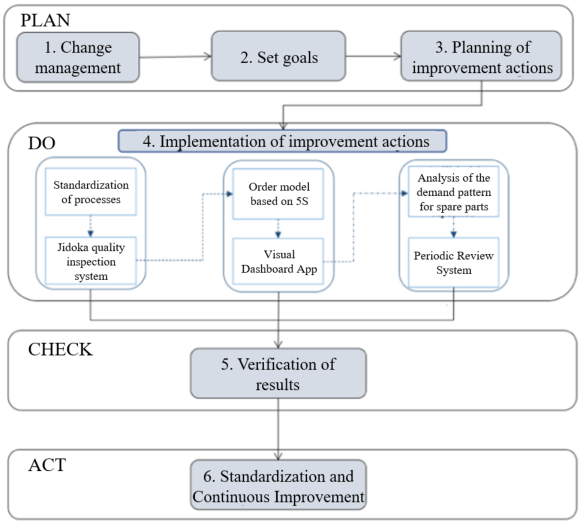
Figure 1. Design of improvement proposal
Human Systems Engineering and Design (IHSED 2021) https://openaccess.cms-conferences.org/#/publications/book/978-1-7923-8987-0
The research has a contribution that is based on an improvement model based on Lean Service tools, the main objective of which is to optimize the level of after-sales service within MYPES companies. The design of the proposal has 06 com-ponents that are developed based on the principles of the Lean Service philosophy and each of them is applied in order to reduce the re-entry rate and decrease the cycle time of the process to comply with the programming assigned.
Specific view To better understand the development of each component mentioned in the model, each one of them will be described.
Change management. This component encompasses the entire research proposal, since it is considered the basis for developing the other components that the model has. This technique is defined as an improvement process that communicates the need for change through various aspects (Rosin, Forget, Lamouri and Pellerin, 2020). The development of change management is carried out in a series of stages, listed below:
Definition of the work team
Create company vision.
Communication and integration meetings
Approach to measurement milestones The application of these stages is intended to generate the commitment of the collaborators and that they understand the future changes to be implemented.
Space optimization. The development of this component is focused on the principles of the first two S, that is, Seiri and Seiton of the 5s model, whose main objective is to order and clean the work areas. For the development of this component, an initial audit was first carried out, where the results that consisted of 16 questions and the results were negative. Based on this, it was proposed to apply the first "S" - select, where a "quarantine" sector is defined within the work area where objects that are obsolete or unusable are stored in that place. Also, to complement the selection of objects, red cards are used, which will have the same objective as putting an object in the quarantine sector. After this, the second "S" -order comes into action with definition of specific sectors for the storage of tools, work areas, storage of stationery and formats, circulation corridors and warehouse (Mau, Ramos, Llontop and Raymundo, 2019; Rosso, 2017).
Periodic Review System. The objective of the component is to control the spare parts inventory levels, for this first an ABC analysis of the spare parts was carried out based on the demand they have in a certain period of time. With this information, the area that presents greater detail and importance in the warehouse is selected, that is, area A. Based on this, the average review time of each item belonging to the selected area and the minimum security stock that it must be taken into consideration so as not to generate future shortages (Huq, Egilmez, Chatha and Bhutta, (2017; Ishak, Johari and
Human Systems Engineering and Design (IHSED 2021) https://openaccess.cms-conferences.org/#/publications/book/978-1-7923-8987-0
Dolah, 2018).
Standardization of the working method. This dimension is the tool most used by the Lean philosophy, since this component provides positive results such as time reduction and analysis of the process under study (Braglia at al., 2019; Mahendrawathi et al., 2019). For the application of this component, the following stages were taken into account:
Identification of the process under study
Process documentation
VA-NVA value analysis
Generation of improvement opportunities
Implementation of procedures and formats View indicators The evaluation and measurement of the research improvement is carried out based on certain measurement indicators that help to compare the current situation and after its implementation, in order to analyze whether the results generated are positive.
Table 1: Proposed measurement indicators
Table available in the original PDF paper.
Associated component Indicator Formula As Is Order model Program compliance
Human Systems Engineering and Design (IHSED 2021) https://openaccess.cms-conferences.org/#/publications/book/978-1-7923-8987-0
VALIDATION Case study
The company on which this study has been developed is a MYPE that is dedicated to the commercialization and importation of rehabilitation medical equipment. For confidentiality reasons, we will refer to it as company “A”, which currently has a headquarters in the city of Lima, Peru. As it is an official brand representative, the “A” technical service workshop is obliged to comply with a certain level of regulation. It has been recorded that the current service level is around 64.4%, the expected service level being at least 90%, revealing a technical gap; being reflected in the increase in operating costs. Based on the detected problem, the idea of making an improvement proposal was born and according to initial investigations it was concluded that the causes that affect the problem are readmissions (31.09%) and delays in the corrective maintenance process (68.01%).
Validation method The validation methods were selected according to the type of component that the presented model has. In the first place, it is proposed to carry out a pilot test to the components associated with: Work standardization, Quality control system based on Jidoka, 5s and finally Visual Control. However, for the periodic review system, a simulation will be carried out in the Arena software based on collected data and variables that support the model under management.
Results
After the implementation of the pilot test and the simulation in the Arena software, the calculation of the measurement indicators of each component was carried out in a corresponding manner, giving the following values as results:
Table 2: Result of the indicators
Table available in the original PDF paper.
Associated component Indicator Initial Projected Real Difference Order model Program compliance based on 5s level 75.42% 90.00% 75.42% 75.42%
Standardization of work Readmission rate 14.26% 7.00% 5.41% -8.85% Percentage of
Visual control fulfillment of
60.78% 85.00% 76.89% 16.11%
assignments Standardization Service level in the of work repair process 64.40% 90.00% 89.19% 24.79%
Visual control Rate of repairs delivered on time 78.31% 90.00% 81.08% 2.77%
Human Systems Engineering and Design (IHSED 2021) https://openaccess.cms-conferences.org/#/publications/book/978-1-7923-8987-0
It can be seen that in general positive results were obtained in the measurement of all components. However, the initial objective set out in the 5s components, visual control and work standardization was not achieved. Another important aspect to highlight was that the total cycle time after the execution of the pilot test managed to reach 27 HH, since the cycle time of the diagnostic process of the corrective maintenance process was reduced by 8.07 hours, which is currently from 19.25 hours. This was achieved because with the application of the tech-niques of the proposed model it was possible to optimize the place and work method.
CONCLUSIONS
The results of the pilot test demonstrate the utility of the proposed model conclu- sively, achieving increasing production capacity by 10.49% and reducing the cost per machine stop by $ 86,990.80. In this way, an increase of 5.17% in the OEE of the line was obtained, a value that is close to the average increase of 6% made in past investigations, despite the limitations established for the pilot test. However, it is important to note that the company where the validation was de-veloped has an efficient operating structure and a large market share in its sector, so financing, data collection and the adoption of improvements within the pro-cesses they were carried out in an agile way. On the other hand, it is important to note that the estimated budget for the full implementation of the model was $ 22,112.75, a value that due to the limitations of the pilot test was reduced to $ 2,432.70. From this economic variation, we can conclude that the largest propor-tion of the initial cost was due to the cost of operator training. It is for this reason that we recommend evaluating internal training options in order to reduce the overall budget of the model.
REFERENCES
Al Owad, A., Samaranayake, P., Karim, A. and Ahsan, K. B. (2018). “An integrated lean methodology for improving patient flow in an emergency department–case study of a Saudi Arabian hospital,” Prod. Plan. Control, vol. 29, no. 13, pp. 1058–1081. Andres-López and Palacios, R. (2020). “Propuesta de mejora de procesos en un taller
de reparación de equipos de acuerdo a la metodología lean service,”. Braglia, M., Castellano, D., Gallo, M. and Romagnoli, G. (2019). “A visual planning solution to streamline the processes of hybrid cross-dockings,” Prod. Plan. Control, vol. 30, no. 1, pp. 33–47. Caparachín Flores, F. de M. and Santa Cruz Tineo, E. (2020). Propuesta para mejorar
la eficiencia en el servicio de reparación de averías de vehículos ligeros del
Human Systems Engineering and Design (IHSED 2021) https://openaccess.cms-conferences.org/#/publications/book/978-1-7923-8987-0 sector automo-triz , utilizando herramientas Lean Manufacturing. Lima: Universidad Peruana de Cien-cias Aplicadas (UPC). Chang, M., Jang, H. B., Li, Y. M. and Kim, D. (2017), “The relationship between the efficiency, service quality and customer satisfaction for state-owned commercial Banks in China,” Sustain., vol. 9, no. 12, pp. 1–15. Cueto, G., Caldas, Y. and Viacava, G. (2020). Waste Reduction Model in a Small
Cloth-ing Company-Umbrella Model. Springer International Publishing. Hueffiner. E. (2020, April 17). Zendesk "What is Customer Experience?". [Online].
Disponible en: https://www.zendesk.com/blog/why-companies-should-invest- in-the-customer-experience/ Huq, F., Egilmez, G., Chatha, K. A. and Bhutta, M. K. S. (2017). “Survey of Lean man-agement practices in Pakistani industrial sectors,” Int. J. Serv. Oper. Manag., vol. 28, no. 3, p. 309. Ishak, F. A., Johari, M. K. and Dolah, R. (2018). “A case study of LEAN application
for shortest lead time in composite repair shop,” Int. J. Eng. Technol., vol. 7, no. 4, pp. 112–119. Instituto Nacional de Estadística e Informática (INEI). (2020) "Encuesta Mensual del Sector Servicios". Khan, S. A., Kaviani, M. A., Galli, B. J. and Ishtiaq, P. (2019). “Application of
continu-ous improvement techniques to improve organization performance: A case study,” Int. J. Lean Six Sigma, vol. 10, no. 2, pp. 542–565. Mahendrawathi, E. R, Hanggara, B. T. and Astuti, H. M. (2019). “Model for BPM im-plementation assessment: evidence from companies in Indonesia,” Bus. Process Manag. J., vol. 25, no. 5, pp. 825–859. Mau, M., Ramos, R., Llontop, J. and Raymundo, C. (2019). “Lean manufacturing
pro-duction management model to increase the efficiency of the production process of a MSME company in the chemical sector,” Proc. LACCEI Int. Multi- conference Eng. Educ. Technol., vol. 2019-July, no. July 2019, pp. 24–26. Pasapera-v, F. (2018). “IMPLEMENTACIÓN DE UN TALLER SERVIMOTOR Fernando Pasapera-Vásquez,”. Rosin, F., Forget, P., Lamouri, S. and Pellerin, R. (2020). “Impacts of Industry 4.0
tech-nologies on Lean principles,” Int. J. Prod. Res., vol. 58, no. 6, pp. 1644– 1661. Rosso, A. J. (2017). “Guía de buenas prácticas de implementación,” Inst. Nac.
Tecnol. Ind. - INTI, vol. 1, no. 1, p. 66. Smith, M., Paton, S. and MacBryde, J. (2018) “Lean implementation in a service factory: views from the front-line,” Prod. Plan. Control, vol. 29, no. 4, pp. 280– 288. Srisuk K. and Tippayawong, K. Y. (2020). “Improvement of Raw Material Picking
Pro-cess in Sewing Machine Factory Using Lean Techniques,” Manag. Prod. Eng. Rev., vol. 11, no. 1, pp. 79–85. Todorovic, M. and Cupic, M. (2017), “How does 5s implementation affect company performance? A case study applied to a subsidiary of a rubber goods manufacturer from Serbia,” Eng. Econ., vol. 28, no. 3, pp. 311–322. Valenzuela F., Estocalenko, J., Rojas, J. & Raymundo, C. (2019). "Lean Service
Quality Model to Improve the Performance of Service in Automotive Dealer". Advances in Intel-ligent Systems and Computing, vol. 2, pp. 917-923.
Human Systems Engineering and Design (IHSED 2021) https://openaccess.cms-conferences.org/#/publications/book/978-1-7923-8987-0
Vilarinho, S., Lopes, I. and Sousa, S. (2018) “Developing dashboards for SMEs to im-prove performance of productive equipment and processes,” J. Ind. Inf. Integr., vol. 12, no. January, pp. 13–22.
Human Systems Engineering and Design (IHSED 2021) https://openaccess.cms-conferences.org/#/publications/book/978-1-7923-8987-0
LISTED IN THE AHFE DIGITAL BOOKSTORE CATALOGUE
Explore the complete digital volume
Human Systems Engineering and Design (IHSED2021): Future Trends and Applications
Read this individual research paper free through the original publisher, or explore the full digital proceedings book.
ISBN 978-1-7923-8987-0
Explore this ISBN in the AHFE Bookstore ↗Listed in the July 2026 bookstore catalogue; search by ISBN to confirm current availability · Digital book purchase optional