Giovanni Maria Conti, Giulia Lo Scocco, Martina Motta (2022). The Digitalization of Knitwear: towards a redefinition of the conventional design boundaries. In: Intelligent Human Systems Integration (IHSI 2022): Integrating People and Intelligent Systems. AHFE Open Access, vol. 22. https://doi.org/10.54941/ahfe100947
In the contemporary context, the knitting industry is dealing with a scarcity of 3d simulation tools, resulting, to date, in a sampling-based method where refinements to a specific design are often abandoned or compromised. While, in other design fields, virtual 3d modeling profitably interacts with hard-ware technology (e.g., 3d printers) [1], such tools do not easily connect to the conventional textile technology of industrial knitting machines [2].This paper explores the state of the art of knitted textiles digitalization, aiming to outline practical support to knitwear design practice with a specific focus on pos-sible digital tools to integrate design and fabrication prerogatives.
Knitwear design is the creation of a technically complex product, consisting of a textile manufacturing method that constructs garments by interlocking yarn loops. Its
Intelligent Human Systems Integration (IHSI 2022): Integrating People and Intelligent Systems https://openaccess.cms-conferences.org/#/publications/book/978-1-7923-8988-7 highly flexible textile construction can be determined and customized on three levels: the structure given by the knitting technique adopted from time to time, the shape either cut or machine-formed, and the chosen material or combination of materials. Through advanced CNC (Computer Numerical Controlled) knitting machines, it is possible to precisely control and embed these three levels into a knitted textile (Albaugh et al., 2019). The traditional method of designing a bespoke textile structure includes different production stages such as patterning, cutting, sewing, or welding. Instead, modern knitting machines can produce complex, seamless three-dimensional shapes in a fast and zero-waste process (Anishenko, 2021). The interplay between shape and fabric is the major source of complexity and difficulty in knitwear design. In this context, the need for an inter-disciplinary dialogue between knitwear technicians, designers and knitting machine producers is emerging to promote a shift from an empirical, sampling-based method towards a digital non-heuristic modeling process. The following paragraphs illustrate the defining elements of a knitted product and the role of professionals taking part in the process. The discourse continues by analyzing how the gradual digitalization of knitwear may impact on the design and manufacturing activities on the one side, while affecting the interaction and work methods of the actors involved on the other. Ultimately, it discusses what possible scenarios digitalization opens on potential new applications of the industrial knitting technology itself.
DEFINING ELEMENTS OF KNITWEAR DESIGN Weft knitting is essentially an additive manufacturing process (Kaspar et al., 2021) determined and customized on different levels: 1. the structure, created by the interlocked loops sequence adopted from time to time; 2. the shape, resulting from the input measurements and pattern; 3. the chosen material or combination of materials with their specifics and properties. Under this perspective, computerized knitwear is a mathematical process, organized in logical sets of coordinates, describing the knitting structure and the garment shape, as calculated from input elements (Underwood, 2018).
The structure The structure of a knitted artifact is given by various elements: 1. the stitch construction, being jersey, interlock, tuck, weave and so on, or a combination of these techniques worked together; 2. the machine knitting gauge, defining the thickness of yarns the machine can handle; 3. the tension, or stitch density, determining how many stitches and rows per centimeter are needed to knit the required shape (Brown, 2013). Knitting simulation software program offer libraries of stitch patterns to choose from, while creating original structure data and jacquard pattern tends to be an advanced- user challenging choice.
Intelligent Human Systems Integration (IHSI 2022): Integrating People and Intelligent Systems https://openaccess.cms-conferences.org/#/publications/book/978-1-7923-8988-7
The shape There are two main methods to construct the shape of a knitted garment: the so-called fully-fashioned knitwear, where each piece composing the garment is knitted exactly to the shape required, and the cut and sew knitwear, where any garment component is cut out from rectangular sheets of fabric, similarly to what happens with woven fabrics. Fully fashioned knitwear is created by increasing and decreasing the number of loops and shaping the piece by stitch transfer to the calculated measurements of the garment design (Motta, 2019). Consequently, the production time is longer, and it is generally only worthy for luxurious fibers in order to minimize fabric wastage. For these reasons, fully fashioned products tend to find their collocation in the higher end of the market (Motta, 2019). 3d simulation programs use pattern shapes as the basis for modeling a garment. With these tools, it is possible to simulate fittings and evaluate the wearability in 3d1, but the extent of pattern libraries is limited and they usually include only garment patterns, making it challenging to employ the knitting technology for design fields away from the apparel sector.
Materials
Besides the structure and shape elements, a different degree of performance control is accomplished by the specifics of the textile fiber either employed by itself or in combinations with others. These performances include a range of traditional and innovative possibilities, such as wool's natural breathability, the thermal conductivity of silver, and the high stiffening power of low melting bonding polymers, to name a few. With HD scanners, it is possible to scan actual yarns and threads down to the detail, realistically recreating the texture of fabrics from a yarn level. Furthermore, there is the Shima Seiki Yarn Bank2, a digital archive where users can quickly select yarns from its extensive library, avoiding the scanning/uploading procedure and consequently avoiding the prior purchase of the yarn.
THE DESIGN PROCESS The design team
1 For further information please refer to https://www.shimaseiki.com/virtual_sampling/ 2 For further information please refer to https://yarnbank.shimaseiki.com/
Intelligent Human Systems Integration (IHSI 2022): Integrating People and Intelligent Systems https://openaccess.cms-conferences.org/#/publications/book/978-1-7923-8988-7
In the contemporary industrial scenario, a knitted artifact derives from the activity of many characters who contribute to the creative process with their various skills and expertise (Motta, 2019), merging in a collective form of imagination. The process is mostly shared by three type of professionals (Eckert, 1997)
- the designer; - the patternmaker - or shape technician; - the software programmer – or knitwear technician; Designers are concerned with the visual and tactile elements of the product, creating specifications on the shape and appearance of the garment in the form of technical sketches. Patternmakers construct the paper model of the garment, defining the fit and flair requested by the designer, and supervising the assemble during the sampling phase. Software programmers (normally referred to as technicians) are responsible for programming knitwear machines to realize designers’ ideas (Eckert, 1999). Directly connected to this workflow comes the circumstance under which, in knitwear design, technical and aesthetic aspects profoundly intertwine (Taylor & Townsend, 2014) And it could not be otherwise since knitwear represents the only textile where fabrics, shapes, draping, and color effects are created simultaneously and reciprocally influencing each other (Narayanan et al., 2019).
The communication workflow within the design team The smoothness of the communication flow within design team members is a relevant problem in many industries, and knitwear is no exception (Eckert et al., 2000). The way knit designers and technicians exchange technical information during the design process suffers from a lack of specific tools to support the design activity, causing significant inefficiencies. Even when the technical specifications are detailed, a software technician might have a partial understanding of the desired outcome required by the designer. Consequently, designers frequently use the method of pointing to previous swatches, garments, or pictures of them, to specify what they want, verbally describing to technicians the desired modifications (Eckert, 1999; Underwood, 2018). Moreover, designers and technicians tend to work independently and interact only at decision points. When technicians take over the development, they fundamentally need to interpret designers’ technical sketches in structural and shape terms. This activity requires technicians to engage in a high degree of creative and design fine- tuning, often resulting in inconsistent or unsatisfactory design outcomes (Eckert, 1999). In the final analysis, most knitted garments compromise technical and aesthetical prerogatives because of this communication inefficiency (Yang & Love, 2008). At the same time, in the attempt to simplify the product, refinements to a design are commonly skipped or ignored.
Intelligent Human Systems Integration (IHSI 2022): Integrating People and Intelligent Systems https://openaccess.cms-conferences.org/#/publications/book/978-1-7923-8988-7
THE DIFFERENT DEGREES OF AUTOMATION FOR DESIGN AND PRODUCTION ACTIVITIES In terms of productivity, contemporary industrial knitting experiences high levels of automation, requiring little human intervention as far as the production phase is concerned (Anishenko, 2021). Once a machine is settled for production, human intervention is required fundamentally to change the cones once they run out of yarn and to make routine maintenance such as needles checking or oil lubrification. However, while the production phase is almost entirely automatized, sampling requires many manual activities and empirical experimentations. Knitting machines operate via specific software applications embedded in the machinery itself. These software applications have been developed as highly sophisticated CAD systems (Eckert, 1999) with specific programming languages that change depending on the machinery producers3. Such specialized software overcomes the high degree of abstraction typical of traditional sketches, avoiding different interpretations among members of the design team. Nevertheless, these software applications are fundamentally built as a support to knitwear technicians, rather than as a design tool for designers. Put differently, to date, we witness a surprising scarcity of tools for designers to engage in the development process creatively. Problem statement: integrating 3d software into knitwear design practice
In this scenario, computerized machine knitting represents a closed system where interaction with external applications, such as 3d modeling or rendering systems, is incompatible (Underwood, 2018). Designers are discouraged from using 3d virtual garment simulation programs, such as Marvelous Designer, Clo 3d, or Opti Tex, for two main reasons. On the one hand, these programs have limited applications in knitwear design. Their graphic reproduction of the textile is a heuristic and non-verified representation (Narayanan et al., 2019), whereas the need is to construct the fabric in structural terms and from the yarn level. On the other hand, these programs are ultimately incapable of interfacing directly with knitting machinery, which in turn appears to recognize only its programming language (Underwood, 2018). In view of the above, specific 3d knitting modeling systems have been emerging in recent years (Narayanan et al., 2019; Underwood, 2018): the Japanese Shima Seiki SDS ONE-Apex system is one of the most common knitting software on the market, 3 Machine producers such as Stoll and Shima Seiki (Conti, 2019), for example, have developed very different programming languages in respect to one another (Vallett et al., 2017). Consequently, knitwear technicians tend to specialize either on one or the other, as the two technologies are not interchangeably programmed.
Intelligent Human Systems Integration (IHSI 2022): Integrating People and Intelligent Systems https://openaccess.cms-conferences.org/#/publications/book/978-1-7923-8988-7 featuring many tools such as realistic yarn level fabric simulation and 3d virtual sampling. In more practical terms, it provides standard design templates4 with limited editing scope, while non-standard patterns still need to be hand-designed. When processing the design to the specialized knitting machine software, much hand- coding, data-cleaning, corrections, and additional data input are necessary (Underwood, 2018). Further on this subject, it is important to always preserve the “machine knittability” of products. In this respect, the process is far from automated and becomes significantly dependent on the ability of the knit technician to translate the design into a reliable and knitting logic.
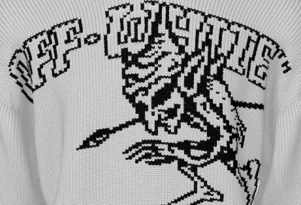
Case study: confronting the virtual simulation of a knitted jumper in Clo 3d with Shima Seiki Apex System As a case study, the authors developed a practical confrontation between a textile simulation software (Clo 3d) and a knitting simulation software (Shima Seiki SDS ONE-Apex). Figure 1 reports a comparison between the two virtual simulations, showing how Clo 3d, despite being a valuable tool for textile design and giving an acceptable result in terms of aspect of the full garment, is still less accurate than Apex in representing some typical specifics of knitwear, like the elasticity, or the pulling/yielding of the knitted fabric in some areas due to the weight of the sweater itself. Focusing on the design, the close-ups reported in Figure 2 show more limits of Clo 3d when it is used for knitwear, as it is incapable of considering and then calculating the exact size of the knitting stitch or anticipating the degree of simplification of a given artwork once knitted. On the contrary, yarn level simulation such as Shima Seiki SDS-ONE Apex offers a much more realistic outcome (Fig. 2), as shown if we compare both simulations with the actual knitted sample (Fig 3).
Figure 1. Clo 3d simulation on the right and Shima Seiki on the left
4 For further information please refer to https://www.shimaseiki.com/virtual_sampling/
Intelligent Human Systems Integration (IHSI 2022): Integrating People and Intelligent Systems https://openaccess.cms-conferences.org/#/publications/book/978-1-7923-8988-7
Figure 2. Close-ups on Clo 3d simulation on the right, Shima Seiki SDS-ONE
Apex simulation on the left.
Figure 3. Real garment and close-up on the design.
CONCLUSIONS
Overcoming the problem: possible limits and solutions As discussed in the previous paragraphs, in the area of 3d virtual garment design, programs simulate knitwear with highly simplified models of behavior. These programs only reproduce the visual quality of knitted textiles, neglecting their yarn- based performative behavior. However, knitting simulation programs represent a challenging design tool for non- technicians users, while, at the same time, the degree of possible design customization remains relatively limited. Furthermore, despite knitwear’s versatile nature in terms of fields of applications (Underwood, 2009; Anishenko 2021), yarn-level simulation programs only reproduce conventional garment typologies as jumpers, cardigans, trousers, skirts, etc. To date, such programs are unable to simulate a 3d object that sits outside the conventional boundaries of the apparel industry, such as for example interior design elements, biomedical products or car upholstery. Moreover, a very challenging field of application for knitted textiles today is architecture (Thomsen et al. 2016; Tamke et al., 2021), as shown by projects such as
Intelligent Human Systems Integration (IHSI 2022): Integrating People and Intelligent Systems https://openaccess.cms-conferences.org/#/publications/book/978-1-7923-8988-7 the construction of Knit Candela (fig. 4 and 5) developed by the Block Research Group at the Institute for Technology in Architecture of ETH Zurich and the Computational Design Group of Zaha Hadid Architects (ZHCODE) (Popescu et al. 2020) . Thus, despite the many opportunities behind contemporary knitting technology, without efficient digital simulations, its full potential remains vastly unexpressed. An essential step for future research would be to integrate knitwear programming systems with 3d modeling or tensile behavior simulation programs (Anishenko, 2021). Such integration would widen the potential for a broader range of design outcomes away from conventional garment typologies. Ultimately, with the globalization and digitalization of the fashion industry, more and more design teams have offices in different countries to those of knitwear manufacturers. In this scenario, the challenges related to the issues discussed in this contribution will undoubtably increase unless a straightforward way to design and specify knitted garments can be found.
Figure 4 and 5. Knit Candela Pavilion. A concrete waffle shell built using a lightweight, stay-in-place, cable-net and knitted fabric formwork.
ACKNOWLEDGMENTS
Authors underline that this paper is one of the first in-depth studies of the Executive Phd in ‘Digital Knitwear, 3d Modeling in the knitting industry’, agreement between the Department of Design of the Politecnico di Milano and SMT -Società Manifattura Tessile, a leading knitting company based in Reggio Emilia.
REFERENCES
Intelligent Human Systems Integration (IHSI 2022): Integrating People and Intelligent Systems https://openaccess.cms-conferences.org/#/publications/book/978-1-7923-8988-7
Intelligent Human Systems Integration (IHSI 2022): Integrating People and Intelligent Systems https://openaccess.cms-conferences.org/#/publications/book/978-1-7923-8988-7
Intelligent Human Systems Integration (IHSI 2022): Integrating People and Intelligent Systems https://openaccess.cms-conferences.org/#/publications/book/978-1-7923-8988-7
LISTED IN THE AHFE DIGITAL BOOKSTORE CATALOGUE
Explore the complete digital volume
Intelligent Human Systems Integration (IHSI 2022): Integrating People and Intelligent Systems
Read this individual research paper free through the original publisher, or explore the full digital proceedings book.
ISBN 978-1-7923-8988-7
Explore this ISBN in the AHFE Bookstore ↗Listed in the July 2026 bookstore catalogue; search by ISBN to confirm current availability · Digital book purchase optional