Sabrina Lucibello (2022). The near (bio)future in design. In: Intelligent Human Systems Integration (IHSI 2022): Integrating People and Intelligent Systems. AHFE Open Access, vol. 22. https://doi.org/10.54941/ahfe100941
The paper joins the debate on the emerging prospective in design in the near future that will be “bio”. The world has gone through 3.8 billion years of research and development, with failures and successes, in search of the most effective and affordable so-lutions to facilitate our daily life. This is especially true today, since we realized that energy resources and raw materials are starting to run-out and that they will not be enough for the population in the near future, The planet could lit-erally implode, ceasing to be an "earthly paradise".Human people have therefore always observed Nature, using it as a source of knowledge and inspiration, but with different approaches. Starting from these premises, the present article explores how innovation can be inspired by Nature. Nature, that in this context is deemed to be the model, the measure and the “mentor” from which designers can learn through a fully informed, responsible study of its biological and biomechanical processes, with the ultimate objective of improving human activities and technology to allow full resonance with Nature itself.Today, technology allows us to reproduce natural systems and biofabricate living systems. Everything appears possible today, but we should probably ask ourselves if this is really necessary, as we did when the possibility of rep-licating and genetically modifying the living being opened up? How can we avoid running into "technological blasphemy"? What role can design play in this?
Intelligent Human Systems Integration (IHSI 2022): Integrating People and Intelligent Systems https://openaccess.cms-conferences.org/#/publications/book/978-1-7923-8988-7
FROM NATURE AS AN INSPIRER TO NATURE AS A CO-WORKER Mimesis was the ancient concept inherited by a long history, until the Enlightenment and the beginning of XIX Century, and that was considered as a bridge between the natural world and the horizon of the human artifacts, as well as the model for any further aesthetic category. The decline of the Mimesis during the XIX Century did not change that relationship altogether. In the age of industry and design, the old and the new materials used for a whole series of new products, from iron and glass to the graphics of printed wallpaper and electricity, were taken for instance by the Art Nouveau movement to re-produce natural forms such as ornaments.
In the Art Nouveau period, between the nineteenth and twentieth centuries, imitating Nature was limited to being inspired by its forms, organic and harmonic and the relation-ship between nature and products of human creation has been conceived through centuries as a form of “imitation”, but already in the mid-twentieth century the term "Bionics" was coined, to describe the search for the formal and geometric principles of Nature, transferred to man-made technological systems.
In the following decades, Nature and Biomimetics (or Biomimicry) approach, inspired creatives and thinkers from all over the world, further pushing the relationship between Nature and the anthropized world.
Nature was no longer just a morphological or technological reference, but a source of new methodologies and logical principles [1], seeking “the logic of training rather than the description of forms” [2].
Moving on to the concept of “bio,” the prefix – originating from the Ancient Greek βίος (“life”) – appears in terms like Bionic (the suffix -ic means “-like,” so the word taken together means “lifelike”), Biomimetics, Biomimicry, and Biotechnology, thus configuring the biocentric vision of scientific research starting from the 1980s. These terms are often considered synonymous because they are different stages in the evolution of the field of scientific studies, whose purpose is to study nature and transfer its strategies and logic to design.
Today, design has moved on to reconsider the active collaboration with Nature, as the only possible solution for a harmonious and symbiotic coexistence, dissolving the boundary that for a long time had separated Nature and Artifice and even considering it as Co-worker, that is active and circular in the design process [3].
Intelligent Human Systems Integration (IHSI 2022): Integrating People and Intelligent Systems https://openaccess.cms-conferences.org/#/publications/book/978-1-7923-8988-7
FROM A SELF-CENTERED APPROACH TO AN ALLOCENTRIC MENTALITY The Earth has always represented our habitat and the symbiosis with it has allowed humanity to evolve, but currently our relationship with the planet is parasitic, but a change of paradigm and perspective is needed. In fact, it is necessary to ask ourselves not only if it is possible to safeguard the environment but even if it is possible to safe- guard life, in accordance with what was already defined in 1987 by the United Nations Commission on sustainable development, which is such if it satisfies the needs of the present, without compromise the ability of future generations to satisfy theirs.
All of which has led to what, today, is a highly saturated system, especially in terms of its dire impact on the environment. In full analogy with what occurred in the post- war period, the challenge to be faced today, especially by the design world, is to explore new processes that can be adopted by industry, in order to bring about a change for the better in the dynamic relations between ourselves and the surrounding environment, of which we, as well as a multitude of other forms of life, are an active component.
This necessary change in paradigm, which once again brings us face-to-face with the dualism of nature/téchne, should not be viewed as merely a romantic “return to natural-ism”, with the latter understood as an unchanging perfection, but rather as an outlook involving the ecosystem as a whole, throwing light on the very real need to mend the intrinsic bond between ourselves and nature, as well as that between matter and the processes from which it originates. Natural systems (and, therefore, the notion of nature) are not fixed, unmoving entities, nor should they be viewed from a mistakenly nostalgic, romantic or static perspective. In actual fact, they are dynamic systems subject to continuous change (in perpetual flux), a process through which “equilibriums” are constantly being balanced anew, based on the behaviour and actions of the multiple agents that give them life.
The paradigm shift asks us to review the logic of extreme competition, and to oppose the law of the "strongest" - according to which only the largest, the most efficient and the most determined survive - the law of "adaptation" and “interdependence”, as op- posed to independence, as a systemic concept resulting from the permeability between open systems and environment [4], with the aim of pursuing a new harmonious mutual relationship between humans and the environment.
This is possible by re-appropriating our skills and collaborating with the other disciplines, but by designing first of all [5].
This does not represent a return to a non-technological era, but on the contrary rep- resents a necessary re-codification and de-codification of the laws and structures of nature and matter, to push their properties towards increased applications and aesthetics [6].
Intelligent Human Systems Integration (IHSI 2022): Integrating People and Intelligent Systems https://openaccess.cms-conferences.org/#/publications/book/978-1-7923-8988-7
NEAR FUTURE After decades of environmental crisis, one of the possible and most interesting alternatives that we face for the survival of ourselves, is to embrace the concept of limit and not of overcoming it at all costs. In fact, the awareness of development in a limited world brings with it full awareness and acceptance of the extent of the environmental problem that has arisen and fueled by problems such as the excessive and indiscriminate use of plastics and microplastics, disposable products, fossil origin, planned obsolescence and electronic waste, pollution, synthetic dyes and the release of harmful chemicals into the environment. Awareness of development in a limited world brings with it full awareness and acceptance of the extent of the environmental problem that has arisen and fueled by issues such as the excessive and indiscriminate use of plastics and microplastics, disposable products, fossil origin, planned obsolescence and electronic waste, pollution, syn-thetic dyes and the release of harmful chemicals into the environment.
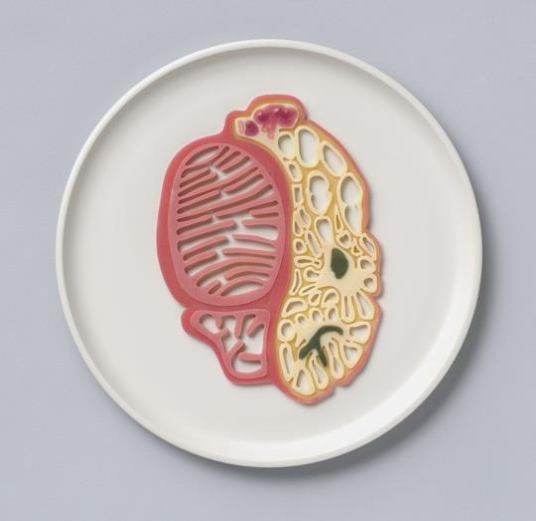
Figure 1. Is Future bio-manufacturing?
Intelligent Human Systems Integration (IHSI 2022): Integrating People and Intelligent Systems https://openaccess.cms-conferences.org/#/publications/book/978-1-7923-8988-7
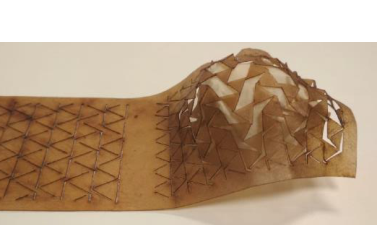
Figure 2. Is Future bio-smart?
Sustainability is certainly one of the problems that each of us in the last forty years has had to deal with at every level, be it that of the project, production, consumption or post-consumption. An artefact is in fact sustainable, if it brings with it a series of com-plex values and meanings, linked both to technology and to materials, but also to its simplicity and multifunctionality. Only by considering all these aspects is it possible to arrive at “true design”, one in which “strong interactions between scientific discovery, technological application, good design and positive social effect take place” [7]. The attention to sustainability, initially developed around the more purely environmental is-sues, today covers a wider range of action including the experimentation and combination of new materials rather than the use of more noble and simple ones, the confrontation with problems related to ethics, aesthetics, the production process: all in the shadow of the "evergreen" theme of the relationship between nature and artifice [8]. Indeed, an interesting approach is that which, mimicking the constant relationship between nature and artifice, sees sustainability and innovation as elements on which to focus the design project. The need for sustainability has imposed not only looking at the product itself, but at the relationship it establishes with the context, both for the effects of the production process on the environment - from which the Life Cycle Design methodologies arise - and for those resulting from the excessive use and waste of raw materials, which "impoverishes" nature.
In fact, Papanek in 1971 [9] already stated that “if design is to be ecologically responsible and socially responsive, it must be revolutionary and radical in the truest sense of the terms. It must devote itself to the 'principle of minimum effort' adopted by nature, in other words to the maximum of variety with the minimum of inventions, or to obtain the maximum with the minimum. This means consuming less, using more, recycling materials.”
Intelligent Human Systems Integration (IHSI 2022): Integrating People and Intelligent Systems https://openaccess.cms-conferences.org/#/publications/book/978-1-7923-8988-7
Quickly retracing the main stages of the Italian debate, we observe how we have progressively shifted from actions aimed at "treatment", to actions aimed at "prevention", so much so that, while changing the point of view and action, it has not changed interest in the sustainable issue and its ethical implications in terms of design, production, consumption and end-of-life. In the seventies, following the economic boom, the focus was mainly on the environment (see the interesting repercussions of Enzo Mari's self-production Open Sources ante litteram) and on the design hope based on trust in the "revolutionary function of rationality applied” [10]; in the eighties the concept of sustainability spreads internationally, but did not generate any particular design repercussions. But it was in the nineties that the question entered its maturity phase, to the point of generating a design attitude aimed at control and efficiency factors (technological, materials, products), which in fact configured the current one as the only alternative, namely that of a “possible if sustainable” world.
PLURAL NATURES What awaits us is the confrontation with a Nature that we could define as plural. or visions of nature in which ecological themes intertwine or alternate, archaic and traditional references, innovation on materials, utopian themes and advanced technologies, high-lighting not a single method but the richness of possible levels of reading.
He reconstructs some plots of the relationship between contemporary Italian design and the different facets of a millenary theme and identifies lines of research, more or less concretized from the design point of view, mirror of the many ways of understanding nature and of an uninterrupted critical reflection. If the theme of sustainability has centralized the discussion for some time, in addressing nature, Italian design has never forgot-ten the confrontation either with history or with the anthropological and symbolic dimension of objects.
The same ecological issues unfold today both in relation to the recovery of local roots, and in terms of innovation on advanced materials and technologies, configuring original and complex research fields. In the design cultures of Northern Europe, the modern project has aimed at a model of continuity and harmonious integration with technology and society, but above all at an organicist dimension. In Italy, also in this respect, modernity takes on a different guise, being born under the influence of Futurism and Metaphysics, which look more at the fracture and the mystery than at the reconciliation between nature and artifice, but lay the foundations for a freer and more profound recognition. Contemporary post-human thought involves the project, indicating a new opening to the contamination of the human with the otherness of nature and technique. This scenario is reflected in contemporary research [11]: the designer behaves like an alchemist who plays with the material to showcase its processes and secret laws or experiments through advanced scientific tools an
Intelligent Human Systems Integration (IHSI 2022): Integrating People and Intelligent Systems https://openaccess.cms-conferences.org/#/publications/book/978-1-7923-8988-7 increasingly close hybridization between nature and technology, to the point of loving the realization. of objects capable of their own autonomous life. It emerges that nature is today a model for design that disregards the patterns imposed by modernity: technical, mythical, or mathematical but, in any case, an inexhaustible source.
CONCLUSIONS
The new generation of designers is therefore reinventing itself, proposing disruptive and radical approaches that reconsider the project in a circular way also through a particular focus on processes and on the "temporality" of materials [12], which paves the way for a future characterized by alternative production-consumption systems. Once we have discarded the idea that the world is a mine at our disposal from which to freely extract resources to the bitter end, finally today we can turn our gaze elsewhere, towards new materials and resources in pursuing an “alternative abundance.”
That is why it is now important to look at the waste of current production processes as a valuable resource, experiment with new types of agriculture with the cultivation of algae, fungi and other natural systems, and stimulate research to find a possible collabo-ration with microorganisms for the cultivation of materials organic or even more to colour them.
The principle is to understand and adapt to the functioning of the natural world of which we are part, through cyclical and circular processes, thus establishing symbiotic relationships between social and environmental systems.
REFERENCES
Langella, C. (2003). Nuovi paesaggi materici. Design e tecnologia dei materiali.
Firenze, Alinea Editrice. Legg, H. (2017). Neri Oxman #99. The Editorial.
https://www.theeditorial.com/essay/2017/3/2/neri-oxman-99 Braungart, M., & McDonough, W. (2002). Cradle to Cradle. Remaking the way we make things, New York: North Point Press. Lucibello, S., Montalti, M. (2019). Beyond Human - New Paradigms of Active
Collaboration in Design. In diid Design 2030: Practice, n.72, p.26. Baecellona: ListLab. Minati, G. (1998). Sistemica: etica, virtualità, didattica, economia. Milano: Apogeo. Lipps, A. (2019). Augment. In A. Lipps, M. McQuaid, C. Condell, G. Bertrand (Eds.), Nature: Collaborations in Design (pp. 145-168). New York: Cooper Hewitt, Smithsonian Design Museum. Koenig, G. K. (1983). Design. Rivoluzione, evoluzione o involuzione? In Ottagono
n° 68.Booher, Harold, ed. (2003). Handbook of human systems integration. New Jersey: Wiley.
Intelligent Human Systems Integration (IHSI 2022): Integrating People and Intelligent Systems https://openaccess.cms-conferences.org/#/publications/book/978-1-7923-8988-7
LISTED IN THE AHFE DIGITAL BOOKSTORE CATALOGUE
Explore the complete digital volume
Intelligent Human Systems Integration (IHSI 2022): Integrating People and Intelligent Systems
Read this individual research paper free through the original publisher, or explore the full digital proceedings book.
ISBN 978-1-7923-8988-7
Explore this ISBN in the AHFE Bookstore ↗Listed in the July 2026 bookstore catalogue; search by ISBN to confirm current availability · Digital book purchase optional