Zi Yang, Kin Wai Michael Siu, Yushan Huang (2022). Service Disruptions and Recovery: Lessons from the Chinese hotel industry for the post-COVID-19 Era. In: Global Issues: Disease Control and Pandemic Prevention. AHFE Open Access, vol. 24, pp. 63–72. https://doi.org/10.54941/ahfe1001360
Ever since the World Health Organization declared COVID-19 a pandemic in early 2020, it has had an impact on all industries globally, especially the tourism and hotel sector. China’s hotel industry was one of the first to experience the challenge related to COVID-19. However, due to early interventions, Chinese hotels are on a faster recovery route than many other global markets. This study examined the relationship between customers' perception of COVID-19 and factors that affect hotel service quality. Through a Chinese online crowdsourcing platform, this study obtained 429 samples from participants who stayed in hotels before and during the pandemic. This study aims to serve as a reference for hotel service innovation and guide hotel managers on how to improve customer experience in the post-pandemic era.
China was the first country affected by the pandemic and its hotel indu- stry faced severe challenges. However, COVID-19 was well controlled in China by the end of 2020. Since 2021, mainland hotels have been recovering faster than other major global markets. When the pandemic broke out at the end of February 2020, China promptly adopted a strict blockade policy; hotel occupancy in mainland China fell to as low as 12.4%. By October, however, occupancy was back up to 65.6%, which was only a decrease of 3.6% compared to the same month the previous year. Even in September, the market posted a 62.9% occupancy level, a 0.7% increase year over year—the country’s first increase since May 2019. Continuous growth in corporate demand has led to recovery in the coun- try’s midscale and economy hotels, posting occupancy rates nearing 2019 levels (Whitepaper, 2021). As China gradually enters the post-pandemic era, with mainland hotel performance closer to pre-pandemic levels com- pared to other major markets around the word, focus has shifted to service innovation for recovering the industry’s vigor and vitality. Stud- ying the experiences and strategies of China’s hotel industry will help the
hotel industry in other parts of the world stage their own post-pandemic recovery.
Covid-19 is an external factor, beyond the control of the hotel industry, so this study focuses on the internal factors that help to determine the qua- lity of hotel service. First, this paper reviews the relevant literature on how pandemic impact the hotel industry and customer experience design. The method section details the development of the survey tools, data collection and analysis processes. The paper concludes with a discussion of the findings and design guidelines for hotel service innovation in the post-pandemic era.
LITERATURE REVIEW
The Impact of the Pandemic on the Hotel Service Industry In 2020, the World Health Organization issued interim guidance to help hotel management across the global respond to COVID-19 (WHO, 2020). The pro- cedures included detailed recommendations on the task of hotel staff’s, the responsibilities of hotels, and specific health-related measures to be taken by hotels for infection control and prevention. Many epidemiological studies have been done on the hotel industry. For example, Filimonau et al. (2020) conducted a quantitative study on senior hotel managers to investigate the impact of the COVID-19 pandemic on their organizational commitment. Shin and Kang (2020) discussed the effects of expected interaction and cleanliness on perceived health risk and hotel booking intention. Seyito˘glu and Ivanov (2021) developed a conceptual framework for designing hotel service system in the COVID-19 era. Other scholars have explored the impact of COVID-19 on the hotel industry from the tourists’ perspective. Villacé-Molinero et al. (2021) explored a new risk scenario for travel, analyzing perceptions of hotel risk and proposing measures to improve travelers’ confidence post- COVID-19. Pappas (2021) examined the impact of COVID-19 on holiday intention in a sample of adult permanent residents in Athens, Greece. Kim et al. (2021) examined how and why the perceived threat of COVID-19 affects consumers’ choice behavior in the hotel domain.
Other related studies focused on the macro-level and micro-level to cope with COVID-19, such as global impact, policymaking and organization management. However, few have explored hotel services from customers’ perspectives, such as requirements for future hotel services and customers’ future needs.
Customer Experience Design in the Hotel Industry Research on customer experience is beneficial to customers and can reduce costs, improve efficiency, and provide a better employee experience (John- ston & Kong, 2011). Customer experience design is a practical and strategic way for service providers, such as hotels, to gain differentiation and achieve a competitive market advantage (Bergs et al., 2020). Zomerdijk and Voss (2010) proposed that a service provider cannot control customers’ experie- nce; they construct it themselves through their interactions with the service provider. Therefore, designers cannot create the consumer experience, but
Service Disruptions and Recovery: Lessons from the Chinese Hotel Industry 65
they can design the “moments of truth” in which customers interact with the environment (Carlzon, 1987). Customers’ perception of service quality com- prises a limited series of moments in which service quality can be shown; these moments are called “service encounters”. They result in a customer’s cogni- tive, emotional, and behavioral response, which may stay in their memory for a long time. A satisfying experience increases the value of the service provided.
Before the outbreak of COVID-19, the hotel industry’s service model, which was based on human interaction, was influential in creating a positive customer experience. However, social distancing restrictions forced hotels to rethink and redesign their service to meet customers’ expectations after the outbreak. COVID-19 has changed how customers perceive hotel service, so hotels must look for new and innovative ways to improve hotel service in line with changing customer perspectives.
METHODOLOGY
A qualitative-quantitative method was adopted for this survey. Quantitative findings were used to design and construct instruments to measure the vari- ables. First, the study looked at the literature that has been published on the internal factors influencing hotel service and quality, as well as focus groups and online interviews to confirm the variables. Later, questionnaires were developed and pre-tested to ensure that respondents could easily understand and answer the survey. Finally, using the developed instrument, data were collected and analyzed.
Qualitative Method According to the literature, as shown in Table 1, internal factors influencing hotel service quality mainly fall within the categories of price, cleanliness, safety, location, medical preparedness, room style, service, security, facilities, size and others.
Besides a review of the existing literature, discussions were conducted with focus groups comprising customers, hotel employees and university profes- sors who specialized in hotel management. Later, in-depth online interviews were held with seven voluntary participants, including one professor engaged in hotel management, two hotel managers and four hotel customers, separa- tely. Finally, five basic factors were deemed to influence hotel service quality: hotel price, hotel service, cleanliness, hotel facilities, and promotion activities.
Quantitative Methods An online crowdsourcing platform from mainland China, known as Wenju- anxing, was used to issue questionnaires and collect the data for the empirical analysis of this study. Respondents were limited to Chinese residents aged 18 years and above who had stayed in a hotel in the previous 18 months, including during the COVID-19 outbreak. A total of 570 samples were col- lected. Given the average response time of the pre-test, questionnaires with
Table 1. Internal factors influencing hotel service quality.
Table available in the original PDF paper.
Scholars Year Factors Salleh & Ryan 1992 Cleanliness, overall comfort, spacious, well-maintained rooms McClearly & Weaver
1997 Price, service quality
1994 Safety, personal service, low price (female); the look of the rooms (male) Lewis & Shoemaker Atkinson 1998 Cleanliness, location, room rate, security Ruys & Wei 1998 Safety, room facilities Oh 1999 Price, cleanliness, maintenance, friendliness, attentiveness of the staff Anna & John 2003 Price, occupancy percentage, guest satisfaction Lau et al. 2005 Service quality, price, fee, variety and quality of food, accommodation, entertainment, facilities, location Lockyer 2005 Price, location, facilities, cleanliness Hong 2010 Price, conglomerate connection, casino facility, location, size John 2011 Hotel type, location, size, service level Chan & Lam 2013 Safety, security system Ghazi 2016 Safety, security importance and usage assessment, medical preparedness Alananzeh 2017 Safety, security, privacy Jiang & Wen 2020 Hygiene, cleanliness, health communication Shin & Kang 2020 Technology innovation, hygiene, cleanliness, health risk
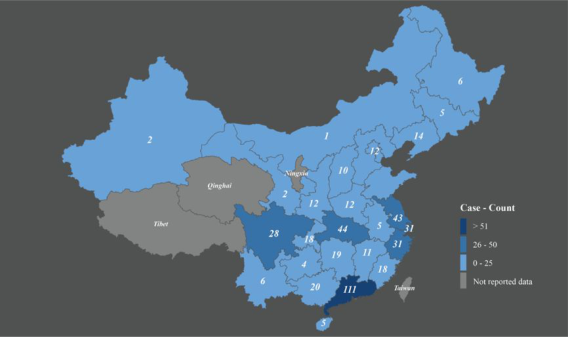
Figure 1: Respondents’ geographical location distribution a response time of fewer than two minutes were regarded as invalid; respon- dents who were overseas during COVID-19 were excluded. A final total of 429 samples were analyzed. Demographic analysis was conducted to confirm the characteristics of the sample. The respondents were distributed across most parts of China, including Hong Kong and Macao.
Service Disruptions and Recovery: Lessons from the Chinese Hotel Industry 67
Table 2. Sample information.
Table available in the original PDF paper.
Variable Category Frequency Per cent Gender Male 88 20.5 Female 341 79.5 Age 18-24 225 52.4 25-34 169 39.4 35-44 20 4.7 45-54 10 2.3 55 and above 5 1.2 Monthly income Below $400 138 32.2 $401-$800 124 28.9 $801-$1,200 79 18.4 $1,201-$1,600 47 11 $1,601-$2,000 18 4.2 $2,001 and above 23 5.4 Annual number of hotel stays 1-3 173 40.3 4-6 132 30.8 7-9 73 17 10-12 24 5.6 13 and above 27 6.3 Purpose of hotel stays (Multiple choice) Tourism 391 91.1 Visiting relatives 123 28.7 Business travel 154 35.9 Conference 56 13.1 Examinations 192 44.8 Hotel enthusiast 11 2.6 Others 39 9.1
Table 3. Correlation analysis.
Table available in the original PDF paper.
Cognition of Hotel Hotel cleanliness Hotel COVID-19 price service facilities Hotel price 0.241** Hotel service 0.167** 0.363** Cleanliness 0.186** 0.281** 0.556** Hotel facilities 0.232** 0.344** 0.355** 0.457** Promotion activities 0.224** 0.607** 0.388** 0.292** 0.317**
Note:** Correlation is significant at the 0.01 level (2-tailed).
DATA ANALYSIS AND FINDINGS Correlation analysis was used to evaluate guests’ perceptions of COVID-19 and identify the internal factors that influence hotel service quality. The test of the relationships between perception of COVID-19 and hotel price, hotel service, cleanliness, hotel facilities and promotion activities revealed signifi- cant positive correlations, with coefficients of 0.241, 0.167, 0.186, 0.232 and 0.224, respectively. Hotel price was most strongly correlated with customers’
perception of COVID-19, and the correlation between hotel service and customers’ perception of COVID-19 was the weakest.
The respondents’ preferences for hotel services were investigated. The five factors considered were hotel price, hotel service, cleanliness, hotel facilities and promotional activities. Linear regression analysis was used to analyze the impact of the respondents’ cognition of COVID-19 on these factors. Details of the analysis can be found in the appendix.
The data analysis indicating that COVID-19 had a positive predictive effect on the five factors of hotel price, hotel service, cleanliness, hotel facilities and promotion activities. Hotel price had the greatest impact and hotel service had the weakest impact.
DISCUSSION
The COVID-19 pandemic has severely impacted the core services of the tradi- tional hotel service model: catering and accommodation. The hotel industry is facing significant pressure due to social distancing requirements and the continued downturn of the tourism industry. COVID-19 has had an ongoing effect on the traditional s face-to-face model of service, altered the balance between supply and demand in the hotel industry, and changed customers’ service requirements and expectations, forcing hotels to pay more attention to customer value and optimizing the customer experience.
Building Trust in Hotels’ Cleaning Service In the post-pandemic era, disease prevention and control have become part of daily life. Customers must trust the cleanliness of the hotel. Information signs in hotel rooms and corridors should be clear, accurate, and reliable, specifying the date, time, and person in charge of disinfecting and cleaning the hotel rooms and elevators. Such clean and specific signage will build customers’ trust in the cleanliness of the hotel.
Hotels must also have strict standards for pandemic prevention and con- trol. Even if customers are not concerned about such issues, hotels, as service providers, must provide customers with peace of mind and a sense of secu- rity. For example, hotel staff should always wear masks and gloves and place thermal scanners in the hotel lobby. They should also implement specific pan- demic prevention measures in public hotel areas. Providing safe and secure services will enhance customer confidence and enable hotels to limit the risk of viral transmission so that customers can book rooms with confidence.
Innovating the Non-Contact Service Experience The hotel industry’s face-to-face, high-touch service model is not appropriate for the post-pandemic era. Hotels should adopt non-contact technologies. Various service systems, e.g., heating, also need to be integrated into the unified control panel to avoid multiple connections with different button. Technical solutions, such as online booking, digital check-in and check-out, communication with employees via an online chat software, and disposa- ble electronic keys instead of traditional keys (cards), can provide efficient and convenient service quality with less contact. With the outbreak of
Service Disruptions and Recovery: Lessons from the Chinese Hotel Industry 69
COVID-19, customers began to reconsider the pre-arrival, arrival, check- in and post-arrival experience. To reduce the need for multiple high-contact interactions, hotels must pay attention to the value of contactless technology innovation.
Hotels should redesign dining spaces to control the number and dista- nce of diners. Undoubtedly, pandemic prevention measures affect customers’ interpersonal intimacy. Although social distancing limits the services provi- ded, the implementation of safety measures may enable customers to enjoy a more intimate and reserved atmosphere, such as dining with partners or family members. Therefore, hotels should consider improving customers’ interpersonal intimacy while ensuring safety.
Attracting Customers With Prices and Promotions The Internet has facilitated the development of the hotel industry. The hotel industry’s publicity channels and promotional activities range from public platforms to the private domain. Customers focus on both price and pro- motions, paying less attention to extraordinary prices than the relationship between price and service. The price should be based on service quality and be reasonable. Many respondents admitted that they can understand the hotel’s survival dilemma under the COVID-19 situation. They can accept higher pri- ces, but they needed to match the quality of service. The data indicated that hotel prices strongly correlate with customers’ perception of COVID-19, i.e. people who are more fearful or sensitive toward COVID-19 are more concer- ned about hotel prices. Therefore, hotels should use service quality as the standard for determining a reasonable price.
Promotion is also related to price. Diversifying online publicity channels has led to various promotional activities, such as advertorials, elevator-screen advertising, web advertising, live broadcasts, and video. This variety can make it difficult for customers to identify the authenticity of advertising and can be misleading. Keeping promotional activities consistent with publi- city activities is extremely important. Hotels should also clearly explain the service content and price during the promotion process.
CONCLUSION
This study investigated the relationship between customers’ perceptions of COVID-19 and the factors affecting hotel service quality. Five factors were identified: hotel price, hotel services, cleanliness, hotel facilities, and pro- motional activities. Correlation analysis indicated that the five factors were positive correlated with customers’ negative attitudes (fear, anxiety, etc.) toward COVID-19. Linear regression analysis confirmed the value of these factors for predicting customers’ hotel choice behavior in the post-pandemic era. The results of this study can be used to guide hotel service innovation in the post-pandemic era. Hotels can revitalize by improving their cleaning service, building customer trust, using non-contact methods to innovate the service experience, adopting reasonable and realistic hotel prices, and using promoting activities to attract customers.
ACKNOWLEDGEMENT
We would like to thank RPg studentship support of The Hong Kong Poly- technic University (PolyU). We also acknowledge the support of Eric C. Yim Endowed Professorship in Inclusive Design, and the partial support of the Public Design Lab and RISUD of PolyU.
REFERENCES
Bergs, Y., Mitas, O., Smit, B. and Nawijn, J., 2020. Anticipatory nostalgia in experience design. Current Issues in Tourism, 23(22), pp. 2798–2810. Carlzon, J. and Peters, T., 1987. Moments of truth. Cambridge, MA: Ballinger. Filimonau, V., Derqui, B. and Matute, J., 2020. The COVID-19 pandemic and
organisational commitment of senior hotel managers. International Journal of Hospitality Management, 91, p. 102659. Johnston, R. and Kong, X., 2011. The customer experience: a road-map for improvement. Managing Service Quality: An International Journal, 21(1), 5–24. Kim, J., Park, J., Lee, J., Kim, S., Gonzalez-Jimenez, H., Lee, J., Choi, Y.K., Lee,
J.C., Jang, S., Franklin, D. and Spence, M.T., 2021. COVID-19 and Extremeness Aversion: The Role of Safety Seeking in Travel Decision Making. Journal of Travel Research, p. 00472875211008252. Pappas, N., 2021. COVID19: Holiday intentions during a pandemic. Tourism Management, 84, p. 104287. Seyito˘glu, F. and Ivanov, S., 2020. A conceptual framework of the service delivery
system design for hospitality firms in the (post-) viral world: The role of service robots. International Journal of Hospitality Management, 91, p. 102661. Shin, H. and Kang, J., 2020. Reducing perceived health risk to attract hotel customers in the COVID-19 pandemic era: Focused on technology innovation for social distancing and cleanliness. International Journal of Hospitality Management, 91, p. 102664. Villacé-Molinero, T., Fernández-Muñoz, J.J., Orea-Giner, A. and Fuentes-Moraleda,
L., 2021. Understanding the new post-COVID-19 risk scenario: Outlooks and challenges for a new era of tourism. Tourism Management, 86, p. 104324. Whitepaper (January 28, 2021). Mainland China: A look back and a look ahead.
STR Website: https://str.com/whitepaper/mainland-china-look-back-and-look-a head WHO (World Health Organization). (March 31). Operational considera- tions for COVID-19 management in the accommodation sector. WHO Website: https://apps.who.int/iris/bitstream/handle/10665/331638/WHO-2019- nCoV-Hotels-2020.1-eng.pdf?sequence=1&isAllowed=y Zomerdijk, L.G. and Voss, C.A., 2010. Service design for experience-centric services. Journal of service research, 13(1), pp. 67–82.
Service Disruptions and Recovery: Lessons from the Chinese Hotel Industry 71
APPENDIX: REGRESSION LINEAR ANALYSIS
Table 4. Cognition of COVID-19 and hotel price t Sig.
Table available in the original PDF paper.
Model Unstandardized Coefficients
Standardised Coefficients B Std. Error Beta
0.241 0.047 0.241 5.137 0.000
(Constant) 3.344 0.173 19.303 0.000 Cognition of COVID-19 R2 0.058 F 26.386 0.000
Table 5. Cognition of COVID-19 and hotel facilities t Sig.
Table available in the original PDF paper.
Model Unstandardized Coefficients
Standardised Coefficients B Std. Error Beta
0.240 0.049 0.232 4.938 0.000
(Constant) 3.146 0.179 17.585 0.000 Cognition of Covid-19 R2 0.054 F 24.386 0.000
Table 6. Cognition of COVID-19 and promotion activities t Sig.
Table available in the original PDF paper.
Model Unstandardized Coefficients
Standardised Coefficients B Std. Error Beta
0.223 0.047 0.224 4.739 0.000
(Constant) 3.360 0.174 19.345 0.000 The cognition of Covid-19 R2 0.050 F 22.454 0.000
Table 7. Cognition of COVID-19 and cleanliness t Sig.
Table available in the original PDF paper.
Model Unstandardized Coefficients
Standardised Coefficients B Std. Error Beta
0.144 0.037 0.186 3.903 0.000
(Constant) 4.039 0.136 29.770 0.000 Cognition of COVID-19 R2 0.034 F 15.231 0.000
Table 8. Cognition of COVID-19 and hotel service t Sig.
Table available in the original PDF paper.
Model Unstandardized Coefficients
Standardised Coefficients B Std. Error Beta
0.144 0.041 0.167 3.495 0.001
(Constant) 4.049 0.152 26.564 0.000 Cognition of COVID-19 R2 0.028 F 12.216 0.001
LISTED IN THE AHFE DIGITAL BOOKSTORE CATALOGUE
Explore the complete digital volume
Global Issues: Disease Control and Pandemic Prevention
Read this individual research paper free through the original publisher, or explore the full digital proceedings book.
ISBN 978-1-958651-00-1
Explore this ISBN in the AHFE Bookstore ↗Listed in the July 2026 bookstore catalogue; search by ISBN to confirm current availability · Digital book purchase optional