Richard Lukenge, Kin Wai Michael Siu, Sylvia Liu, Zi Yang (2022). Micromobility: Challenges and prospects for Electric Mobility Devices (EMDs) in Hong Kong. In: Human Factors in Transportation. AHFE Open Access, vol. 60, pp. 219–228. https://doi.org/10.54941/ahfe1002452
In recent years, electric mobility devices (EMDs) have become popular in major cities across the globe. Whereas many cities have embraced and integrated this new form of urban green mobility into their public transport systems, in Hong Kong, the growing popularity of EMDs is being met with growing public and government concern about their safety. To address these concerns, the government proposed the EMD regulatory framework to manage their use in such a densely populated and mountainous city. The judicial definition of EMD in the current Hong Kong Road Traffic Ordinance (Cap. 374) considers devices such as unicycles, e-scooters, hoverboards, and electric bicycles as motor vehicles that are prohibited on the roadways, footpaths, and street flex zones. Referring to the transport review of the Hong Kong Legislative Council Panel conducted on June 19, 2020, in this study, we examine the costs and benefits of using EMDs in such a densely populated city. Furthermore, we argue that less populous outlying islands could offer more suitable trial locations to integrate these innovative “first-last mile” micro vehicles. This article contributes to the existing EMD body of knowledge by highlighting the benefits and challenges with specific emphasis on Hong Kong’s EMD proposed framework.
Major cities across the globe have seen a rapid boom in demand for micromo- bility vehicles (Chang et al., 2019; Christoforou et al., 2021; Garman et al., 2020; King et al., 2020; Oeschger et al., 2020; Tuncer & Brown, 2020). Examples of such electric mobility devices (EMDs) for short-distance tra- vel include personal mobility devices (PMDs), power assisted pedal cycles (PAPCs), and motorized personal mobility aids (PMAs), such as e-unicycles, e-scooters, electric hoverboards, electric wheelchairs, and electric bicycles (Mobility, 2021).
METHOD
The chapter is structured as follows. First, we briefly present the main research constructs, which are the various EMD types, and benefits.
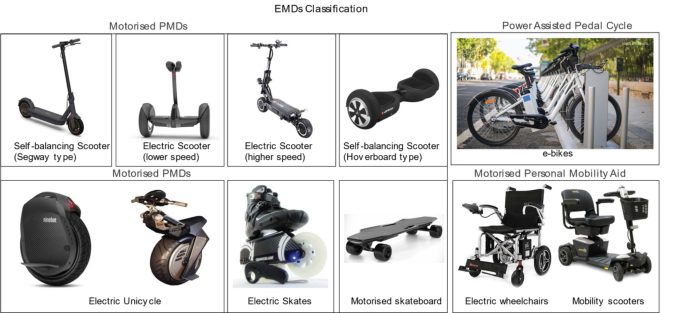
Figure 1: Popular electric mobility devices (EMDs). Source: (Mobility, 2021).
Second, referring to the transport review of the Hong Kong Legislative Cou- ncil Panel conducted on June 19, 2020, we look at the challenges and prospects of using EMDs in such a densely populated and mountainous city. Last, we suggest geographic locations where EMDs could be used in Hong Kong.
CLASSIFICATION OF EMDS EMDs can be divided into motorized PMDs, PAPCs, and motorized PMAs (Mobility, 2021; O’Hern & Estgfaeller, 2020; Oeschger et al., 2020). PMDs are one or two-wheeled personal mobility devices with an attached electric motor such as e-scooters, hoverboards, and unicycles. PAPCs are electric cycles whose motion is caused by both human pedaling and the driving force of an actuator (Yabushita et al., 2003). The design of PAPCs such as e-bikes, tricycles, and bicycles includes both manual pedals and an electric motor to facilitate movement without pedaling for a short time. Finally, PMAs are three- or four-wheeled electric vehicles such as mobility scooters and electric wheelchairs designed to assist people with reduced mobility (Mobility, 2021). Common examples of EMDs are shown in Figure 2.
BENEFITS OF MICRO VEHICLES Micromobility is a form of transport solution aimed specifically at meeting the needs of people in urban areas by providing missing links to public tran- sport, including first-last-mile journeys (Abduljabbar et al., 2021; Oeschger et al., 2020). Micromobility has many social, economic, health, and environ- mental benefits (Abduljabbar et al., 2021). As a result, many cities consider EMDs as a complementary alternative to other modes of urban mobility (Christoforou et al., 2021). First, these micro vehicles allow people to access cost-effective, short-distance, and environmentally friendly alternative public transportation (McQueen et al., 2021). Second, as cities grapple with the negative externalities associated with private car use such as carbon emissi- ons, air, and noise pollution, congestion, and parking needs, this mode can
Micromobility: Challenges and Prospects for Electric Mobility Devices (EMDs) 221
Table 1. Summary of the social, economic, environmental, and health benefits of electric mobility devices (EMDs). Source: Author (2022).
Table available in the original PDF paper.
Benefits Description Measurement Door-to-door mobility Travel choice modeling Increase the modes of travel
Reduced transportation costs; cheap parking fees
Efficient and affordable
Core dimensions of land use and travel
Commuters’ transport expenditure surveys Promote efficient land use
Require little road space and infrastructure, putting less pressure on land and energy
Commuters’ transport expenditure surveys
Reduced costs for the public and consumers
Cheap to buy and low maintenance costs compared with other modes of transport such as private cars
Travel choice modeling
Accessibility Provide access to all street corners, including small spaces inaccessible to conventional modes of transport.
Equitable and inclusive
Transport and social policy analysis; horizontal and vertical equity principle analysis
Progressive with respect to income; provide mobility options for disadvantaged travelers such as the young, the poor, and the physically disadvantaged Green and clean No carbon emissions, thus beneficial to the environment
Travel and health surveys
Involve walking and, promoting physical health
Public transport emission measurements Promote public health and fitness Consumers’ transport preference surveys First-last-mile commuting
Complements other modes of transport, such as walking and public transportation Innovative and fun A creative and therapeutic way to get around the city
Consumers’ level of service (LOS), travel happiness indicators
solve these problems to some extent (Christoforou et al., 2021; McQueen et al., 2021; Oeschger et al., 2020). For example, unlike larger vehicles, EMDs require little road space and therefore exert less pressure on land use and other resources. In Hong Kong, a major problem with traditional private car mobility is parking spaces. Wong et al. (2000) revealed that the cost of a parking space in Hong Kong is higher than the cost of a car. the size and flexibility of EMDs can thus, benefit this densely populated city (Abduljab- bar et al., 2021; Oeschger et al., 2020). Table 1 summarizes the benefits of EMDs.
MICROMOBILITY CHALLENGES IN HONG KONG There are several challenges to micromobility in Hong Kong. First, Hong Kong is characterized by hilly terrain. Although Hong Kong covers around
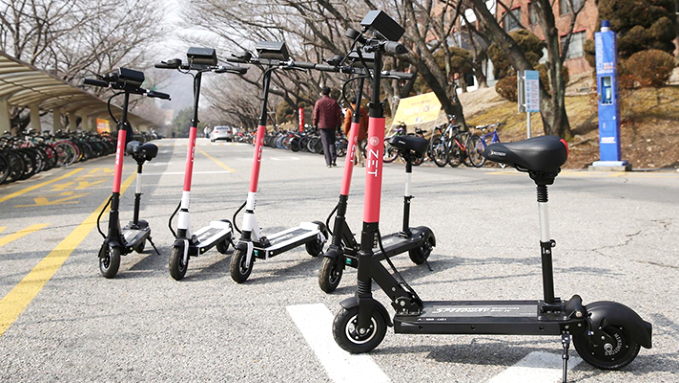
Figure 2: Hyundai motor group’s ZET E-scooters. Source: (Min, 2019).
1,100 km2 (GovHK, 2021), which is larger than cities like Osaka, Singapore, and New York, it is largely mountainous (Yang et al., 2019), with only about 16% flat terrain to facilitate uninterrupted (smooth) riding and cycling using EMDs. Such a small space for micromobility presents a challenge for basic EMDs and more powerful EMDs would be required to accommodate the hilly terrain.
Second, Hong Kong is a densely populated city with 6,890 people per km2 (Statistics, 2020), with some districts like Kowloon accommodating over 49,000 people per km2. This population density can make it difficult to inte- grate EMDs into the city’s public mobility system. However, some populous cities such as Singapore with more than 8,100 people per km2 (Diehl et al., 2020) use EMDs as part of their public mobility system. Although integra- ting EMDs into Hong Kong’s public mobility system may be difficult, it is not impossible.
PROPOSED EMD FRAMEWORK In 2018, the retained imports of EMDs in Hong Kong reached 1.16 million units (LegCO, 2020), implying that EMDs are becoming increasingly popu- lar in the city (LegCO, 2021). However, the growing popularity has been met with growing public and government concerns (LegCO, 2020). There is the concern that integrating EMDs into the city’s transport system may pose a risk to all road users. First, third-party insurance coverage for victims of road accidents caused by the unauthorized use of EMDs does not exist in Hong Kong. Second, there are no product safety regulations in place for EMDs in the local market. In December 2017, the Transport Department commissio- ned the Consultancy Study, to review EMD regulatory policies and referring to EMD practices and regulatory requirements of other cities to regulate the use of EMDs in Hong Kong (LegCO, 2020). On June 19, 2020, it was propo- sed that because the Hong Kong Vehicular and pedestrian traffic is heavy, and
Micromobility: Challenges and Prospects for Electric Mobility Devices (EMDs) 223
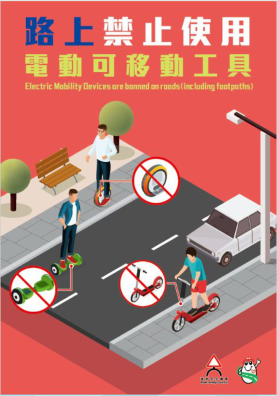
Figure 3: A warning against the use of micromobility devices in certain areas. The Hong Kong government transport department (2022). Source: (LegCO, 2021).
the existing road infrastructure is primarily designed for motor vehicles with no designated EMD lanes, motorized PMDs and PACs should be prohibited on the roads. It was further proposed that, for pedestrian safety, motorized PMDs and PACs should not be used on the walkways. The proposal prohibi- ted the use of PMAs on the cycle tracks and carriageways but allowed their use on the footpaths.
Therefore, as of January, 2022, the judicial definition of EMD in the cur- rent Hong Kong Road Traffic Ordinance (Cap. 374) considers devices such as unicycles, e-scooters, hoverboards, and electric bicycles as motor vehicles that are prohibited on the roadways, footpaths, and street flex zones (LegCO, 2020). The Hong Kong Transport Department benchmarked 12 jurisdictions, to assess their EMD practices and regulations. These areas included (1) Shan- ghai (China), (2) Singapore, (3) Tokyo (Japan), (4) Seoul (South Korea), (5) Queensland (Australia), (6) Victoria (Australia), (7) the United Kingdom, (8) Germany, (9) France, (10) Barcelona (Spain), (11) Washington, D.C. (Uni- ted States), and (12) New York (United States). The following is a summary of the key findings.
Motorized Personal Mobility Devices (PMDs) Except for Queensland and Washington, D.C., most of these cities prohi- bit the use of motorized PMDs on pathways. Approximately half of the benchmark cities permit the use of motorized PMDs on roadways, limited to an average speed of about 25 km/h. Except Barcelona, most cities do not require third-party insurance coverage for the usage of motorized PMDs. Furthermore, among these cities, only Singapore (e-scooters only) requires device registration. Except for New York, Seoul, Queensland, and Barcelona,
the majority of these cities do not require the use of personal protective equipment, such as a helmet, when using motorized PMDs (LegCO, 2020).
Power-Assisted Pedal Cycles (PAPCs) All of these cities permit the use of PAPCs on roadways and, where possi- ble, in designated bike lanes. Insurance coverage for the use of PAPCs is not required in any of these cities. Most of these cities do not allow the use of PAPCs on footpaths, except Queensland and Victoria (for users under the age of 13), France (for users under the age of 8), and Barcelona (for users under the age of 8) in specific situations. The majority of these cities have no registration requirements; however, for PAPCs used for economic purpo- ses, cities such as Barcelona, Shanghai, and Singapore impose registration requirements (LegCO, 2020). Most of these cities require the use of personal protective equipment (e.g., a helmet).
Motorized Personal Mobility Aids (PMAs) All of these cities allow the use of motorized PMAs on public sidewalks. Except for Shanghai and the United Kingdom, where there is a speed limit, most of these cities prohibit the use of motorized PMAs on roadways. None of these cities require the use of personal protective equipment, such as a helmet (LegCO, 2020).
CRITICISM OF THE PROPOSED EMD FRAMEWORK The framework proposed by the Hong Kong government is based on com- parisons between various cities. However, the focus seems to be mainly on EMD regulatory control rather than how EMDs have been adopted and inte- grated into these cities’ public transport systems. The proposed framework does not fully explain how these cities benefit from EMDs. For instance, in Singapore, more than 5% of households own EMDs and more than 1% of the population actively uses e-scooters and other EMDs (LegCO, 2021), but these facts are not discussed in detail in the proposed regulatory framework.
Furthermore, the proposed framework reveals that Hong Kong’s exi- sting road infrastructure is primarily designed for motor vehicles with no designated lanes for EMDs. Although Hong Kong’s Road infrastructure is car-centric, some cities such as Singapore have roads open to EMD users at certain times. Many cities have assigned certain streets to micro-and non- motorized transport devices (Vleugel & Bal, 2018). The reason why the proposed framework uses Singapore as an example is that Singapore’s urban transport system resembles that of Hong Kong. However, Singaporeans are increasingly using EMDs for their daily commute (LegCO, 2020). Last, the proposed framework suggests that the “Transport Department shall conduct EMDs site trials in Science Park because the site in the Science Park is a popu- lar spot for cycling”(LegCO, 2020, p. 6). Conducting trials in recreational parks supports the notion that EMDs are still largely seen as recreational or fun devices rather than a fully functional and innovative green mode of transport that can facilitate the mobility of certain groups of city dwellers.
Micromobility: Challenges and Prospects for Electric Mobility Devices (EMDs) 225 (a) (b)
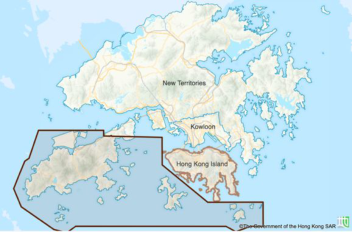
Figure 4: Proposed areas in Hong Kong for EMD Trials. (a) Islands proposed for EMD trials. Adapted from (Profiles, 2017); and (b) Major Roads on the Islands. Adapted from Open Street Maps. The figure was redrawn by the author.
PROSPECTS FOR EMDS IN HONG KONG As the Hong Kong government acknowledges that EMDs are not only risky but also have enormous social, economic, health, and environmental bene- fits (LegCO, 2021), this demonstrates its awareness that integrating these innovative micro vehicles into Hong Kong’s transport system could benefit Hong Kong society at large by improving individual accessibility through point to point transport (especially for people who have trouble with wal- king). The global phenomenon of population aging is also affecting Hong Kong. EMDs are key to supporting senior citizens and facilitating their short- distance mobility. As people age, their mobility is compromised and therefore they are mobility-wise more vulnerable (Martins et al., 2012), which may require the use of mobility assistive devices such as PMAs. Bluethmann et al. (2020) found that out of six million mobility device users in the United Sta- tes, approximately two thirds are at least 65 years old. With Hong Kong having the highest life expectancy in the world (Cheung & Yip, 2010), there is no doubt that Hong Kong authorities will always consider any sustainable innovation intended to promote the health and well-being of its citizens.
Proposed Sites for EMD Trials Based on the discussion above, we suggest that in considering the integra- tion of EMDs into Hong Kong’s public transport system, the outlying islands of Hong Kong could be excellent trial sites for micro vehicles, as opposed to the government’s proposed science parks, which are only for recreatio- nal purposes. These islands include Yat Tung Estate North, Yat Tung Estate South, Tung Chung North, Tung Chung South, Discovery Bay, Peng Chau, Hei Ling Chau, Lamma, Po Toi, Cheung Chau South, Cheung Chau North, and Lantau. Lantau Island has a well-developed public transport network and is connected to other areas such as the New Territories. Thus, commu- ters on Lantau Island could ride their micro-vehicles to and from the Tung Chung line (part of Hong Kong’s mass transit railway [MTR] system) or to the ferry. These islands are sparsely populated. According to the National Census (Profile, 2019), among all DC districts, Islands have both the highest
proportion (33.0%) of working-age individuals (25–44 years old) and the highest percentage (13.2%) of children under the age of 15, both being the likely active age for micromobility (Lukenge & Siu, 2021).
CONCLUSION AND RECOMMENDATIONS In this article, we examine the framework proposed by the Hong Kong government during the transport review of the Hong Kong Legislative Cou- ncil Panel conducted on June 19, 2020, on the use of EMDs in Hong Kong. We highlight the social, economic, environmental, and health benefits of using EMDs for short-distance travel. We also argue that even for a city like Hong Kong, which has one of the best public transport systems in the world, the benefits of EMDs cannot be overlooked. We further propose Hong Kong’s less populated outlying islands as trial sites for simulating the integration of EMDs into Hong Kong’s transport system. For example, as Lantau Island has a well-developed public transport network that is connected to other areas such as the New Territories, commuters could ride their micro vehicles to and from the Tung Chung line or to the ferry. To address public concerns about the safety of EMDs, municipal authorities could examine and regu- late the behavior of EMD riders by introducing rules and a code of conduct for EMD use. More efforts should be made to ensure the safe use of EMDs by issuing driving licenses based on users’ training and competencies and by enforcing the compulsory use of protective gear, for example, safety helmets, padded jackets, and goggles. For the safety of pedestrians, authorities could impose maximum speed limits and issue fines and tickets to those who break the rules, such as improper parking and disrespect of walkways. These regula- tions may improve the public’s attitude toward micro-vehicles’ safety. Finally, without Hong Kong Transport Department authorizing the use of EMDs, it remains difficult to measure and quantify the costs and benefits of using such devices in Hong Kong.
DECLARATION OF COMPETING INTERESTS The authors declare no potential conflict of interest.
ACKNOWLEDGMENT
The authors would like to thank the School of Design and the Research Institute for Sustainable Urban Development (RISUD) at The Hong Kong Polytechnic University for RPG research support. One of the authors, Prof. Kin Wai Michael Siu, PolyU Public Design Lab, would like to acknowledge the Visiting Chair Professorship of the Chu Tian Scholar Program of Wuhan University of Technology.
REFERENCES
Abduljabbar, R. L., Liyanage, S., & Dia, H. (2021). The role of micro-mobility in shaping sustainable cities: A systematic literature review. Transportation Research Part D: Transport and Environment, 92, 102734.
Micromobility: Challenges and Prospects for Electric Mobility Devices (EMDs) 227
Bluethmann, S. M., Flores, E., Campbell, G., & Klepin, H. D. (2020). Mobility Device Use and Mobility Disability in US Medicare Beneficiaries With and Without Cancer History. Journal of the American Geriatrics Society, 68(12), 2872–2880. Chang, A., Miranda-Moreno, L., Clewlow, R., & Sun, L. (2019). Trend or fad.
Deciphering the Enablers of Micromobility in the US. Cheung, K. S. L., & Yip, P. S. F. (2010). Trends in healthy life expectancy in Hong Kong SAR 1996–2008. European Journal of Ageing, 7(4), 257–269. Christoforou, Z., Gioldasis, C., de Bortoli, A., & Seidowsky, R. (2021). Who is
using e-scooters and how? Evidence from Paris. Transportation Research Part D: Transport and Environment, 92, 102708. Diehl, J. A., Sweeney, E., Wong, B., Sia, C. S., Yao, H., & Prabhudesai, M. (2020).
Feeding cities: Singapore’s approach to land use planning for urban agriculture. Global Food Security, 26, 100377. Garman, C. M., Como, S. G., Campbell, I. C., Wishart, J., O’Brien, K., & McLean, S.
(2020). Micro-Mobility Vehicle Dynamics and Rider Kinematics during Electric Scooter Riding (0148–7191). GovHK. (2021). The Hong Kong Geography. Hong Kong – the Facts. https://www.
gov.hk/en/about/abouthk/facts.htm King, C. C. S., Liu, M., Patel, S., Goo, T. T., Lim, W. W., & Toh, H. C. (2020).
Injury patterns associated with personal mobility devices and electric bicycles: an analysis from an acute general hospital in Singapore. Singapore medical journal, 61(2), 96. LegCO, G. (2020). Legislative Council Panel on Transport Review of the Use of Electric Mobility Devices in Hong Kong. https://www.legco.gov.hk/yr19-20/engl ish/panels/tp/papers/tp20200619cb4-698-2-e.pdf LegCO, G. (2021). Regulation of e-scooters and electric mobility devices. https://www.legco.gov.hk/research-publications/english/essentials-1920ise05- regulation-of-e-scooters-and-electric-mobility-devices.htm#endnote15 Lukenge, K. R., & Siu, K. W. M. (2021). Walkability Mobility: Re-envisioning
Non-motorized Transport (NMT) in Developing Cities for a Sustainable Future. International Conference on Applied Human Factors and Ergonomics. Martins, M. M., Santos, C. P., Frizera-Neto, A., & Ceres, R. (2012, 2012/04/01/).
Assistive mobility devices focusing on Smart Walkers: Classification and review. Robotics and Autonomous Systems, 60(4), 548–562. https://doi.org/https://doi.or g/10.1016/j.robot.2011.11.015 McQueen, M., Abou-Zeid, G., Macarthur, J., & Clifton, K. (2021). Transportation Transformation: Is Micromobility Making a Macro Impact on Sustai- nability? Journal of Planning Literature, 36(1), 46–61. https://doi.org/10.1177/ 0885412220972696 Min, J. h. (2019, 05–06-2021). Micro Mobility for the Convenient Last Mile. https://news.hyundaimotorgroup.com/Article/micro-mobility-for-the-conv enient-last-mile Mobility, P. (2021, 06–06-2021). Mobility scooters and wheel chairs. https://www.
pridemobility.com/ O’Hern, S., & Estgfaeller, N. (2020). A Scientometric Review of Powered Micromobility. Sustainability, 12(22), 9505. https://doi.org/10.3390/su12229505 Oeschger, G., Carroll, P., & Caulfield, B. (2020). Micromobility and public tran-
sport integration: The current state of knowledge. Transportation Research Part D: Transport and Environment, 89, 102628.
Profile, T. (2019). Hong Kong Population Analysed by District Council District,
2019. (Feature Article). https://www.censtatd.gov.hk/en/data/stat_report/produc t/FA100096/att/B72009FB2020XXXXB0100 Profiles, D. (2017, 2017, December, 8 ). Hong Kong Government: The “District Council District / Constituency Area (DC / CA) system”. https://www.bycensus 2016.gov.hk/en/bc-dp-new-town.html Statistics, H. (2020). Hong Kong Census and statistics. https://www.censtatd.gov.h
k/en/EIndexbySubject.html?scode=460&pcode=B1010006 Tuncer, S., & Brown, B. (2020). E-scooters on the ground: Lessons for redesigning urban micro-mobility. Proceedings of the 2020 CHI Conference on Human Factors in Computing Systems, April 2020, Honolulu HI USA. Vleugel, J., & Bal, F. (2018). The impact of a CO2 reduction target on the private
car fleet in the Netherlands. WIT Transactions on Ecology and the Environment, 215, 109–112. Wong, S., Tong, C., Lam, W. C., & Fung, R. Y. (2000). Development of parking demand models in Hong Kong. Journal of Urban Planning and Development, 126(2), 55–74. Yabushita, H., Hirata, Y., Kosuge, K., & Wang, Z. (2003). Environment-adaptive
control algorithm of power assisted cycle. IECON’03. 29th Annual Conference of the IEEE Industrial Electronics Society (IEEE Cat. No. 03CH37468), Roanoke, VA, USA. Yang, C., Li, Q., Zhao, T., Liu, H., Gao, W., Shi, T., Guan, M., & Wu, G. (2019).
Detecting spatiotemporal features and rationalities of urban expansions within the Guangdong–Hong Kong–Macau Greater Bay Area of China from 1987 to 2017 using time-series Landsat images and socioeconomic data. Remote Sensing, 11(19), 2215.
LISTED IN THE AHFE DIGITAL BOOKSTORE CATALOGUE
Explore the complete digital volume
Human Factors in Transportation
Read this individual research paper free through the original publisher, or explore the full digital proceedings book.
ISBN 978-1-958651-36-0
Explore this ISBN in the AHFE Bookstore ↗Listed in the July 2026 bookstore catalogue; search by ISBN to confirm current availability · Digital book purchase optional