Maria Guarino, Marlene Lages, Ipek Suluova, Rui Fonseca Pinto, Nuno Lopes (2022). The CBmeter: designing innovative strategies for early diagnosis of metabolic diseases. In: Human Dynamics and Design for the Development of Contemporary Societies. AHFE Open Access, vol. 25, pp. 368–375. https://doi.org/10.54941/ahfe1001410
Diabetes is a disease with high prevalence worldwide, however, about 44% of patients are asymptomatic, which leads to a later diagnosis of the disease and, consequently, increases the risk of developing complications. The development of new approaches for early diagnosis is imperative to allow proper adoption of preventive measures. From a motivational point of view, it is easier for patients to adopt healthy eating habits and lifestyles when there is an altered marker that indicates subclinical disease, particularly in a pathology that remains asymptomatic until advanced stages. Thus, timely diagnosis based on a measurable and monitorable indicator is extremely important so that such behaviors are implemented as early as possible, increasing effective health gains and reducing the costs related to this pathology. Pre-clinical studies in animal models have shown that the etiology of type 2 diabetes mellitus (T2DM) is related to alterations in the carotid bodies (CB), chemosensory organs located in the bifurcation of the carotid arteries. In animals with T2DM it has been observed that the CBs are overactivated causing an increased heart rate, respiratory rate, and blood glucose levels. In humans, this mechanism has been confirmed but is not yet well-characterized. This paper highlights the importance of developing a device that allows early detection of changes in CB activity correlating it with emerging diabetes. The design strategies to prototype the CBmeter were to model and characterize the features of interest for the diagnosis- respiratory rate, heart rate, peripheral oxygen saturation and glucose - in healthy people and people with diabetes using a combination of set commercial sensors pre-existent in the market that were integrated to collect real-time data. After determining health and disease patterns, the CBmeter development pipeline includes a co-design approach in which physiologists, endocrinologists, nurses, computer and electrical engineers, designers and patients are collaborating to develop an easy-to-use, portable, and minimally invasive medical device that associates CB function with endocrine dysregulation, with very small discomfort and risk for users. The definition and specification of the most appropriate architecture for the CBmeter, in order to allow its modularity, signal acquisition and consequently the communication between the sensor/device and the receiver/backend in the most efficient way is being allied to the selection of materials, tools and steps to create an innovative product, that will fill a technical gap in the market, designed for the early diagnosis of metabolic diseases, in a subclinical phase, with the potential to contribute with significant gains for public health in the medium/long term.
The CBmeter: Designing Innovative Strategies for Early Diagnosis of Metabolic Diseases 369
INTRODUCTION
Diabetes is a disease with high prevalence worldwide, however, about 183 million people, or half of those who have diabetes, are unaware they have the disease, which leads to a later diagnosis and, consequently, increases the risk of developing complications (Ogurtsova et al., 2021). There are several approaches to diagnose diabetes, all to be carried out in a health care set- ting and usually requiring confirmation on a second day (Chamberlain et al., 2016). One of the diagnosis techniques consists in determining blood hemo- globin A1C (HbA1c) levels to evaluate mean blood sugar for the past two to three months. The test requires a single peripheral blood collection but has the advantage of not requiring fasting of the patient to be performed. A second test consists in measuring Fasting Plasma Glucose (FPG) by checking blood sugar levels after an 8hour fasting period. The test is usually done first thing in the morning, before breakfast and it also requires blood sample collections. Finally, the Oral Glucose Tolerance Test (OGTT) is a two-hour test that veri- fies blood sugar levels repeatedly before and after ingestion of a standardized sweet drink. All the above-mentioned methodologies are invasive since they involve blood sample collection and, most of all, they are not effective in dia- gnosing the disease in an early phase. Type 2 diabetes mellitus (T2DM) can be present for 9–12 years before being diagnosed and, as a result, complications are often present at the time of diagnosis (Harris et al., 1992). The potential does exist to prevent the onset of T2DM as several randomized control trials have shown that both lifestyle and pharmacologic interventions in adults are effective (Tuomilehto et al., 2001; UKPDS, 1998). To contribute to increasing self-monitoring we need better and less invasive diagnostic tools that look at the onset of the disease and not to clinical manifestations. From a motiva- tional point of view, it is easier for patients to adopt healthy eating habits and lifestyles when there is an altered marker that indicates subclinical dis- ease, particularly in a pathology that remains asymptomatic until advanced stages. Thus, timely diagnosis based on a measurable and monitorable indi- cator is extremely important so that such behaviors are implemented as early as possible, increasing effective health gains and reducing the costs related to this pathology. Pre-clinical studies in animal models have shown that the etiology T2DM is related to alterations in the carotid bodies (CB), chemo- sensor organs located in the bifurcation of the carotid arteries. In animals with T2DM it has been observed that the CB respond to hyperinsulinemia by increasing heart rate, respiration rate and blood glucose levels. In humans, this mechanism has been confirmed but is not yet well-characterized. Thus, the main objective of our team is to build a system that allows early detection of changes in CB activity, correlated with T2DM and subclinical predia- betes. The development of a significant and meaningful process for all the stakeholders requires the involvement of healthcare providers and patients. Co-participatory design tools are powerful instruments in improving health- care, helping to create better experiences and to improve patient outcomes. Traditional healthcare is research-based on clinical data collection however, healthcare does not only happen in the clinic (Slattery et al., 2020). Herein we describe a collaborative approach to develop a new product/service that
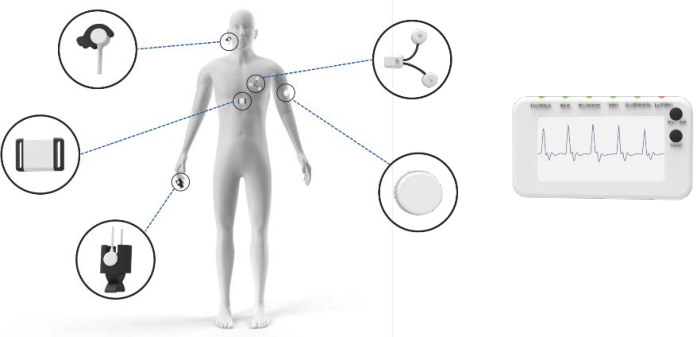
Figure 1: Representation of the placement of sensors for evaluating physiological signals. Peripheral oxygen saturation is assessed using a sensor placed on the ear- lobe or a finger. Respiratory rate is assessed using a sensor placed on the thorax. Heart rate assessment is measured using three electrodes placed on the left side of the chest. Interstitial glucose is measured by a continuous monitoring sensor placed on the side of the forearm. Signals are acquired and sent in real-time to the hub with a data visualization screen.
represents both a scientific step forward and a considerable user experience improvement.
DEVELOPING A SYSTEM FOR EARLY DIAGNOSIS OF SUB-CLINICAL METABOLIC DISEASES Sensing vital signs to diagnose metabolic diseases
The CBmeter consists of a set of sensors that measure respiratory rate, heart rate, peripheral oxygen saturation, and glucose, the sensors identified by the experts in the fields of Metabolism and Carotid Body as necessary to per- form diagnosis based on the CB hypothesis (Cunha-Guimarães et al., 2020; Lages et al., 2021). Currently, there is no easy-to-use, portable medical device that associates the diagnosis of CB function with metabolic function availa- ble in the market. Also, it is not common clinical practice to associate these organs with endocrine dysregulation. The CBmeter emerges as an innovative approach designed for the early diagnosis of metabolic diseases, in a subclini- cal phase, with the advantage of being minimally invasive, reducing the risks related to its use as a diagnostic method in a clinical context. End users are the healthcare professionals at Primary Care Centers who, in collaboration with the researcher team, defined the main requirements and specifications. Based on the expert and end-user opinion, the most appropriate architecture of the CBmeter was defined to allow its modularity, signal acquisition, and communication between the sensor/device and the receiver/backend. This architecture, depicted in Figure 1, represents the core of the system and the pillar to define the device design, as well as the selection of materials, tools, and steps allied to the production.
The CBmeter: Designing Innovative Strategies for Early Diagnosis of Metabolic Diseases 371
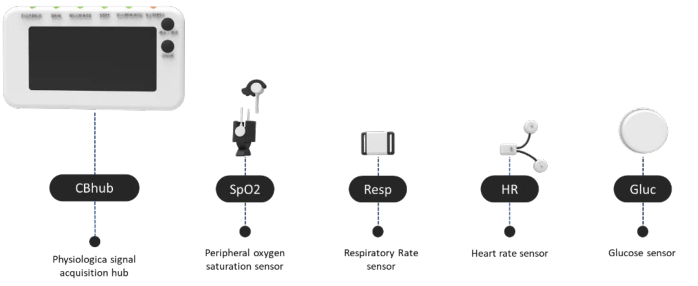
Figure 2: The CBmeter is composed of a set of sensors for measuring physiological signals and a hub for data acquisition and storage. The sensors were designed to be wireless and ergonomically comfortable for users.
To accomplish the next step in the CBmeter pipeline, the following steps are ongoing: 1) Development of miniaturized wireless sensors to monitor ele- ctrophysical vital signs and biochemical parameters in a non-invasive way; and 2) Definition of materials to encapsulate the electronic components and respective energy sources suitable for the development of compact, autono- mous, and low-cost CBmeter device. Our team settled an initial proof of concept consisting of a set of commercially available sensors to evaluate t the potential and feasibility of the CBmeter study (Lages et al., 2021). This early prototype consisted of an inductance respiratory plethysmography system embedded in a thoracic elastic band; three electrodes for the acquisition of the electrocardiogram tracing, a peripheral oxygen saturation sensor conne- cted to an acquisition and recording module responsible for data collection and recording in memory, and a commercially available continuous glucose monitoring sensor that was utilized to monitor glucose during the preliminary feasibility tests.
The Challenge of Glucose Monitoring The next phase in the CBmeter project will be pilot production. While the sensors required for non-invasive heart rate, respiratory rate, and oxygen saturation assessment do not represent a hurdle, since the technology for its signal acquisition is well described in the literature (Liu et al., 2019; Krizea et al., 2020), glucose sensors represent a major challenge.
The technology related to glucose sensors has evolved immensely in the last decade. Self-monitoring blood glucose plays a key role in diabetes mana- gement but performing finger pricking several times every day has a lot of burden to the patients being considered as time-consuming, painful and decreasing quality of life (Chase et al., 2001). In addition, since insulin need- les and test strips are single-use, they harm the environment and increase the financial burden. Factors such as shelf life, storage conditions, and not disin- fecting the area to be measured affect the accuracy of blood glucose levels. Even though measurement of HbA1c has been the traditional way to evaluate
glycemic control, it does not give enough information about hyperglycemia and hypoglycemia which have been related to complications of the disease (Danne et al., 2017). Continuous Glucose Monitoring (CGM) contributes to the elimination of many limitations found in the HbA1c test and is divi- ded into real-time CGM (rtCGM) and intermittently scanned CGM (isCGM) (Edelman et al., 2018). CGM devices have started to replace fingerpicking for the last 10 years to reduce the burden and distress of patients with diabetes and to enable healthcare professionals to see the complete profile of their glucose levels. Continuous Glucose Monitoring devices consist of a sensor placed under the skin, an electrical part on the skin, a transmitter that provi- des data storage, and a reader (a smartphone or a smartwatch) to which data is sent. The sensor continuously measures the glucose concentration in the interstitial fluid (ISF) through a biochemical reaction catalyzed by the glu- cose oxidase enzyme and converts it to an electrical signal. These signals are converted to blood glucose levels by an algorithm. The data which is stored in the transmitter is sent to the receiver every 5-15 minutes. Although CGM devices have revolutionized the field of diabetes technologies, especially in recent years, they have various limitations. Pain and bleeding during the pla- cement of the sensors, the limitation of the areas where they can be placed, and skin reactions caused by adhesives are also stated as disadvantages of the sensors. In the same study, parents reported that the use of CGM allowed them to sleep more, their fear of hypoglycemia and hyperglycemia decrea- sed, and their sense of confidence increased (Hilliard et al., 2019). Carrying additional technological devices in a patient’s body causes the visibility of the disease to increase, which can affect the psychology of the patient. In a study investigating the effect of CGM use on psychosocial factors, patients were stated that the use of CGM made their diabetes visible and increased their body perception concerns about their appearance in society (Ritholz et al., 2010). Despite mostly blood, interstitial fluid and urine samples being used today, non-invasive innovative approaches for glucose monitoring are cur- rently being developed in biological matrixes like saliva, sweat, or tears. The methods used to measure glucose concentration are divided into invasive or non-invasive, depending on whether they harm human skin or not. The deter- mination of glucose concentration in body fluids is considered promising and important because they are non-invasive methods. However, these “weara- ble sensors” have their specific limitations in terms of availability, sampling, and reproducibility (Heikenfeld et al., 2019; Kim et al., 2019). As sweat- based sensors stand out with their advantages such as being wearable, easy collection of the sample, and providing continuous monitoring; they have limitations such as being easily affected by pH changes, needing to be diluted 100 times more than ISF, and affecting the result by previous sweat residues in the sensor (Kim et al., 2019). In the saliva-based methods, sample collection is easy and non-invasive; however low correlation, favorable for bacterial growth, calibration challenges, low sensitivity, and discomfort in long-term use in the mouth are the obstacles to this method (Yang and Gao, 2019). Con- tact lens-type glucose sensors are known for the cleanliness of the sample, the stability of glucose concentrations, and the transmission of real-time data via the wireless network. However, it has not yet found a place in the market
The CBmeter: Designing Innovative Strategies for Early Diagnosis of Metabolic Diseases 373
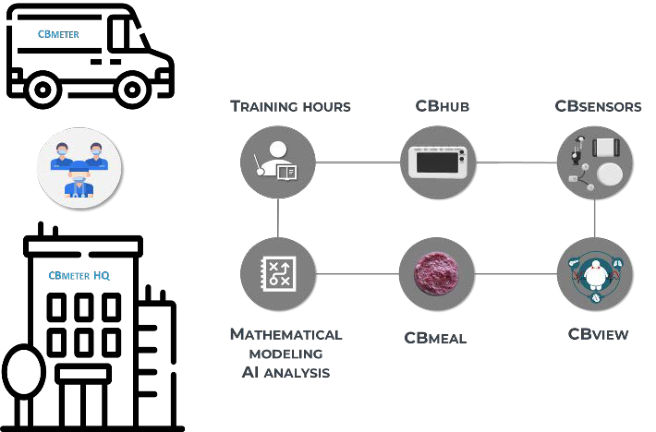
Figure 3: CBmeter is an integrated solution that includes the technological tools and the training necessary for its correct use. The service will include solutions designed according to the needs of healthcare professionals and primary healthcare centers.
due to its non-ergonomic use, energy supply problem, and low sensitivity (Kownacka et al., 2018). The CBmeter system will include a modular glu- cose sensor and health care professionals and experts in the field all indicated that it should be developed for the detection of glucose in biological matrixes more easily accessible than blood. Recent studies have proven the accuracy and reproducibility of systems based on sweat glucose concentration to esti- mate blood glucose levels using sweating-stimulation disks impregnated with carbachol. These drug-releasing systems allow the integration between the stimulation of sweat production and the detection of analytes. Our team is currently collaborating with a multidisciplinary research group to develop an innovative glucose biosensor based on the use of polymers with specific binding sites for glucose, combined with optic fiber sensors.
CONCLUSIONS
The CBmeter is an innovative system for the diagnosis of T2DM risk at the very early onset of the disease, assuming itself as a tool available for healthcare professionals to aid in the adoption of preventive measures. The stakeholders participating in the project manifested a longing for a wire- less and non-invasive system that can provide accurate data. The success of the CBmeter system will also be influenced by its robustness, consiste- ncy, transparency, and the ability to protect personal health data (Rupp et al. 2016). The shape, comfort level, and time consumption on daily activities of health care professionals are also key factors for the success of adoption of the system in the long term. In some primary care settings, there will be no room available to perform the tests and a mobile unit may be necessary to implement the technology in these communities (Figure 3).
A well-designed integrated solution that involves training hours for heal- thcare professionals, mathematical modeling for easy interpretation of data, intuitive interfaces a support team that may assist doubts and difficulties in the utilization of the system are also variables that need to be considered.
ETHICS APPROVAL The CBmeter project was submitted to Ethical approval by Leiria Hospital Center’s Ethics Committee.
ACKNOWLEDGMENT
The authors would like to acknowledge FCT/SAICT-POL/23278/2016, Bolsa Bragança Parreira – Portuguese Diabetes Society 2018; Alfredo da Silva| COTEC 2021 and FCT/UIDB/05704/2020. Marlene Lages holds a PhD fellowship FCT/2021.07673.BD.
REFERENCES
Chamberlain, J. J., Rhinehart, A. S., Shaefer Jr, C. F., & Neuman, A. (2016). Diagnosis and management of diabetes: synopsis of the 2016 American Diabetes Associa- tion Standards of Medical Care in Diabetes. Annals of internal medicine, 164(8), 542–552. Chase, H.P., Kim, L.M., Owen, S.L., MacKenzie, T.A., Klingensmith, G.J., Murtfeldt,
R., Garg, S.K., 2001. Continuous Subcutaneous Glucose Monitoring in Children With Type 1 Diabetes. Pediatrics 107, 222–226. https://doi.org/10.1542/peds.107. 2.222 Cunha-Guimaraes, J. P., Guarino, M. P., Timóteo, A. T., Caires, I., Sacramento, J. F., Ribeiro, M. J., ... & Conde, S. V., 2020. Carotid body chemosensitivity: early bio- marker of dysmetabolism in humans. European Journal of Endocrinology, 182(6), 549–557. Danne, T., Nimri, R., Battelino, T., Bergenstal, R.M., Close, K.L., DeVries, J.H.,
Garg, S., Heinemann, L., Hirsch, I., Amiel, S.A., Beck, R., Bosi, E., Buckingham, B., Cobelli, C., Dassau, E., Doyle, F.J., Heller, S., Hovorka, R., Jia, W., Jones, T., Kordonouri, O., Kovatchev, B., Kowalski, A., Laffel, L., Maahs, D., Murphy, H.R., Nørgaard, K., Parkin, C.G., Renard, E., Saboo, B., Scharf, M., Tamborlane, W. v., Weinzimer, S.A., Phillip, M., 2017. International Consensus on Use of Continuous Glucose Monitoring. Diabetes care 40, 1631–1640. https://doi.org/10.2337/DC 17-1600 Lages, M., Carvalho, L., Feijó, S., Vieira, A., Fonseca-Pinto, R., & Guarino, M. P.,
2021. CBmeter study: protocol for assessing the predictive value of peripheral chemoreceptor overactivation for metabolic diseases. BMJ open, 11(8), e042825. Liu, H., Allen, J., Zheng, D., & Chen, F., 2019. Recent development of respiratory rate measurement technologies. Physiological measurement, 40(7), 07TR01. http s://doi.org/10.1088/1361-6579/ab299e Edelman, S. v, Argento, N.B., Pettus, J., Hirsch, I.B., 2018. Clinical Implications of
Real-time and Intermittently Scanned Continuous Glucose Monitoring. Diabetes Care 41. https://doi.org/10.2337/dc18-1150 Harris M.I., Klein R., Welborn T.A., Knuiman M.W. Onset of NIDDM occurs at least 4–7 years before clinical diagnosis. Diabetes Care. 1992;15:815–819.
The CBmeter: Designing Innovative Strategies for Early Diagnosis of Metabolic Diseases 375
Heikenfeld, J., Jajack, A., Feldman, B., Granger, S.W., Gaitonde, S., Begtrup, G., Katchman, B.A., 2019. Accessing analytes in biofluids for peripheral biochemical monitoring. Nature biotechnology 37, 407–419. https://doi.org/10.1038/S41587- 019-0040-3 Hilliard, M.E., Levy, W., Anderson, B.J., Whitehouse, A.L., Commissariat, P. v.,
Harrington, K.R., Laffel, L.M., Miller, K.M., van Name, M., Tamborlane, W. v., Desalvo, D.J., Dimeglio, L.A., 2019. Benefits and Barriers of Continuous Glu- cose Monitoring in Young Children with Type 1 Diabetes. Diabetes technology & therapeutics 21, 493–498. https://doi.org/10.1089/DIA.2019.0142 Kim, J., Campbell, A.S., de Ávila, B.E.F., Wang, J., 2019. Wearable biosensors for healthcare monitoring. Nature biotechnology 37, 389–406. https://doi.org/10. 1038/S41587-019-0045-Y Kownacka, A.E., Vegelyte, D., Joosse, M., Anton, N., Toebes, B.J., Lauko, J., Buz-
zacchera, I., Lipinska, K., Wilson, D.A., Geelhoed-Duijvestijn, N., Wilson, C.J., 2018. Clinical Evidence for Use of a Noninvasive Biosensor for Tear Glucose as an Alternative to Painful Finger-Prick for Diabetes Management Utilizing a Biopoly- mer Coating. Biomacromolecules 19, 4504–4511. https://doi.org/10.1021/ACS. BIOMAC.8B01429 Krizea, M., Gialelis, J., Kladas, A., Theodorou, G., Protopsaltis, G., Koubias, S., 2020. "Accurate Detection of Heart Rate and Blood Oxygen Saturation in Reflective Photoplethysmography," 2020 IEEE International Symposium on Signal Processing and Information Technology (ISSPIT), 1–4, doi: 10.1109/IS- SPIT51521.2020.9408845. Ogurtsova, K., Guariguata, L., Barengo, N. C., Ruiz, P. L. D., Sacre, J. W., Karu-
ranga, S., ... & Magliano, D. J., 2021. IDF diabetes Atlas: Global estimates of undiagnosed diabetes in adults for 2021. Diabetes research and clinical practice, 109118. Ritholz, M.D., Atakov-Castillo, A., Beste, M., Beverly, E.A., Leighton, A., Weinger, K., Wolpert, H., 2010. Original Article: Education and Psychological Aspe- cts Psychosocial factors associated with use of continuous glucose monitoring. Diabet. Med 27, 1060–1065. https://doi.org/10.1111/j.~1464--5491.2010. 03061.x Rupp, M. A., Michaelis, J. R., McConnell, D. S., & Smither, J. A. (2016, September).
The impact of technological trust and self-determined motivation on intentions to use wearable fitness technology. In Proceedings of the human factors and ergo- nomics society annual meeting (Vol. 60, No. 1, pp. 1434–1438). Sage CA: Los Angeles, CA: SAGE Publications. Slattery, P., Saeri, A. K., & Bragge, P., 2020. Research co-design in health: a rapid overview of reviews. Health research policy and systems, 18(1), 1–13 Tuomilehto J., Lindstrom J., Eriksson J.G., Valle T.T., Hamalainen H., Ilanne-Parikka
P. Prevention of type 2 diabetes mellitus by changes in lifestyle among subjects with impaired glucose tolerance. N Engl J Med. 2001;344(18):1343–1350. UK Prospective Diabetes Study (UKPDS) Group Intensive blood-glucose control with sulphonylureas or insulin compared with conventional treatment and risk of complications in patients with type 2 diabetes (UKPDS 33) Lancet. 1998;352(9131):837–853 Yang, Y., Gao, W., 2019. Wearable and flexible electronics for continuous molecular
monitoring. Chemical Society reviews 48, 1465–1491. https://doi.org/10.1039/ C7CS00730B
LISTED IN THE AHFE DIGITAL BOOKSTORE CATALOGUE
Explore the complete digital volume
Human Dynamics and Design for the Development of Contemporary Societies
Read this individual research paper free through the original publisher, or explore the full digital proceedings book.
ISBN 978-1-958651-01-8
Explore this ISBN in the AHFE Bookstore ↗Listed in the July 2026 bookstore catalogue; search by ISBN to confirm current availability · Digital book purchase optional