Cláudia Lima, Susana Barreto, Rodrigo Carvalho (2022). Interpreting Francis Bacon's Work through Contemporary Digital Media: Pedagogical Practices in University Contexts. In: Human Dynamics and Design for the Development of Contemporary Societies. AHFE Open Access, vol. 25, pp. 446–453. https://doi.org/10.54941/ahfe1001420
This paper describes two pedagogical practices based on Francis Bacon’s graphic Works. One in a curricular context, held at Escola Superior Artística do Porto, and the other in an extracurricular context held at Universidade Lusófona do Porto (both in Portugal), which aimed to stimulate students towards a critical analysis and interpretation of Francis Bacon's work and its recreation using contemporary digital media. This initiative was integrated in the Graphic Works of Francis Bacon exhibition at the World of Wine Museum in Vila Nova de Gaia and was the result of a collaboration between this Museum, the Academy and the Renschdael Art Foundation, a collaboration that aimed to give voice and life to a debate emerging from the exhibition of the work of art and its multimedia translation. Hence, it was intended to complement the exhibition of the artist's works with a multimedia language, through multiple interpretations and digital animations of the Painter's work made by the students and targeted at digital natives as one stream of the exhibition was to target local primary and secondary schools.The participants involved in this project came from various BAs, including Communication Design, Fine Arts and Intermediate, Visual Arts - Photography, Cinema and Audiovisual, Audiovisual Communication and Multimedia, Video Games and Multimedia Applications. This allowed to bring together multidisciplinary groups of students with different profiles and backgrounds, contributing to a myriad of results both in visual terms and technological resources, which included approaches such as: the use of techniques close to rotoscoping in which students created drawings frame by frame over the original images; the exploration of cut-out animation techniques; the recreation of Francis Bacon's work in 3D; explorations of image manipulation, editing, and video effects.In an academic context, these practices resulted in an in-depth knowledge of the work of an artist from a generation different from that of the students; an opportunity for them to work with a real client, applying in a project the knowledge obtained in various curricular units of the BAs they are attending; and the possibility of seeing their work integrated in an international exhibition. As regards to the Graphic Works of Francis Bacon exhibition, this academic project brought a new dynamic to the space combining graphic works by the Painter with multiple interpretations of a generation to whom digital media are omnipresent.In this paper, the pedagogical practices adopted in both Universities are described, projects by students are analyzed as well as the contribution that these projects brought to the exhibition through information gathered from visitors, from articles published on the event and through an interview conducted with the exhibition curator.The exhibition, according to the commissioner, Charlotte Crapts, had an "impressive" turnover bearing in mind that the country was going through Covid restrictions. In the commissioner’s view, the multimedia interventions created a bridge with the educational sector and following this, the exhibition interacted with a great number of youngsters. This was a pioneer exercise in the exhibition space that will be followed in future exhibitions.
In 2020–21 two pedagogical practices based on Francis Bacon’s graphic works were developed in Portuguese universities: one in a curricular con- text, held at Escola Superior Artística do Porto (ESAP), and the other in an extracurricular context held at Lusófona University of Porto (ULP). These practices aimed to stimulate students towards a critical analysis and interpre- tation of Francis Bacon’s work and its recreation using contemporary digital media. It was an initiative integrated within the Graphic Works of Francis Bacon exhibition held at the World of Wine Museum in Vila Nova de Gaia (Portugal) between 29th April and 26th September 2021 and was the result of a collaboration between this Museum, the Academy and the Renschdael Art Foundation, a collaboration that aimed to give voice and life to a debate emer- ging from the exhibition of the work of art and its multimedia translation. Hence, it was intended to complement the exhibition of the artist’s works
Interpreting Francis Bacon’s Work through Contemporary Digital Media 447
with a multimedia language, through multiple interpretations and digital animations of the Painter’s work made by the students and targeted at digi- tal natives as one stream of the exhibition was to target local primary and secondary schools.
The practices implemented in both universities were based on a set of methodologies developed within the Wisdom Transfer (https://wisdomtran sfer.fba.up.pt) project aiming to promote knowledge transfer between reti- red artists and designers and current art and design students and based on workshop models tested within this project (Barreto et al., 2021). Spe- cifically, the programs and outcomes of three workshops were analyzed: the workshop “The narrative possibilities of illustration in transgeneratio- nal dialogue”, held at the Faculty of Fine Arts of the University of Porto (Lima et al., 2022; Santos, 2020); the workshop “Typographical essays as a contribution to the transfer of transgenerational knowledge”, held at the Lusófona University of Porto (Lima et al., 2020, 2022); and the workshop “Procedural pattern interpretations of the work of António Quadros Fer- reira”, held at the Polytechnic Institute of Cávado and Ave (Barreto et al., 2021). From the analysis of these workshops, a set of practices were identified that contributed significantly to raising greater interest and involvement of students in the proposed projects; broadening knowledge about artists and works from other generations; stimulating the sharing of knowledge betw- een students with different profiles (Lima et al., 2020). Of these identified practices, we highlight: the possibility of attending the workshop for free, the only requirement being the students’ commitment and engagement; the encouragement of proximity between teachers and students, dissipating noti- ons of hierarchy in favor of a more collaborative work; the creation of an environment similar to artists’ studios in order to stimulate greater proxi- mity, sharing of ideas and experiences; the gathering of a reduced number of participants which allows a greater follow-up of all the work, the involve- ment of all (teachers and students) in the project and a sense of belonging and commitment; the engagement of participants coming from different artistic areas, envisaging multidisciplinary groups (Lima et al., 2020, 2022; Santos, 2020). These practices were adapted for the two workshops on the work of Fra- ncis Bacon, taking into account the artist’s profile, the briefing proposed and the nature of the institutions involved in the project: the World of Wine Museum space destined for the Francis Bacon exhibition; the ESAP where a first workshop was held in the curricular context of the discipline Art and Multimedia Communication, which gathers students from the BAs of Com- munication Design, Fine Arts and Intermediate, Visual Arts - Photography, Cinema and Audiovisual; the ULP where a second workshop was held in an extracurricular context and involving students from the BAs in Communica- tion Design, Audiovisual and Multimedia Communication, and Video Games and Multimedia Applications; the Foundation that represents Francis Bacon, Renschdael Art Foundation.
METHODOLOGY
Based on an exploratory study, we hypothesize that the reinterpretation of works by artists from past generations, such as Francis Bacon, through con- temporary digital media will raise greater interest among young people and lead to a more meaningful learning of art. The study was conducted by three researchers, who led the two workshops. Therefore, the participant observa- tion method and informal interviews were used to analyze the process and results of the workshop as well as the impact it had on the learning of artistic knowledge by the students.
In the workshops held, participants were initially given a biographical contextualization of the Painter and presented a set of artworks that allo- wed them to recognize and understand the characteristics of Bacon’s work, including: the frequent use of photography; the reinterpretation of clas- sic paintings, often dramatizing the scenes portrayed in an almost tragic way and appealing to catharsis; the representation of fragments of reality mixed with planes sometimes neutral and combining multiple perspecti- ves; the dramatized representation of the portrait and self-portrait also from multiple perspectives taking the observer to a parallel universe to Picasso’s (Kol, 1995). Simultaneously with this ubiquity of angles, it was also appointed the artist’s intentionality in exploring dragging effects in the painting, according to him, “to look as if a human being had passed between them [the pictures], like a snail, leaving a trail of the human presence and memory trace of past events, as the snail leaves its slime” (Bacon as cited in Peppiat, 2009).
This contextualization was supported by bibliography and videos about Bacon’s life, his social circuit, and his art studio, a place where he worked for 20 years with an assortment of paint daubs splattered all over the space and hundreds of magazines and photographs mixed in the floor, tables, and chairs, tins with dried paints, paint-hardened bru- shes, fabrics full of color stains that Bacon used either to create tex- tures in the paintings or to occasionally clean the materials, and color- stained canvases (Edwards & Ogden, 2001). A presentation by the exhibition commissioner, Charlotte Crapts, was also done who provi- ded a bridge between the artist’s work, the exhibition concept, and expectations.
Two exercise proposals were then presented:
1) the reinterpretation of an artwork by Bacon through the use of digital media: the student was challenged to give “life” to the work through digital animation; 2) a portrait of the Painter based on a photographic image, an approach close to the artist’s own working methodology, who preferred to “work from photographs” (Part of a Bigger Plan, 2018; Sylvester, 1999).
Given the pandemic context and successive lockdowns in the country, both workshops were held online.
The first workshop was carried out at ESAP between November 2020 and January 2021 within the curricular unit of Art and Multimedia
Interpreting Francis Bacon’s Work through Contemporary Digital Media 449
Communication with 31 students participating. As part of them, at that time, still had little (or no) knowledge in the multimedia area, it was given the option to do this work resorting to image manipulation with software such as Photoshop with outcomes presented in animated GIF format. The intention was not to condition the development of the work by possible technological limitations.
For the second workshop, held at ULP, the extracurricular model was chosen to bring together participants with different profiles and vocations, although all coming from artistic areas, and to overcome possible constraints arising from the obligation to carry out the project and subsequent evalu- ation, which could result in student demotivation. This model allowed to gather a multidisciplinary and multifaceted group of 12 students: 7 from the Communication Design BA, 3 from the Audiovisual Communication and Multimedia BA, and 2 from the Video Games and Multimedia Appli- cations BA. These students were selected due to their previous academic work.
The workshop was divided into four sessions, held between January and February 2021, a teaching break period between the first and second seme- ster that allowed participants to develop the projects without an overload of assignments of curricular units of the BAs they were attending. The sessions were guided by two teachers, one from the area of design and visual arts, the other from the area of design and multimedia. The first session was dedicated to the contextualization and presentation of the project (as mentioned above) with the presence of Charlotte Crapts and a researcher involved in the pro- duction of the exhibition and supervisor of the first workshop, held at ESAP. In the second session, Bacon’s works to be digitally reinterpreted were iden- tified and analyzed and the final two sessions were reserved for the practice and presentation of projects, analysis and discussion of creative approaches, technical and functional aspects.
After the workshops and subsequent exhibition in the World of Wine Museum, an analysis was made of the outcomes of the workshop process, comparing the results obtained in both universities and through informal interviews with the students. The impact that the animations developed by the students had on the exhibition was also subject of study: texts publi- shed in the media were analyzed and informal interviews with the exhibition curator and visitors to the exhibition were conducted.
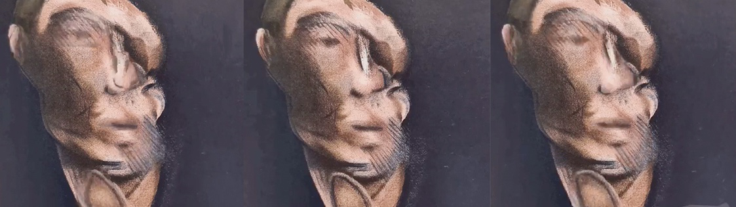
WORKSHOP RESULTS This project for a real client and the perspective of its inclusion in an inter- national exhibition had a very exciting effect on students in general who revealed a strong commitment and whose performance and dedication cul- minated in diverse interpretations and results. The outcomes demonstrated a clear identification and understanding of concepts and characteristics underl- ying the Painter’s work, whether in terms of graphic approach or in terms of the animations created. For example, the drag effect so common in Bacon’s work was one of the characteristics widely used by students as in Figure 1.
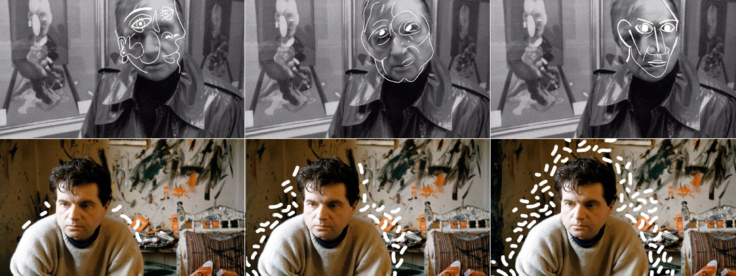
Figure 1: Animation stills by Ricardo Ferreira.Figure 2: Animation stills by Klara Tapadas.Figure 3: Animation stills by Luana Baia (first row) and Fabiana Ferreira (second row).
Other participants appropriated, deconstructed, and reconstructed Bacon’s work exploring techniques such as cut-out animation in which ele- ments of his works or photos were cut out and animated giving life and movement to the static images as in Figure 2.
Another common approach was the use of techniques close to rotoscope in which students created frame-by-frame drawings over the original images. In certain cases, these drawings replicate the original image, in other cases they add new elements expanding the works (Figure 3).
These techniques of cut-out and rotoscope were the most used, however, other technical explorations emerged occasionally, such as a 3D recreation of one of the paintings of the triptych Second Version of Triptych (1944), with the animation being done through camera movement within the work itself, giving us a new spatial perspective on it; or explorations of image manipulation and editing and video effects (Figure 4).
Interpreting Francis Bacon’s Work through Contemporary Digital Media 451
Figure 4: Animation stills by Pedro Machado.
The works developed were presented in the exhibition Graphic Works of Francis Bacon on 2 television monitors in a space with reduced light to isolate the videos and create an autonomous and more engaging environment. These monitors were placed at the end of the exhibition route, providing the visitor with an experience that began with the contact with Francis Bacon’s graphic work and a video recorded in his studio, and ended with the projection of the students’ digital interpretations of his work. These interpretations, many of them with soundtracks, were displayed in rotation, on a loop, with the sound of the monitors being alternately activated.
DISCUSSION
The outcomes resulted in very different approaches both creatively and in terms of technical resources. The training of each participant largely determined the approach to be followed and the digital technologies to be implemented. On the other hand, the periodic presentation and discussion of works allowed a greater interaction among participants and the sharing of ideas, contributing to and influencing the evolution of proposals.
Other factors greatly contributed to the diversity of results, namely the multiplicity of visual resources provided, which included images of pain- tings, photographs used by the artist to develop his compositions, images of his studio with numerous materials and working tools, biographical pho- tographs, videos, texts, and quotes. All these elements were absorbed and integrated in different ways in the animations that explored aspects such as: the chaotic side of the artist who claimed to work better in the midst of chaos (Part of a Bigger Plan, 2018); the combination of multiple planes; the transformation of the work into a three-dimensional object providing the viewer with a virtual tour around the portrayed figure; the construction and deconstruction of the portrait symbolically representing the languor and drag of the image; the succession of photographic negatives used by the artist in passages and sequences that refer to a more cinematographic envi- ronment; chromatic contrasts and vibrant color palettes reinforced by the presence of black backgrounds; the excessive dramatization of the figure portrayed.
This initiative had a strong impact not only in the academic context but in the community where the exhibition was held being covered by several natio- nal and international media interested in reporting the results of an exhibition that combined the graphic works of Francis Bacon with animated interpre- tations by students. As stated in an email from the commissioner Charlotte
Crapts on 8th November 2021, the exhibition had an “impressive” turnover bearing in mind that the country was going through Covid restrictions. In the commissioner’s view, the multimedia interventions created a bridge with the educational sector and following this, the exhibition interacted with a great number of youngsters. This was a pioneer exercise in the exhibition space that will be followed in future exhibitions.
CONCLUSION
The study shows that the reinterpretation of artworks from a past genera- tion through contemporary digital media increases interest in young people, both in art students (contributing to more meaningful learning) and in the exhibition audience.
The workshops held at ESAP and ULP allowed students an in-depth kno- wledge of the work of an artist from a generation different from theirs; an opportunity for them to work with a real client, applying in a project the kno- wledge obtained in various curricular units of the BAs they were attending; and the possibility of seeing their work integrated into an international exh- ibition. Participants came from a variety of BAs, including Communication Design, Fine Arts and Intermediate, Visual Arts - Photography, Cinema and Audiovisual, Audiovisual Communication and Multimedia, Video Games and Multimedia Applications. This allowed to bring together multidiscipli- nary groups of students with different profiles and backgrounds, contributing to a myriad of results both in visual terms and technological resources, which included approaches such as: the use of techniques close to rotoscoping in which students created drawings frame by frame over the original images; the exploration of cut-out animation techniques; the recreation of Francis Bacon’s work in 3D; explorations of image manipulation, editing, and video effects.
As regards to the Graphic Works of Francis Bacon exhibition, this acade- mic project brought a new dynamic to the space combining graphic works by the Painter with multiple interpretations of a generation to whom digital media are omnipresent.
ACKNOWLEDGMENT
This work is financed by national funds through FCT - Fundação para a Ciência e a Tecnologia, I.P., under the project UIDB/04057/2020.
REFERENCES
Barreto, S., Alvelos, H., Penedos-Santiago, E., Lima, C., Amado, P., Santos, R., Martins, N. and Pereira, J., ed. (2021). Threads of a Legacy: Towards a Peda- gogical Heritage in Art and Design: the Porto School of Fine Arts, 1956–1984. Porto: ID+ Instituto de Investigação em Design, Media e Cultura. Edwards, J. and Ogden, P. (2001). 7 Reece Mews: Francis Bacon’s studio. New York:
Thames & Hudson Inc. Kol, J., ed. (1995). Grandes Pintores do Século XX: Bacon. Madrid: Globos.
Interpreting Francis Bacon’s Work through Contemporary Digital Media 453
Lima, C., Alvelos, H., Barreto, S., Penedos-Santiago, E., Santos, S. and Martins, N.
(2022). Case Studies of a Trans-Generational Pedagogy of Art and Design. The International Journal of Design in Society 16 (1): 113-129. doi:10.18848/2325- 1328/CGP/v16i01/113-129 [accessed 13 May 2022] Lima, C., Barreto, S., Alvelos, H., Penedos-Santiago, E. and Martins, N., (2020).
Typographic essays as a contribution to trans-generational wisdom transfer in art and design. In C. Lima (Chair), Wisdom Transfer: Towards the Scientific Inscri- ption of Individual Legacies in Contexts of Retirement from Art and Design. Symposium conducted at The Barcelona Conference on Arts, Media & Culture 2020, Barcelona, Spain. Part of a Bigger Plan (Producer). (2018). Francis Bacon’s Studio, Fondation Beyeler.
Available from: https://vimeo.com/295347211 [accessed 17 July 2021] Peppiatt, M. (2009). Francis Bacon. Apple Books [accessed 17 January 2022] Santos, R. (2020). The Visual Storytelling as a Way to Create Knowledge and Empathy Between Generations in Academic Institutions. The Barcelona Conference on Arts, Media & Culture 2020: Official Conference Proceedings, pp. 1–14. Sylvester, D. (1999). The Brutality of Fact: Interviews with Francis Bacon. London:
Thames & Hudson.
LISTED IN THE AHFE DIGITAL BOOKSTORE CATALOGUE
Explore the complete digital volume
Human Dynamics and Design for the Development of Contemporary Societies
Read this individual research paper free through the original publisher, or explore the full digital proceedings book.
ISBN 978-1-958651-01-8
Explore this ISBN in the AHFE Bookstore ↗Listed in the July 2026 bookstore catalogue; search by ISBN to confirm current availability · Digital book purchase optional