Luis Filipe Rodrigues, Helena Rodrigues, Abilio Oliveira (2022). In Times of Pandemic - How Generation XYZ Looks at Digital Banking. In: Usability and User Experience. AHFE Open Access, vol. 39, pp. 458–466. https://doi.org/10.54941/ahfe1001742
The banking industry since pandemic has shifted servicing dramatically from its traditional branches to become far more digitally flexible. Banks rushed to face-lift the front-end look and feel and enable non-essential digital services without asking users their needs. Thus, this bank attitude as greater impact on building a good digital banking customer experience that leads the users to fully adopt digital. To have a clear vision of how banks can stand out to a successful digital transformation we interview 634 digital bank users from the generation XYZ. To find out about the digital banking perceptions of Generation Z (born 1997-2012) , Generation Y (born 1981-1996), and Generation X (born 1965-1980) we perform a qualitative analysis using Leximancer content analysis software to determine differences and characteristics of users' attitudes toward digital banking. The findings highlighted nineteen concepts (transfers, bank, channels, products, digital, availability, anywhere, services, operations, use, account, savings, speed, costs, information, options, price, complex, and market) grouped in eight key themes perceived by users using digital banking channels, namely: transfers, availability, use, speed, information, price, complex and market. The three tags categories generation XYZ result of the presence of highly connected with concepts or independent variables showing prominence between X-generation and availability and services concept, Y-generation, and market, anywhere, bank and operation concepts, Z-generation, and transfers concepts. These results showed that digital bank users are concerned about price, speed of transfers and product information, the anywhere availability of services and operations in the financial market, with some constraints about the complexity of options used to manage their accounts and savings. More the Y-generation (middle age) take more advantage of digital banking to explore bank/financial market and perform operations anywhere, the X-generation (older age) look digital banking mainly for the availability of services and Z-generation (younger age) simple for transfers. This study contributes to understanding the use and preference of digital banking, allowing us to propose a new conceptual model to explain the digital banking usage, helps to identify what is important for each XYZ generation to increase their adoption of digital banking and alerts to the use complex of multiple options that probably are not the main focus to successfully used by this generations. Highlighting the users' perceptions is important for the bank industry to develop digital banking features that align with users' expectations and to increase the success of digital transformation by shifting servicing dramatically from a brick-and-mortar stalwart to become far more business digitally flexible.
In Time of Pandemic How Generation XYZ Looks Digital Banking 459
INTRODUCTION
The covid-19 pandemic has impacted every industry, and banks, like other businesses, have been forced to adjust and adapt their business processes and customer relationships. Banks, on the other hand, are in a different situation than other organizations today since they have better digital capabilities and are already providing important financial services through their websites and mobile apps.
In the face of the epidemic, businesses like as banks are updating their digital channels, including as websites and mobile apps, as well as modifying consumer behavior to transition from a person-to-person interaction to a new digital one. Now that we are in during a new global health crisis, banks are modifying their information systems to encourage virtual banking. In order to have a clear picture of how banks can stand out in the digital revolution, consider the following question: What are the digital banking attitudes of generation XYZ customers?
Our main goal is to present a conceptual model that explains the essential elements that explain bank customers from generation XYZ’s perceptions of bank digital channels. We feel that banks are modifying the user experience (UX) without first analyzing and knowing how different generations XYZ use digital channels and what motivates them.
In our study, we used an online questionnaire with open and close que- stions to use a qualitative methodological approach. The collected text data was uploaded, analyzed, and categorized using Leximancer semantic computer software, which conducts quantitative content analysis using a machine learning technique to identify what are the main concepts in a text data and how they relate to each other, and generates a concept map that highlights the main concepts focused by bank customers, based on the co- variance of the most frequent words found in the answers (Angus-Lipan et al., 2013). In summary, this research connects two fields of knowledge: customers of generation XYZ and bank digital channels and use qualitative analysis to offer a conceptual model highlighting important perceived drivers for digital banking adoption and usage. The conceptual model aims to fill a research gap in the field of digital banking systems by examining the key drivers for the XYZ generation and providing an analytical tool that researchers and professionals can use to better understand customers’ preferences, needs, and usage, as well as increase the success of digital banking transformation.
As a result, we may be able to fill this void by describing the primary drivers for the design and procedures of digital channels in the financial sector based on a thorough contextual analysis.
LITERATURE REVIEW
Generation (Gen) XYZ Three of the most studied generations will converge on the workplace at the same time in the near future: Gen X,who were born before the 1980s but after the Baby Boomers; Gen Y, or Millennials, who were born between 1984 and
1996; and Gen Z, who were born after 1997 and will be the next to enter the workforce. In 2017, the INSEAD Emerging Markets Institute, Univer- sum, and the HEAD Foundation performed a study of 18,000 people from these three generations from 19 countries and discovered some significant variations in their objectives and values (Bresman & Rao, 2017). In general, Gen Y and Gen X workers prefer the coaching and mentoring that comes with managerial employment to the higher responsibility. Higher levels of responsibility and more flexibility, on the other hand, are desirable aspects of leadership to Generation Z.
Understanding the various generational issues will be critical for banks (Zachariadis et al., 2019). Most banks have worldwide digital strategic initi- atives rather than ones tailored to a specific generation of customers. What Gen X and Y desire is vastly different from what Gen Z wants. To overcome these disparities, Bank digital development activities may need to be adapted by country and generation.
For example, the poll found that Gen Z prefers to work for a company, whereas Gen Y and Gen X prefer to create their own firm. To retain people interested in entrepreneurship, banks could offer “entrepreneurship,” which allows employees to work on their own startup ideas (Prexl, 2019).
Digital natives are shaping the future of digital banking. Banks must be pre- pared for millennials and Generation Z to bring their technology preferences to digital banking, since the digital banking momentum is heavily influenced by generation and context.
Financial Services Industry Financial services industry changes have accelerated and show no signs of slowing down. The entire structure of the financial services business is in change, driven by a convergence of factors such as altering economics and customer expectations, increased privacy and regulatory constraints, and the Fintech revolution (Lee & Shin, 2018). Many banks, wealth management firms, mortgage and real estate advising firms, and other financial services organizations are becoming commoditized as a result of rising cost control and digitization (Gomber et al., 2018). To maintain growth, it is critical to drastically improve products and services while also adding value to custo- mers (Drasch & Urbach, 2018). As a result, banks must quickly adapt to digital platforms.
What generation XYZ looks like in the event of a pandemic Users are deciding how they want banks to respond and surpass their expectations, the- refore digital banking is critical to advance with a digital disruption. Since the epidemic, the banking industry has changed its services away from traditional branches and toward becoming significantly more digitally adaptable (Hara- layya, 2021). Banks hurried to update the front-end appearance and feel and allow non-essential digital services without soliciting feedback from custo- mers. You might generate a flurry of ideas without it, but you won’t produce value-added services (Ross et al., 2017). As a result, this bank’s mindset has a higher impact on creating a positive digital banking customer experience that encourages consumers to fully embrace digital banking.
In Time of Pandemic How Generation XYZ Looks Digital Banking 461
Times of Crisis Government-imposed social distancing policies force businesses to adopt digital features (Iverson & Barbier, 2021). Customers’ digital channels should be considered in our policies, since technology-driven changes are a driver for service innovation changes during times of crisis (Heinonen & Stran- dvik, 2020). Since 2008, most bank attempts to change have been focused on complying with federal laws rather than boosting services or optimizing basic processes (Shah, 2021). While a financial crisis occurs when the value of financial assets in an economy falls rapidly, a disease pandemic (COVID- 19) has resulted in both a public health and economic crisis over the world (Talbot & Ordonez-Ponce, 2020). The COVID-19 epidemic has disrupted global health services, pushing more than half a billion people into or further into extreme poverty as a result of health-care costs.
Customers’ retirement assets have shrunk because of job losses and missed paychecks. Customers’ need to regroup and reorganize should be recogni- zed by banks by providing personal financial apps and extending savings, annuity, and retirement product options. As previously said, banks can utilize their analytic and personalization capabilities to communicate in the appropriate tone and with the appropriate messaging via their digital channels.
METHOD AND SAMPLE The study focuses on the usage of digital channels by customers’ banks during pandemics. The pandemic-driven quick migration to digital technologies will continue throughout the recovery, accelerating banks’ digital capacity to keep up. As a result, understanding bank customers’ Gen XYZ impressions of digital channels can lead to digital adoption across all Gen segments. We inte- rviewed 634 digital bank users from generation XYZ to get a clear picture of how banks might stand out in the face of a successful digital transition. We conducted a qualitative analysis using Leximancer content analysis sof- tware to evaluate differences and characteristics of consumers’ views about digital banking among Generation Z (born 1997–2012), Generation Y (born 1981–1996), and Generation X (born 1965–1980). We used open-ended que- stions in our exploratory study to allow participants to respond in their own words, as well as qualitative research methodologies to see things from a customer’s perspective, as we gain feedback in their own words using text semantic analysis instead of stock answers. An online questionnaire with two questions were used to collect data: “Age” and “Describe or give examples of the most important factors and experiences that the Bank’s Digital Channels should include / make available? “. The Leximancer software may identify clusters of words that generally belong together near a primary text – a pos- sible concept – and place them in a net with all processed concepts depending on how frequently they appear in sentences. The concepts are grouped into higher-level themes, which are heat-mapped – in a concept map – to show relationships between concepts and the proximity of themes to each concept – the closer a theme is to a concept, the more strongly it is linked to that concept (Leximancer, 2016).
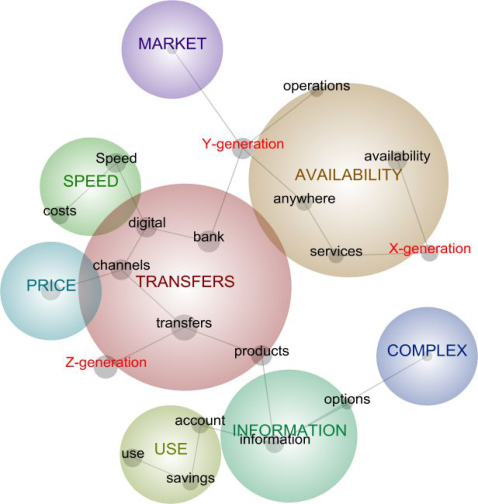
Figure 1: Leximancer conceptual map (Source: Own elaboration).
RESULTS
In this study, we had a sample of 634 participants – 152 (24%) were Gen X (born before 1980; age: 42-57), 362 (57%) were Gen Y (born 1981–1996; age: 26-41) and 120 (19%) Gen Z (born 1997–2012; age: 18-25). Accor- ding on the data gathered, the participants’ perceptions were analyzed in Leximancer and a concept map with eight themes was created (see Figure 1). The participants perception about bank digital channels reveals a concept map with 8 themes. The most important themes are Transfers with 316 hits and Availability with 232 hits (see Figure 1), which highlights a cluster of concepts with which are connected to “transfers”, “bank”, “channels”, “products”, “digital” (Transfers theme) and “availability”, “anywhere”, “services”, “operations” (Availability theme). Moreover, the results highli- ght themes like Speed (172 hits), Use (152 hits), Information (148 hits), Price (108 hits), Complex (28 hits) and Market (12 hits). These themes are also associated with important concepts: use, account, savings (Use theme); speed, costs (Speed theme); information, options (Information theme); price (Price theme); complex (Complex theme); Market (Market theme).
In our questionnaire-data with use of Auto Tags created from age field data from all combining with concepts. Leximancer places Tags close to a particu- lar theme or concept, according to the frequency of those terms in the section tagged. The concepts were further explored by including the generation tags (TAG), to verify the perception of each different generation (XYZ), on bank digital channels usage. These analyses revealed that some concepts are lin- ked to a greater or less extent to each generation group of the participants
In Time of Pandemic How Generation XYZ Looks Digital Banking 463
(Grace et al., 2010). The Gen X Tags reveal that baby boomers perceptions encompass the concept availability. The Gen Y Tags reveal that Millennials perceptions encompass the concept bank, anywhere and market. The Gen Z Tags reveal that zoomers perceptions encompass the concept transfers.
DISCUSSION
This research aids in the understanding of digital banking usage and pre- ferences, allowing us to propose a new conceptual model to explain digital banking usage, aids in identifying what is important for each XYZ generation to increase their digital banking adoption, and alerts to the use of a complex of multiple options that are likely not the main focus for this generations to successfully use.
It is innovative because adopts Leximancer for a quantitative approach to do the content analysis of qualitative data; and proposes a conceptual map, to identify and illustrate, in a graphic way, the main themes and conce- pts that explain the bank customers digital channels usage perception. Our findings identified eight main themes and nineteen concepts that explain the participants’ perceptions about their bank digital channels usage (see Figure 1).
“Transfers” is the strongest theme, with 316 hits, representing five conce- pts (transfers, bank, channels, products and digital). This theme reflects the easy and comfortable user experience of digital banking interface to process financial transactions such transfer money between accounts. This finding is aligning with banks strategic to integrate payments and tran- sfers gateways with their digital channels for everyday bank operations (Haralayya, 2021). Mobile money transfer has gained in importance as a remittance vehicle that offers considerable efficiency gains over traditional money transfer methods since it saves time (Lashitew et al., 2019). For example, participants writing about “Even lower costs in national bank transfers between different banks”, “Save information from past transfers for easier use in the future” and “Payments and transfers out off-hours Unavailability”.
“Availability” is the second main theme, with 232 hits, embodying four concepts (availability, anywhere, services and operations). As a driving force of efficiency enhancement, bank investments in technology to increase the efficiency and availability 24x7 anywhere of products and services from any digital channel without visiting and spending time in queues (Mo¸steanu et al., 2020). Digital banking operations and scope is expanding very fast due to inclusion of securities services and operations and availability and ease of use of mobile banking (Shareef et al., 2018). For example, partici- pants writing about “Operations (transfers, payments, ...) and availability anywhere”, “unavailability and slowness and complex processes of carr- ying out operations “and “Ease and availability 24/7 for consultations and operations”.
“Speed”, “Use”, “Information”, “Price”, “Complex” and “Market” are the other themes representing teen concepts (speed, cost, use, account,
savings, information, options, price, complex and market). Both traditio- nal and digital channels provide customers with access to bank accounts, products, and services, as well as the capacity to do business with the help of an employee or through a digital channel with a few mouse clicks or taps on your phone screen. Banks digital channels leverage their lower price to offer faster daily bank operations, better usability, information, and market accessibility to giving customers what they want in the digital interaction (Bossert, 2016). In resume these key themes indicate conveni- ence matter in banks digital channels and should have flexible structures and lower costs, develop at a high speed, and focus on financial markets where banks do offer non-complex services and information (Talwar et al., 2020). Around the Tags: To verify the generation XYZ influence on bank digital channels usage, we defined three Tags to represent the concepts of Generation X, Generation Y and Generation Z (see Figure 1). Beside the difference age between the three generation X (born 1965–1980), Y (born 1981–1996), and Z (born 1997–2012) all are about to be using bank digital channels side by side. Therefore, it’s crucial that people in cross-generational understand the best way to use and adopt digital banking channels to support their financial activities.
“Generation X” Tags reveal that baby boomers perceptions encompass the concept availability. As a result, Gen X are regarded to be computer savvy, technologically inventive, and, most all, demand the availability of bank digital services (Korobeynikova et al., 2021).
“Generation Y” Tags reveal that Millennials perceptions encompass the concept bank, anywhere and market. Their response to bank digital channels is different from Gen X, because they demand access anywhere and with no financial markets restriction (Dabija & Lung, 2018).
“Generation Z” Tags reveal that zoomers perceptions encompass the concept transfers. Generation Z differs from baby boomers and Millennials by less focusing living in a world of continuous updates and process informa- tion faster accustomed to use more bank transfers in bank digital channels (Vasylieva et al., 2017).
This research enriches the existing literature by emphasizing the bank customers perceptions by Gen XYZ about bank digital channels. Though this results banks can have different digital customer orientation to their web or mobile channels.
CONCLUSION
We conclude that in reference to customer’s perceptions about bank digital channels, we may consider eight main themes (Transfers, Availability, Speed, Use, Information, Price, Complex and Market) and nineteen concepts (game, client, rules, colors, graphic, application, idea, process, appealing, simple, interest, investment, game theme, analogy, and purchase), that should be con- sidered by practitioners and academics to rethinking about customers Gen xyz digital banking preferences that are appropriate accordingly with custo- mers’ needs and cultures. Furthermore, witch Gen XYZ see digital banking
In Time of Pandemic How Generation XYZ Looks Digital Banking 465
with some differences: Generation X or baby boomers enhances availability, Generation Y or Millennials enhances anywhere and market, and Generation Z or zoomers enhances transfers.
As a result, digital banking might be improved to make it more functi- onal and effective, allowing Gen XYZ to use it more regularly. Finally, this research aids in understanding the use and preference of digital banking, allo- wing us to propose a new conceptual model to explain digital banking usage, aids in identifying what is important for each XYZ generation to increase their adoption of digital banking, and alerts to the use of a complex of mul- tiple options that are likely not the primary focus for this generations to successfully use. It is critical for the banking industry to emphasize users’ perceptions in order to develop digital banking features that align with users’ expectations and to increase the success of digital transformation by dramati- cally shifting servicing from a brick-and-mortar stalwart to become far more digitally flexible.
ACKNOWLEDGEMENT
This work was supported by Fundação para a Ciência e a Tecnologia (FCT), grant UIDB/04466/2020.
REFERENCES
Angus, D., Rintel, S., & Wiles, J. (2013). Making sense of big text: a visual-first approach for analysing text data using Leximancer and Discursis. International Journal of Social Research Methodology, 16(3), 261–267. Bossert, O. (2016). A two-speed architecture for the digital enterprise. In Emer-
ging trends in the evolution of service-oriented and enterprise architectu- res (pp. 139–150). Springer, Cham. Bresman, H., & Rao, V. D. (2017). A survey of 19 countries shows how generations X, Y, and Z are—and aren’t—different. Harvard Business Review, 25, 1–8. Dabija, D. C., & Lung, L. (2018, May). Millennials versus gen Z: online shopping
behaviour in an emerging market. In Griffiths School of Management and IT Annual Conference on Business, Entrepreneurship and Ethics (pp. 1–18). Springer, Cham. Drasch, B. J., Schweizer, A., & Urbach, N. (2018). Integrating the ‘Troublemakers’: A taxonomy for cooperation between banks and fintechs. Journal of Economics and Business, 100, 26–42. Gomber, P., Kauffman, R. J., Parker, C., & Weber, B. W. (2018). On the fintech
revolution: Interpreting the forces of innovation, disruption, and transformation in financial services. Journal of management information systems, 35(1), 220–265. Grace, D., Weaven, S., & Ross, M. (2010). Consumer retirement planning: an exploratory study of gender differences. Qualitative Market Research: An International Journal, 13(2), 174–188. Haralayya, B. (2021). How Digital Banking has Brought Innovative Products
and Services to India. Journal of Advanced Research in Quality Control and Management, 6(1), 16–18. Heinonen, K., & Strandvik, T. (2020). Reframing service innovation: COVID-19 as a catalyst for imposed service innovation. Journal of Service Management. Iverson, T., & Barbier, E. (2021). National and Sub-National Social Distancing
Responses to COVID-19. Economies, 9(2), 69.
Korobeynikova, O. M., Korobeynikov, D. A., Agievich, T. G., Minaeva, O. A., & Shaldokhina, S. J. (2021). Availability of Digital Financial Services: Problems and Solutions. In Socio-economic Systems: Paradigms for the Future (pp. 431–440). Springer, Cham. Lashitew, A. A., van Tulder, R., & Liasse, Y. (2019). Mobile phones for financial
inclusion: What explains the diffusion of mobile money innovations?. Research Policy, 48(5), 1201–1215. Lee, I., & Shin, Y. J. (2018). Fintech: Ecosystem, business models, investment decisions, and challenges. Business horizons, 61(1), 35–46. Leximancer. (2016). Leximancer user guide release 4.5. Brisbane: Leximancer Pty.
Retrieved August 15, 2016, from http://doc.leximancer.com/doc/LeximancerMan ual.pdf Mo¸steanu, D., Roxana, N., Faccia, D., Cavaliere, L. P. L., & Bhatia, S. (2020).
Digital technologies’ implementation within financial and banking system during socio distancing restrictions–back to the future. International Journal of Advanced Research in Engineering and Technology, 11(6). Prexl, K. M. (2019). The intrapreneurship reactor: how to enable a start-up culture in corporations. e & i Elektrotechnik und Informationstechnik, 136(3), 234–240. Ross, J. W., Beath, C. M., & Sebastian, I. M. (2017). How to develop a great digital
strategy. MIT Sloan Management Review, 58(2), 7. Shah, S. (2021). Compliance Monitoring and Testing Seismometer to Detect Compliquake. In Money Laundering and Terrorism Financing in Global Financial Systems (pp. 238–260). IGI Global. Talbot, D., & Ordonez-Ponce, E. (2020). Canadian banks’ responses to COVID-
19: A strategic positioning analysis. Journal of Sustainable Finance & Investment, 1–8. Talwar, S., Dhir, A., Khalil, A., Mohan, G., & Islam, A. N. (2020). Point of adoption and beyond. Initial trust and mobile-payment continuation intention. Journal of Retailing and Consumer Services, 55, 102086. Vasylieva, T. A., Leonov, S. V., Kryvych, Y. N., & Buriak, A. V. (2017). Bank 3.0
concept: global trends and implications. Financial and credit activity: problems of theory and practice, 1(22), 4–10.1 Zachariadis, M., Hileman, G., & Scott, S. V. (2019). Governance and control in distributed ledgers: Understanding the challenges facing blockchain technology in financial services. Information and Organization, 29(2), 105–117.
LISTED IN THE AHFE DIGITAL BOOKSTORE CATALOGUE
Explore the complete digital volume
Usability and User Experience
Read this individual research paper free through the original publisher, or explore the full digital proceedings book.
ISBN 978-1-958651-15-5
Explore this ISBN in the AHFE Bookstore ↗Listed in the July 2026 bookstore catalogue; search by ISBN to confirm current availability · Digital book purchase optional