Paulo Eduardo Hauqui Tonin, Elton Moura Nickel, Flávio Anthero Nunes Vianna Dos Santos (2022). Technology and sensory stimuli as support for physical retail experience design. In: Affective and Pleasurable Design. AHFE Open Access, vol. 41, pp. 153–160. https://doi.org/10.54941/ahfe1001792
With the Coronavirus pandemic and the necessary social isolation, purchases made by the digital channel gained a notable space, evidecing the changes in shopping habits that have been taking place over the last ten years. In Brazil, the growth of online shopping was 75% and in China, sales through e-commerce are expected to surpass sales in physical stores for the next two years to come (e-Marketer, 2021). In the age of digital interactions, consumers demand a new level of concern. Being at the center in the making of products and services, users define any and all design decisions. Euromonitor, in a report issued in late 2020, pointed out that approximately 60% of consumers between 15 and 29 years old used augmented reality or virtual reality in the last year at the same time that 68% of consumers over 60 years old prefer to talk to human representatives when making transactions or purchases. This proves the need to rethink the experience offered in physical retail, incorporating different generations and shopping habits. Although attracted by the speed and convenience of the virtual environment, customers are looking for personalized and multi-sensory shopping experiences that only physical stores are able to offer. In order to claim their importance and permanence in the current scenario that moves with dynamism, these points of sale must include in the experience they offer personalized solutions that involve, for instance, sensory stimulation and technology. When consistent with the brand image, product, and target audience, these solutions can, together, create a more compelling experience.Marketing or sensory branding consists of the precise use of environmental elements in order to act on the senses and generate affective, cognitive and behavioral reactions, which can contribute to usability and satisfaction, as well as memory and decision-making processes. Through technology, in addition to simplifying tasks, it becomes possible to make visible what would otherwise be invisible or even hide what is irrelevante in the shaping of the shopping journey. In attendance as mnemonic aids, like smartphones and tablets, or even solutions for immersive experiences, as augmented or virtural reality devices, technologies must be designed according to the audience they intend to interact with. This study is characterized as an exploratory research that, through literature review, seeks to raise ideas and thoughts on technology and sensory stimulation acting as support for experience design in physical retail environments, understanding the influence they can exert on users cognitive processes and responses. Based on different fields of knowledge, such as cognitive ergonomics and marketing, the study intends to promote an integrated view of the topic, facilitating its approach and understanding for both designers and retailers.
Global Data in 2017 issued a report on consumption habits that predicted a 13.3% growth on the preference for online commerce. However, this previ- sion did not took into account an important and complex aggravating factor, the Covid-19 pandemic. With the pandemic and its necessary social isolation, purchases made by the digital channel gained a notable space, evidencing the changes in shopping habits that have been taking place over the last ten years. In Brazil, the growth of online shopping was 75% and in China, sales through e-commerce are expected to surpass sales in physical stores for the next two years to come (e-Marketer, 2021).
Although attracted by the speed and convenience of the virtual envi- ronment, customers still look for personalized and multi-sensory shopping experiences that only physical stores are able to offer. In response to the
current scenario, points of sale, including everything from flagship to popup stores, need to rethink the experience they offer to their customers; otherwise, they may end up becoming obsolete, especially for younger generations such as the millennials and generation z. In order to promote a different appro- ach to the physical stores, it is essential to consider elements that involve, for example, sensory branding and technology.
Sensory branding consists of the precise use of environmental elements in order to act on the senses and generate affective, cognitive and behavi- oral reactions, which can contribute to usability and satisfaction, as well as memory and decision-making processes (Lindstrom, 2010). Through techno- logy, in addition to simplifying tasks, it becomes possible to make visible what would otherwise be invisible or even hide what is irrelevant in the shaping of the shopping journey. In attendance as mnemonic aids, like smartphones and tablets, or even solutions for immersive experiences, as augmented or virtual reality devices, technologies must be designed according to the audience they intend to interact with (Norman, 2013). This study is characterized as an exploratory research that, through literature review, seeks to raise ideas and thoughts on technology and sensory stimulation acting as support for expe- rience design in physical environments, understanding the influence they can exert on users cognitive processes and responses.
LITERATURE REVIEW
The Consumer Mind: Cognitive Processess and Responses According to Guimaraes (2004), cognitive ergonomics, an emerging branch of ergonomics, is defined as the area that encompasses the perceptual, mental and motor processes. It is the act of knowing, capturing, integrating, ela- borating and expressing information, in order to solve problems. Thus, it is perceived that this field of knowledge affects the way people think and process information when performing their tasks. Usability is the human factors discipline closely related to customer satisfaction. The International Standard Organization (ISO 9241) defines usability as “the effectiveness, effi- ciency and satisfaction with which specific users can achieve certain goals in a given context”. In support of the usability discipline, which defines the ease and satisfaction with which a user employs a tool or object (physical store) in order to perform a specific and important task (to buy), other fields of scientific knowledge are taken into account, such as cognitive psychology and neuromarketing. One of the theoretical frameworks commonly used in this case is the “stimulus-organism-response”, a structure proposed by Meh- rabian & Russell (1974). This theory suggests that environmental stimuli influence emotional states such as pleasure, arousal and dominance and, in turn, these emotional states influence not only an individual’s approach and interest but also possible avoidance behaviors.
According to Gibson (1966), information from sensory receptors is all that is needed to perceive any situation. Perception helps the interpretation of dif- ferent stimuli, giving them meaning. Attention, which includes conscious and unconscious processes, is the means by which a limited amount of informa- tion captured by the senses is processed. Through limited mental resources,
Technology and Sensory Stimuli as Support for Physical Retail Experience Design 155
one can focus more on the stimulus that matters and is relevant and less on those that are not. Memory refers to the dynamic mechanisms associated with storing, retaining and retrieving information about past experiences. Atkinson and Shiffrin propose a model that conceptualizes memory in terms of three storage systems: sensory, short-term and long-term. Sensory or ico- nic storage constitutes the initial repository of a lot of information that, in the end, becomes part of the short-term and long-term storage. One of the first 20th century decision-making model assumes that people make decisi- ons according to rationality. They evaluate, examine, and make choices in order to maximize something of value. One of the first heuristics formulated by researchers is satisfaction, closely related to usability. In it, the options are considered individually and then an option is selected as soon as it meets the minimum levels of acceptability (Sternberg, 2016).
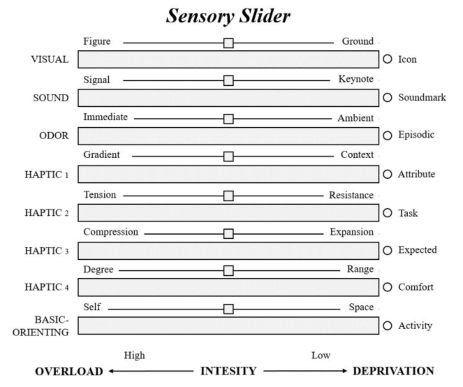
Krogerus & Tschappeler (2016) in their TEDx on decision-making, report to the TMI Paradox (Too Much Information Paradox). Individuals tend to feel confused when they have too little or too much information about some- thing. When faced with this feeling of confusion, the brain asks for more information and therefore, the search begins. The more that is known about a particular topic, the more confident the individual feels about making a decision. Sheena Iyengar (2011), through experiments involving shopping behavior in supermarkets, noticed that if people have few options, they tend not to want to buy anything because they usually think that some other store will possibly have more options to choose from. However, she also realized that in the presence of too many options, individuals feel overwhelmed. It is common for users to experience these “choice overload problem” situations, especially in retail. Malnar and Vodvarka (2004) offer a model of sensory control, a tool to analyze and measure the existence and intensity of sensory stimuli at points of sale (see Figure 1). It is noted that at the extremes of the model, there are the concepts of deprivation and overload, indicating that the sensoriality in these spaces may be being worked on in a very mild, discreet or even non-existent way, as well as indicating that the sensorial stimuli are being applied with such intensity that they end up making perception difficult and even causing some mental confusion due to the accumulation of infor- mation (Song, 2010). Everyone makes bad decisions. However, it is worth noting that bad decisions made intuitively tend to be less penitent than those made rationally. In other words, intuitive decision-making, processed in the subconscious, is the one that still tends to be more satisfying. Intuition is born from experience and feelings about stimuli, most of which are sensory (Krogerus & Tschappeler, 2016).
Emotional Design: Creating Meaningful Experiences Emotional design is the concept that involves creating by evoking emotions that result in positive user experiences. Designers aim to target users on three cognitive levels - visceral, behavioral and reflective - so that users develop positive associations. At the visceral level, users’ instinctive reactions or first impressions of the design are presented; for example, an uncluttered user interface suggests ease of use. In behavioral, users subconsciously evaluate
Figure 1: Sensory slider created by Malnar & Vodvarka. (Adapted from Song, 2010).
the design, how it helps them achieve certain goals, how they make a task easier and make them satisfied to be in control, with the least amount of effort required. Finally, at the reflective level, users will consciously judge their performance and benefits, including value for money. If they are happy, they will continue using, form emotional bonds, and tell their friends about it (Norman, 2013).
The human uses the written or spoken word to express what it wants to communicate. Its language is full of symbols, signs or images that are not stri- ctly descriptive (Jung, 2016). Design works on the creation and management of meanings, communicating through the five senses. For the experience to have positive impacts for both the costumer and the company, the messa- ges communicated must be compatible with the brand identity, the audience to which the actions are directed and consistent with the products marke- ted in the point of sale where the experience is being designed. In other words, experience design must be conducted in a clear and cohesive way in order to communicate effectively. Language attributes, like adjectives, have as their main function to accompany the noun, giving it characteristics or presenting something that particularizes it. Attributes organize communica- tion and are directly connected with the sensations provoked in the individual in relation to the object under his gaze. This first impression is conveyed by the five senses through form, texture, color, aroma, taste and sound. The first relationship is visual and the responses are transmitted by sensory sti- muli, establishing a field of attractiveness between the user and the product, defining the level of acceptance or rejection of the user (Krippendorf, 2006).
Pine & Gilmore (2019) named and shaped the concept of “experience economy”. In the experience economy, consumers make purchase decisions based on the moments they experience. The authors bring a classic exam- ple for understanding economic progression: the coffee. The price escalates from unprocessed coffee beans (commodity) to coffee grounds (product), to a generic cup of coffee (service), and finally to a symbolic cup of Starbucks®
Technology and Sensory Stimuli as Support for Physical Retail Experience Design 157
(experience). In essence, people are willing to pay more for the same basic product if it is involved in a desirable experience. This economic progression involves the transition from economic activity from providing a service to providing an immersive experience. Experience Design, in turn, is a set of methods that analyzes customer behavior throughout their purchase jour- ney, conceived in five moments: 1- Attraction; 2- Entry; 3- Involvement; 4- Output/Exit; 5- Extension. This broad and strategic view allows map- ping and improving the various points of contact between the brand and the customer, making the shopping experience more pleasant, memorable and, consequently, more profitable for companies (Rossman et al., 2019).
Sensory Branding and Technology in Physical Retail The Brand Sense research conducted by Lindstrom (2010) confirms that the more positive the relationship established between the senses, the stronger the connection between the sender and receiver. Branding is all about esta- blishing emotional connections between the brand and the consumer. As in any relationship, emotions are based on input from the five senses. Sensory branding aims to stimulate the relationship with the brand. It can be said that it arouses interest, expands impulsive buying behavior and allows emo- tional responses to dominate rational thinking (Manzano et al., 2012).Of the sample interviewed in the Brand Sense survey, “sight” was listed as the most important sense for evaluating an environment by 37% of respondents, fol- lowed by “smell” with 23%. In general terms, however, it leads to conclude that the five senses are important in any form of communication.
Furthermore, the results of the study revealed that the more sensory tou- chpoints consumers are able to access when they are thinking about buying, the greater the number of sensory memories are activated; and the greater the number of activated sensory memories, the stronger the link between the brand and the consumer. Nearly all consumers interviewed in focus groups expressed genuine surprise at the lack of multi-sensory appeal in today’s brands.
Based on the research, it was also found that a multi-sensory appeal clearly affects the perception of product quality – and therefore brand equity (the commercial value that derives from consumer perception). The study also showed a correlation between the number of senses a brand appeals to and the price. Multi-sensory brands can sustain higher prices than similar brands with fewer sensory characteristics. In addition to positively impacting users’ cognitive processes, the benefits of sensory marketing extend to the brand itself, from generating notoriety to better communicating its identity through the store’s image. As experiences develop on the associations and attributions inherent to what differentiates a brand from others, they certainly affect the value transmitted and the relationship built with consumers. The store and its image stand as the main territory for exploring sensory branding, since it is where most of the elements that serve as a basis for value creation take place. It is up to the brand to define how it will incorporate the sensoriality, depending on its priorities, opportunities, capabilities and resources to do so. (Lindstrom, 2010; Manzano et al., 2012).
In recent decades, technology has gone from being a specific tool for certain market segments to becoming a day-to-day tool. Its growth is exponential and its development reaches all segments of the population. Paradigms were broken and today banking and shopping can be done quickly and convenien- tly through electronic devices. Technologies to promote innovative shopping experiences are numerous; however, what seems to connect them all is the notion that a brand must be able to integrate its products, environment and services, transmitting its identity from end to end in order to build a strong relationship with people. How can you simplify tasks and make the user keep them in their memories? A first alternative would be to offer mnemonic aids, like tablets and smartphones. It can be seen today that smartphones, present in the lives of practically all human beings, are nothing more than mnemonic helpers; that by facilitating the daily tasks of the users, fell into their gra- ces and remain as a faithful ally, whether at work, in study or in social life. Through technology, in addition to simplifying tasks, it becomes possible to see what would otherwise be invisible or even keep hidden what is irrelevant. After all, too much visual information generates mental confusion. Alongside advances in technology, automation can also simplify tasks by making some of them disappear. It is important to point out that even completely changing the way the task can be performed, automation must still maintain the auto- nomy and power of choice of users when performing a certain task (Norman, 2013; Sternberg, 2016). Technological solutions can be divided into analog and digital. According to the dictionary, technology can be described as everything that is new in terms of technical and scientific knowledge. Analogy, in turn, is defined as the similarity of properties between things or facts. Therefore, analog tech- nologies, in this study, refer to the analogies of human life itself and lived experiences. These tools are not necessarily linked to innovation, as is the case with digital ones. They focus on existing solutions that are known to ever- yone, but it is the way they are applied that make them new technologies or material to address old and already accessed knowledge. Digital technologies, unlike analogical ones, refer to solutions that involve the use of platforms, software and artifacts that use innovation to improve usability. Examples of analog technologies are actions related to Upcycling (reuse), Do-It-Yourself (customization) and playful installations capable of involving and stimulating different senses, such as “Instagrammable” scenarios (photo opportunities). The digital ones, in turn, rely on behavioral mind mapping actions, such as eye tracking, and extend to social retail (shopping through social networks), smart geolocation devices such as iBeacon, augmented and virtual reality, QR codes, shopping guided by mnemonic devices, among others.
CONCLUSION
According to Kotler et al. (2017), the buying process begins when the buyer recognizes a problem or a need. The need can be provoked by internal or external stimuli. Internal stimuli are triggered by the person’s environment, becoming an impulse, and external stimuli are triggered by the environment. When well worked out in their intensity - so that they do not deprive or
Technology and Sensory Stimuli as Support for Physical Retail Experience Design 159
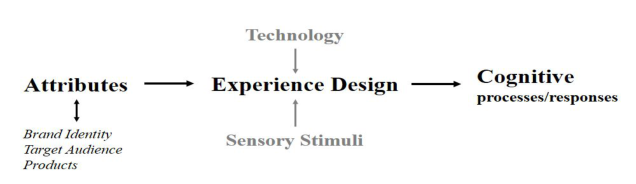
Figure 2: Theoretical Framework proposed by the author.
overload users - sensory stimuli improve the shopping experience and influe- nce cognitive and behavioral processes inherent to retail, such as perception, attention, memory and decision making, closely related to usability, sati- sfaction and brand loyalty. Through sensory attribution, physical retail can determine its advantage over digital, and for this, it is undoubtedly important to communicate compatible messages, offering experiences that are linked directly to the brand identity, its target audience and marketed products.
Studies conducted by Lindstrom (2010) revealed that the more sensory tou- chpoints consumers are able to access when they are thinking about buying a brand, the greater the number of sensory memories activated; and the gre- ater the number of activated sensory memories, the stronger the connection between the brand and the consumer. Although there are many possibilities to incorporate the senses in physical commercial environments, it seems sen- sible that the actions that involve them follow the proper language attributes inherent to each specific brand and point of sale. Once the attributes that best represent the brand are determined, they will help to define the support ele- ments coming from technology and sensory stimuli. It is recommended that actions involving both are present throughout the purchase journey, from before entering the store to even when the customer returns to its home (see Figure 2).
With regard to digital technology, related to components linked to inno- vation, special attention must be paid to the target audience. Depending on the generation of consumers that the experience is promoted, these solutions can be extremely valuable in driving the purchase journey as they can also negatively influence mental processes. In order for the effects to be positive, in addition to the target audience, it must also be borne in mind that techno- logy can facilitate a task but can never take away the user’s control over it. The designer must always keep in mind that automation must make the task easier for the user, but it must never take control away from him. Once con- trol is taken away, too much automation can depersonalize the task, cause dependency, and provide a passive – third-person – experience.
REFERENCES
Gibson, J. (1966). The senses considered as perceptual systems. Houghton Mifflin Company, Boston. Goldstein, E. B. (2006). Sensation and perception. Brooks/Cole Publishing Company,
Pacific Grove.
Guimaraes, L. B. de M. (2004). Ergonomia cognitive: produto e produção. Blucher, Porto Alegre. Healey, M. (2008). What is branding. RotoVision, Switzerland. Iyengar, S. (2011). The art of choosing. Twelve, New York. Jung, C. G. (2016). O homem e seus símbolos. Harper Collins, New York. Kotler, P. et al. (2017). Marketing 4.0: der leitfaden fur das marketing der zukunft.
Campus Verlag, Frankfurt. Krippendorf, K. (2006). The semantic turn: a new foundation for design. Taylor & Francis, Boca Raton. Krogerus, M., & Tschappeler, R. (2016). How to make good decisions. 03 June.
Available at: /www.youtube.com/watch?v=KkyzYjPuxK8 (Accessed: 09 February 2022) Lindstrom, M. (2010). Brand sense: sensory secrets behind the stuff we buy. Free Press, New York. Malnar, J. M.; Vodvarka, F. (2004). Sensory design. University of Minnesota Press,
Minneapolis. Manzano, et al. (2012). Marketing sensorial: comunicar con los sentidos en el punto de venta. Pearson, Madrid. Martineau, P. (1958). The personality of the retail store. Vol. 36. Issue 1, 47–55.
Harvard Business Review, Brighton. Mehrabian, A., & Russel, J. A. (1974). An approach to environmental psychology.
The MIT Press, Cambridge. Norman, D. (2013). The design of everyday things: revised and expanded edition.
Basic Books, New York. Pine II, B.J.; Gilmore, J. H. (1999). The experience economy: work is theatre & every business a stage. Harvard Business School, Boston. Rossman et al. (2019). Designing experiences. Columbia Business School Publishing,
New York. Song, J. (2010). Retail design and sensory experience: design inquiry of complex reality. Iowa State University, USA. Sternberg, R. J. (2016). Psicologia cognitiva. 6th ed. Cengage Learning, Boston.
LISTED IN THE AHFE DIGITAL BOOKSTORE CATALOGUE
Explore the complete digital volume
Affective and Pleasurable Design
Read this individual research paper free through the original publisher, or explore the full digital proceedings book.
ISBN 978-1-958651-17-9
Explore this ISBN in the AHFE Bookstore ↗Listed in the July 2026 bookstore catalogue; search by ISBN to confirm current availability · Digital book purchase optional