Wei Ding, Zijian Zhou (2022). Cultural and creative product design strategies suitable for the visually impaired from the perspective of inclusive design. In: Design for Inclusion. AHFE Open Access, vol. 45, pp. 166–172. https://doi.org/10.54941/ahfe1001882
Because visually impaired people cannot perceive the connotation of products through vision, it is necessary to explore product design strategies suitable for them. This article sorts out the characteristics of the visually impaired through the literature research and interview, and analyzes the problems existing in the interpretation of the products by visually impaired people. With inclusive design as the guiding ideology, meeting the needs of visually impaired people for cultural. A research idea is formed with cultural heritage as the core, five sense experience as the method, embodied cognition as the supplement, and equality and tolerance as the expectation. The conclusion of this paper is to realize the inclusiveness of cultural and creative products by establishing a multi-dimensional perception design model of products.
According to the World Health Organization, there are about 250 million visually impaired people in the world. However, under the social background of emphasizing national culture, today’s cultural and creative products fail to allow visually impaired people to understand the connotation of products. Therefore, taking this as a starting point, from the perspective of inclusive design, re-examine the design methods of cultural and creative products to ensure that visually impaired people enjoy excellent cultural achievements on an equal basis, so that they can gain more sense of identity and happiness.
INTERPRETATION OF RELATED CONCEPTS Inclusive Design
Inclusive design is defined in the UK Department for Trade and Industry’s “Foresight Scheme” as: a process that enables designers, manufacturers and service providers to ensure that their products and services meet the needs of the widest audience, regardless of their age or Limitation of ability (Li and Dong, 2018). Inclusive design advocates that mainstream products
Cultural and Creative Product Design Strategies Suitable for the Visually Impaired 167
and services include as many user groups as possible, and fully considers human diversity to reduce product exclusion.
Cultural and Creative Products Cultural and creative products refer to the creation and improvement of spe- cific cultural resources by means of certain scientific and technological means, relying on people’s creative ideas, and producing products with high added value through the development and application of IP. Excellent cultural and creative product design can not only effectively promote the development of local cultural and creative industries, but also promote the widespread dissemination of regional culture (Li et al., 2021).
INCLUSIVE ISSUES OF CULTURAL AND CREATIVE PRODUCTS Through a systematic review of CNKI’s literature on cultural and creative product development strategies, it is found that China’s current focus on cul- tural and creative product development lies in the cultural coding process and the use of technology to make products fit the current living environ- ment. The development strategies of these products have promoted the spread of culture, but at the same time, the current product design strategies have not been considered from the perspective of inclusive design, and have failed to take into account the perception needs of special groups such as visually impaired people for the cultural connotation of products. The following will introduce the popular cultural and creative product design strategies in recent years.
Product Design Strategy Chinese scholars’ research on the direction of product design is mainly based on the corresponding culture or the way of communication based on culture, and is committed to the introduction of culture into people’s lives. On the one hand, scholars have conducted research on product design strategies based on local cultural resources, combining local culture with products from the perspectives of metaphor, semiotics, branding, IP creation, and marketing methods (Xu, 2021, Xie and Chen, 2021, Ding, 2021). On the other hand, there are scholars who combine information technology to intelligently tran- sform traditional cultural products, innovate business models, and provide practical cases for the integration and development of technology and culture (Yu et al., 2020). At the same time, some scholars started from the practice and exploration of the National Museum, analyzed the development status of the museum’s cultural and creative industry, and proposed design strate- gies for IP authorization, mobilizing social forces to participate in design, and cross-border development. Realize the vision of letting Chinese stories go to the world based on the collection culture (Chen, 2017).
From (Table 1), it can be seen that in recent years, Chinese scholars’ resea- rch on the design direction of cultural and creative products has concentrated on the perspectives of cultural communication methods and business models, which has enriched the design strategies of cultural and creative products. However, scholars rarely consider the design strategy of cultural and creative
168 Ding and Zhou
Table 1. Cultural and creative product design direction.
Table available in the original PDF paper.
Year Author Main Content 2021 Jing Xie Lipstick design based on cultural heritage 2021 Lei Xu Product Design Strategies for Drama Archives 2021 Hao Ding Research on products from a brand perspective 2020 Jian Yu Explore the business model of platform development 2017 Chen Chen Analyze the status quo of cultural creation in the Forbidden City and propose development countermeasures
products from an inclusive perspective, which makes many visually impaired people excluded from cultural and creative products.
Summary of Related Issues The current research fails to consider whether cultural and creative produ- cts are repulsive to users of different ability levels, resulting in the fact that the audience of cultural and creative products at this stage fails to consider visually impaired people. Therefore, from the perspective of inclusive design, considering how user groups with different behavioral abilities interpret the cultural connotation of cultural and creative products has certain practical significance for promoting the equal development of society.
ANALYSIS OF TARGET USERS Perception Means of the General Population
For ordinary people, they can perceive the surrounding environment informa- tion through the five senses. The five senses refer to the perception of vision, hearing, smell, taste, and touch using the human eyes, ears, nose, mouth, and body parts. People will have different psychological and physiological feelings through external stimulation, and obtain rich external information through the superposition of senses, thereby realizing the rational constru- ction of information. The human body’s “five senses” perception strengths are vision, smell, hearing, taste, touch, and our sensory systems will interact with each other and synesthesia (Liang, 2017). Therefore, when designing cultural and creative products, consider the user’s five senses and analyze the characteristics of various perception methods to design, which will bring users a rich sense of experience.
Perception Means for Visually Impaired People Visually impaired people refer to the groups whose visual perception function has been damaged to a certain extent. The visually impaired people can- not achieve normal vision, which affects their daily life. Compared with the five senses of ordinary people, visually impaired people mainly realize the perception of external information through the other four perception meth- ods. And according to international regulations, visually impaired people will have five stages of tactile training in childhood, firstly the understanding of material texture, and then the understanding of shapes, and finally realize
Cultural and Creative Product Design Strategies Suitable for the Visually Impaired 169
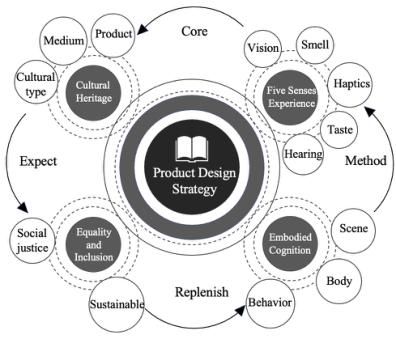
Figure 1: Multi-dimensional perception model of product connotation.
the recognition of Braille, numbers, letters and graphics, so that, It has a high tactile recognition ability (Hu et al., 2017). Therefore, compared with the general population, other perception channels of the visually impaired are more sensitive and can obtain more information than the general population.
Summary Through literature analysis and interviews with the two target groups, it can be seen that the main difference between the two types of groups in obtaining information lies in visual perception, and both have certain needs for cultural and creative products. Therefore, in the design process, attention should be paid to other means of communication in addition to visual aspects, so as to reduce the exclusion of cultural and creative products. Taking the visu- ally impaired people into the scope of target users, on the one hand, allows ordinary groups to break through the cultural perception method that stays at the visual level alone. On the other hand, it solves the problem of limited scope of applicable groups of cultural and creative products.
CREATIVE PRODUCT DESIGN STRATEGIES FROM THE PERSPECTIVE OF INCLUSIVE DESIGN Based on the current scholars’ research on cultural and creative product development strategies, the development of cultural and creative product development strategies is carried out from the perspective of inclusive design, so as to enrich the research on cultural and creative product development strategies. Therefore, the author proposes a cultural and creative product development strategy (Figure 1) with cultural heritage as the core, five senses experience as the method, embodied cognition as the supplement, and equ- ality and tolerance as the expectation. The scope of the audience of cultural and creative products has been expanded, and the means of communication and perception of the cultural connotation of cultural and creative products have been enriched.
170 Ding and Zhou
Taking Cultural Heritage as the Core In view of the attributes of cultural and creative products, mining the core connotation of regional culture and seeking the perfect fit between regional cultural connotation and cultural and creative products are the core basis for product development and the primary purpose of cultural and creative product development. Regional cultural heritage mainly includes material culture and intangible culture. Based on the characteristics of two different types of cultural heritage, regional culture is coded through semantics, semi- otics and narratology, so that it can show local specific cultural connotations. It should be the core requirement of the strategy of cultural and creative pro- duct design. Therefore, the development of cultural and creative products should always take cultural inheritance as the primary principle, take cultural connotation expression as the core, integrate modern technology and design principles into cultural and creative products, and skillfully integrate cultu- ral connotation with practical functions. By endowing cultural and creative products with specific attributes in terms of cultural connotation and pro- duct function, they become an important medium for disseminating regional culture and promoting the prosperity of national culture.
Using the Five Senses Experience as a Methods In the era of focusing on user experience, if any product or service wants to be recognized by people, it must pay attention to people’s emotional experi- ence. By fully mobilizing human perception of vision, hearing, smell, taste, and touch, users can perceive rich information. The so-called “five senses” are the way people perceive the world. These basic sensory functions exist in all aspects of people’s lives and are experience activities that are carried out anytime, anywhere (Qian and Ye, 2017). By considering the five senses experience in the product design and development stage, and studying the information transmission methods of each channel, the experience of cultu- ral and creative products will be enriched. The following will explain the design strategies of products from the five senses.
vision is the main way for people to perceive the world, and has advanta- ges unmatched by the other four senses. First, cultural and creative products can express the cultural connotation of the product through modeling, so the design of products must actively seek visual symbols that can express the cor- responding culture, so that the audience can understand the cultural through the appearance. Second, the use of color is also crucial to the visual experie- nce of products. With the appropriate color combination, the user’s attention can be grabbed at the first time.
Hearing plays an important role in people’s cognition of the world. Dif- ferent timbres, tones, and melodies convey many information. By designing cultural and creative products to emit different tones during use, enhance the interactivity of the product, and promote the communication between peo- ple and the product, so as to realize the active cognition of users, which will facilitate the transmission of information.
The sense of smell can make people have a deep impression of things, so by using smell to convey information, it can deepen user’s memory and enrich
Cultural and Creative Product Design Strategies Suitable for the Visually Impaired 171
user’s understanding of cultural. First, the design and development of cultural and creative products can focus on the special smell of the region and inte- grate it into the expression of product information, which will surely enrich users’ perception of cultural connotation. Second, scents will bring emotional experiences to users, and integrating them into the expression of products will bring emotional feelings to users and obtain a three-dimensional perception effect on culture.
The importance of touch in the process of human cognition of the world is second only to vision. First, people have accumulated a lot of tactile sen- sations, and have formed a profound cognition of the tactile sensations of various things. Therefore, expressing specific cultural connotations through the combination of materials is also an important way to express the seman- tics of products. After cultural research, materials that can represent regional characteristics are selected for design, which brings unique memory points to the experience of the product and brings different tactile experiences to users. Second, people can feel the shape of the product through touch, so the shape of the product should not only conform to the specific cultural connotation visually, but also should be concise and clear enough, discarding redundant information, which will facilitate people’s tactile perception.
Taste has always been a difficult way of perception, because the harsh- ness of taste perception conditions determines the difficulty of this way of perception. Color can help people understand the taste of things, so by com- bining color with the set cultural smell, it will play an important role in the communication of product information. Second, cultural and creative produ- cts can express the cultural connotation conveyed through edible materials. By eating, users can not only experience the visual, tactile and other aspe- cts of information, but also generate more profound cognition through the taste.
Supplemented by Embodied Cognition Embodied cognitive theory emphasizes that the body plays a key role in the cognitive process. The embodiment of cognition is mainly reflected in: (1) the way and steps of the cognitive process are determined by the physical pro- perties of the body; (2) the content of cognition is provided by the body; (3) As an activity of organisms adapting to the environment, cognition is the result of the dynamic coordination of body, situation and behavior (Zhang et al., 2021). Therefore, in the design process, attention should be paid to let the general group and the visually impaired group interact with the product behavior by mobilizing their own body functions, so as to realize the active cognition of the connotation of cultural and creative products. In addition, according to the physical condition and behavior of ordinary people and visually impaired people, the embodied characteristics of products should be reasonably designed to ensure the fluency of various subjects’ cognitive processes. In the design process, the impact of usage scenarios on interaction methods should also be considered, combined with appropriate behavior gui- dance, so as to enrich the user experience and ultimately achieve a correct understanding of cultural connotations.
172 Ding and Zhou
Expecting Equality and Inclusion Through interviews with visually impaired people, it is found that visually impaired people have the same desire for spiritual needs in addition to their basic physical needs. Cultural and creative products designed from the per- spective of modeling alone are not conducive to visually impaired people’s understanding of the spiritual connotation of cultural and creative products, nor are they conducive to cultural heritage in today’s context. The deve- lopment of cultural and creative products based on the design premise of equality and inclusiveness has strong practical significance for promoting social equity and cultural inheritance.
CONCLUSION
From the perspective of inclusive design, focusing on how to reduce product exclusion and not deliberately differentiated design is also an important rule that should be followed. By allowing users to take the initiative to recognize, combined with a specific environment, and add a variety of information perception methods, it will definitely enrich the scope of application of target users. This strategy not only allows the visually impaired to perceive the cul- tural connotation of the product, but also enables ordinary groups to enrich the experience of using the product, realizing the design expectations of an equal and inclusive cultural and creative product.
REFERENCES Chen, C. (2017). Research on the development of cultural and creative industries in the Palace Museum. Guangxi Social Sciences, (07), 192–194. Ding, H. (2021). The Construction of Pingwu Baima Tibetan Intangible Cultu-
ral Heritage Brand—Taking “Cao Gai Mask” as an Example. Decorate, (08), 132–133. Hu, X.M., Xu, L. L., Fan., Z. Y. and Lin, F. (2021). Research on the design of tactile training toys for preschool visually impaired children. Packaging engineering, 42(10), 138–143. Li, F. and Dong, H. (2018). Developments and challenges of universal design and
inclusive design principles. Art and Design, (05), 71–78+210. Li, C., Sun, X. F., Jiao., Y. and Tan, J. Y. (2021). Research on the design of cultural and creative products of regional culture based on Morris semiotics. Packaging engineering, 42(20), 188–195. Liang, W. (2017). Book Design: “Five Senses” Creativity and Experience. Published
in China, (23), pp. 32–35. Qian, L. and Ye, C. (2016). Research on Modern Art Design Based on “Five Senses” Experience. Packaging engineering, 37(20), 220–223. Xu, L. (2018). Research on the development strategy of cultural and creative produ-
cts of drama archives—Taking Beijing People’s Art Theater as an example. Beijing Archives, (05), 31–33. Xie, J. and Chen, H. (2021). Research on the design of lipstick cultural and creative products based on inheritance elements. Packaging engineering, 42(22), 298–303. Yu, J. A., Xu, L. and Yin, K. (2020). Intelligentization of traditional cultural produ-
cts: the fusion of culture and modern technology. China Science and Technology Forum, (02), 54–61+71. Zhang, X. C., Yao, C. Y. and Hu, F. (2021). Continuous tactile blindness-guided product design from the perspective of embodied cognition. Packaging engineering, 42(16), 113–119.
LISTED IN THE AHFE DIGITAL BOOKSTORE CATALOGUE
Explore the complete digital volume
Design for Inclusion
Read this individual research paper free through the original publisher, or explore the full digital proceedings book.
ISBN 978-1-958651-21-6
Explore this ISBN in the AHFE Bookstore ↗Listed in the July 2026 bookstore catalogue; search by ISBN to confirm current availability · Digital book purchase optional