Wei Ding, Zhaoyi Li (2022). Analysis of Intelligent Design of Service Robot Based on Intelligent Transformation. In: Human Factors in Robots, Drones and Unmanned Systems. AHFE Open Access, vol. 57, pp. 107–113. https://doi.org/10.54941/ahfe1002317
Over the past 30 years from the end of the 20th century to the present, service robotics technology has made great progress, and many important results have been achieved in the broad interdisciplinary fields of robot mechanical structure, information transmission and interaction, material science, automation control, sensor technology, etc. . Every breakthrough in key technologies has enabled service robots to develop rapidly in the direction that people expect. With the in-depth development of Internet technology, the comprehensive popularization and promotion of the Internet of Things technology led by 5G. Coupled with the continuous breakthrough of new developments in the field of artificial intelligence, the development of service robots has encountered an unprecedented technological dividend period, and will surely usher in considerable development, becoming an important driving force for the promotion of human civilization and economic development.The rapid development of many advanced technologies such as artificial intelligence, big data, and 5G communications has directly promoted the rapid development of the robotics industry. Under the impetus of new technologies, service robots closely related to humans are developing rapidly. Service robots are becoming more and more intelligent. In this context, the design principles of service robots, interaction design, service mode design and other related fields are in urgent need of intelligent transformation, and the concept of intelligent design with artificial intelligence as the core has begun to be paid attention to by the academic community.The research on intelligent design in academia is currently mainly in the review stage, and the field of discussion is mainly focused on graphic design. This article hopes to broaden the research field of intelligent design by studying the intelligent design of service robots. At the same time, it provides new ideas and new paradigms for the innovative design of service robots to improve the user experience and service quality of service robots. This research mainly studies the design principles, design goals, interaction design, service mode and design process of existing service robots based on the perspective of intelligent design. This article mainly uses the literature analysis method and the desktop survey method to sort out related theories and design methods and combines specific practical case analysis to make a bold outlook on the intelligent design of service robots to help the intelligent transformation of service robots.In the era of intelligent design, the design principles of service robots are also changing and iterating. First of all, service robots must adapt to their service scenarios. Different service scenarios have different requirements for the function and existence of the product; secondly, Secondly, the interaction design of service robots should be carried out based on user experience, and technology serves as a tool to enhance users’ experience ; the last is the discussion of appearance design principles of service robots. This article takes the LeoBots Scrub Singapore sweeping robot as an example to propose that the appearance design of service robots needs to be developed around safety, emotion and bionics. Intelligent design is guided by traditional design thinking and methods, and conducts big data analysis and intelligent research on the essence, process, thinking and other aspects of industrial design through related design methodology, as the basis for intelligent design to simulate artificial design. The core technical means of intelligent design is artificial intelligence, which is based on big data analysis, combined with artificial intelligence technologies such as machine learning, artificial neural networks, genetic algorithms, and deep learning to achieve the intelligent development of the entire process design.The change of service robot design principles and the addition of intelligent design have changed the design process of service robots. Based on the practical cases of Haier U-BOT robots, this article actively explores the service robot design process under the development trend of intelligent transformation based on intelligent design in order to provide new ideas for the intelligent design of service robots. The intelligent transformation of service robots promotes the development of intelligent design, and intelligent design drives the intelligent transformation of service robots.
From the end of the 20th century to the present for more than 30 years, service robot technology has made great progress, and many important ach- ievements have been made in the broad and interdisciplinary fields of robot mechanical structure, information transmission and interaction, material sci- ence, automation control, sensor technology, etc. Every breakthrough in key technology has made service robots develop rapidly in the direction of intelli- gence and intelligence. With the new development, the development of service robots has encountered an unprecedented period of technological dividends, or will usher in an important transformation stage of intelligent development, becoming an important driving force for promoting human civilization and economic development.
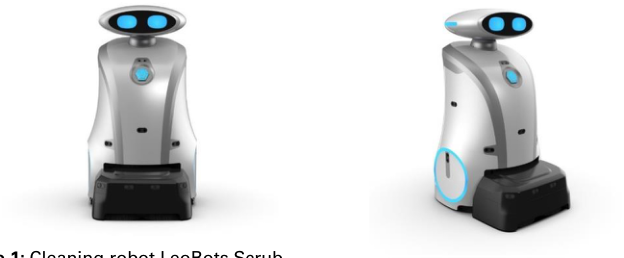
THREE PRINCIPLES OF SERVICE ROBOT APPEARANCE DESIGN, TAKE THE CLEANING ROBOT LEOBOTS SCRUB AS AN EXAMPLE Design is a creative thinking activity. First, it needs to be guided by appropri- ate design principles, then a reasonable design concept is formed, and finally the concept and concept are effectively conveyed through appropriate design expressions. Design principles play an important role in this process. This section will take the design of the cleaning robot LeoBots Scrub as an example to discuss the design principles in the design process of the service robot. The cleaning robot LeoBots Scrub has a personalized and human-like response, and can cooperate with each other to complete the cleaning work completely autonomously, greatly improving the cleaning efficiency and improving the cleaning effect. The service robot complies with the three principles of safety, emotion and bionics in the process of design, with the purpose of exploring a new paradigm of service robot design.
Safety Design Products related to services and people must take into account the safety of the products. From a user experience point of view, making the product feel safe becomes especially important. The cleaning robot LeoBots Scrub ensures the safety of use through a dual mode based on users and managers: For users, since the use scene of the robot is a public space, the personnel and environmental conditions are more complicated, and an emergency stop mechanism is hereby set up to protect the product As well as the safety of users; for managers, they can operate and monitor the working status of the robot through remote control through the network or through the mobile terminal of the mobile phone. In addition, the main body of the cleaning robot LeoBots Scrub adopts a large and smooth shape to ensure product safety and improve product affinity; at the same time, the oval head and rich expression system endow the robot with powerful Emotional interaction ability can greatly increase the user’s sense of security.
Emotional Design Emotional design has similarities with humanized design, both of which can make users have a pleasant experience physically and psychologically. Emotional design requires the extension of form and emotional connotation.
Analysis of Intelligent Design of Service Robot Based on Intelligent Transformation 109
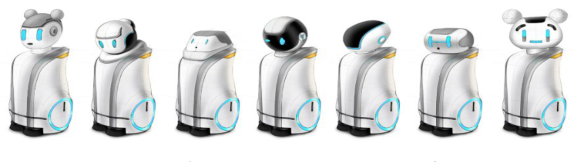
Figure 2: The exterior design of the cleaning robot LeoBots Scrub.
Vision, hearing and smell can instantly make people feel the emotions that the product wants to express. Therefore, when we carry out product design stages such as modeling design or material selection, we should conduct emo- tional research and analysis, and take the real feelings of users as the design orientation of the product.
Amenity of expression, voice, and demeanor Expression, voice, and deme- anor are unique attributes of service robot products, because robots imitate natural creatures and humans, with distinct life characteristics, and have simi- lar biological appearances in external form. The head, torso, limbs and other organs, and some can also have a conversation with the user. In the appeara- nce definition stage of the cleaning robot LeoBots Scrub, the designer focused on its head shape and eye expression system. The designer has set many dif- ferent characters for the robot, and defines the head of the robot based on the image characteristics of different characters.
Bionic Design Robots were originally created to replace human beings to complete some tasks, and directly “imitation” of human body structure can allow them to obtain the best work benefits. Senses such as touch are critical to user expe- rience, and the main emphasis here is on bionic design in appearance and materials. The bionic design on the appearance can enhance the flexibility of the service robot, and the expression of body language is more delicate and vivid; the bionic design on the material can shorten the distance between people from a tactile point of view and get rid of the cold machine in the past a feeling of. During the design process of the Singapore robot, the designer took the head of the robot as the focus of the bionic design, and created the humanized appearance of the robot through the shaping of the head and the expression of the eyes.
SERVICE ROBOT DESIGN PROCESS—TAKE U-BOT ROBOT AS AN EXAMPLE The product design process means that when an enterprise develops and desi- gns a certain product, it has to go through a specific work process in order to transform the initial planning and creativity into the final product and rea- lize the enterprise’s development strategy. For service robot products, a set of design processes in line with the actual situation of Chinese enterprises has been developed, so as to ensure that enterprises have the highest efficiency,
110 Ding and Li
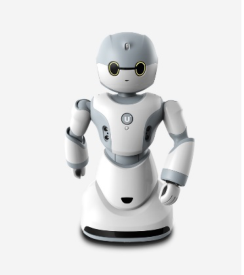
Figure 3: Haier’s U-bot intelligent robot.
the least waste of resources, and the steady improvement of their core com- petitiveness during product development and production. The emergence of Haier’s U-bot intelligent robot has opened up a new world of Chinese home intelligent robots. He is not a toy, but an all-round home assistant with full functionality and full security. He is not a cold smart terminal, but a consi- derate partner. His friendly appearance and interesting interaction make him truly a housekeeper in the new era. U-bot has become a link bridge for Haier’s full range of products. In the future, Haier’s products will be organically linked through robots to form a complete smart home ecosystem.
In the design process of this project, the relevant methods and processes of user-centered user experience design in industrial design were fully considered and combined. According to the relevant design principles of service robots and the relevant requirements of commercial design, the following three com- ponents were constructed. Section: Design process for user research, market needs analysis and product design.
User Research First of all, determine the target group of the design, obtain the characteristics of the target users through user research methods such as user interviews and questionnaires, understand the target users’ attitudes and opinions on the smart home service robot, and obtain their needs and expectations.
Market Demand Analysis Firstly, the service scenarios of smart home service robots are sorted out, and typical service scenarios are selected. Based on service scenarios, users’ pain points and needs in each scenario are mined through user journey maps and brainstorming methods. Combined with the findings of user research, the needs of users are sorted out, and the problems that can be solved by smart home service robots and smart home systems are selected, and the needs of users are transformed into design opportunities.
Analysis of Intelligent Design of Service Robot Based on Intelligent Transformation 111
Product Design According to the previous market demand analysis and user research, firstly clarify the relationship between the smart home service robot and the smart home system and the role of the robot in the smart home system, and then start the product design of the smart home service robot. The design focus of this stage mainly focuses on the functional design, appearance design and human-computer interaction design of the robot.
In the functional design stage, according to the results of the previous user research and market demand research, the functional positioning of the U-bot robot is set as the control center of the smart home system and special family members serving the user’s home life. As the control center of the smart home system, it can be used as a smart housekeeper to connect with other smart home devices, such as smart lamps, smart TVs, smart air conditioners and other smart home appliances, circuit detectors, smoke detectors and other home security equipment; The linkage of multiple devices realizes functions such as home appliance control and home security; it can also be connected to the Internet to realize remote control of smart homes.
Modeling is the basic task of design. With the wide application of service robots, while bringing users a more convenient lifestyle, it should also bring users visual enjoyment. Modeling is an indispensable part of visual presentation. attention of designers.
Smart home service robots are high-tech products, and high-tech products often give people a sense of indifference and distance. Because the smart home service robot has the unique characteristics of being human-like and intelli- gent, it has a closer relationship with people than other home life products. Its shape design needs to get rid of the sense of indifference and distance brought by the integration of various high-tech, and show the complex technology to users through the shape of the bearing, giving people the feeling of being easy to approach, so as to be accepted and loved by users.
Color is the expression of hue, lightness, and purity, and is the color appea- rance of a product. Colors not only have decorative and aesthetic properties, but also symbolic and symbolic meanings. In the color definition of the U- bot robot, white with a higher degree of coordination with the environment is used as the main color, and a color with higher grayscale is appropriately added as an auxiliary, and three color combinations are designed according to the color requirements of different users. plan.
Material is the combination of the material selected for the product and the texture of this material. People feel the material through vision and touch, and different materials give people different psychological and physiological feelings. The designer did a lot of research on the material selection of the U-bot robot, and finally used a special plastic for the head component, so that the infrared signal can pass through the component well while ensuring good appearance characteristics. In the surface treatment of materials, U- bot reasonably adopts a soft-touch surface, which enables him to establish a more friendly communication with users and eliminate the cold feeling of the robot.
112 Ding and Li
The interaction process between smart home service robots and humans includes three main aspects: information input and output between humans and robots, human manipulation of robots, and robot feedback on mani- pulation. In the interaction process, the current interaction methods between service robots and users mainly include voice interaction, touch interface inte- raction and action gesture interaction.In the interaction design of the U-bot robot, in addition to the excellent voice interaction system, the designer cre- atively designed a lighting interaction mode for it: lighting is an auxiliary interaction method for voice control. To give users a more direct visual feed- back. When the robot is in different states, the lights in different parts will have specific reactions, which has given the user the most intuitive feedback.
CONCLUSION
The current product form and industrial scale of service robots are still in the early stage of development, and they need to be piloted and cultivated in combination with economic and industrial needs. There is an urgent need for the development of modular standards and cutting-edge scientific and technological innovation research and development. According to the law of market competition, where there is demand, there will be capital. With a large amount of capital entering the field of service robots, the development prospects of service robots will continue to improve in the future, and the industrialization of service robots will also be inevitable. Row. With the pro- cess of industrialization, the main trends in the development of service robot technology are intelligence, networking and diversification.
Intelligent With the rapid development of Internet, big data, artificial intelligence and Internet of Things-related technologies, the intelligent development of service robots is the general trend. In the future, service robots will have stronger self-learning and adaptive capabilities, can actively identify the environment, actively analyze user needs and emotions, and provide more intelligent huma- nized services. At the same time, the development of new technologies will further promote the iteration and upgrade of service robot functions. This functional requirement will make the life characteristics and intelligence of service robots continue to improve.
Networking The combination of the Internet and robots is an important development dire- ction for service robots. The Internet is equivalent to a huge resource library, containing a large number of computing resources and information resou- rces. Robots combined with the Internet are a tool and means to effectively utilize these resources. As an intelligent terminal and operation carrier, the home service robot itself has the functions of movement, perception, decision- making and operation. With the help of cloud computing, big data, Internet of Things and other technologies, the Internet platform can provide robots
Analysis of Intelligent Design of Service Robot Based on Intelligent Transformation 113
with a huge potential information collection and processing platform. Com- bined with the Internet, it can greatly extend the perception, decision-making and operation capabilities of home service robots.
Diversification The functions of service robots will continue to develop in a diversified dire- ction, and the application fields will also be greatly expanded. The perfect realization of various functions of the service robot benefits from the adva- ncement of related technologies. The gripping mechanism and the walking mechanism will be more flexible, even comparable to human finger move- ment and bipedal walking, thus ensuring that the service robot can perform more complex and delicate work. ; The improvement of natural speech reco- gnition, natural language understanding and other capabilities will make the voice of the service robot more natural and smooth, and the communication and interaction with people will be more flexible and free; the breakthrough of artificial intelligence technology will improve the recognition ability and decision-making ability of the robot, making it Competent in areas of work that require a certain level of intelligence.
REFERENCES
Bowen Xu, 2018. Research on service robot design based on service design concept.
East China University of Science and Technology(08), p. 127. Canqun He,Weizhen Xiao, 2020. Research on anthropomorphic design in service robots. Zhuang Shi(04), p. 27–31. Juan Yang,Xia Kong, 2020. Research on modeling design of service robot based on
charm engineering. Packaging Engineering(22), p. 72–76. Shouju Chen, 2005. Modern industrial design concept and design expression.
Chongqing University(08), p. 114. Yechi Zhang, 2006. Research on Modeling Design of Service Robot Products. Jilin University(11), p. 130.
LISTED IN THE AHFE DIGITAL BOOKSTORE CATALOGUE
Explore the complete digital volume
Human Factors in Robots, Drones and Unmanned Systems
Read this individual research paper free through the original publisher, or explore the full digital proceedings book.
ISBN 978-1-958651-33-9
Explore this ISBN in the AHFE Bookstore ↗Listed in the July 2026 bookstore catalogue; search by ISBN to confirm current availability · Digital book purchase optional