Yinan Che, Yuanbo Sun, Zhang Heng, Chenxi Wang, Zhang Boyang (2022). Interactive Design for Intelligent Vehicles in the Context of Smart City. In: Ergonomics In Design. AHFE Open Access, vol. 47, pp. 717–724. https://doi.org/10.54941/ahfe1002002
The progress of science and technology and the continuous development of society let us march towards an intelligent society, and the vehicle interaction mode will change accordingly. This paper aims to analyze the development of the interaction mode of the vehicle and the influencing factors of the user's travel experience, to predict the interaction mode of intelligent vehicles in the context of smart cities, and to provide some help for the relevant forward-looking design. The final conclusion is that the interaction research of smart vehicles should continue to focus on both in-vehicle interaction and out-of-vehicle interaction. The positioning of vehicles has changed: from travel tools to intelligent space development, interaction mode from two-dimensional plane to three-dimensional space development, there is a traditional single task of a single interaction mode to multi-scene co-existence, multi-modal interaction development. Users' social, entertainment and personalization needs in the vehicle will influence the overall travel experience of the user.
Intelligent vehicle is a new generation of cars equipped with advanced onbo- ard sensors, controllers, actuators and other devices (hardware). It integrates with modern communication and network technology to achieve intelligent information exchange and sharing between the car body and the outside world. Intelligent vehicles have complex environmental awareness, intelli- gent decision-making, collaborative control and other functions, which can achieve safe, efficient, comfortable and energy-saving driving, and ultimately replace human operation (Yan, J. 2020).
The progress of science and technology and the continuous development of society has allowed us to move toward an intelligent society, and smart cities are not far away. High-grade autonomous driving technology makes the use of scenes in the car no longer based on driving behaviour; the use of scenes in the car is more complex and diverse. People for intelligent vehicles will put forward more personalized requirements, so the human-computer inte- raction system will also change. The traditional interaction methods can no longer be better adapted to the new intelligent vehicles. This paper summa- rizes the changes in the interaction mode of intelligent vehicles. It predicts
the interaction mode of intelligent vehicles in the context of smart cities from the perspective of user experience in order to provide some help for the forward-looking design of intelligent vehicles.
INTERNAL VEHICLE INTERACTION Transformation of the Traditional Cockpit into a Smart Space
In the early exploratory stages of car manufacturing, the focus on cars was often on kinetic energy and safety: how to make them run, make them go faster, and keep them running safely. At this stage, there was no fundamental concept of car interiors, and the overall driving space of the car was not fixed. Furthermore, with the continuous development of technology, the overall structure of the car body is gradually shaped. The emergence of the closed cockpit of the car allows people to start thinking about the assembly layout of this car space. The concept of interior design can appear, but mainly to the decoration of the interior space, and the interaction mode between people and the car, influenced by the driving relationship, concentrating on the control of people and car driving apparent match.
With the popularization of vehicles and the further development of related technologies, equipment such as radios and air conditioners entered the inte- rior space. The decoration of different material skins added a different sense of space to the car’s interior. More storage spaces were developed, people’s driving experience was enhanced, and the control and display relationship between people and vehicles became more diverse with the enrichment of functions. The interior design has since matured, with more and more functi- ons and accessories inside the car. In contrast, the functional module areas inside the car tend to be regularized, and the functional panels continue to be integrated. The development of ergonomics has optimized the relati- onship between control and display, and the “T-shaped layout” has taken shape.
It is easy to see that the car body’s interior space and interaction are mainly determined by the driving relationship and influenced by the onboard functi- ons. The rapid development of autonomous driving technology is bound to bring disruptive changes to the traditional cockpit of the car body. Moreover, the traditional driving relationship is constantly being weakened; people no longer need to be involved in the driving process at fully automated driving levels. At this time, the focus of human-vehicle interaction will then be diverse non-driving functions. The development of 5g technology has made it possi- ble for everything to be connected, bringing infinite possibilities for vehicle functions. The ability to accurately capture the user’s psychology and meet the user’s diverse needs will be a significant focus of interaction design and a reflection of the intelligence of the vehicle. In the context of smart cities, the traditional cockpit will be transformed into an intelligent cockpit, and the car will be deeply integrated into people’s daily life. It will be no longer just a tool for transportation but also an intelligent carrier for various lifestyles, such as a resting space, an entertainment venue, a social tool, and even a smart partner (Wang, T. 2021).
Interactive Design for Intelligent Vehicles in the Context of Smart City 719
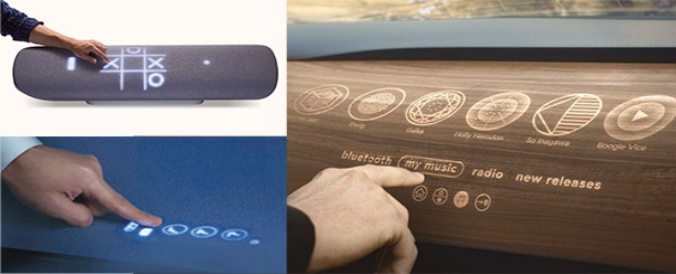
Figure 1: Application of smart surface technology.
Planar Interaction to Spatial Interaction The traditional cockpit is influenced by the driving relationship, with a more apparent regional division and a sense of space fragmentation, which limits the user’s activity space inside the vehicle. Its corresponding can meet the functional needs of the user is limited. In support of high-grade automatic driving technology, the overall space layout of the intelligent cockpit because it is no longer affected by this, and the overall free activity space will be a significant development trend.
Intelligent surface technology is mainly in the material surface to incre- ase the electronic function of the product structure that integrates decorative and functional, either decorative fabric surface or synthetic skin can be. User- independent flexible interface settings thus can reduce redundant button and switch design. The smart surface does not require a screen and can display different human-computer interaction interfaces in more spatial locations, luminous, touch-sensitive, gesture control, etc. The use of a variety of intui- tive and exciting ways to interact with the body of the car can achieve a variety of functions to control the display and, at the same time, ensure that the design of the cabin is more simple and more intelligent. Compared with the traditional physical buttons, the overall sense of space inside the car body is just right. The interior of the car body does not need to be occupied by all kinds of screens. In addition, compared to integrating functions on a screen, the ease of learning intelligent surfaces is better. It can effectively reduce the user who can not find the control interface (Feng, Y. et al., 2021).
Taking Yanfeng’s intelligent cockpit design as an example, the sensors are integrated into the wood material to realize the interaction function through the tactile feedback of the wooden slider.
Under the background of intelligence, the interaction between the human and car body will break through the traditional steering wheel, centre control instrument, etc. Furthermore, 3D display, augmented reality, somatosensory interaction, spatial gesture interaction, and virtual projection provide the possibility of expanding the scope of interaction from the traditional sin- gle interaction mode applied to a single task, to multiple interaction modes applied to the same scene. In the future, multimodal interaction modes should meet the coexistence and switching of multiple scenes. The diversity of scenes
at this time is often affected by the age, personality, occupation and other factors of passengers. Moreover, how to balance the characteristics of diffe- rent scenes in a limited space directly determines the user’s spatial immersion and whether the user can get rid of this is a car body inside the established cognition, and further determines the degree of concentration and experience of the activities inside the user’s car body.
Multimodal Interaction Multimodal interaction means that the user communicates with the intelli- gent device through multiple channels such as voice, body language, infor- mation carrier (text, picture, audio, video), environment, etc. The intelligent device fuses multidimensional information to judge human intent, comple- tes the corresponding operation, and gives feedback to the user through text, sound, light bands, and other means. It involves two steps: multimodal perception and multimodal feedback.
Modal perception is divided into three levels: perception, understanding and prediction. Early modal perception of the vehicle body is often applied to the monitoring of alcohol content and fatigue level, staying at the perception level to ensure safe driving of the user. The intelligent multimodal human- machine interface incorporates multiple interactive input interfaces such as voice, gesture, gaze, touch, etc. It combines specific user behaviour (expres- sion, eye movement, posture) and physiological signals and other intention information to achieve emotional awareness of passengers. By calculating the possibility of user behaviour, it finally completes the prediction of user com- mands, makes relevant suggestions, and even performs task pre-completion. The application of multimodal perception can help the vehicle body obtain the user’s command information more quickly and accurately, thus reducing the difficulty of the user’s operation and the learning difficulty of operating commands.
Multimodal interaction feedback is built on vision, touch, hearing, smell, balance, and temperature to ensure that passengers can access the completion of relevant commands and predict the evolution of future scenarios, such as location information, road scene conditions, and actions that need to be performed by the user by sensing and understanding the conditions inside and outside the vehicle (Zhou, Y. & Zhu, L. 2020). Poor interactive feedback can cause the execution process to differ from the expected, thus affecting the user’s judgment and causing undesirable consequences. The intelligent vehicle can choose a reasonable feedback method according to the task’s urgency, such as alerting the user of new news with the help of such gentle feedback as ambient light or using vital feedback of local vibration to alert the occurrence of emergency conditions.
Multimodal interactive can effectively help passengers complete the scene switch, adjust the passengers ‘ attention, and enhance the overall travel experience on the premise of safety.
In-car AI Assistant As a new type of vehicle component in the car networking era, the in- car AI assistant has the intelligent characteristics of autonomy, sensitivity,
Interactive Design for Intelligent Vehicles in the Context of Smart City 721
Table 1. Multimodal interaction design.
Table available in the original PDF paper.
Multimodal Interaction Design Solutions Visual Channel Meet the preset scene ambient lighting and dynamic expression response Auditory channel Natural verbal communication and Variable tone that fits the role model in the user’s mind Tactile channel Light and heavy reasonable contact indicates the urgency of the emergency situation or not Olfactory channel The appropriate aroma to set the user in a good mood or to play a role in helping sleep Multi-channel Abundant and interesting interaction methods make the car efficient and rich in life
responsiveness, goal-oriented communication, and contextual association. Anthropomorphic voice interfaces, virtual images or physical robots are its typical forms. It gives life and emotional characteristics to cars by forming an anthropomorphic human-vehicle interaction interface for automotive artifi- cial intelligence systems. The appearance of emotional characteristics further strengthens the intelligent vehicle Self-positioning changes, from the traditi- onal means of transportation to a specific communication feedback ability of the intelligent body. This change makes the relevant display design more important, the way and method of emotional expression, whether the form is clear and reasonable, and even its expression, the richness of speech will directly affect the user’s cognitive experience.
Furthermore, in the smart city context, the AI assistant will become the most direct interface between the car space and the surrounding external space information transfer. On the one hand, the AI assistant, as the car body of the internal space of the housekeeper, assists users in completing the car body of the relevant work deployment and task feedback. On the other hand, as the vehicle in the intelligent city network under the image of the represen- tative, it also completes the car and the external communication links. AI assistant image customization will be similar to social software users’ ava- tars or personalized signature design. It will be a new channel for users to manifest themselves and express their views.
EXTERNAL VEHICLE INTERACTION (EHMI) Traditional external interaction design is often focused on electric tailgates, hidden door handles, etc., using a modal sensing system to determine the crowd information around the vehicle, and user behaviour, to ensure vehicle safety while simplifying user operations. Moreover, with the development and maturity of related technologies, dynamic logos, intelligent windows, and other new external interaction modes have emerged. It combines light effects, voice and other dynamic effects. The colour changes are displayed when the vehicle is charged, unlocked and driven, thus communicating the corresponding status information.
Table 2. Exterior interaction information.
Table available in the original PDF paper.
Exterior Interaction Interaction Information Front of the car Emotional interaction, ambient light, driving path, destination, speed status, next action warning, etc. Rear of the car Emotional interaction (goodbye), driving path, nighttime ambient light, road condition information ahead, etc. Side of the car Date information, environmental information (temperature, humidity, weather), map navigation, dialogue text, interactive games, charging status, etc.
The external interaction is not only limited to the external surface of the vehicle. The external space of the vehicle can be divided into three areas according to the positional relationship between the vehicle and the pede- strian: front interaction area, rear interaction area and side interaction area. The front interaction area is mainly for the vehicle and pedestrians driving in opposite directions or cross driving, mainly to display driving status informa- tion. The rear interaction area is mainly for the same direction and displaying driving status information. It also provides electronic expressions such as greeting, waving goodbye, thanking pedestrians for waiting and other emo- tional expressions. The side interaction area is mainly used to meet the user’s personalized needs and entertainment functions.
In the context of smart city, the interaction outside the car will be further developed; combined with the vehicle-road cooperation technology, the user can get the location information between the vehicle timely, including the car and the whole road section through the external information display: the driving speed of the peer vehicles, the relative distance between the car, the fault information of the vehicle ahead, the overall traffic flow of the road section and so on (Carmona, J. et al. 2021). Furthermore, removing the body of the car itself, combined with the external dynamic light effect or even mixed reality technology, together to create a sense of space outside the car’s body, will become a new direction for users to pursue individual expression or aesthetic preferences.
INFLUENCING FACTORS OF USER EXPERIENCE Mutual Understanding
Without mutual understanding, the two agents (human and vehicle) will fail to comprehend each other’s intentions and actions accurately (Carsten & Martens, 2019).
Smart cars differ in their degree of intelligence because of the different rele- vant devices they carry and the lack of corresponding standards. Therefore, people will face differences in the complex functions and usage logic carried by the human-machine interfaces of different vehicles. It will significantly affect the driving experience and even cause distrust among users of the auto- nomous driving capabilities of different brands of vehicles (Ekman, F. et al., 2017). The ease of learning the vehicle interaction mode will directly affect
Interactive Design for Intelligent Vehicles in the Context of Smart City 723
whether the user can quickly grasp the vehicle information and implement the practical operation or not. Therefore, a reasonable interaction mode should fully consider the user for the intelligent vehicle cognitive learning process.
On top of the three levels of the user behaviour pattern perception (perce- ption, understanding, and prediction), the intelligent vehicle will further realize the corresponding user behaviour categorization summary with the development of the overall intelligence, which can be combined with speci- fic crowd types: such as students, business people, We media workers, etc. Complete their function of the architecture upgrade to reduce the user’s non- essential operation, and ultimately realize the wisdom of the vehicle and the user of the Mutual understanding, become each other’s continuous in-depth understanding of the “old friend.”
Social and Entertainment Man is the sum of all social relationships, and no matter how far the intelli- gence of society has developed, we still cannot live without social interaction. High-level self-driving technology gives users a higher degree of freedom, and the enhanced functionality is bound to make people spend more time in it to enjoy their own private time. The intelligent vehicle itself has a variety of advanced technology aggregates, and the user can take the car itself as a new social media, like an optimized and upgraded social platform. Users no longer need a separate social account, the car itself can be used to represent the user’s image. The users can go directly through the car network to complete social activities with the outside world, share videos with fellow travelers, exchange information, form a travelling fleet, etc. The use of virtual reality and other technologies, multimodal interaction mode, including sufficient space in the car body, can offer a better way to socialize far beyond the present while enriching the form of user entertainment (Yu, Z. 2020).
CONCLUSION
From ancient times to the present, people have never stopped exploring technology and aspiring for the future society. An intelligent society is no longer far away, and the arrival of smart cities will inevitably have a signi- ficant impact on the existing human-vehicle interaction mode to meet users’ higher requirements. There will be more travel scenarios and more com- plex traffic situations for us to consider. Although we cannot peek into the future, the changing trend of interaction mode brought by the development of technology is enough to help us boldly predict the future.
Under the background of the smart city, the interaction design of intelli- gent vehicles should also focus on the in-vehicle interaction and out-vehicle interaction. Technology development will provide more possibilities for mul- timodal interaction, and intelligent vehicles will develop into intelligent space. The user can complete more activities in the car. How to achieve a variety of scenes in the car will be the problem we need to think about, fully consider the actual needs of the user, and combine with the user’s pursuit of social, enter- tainment and personal expression, can be considered. The pursuit of social,
entertainment and individual expression can help us optimize the interaction design and create an intelligent, safe and perfect travel experience.
ACKNOWLEDGMENT
The authors would like to acknowledge Professor Sun, who guided us throu- ghout our writing of this thesis. He carefully read the whole draft and offered painstaking and precious criticism.
REFERENCES
Carmona, J., Guindel, C., Garcia, F. and de la Escalera, A., 2021. ehmi: Review and guidelines for deployment on autonomous vehicles. Sensors, 21(9), p. 2912. Carsten, O. and Martens, M.H., 2019. How can humans understand their automated
cars? HMI principles, problems and solutions. Cognition, Technology & Work, 21(1), pp. 3–20. Ekman, F., Johansson, M. and Sochor, J., 2017. Creating appropriate trust in automated vehicle systems: A framework for HMI design. IEEE Transactions on Human-Machine Systems, 48(1), pp. 95–101. Feng, Y., Sun, Y.,Wang,H.,Sun, J. and Sun, J., 2021. Development Status and Future
Trend of Automobile Intelligent Cockpit .J. Era Car. 46, 201–206. (in Chinese). Wang, T., 2021. Research on the Development Path of Intelligent Vehicle from the Evolution of Smart Transportation Self-organizing System Perspective. J. Era Car. 23, 158–159. (in Chinese). Yan, J., 2020. Research on the Development Path of Intelligent Vehicle from the
Evolution of Smart Transportation Self-organizing System Perspective. D. China University of Mining and Technology. (in Chinese). Yu, Z., Jin, D., Song, X., Zhai, C. and Wang, D., 2020. Internet of vehicle empowered mobile media scenarios: In-vehicle infotainment solutions for the mobility as a service (MaaS). Sustainability, 12(18), p. 7448. Zhou, Y. and Zhu, L., J., 2021. Research on the Development Trend of HMI Design
in Smart Cockpit. J. Era Car. 10, 113–114+117. (in Chinese).
LISTED IN THE AHFE DIGITAL BOOKSTORE CATALOGUE
Explore the complete digital volume
Ergonomics In Design
Read this individual research paper free through the original publisher, or explore the full digital proceedings book.
ISBN 978-1-958651-23-0
Explore this ISBN in the AHFE Bookstore ↗Listed in the July 2026 bookstore catalogue; search by ISBN to confirm current availability · Digital book purchase optional