Kamalatharsi Mutuura, Mario Niederhauser, Nico Erb, Freddie Van Den Anker (2022). User Requirements for a Health Care Service Based on Point-of-care Testing in the Context of Ambulatory Care and Telemedicine for Older People. In: Healthcare and Medical Devices. AHFE Open Access, vol. 51, pp. 51–57. https://doi.org/10.54941/ahfe1002098
In healthcare, point-of-care testing, i.e., diagnostic testing at the time and place of patient care, allows for early diagnosis and therefore timely treatment of various diseases. These on-site tests are particularly beneficial to people living in remote areas and those with limited mobility. Our study focused on the design of a service for older people, whereby ambulatory care and telemedicine consultations are based on point-of-care testing. Its aim was to elicit user requirements, specifically for the use case of iron deficiency in older people. A textual scenario was developed which formed the foundation for the simulated or “enacted” scenario, with both undergoing participatory evaluations. A wide range of “socio-technical” requirements were elicited that are expected to be crucial for the implementation of this service. Based on content analysis they were categorized into technology-, people-, organization- and environment-related requirements. The results are discussed regarding the specific use case and methods used.
Like many nations in the world (He, Goodkind and Kowal, 2016), Switzer- land is facing the challenges of an aging population (Bundesamt für Statistik BFS, 2021). A high number of elderly people are suffering from chronic diseases and multimorbidity, which have negative impacts on their physical capabilities, mobility, and autonomy (Gesundheitsförderung Schweiz, 2016). At the same time, Switzerland is experiencing a shortage of nursing profes- sionals, leading to challenges in providing the required health care to the older population (Merçay, Grünig and Dolder, 2021). This situation calls for innovative collaboration concepts in ambulatory care (Meidert, Ballmer and Becker, 2021) and the smart use of modern technology (Angerer, Hollenstein and Russ, 2021) to deliver health care services at the older person’s home.
The study reported in this contribution aimed to design a health care service combining the technology of Point-of-care testing (POCT), teleme- dicine services, and ambulatory nursing care to enable older people to live an
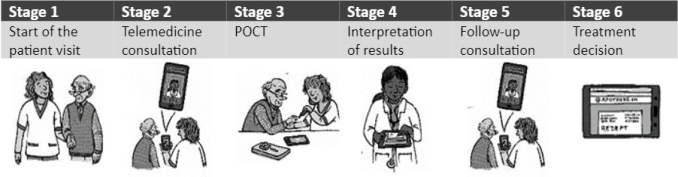
Figure 1: Ambulatory health care service provided by nurses and telemedicine physi- cians using POCT.
independent life in their own homes. The focus on the private home environ- ment is especially important since control and autonomy are relevant factors in determining the quality of life in old age (Hyde et al., 2003). POCT stands for diagnostic testing at the time and place of patient care. It supports the early diagnosis, using blood and urine samples to detect, for example, infe- ctions, nutritional deficiencies, or organ dysfunctions, and thus increases the chances for timely treatment. Reducing the need to travel, POCT is espe- cially beneficial for older people in remote areas and people with mobility limitations.
The POCT-based health care service is envisioned to take place in six sta- ges (see figure 1). First, the ambulatory care nurse starts the patient visit. If the client expresses health problems, which according to the nurse should be immediately assessed by a physician, a telemedicine consultation with a physician can be initiated. At the required order of the physician, the nurse would next perform the POCT and then electronically transmit the results to the telemedicine physician for interpretation. In a follow-up video call with the client and the nurse, the physician can explain those results and discuss possible treatment options. Finally, in the last stage, the decision regarding the treatment is made and the physician provides the necessary documents such as prescriptions or a referral to a specialist.
From a human factors perspective, the successful realization of such a health care service involves a variety of design challenges, ranging from basic choices concerning input and output devices, the functionalities and informa- tion offered to the users, up to the macro-level of organizational processes, roles, responsibilities as well as competencies of those involved. At the time of this research project, no studies in this area, taking human factors or user- centered perspectives, were found. Against this background we conducted an interdisciplinary research project together with systems and life sciences, to elicit user requirements for the realization of the POCT-based health care service.
The specific user requirements depend on the use cases selected. Thus, based on a field study, consisting of observations, analysis of telemedicine consultations, and interviews with general practitioners, ambulatory care nurses, their clients as well as telemedicine physicians, an understanding of the context-of-use was created and different use cases for which POCT could be especially useful were defined. In this contribution, we focus on the identification of user requirements for the case of nutritional deficiencies, specifically iron deficiency.
User Requirements for a Health Care Service Based on Point-of-Care Testing 53
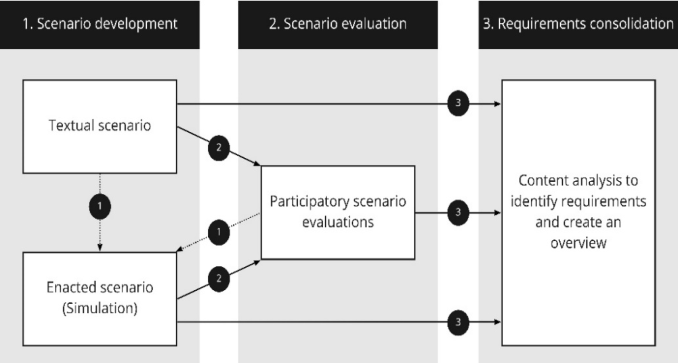
Figure 2: Research design.
METHOD
The user requirements for the realization of the iron deficiency use case were derived in three steps, as shown in figure 2: 1. Scenario development, 2. Sce- nario evaluation, and 3. Requirements consolidation. It is important to point out that these three steps were not conducted completely chronologically, i.e., part of the requirements could already be identified while developing the scenarios, and others were defined in the evaluation process.
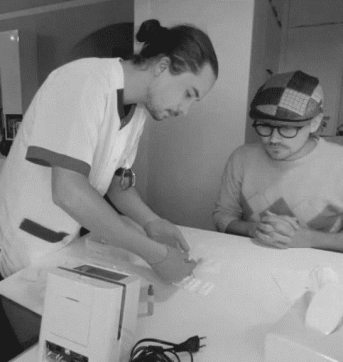
Step 1: Scenario Development First, the iron deficiency scenario was developed using two different approa- ches regarding scenario development. Initially, the research team, consisting of the authors of this contribution, developed a textual scenario based on the context-of-use analysis that had been conducted before. A rich contex- tual scenario was developed using a screenplay writing approach (van den Anker & Schulze, 2006), representing in detail place, time, tools and materi- als, actors (for which personas were created), and dialogues between actors. The participatory evaluation of the textual scenario (see “Step 2: Scenario evaluation”) was used to adjust the scenario, which then served as the foun- dation for the “enactment” or simulation of the scenario (Brandt & Grunnet, 2000). In this simulation, the research team acted out the scenario by taking on the roles of the people involved in the scenario using props as well as real tools such as the POCT-kit (see figure 3). This simulation was recorded on video for evaluation purposes (see “Step 2: Scenario evaluation”). User requirements that were identified in the process of scenario development and simulation were documented.
Step 2: Scenario Evaluation Both the textual and the enacted scenario (simulation) were evaluated with central stakeholders from both the telemedicine and the ambulatory care organizations who were partners in the project. The textual scenario was
Figure 3: Enacted scenario (simulation).
evaluated through a focus group with four telemedicine physicians and an interview with the managing director of the ambulatory care organization. The simulation (i.e., a video recording of it) was evaluated in a workshop with two physicians of the telemedicine organization and the managing director of the ambulatory care organization. Both the textual scenario and the simu- lation were evaluated on the desirability of the future processes represented by them as well as the requirements for realizing these future processes.
Step 3: Requirements Consolidation First, the contents of the textual as well as the enacted scenario (simulation), were analyzed by the research team to identify user needs regarding com- petency, resources (e.g., technologies), and information, from which then requirements were derived. Second, additional requirements were identified by analyzing the documentation of the participatory scenario evaluations. All identified requirements were then collected and categorized through content analysis into technology-, people-, organization- and environment-related requirements.
RESULTS
A wide range of “socio-technical” requirements could be elicited that are expected to be crucial for the successful realization of POCT-settings. These socio-technical requirements concern both the technology (e.g., functional requirements) and its context-of-use (e.g., the users themselves, the social and organizational context as well as aspects of the physical use environment). These socio-technical requirements are presented below along the health care service process as shown in figure 1 and the categories of technology-, people- , organization- and environment-related requirements.
Stage 1: Start of the Patient Visit In the first step, which consists of the interaction between the client and the ambulatory care nurse, most requirements are related to the category
User Requirements for a Health Care Service Based on Point-of-Care Testing 55
“people”. This concerns, for example, the required positive attitude towards POCT by both the client and the ambulatory care nurse as well as the client’s cognitive ability to reflect and communicate his or her state of health: [requirement] The client must be able to provide relevant information about his or her state of health to the ambulatory care nurse, who needs this information to decide about the next steps in the health care service process.
Stage 2: Telemedicine Consultation Of all six steps of the POCT-based ambulatory health care service, it is in stage 2 that most technology-related requirements were identified. This is due to the use of communication technology to enable the telemedicine con- sultation and the need to access patient information in this stage, resulting in requirements such as:
[requirement] The telemedicine physician must have access to the pati- ent’s medical record to be able to interpret the client’s complaints based on the client’s health status (especially when consulting multimorbid patients).
Furthermore, organizational requirements need to be fulfilled at this point, as there is a high level of cooperation needed between the ambulatory care nurse and the telemedicine physician, e.g.: [requirement] The telemedicine physician must know which POCTs can be carried out by the ambulatory care nurse in terms of competency and available resources (e.g., test kits) on-site.
Stage 3: POCT This stage is highly complex, which is shown by the many requirements that were identified for this stage in all four categories. Environmental requirements play a role as the POCT is conducted in the client’s home, e.g.:
[requirement] There should be a big enough table to conduct the POCT. [requirement] There should be a nearby socket to connect the analysis device.
Also, to ensure that the POCT is conducted correctly, people-related require- ments regarding the ambulatory care nurse’s competency need to be fulfilled. This concerns, for example, specific knowledge about the tests: [requirement] The ambulatory care nurses must know the exact dura- tion of the chemical reactions of the different POCTs to embed this new procedure into the flow of care activities.
Furthermore, the results of the POCTs need to be communicated, which leads to technology-related requirements, e.g.: [requirement] The ambulatory care nurse must be able to transfer the test results from the analysis device to the tablet and from there to the telemedicine app easily and securely.
Finally, organizational requirements need to be considered as conducting the POCT must be integrated into the existing care processes, e.g.: [requirement] The ambulatory care nurse must be able to step away from the client briefly during the nursing activities (e.g., showering the client) to carry out time-relevant actions (e.g., changing the test cartridges) in the POCT-analysis procedure.
Stage 4: Interpretation of Results Because step 4 only involves the telemedicine physician, it is less complex. Technological requirements were related to the need of the physician to access the POCT results so they can be interpreted e.g.:
[requirement] The telemedicine physician must be able to receive, view & save the test results in the telemedicine organizations’ system.
Additionally, organizational requirements in terms of available resources for the telemedicine physician need to be fulfilled for an efficient process, e.g.: [requirement] The telemedicine physician must have the time resources to interpret the test results promptly, so the ambulatory care nurse is not delayed by the waiting time.
Stage 5: Follow-up Consultation For this process, an important organization-related requirement was identi- fied. It concerns the availability of the telemedicine physician:
[requirement] It must be ensured that the same telemedicine physician is quickly available again for the follow-up call after the application of the POCT.
Stage 6: Treatment Decision At this point, organizational requirements are essential, since, for timely and comprehensive treatment, additional health care specialists may need to be involved, e.g.:
[requirement] New logistic processes involving the ambulatory care organization and pharmacies need to be created when medication has to be delivered home to an immobile client. [requirement] The client’s insurance model must allow for the telemedi- cine physician to refer the client to a specialist for further examination (e.g., the client must have free choice of a health professional), to ensure that healthcare costs are covered by the insurance.
CONCLUSION AND DISCUSSION In this contribution, we reported about the requirements that need to be ful- filled to successfully implement a health care service based on POCT in the context of ambulatory care and telemedicine for older people. The results show a wide variety of socio-technical requirements along all stages of the ambulatory health care process. The requirements were categorized as either
User Requirements for a Health Care Service Based on Point-of-Care Testing 57
technology-, people-, organization- or environment-related. This illustrates the importance of taking a broad human factors or user-centered perspective, especially when designing services that introduce innovative technologies and new collaborations.
The requirements described in this contribution are specific to the iron deficiency use case. Whilst it can be expected that the same requirement categories will be found when exploring different use cases, the specific requi- rements may vary. This could be due to differences in testing data (e.g., urine instead of blood probes) or medical attention needed (e.g., acute cases vs. long-term monitoring). Interesting use cases to consider for further research could be “detecting urinary tract infections”and “monitoring diabetes”, both of which are common health problems amongst older people.
For those future explorations, the research design of this study might prove to be a promising foundation. It exemplified the usefulness of condu- cting simulations to complement textual scenario development. In addition to the requirements identified during the development of the textual scenario, further requirements were discovered during the simulation of the scena- rio, specifically, details regarding the physical environment (e.g., available equipment) and the flow of activities (e.g., the time needed for care tasks).
REFERENCES
Angerer, A., Hollenstein, E. and Russ, C. (2021). Der Digital Health Report 21/22: Die Zukunft des Schweizer Gesundheitswesens. Winterthur: ZHAW School of Management and Law. Brandt, E. and Grunnet, C. (2000). Evoking the future: Drama and props in user
centered design. In: Participatory Design Conference. ACM Press, pp.11–20. Bundesamt für Statistik. Alterung der Bevölkerung. [online] www.bfs.admin.ch.
Available at: https://www.bfs.admin.ch/bfs/de/home/statistiken/bevoelkerung/ alterung.html [Accessed 14 Feb. 2022]. Gesundheitsförderung im Alter - Fakten und Zahlen. (2016). Bern: Gesundheitsförderung Schweiz. He, W., Goodkind, D. and Kowal, P. (2016). An Aging World: 2015. Washington,
DC: U.S. Government Publishing Office. Hyde, M., Wiggins, R.D., Higgs, P. and Blane, D.B. (2003). A measure of quality of life in early old age: The theory, development and properties of a needs satisfaction model (CASP-19). Aging & Mental Health, 7(3), pp. 186–194. Meidert, U., Ballmer, T. and Becker, H. (2021). Innovative Modelle für die Zusam-
menarbeit in der ambulanten Versorgung älterer Menschen. Winterthur: Zürcher Hochschule für Angewandte Wissenschaften. Merçay, C., Grünig, A. and Dolder, P. (2021) Gesundheitspersonal in der Schweiz – Nationaler Versorgungsbericht 2021 - Bestand, Bedarf, Angebot und Massnahmen zur Personalsicherung. Neuchâtel: Schweizerisches Gesundheitsob- servatorium. van den Anker, F.W.G. and Schulze, H. (2006). Scenario-based design of ICT-
supported work. In: W. Karwowski, ed., International Encyclopedia of Ergono- mics and Human Factors. CRC Press, pp. 3396–3401.
LISTED IN THE AHFE DIGITAL BOOKSTORE CATALOGUE
Explore the complete digital volume
Healthcare and Medical Devices
Read this individual research paper free through the original publisher, or explore the full digital proceedings book.
ISBN 978-1-958651-27-8
Explore this ISBN in the AHFE Bookstore ↗Listed in the July 2026 bookstore catalogue; search by ISBN to confirm current availability · Digital book purchase optional