Mónica Mendoza-Proaño, Janio Jadán-Guerrero, Patricia Acosta-Vargas, Isabel L. Nunes (2022). Digital Learning Experiences in virtual Museums. In: Human Factors and Systems Interaction. AHFE Open Access, vol. 52, pp. 337–344. https://doi.org/10.54941/ahfe1002174
1 Maestría en Educación, mención innovación y liderazgo educativo (MEILE). Universidad Tecnológica Indoamérica, Quito, 170103, Ecuador ↗
2 Maestría en Educación, mención innovación y liderazgo educativo (MEILE). Universidad Tecnológica Indoamérica, Quito, 170103, Ecuador; Centro de Investigación en Mecatrónica y Sistemas Interactivos (MIST). Universidad Tecnológica Indoamérica, Quito, 170103, Ecuador ↗
3 Intelligent & Interactive Systems Lab, Universidad de Las Américas, Quito, 170103, Ecuador ↗
4 NOVA School of Sciences and Technology, NOVA University Lisbon, 2829-516 Caparica, Portugal ↗
Due to the COVID-19 pandemics, the virtual space became relevant in teaching practice. It has been necessary to find new ideas to teach, being this the perfect setting where the virtual museum is seen as a space for teaching and learning. In today's digital ecosystem, there are many resources, so the educational application of these resources makes them interesting, exciting, and relevant. The research’s objective is to create a virtual museum articulated with the axes and areas of development and learning of the national curriculum of Ecuador for pre-school children and to analyze the effects on the teaching-learning process. With the opening and democratization of the knowledge of these cultural centers, it is possible to create synchronous and asynchronous learning experiences and explore fine arts world by selecting artworks, figures and objects that allow meaningful learning. The methodological design of this study is based on the qualitative-quantitative paradigm, with the participation of teachers and pre-school children, integrating collection, analysis and interpretation of quantitative and qualitative data, as well as experts’ criteria about the subject, which allowed obtaining data concerning the use of virtual museums and the applicability of relevant interactive resources. With the focus group technique, 30 children aged 4 to 5 years old expressed their opinions, feelings, and experiences, generating an enriching debate about users’ experience in the virtual museum. The design of the museum was developed on a platform that allowed the creation of a guided visit circuit similar to that of a physical museum, where the teacher becomes a mediator and interpreter of this new virtual museology focused on the user. The results are encouraging with a pertinent design and according to the national curricular logic. Promoting the use of other non-formal spaces, highlighting the importance of cultural centers use such as physical or virtual museums and routes as well as city or world’s corners to develop learning sessions, and expanding the scope of visits to the physical and virtual museums in a kind of hybrid didactics will be the subjects of this research.
The COVID-19 pandemics has caused the most significant historical inter- ruption in educational systems worldwide, transforming teaching-learning processes. As Iivari et al. (2020) note the challenges teachers and students faced were diverse. They saw the need, on the one hand, to create new inte- ractive educational materials and, on the other hand, to have the necessary equipment to connect to virtual classes.
In the Ecuadorian educational system, museums are not common in teach- ing practice, much less with children at the initial level. The need to continue with visits to these cultural centers as part of the institution’s educational project is what led to the following problem: Absence of a didactic methodo- logy on virtual museums as teaching spaces to enhance learning on pre-school children at the Arca del Saber educational center.
The objective of this research is to study the impact that virtual museums have on the teaching-learning process through the characterization of media- tions and interactive interpretations articulated with the axes, areas and skills detailed in the national curriculum for pre-school education integrated into a virtual space for pre-school second level children at the Arca del Saber educa- tional center, finally to evaluate the use and application of the virtual museum prototype.
The methodological framework of this research was based on the qualitative-quantitative paradigm, which allowed carrying out data colle- ction, analysis and interpretation activities. This was the modality applied because a creative and innovative solution to the problem was developed. Being descriptive it was possible to characterize the didactics of virtual museums. The survey technique was used through the questionnaire valida- ted by expert judgment; this survey was applied to 12 educational institution teachers. The interview guide was used to national and international experts and through the focus group that included the participation of 30 boys and girls, 12 teachers and 30 parents from second initial level.
The research goal is to assess if the teaching-learning process can be enha- nced through the use of the virtual museum as an integrating element in the proposed didactics. The virtual museum was developed in the Artsteps plat- form that allows creating, designing and sharing virtual reality exhibits and stories. The expected outcome of the selected activities and of the didactic application of the interactive resources is to trigger children curiosity, and above all, to induce new experiences and emotions.
RELATED WORK
Interesting data has been found about this topic, namely the results from the research carried out by Andre et al. (2017) that shows a detailed analysis of the percentage of children’s learning contexts, classified by type of cultu- ral center, as follows: science museums, totaling 36 % of the cases; history museums, with 29 %; art museums and galleries, with 21 %; and, finally, children’s museums with a percentage of 14 %.
The Bancaja Foundation (Foundation, 2021), from Valencia, Spain, became pioneer by creating workshops aimed for boys and girls, that included
Digital Learning Experiences in Virtual Museums 339
art based on video game technology. The use of the Roblox virtual platform, allows the users to interact in real time during a tour of the developed exh- ibitions. Roblox is one of the platforms with most users on the web. The category of New Media Art, described by Tribe (2007), uses technological advances to find cultural possibilities and bring closer the knowledge that cultural centers, busts and monuments offer, which can tell stories to different audiences without the limitations of space and time. Parry (2021) describes the meta museum, an exciting concept that delves into what is relevant and transcendent in art and highlights the importance of emotion as a positive and transformative feeling that consolidates significant learning.
Maslow’s theory of motivation, and the associated pyramid, was adapted and redefined to the context of museums by Frankle (2017). In this approach interesting categories emerge to be taken into account in the creation and development of activities in museums, which allow identifying other basic needs when visiting these cultural centers. Among the questions that arise we have the following: Is this virtual space safe? Who accompanies my lear- ning? How can this knowledge change my life? etc. With the COVID-19 Pandemics, the way in which we socialize and learn now encompasses virtual environments that have been abruptly transformed into teaching-learning spaces for pre-school children. These times offer the perfect opportunity to be co-creators of new learning experiences, taking into account the categories cited by Beals and Bers (2009), when developing virtual products for children, where the user is the center of this new didactic museology. Such products can contribute to the integral development of boys and girls, through the design of virtual museums, as an integrating element articulated with the initial edu- cation curriculum, which conveys the learning about our culture and other world cultures. This is the central axis of the research.
METHODOLOGY
The methodological framework of this research is part of the qualitative- quantitative paradigm with data collection, analysis and interpretation activi- ties that allowed obtaining relevant information to fulfill the stated objectives. The focus group technique allowed to inquire about the attitudes and reacti- ons on using and applying the virtual museum prototype, obtaining favorable results. A response was given to the proposed hypothesis: virtual museums strengthen the teaching-learning process in the three axes of the second level children’s development and learning at the Arca del Saber educational center. The research by Palacios (2021) addresses the use of interactive museums in learning spaces and demonstrates the didactic application of the strategies proposed within a virtual space. This research served as a reference to deve- lop interactive strategies housed in a virtual space and articulated with the curricular logic for pre-school education, having the virtual museum as an integrated element.
PARTICIPANTS In this research participated 30 pre-school children, 12 teachers and 30 edu- cational guardians, highlighting that in the development of the activities with
pre-school children, the teachers together with the educational guardians become mediators of knowledge and are the ones who support and supervise the proposed synchronous and asynchronous activities.
MATERIALS AND INSTRUMENTS In this research, the following techniques and instruments were used: (i) survey - through a questionnaire validated by expert judgment, aimed for teachers to identify the axes of development and learning of the national pre- school education curriculum that can be articulated with the activities of a virtual museum; (ii) interview - directed to experts, using a guide that allo- wed obtaining information to characterize the digital educational resources for the design of an interactive space based on virtual museums tours, as well as integrating interactive educational strategies in a prototype of a vir- tual museum for pre-school students; and (iii) focus group - through a group interview guide directed to students, teachers, educational guardians, which allowed to evaluate the use and application of the prototype in the academic period 2021–2022.
PROCESS This research was developed in three phases:
First phase: Systematically identify scientific and cultural theoretical refe- rences in English and Spanish, as well as research on the subject; analyze the 2014 pre-school education curriculum Volemos Alto activities to cha- racterize the didactics of virtual museums for pre-school children; identify virtual museums in Ecuador and around the world with tours and activi- ties for pre-school children; finally, investigate and select a technological tool for the design of the prototype proposed in the present investigation easily accessible and free of charge.
Second phase: Identify the axes, areas and skills of the national pre-school curriculum that can be articulated with activities in museums, through the design of data collection instruments; the validation of instruments was car- ried out with the active collaboration of the tutor and experts’ judgment; authorizations were requested to apply the questionnaire addressed to 12 teachers of the Arca del Saber educational center; national and international experts were contacted for interviews; finally the tabulation was carried out using the data, the creation of tables, graphs and the reflection of the results obtained.
Third phase: Design of the virtual museum prototype involving: plan- ning the proposal, selecting the museum’s name, defining the objectives and strategies, and identifying the museum’s theme. Identifying resources, digi- tal materials, activities, pieces, objects and collections that are pertinent and allow the proposed didactics to be developed in the design of the virtual tour; therefore, images, texts, links, audio, videos and other elements that enrich the proposal were incorporated. Subsequently coordinated the realization of the focus group to validate the proposal with authorities, teaching staff, legal representatives and children of the Arca del Saber educational center. For
Digital Learning Experiences in Virtual Museums 341
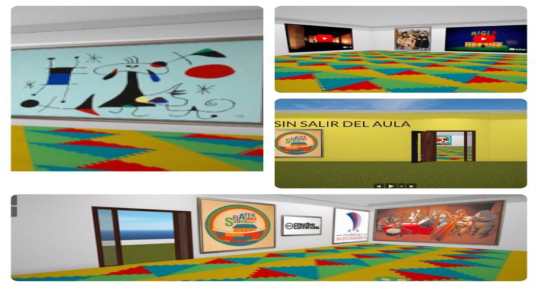
Figure 1: The main entrance to the virtual museum “Traveling without leaving the classroom”.
this activity, the planning for teachers was designed, carrying out a proposed didactics socialization; it was delivered to each teacher a digital user guide with free and open access, which serves as a consultation element about the proposed activities and the use of the virtual museum. Finally, the invitation to the focus group was designed and delivered. The access link to the vir- tual museum is https://bit.ly/2Zsi1zE. Figure 1 presents images of the virtual museum “Traveling without leaving the classroom”.
PROPOSAL IMPLEMENTATION The proposed didactic with the virtual museum as the integrating element is presented as follows:
Strategy No. 1: Axis: Personal and social development. Area: Identity and autonomy. Skill: Identify own physical characteristics and those of the people around as part of the process of self-acceptance and respect for others. Acti- vity: Travel to Colombia and meet Fernando Botero, through the portrait of “The Presidential Family” Assemble the interactive puzzle and identify the physical characteristics of the characters observed https://bit.ly/3pv3wpu.
Strategy No. 2: Axis: Personal and social development. Area: Coexistence. Skill: Identify institutions and professions that provide services to the com- munity and the roles they play. Activity: travel to the Mesozoic era; learn what a paleontologist is https://bit.ly/3B995Ms. With the help of an adult using a cell phone and the google 3D tool, visualize dinosaurs in some corner of the house https://bit.ly/3FK2BXw.
Strategy No. 3: Axis: Discovery of the natural and cultural environment. Scope: Relations with the natural and cultural environment. Skill: Participate in some traditional practices of their environment, enjoying and respecting the different cultural manifestations. Activity: using the interactive tool Flip- grid, travel to the Ecuadorian coast and participate in a beautiful tradition of this region, singing or reciting your favorite amorfino. https://bit.ly/3Ec87A. Flipgrid login code: 0c690a6f.
Strategy No. 4: Axis: Discovery of the natural and cultural environment. Area: Logical-mathematical relations. Skill: Identify basic geometric figures:
circle, square and triangle in objects in the environment and graphic repre- sentations. Activity: With the geometric art of Joan Miró, travel to Spain, through the interactive wordwall tool, observe the works and identify the geometric figures: circle, square and triangle https://bit.ly/3ngr92c.
Strategy No. 5: Axis: Expression and communication. Area: Compreh- ension and language expression. Skill: Orally describe graphic and digital images, structuring more elaborate sentences that describe the objects obse- rved. Activity: On the Estrafalario Club, observe the Juan Agustín Guerrero artist’s work and describe this immersive diorama in the National Museum. Observe the work in the virtual museum. Listen to your teacher and orally describe this magnificent band of musicians.
Strategy No. 6: Axis: Expression and communication. Scope: Artistic expression. Skill: Express your opinion when observing an artistic work rela- ted to plastic or sculpture. Activity: With Puppy, a sculpture by the North American artist Jeff Koons (1955), travel to Bilbao. Observe the sculpture of Puppy in the virtual museum. Express your opinion about Puppy.
Strategy No. 7: Axis: Expression and communication. Area: Body expres- sion and motor skills. Skill: Perform exercises that involve segmented move- ments of thick and thin parts of the body (neck, shoulder, elbow, wrist, fingers, hip, knee, ankle, foot). Activity: Through the exhibition Van Gogh Alive from Spain, have fun with the rhythm and movement of our body, making movements (neck circles; shoulders up and down; inside, outside and circles - elbow and wrists; open and close fingers; hip circles; up, down and circles - knee, ankle and foot) https://bit.ly/3sLsoLo.
RESULTS
The evaluation result of the proposal through the focus group is positive and encouraging, the design of the didactics proposed with the virtual museum allowed to bring Ecuatorian cultural knowledge as well as the cultures of the rest of the world closer to the children through interactive activities that promoted reaching the skills defined in the Ecuadorian curriculum to pre- school education children.
Following the success of the Second World Conference on Arts Education, in Seoul in 2010, Unesco proclaimed the fourth week of May as the Inter- national Week of World Arts Education (Unesco, 2018). This highlights the importance of artistic education in different environments to find learning opportunities within the objectives. This research promotes and provokes the use of virtual environments through significant experiences that allow con- tributing to the objectives set by Unesco for the development and training of safe, creative boys and girls, who work in favor of a more inclusive society, so that they could become the leaders of profound changes to contribute to the growth of a country, where, as Cano (2021) states, this new museology allows activities to be developed focused on the user.
The results obtained from the focus group participants are summarized below:
Digital Learning Experiences in Virtual Museums 343
1. About the space and the criteria of the activities: The virtual space seemed pertinent to them. The criterion on the activities is positive because they are articulated with the education curriculum, and the objectives set in the sublevels are met; 2. About learning space and ease of use: They consider it a creative and fun learning space because it is a meeting place and social relationship; students and teachers interact with digital activities and resources through the proposed didactics; 3. Fulfillment of stated objectives: The objectives are met with the deve- lopment of planning for teacher and with the support of the user guide; 4. Satisfaction and improvement of the experience: They consider that it was a fun and innovative experience. It is a tool that allows pre- school children to approach knowledge through fine arts. Suggestions for improvement were: create virtual murals and include digital badges for qualitative motivation of completed activities.
CONCLUSION
This research presents fascinating data that support the conclusion that the teaching-learning process can be enhanced by articulating the axes and areas of the pre-school curriculum with the use of a virtual museum through an innovative pedagogical proposal based on the methodological guideli- nes detailed in the national curriculum for the pre-school level, such as the learning experiences that made it possible to respond to the identified problem.
It was possible to fulfill the general objective of this research, which was: Analyze the effect that virtual museums have on the three axes of develo- pment and learning. This was achieved through the development of planning that had the virtual museum as an integrating element of the proposed acti- vities. It was possible to identify the development and learning axes of the national pre-school education curriculum, which were articulated with the activities of a virtual museum. This is detailed in the planning access link https://bit.ly/3wyVw8t and the user guide access link https://bit.ly/3rZu9m2.
Digital educational resources were characterized to design an interactive space based on virtual museums tours. Interviews with national and interna- tional experts contributed to identify relevant pieces, objects and resources to include in the virtual museum tour. This investigation managed to select a tool for designing a virtual museum that allows integrating interactive educational strategies through a virtual museum prototype for pre-school.
Finally, through the focus group it was possible to evaluate the use and application of the prototype in the 2021-2022 school year. This evaluation yielded exciting data for future research related to the subject.
ACKNOWLEDGMENT
The authors would like to acknowledge to Universidad Tecnológica Indo- américa and its Maestría en Educación mención Innovación y Liderazgo
Educativo for contributing to this research to participate in the 13th Internati- onal Conference on Applied Human Factors and Ergonomics (AHFE 2022). Special thanks to the students, teachers, and authorities of Arca del Saber educational center for participating in this research.
REFERENCES
Andre, L., Durksen, T. &Volman, ML. (2017). Museums as avenues of learning for children: a decade of research. Learning Environ, Res 20, 47–76. https://doi.org/10.1007/s10984-016-9222-9 Beals, N. y Bers, M. (2009). A developmental lens to design virtual worlds for
children and youth. International journal of learning and media, 1(1). 51.ç. https://bit.ly/3Hn1r4F Cano, R. (2021). Museos y compromisos con los usuarios, EVE Museos. https://bit.ly/3ELA4iX Frankle, E. (2017). Maslow in the museums. Frankleolinsky. https://bit.ly/2Wpli17. Fundación Bancaja (2021). Fundación Bancaja introduce la tecnología de los video juegos en sus talleres didácticos para escolares. Fundación Bancaja. https://bit.ly/3gwhrFA Iivari, N., Sharma, S., Ventä-Olkkonen, L. (2020). Digital transformation of every-
day life – How COVID-19 pandemic transformed the basic education of the young generation and why information management research should care. Internatio- nal Journal of Information Management, v.55, n. 102183, p. 4-5, jun.2020.ISSN 0268-4012, https://doi.org/10.1016/j.ijinfomgt.2020.102183 Palacios, D., Jadán, J., Ramos, C. (2021). Digital Museums as Pedagogical Mediators in the Pandemic Crisis, in book: HCI International 2021 - Posters, 23rd HCI International Conference, HCII 2021, Virtual Event, Proceedings, Part III (pp. 122–131), https://doi 10.1007/978-3-030-78645-8_16 Parry, R. (2021). Our Digital Maturity Why It’s Time for Excitement, Fairness,
and Community in Museum Technology [video]. (2021, 25 march). YouTube https://bit.ly/3pDlypl Tribe, M. (2007) New Media Art - Introduction. Brown University Wiki. https://bit.ly/2UPdh4A Unesco (2018). Objectives of the Second Conference on Art Education, https://bit.ly/3EKFzyv
LISTED IN THE AHFE DIGITAL BOOKSTORE CATALOGUE
Explore the complete digital volume
Human Factors and Systems Interaction
Read this individual research paper free through the original publisher, or explore the full digital proceedings book.
ISBN 978-1-958651-28-5
Explore this ISBN in the AHFE Bookstore ↗Listed in the July 2026 bookstore catalogue; search by ISBN to confirm current availability · Digital book purchase optional