Juan Ramos-Paredes, Janio Jadán-Guerrero, Hugo Arias-Flores, Isabel L. Nunes (2022). Using Comics in the English Language Classroom. In: Human Factors and Systems Interaction. AHFE Open Access, vol. 52, pp. 345–353. https://doi.org/10.54941/ahfe1002175
1 Maestría en Educación, mención pedagogía en entornos digitales (MEPED), Universidad Tecnológica Indoamérica, Quito, 170103, Ecuador ↗
2 Maestría en Educación, mención pedagogía en entornos digitales (MEPED), Universidad Tecnológica Indoamérica, Quito, 170103, Ecuador; Centro de Investigación en Mecatrónica y Sistemas Interactivos (MIST), Universidad Tecnológica Indoamérica, Quito, 170103, Ecuador ↗
3 NOVA School of Sciences and Technology, NOVA University Lisbon, 2829-516 Caparica, Portugal ↗
English is a language which plays an important role in the Ecuadorian society because it is used on different fields such as business, tourism, entertainment, health. English is present in Education because it is taught in most educational institutions – at primary, secondary and higher levels – giving students the opportunity to gain competencies in a second language. Unfortunately, the lack of didactic resources to teach grammar makes the English learning process difficult and boring. Therefore, the aim of this research is to develop a storytelling to learn English grammar through comics. The methodology used is the mixed method approach – qualitative and quantitative – for the data collection. The students who participated on this research took a pre-test and a post-test in order to know the perspective of comics as well as their grammar knowledge. The comics were designed in the software Paint 3D because it makes colorful presentations and it is possible to draw on the computer’s screen by using the optical pen. The comics present grammar structures in familiar contexts to motivate comics reading. After applying comics, the results showed that students improved their grammar grades and were motived to learn grammar. A secondary goal is to promote comics as an English resource to improve the learning of different English skills.
The conventional classroom methodology constrains the teaching-learning process of the English language, mainly during the pandemic, where the stu- dent’s motivation, digital resources, and the teacher played a predominant role. According to Butnaru, Nit˘a, Anichiti and Brînz˘a (2021), students react differently to virtual education, which depends on virtual tools and the way the teacher imparts the class virtually.
Traditional language education includes: grammatical structures memo- rization, which has been a process that has been maintained for years in language learning, causing demotivation in students because learning is done
in a rote and passive way; the lack of grammar presentation in a real con- text where students associate the importance of language causes disinterest in grammatical learning since sentences are presented in isolation; the lack of teacher’s time to plan and prepare didactic resources means that the fastest method is writing sentences on the blackboard without making a correct pre- sentation of grammatical topics; and the lack of digital resources to learn grammar causes students to use only texts presented by the teacher, restri- cting students from being protagonists in generating their own learning and precluding the access to different sources of information that are currently available on the internet and to the use of technological devices that contri- bute to the teaching-learning process in virtual mode. ˙Ilhan, Kaba and Sin (2021) mention that digital comics in virtual education promote and help develop critical thinking.
Due to the above-mentioned problems, the development of digital comics for learning grammar in the English language is proposed, where the influ- ence of comics is based on a tool for learning English language grammar; besides, the level of grammar skills that the students have was diagnosed. The digital tools that allow the development of comics was investigated and effective activities were designed to teach grammar through comics. Based on Aggleton (2018), digital comics are different from printed comics because they convey striking visual and sociocultural characteristics.
RELATED WORK
Various studies address the use of comics as a didactic resource for learning English language.
Wallner and Eriksson (2020) analyzed the increase in knowledge based on the use of comics as material in students aged 6 to 15 years old. The authors searched different databases and web pages, basing their research on 55 arti- cles and doctoral theses from 14 countries, especially from North America. The conclusion of this research was that it is necessary to explore more ways of using comics and it is important to examine the types of knowledge that reading comics allows.
Barbosa, Tavares and Kruta (2017) carried out a research to evaluate the use of comics as an active teaching strategy for students of a baccalaureate program in administration in Brazil. The results obtained in the research indi- cate that the use of comics as a teaching strategy improves the development of different skills, develops creativity and innovation and links theory with practice, developing critical thinking in students based on experience and knowledge.
Arkanka (2020) researched how comics can be used as an educational tool, especially in complex topics related to social sciences, allowing students to learn in an entertaining way. The research that had a qualitative approach was based on a literature review in which comics were used in an educational context. This author proposed the use of comics for teachers who intend to teach social sciences and researchers who wish to see the influence of comics at different levels of education.
Using Comics in the English Language Classroom 347
Matuk, Hurwich, Spiegel, and Diamond (2019) researched how teach- ers use comics to promote motivation, equity, and diversity in social studies classes. The study was based on interviews with teachers, surveys and observations that revealed how teachers use comics to promote teaching. Additionally, it was observed how teachers use digital narratives in their tea- ching work. The study presents how teachers and researchers incorporate innovative materials that allow the participation of social science students.
Ketut (2015) carried out research on teaching English to young people through digital comics, assuming that young people get bored easily, so tea- chers must be creative and one of the best ways is to use multimedia resources. Young people are considered to love the colorful stories that are usually pre- sented in digital comics. The purpose of this article is to provide information to English teachers who want to use digital comics as a digital resource. As conclusion, the author points out that teachers are not required to have a great ability to draw since there are digital applications available; and that the use of digital narratives has a positive effect on students learning English.
Therefore, based on the research reviewed, it can be concluded that digital comics contribute to the teaching-learning process of different subjects, with the teacher’s creativity being necessary in order to generate motivation along this process. In addition, Grand and Bolin (2016) note that digital comics is a mechanism that motivates students to learn and increases their cultural level since students develop different skills and gain experience in the use of different technologies, making their point based on social problems.
METHOD
The research has a mixed approach due to the combination of qualitative and quantitative methods. The research is of a qualitative type because it was necessary to collect information in documents such as books, articles, texts and comics which allow analyzing the information found in all these sources; it was also important to interview the students to know their point of view about comics; and finally, observe the evolution of the classes and the impact resulting from the use of comics. Additionally, the research is of a quantita- tive type since the analysis and interpretation of the data collected may be transcendental, which is reflected in tables and figures for a better under- standing the numerical data of the research. The mixed approach allows the information to be combined, improving the research outcome.
The data collection and the execution of the research was carried out through the internet using the Microsoft Teams, which was the platform used for virtual classes during the pandemic confinement periods. In each session, a presentation of the research was made and the collaboration of the stu- dents was requested for the reception of a pre-test through Google forms and the Moodle platform in order to know the perspective about comics and the level of grammatical knowledge of the students. After the application of the proposal, the grammatical knowledge of the students was evaluated again by applying a post-test. The use of the Moodle platform allowed obtaining the numerical tabulation of each one of the results.
Table 1. Data collection.
Table available in the original PDF paper.
Technique Instrument Subject Objective Interview Pre-test and post-test Students Identify students’ perspective on the use of comics. Survey Pre-test and post-test Students Know the level of grammatical knowledge of the students
Participants The study population is made up of 27 students from a university institution located in the city of Ambato - Ecuador and whose group is composed by young adults including men and women between 19 and 22 years old who are in the sixth level of English.
Materials and Supplies Due to the pandemic situation, classes were developed virtually, with tech- nological resources such as internet access, educational platforms. Electronic devices (e.g., computers, laptops, cell phones) were very important because they allowed the teacher to generate a teaching process, participatory and dynamic learning.
Additionally, students had physical and virtual texts in English, which allo- wed them to access class contents physically and digitally with the purpose of reinforcing knowledge with interactive contents based on the use of a virtual platform that allows homework to be sent, assign grades and save evidence of the learning process.
Process This research was carried out in three phases. In the first phase, techniques and instruments for data collection were designed as shown in Table 1.
In the second phase, different digital tools that allow comics to be designed were analyzed. According to Annum (2014), despite the proliferation of sof- tware for digital designs, it is necessary to explore several tools that allow the design process to be carried out. After analyzing the advantages and disa- dvantages of different digital tools to create comics, the Paint 3D digital tool was selected since it offers the possibility of using the stylus on the computer screen and makes it easier to make authentic comics based on artistic creati- vity. Table 2 summarizes the main advantages and disadvantages of each tool analyzed.
In the third phase, the Flipsnack tool was used, which allowed creating digital books through a simple environment. Bozkurt, Okur and Karadeniz (2016) indicate that digital books are used regardless of the age of the readers for academic or entertainment purposes.
PROPOSAL IMPLEMENTATION The application of the proposal has three phases: beginning, development and closing. Previously, a planning was carried out in which there was a general
Using Comics in the English Language Classroom 349
Table 2. Technological tools analyzed for designing Comics.
Table available in the original PDF paper.
Program Advantages Disadvantages
Pixton
Colorful designs Facial designs
Paid designs Limited characters
Stripcreator
Easy to use Children can make comics
Based designs Unco- lorful designs
Multiple characters Text designs
Limited panels Paid designs
Storyboardthat
Easy to use Children can make comics
Based characters Limited characters
Witty
Paint 3D
Easy to use Make your own designs Limited characters
information about the class, steps for the development of the class, time and the procedure for applying the comic (show Table 3).
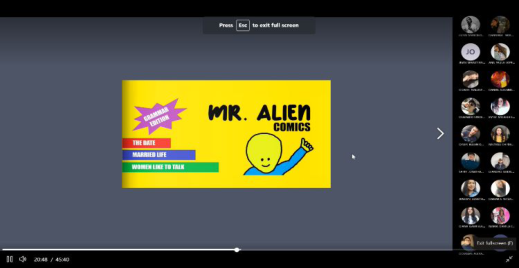
Beginning In the first phase, the comics are presented to the group of English students through the Microsoft Teams platform used for virtual classes. Additionally, the link to the comics is published on the Moodle platform and socialized in the chat since many of the students use the cell phone (https://www.flipsnac k.com/jujora/main-main.html).
Once the link to the digital book is shared, the topic of the comics is revi- ewed: I wish (I wish) by asking questions so that students become familiar with the topic they are going to read in the comics. The question based on the theme of the comics is: What would you like? Some students turn on the microphone and express some answers such as: I wish I could travel, I wish I had a job, I wish I had money, I wish I had a vacation, or I just wish I could
Table 3. Planning.
Table available in the original PDF paper.
General information of the class English level: Sixth Unit: One – Sentence Review Activity time: 20 minutes Objective: Learn the use of Future tense Material: Mr Alien Comics Comics: I wish Resource link: https://www.flipsnack.com/jujora/main-main.html
Step Time Process Beginning 5 min. The teacher asks some questions about the topic presented (I wish). Developing 5 min. Students read the comics individually in which they associ- ate the graphics with the grammatical structure. 5 min. The students, together with the teacher, analyze the comics, emphasizing the grammatical structure. Closing 5 min. The student generates his/her own knowledge by applying the presented grammar and also expresses his/her opinion.
Figure 1: Digital book on Flipsnack.
sleep. Once students participate, they are assured of what they are going to read in the comics (Figure 1).
Development A period of time is designated for students to read the comics: I wish (I wish) individually. Once the students finish reading, a space for discussing the comics is designated verbally, and in the chat, about the grammatical stru- cture that they managed to identify. Students write the structure and each of the parts of the sentence is analyzed together with the purpose of generating inductive learning through their participation. Some students are able to qui- ckly identify the structure by writing the correct structure in the chat; while other students write some examples based on the grammatical structure.
Using Comics in the English Language Classroom 351
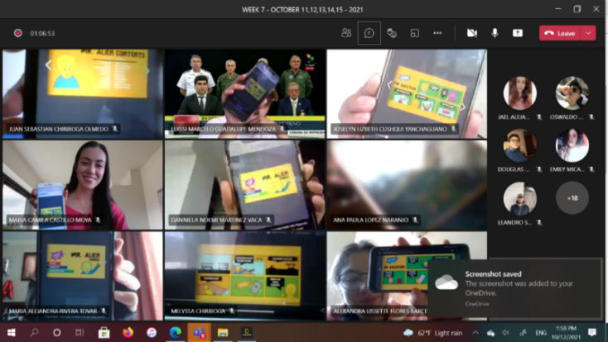
Figure 2: Comics socialization.
Closing Among the main results of the research, it can be indicated that Comics-Based Learning in English Teaching is presented as a way to innovate educational practice (Figure 2), in a subject that represents a challenge for both stu- dents and teachers, as demonstrate the results obtained. through the pre-test applied to the students on grammar of the English language, the highest percentage is concentrated in those who could not solve them, this could be due to the fact that the internalization of knowledge occurs mechanically without further reflection.
RESULTS
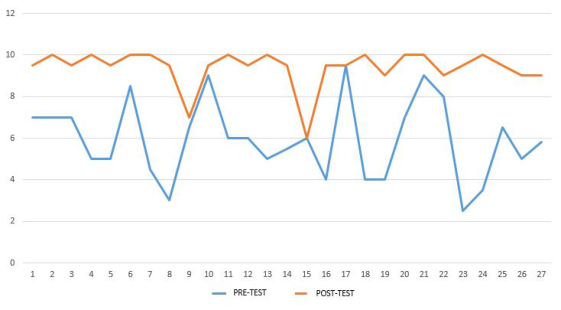
In order to know the students’ English language level of grammar knowledge, a knowledge test was applied, which consisted of 20 questions with topics related to ten grammatical tenses. For applying this pre-test, the institutional Moodle Platform was used, obtaining a general average grade of 5.80 out of 10, which evidenced that the average knowledge of grammar was regular because it was below 6. After applying the proposal in virtual classes, a post- test was carried out to verify knowledge of English grammar, obtaining an average grade result of 9.38. Next, a T student analysis was performed to assess the data between the pre-test and post-test (Figure 3).
Based on the survey it can be deduced that comics help significantly in the learning of the English language because 27 students, which corresponds to 100%, expressed their satisfaction in being able to visualize graphics. Addi- tionally, all students consider that comics should be included as a didactic resource used by English teachers. Furthermore, 26 students corresponding to 96.3% considered that comics favor the development of other skills and subskills (reading, vocabulary, grammar). Additionally, 25 students corre- sponding to 92.6% considered that it was easy for them to learn English through comics and that they could easily deduce and that they were able to easily deduce the grammar presented in each of the chapters. Finally, only
Figure 3: Pre-test and post-test results.
3 students (11.1%) stated that they had difficulties reading the comics in English while 24 students (88.9%) had no difficulty reading the comics on their digital devices.
CONCLUSION
The development of digital narratives strengthens English language grammar learning where digital comics are considered as a digital didactic resource for learning and entertainment applied effectively in virtual classes. By reading comics, the students show a better participation during the class expressing their ideas and generating their own knowledge based on the structure of comics. At the end of reading comics, it is evident that the class average grades improved considerably and that the motivation for reading digital comics increased remarkably.
Storytelling should be used more frequently by English teachers as a dida- ctic resource to develop the learning of different English language skills such as reading, writing, speaking and listening. In addition, teachers can develop different subskills such as vocabulary, pronunciation, and grammar. Reading comics has different advantages considering their visual impact and the fact they can be used in different ways in the classroom where the only limitation is the imagination of the teacher.
Comics should be implemented by teachers in classes as a way of learning and having fun. There are free comics that are available in the Internet and they can be selected according to the students’ age and preferences. More- over, digital comics can be saved in different technological devices such as laptops, cellphones, tablets, or computers and it would give the students the possibility to check and to read the comics as many times as they want. The- refore, teachers should promote the information storage of comics in those devices to practice reading in free time.
ACKNOWLEDGMENT
The authors would like to acknowledge to Universidad Tecnológica Indo- américa and its Maestría en Educación, mención innovación pedagogía en
Using Comics in the English Language Classroom 353
entornos digitales (MEPED) for contributing to this research to participate in the 13th International Conference on Applied Human Factors and Ergo- nomics (AHFE 2022). Special thanks the students from sixth level and the authorities at Pontificia Universidad Católica of Ecuador, Sede Ambato for participating in this research.
REFERENCES
Aggleton, J. (2018). Defining digital comics: a British Library perspective, Journal of graphic Novels and Comics, vol. 1, no. 1, pp. 1–18. Akcanca, N. (2020). An alternative teaching tool in science education: Educational
Comics, International Online Journal or Education and Teaching, vol. 7, no. 4, pp. 1550–1570. Annum, G. (2014). Digital painting evolution: A multimedial technological platform for expressivity in fine art painting, Academic Journals, vol.4, no. 1, pp. 1–8. Barbosa, A., Tavares, G., Kruta, A. (2017). The comics as teaching strategy
in learning of students in an undergraduate management program, Mackenzie Management Review, vol. 18, no. 1, pp. 40–65. Bozkurt, A., Okur, M., Karadeniz, A. (2016). Use of digital books at academic level: Perceptions, attitudes and preferences of post-graduate students, Journal of Human Sciences, vol. 13, no. 1, pp. 1–12. Butnaru, G., Nit˘a, V., Anichiti, A., Brînz˘a, G. (2021). The Effectiveness of Online
Education during Covid 19 Pandemic — A Comparative Analysis between the Perceptions of Academic Students and High School Students from Romania, Sustainability, vol. 13, no. 5311, pp. 1–20. Grant, N., Bolin, B. (2016). Digital Storytelling: A Method for Engaging Students and Increasing Cultural Competency, The Journal of Effective Teaching, vol. 16, no. 3, pp. 44–61. ˙Ilhan, G., Kaba, G., Sin, M. (2021). Usage of Digital Comics in Distance Learning
During COVID-19,IJonSES, vol. 3, no. 1, pp. 161–179. Ketut, A. (2015). Teaching English for young learners using a digital comic strip,” Jurnal Pendidikan dan Pengajaran, vol. 1, no. 48, pp. 71–79. Matuk, C., Hurwich, T., Spiegel, A., Diamond, J. (2019).How do teachers use comics
to promote engagement, equity, and diversity in science classrooms?, Research in Science Education, vol. 4, no. 1, pp. 1–60. Wallner, L., Eriksson, K. (2020). Using comics and graphic novels in K-9 education: An integrative research review, Studies in Comics, pp. 37–54.
LISTED IN THE AHFE DIGITAL BOOKSTORE CATALOGUE
Explore the complete digital volume
Human Factors and Systems Interaction
Read this individual research paper free through the original publisher, or explore the full digital proceedings book.
ISBN 978-1-958651-28-5
Explore this ISBN in the AHFE Bookstore ↗Listed in the July 2026 bookstore catalogue; search by ISBN to confirm current availability · Digital book purchase optional