Diana Espinoza-Espinosa, Janio Jadán-Guerrero, Marco Santorum, Isabel L. Nunes (2022). Learning Based on Board Game to Inspire Mathematical Thinking. In: Human Factors and Systems Interaction. AHFE Open Access, vol. 52, pp. 330–336. https://doi.org/10.54941/ahfe1002173
Math learning is, together with reading and writing, one of the fundamental learnings of elementary education, given the instrumental nature of these subjects. However, it has been identified the difficulty that students have when they need to solve addition and subtraction math problems with numbers of up to three digits, which is why it is necessary to find new ways to teach students to reason. This article proposes the design of a board game to strengthen logical reasoning. The methodology used in the research began with a diagnosis of 37 fourth grade students from a private school in Ecuador through a pre-test, later an interaction with the board game and finally a post-test. Two math teachers and two designers participated in the board game design. The information obtained from the experts helped with the design of the game, the data collected from teachers made it easier to identify the main problems that students present in terms of understanding mathematical problems. The design of the game was based on the narrative of superheroes such as: Spidermas, Superesta, Dividivertido, Centella, Sumager, among others, as well as in the most representative places at the Downtown of Quito. The game is designed for three or four students; the game’s mechanics consist in that the participants must solve math problems proposed in the board and if they can solve them properly, they advance in the game. Among the main results and conclusions of this research is that the students feel motivated to learn using the game; in addition, collaborative work is evidenced, and soft skills are enhanced such as teamwork, problem solving, analytical thinking and autonomy. For future work, the board game can be used in other topics where students face difficulties, such as: fractions, multiplication and division.
Mathematics teaching is a challenge at all levels of education, this is because it is a discipline that requires rigor; therefore, the use of board games is a novel methodology, which combines the playful component with the developing in students of skills, logic and creative thinking.
Learning Based on Board Game to Inspire Mathematical Thinking 331
The game is one of the main elements of socialization that human beings have, allowing their integral development because it combines aspects such as: discovery, creativity, and collaborative work (Gallardo and Gallardo, 2018). On the other hand, Mathematics is an essential subject in all aspects of daily life; however, in Latin America and the Caribbean, according to the Third Comparative and Explanatory Regional Study on learning achieve- ment, it is evident that 47% of third grade students at the regional level reached level I, while 23% level II and only 22% level III. Among the coun- tries with the best scores are: Chile (787), Costa Rica (750), Uruguay (742) and Mexico (741), while Ecuador obtained 703 points, ranking 8 out of 15 participating countries (UNESCO, 2016).
That is why the use of board games for Mathematics teaching seeks to innovate pedagogical practice, helping in the development of logical reaso- ning. On the other hand, it is necessary to highlight that board games have great benefits as shown in a study that addresses their effectiveness for the acquisition of knowledge in university students, concluding that these resou- rces allow to increase learning motivation by combining fun with educational processes (Taspinar et al., 2016).
Therefore, the aim of this study was to establish learning based on board games as an active methodology seeking to strengthen Mathematics teaching, for which the relevance of the game in this discipline was identified.
The applied methodology was bibliographic-documentary as well as in field with a descriptive level. The instruments used were: interview guide and questionnaire (pre-test and post-test). The participants in this study were tea- chers, students and two designers. Regarding the evaluation of the proposal, it was deemed beneficial, which was evidenced in the results of the post- test applied to students, showing a positive evolution after the board game intervention.
Technology was an essential element for the application of the proposal. Classkick platform was used for the questionnaire to students; in addi- tion, Genially was used for the digitization of the game; and finally, for its application it was used the Zoom platform.
Regarding the research findings, it can be mentioned that the board game requires establishing strategies and decision making to reach the goal, promo- ting cooperative work, providing valuable information regarding the progress of the students in a specific theme, and favoring the concentration and mental abilities.
RELATED WORK
For the present work, some investigative studies have been approached that used the board game as an element in the educational process.
Karisimos (2021) mentions that board games help students deliver spon- taneous responses, contributing to building their confidence.
Gasteiger and Moeller (2021) analyzed conventional board games to pro- mote numerical skills at an early age, carrying out an intervention of seven sessions lasting 30 minutes each. The authors noticed evidence that the students manage to develop numerical competences.
Malliakas et al. (2021) investigated the effectiveness of board games for Mathematics teaching in Greek students with dyslexia, for which the rese- archers applied a pre-test and post-test, obtaining as results that the board games have positive effects for understanding fraction concepts.
Likewise, Satsangi and Bofferding (2017) with their research sought to determine if board games contribute to strengthening numerical awareness in students with autism spectrum, concluding that they improved knowledge of numbers, and achieve higher levels of attention.
Finally, Andika et al. (2019) consider that by combining Mathematics and board games, counting skills are developed at an early age. After the use of linear and circular board games, the results show that linear board games are more effective for students to understand number sequences, compare quantities and solve addition and subtraction problems.
All these studies support that Learning Based on Board Games contributes to innovate teaching practices in a subject that society has stigmatized as com- plicated. The use of games becomes relevant because the student feels free, producing in them motivation for learning and overcoming the challenges presented.
METHOD
The present research work has the aim to establish the application of board games to favor the resolution of mathematical addition and subtraction problems.
A board game is a fun resource that is intended to entertain, educate and establish social bonds, so it can be used in various environments such as: home and educational institutions. In the educational field, board games are essential resources for students to enhance their negotiation and communication skills (Riggs and Young, 2016).
That is why, in the present study, the educational resource “Mathematical Superheroes” was designed, for which the inductive and deductive method has been used, under a descriptive design.
Interviews were applied to teachers, with the purpose of identifying the educational process in Mathematics subject teaching, as well as the apprecia- tions when using the board game in the educational process. Next, a pre-test was carried out to identify the level of understanding in the resolution of mathematical addition and subtraction problems, for which the Classkick digital platform was used, in which the students had to demonstrate the mathematical problem solving process. Later, the board game “Mathematical Super Heroes” was designed; for subsequent application through the Geni- ally and Zoom platforms. After the intervention, the post-test was applied in order to assess the evolution in the skill to solve mathematical addition and subtract problems.
PARTICIPANTS The population of this research study involved two board game designers, with a fourth-level degree, and two fourth grade teachers, with a degree
Learning Based on Board Game to Inspire Mathematical Thinking 333
Table 1. Data collection techniques and instruments.
Table available in the original PDF paper.
Technique Instrument Subject Objective Interview Interview guide Board Game Recognize board games’ importance in
Mathematics teaching and learning process. Survey Questionnaire Students Determine the level of effectiveness of board games in solving addition and subtraction problems. Interview Interview Guide Teachers Identify the educational processes
applied in the teaching of solving mathematical problems.
in Education Sciences. On the other hand, a sample of 37 students was used (20 female and 17 male) aged eight years old; from middle and low socioeconomic households.
MATERIALS AND SUPPLIES The instruments used in the research were: interview guide, with 15 open questions. For teachers, the interview guide addressed 31 items. Regarding the students, the questionnaire was applied twice, which contained 10 que- stions. For the elaboration of the instrument, the skill of solving problems that require the use of addition and subtraction with numbers of up to three figures was considered.
The materials used for the design of the proposal were office supplies for the initial prototype. In addition, technology is an essential element for the final design, which allowed the user to use it.
PROCESS The research was developed in five phases. In the first phase, the search for documental information of scientific articles in English was carried out, which demonstrated the relevance of using board games in the mathematical discipline in the different school stages. The second phase corresponded to the design of research techniques and instruments as shown in Table 1.
Next, the reliability of the instruments was obtained through Cronbach’s Alpha, and then applied to the students. On the other hand, the interview was also applied to board games design experts, who provided significant information for the present study. Likewise, the interview was applied to teachers, in order to identify the pedagogical process used in mathematical teaching. In the third phase, the different elements constituting the board game “Mathematical Super Heroes” were designed (see Figure 1), for which the information collected in the previous phase was considered. The fourth phase consisted in the application of the proposed game; this was carried out with technology help, in small groups of students and with sessions of 30 to 40 minutes. Finally, the fifth phase was directed to the application of the post-test and the analysis of the results.
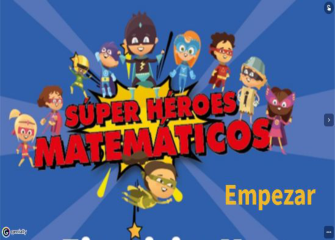
Figure 1: Boargame “Super Héroes Matemáticos”.
PROPOSAL IMPLEMENTATION The board game “Mathematical Super Heroes” is based on the narrative of the Downtown of Quito showing the most representative places (e.g., Plaza de la Independencia, Palacio de Gobierno, Municipio de Quito, San Francisco Church), spaces that are represented on a board. In addition, super heroes (such as: Superesta, Divided, Batisuma) are characters that have the mission to reach the point established as a goal.
The board is designed for three or four individual players or pairs to par- ticipate, solve problems, challenges and questions. If they manage to solve them they advance squares; but if they fail they go back squares or lose a turn.
For the visual representation of the student on the board, avatars with the design of one of the previously mentioned super heroes were used; throwing a dice allowed students to advance on the board. On the other hand, the game is aided by cards containing the problems, questions and challenges the students must solve.
Due to the pandemic caused by COVID-19, the sessions were performed virtually, using the interactive platforms Genially and Zoom.
RESULTS
Among the main results of the research, it can be mentioned that Learning Based on Board Games in Mathematics Teaching was found as an effective way to innovate educational practice, in a subject that represents a challenge for both students and teachers. As evidenced by the results obtained through the pre-test applied to students on mathematical problem solving, the highest percentage is concentrated in those who could not solve them, this could be due to the fact that the internalization of knowledge occurs mechanically without further reflection.
The concept of Learning Based on Board Games is based on significance, reflection and collaboration, discovering new ways to achieve knowledge, where the student has an active and participatory role in the educational process. All these aspects allow the knowledge achieved by the students to link theory with practice.
Learning Based on Board Game to Inspire Mathematical Thinking 335
As mentioned by Deng et al. (2019), board games enrich school activities with emotions, allowing students to relax and dynamizing the educational process. The use of games requires the involvement of the teacher, as the game progresses, providing small clues that help students develop their critical thinking.
CONCLUSION
The board game has various benefits in the Mathematics teaching process, generating interest in the student and promoting several emotions such as: joy and surprise. In addition, it helps in the development of social skills, rea- soning and autonomy, contributing to the establishment of assertive channels of communication between teacher and student.
On the other hand, it is concluded that board game requires establish- ing strategies and decision making to reach the goal, promoting cooperative work, providing valuable information regarding the progress of students in a specific theme and favoring concentration and mental abilities.
In addition, it is concluded that, in elementary basic education, it should be promoted learning that is linked to contexts that are familiar to the student; therefore, problem solving becomes the fundamental axis in Mathematics teaching. Consequently, the process applied by teachers in teaching pro- blem solving must allow students to understand, analyze, establish a strategy, and check its resolution. This helps them reason about the answer, avoiding mechanical processes.
Finally, there is flexibility in number of components that are related to the mechanics and dynamics of the game; hence, the teacher has the free- dom to determine those that he/she considers pertinent in the development of the game. Regarding the board game for Mathematics teaching, every aspect mentioned above must be taken into account; so that it contributes signifi- cantly to the success of the knowledge acquisition process. Regarding the use of the game, the teacher must clearly establish the learning objective to pur- sue; then explain the game mechanics to the students; let them play to acquire knowledge; and, finally, evaluate if the game contributed to the evolution of the educational process.
ACKNOWLEDGMENT
The authors would like to acknowledge to Universidad Tecnológica Indo- américa and its Maestría en Educación mención Innovación y Liderazgo Educativo for contributing to this research to participate in the 13th Interna- tional Conference on Applied Human Factors and Ergonomics (AHFE 2022). Special thanks to the students, teachers, and authorities of Unidad Educativa Consejo Provincial de Pichincha for participating in this research.
REFERENCES
Andika, W.D., Akbar, M., Yufiarti, Sumarni, S. (2019). Playing board games with mathematical self -concept to support early numeracy skill of 5-6 years old children. Journal of Physics: Conference Series 1166.
Deng, L., Wu, S., Chen, Y., Peng, Z. (2019). Digital game-based learning in a Shanghai primary-school mathematics class: A case study. Journal of Computer Assisted Learning, 36(5) 709–717. Gallardo López, J. A., Gallardo Vázquez, P. (2018). Teorías sobre el juego y su
importancia como recurso educativo para el desarrollo integral infantil. Revista Educativa Hekademos, 24, 41–51. Gasteiger, H., Moeller, K. (2021). Fostering early numerical competencies by playing conventional board games. Journal of Experimental Child Psychology, 204, 105060. Karisimos, A. (2021). Using board games for EFL preschoolers. Research Papers in
Language Teaching and Learning, 11 (1) 93–103. Malliakas, E., Jiménez-Fanjul, N., Marín Díaz, V. (2021). Educational Intervention through a Board Game for the Teaching of Mathematics to Dyslexic Greek Students. Social Sciences, 10(10) 370. Riggs, A., Young, A. (2016). Developmental changes in children’s normative rea-
soning across learning contexts and collaborative roles. Dev Psychol, 52(8), 1234–46. Satsangi, R., Bofferding, L. (2017). Improving the Numerical Knowledge of Children with Autism Spectrum Disorder: The Benefits of Linear Board Games. Journal of Research in Special Educational Needs, 17(6) 218–226. Taspinar, B., Schmidt, W., Schuhbauer, H. (2016). Gamification in education: a
board game approach to knowledge acquisition. Procedia Computer Science, 99, 101–116. UNESCO (2016). Third Regional Comparative and Explanatory Study on Education Quality. Santiago: UNESCO Regional Bureau of Education for Latin America and the Caribbean.
LISTED IN THE AHFE DIGITAL BOOKSTORE CATALOGUE
Explore the complete digital volume
Human Factors and Systems Interaction
Read this individual research paper free through the original publisher, or explore the full digital proceedings book.
ISBN 978-1-958651-28-5
Explore this ISBN in the AHFE Bookstore ↗Listed in the July 2026 bookstore catalogue; search by ISBN to confirm current availability · Digital book purchase optional