Olaoluwa Akinshipe, Clinton Aigbavboa (2022). A Review of Historical Street Lighting Solutions. In: Human Factors in Energy: Oil, Gas, Nuclear and Electric Power. AHFE Open Access, vol. 54, pp. 1–7. https://doi.org/10.54941/ahfe1002214
Aside from food, clothing and shelter, one of the essential needs of man is light. Unfortunately, the early man had to rely on natural light alone until the possible accidental discovery of fire. This discovery led to the invention of other basic technologies such as torches, candles, wicks and the like. Providing a lighting system suitable for enclosed spaces, open spaces, streets, and tunnels have been a subject of research over the years as more efficient methods are catechized to give way to the currently used systems. This report looks to explore two analogous objectives. The first is to provide a retrospective insight into the origin of lighting systems. The second objective highlights the significant progress made over the years to create an efficient lighting system for domestic and industrial use. This paper takes a deep dive into the lighting technologies used as far back as ancient Egypt, Rome, and the Benin Kingdom of current-day Nigeria.
Lighting consumes a significant amount of energy domestically and in the business sector. Large machines and street lighting account for over half of South Africa’s electricity usage. There are approximately 187,000 road light installations in South Africa alone, most of which are situated at parks and sports stadia. One of the easiest and most cost-effective ways to minimize power use and corresponding greenhouse gas emissions is to replace lights with much better energy-efficient ones.
Newer lighting technologies such as the Light Emitting Diodes (LEDs) have significantly reduced these concerns since they became more affordable. They were initially utilized as circuit board indicator lights, and they quickly gai- ned a reputation for their longevity and energy economy. When LEDs became commercially available in the 1980s, cities began to replace the conventi- onal incandescent bulbs in streetlights with the second generation of LEDs. Scientists continued to work with them as fluorescent light substitutes in out- door signage. Fortunately, the current generation of LEDs now comfortably outlasts and outperforms all other lighting sources in terms of durability, per- formance, and energy efficiency. LEDs have so far taken centre stage as the de facto lighting technology for diverse use cases.
STRUCTURE OF THE PAPER This paper contains two chapters. The first chapter discusses the origin of road lights using systematic reviews of relevant literature on the topic. The second chapter highlights the significant progress made over the years by discussing the current lighting systems being used.
HISTORICAL REVIEW OF LIGHTING TECHNOLOGIES The present-day street lights are a product of years of cognate research in both electricity and lighting technologies. From ancient oil lamps to the more recent LED technologies, the large-scale use of street lighting predates the industrial revolution by a few centuries.
Around 3100 BC in Africa, the Egyptians used plant-based materials such as walnuts, sunflower and sesame seeds, wheat and castor oil plants, flax, walnuts and almonds and other nuts as a source of fuel for their lamps (Barry, 2017). Sesame seeds, in particular, were exclusively used in Pharaoh’s palaces. Although lamp oils made out of soft animal fat were relatively cheaper, they produced peculiarly unpleasant smoke when it was burnt.
Ancient cities of the Benin Kingdom used palm oil-fueled-wicks made of cotton and housed in bronze receptacles mounted on 20 feet wrought iron poles positioned in streets leading to the palace and within so as to properly illuminate the roads for the king’s guests (Ling et al. 1855).
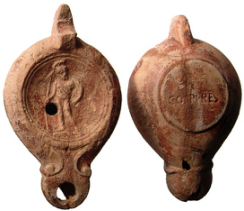
Vegetable oil was used instead as fuel for their street lamps in ancient Rome, mostly within affluent neighbourhoods. Wealthy Romans often car- ried their lamps around at night for their safety. From around the seventh century, oil lamps made of metal or ceramic were used for centuries. Most of the lamps had an oil chamber, a filling hole in the centre, and a hole in the nozzle for a wick made of linen material. Figure 1 shows a pictorial image of such lamp.
Before street lighting, torches and candles were used as a lighting source at night in darker places like caves which mainly were not adequately lit by natu- ral light. Materials like beeswax and animal fat were used to make the candles (Webster et al. 1855). In some parts of Asia, whale fat was used instead (Nikola, 2016). In larger cities like Beijing, volcanic gas leaks were chan- nelled into the city through pipes made with bamboo sticks around 500BC (The Old Timey, 2021).
There wasn’t any semblance of significant progress in that regard until the late 18th century when it was discovered by Stephen Hales in 1726 that flammable fluid could be extracted from the distillation of coal in a process now referred to as “Coal gasification” (Forstall, 1912). This process involves blowing coal through a “gasifier” with oxygen and steam while it’s being heated. It is required that complete combustion of the fuel is not prematu- rely achieved during this phase. The end product is called syngas or coal gas (H2 + CO) (El-Nagar et al. 2019).
3CH4 + O2 + H2O →3CO + 7H2
A Review of Historical Street Lighting Solutions 3
Figure 1: A vegetable oil-fueled lamp used in ancient Rome (Adamah, 2017).Figure 2: An early version of the arc lamp (Adapted from Timetoast, 2021).
In 1735, John Clayton had also discovered, though accidentally, the flam- mability of coal during an experiment. He was documented to have called the gas “The spirit of coal” (Hutchison, 1985).
More progress was made in 1792 towards more efficient lighting by Scot- tish inventor William Murdoch (Tietz, 2021), who demonstrated the first practical use of coal-fueled gas lights for illumination. He fitted lamps powe- red by gas in his own house in Redruth to demonstrate this. He made further progress by illuminating the Soho Foundry main building in 1798.
As shown in Figure 2, arc lamps also called “Electric candles”, or “Jablo- tchkoff candles”, were developed in 1875 by Pavel Yablochkov and were first used in large scale in 1878 in Paris, France during the opening of the Paris Universal Exposition on the avenue de l’Opera and the Place d’Etoile. Street lights were installed shortly afterwards around the major boulevards in 1881 to correspond with the timing of the Paris International Exposition of (Fierro 1996). The issues with the arc lamp were: Heat, Light Intensity, Radio-frequency interference, Fire hazard and Carbon monoxide emission.
The heat produced by the resistance between the carbon rods measures upwards of 3,315 degrees Celsius, and unfortunately, this burns down the carbon rods. This means the rods would need to be adjusted to keep them closer to each other to maintain the heat.
The Intensity of the light is usually so high that it can only be used when high-intensity lighting is needed. The high level of ultra-violet light may also portend serious health hazards after being exposed to the human body over an extended period. Because of this, extra caution had to be taken to avoid temporary or permanent health issues. (Nationalmaglab, 2019).
Around the same time, as the evolution of electricity continued, it coinci- ded with the quest to produce “fire”. Thomas Edison, in 1879, discovered the
4 Akinshipe and Aigbavboa
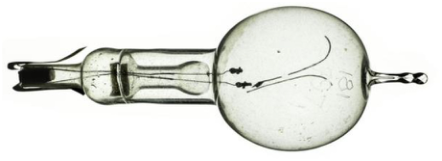
Figure 3: Original carbon-filament bulb from Thomas Edison (Adapted from Bulbs, 2021).
first practical and commercial carbon-threaded incandescent lamps (Institute for Energy Research, 2018). This is an improvement on the works of a long list of scientists, including Humphrey Davy, Warren de la Rue, John W. Starr, Alexander Lodygin, Heinrich Göbel, Henry Woodward, Mathew Evans, and Joseph Swan from 1802 to 1878 (Bellis, 2019). While arc lamps produced light by having an electric arc leap the gap between two electrodes, the incan- descent lamps produced light by having an electric current pass through a filament. Figure 3 shows an example of such lamp.
After Peter Cooper Hewitt’s filed a patent for his first mercury vapour lamp in 1901, which created luminescence by exciting the mercury vapour within the tube, Edmund Germer improved on the design by inventing a high- pressure mercury-vapour lamp which solved the excessive heat conundrum of the arc lamp. Thus, lighting became more affordable and less hazardous. His work, alongside Friedrich Meyer and Hans Spanner, was eventually patented in 1927.
Development didn’t stop there. Fortunately, it took the efforts of George Inman and other General Electric Scientists to improve on and develop a more commercially viable (Bellis, 2020).
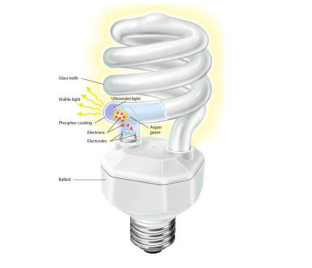
EVOLUTION OF CFLS AND LEDS Compact Fluorescent Lamps consume around a fifth to a third of the amount of energy consumed by incandescent bulbs and have a longer lifespan. CFLs can last fifteen times longer while still producing a similar luminance. The technologies also work differently. While incandescent light bulbs produce light by warming up a thin wire filament when current is passed through it, the CFL emits visible white light when electric current flows within a tube filled with argon and vapourised mercury. Figure 4 shows an example of a CFL lamp.
During this process, ultraviolet light is produced. The generated light then excites the fluorescent coating within the tube. This process is completed when the light eventually becomes visible (EnergyStar, 2021).
Edward Hammer invented the first spiral CFL in 1976 while he was still working with General Electric (Americanhistory, 1996). Due to the economic crisis, General Electric could not mass-produce them. However, the original design was modified to include an electronic ballast by Osram Licht AG, a German company headquartered in Munich in 1985 (Kane et al. 2001).
A Review of Historical Street Lighting Solutions 5
Figure 4: Diagram showing the sections of a Compact Fluorescent Lamp (Adapted from ElecticalTechnlogy 2016).
A Light-emitting diode is a semiconductor that emits visible light (or non- visible light in the case of infrared) when connected to direct current. LEDs will emit visible light at a specific range of wavelengths. The human eye is capable of detecting light within this spectrum. Aside from visible light, LEDs also emit infrared light, mostly used in TV remotes and ultraviolet light. The process by which a substance (LED in this case) emits light when an ele- ctric source (current) connected to the terminals flow through it is called electroluminescence.
Henry Joseph Round first discovered this concept in 1907. While working at Marconi labs, Henry noticed that a sort of yellowish light was emitted when silicon carbide crystal was stimulated by electricity. As with other disco- veries, there was very little economic benefit until Russian inventor Oleg Losev reportedly proposed a working theory for the first LED in 1927 after carefully studying Round’s discovery.
For some reason, there was no significant progress in that respect for a few decades until 1955, when Rubin Braunstein discovered that diodes could generate infrared light when current passes through them. Gary Pittman and Bob Biard of Texas Instruments also in 1961discovered that when a gallium- arsenide diode is fed with current, it generates infrared light. Soon afterwards, they got a patent for infrared LEDs (History of Lighting, 2022).
LEDs were only successfully made to emit visible red light instead of the pre-existing infrared light by an American, Nick Holonyak Jr. of General Electric, in 1962. In the same year, M. George Craford, a student of Holonyak at the University of Illinois at the time, produced the first yellow LED and a red LED that was much brighter than Holonyak’s in 1972.
The efforts of Holonyak and Craford led to the mass production of LEDs for indicators and seven-segment displays by Monsanto Company, which became widely used in pre-existing electronics such as flashlights, TVs, radios, calculators, semaphores and telephones (Jeffrey 2011).
In 1976, Thomas P. Pearsall invented a high-brightness light-emitting diode to transmit information through fibre optic cables. A Japanese company (Nichia Corporation) scientist Shuji Nakamura discovered that using indium- gallium-nitride instead of just gallium-arsenide could produce a bright-blue
6 Akinshipe and Aigbavboa
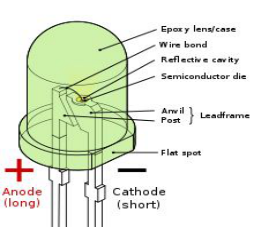
Figure 5: Diagram of a regular-sized 5mm LED (Adapted from Zazzle, 2021).
light in 1979. It wasn’t until 1994 that the first commercially viable LEDs were mass-produced for personal and industrial use. Figure 5 shows an example of a well labelled LED.
LEDs’ popularity and breadth of applications have expanded tremen- dously during the last two decades. They are now viewed as the future of lighting systems, owing to their efficiency and long-term dependability.
CONCLUSIONS AND LESSONS LEARNT Humans as sentient beings will continue to evolve and innovate to improve on previous innovations as we try to correct the defects of earlier inventions. This led to a long history of lighting systems that progressively developed to be more efficient.
As the world moves towards the idea of greener and more efficient power sources, it is worthy of note that lighting will always be subject to more research as it takes up a large percentage of energy consumption. A lighting system that increases efficiency and significantly reduces domestic and urban road light costs would be exceptional. As LEDs become more prevalent, limi- tations will become more conspicuous. This would lead to the creation of even better lighting technologies. As with every other technology, they will continue to improve to meet the needs of future generations.
REFERENCES
A. E. Forstall, (1912). “The technique of gas manufacture”, Journal of the Franklin Institute. A. Fierro, (1996). Histoire et dictionnaire de Paris. Adamah (2017). Ancient Everyday – Oil Lamps in Ancient Rome. Eagles and dragons publishing website: https://eaglesanddragonspublishing.com/ancient- everyday-oil-lamps-in-ancient-rome/ Americanhistory (1996). Lighting a revolution Inventing Six Modern Electric Lamps.
American History Website: https://americanhistory.si.edu/lighting/20thcent/inve nt20.htm Barry, G. (2017). “Lighting in Ancient Egypt and the world before electricity”, Barrygraygillingham.
A Review of Historical Street Lighting Solutions 7
Businesstech (2021). Why Cape Town keeps street lights on during the day. Business Tech Website https://businesstech.co.za/news/energy/514010/why-cape-tow n-keeps-street-lights-on-during-the-day/ Energystar (2021). How do CFLs work? Energy Star website: https://www.energyst
ar.gov/products/lighting_fans/light_bulbs/learn_about_cfls History of Lighting (2022). History of LEDs - Light Emitting Diodes History of lighting. History of Lighting website: http://www.historyoflighting.net/light-bulb -history/history-of-led/ Institute for Energy Research (2018). History of Electricity. Institute for Energy
Research website: https://www.instituteforenergyresearch.org/history-electricity/ Jeffrey B. (2011). The long history of light-emitting diodes. Electronic Products website: https://www.electronicproducts.com/the-long-history-of-light-emitting- diodes/ Kane, Raymond; Sell, Heinz (2001). “Revolution in Lamps: A Chronicle of 50 Years
of Progress (Second ed.)”. The Fairmont Press. pp. 189–190. Ling, H. Roth, (1903). “Great Benin: Its Customs, Art, and Horrors”, Halifax, England: F. King & Sons Ltd. M. Bellis, (2019). A Timeline for the Invention of the Lightbulb. Thoughtco website:
https://www.thoughtco.com/who-invented-the-lightbulb-1991698 M. Bellis, (2019). The History of Fluorescent Lights. ThoughtCo website: https:// www.thoughtco.com/history-of-fluorescent-lights-4072017 Nationalmaglab (2019). Arc Lamp. Nikola, (2016). The Use of Candles in China. Candle Delirium website: https://
www.candledelirium.com/blog/the-use-of-candles-in-china/ R. A. El-Nagar, A. A. Ghanem, (2019). Syngas Production, Properties, and its Importance. T. Tietz, (2021). Illumination and Steam Power – William Murdoch and the Industrial
Revolution. T. Webster, W. Parkes, (1855). “An Encyclopædia of Domestic Economy”, pp. 165–170. The Old Timey (2021). A History of Streetlights: Out of the Darkness. The Old Timey website: https://theoldtimey.com/a-history-of-streetlights-out-of-the-darkness/ W. K. Hutchison, (1985). The Royal Society and the foundation of the British Gas
Industry.
LISTED IN THE AHFE DIGITAL BOOKSTORE CATALOGUE
Explore the complete digital volume
Human Factors in Energy: Oil, Gas, Nuclear and Electric Power
Read this individual research paper free through the original publisher, or explore the full digital proceedings book.
ISBN 978-1-958651-30-8
Explore this ISBN in the AHFE Bookstore ↗Listed in the July 2026 bookstore catalogue; search by ISBN to confirm current availability · Digital book purchase optional