Casey Kovesdi (2022). Addressing Function Allocation for the Digital Transformation of Existing Nuclear Power Plants. In: Human Factors in Energy: Oil, Gas, Nuclear and Electric Power. AHFE Open Access, vol. 54, pp. 49–55. https://doi.org/10.54941/ahfe1002220
The existing nuclear power plants in the United States (U.S.) have a vital role in providing carbon-free electricity. However, these existing plants are being economically challenged due to changes in the U.S. energy market. In order for the existing nuclear power plant fleet to remain economically viable, a significant digital transformation that fundamentally changes the way in which these plants are operated, maintained, and supported ought to be seriously considered. Adopting advanced digital technologies is an important element of the digital transformation, and includes adding new automation capabilities like control automation, computer-based procedures (CBPs), advanced alarms, decision support, and digital human-system interfaces (HSIs). Moreover, safe and effective adoption of automation requires addressing human and technology integration considerations that come along with making significant changes to the existing plants’ concept of operation. For example, task responsibilities are likely to change for control room operators to a more supervisory role; crew coordination may be impacted from the use of automation, digital HSIs, and associated capabilities that are available from a modern control system. This work describes important considerations and challenges that come with function allocation for the adoption of new automation at existing nuclear power plants, based on continuing research from the U.S. Department of Energy (DOE) Light Water Reactor Sustainability (LWRS) Program. Specifically, this work reviews the state-of-the-art in function allocation guidance within the U.S. nuclear industry along, identifies current challenges in interpreting and applying this guidance within the context of making significant modifications to existing plants, and identifies emerging methods that may support function allocation for these cases based on a review of the literature combined with ongoing discussions with a utility partner. An objective of this work is to raise awareness of these current challenges and proposed approaches to the human factors community to support future research and development that ultimately supports the effective use of function allocation in the digital transformation of existing nuclear power plants.
The existing NPPs in the United States (U.S.) have a vital role in providing carbon-free electricity. However, these existing plants are being economi- cally challenged due to changes in the U.S. energy market. For the existing NPP(NPP) fleet to remain economically viable, a significant digital transfor- mation that fundamentally changes the way in which these plants are ope- rated, maintained, and supported ought to be seriously considered (Kovesdi et al., 2021). Adopting advanced digital technologies like automation is an important element of the digital. Safe and effective adoption of automation requires addressing human and technology integration considerations that come along with making significant changes to the existing plants’ concept of operation. This work describes important considerations and challenges that come with function allocation for the adoption of new automation at existing nuclear power plants, based on continuing research from the U.S. Depar- tment of Energy (DOE) Light Water Reactor Sustainability (LWRS) Program. Specifically, this work reviews the state-of-the-art in function allocation gui- dance and highlights how it can be used within the U.S. nuclear industry. An objective of this work is to present the current challenges and proposed approaches to the human factors community to support future research and
development that ultimately supports the effective use of function allocation in the digital transformation of existing nuclear power plants.
ORIGINS OF FUNCTION ALLOCATION Function allocation can be traced to the original work performed by Paul Fitts (1951). Fitts List provided a dichotomized list of qualities that people, and machines are better suited at performing. The notion of Fitts List is to provide design guidance in assigning responsibility of functions to either people or machines, based on their qualities reflected in the list. As interpreted from comparing to Fitts List, functions that are better suited for machines should be automated whereas functions better suited for people should be assigned to the person. There have been numerous criticisms of the use for Fitts List in real-world applications (e.g., Fuld, 1993; Sheridan, 2002) and this paper is surely not within scope of providing a detailed critique. Though, some of the more salient critiques are as follows:
A False Dichotomy. The assignment between people and automation is not truly a dichotomy, but rather there’s an element of cooperation between agents (Sheridan, 2002; Wickens et al., 2004).
Overly Simplified. There are generally numerous combinations in which a function can be carried out between automation and people and applying the list is short sighted (particularly for complex systems); this is compoun- ded in that responsibly assigning a function requires a priori knowledge of context to which the function is being assigned (Sheridan, 2002; Wickens et al., 2004).
Leftover Problem. There are concerns of a leftover problem in which functions are decided on a technology-centered approach (as opposed to user-centered) based on whether it is technically feasible to automation, leaving ‘leftover’ functions to the person (Roth et al., 2019; Wickens et al., 2004).
Outdated Guidance. A final criticism, perhaps most salient, is that the guidance is aged, given that it was developed in 1951 (Sheridan, 2002; Wickens et al., 2004). Certainly, with ever-evolving technology, including but not limited to the advent of computers and artificial intelligence, what qualities are described in each column of the list are almost certain to change.
Despite these criticisms, Fitts List is still regarded as a useful starting point in function allocation (e.g., Fuld, 1993; De Winter & Dodou 2014). It has generated scientific debate among the human factors community and has served as a basis in standards and guidelines that have extended upon Fitts List to more elaborate process-related approaches for performing function allocation in complex systems, like NPPs.
NOTEABLE U.S. STANDARDS AND GUIDELINES NUREG/CR-3331. The U.S. Nuclear Regulatory Commission (NRC) provides detailed guidance for function allocation in NUREG/CR-3331
Addressing Function Allocation for the Digital Transformation 51
(Pulliam et al., 1983). This document provides one of the earliest guidance for function allocation in the design of NPPs and has been used as a foun- dational methodology for forthcoming standards and guidelines described later in this paper. The development of NUREG/CR-3331 was in response to creating specific guidance for NPPs in performing function allocation or evaluating their allocation in an existing design with the intent of providing a method that can assure allocation of function is done so through an ‘orderly’ and ‘rational’ approach.
NUREG-0711. The U.S. NRC HFE Program Review Model, herein refer- red to as NUREG-0711 (2012), describes function analysis as an activity that 1) defines the high-level functions that are done to accomplish plant goals, 2) delineates the relationships between these high-level functions and associated specific plant systems, and 3) provides a framework for determi- ning the responsibilities of people and automation. The decomposition of abstract functions to specific equipment enables an understanding of how specific physical equipment and processes are used to accomplish plant goals; it also provides a basis for assigning responsibility to people, automation, or a combination of the two in function allocation. Functions that are allocated to people are further analyzed in task analysis. Function allocation focuses on verifying that the assigned the functions take advantage of the capabilities (i.e., physical and cognitive) of people. It is expected that the applicant uses a structured approach to perform function analysis and allocation that can be done iteratively and can provide technical bases for the decisions made when assigning functions to people and/or automation.
EPRI 3002004310 [12], Human Factors Guidance for Control Room and Digital Human-System Interface Design and Modification, pairs with NUREG-0711 (2012) and provides detailed guidance for the execution of HFE activities in the design if new NPPs and performing modifications to existing plants. The guidance given on function analysis and allocation here closely follows the methodology presented in NUREG/CR-3331 (1983), among other sources (e.g., Sheridan, 2002). EPRI 3002004310 (2015) adds the use of following a graded approach and includes a 17-step methodology that addresses defining (or addressing changes) to the concept of operations, performing function analysis, defining scenarios for evaluation, performing function allocation, and evaluation the impacts of allocation on other functi- ons. The outputs of function allocation include automation requirements and human actions (i.e., functions allocated to people fully or partially) that serve as inputs into task analysis.
CHALLENGES WITH CURRENT GUIDANCE Despite there being standards and guidelines in performing function alloca- tion, there are several challenges, in applying this guidance at existing nuclear power plants.
Guidance Focuses on ‘Blank Slate’ Design. Current guidance provides a detailed and rigorous process that certainly has merit in addressing the criteria described in NUREG-0711 (2012), which provides particular bene- fit in the development of a new plant where the applicant begins with a
52 Kovesdi
‘blank slate.’ It provides a structured methodology that can be performed iteratively to describe the hierarchical relation of high-level functions to the specific equipment. This detailed understanding then, in theory, can be used to responsibly assign functions to people or automation through the careful understanding of the function itself and how it impacts people.
For existing nuclear power plants, such guidance may not provide the most direct means to performing function analysis and allocation for digital upgra- des at existing plants (Hunton & England, 2019). Digital upgrades at existing plants come with unique constraints such as using commercially available qualified vendor digital technology (i.e., distributed control systems) that can be configured in a limited number of ways, either due to regulatory or tech- nical constraints. The question of how to allocate functions is not purely an empirical one, decided by human factors engineering. Rather, function allo- cation is a multidisciplinary endeavor in which human factors engineers must work closely with other disciplines to carefully understand what is possible (i.e., deemed from regulatory, technical, or economic considerations), and what configuration between automation and people provides the best suite to perform the function safely and reliably.
Limited to Safety with Minimal Guidance on Power Production. The meth- odologies provided previously have traditionally focused on plant safety where there has been little focus on power generation (Kovesdi et al., 2021). That is, at least within the public domain, function decomposition and alloca- tion between people and automation has focused primarily on safety-related systems and not on the secondary (i.e., power generation) side of the plant. It is important to note that with changing energy markets in the U.S., there is an emerging need for existing NPPs to identify ways in which operations and maintenance can be reduced to remain economically viable (Kovesdi et al., 2021). Hence, a need for understanding function allocation in the context of production is highly important.
Lack of Real-World Use Cases. Unlike task analysis, which has been expan- ded upon and arguably used extensively in nearly all domains in which HFE is involved, function analysis and allocation is less documented. To this end, the number of real-world use cases of function allocation such as described in NUREG/CR-3331 (1983) that is available to the public domain is notably limited. As a result, applying and tailoring a function allocation approach like NUREG/CR-3331 remains less straightforward when compared to more traditional methods like task analysis.
Does Not Explicitly Address Team Dynamics. Joe and colleagues (2015) position the need to consider social factors such as teamwork (include people and automation), communication, trust, and creating shared mental models. The guidance to date has primarily focused on only ‘micro-ergonomic’ factors such as perception, cognition, and action of the operator. However, ‘macro- ergonomic’ considerations must also be addressed for effective allocation. The ways in which automation is applied can fundamentally change crew dynamics and even organizational factors. Hence, there is a need to bro- aden how function allocation is addressed by considering sociotechnical considerations.
Addressing Function Allocation for the Digital Transformation 53
Table 1. Summary of emerging function allocation methods.
Table available in the original PDF paper.
Cognitive Work Analysis (CWA)
Function Analysis. Work domain analysis (Phase 1) abstraction hierarchy sup- ports function analysis by decomposing the functions using the goals-means approach (Roth et al., 2019; Stanton et al., 2017). The results of this decom- position can be used to define the information requirements in the design phase.
Function Allocation. CWA is sociotechnical in nature and decomposes the system across multiple constraints represented at specific phases of CWA. The phases are completed in sequence. It is at the fourth phase (i.e., Social Organization and Cooperation Analysis; SOCA) where function allocation can be used (Stanton et al., 2017). Specifically, combining the results from control task analysis (Phase 2) decision ladders and applying the specific agents responsible for executing key decision making provides a basis in allocating functions based on the decision requirements of the team (e.g., Roth et al., 2019).
Cognitive Task Analysis (CTA)
Function Analysis and Allocation. CTA provides a broad set of task data col- lection and representation techniques that focus on the cognitive elements of work (Crandall et al., 2006). Knowledge elicitation methods like Critical Decision Method can be used to understand in detail how operators performed important decisions with the technology, based on actual incidents. CTA enriches design knowledge to effectively assign functions to people or automation (Kovesdi et al., 2021).
System Theoretic Process Analysis (STPA)
Function Analysis and Allocation. STPA is a systems engineering hazard analysis approach that looks at the system holistically by focusing on the interactions between components (Levenson & Thomas, 2018). The primary feature of STPA that describes this interaction is the control structure; here, the operator (and even organization) is included in the control structure and the functions can be modeled through defining the control actions and feedback necessary to perform the function. Loss scenarios and unsafe control actions are then described using the control structure. The framework enables design team to identify ways for mitigating unsafe control actions very early in conceptual design.
Simulation and Modeling
Function Allocation. The notion of applying simulation and human-in-the-loop testing is not new to function allocation guidance (EPRI, 2015; Kovesdi et al., 2021). Not surprisingly, applying performance-based tests via simulation offers a wealth of opportunity to identify and mitigate critical design issues and ulti- mately inform allocation decisions. Simulation and modeling paired with rapid prototyping enables operators to perform realistic tasks with the proposed system to collect performance-based and user feedback. The design team, including ven- dor, utility stakeholders, operations, and HFE can observe these issues within a realistic context to come to effective design decisions (Kovesdi et al., 2021).
54 Kovesdi
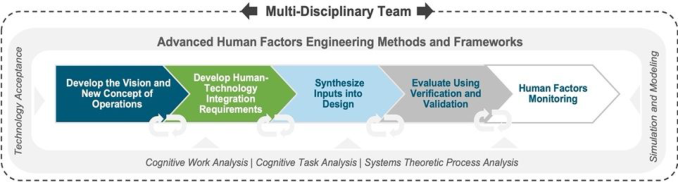
Figure 1: Methodology to for adoption of automation (adapted from Kovesdi et al., 2021).
EMERGING FUNCTION ALLOCATION METHODS Alternative methods have been proposed to support function analysis. While many have been proposed outside the specific context of NPP moderni- zation, a central motivation has been to incorporate methods that enable the designer to understand the operational demands and impacts of alloca- tion to human-automation teaming. Put simply, these approaches consider function allocation as a sociotechnical problem and focus on both the micro- and macro-ergonomic considerations. Notable methods are summarized in Table 1.
FUNCTION ALLOCATION AT EXISTING PLANTS Kovesdi and colleagues (Kovesdi et al., 2021) have developed a methodo- logy that incorporates existing industry guidance and the use of the emerging methods described previously to support the adoption of advanced automa- tion, including addressing function analysis and allocation when developing human-technology integration requirements (Fig. 1). The approach is descri- bed in detail in (Kovesdi et al., 2021); though, it is worth emphasizing that methodology centers the methods previously described in this paper around five core phases that are important to undertaking a large-scale modernization project. A central goal here is to incorporate HFE early and enable iterative feedback that can help guide the vision of a new state that consequentially directs the selection and configuration of digital technology.
The use of CWA and CTA for example can be used to elicit operating expe- rience from end users and gather utility needs that can guide a procurement strategy for digital technologies that is user centered and likely to address sociotechnical considerations. Tools like STPA and simulation studies can facilitate multidisciplinary thinking by allowing members of the design team to identify scenarios and error traps through a systematic approach. As a result, these approaches may allow for design solutions that are more effective and achievable. Because these emerging methods are enabled at different pha- ses, they can be applied iteratively, allowing the team to apply lessons learned from earlier phases to correct previous guidance given, as well as potentially allow HFE to better integrate in the project schedule. The methodology pre- sented in (Kovesdi et al., 2021) will be applied to solve real-world challenges at U.S. NPPs to support effective adoption and allocation of automation. Lessons learned from this work will be reported in future research to support
Addressing Function Allocation for the Digital Transformation 55
a business-driven and user-centered approach for a digital transformation of existing nuclear power plants.
ACKNOWLEDGMENT
This work of authorship was prepared as an account of work sponsored by Idaho National Laboratory (under Contract DE-AC07-05ID14517), an age- ncy of the U.S. Government. Neither the U.S. Government, nor any agency thereof, nor any of their employees makes any warranty, express or implied, or assumes any legal liability or responsibility for the accuracy, completeness, or usefulness of any information, apparatus, product, or process disclosed, or represents that its use would not infringe privately owned rights.
REFERENCES
Crandall, B., G. Klein, and R. Hoffman. 2006. Working Minds: A Practitioner’s Guide to Cognitive Task Analysis. MIT Press. De Winter, J. C., & Dodou, D. (2014). Why the Fitts list has persisted throughout
the history of function allocation. Cognition, Technology & Work, 16(1), 1–11. EPRI. 2015. “Human Factors Guidance for Control Room and Digital Human- System Interface Design and Modification.” EPRI 3002004310, Electric Power Research Institute. Fitts, P. M. (Ed.) (1951). Human engineering for an effective air-navigation and
traffic-control system. Washington, DC: National Research Council. Fuld, R. B. (1993). The fiction of function allocation. Ergonomics in Design, 1(1), 20–24. Hunton, P., and R. England. 2019. “Addressing Nuclear I&C Modernization
Through Application of Techniques Employed in Other Industries.” INL/EXT- 19-55799, Idaho National Laboratory. Joe, J. C., O’Hara, J., Hugo, J. V., & Oxstrand, J. H. (2015). Function allocation for humans and automation in the context of team dynamics. Procedia Manufacturing, 3, 1225–1232. Kovesdi, C.R., Spielman, Z., Hill, R., Mohon, J., Miyake, T., Pedersen, C.:
Development of an Assessment Methodology That Enables the Nuclear Indu- stry to Evaluate Adoption of Advanced Automation. INL/EXT-21-64320, Idaho National Laboratory (2021). Levenson, N., and J. Thomas. 2018. “STPA Handbook.” Pulliam, R., Price, H. E., Bongarra, J., Sawyer, C. R., & Kisner, R. A. (1983).
NUREG/CR-3331: A methodology for allocating NPPcontrol functions to human or automatic control. Washington, DC: U.S. Nuclear Regulatory Commission. Roth, E. M., Sushereba, C., Militello, L. G., Diiulio, J., & Ernst, K. (2019). Function allocation considerations in the era of human autonomy teaming. Journal of Cognitive Engineering and Decision Making, 13(4), 199–220. Sheridan, T. B. (2002). Humans and automation: System design and research issues.
Human Factors and Ergonomics Society. Stanton, N. A., Salmon, P. M., Walker, G. H., & Jenkins, D. P. (Eds.). (2017).
Cognitive work analysis: applications, extensions and future directions. CRC Press. U.S. Nuclear Regulatory Commission. Human Factors Engineering Program Review Mod-el, NUREG-0711, Rev. 3 (2012). Wickens, C. D., Gordon, S. E., Liu, Y., & Lee, J. (2004). An introduction to HFE
(Vol. 2). Upper Saddle River, NJ: Pearson Prentice Hall.
LISTED IN THE AHFE DIGITAL BOOKSTORE CATALOGUE
Explore the complete digital volume
Human Factors in Energy: Oil, Gas, Nuclear and Electric Power
Read this individual research paper free through the original publisher, or explore the full digital proceedings book.
ISBN 978-1-958651-30-8
Explore this ISBN in the AHFE Bookstore ↗Listed in the July 2026 bookstore catalogue; search by ISBN to confirm current availability · Digital book purchase optional