Anna Maria Teperi, Ilkka Asikainen, Arja Ala-Laurinaho, Vuokko Puro (2022). Participative Development for Improving Safety– Collaborative Work Process Analysis in Nuclear Maintenance. In: Human Factors in Management and Leadership. AHFE Open Access, vol. 55, pp. 116–125. https://doi.org/10.54941/ahfe1002240
Our aim was to apply participative development of safety in the highly proceduralized and strictly managed field of nuclear industry. We used the Collaborative Work Process Analysis method to enhance cooperation in and create a shared view of maintenance across and among the organizational units of a nuclear power plant. We found that this analysis had the potential to promote the participative development of safety and that participative methods are needed in the nuclear industry to facilitate safer and more smoothly flowing work.
The research approach of this study is based on the perspective of human factors (HF). The aim of this approach is to develop work and organization so that the staff’s view of their work and its everyday challenges and resources can be heard. (Dekker, 2016; Hollnagel & Nemeth, 2021). The human aspect is particularly needed in the continuous development of safety-critical areas, such as nuclear power industry.
The safety-critical nuclear industry is facing several changes, such as the modernization of technology and new ways of organizing and structuring work. Dealing with aging personnel, transferring tacit knowledge, maintai- ning nuclear know-how and recruiting new generations to the positions of operators, managers and experts are ongoing activities in nuclear organi- zations (Wahlström, 2021). Nuclear safety is also challenged by economic pressure and waning public confidence. The nuclear industry is characte- rized by formal systems and practices and recognizes the need to take people’s views into account through communication, feedback, guidance, and appraisal (Schöbel et al., 2021).
Applying measures and means to facilitate openness and trust at all levels of nuclear organizations is of utmost relevance for creating the prerequisi- tes for a just and fair culture (Dekker, 2016). New ways to commit and motivate personnel to participate in decision-making, to improve compete- nce and work practices, and to develop new learning are also necessary to
Participative Development for Improving Safety–Collaborative Work Process Analysis 117
proactively promote safety (Hollnagel & Nemeth, 2021). In high-reliability organizations, frontline employees’ suggestions and concerns enable the early identification of potential problems that might have catastrophic consequ- ences. Operative personnel and experts are essential for developing work and safety. Practical solutions for promoting participative development (PD) would meet these needs.
Digitalization and the increase of technologically mediated work; dynamic, interdependent processes; organizational restructuring into teams and netw- orks; and expanded work tasks and responsibilities require that all employees have good theoretical and practical knowledge of processes and their related issues. Moreover, for cooperation, communication, and decision-making to succeed, employees should have a common understanding of work processes (Hollnagel, Cacciabue & Hoc, 1995).
Such a shared understanding creates the basis for safe work and promotes resilient performance, as it supports the performance of both systems and humans by improving the ability to anticipate and learn in both everyday operations and more demanding situations (Hollnagel & Nemeth, 2021).
Understanding a work system with all its interactions and interdepende- ncies requires applying good conceptual and theoretical knowledge to the specific work context and work situation. Work process knowledge (Bore- ham, 2002) refers to understanding the work system as a whole, including work processes, the interdependencies of activities in different departments, work roles, and organizational culture. It covers knowledge that is useful for work and supports practical activity, as opposed to general knowledge. Work process knowledge is formed while solving problems and contradicti- ons at work by combining practical experience (knowhow/competence) and theoretical knowledge.
The more accurate and the deeper the personnel’s conception of their work and tasks is, the more successfully they can judge various situations and decide on the appropriate actions (Hollnagel et al., 1995).
Collaborative Work Process Analysis Collaborative Work Process Analysis (CWPA) (Leppänen et al., 2008) is a collaborative, development-oriented method that facilitates the accumulation of work process knowledge and shared understanding of work. It aims to increase the participants’ ability to see the work process as an entity and to encourage them to take an active role in improving and developing it.
The core concept of CWPA is the sharing of knowledge and experie- nces among participants through dialogue. Participants have different views and knowledge of processes due to their varied education, work experience, work tasks, and responsibilities, and this enriches the discussions on and resulting conclusions regarding the history, current state, and development opportunities of processes. Dialogue combines the theoretical and practical knowledge of participants for forming shared local concepts and theories of work—-shared work process knowledge.
The method is based on steered discussions. During the analytical sessions, the participants work in different groups and analyze their work processes,
work methods, materials, products, and cooperation, as well as the related problems and aspects that need development. The themes of the analysis and the development areas of work are selected according to the aims and goals of the project. The discussions cover issues such as who does what, why, when, and how the work is done.
Preparing development proposals is an essential part of CWPA. In ear- lier development programs, participants have made hundreds of development plans concerning the entire work process, from technical development to coo- peration (Leppänen et al., 2003). The purpose of the development plans is to reveal the work process areas that need developing and to provide adequate information to initiate actions. They are not merely the occasional views of one person. Development plans cannot be formed without properly modeling the work.
In this project, we used a modified version of a method that was develo- ped in safety-critical air traffic management (Teperi & Leppänen, 2011), and further modified in aviation maintenance (Teperi et al., 2019). Evaluations of these projects have proved that using CWPA supports systematic coope- ration between different actors in organizations. It helps define and create a mutual understanding of the safety-critical characteristics of work among the organizational actors, which could be further supported by improving work processes in practice.
In choosing CWPA for this study, we aimed to 1) make tacit expertise in maintenance work more visible and concrete, 2) analyze and learn directly from everyday work (not only from operative events, audits, or other safety management models currently in use), 3) understand and develop work by modeling it collaboratively, with the personnel themselves, from operative to expert and management levels, and 4) collaboratively find appropriate corrective measures.
A further aim was to support organizational learning, knowledge-sharing and safety in maintenance work. In this study, we aim to describe the appli- cation of the CWPA method in nuclear maintenance and evaluate its benefits and drawbacks.
MATERIAL AND METHODS This study was conducted in 2019–2021 and had two main phases. In the first phase, we interviewed nine experts and operative personnel for orientation. The aim of the interviews was to obtain preliminary information to orientate the researchers; to find the specific, topical needs of nuclear power maintena- nce; and finally, to select work processes for further analysis. In the second phase, CWPA was conducted at a nuclear power company (NPC), to obtain a detailed understanding of its use. The CWPA included three work process samples: a) five fault repairs b) a planning process, and c) component and system health reporting. The CWPA was conducted at one-day-workshops, which were conducted as steered sessions in cooperation with the operative personnel and experts themselves (Table 1).
We collected the data for this study in an NPC that had two plants. In this report, we refer to these plants more generally as the NPC.
Participative Development for Improving Safety–Collaborative Work Process Analysis 119
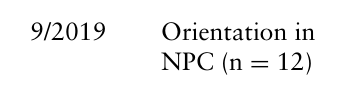
Table 1. CWPA actions in 2019–2021 (workshops WS1–WS6), number of participants in each action and the aims of each action.
Table available in the original PDF paper.
Equation reproduced from the original PDF.
-preliminary overview to determine needs and current state of NPP maintenance
Equation reproduced from the original PDF.
-introduction of method in NPP -reflection on interview findings -selection of work processes for CWPA First set of CWPA 2/2020 WS1 (n = 9) -modeling four fault repairs -preparing development plans 3/2020 WS2 (n = 9) -summary, evaluation, and conclusions of WS1 Second set of CWPA 10/2020 WS3 (n = 9) -modeling modifications: case scheduling and plan- ning replacement work of compressor -focus on collaboration among engineering, operations, and maintenance departments 11/2020 WS4 (n = 16) -summary, evaluation, and conclusions of WS3 Third set of CWPA 9/2021 WS5 (n = 10) -modeling component health and system health reporting processes for lifecycle management of NPC -focus on how to help reporting process produce good quality reports, for the use of annual planning and long-term investments 10/2021 WS6 (n = 13) -summary, evaluation, and conclusions of WS5 Total 8 actions Partly same people in each workshop or interview
Orientation – Interviews and Workshop We interviewed nine maintenance team leaders, supervisors, technicians, and engineers from the NPC. The interviews were in the form of thematic group interviews: The groups had two to three people and were administered by two researchers. The main themes of the interviews were: changes at work, work organization, leadership, overview and critical phases of maintenance, and potential conflicts and their resolutions. The aims were to identify topi- cal views for further analysis. The findings of the interviews were discussed with the NPC participants in the workshop, to form a picture of the current situation and the needs and current forms of PD in NPCs.
Based on the interviews and the interpretation of the data, the themes for further analysis using CWPA were selected in cooperation with the maintenance unit.
Implementation of CWPA in Three Sets of Workshops After orientation, we conducted three different sets of CWPA workshops. Each set consisted of two workshops, described in Table 1.
The first set of CWPA focused on assemblers’ and supervisors’ fault repair work. We conducted five intensive analysis sessions with 13 study participants, each lasting two hours.
First, three electrician and automation assembler pairs selected a disturba- nce case for analysis (Workshop 1). They then modeled the phases and tasks and possible challenges in the process and identified efficient work methods. Development ideas were collected and discussed.
After this, two groups of supervisors and experts added their relevant tasks to the process descriptions of each case, with comments and development ideas. In this way, the assemblers’ and supervisors’ views of the processes were combined with the process illustrations. The analysis produced 13 different development ideas.
An evaluative workshop (Workshop 2) was held for the assemblers, supe- rvisors, and experts who had participated in the analysis process, but also included management and HR and safety experts, totaling 15 participants. The findings of the CWPA were discussed. Three development plans were selected for further development. The participants also reflected on the CWPA method.
The second set of CWPA focused on collaboration between the depar- tments of engineering, operations, and maintenance, during modifications. It focused on the planning processes of the modifications, especially from the perspective of the managers’ and engineers’ work. The specific case was a compressor replacement and the planning phase of the replacement work. Nine engineers and managers representing the different departments participated in the workshop.
First, the representatives of each department modeled the phases and tasks of their own planning process on a timeline and presented the pro- cesses to each other. The processes were illustrated as parallel on the timeline (Workshop 3). The participants identified strengths and good practices, and the disturbances or aspects needing development. They also pointed out connections between processes and needs for interconnections and collabo- ration, including different kinds of planning and review meetings. Ideas were discussed, and development plans were initiated.
An evaluative workshop was held (Workshop 4), the participants (n = 16) of which were managers from different departments and activities, supervi- sors, development managers, and engineers.
The third set of CWPA focused on the component health reporting and system health reporting processes in the lifecycle management of the NPC. This case consisted of expert knowledge work with intensive information gathering and knowledge creation.
The analysis focused on how to help the reporting process produce good quality knowledge and reports for the use of both annual planning and long- term investments, and for overall sustainable life cycle management.
The participants were from the maintenance (n = 4), engineering (n = 5), and development (n = 1) units, ten in total (Workshop 5). They modeled the component health reporting and the system health reporting proces- ses on the timeline as groups, after which they presented the process to
Participative Development for Improving Safety–Collaborative Work Process Analysis 121
each other (Workshop 5). This was followed by an evaluative workshop (Workshop 6).
The research data of the CWPA actions was analyzed by means of content analysis and phenomenography, focusing on the study participants’ perce- ptions without any ready-made or guiding classification. This is because we wanted to look at the situation with a clean eye, without any prior reservations or assumptions about the outcome. (Silverman, 2013).
RESULTS
Interviews Notable changes had occurred in the NPC as well as in society in recent past years, which had affected the mood of the employees in the facility and caused problems in operations. An organizational change, which pooled tech- nical expertise into a new organizational unit, was an ongoing discussion in the NPC. The re-arrangement of engineering into a support service, including the introduction of a new service ticket system for utilizing engineering exper- tise, was seen as a challenging reform from the perspective of mechanics. It forced adjustments to the old ways of collaborating, which relied heavily on personal relationships and familiarity between mechanics and engineering. “Our side of the fence” and “the other side of the fence”, were described as separate organizational entities with separate cultures. In addition to this, a general shift in the engineering labor market from permanent labor relati- onships in the NPC to rivalry to acquire skilled engineering craft, combined with increased turnover rates were also seen as an organizational challenge. Sharing tacit knowledge and mutual learning between engineering and mech- anics was considered difficult. Open, undisguised discussions in and between all organizational levels on the abovementioned topics were considered signs of open communication and an organizational culture capable of reflection.
Technical expertise and technically skillful keypersons were described as playing an essential role in production, regardless of their organizational level. Equipment managers, who are responsible for looking after a single or several pieces of machinery, were described as being in key positions. The task requires deep technical understanding of a single or several components and systems, as well as skills in planning and reporting in collaboration with plant lifespan control.
Safety work had become a more visible topic, as occupational health and safety training had become more frequent. Safety procedures were also more actively implemented, being an integral part of daily operations. Needs for collaboration across units had increased. Basic maintenance work, however, was considered to have remained relatively unchanged. NPC maintenance work is very different in ad-hoc repairs such as breakage of machinery, and normal maintenance that follows the annual repair plan. Work processes in ad-hoc fault repairs are not as well planned as annual maintenance. Some themes, such as short reaction times, emerged frequently in ad-hoc repairs, which emphasizes the need for development.
Workshops Next, we present the themes of the development plans and main reflections on the application of the method discussed in the evaluative workshops.
As a result of the first set of CWPA, development plans were made to, for example, digitalize the guidelines, documents and pictures of on-sight damage, improve lighting in dark spaces, improve work order forms, and improve spare part ordering procedures.
The experiences that arose in the evaluative workshops highlighted the importance of the modeling being done by people who work in the process in question. The level of detail in the development plans could not have been reached without the viewpoint of the personnel: what happens and how, why certain choices are made in the process, and what kinds of challenges are encountered. Focusing on processes that continuously require reworking and maintenance and often have flaws, defects, and disturbances, were seen as good targets for CWPA.
As the result of the second set of CWPA, development plans were sketched for a series of meetings to improve collaboration and keep up a shared situ- ational awareness and understanding of operations between organizational units in the planning phase of major component modifications:
- Pre-job briefing to plan how the process will be conducted (initial gathering of all units that participate in the installation) - Design reviews (following up on the process, taking corrective measures if needed) - Preliminary review of the plant modification documentation (quality check for amending and minimizing errors in documentation) - Pre-job briefing of work planning and control (starting work scheduling across the functions) The experiences gained from the evaluative workshop highlighted the potential of the CWPA method to facilitate constructive face-to-face com- munication between people who work in different units and have shared projects. Facilitation from outside the NPC and creating a constructive atmo- sphere by also focusing on the positive aspects and fluencies of collaboration arose as important features of CWPA for promoting collaboration between units.
As a result of the third set of CWPA, development plans were sketched to improve data collection for reporting and clarify the aims and purposes of the reporting procedures related to the life-span control of machinery. A plan was made to clarify the goals and justifications for component and system health reporting, as well as the relatedness of these two documents. Overlaps in component and system reports were considered, to ensure the practical applicability of the reporting system and to streamline reporting procedures. Improvements to disturbance reports (as raw material for reporting) were suggested, such as updating disturbance codes to ensure that the data used for reporting are sound. Knowledge of the stock level of spare parts needs to be accurate, as this are essential for future maintenance and investment plans. Data gathering needs to be automated, and data systems integrated to
Participative Development for Improving Safety–Collaborative Work Process Analysis 123
support reporting. The participants also wanted the timeframe of reporting in different units to be redefined to eliminate time pressure in the springtime, when revision is due.
The experiences gained from the evaluative workshops highlighted the potential of the CWPA method to clarify the overall picture of reporting in a participative manner. Reporting forms a complex system constructed of diffe- rent procedures and distribution across the NPC, and it was considered that the modeling helped pool the experiences of those who do the reporting and revise and streamline procedures.
DISCUSSION
Three very different types of processes were modeled in the workshops. In the first set of CWPA, the technical fault repair processes and collaboration between mechanical and electronical maintenance were modeled, whereas the second set of CWPA focused on modeling a compressor replacement planning process, and the third set on the knowledge-intensive component and system health reporting processes. The success of modeling both highly technical and highly information-intensive processes highlights the versatility of the CWPA method, as well as the variability of its potential for applying PD. The results of the study predominantly concern the non-technical aspects of work, which shows that PD is a fruitful way to support mastery in the human factors that complement and support the NPC operations.
Knowledge and understanding of the overall picture of the NPC was vital for properly conducting the CWPA workshops. The interviews helped gain a relevant understanding of the changes in utilizing technical expertise in the NPC. The role of the technical support unit needed careful consideration. For example, it was vital to understanding the cultural and practical shift from longstanding personal relationships and cooperation methods to more mediated communication while preparing workshops. In choosing the targets for the CWPA, the expertise of the health, safety and environment officials of the NPC and the shop floor level of maintenance was important to help find genuinely relevant targets for modeling.
The NPC had no similar method in use prior to the project. The work and production processes had been analyzed, but not with the aim of facilitating collaboration among the organizational units and levels.
The findings revealed that CWPA is beneficial. The participants valued the discussions and accepted the method. It helped them verbalize tacit work process knowledge, concretely identify the aspects of work that needed deve- lopment, and define corrective actions. The method also helped them openly discuss the needs for information sharing and mutual feedback between the units. Using a PD method such as CWPA may speed up organizational lear- ning and make work development more collaborative, leading to a high level of safety and quality in production.
The lessons learnt were that it is essential that the case for collective analy- sis and learning is selected carefully in order to ensure practical relevance and to motivate participants to join the discussions. It was also important to first observe and discuss strengths and best practices, as this made the joint
handling of potential conflicts, disturbances, or other failures easier. CWPA requires skillful facilitators, and group dynamics may affect the group’s work: Some group members may dominate, or underlying tensions between the functions or in the organizational culture may inadvertently be strengthe- ned. The participation of the upper management level would also have been beneficial, to highlight the relevance of bottom-up work development. Alth- ough middle management actively participated in the evaluation workshops in each phase, questions on how to proceed with the development plans may have remained. Long-term follow-up of how the development plans are rea- lized is important, to finalize the evaluation of the efficiency of the CWPA process.
The disadvantages of the PD methods are that during their application, they may be experienced as an additional work task to daily work processes, which increases workload. However, developing work should be regarded as an important part of normal daily work.
The proceduralized, strictly normative nuclear industry would benefit from applying participative methods such as that tested in the study. Whe- ther these kinds of methods can be applied in practice is ultimately affected by the organizational and industrial culture. Methods with a participative ori- entation may be one way of renewing the safety culture and making it more open, just, and fair (Dekker, 2016), thus making any steps to apply further participative methods easier.
CONCLUSION
A method such as the CWPA can be applied to identify the critical latent factors of work and the safety system, as was revealed in this study. In addition to this, it may also be used in different phases of organizational chan- ges. Using CWPA can support work or organizational development in terms of changes in technology, procedures, equipment, or training. It may also improve occupational health service practices and cooperation with other nuclear actors such as regulators.
REFERENCES
Boreham, N. (2002). Work process knowledge in technological and organizational development. In Work process knowledge. Ed. by Boreham N., Samurcay R., Fischer M.Routledge, London. Dekker, S. (2016). Just culture: Balancing safety and accountability. CRC Press. Hoc, J., Cacciabue, P., Hollnagel, E. (1995) Expertise and technology. Cognition,
human-computer cooperation. ed by. Lawrance Erlbaum Ass. NJ. USA Hollnagel E., Nemeth C.P.(2021). Advancing Resilient Performance. Springer, Cham. Leppänen, A. (2001). Improving the mastery of work and the development of the work process in paper production. Industrial Relations, 56:3, 579–605. Leppänen A., Hopsu L., Klemola S. & Kuosma E. (2008). Does multi-level inte-
rvention enhance work process knowledge? Journal of Workplace Learning, 20, 416–430.
Participative Development for Improving Safety–Collaborative Work Process Analysis 125
Schöbel, M., Silla, I., Teperi, A. M., Gustafsson, R., Piirto, A., Rollenhagen, C., & Wahlström, B. (2022). Human and organizational factors in European nuclear safety: A fifty-year perspective on insights, implementations, and ways forward. Energy Research & Social Science, 85, 102378. Silverman, D. (2013). Doing qualitative research: A practical handbook. Sage. Teperi, A-M., Asikainen, I., Ala-Laurinaho, A., Valtonen, T., Paajanen, T. (2019).
Modeling Safety Criticality in Aviation Maintenance Operations to Support Mastery of Human Factors. Springer International Publishing AG, part of Sprin- ger Nature 2019. P. M. F. M. Arezes (Ed.): AHFE 2018, AISC 791, pp. 1–11, 2019. https://doi.org/10.1007/978-3-319-94589-7_32. Teperi, A.-M., Leppänen, A. (2011). From crisis to development–Analysis of air traffic control work processes, Applied Ergonomics, Volume 42, Issue 3, March 2011, Pages 426–436. Wahlström, B. (2011). Organisational learning–Reflections from the nuclear indu-
stry. Safety Science 49, 1, 65–74.
LISTED IN THE AHFE DIGITAL BOOKSTORE CATALOGUE
Explore the complete digital volume
Human Factors in Management and Leadership
Read this individual research paper free through the original publisher, or explore the full digital proceedings book.
ISBN 978-1-958651-31-5
Explore this ISBN in the AHFE Bookstore ↗Listed in the July 2026 bookstore catalogue; search by ISBN to confirm current availability · Digital book purchase optional