Alina Yakymchuk, Mykola Svets, Nataliia Ostapiuk, Oksana Zayachkivska (2022). Innovative Transport Technologies of Ukraine: Sustainable Development, Economy, Infrastructure. In: Human Factors, Business Management and Society. AHFE Open Access, vol. 56, pp. 413–420. https://doi.org/10.54941/ahfe1002297
Abstract. The state and development of the national economy depend on the sustainable development of transport. Increasing productivity of the economy branches determines the formation of the basis for achieving sustainable devel-opment for both states and individual territories. The aim of this investigation is an optimizing of activity of transport system of Ukraine, to develop international cooperation between Ukraine and European Union in the field of introduction of innovation technologies on transport. The authors examine the condition of Ukraine’s transport system, its production activities, and, in particular, the perspectives of introduction of innovative technologies in national transport system. A set of measures for economic stimulating the transport system has been offered. The state of the Ukrainian transport infrastructure has been analyzed and the possibilities of introduction of transport innovations, which are successful in the European Union, have been revealed. Keywords: Transport System Integration Economic Policy Transport Innova-tions
Thanks to transformative transportation technologies now transport system has major changes. The future of transportation has promises to be inno- vative. Today new and innovative transportation technologies impact the trucking and transportation industries. Famous modern transportation are as smart cars, next-gen GPS devices, self-driving automobiles, high-speed rail networks, personal transportation pods, gyrocars or gyroscopic vehicles and others. As the transport sector has so far mainly operated (and still uses) fossil fuels, it is responsible for external environmental factors such as greenhouse gas emissions. That is why it can be argued that such an innovative transport industry plays a fundamental role in achieving environmental safety indica- tors, improving the socio-economic development of society. It is known that economic growth and the development of transport infrastructure are clo- sely intertwined. That is why an innovative and reliable transport system
often acts as a catalyst for economic growth and development of a parti- cular state. Such transport technologies can effectively stimulate economic progress and significantly improve people’s quality of life. The economical growth on the basis of transport technologies was highlighted in such works as (Akanbi Bosede, 2013; Ciborowski, R., Skrodzka, I., 2019) and many others. There are many studies about the innovative transport technologies; but in the international infrastructure context the influence it on economy of the state has been insufficiently studied. In the world some economies use transport technology to revitalize their social, infrastructure development and those do better their economical condition. Developed countries of the world annually invest significant financial resources in the construction, maintena- nce or renewal of their transport infrastructure due to the constant increase in passenger and freight turnover. This is especially true for countries with limited financial resources and budgets, such as Ukraine. The Government of Ukraine should focus more on the development of transport infrastru- cture for higher economic development. The relationship between innovative transport technology in EU and social-economic growth have investigated by different scientists (Nannan Yu, 2012; Ciborowski, R., Skrodzka, I., 2019). The article defines correlation-regression model of interdependence of the number of cargo and passenger transportation with the assessment of other factors – financial, the number of employees in the field of road transport; a set of measures to stimulate the development of innovative transport techno- logies in accordance with the concept of sustainable development has been developed.
DEVELOPING SUSTAINABLE TRANSPORT. METHODOLOGY AND TOOLS The fundamental provisions of economic in the sphere of transport have been methodological and theoretical basis of this investigation. In this research some general scientific methods were applied as systematization – to analyze economic and technological condition of the transport sphere of developed countries and Ukraine; to study the influence of the economic crisis and pandemic COVID-2019 on the transport sector – it was used a cause and consequences method. The few special methods were applied – a method of correlation-regression analysis – establishing the interdependence between the volume of cargo transportation and the number of transported passengers in transport automobile sphere from 1980 to the present in Ukraine. Factors such as the number of employees in the transport sector, the financing of inno- vative transport technologies in the dynamics were taken into account. Such special methods as – benefits and costs analysis – to assess the economic effi- ciency on the innovative transport technologies implementation best foreign practices for optimization it on Ukrainian enterprises, prospects for the use of blockchain technologies in the transport sector; to choose the optimal mech- anisms of state regulation scenario of transport activity of the state – we have used the method of analysis of hierarchies; imitation modeling – for quanti- tative assessment optimizing scenarios of the budgeting process of innovative technology transport enterprise. To implement the process of optimizing the
Innovative Transport Technologies of Ukraine: Sustainable Development 415
economic transport sphere of Ukraine in this paper, a correlation model is developed, where the initial data are number of transported passengers (x), volume of cargo transportation in automobile transport sphere (y). The calcu- lation has been based on stimulating the transport innovation technologies for this important economic sector.
INNOVATIVE TRANSPORT TECHNOLOGIES AS A SUPPORTIVE FRAMEWORK FOR MODELING In 2015 the United Nations approved its 2030 Agenda, an action program setting out 17 Sustainable Development Goals (SDGs) for everyone and soci- ety to follow, to achieve sustainable growth from a social, economic and environmental side. Promoting sustainable transport means reducing gree- nhouse gases, which are the main cause of climate change, and taking on one of the world’s biggest challenges: protecting the environment and biodiver- sity (Yakymchuk A., 2020). For example, transport sector does in Europe and the United States, emissions near 25% of global CO2 emissions (Using Smart, 2021). The World Bank has identified several such factors that affect the efficiency of economic growth of the state and its competitiveness: these are technological readiness and infrastructure, macroeconomic environment, health care and primary education, market size. Between these factors there are some causal relationships. By regulating the indicators of infrastructure, including transport, we can regulate national competitiveness (The World Bank, 2020). That is why such important transport innovations in stimu- lating economic development. In recent years many developed countries do significant amount of innovative transport technologies (ITT). The USA are a world leader in automation in the transportation industry. According to the data of Ministry of Transportation, the United States have ushered in a new era of transportation innovation and security for the rest countries of the world. There is a strong collaboration with a broad coalition of indu- stry, academic, staff and local stakeholders involved in security advocacy and transportation. The goal of this coalition is to support the safe deve- lopment, testing and integration of automated vehicle technologies (USDOT, 2021). Now EU is doing much to speed up the research and innovation nee- ded to radically change transport. So, transport transforming are also a key to delivering the EU’s next research and innovation funding programs and in particular the Horizon Europe Mission area on climate-neutral and smart cities (Future Transportation, 2021). The experience of the EU shows that Ukraine needs to develop an economic policy that would improve transport infrastructure, as well as increase investment in the sector for Ukraine’s sustai- nable economic growth. Transport innovative technology as an economic factor is a measure of economic activity and at the same time transportation is an economic activity reflection. So, the questions about relationship between transport infrastructure and economic growth, transport infrastructure per- formance measurement are the subjects for discussions in both non-academic and academic spheres. To implement the process of optimizing the econo- mic transport sphere of Ukraine, the authors made a correlation-regression
Table 1. Dynamics of transportation of goods and passengers by public road transport of Ukraine, 1980–2020 years. (Compiled by the authors on the basis of data of State Statistics Service, 2020).
model, where the initial data are number of transported passengers (X), volume of cargo transportation in automobile transport sphere (Y) (Table 1).
As shown by the correlation-regression analysis carried out in this paper – the determination coefficient is 0,95. That is a close relationship between
Innovative Transport Technologies of Ukraine: Sustainable Development 417
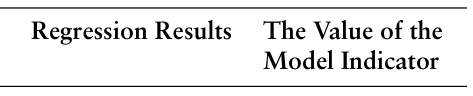
Table 2. Estimation of regression statistical model. (Calculated by the authors).
Table available in the original PDF paper.
Indicator The Value of the Model Indicator
Equation reproduced from the original PDF.
0,974825683188817 Student’s criterion (critical)
Multiple correlation coefficient (R)
7,1816594867224
Determination indicator (R2)
0,950285112604544 Student’s criterion b0
669,01446797200
Normalized value R2
0,948864687250388 Fisher’s criteria (actual)
25,8653139933
Standard error 384205,903493247 Student’s criterion b1 Fcr = 4,1213 Number of observations 37 Fisher’s criterion (critical)
Table 3. Analysis of variance of model’s indicators of transport of Ukraine. (Calculated by the authors).
the main indicators of passenger transportation by public road transport in Ukraine and the main indicators of cargo transportation by road (Table 2).
The regression statistics of the model has been given in Table 3. Since the calculated value of the Fisher’s criterion (F = 669,014), which is much higher than the critical value (Fcr = 4,1213), the model has been statistically significant and adequate. In general, 97% change in the resulting indicator y depends on the change of the indicator x. Therefore, the relation- ship is considered to be extremely close. The result function of the model has been the following:
Equation reproduced from the original PDF.
Since the obtained value of t-statistics modulo (7,181) is greater than the calculated value (tcr = 0,5159), the coefficient b0 is statistically significant and b1 is also statistically significant (because 25,865 is more than 0,515). The determination rate of R2 demonstrates that changing of the values of x1, x2 changes the value of the resulting indicator y (volume of cargo tran- sportation). Thus, the correlation coefficient R = 0,975 is approaching 1, which means that the connection between factors has been estimated as very close. Therefore, the model is reliable. With the help of software forecasting the size of the indicator y from the change of x, ie it is predicted that in the
next five years the size of cargo transportation by road will decrease to 362,9 thous tons with unchanged rate of passenger transport by public transport in Ukraine. This is due to the negative impact of various dangerous strains of the coronavirus pandemic on the economy of the transport sector, population decline in Ukraine due to natural losses, as well as due to labor migration to other countries of the European Union.
Increasing freight turnover in freight transport based on innovative tran- sport technologies is a very important aspect. These are revolutionary techno- logies: electric and autonomous electric vehicles. Such trucks break less often and they are more technically advanced. An example today is the innovative electric trucks of Daimler, Tesla, Nikola, Volkswagen. In European Union the way of live and travel is changing. At the same time EU transport system needs to adapt to global realities such as pandemic-2019, climate change and digitalization. Today european experts understand, that reducing transport’s impact on the climate and natural environment is the most urgent priority, in order to meet COP21 Paris Agreement commitments and align with broader EU transport, climate and energy goals (CEF, 2021). In 2021, seven billion euro were earmarked to support infrastructure projects across the European Union on the data of European Climate, Infrastructure and Environment Executive Agency (EU to invest, 2021). In 2018, this amount was also signi- ficant (nearly 700 million euro) on the data of European Commission (Why the EU supports research, 2020). Ministry of Transportation of USA has developed a Comprehensive Automated Vehicle Plan to advance on safety priorities in preparation for future transportation. This document identifies such a three goals to achieve of automated driving systems: preparing the transport system, modernizing the regulatory environment, promoting coo- peration and transparency (Using Smart Transport, 2021). The development of such a plan will be useful in the Ukrainian realities of the transport system functioning. Smart innovations have changed the conditions for transpor- ting passengers and goods around the world. The use of smart innovations in transport (big data, autonomous and electric vehicles, integrated technolo- gies, innovations in freight and passenger transporting) is an economic driver of the transport industry (Future Transportation Technologies, 2021). Such technologies improve the delivery methods of freight companies, and this applies not only to speed, but also to save time, reduce costs, and someti- mes they can even save lives. It is worth noting that the combination of big data and artificial intelligence allows to optimize the delivery of goods and forecast transport activities. An example of the use of successful technologies in this sense is the logistics company Geodis, which launched the Neptune platform (Top 5 Technologies, 2021). This platform coordinates all transpor- tation activities in real time, almost simultaneously reporting and analyzing key performance and archiving metrics. The work of this platform has been based on big data, the platform allows for operators and customers to quickly manage all their activities.
CONCLUSION
New technologies help to achieve sustainable transport and go to sustaina- ble development. Research needs to be continued to reduce greenhouse gas
Innovative Transport Technologies of Ukraine: Sustainable Development 419
emissions from smart transport systems, which are mainly deployed along transport corridors or certain areas within one country (or between coun- tries). Promising in Ukraine are the development of innovative transport technologies, such as big data, smart drones, next-generation GPS devices, personal transport capsules, electric cars, high-speed rail networks, gyro- scopic vehicles and so on. Although they are expensive, we need to look for new sources of funding that are available in developed countries, such as international grant support. In Ukraine it is necessary to develop such infrastructure transport directions as transport compatibility projects on the main and complex TEN-T (roads, railways, inland waterways, railway ter- minals and multimodal logistics platforms), smart applications for transport (ITS, RIS, ERTMS, SESAR, etc.). The use of blockchain in transportation from 2022 is promising too. Because blockchain transactions are consistent and transparent, all parties can be confident that information about each technical device is credible.
The European Union has an important positive experience of implementa- tion of innovative transport technology for Ukraine’s economy. The authors formed a correlation-regression model to implement the process of optimi- zing the economic transport sphere of Ukraine, where the initial data are number of transported passengers, volume of cargo transportation in auto- mobile transport sphere. As shown by the correlation-regression analysis – the determination coefficient is 0,95, that is a close relationship between the main indicators of passenger transportation by public road transport in Ukraine and the main indicators of cargo transportation. Since the calculated value of the Fisher’s criterion, which is much higher than the critical value, the model has been statistically significant and adequate, the relationship is considered to be extremely close. The correlation coefficient R = 0,975 is approaching 1, which means that the connection between factors has been estimated as very close. Therefore, the model is reliable. As seen by softw- are forecasting, in the next five years the size of cargo transportation by road will decrease to 362,9 thous. tons with unchanged rate of passenger transport by public transport in Ukraine. This is negative impact of various dangerous strains of the coronavirus pandemic on the economy, population decline in Ukraine, as well as labor migration to other countries of the Euro- pean Union. Countries spend considerable amounts of money each year to build, improve and maintain their transport infrastructure. Transport infra- structure supports economic growth of the state and personal well-being of the population. It is an essential ingredient in economic development at all levels of income. Through this, we could meet global challenges by acti- vely supporting a socially fair energy transition, to preserve our biodiversity, our planet and provide efficient, sustainable energy resources for all (Yaky- mchuk A., 2020). Accelerating the construction of transport infrastructure in Ukraine will improve the accessibility of its territory to the European Union, which will be the impetus for the emergence of a new economic center here, this will increase the number of passengers and the volume of cargo. The development of infrastructure and increasing accessibility to other European markets will undoubtedly stimulate the development of Ukraine’s regions and the emergence of a new economic innovation system.
REFERENCES
Akanbi Bosede, Bamidele Abalaba, Dunni Afolabi (2013). Transport Infrastructure Improvement and Economic Growth in Nigeria. International Journal of Huma- nities and Social Science Invention. Volume 2, Issue 8. 2013. P. 26–31. URL: D081026031.pdf (ijhssi.org). CEF 2021Transport call for proposals. European Climate, Infrastructure and Envi-
ronment Executive Agency (2021). URL: http://europa.eu. Ciborowski, R., Skrodzka, I.: International technology transfer as innovation factor in EU countries. URL: https://www.inderscience.com/info/inarticle.ph p?artid=81708 (2019). EU to invest nearly €700 million in sustainable and innovative transport. URL:
http://europa.eu. Future Transportation Technologies That Will Change the Industry (globaltranz.com). Nannan Yu, Martin De Jong, Servaas Storm & Jianing Mi (2012) The growth impact
of transport infrastructure investment: A regional analysis for China (1978–2008), Policy and Society, 31:1, 25–38. State Statistics Service of Ukraine. URL: http://www.ukrstat.gov.ua (2020). The World Bank. World Development Indicators Database: Gross Domestic Product [URL: data.worldbank.org]. Top 5 Technologies and Innovation Trends Revolutionizing Trucking - Transmetrics.
URL: https://www.transmetrics.ai/blog/innovation-in-trucking. USDOT (2021) Automated Vehicles Activities | US Department of Transportation. Using Smart Transport Technologies to Mitigate Greenhouse Gas Emissions from the Transport Sector in Asia | ESCAP (unescap.org). Why the EU supports research and innovation in transport. Transport | European
Commission (europa.eu). Yakymchuk A. et al.: (2020). Public Administration and Economic Aspects of Ukraine’s Nature Conservation in Comparison with Poland. In: Kantola J., Nazir S., Salminen V. (eds) Advances in Human Factors, Business Management and Leadership. AHFE 2020. Advances in Intelligent Systems and Computing, vol 1209. Springer, Cham.
LISTED IN THE AHFE DIGITAL BOOKSTORE CATALOGUE
Explore the complete digital volume
Human Factors, Business Management and Society
Read this individual research paper free through the original publisher, or explore the full digital proceedings book.
ISBN 978-1-958651-32-2
Explore this ISBN in the AHFE Bookstore ↗Listed in the July 2026 bookstore catalogue; search by ISBN to confirm current availability · Digital book purchase optional