Carpal Tunnel Syndrome is a common health issue that targets the Median Nerve in the Carpal Tunnel Area, causing severe damage that affects the health of the patient and the overall performance of the originations. In this project, we came up with a new innovative smart detective glove that would be able to reduce the effects of CTS using special types of sensors and other supporting tools. The glove is a customer need-driven product that has some important features including measuring and detecting bending angles of the hand, analyzing the hand postures, and warning the users, in addition to that it has to measure the amount of pressure applied to the Carpal Tunnel Area specifically to the Median Nerve. It is cost-effective, light in weight, environmentally friendly, adjustable, and an easy-to-use device. Our approach for designing the glove was the double diamond theory which consists of four main stages starting with discovering our goals and defining the main components of the design followed up with the development of the design concept and its working principle and delivering ourPROSAFE smart glove at the end. Cost Analysis was used to check the feasibility of the design and how effective it is in terms of cost-saving. This glove will be able to predict, follow up CTS progression, warn the users and suggest the best hand posture for specific repetitive work.
The workplace environment usually encounters several types of problems, particularly those associated with obstacles in performing work tasks that lead to claims of Musculoskeletal Disorders (MSD) and Repetitive Strain Injuries (RSI). International Labor Organization statistics in 2015 stated that Work-Related MSDs are amongst the most common occupational disorders that account for approximately 40% of the entire workers’ compensation costs in the world (Castellucci, 2021). Repetitive motion is one of the key risk factors connected with these conditions. It is defined as the diagnosis of different kinds of injuries related to muscles, tendons, and nerves that require appropriate management.These injuries are commonly caused by activities that consist of repetitive movements, for instance, typing or clicking the mouse periodically during the day. The greatest risk for RSI is clearly visi- ble in service and manufacturing industries, as well as any job that requires computer and keyboard use (Restuputri, 2019). Nowadays, the growing use of computers keyboards, and mouse devices in the workplace for a long time has led to many associated musculoskeletal complaints. Carpal Tunnel
Syndrome (CTS) is one of the musculoskeletal disorders which is defined as the occupational risk caused by augmented median nerve compression. It is painful and incapacitates hand practice. In addition, it is frequently the main source of considerable disability as it is linked with median nerve compres- sion at the wrist (Rangeela, Mohanraj, and Rajendran, 2020). Symptoms of the CTS usually include pain, sensation, tingling, and numbness that can be initiated on the anterior surface of the index, middle and radial half of the ring fingers. CTS is also connected with handgrip weakness and muscle dysfunction, which are symptoms of hand pain. Another reason for CTS is the postural stress caused by the poor ergonomics in the workstation, for example, the unsuitable monitor location. The prevalence of CTS among the overall population has been reported to range from 0.7% to 9.2% amongst women and 0.4% to 2.1% amongst men in the year 2018. Statistical studies have shown that CTS appears at a rate of 276 per 100,000 yearly 84 reports, with higher incidence rates for women compared to men. Despite the fact that CTS is common in all age groups, it is more prevalent in adults 86 aged 40 to 60 years (Tadjerbashi, Atroshi, Iand Åkesson, 2019). Most cases of CTS incidences have been reported amongst those working with vibrating mach- ines as well as amongst office workers, particularly data entry clerks and typists (Thaslima Nandhini, Yuvaraj Babu, K. and Mohanraj, 2018). Trea- tment for such conditions is frequently costly, with estimates ranging from more than $2 billion per year in the United States. Evidence shows that CTS treatment options are conservative, while surgical procedures may carry side effects and complicated risks. Thus, prevention strategies and appropriate management of hand and wrist movement are of great importance in order to control the CTS in its early stages and to eliminate its risk in the workplace. (Trillos-Chacón, 2021).
Previous research has devised a technique for measuring keyboard force and wrist posture in people who operate computer terminals. However, their technique is just for people who work at a computer workstation and not for people who do other types of repetitive work. Our goal is to extend monito- ring to a wider variety of activities, improve wearable capability over time, and improve hand mobility. Other researchers have developed a system to track thumb movements, but it is only capable of tracking a single finger and does not address carpal tunnel disease. Furthermore, the created gloves are not suited for long-term use or data collection, and they are inconvenient and obtrusive when conducting regular tasks.
Currently, the CTS occupational disease is having a negative impact on work capacity and causing a significant loss of workdays. A absence to CTS pain has been reported with a high average of 58 days, which highlights the need for effective management and early intervention.
The pathophysiology of CTS consists of a combination of mechanical shock, amplified pressure, and ischemic harm to the median nerve within the carpal tunnel. The normal pressure in the wrist is documented to fluctu- ate between 2 mmHg to 10 mmHg. In the CTS case, the alteration in the wrist position may lead to shifts in the fluid pressure. As a result, the pres- sure increases 10 times more than at its initial level. On the other hand, wrist
Smart Detective Gloves (PROSAFE) for Reducing Carpal Syndrome Injuries 47
flexion causes an increase in carpal tunnel pressure [9]. The key to the appro- priate treatment of CTS is the early detection of the syndrome. The earlier the disorder is diagnosed, the faster patients can make a complete recovery and avoid any complications. Carpal tunnel syndrome can be diagnosed by doctors using a combination of the patient’s history, physical investigation, and some tests called “electrodiagnostic tests” (EDX).
There are different HSE codes and standards that we have referred to in our project. The first one was ISO 45001, which specifies the requirements for an occupational health and safety management system and provides gui- dance for its implementation. The other one is ISO 26000, which evaluates a company’s commitment to sustainability and overall performance and spe- cifies the standards for an environmental management system. (Alexandre, 2018)
METHODOLOGY
The main approach of this project is to do an intensive study of CTS and propose a detective device that can notice any repetitive posture in the work- place, especially in the repetitive movement activities of typing and computer use. There are many aspects being focused on, including the time required to complete a specific task, the exact right posture that the worker needs to maintain in order to reduce CTS symptoms, and a study of the nerves around the wrist area to identify the possible risk and make predictions of when the injuries may occur. The Double Diamond Model was used to design PROS- AFE. Where the main objectives were discovered, followed by defining the core needed components, after that, a development of the conceptual design with placing and arranging them and delivering the design sketch at the end.
PROSAFE Design Features and Components PROSAFE is a wearable multi-purpose smart detective glove developed in response to customer demand. It is low-cost, easy-to-use, adjustable, environmentally friendly, lightweight, comfortable, and allows the user to move freely. The key characteristics of PROSAFE are as follows. The first is the ability to detect the wrist’s bending angle (Carpal Tunnel Area) as well as hand movements. It also has an alerting mechanism that notifies the user if the time limit has been exceeded or if the device has been used excessi- vely. Furthermore, the device will incorporate a nerve detection system for detecting and identifying the amount of pressure applied to the median nerve area. The information gathered can be used to track the patient’s progress over time and to assist caretakers in modifying scheduled activities or exerci- ses as needed. It will also provide an update on the patient’s CTS status and disease progression, and it can be accessed by anybody. As illustrated in, the design consists mostly of six modules, which are the Sensing Unit, Arduino, Bluetooth, Glove material, and source of power.
Sensing Unit For the hand posture detection system, two special types of sensors, which are the Flex sensor and IMUs sensors, were chosen to be placed in PROSAFE.
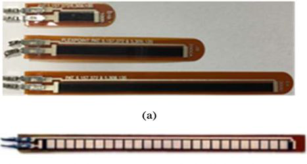
They would be able to read, detect, and interpret hand movements and postu- res and assist in identifying improper postures and activities and provide real-time feedback to correct improper postures. The Flex sensor is a low-cost sensor that functions as a variable resistor. It is constructed by consisting of a conductive layer designed on top of a bendable plastic substrate, as shown in Figure 1.
Figure 1: Flex sensor.
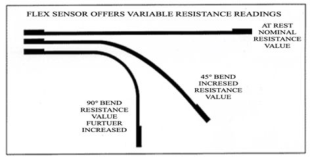
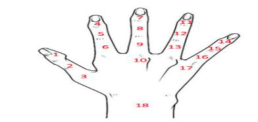
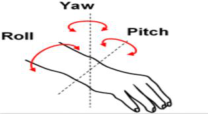
Because of the increased resistance, when the sensor is bent away from the ink, the conductive particles move further apart, and when the hand is straight and not bent, it returns to its normal state. Figure 2 shows the resi- stance according to the bending angles. It is used in PROSAFE to measure the bending angle of the wrist and hand and will be placed perpendicular to the wrist area. It will have an operating voltage of 0-5V and a power rating of 0.5 Watts. It will operate at a temperature that varies from -45°C to +80°C. The bend resistance will range from 45K to 125K depending on the bend of the hand. (Agrawal, 2020) IMUs is a 6-axis sensor that uses a combination of two sensors, which are Accelerometer and Gyroscope. The accelerometer automatically mea- sures the linear velocity and acceleration in the X, Y, and Z directions. In addition, it detects and measures vibration, as well as measures acceleration owing to the body (inclination). A gyroscope, on the other hand, is used to detect and measure the rotational rate for the movements of roll (rotation of the front-to-back axis), yaw (rotation of the side-to-side axis) and pitch (rotation around the vertical axis). Figure 4 shows the movements detected by the IMU using the Gyroscope sensor. Standard setups for these sensors in the IMUs where both of the sensors will be placed to be able to do all the needed measurements and detections. The data collected from these sensors placed in 18 different locations as shown in Figure 3 will aid in determining hand movement in various axes, allowing for the evaluation of the best hand posture for performing repetitive work. (Filippeschi, 2017)
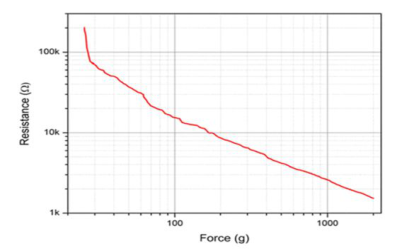
For pressure detection, A Force Sensing Resistor is a passive electrical device with a changing resistance based on the applied force that is primarily used to measure static and dynamic forces applied to a contact surface. The core of the working mechanism of FSR devices is to produce a decline in the electrical resistance when the applied physical force or pressure to them is increasing. The FSR force sensitivity can range from 0.2 N to 40 N. Figure 5 shows the relationship between the force exerted and the resistance output of the sensor, where it decreases whenever the pressure force increases. PROS- AFE incorporates five FSRs, which are positioned on three fingertips (thumb,
Smart Detective Gloves (PROSAFE) for Reducing Carpal Syndrome Injuries 49
Figure 2: Bending angles of the flex sensor.Figure 3: Hand movements detected by IMU sensors.Figure 4: IMUs position in PROSAFE.Figure 5: Output of FSR sensor.
index, and middle finger) as well as the base of the thumb on the palm of the hand and the wrist area where the carpal tunnel is located to measure the amount of force exerted, especially on these areas, and determine the effects of developing CTS. (Mohd Bardiri, 2018) When these sensors work together, they generate measurable signal data that can be utilized to identify bending angles, hand movements, and gestu- res, as well as the amount of compression force exerted. They’re supposed to employ a light-emitting diode (LED) to alert the user if they’re using an inappropriate hand posture while executing a repetitive task for an extended period of time, which leads to CTS. The Threshold Limit Value (TLV) for Hand Activity Level (HAL) for different activities is taken into consideration.
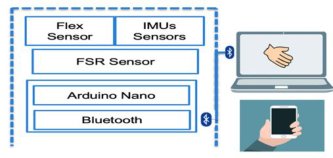
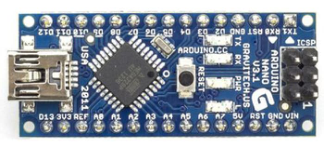
Figure 6: PROSAFE main diagram.Figure 7: Arduino nano.
Working Principle of PROSAFE PROSAFE working principle, as indicated in Figure 6, will start with the sen- sing units that will enable us to get all the readings regarding the desired parameters. The output of these sensors will be processed and analyzed by the Arduino Nano, which is a very common and widely used open-source hardware and software platform that performs many tasks, including input, output, processing, receiving, and sending information over the internet. The Arduino Nano type was chosen for the design due to its small size and effe- ctiveness. Figure 7 shows the Arduino Nano with its main components. The Arduino is connected to a Bluetooth module, which basically receives and transfers data wirelessly through a 2.4 GHz link. Bluetooth Low Energy (BLE) was used in the design, which has a low power consumption rate compared to the other modules. The source of power used in the design is a rechargeable lithium-ion battery, which is considered to be one of the most famous batteries that defeated the performance of other batteries. It has many features, including cost-effectiveness, long-lasting, lightweight, quick, and efficiency when used in different applications. The material of the glove used is synthetic leather. It is considered to be a breathable material, low-cost, and heat resistant material that can protect the users when using PROSAFE in different environments. (Al Rakib, 2021)
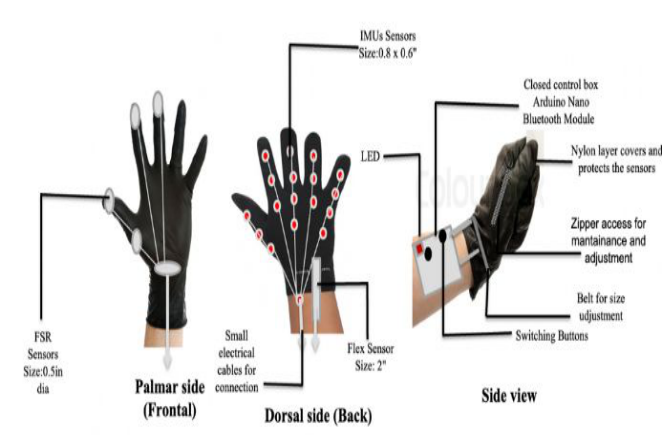
Figure 8 shows the basic sketch and arrangement of the PROSAFE wea- rable glove where sensors and other components are placed in special arran- gements and specific locations that will ensure the functionality of each one of them. All the sensors are glued using PVC glue, which is a special type of chemical solvents that use a Cold-Welding process, a process where we use no source of heat to do the welding procedure instead, we use pressure to join the materials together (FAN, 2018). The design has also some interesting features, it is provided with an adjustable belt that allows the user to adjust it according to the wrist size, where it can suites wrist sizes varying from 5.5
Smart Detective Gloves (PROSAFE) for Reducing Carpal Syndrome Injuries 51
Figure 8: Sketch of PROSAFE.
to 7.87in. In addition to that, the glove is provided with access from one side for maintenance.
The estimated cost of PROSAFE is about $315 per unit. The available com- mercial Sense Gloves in the market usually cost between $700 and $2000. Lower cost materials were used in our proposed design, but their quality is guaranteed. Thus, we expect that the durability of our detective gloves pro- duct can last for 10 years. Such a product would be highly useful in terms of saving lives and preventing CTS injuries. It can detect at least 10,000 cases in the general population per year. It is estimated to result in saving money of approximately $3 million for the non-surgical treatment and physical the- rapy. It can also prevent the need for doctor visits and surgical treatment which leads to $12.4 million saving costs. Moreover, workers’ compensa- tion claims and lost work time due to CTS which is approximately equal to $221 million will be declined over the year which will save a total of $325.4 million [15].
CONCLUSION
Carpel Tunnel Syndrome is a health condition that arises when the median nerve, gets compressed as a result of repetitive motion over a long period of time. Many solutions have been proposed by researchers, however, they are limited in terms of their scope and the accuracy of the data obtained. PROSAFE is an innovative solution that provides many features, including determining bending angles, detecting hand movements, and measuring the pressure force applied to the median nerve in the carpal tunnel area with an alarm to warn the user. The device aims to follow up, check the progression of CTS, and find the right-hand posture for doing different repetitive tasks. The designed system consists of three types of sensors, which are Flex, IMUs,
and FSR sensors, with an Arduino to process the collected data and transfer them via Bluetooth with specific arrangements. The cost analysis proved the cost feasibility of the design, supported by the cost which will be saved if the design idea is implemented and used in many industries. The device will help in reducing the cost arising from CTS, increase productivity and the company’s business. Further developments in the design can be implemented in the future, and many features can also be added to the device to make it more efficient. These features include adding a Stimulus Nerve System using the principle of Transcutaneous Electrical Nerve Stimulation, by using low- voltage electric currents to relieve pain. Another feature that can be added is providing the device with an optional choice of hand posture adjustment whenever the time of repetitive work exceeds the limit with the wrong posture performed. Some other areas of enhancement include the development of the algorithms used to train the models and the use of special types of machine learning platform called Azure Machine Learning in order to increase the reliability and accuracy of the collected data, In addition, the designed system can also be manufactured in a separate chip placed in a smart band with an adjustable size that can be placed at any other joint such as shoulders, elbows, knees, and the neck by changing and altering some of its features to help to prevent diseases such as tendonitis and bursitis by studying the right postures and sending the data to a phone application that will inform the user about his posture and the condition of the targeted area, as well as provide some helpful tips and recommendations to the user.
ACKNOWLEDGEMENT
I owe my thanks to the department of industrial and System Engineering in Khalifa University for Scince and technology for their continues support.
REFERENCES
Agrawal, S. K. (2020) “Introducing Wearable Technologies: An open access journal focused on the design, control and mechanics of wearable devices,” Wearable Technologies. Cambridge University Press, 1, p. e1. doi: 10.1017/wtc.2020.2. Al Rakib, M. A. et al. (2021) ‘An Arduino Based Smart Hand Gloves for Load
Control and Physician Notification’, 2021 International Conference on Automa- tion, Control and Mechatronics for Industry 4.0 (ACMI), Automation, Control and Mechatronics for Industry 4.0 (ACMI), 2021 International Conference on, pp. 1–5. doi: 10.1109/ACMI53878.2021.9528260. Alexandre Crespo Coelho S. Pinto et al. (2018) ‘Injuries of Repetitive Efforts in Workers from the Poultry Meat Industry: A Bibliometric Analysis of Literature’, Sustainability, 10(1), p. 250. doi: 10.3390/su10010250. Castellucci, H. I. et al. (2021) ‘Developing countries and the use of ISO Standard
11228-3 for risk management of Work-Related Musculoskeletal Disorders of the Upper Limbs (WRMSDs-ULs): The case of Chile’, Applied Ergonomics, 96, pp. 177–187. doi: 10.1016/j.apergo.2021.103483. FAN Zhen-zhong et al. (2018) ‘Microstructures and Mechanical Properties of ZL114A Alloy Under Cold Welding State’, Journal of Materials Engineering, 46(6), pp. 57–64. doi: 10.11868/j.issn.1001–4381.2016.001410. Filippeschi, A. et al. (2017) ‘Survey of Motion Tracking Methods Based on Inertial
Sensors: A Focus on Upper Limb Human Motion’, Sensors (14248220), 17(6), p. 1257. doi: 10.3390/s17061257.
Smart Detective Gloves (PROSAFE) for Reducing Carpal Syndrome Injuries 53
Genova, A. et al. (2020) ‘Carpal Tunnel Syndrome: A Review of Literature’, Cureus, 12(3), p. e7333. doi: 10.7759/cureus.7333. Lallukka, T. et al. (2021) ‘Sickness absence and disability pension after carpal tunnel
syndrome diagnosis: A register-based study of patients and matched references in Sweden’, Scandinavian journal of public health, p. 14034948211002728. doi: 10.1177/14034948211002729. Law and Regulation, https://www.osha.gov/laws-regs Mohd Bardiri, M. H. A. et al. (2018) ‘Development of FSR Micro-Sensor Network’, 2018 International Conference on Radar, Antenna, Microwave, Electronics, and Telecommunications (ICRAMET), Radar, Antenna, Microwave, Electronics, and Telecommunications (ICRAMET), 2018 International Conference on, pp. 27–31. doi: 10.1109/ICRAMET.2018.8683918. Rangeela, M. (1), Mohanraj, K. G. (2) and Rajendran, D. (3) (2020) ‘Association
between carpal tunnel syndrome and usage of computer keyboard and mouse in young, adult and middle-aged female information technology professionals – a survey based analysis’, International Journal of Pharmaceutical Research, 12, pp. 886–895. doi: 10.31838/ijpr/2020.SP2.104. Restuputri, D. P., Eriko and Masudin, I. (2019) ‘The risk assessment of repetitive strain injury (RSI) disorder using Occupational Repetitive Action (OCRA) index method’, IOP Conference Series: Materials Science and Engineering, 598, p. 012029. doi: 10.1088/1757-899X/598/1/012029. Tadjerbashi, K. (1,2), Atroshi, I. (1,2) and Åkesson, A. (3) (2019) ‘Incidence of
referred carpal tunnel syndrome and carpal tunnel release surgery in the general population: Increase over time and regional variations’, Journal of Orthopaedic Surgery, 27(1). doi: 10.1177/2309499019825572. Thaslima Nandhini, J. S. (1), Yuvaraj Babu, K. (2) and Mohanraj, K. G. (2) (2018) ‘Size, shape, prominence and localization of Gerdy’s tubercle in dry human tibial bones’, Research Journal of Pharmacy and Technology, 11(8), pp. 3604–3608. doi: 10.5958/0974-360X.2018.00663.7. Trillos-Chacón, M.-C. et al. (2021) ‘Strategies for the prevention of carpal tunnel syn-
drome in the workplace: A systematic review’, Applied ergonomics, 93, p. 103353. doi: 10.1016/j.apergo.2020.103353.
LISTED IN THE AHFE DIGITAL BOOKSTORE CATALOGUE
Explore the complete digital volume
Physical Ergonomics and Human Factors
Read this individual research paper free through the original publisher, or explore the full digital proceedings book.
ISBN 978-1-958651-39-1
Explore this ISBN in the AHFE Bookstore ↗Listed in the July 2026 bookstore catalogue; search by ISBN to confirm current availability · Digital book purchase optional