André Cardoso, Hatice K Gonçalves, Guilherme Deola Borges, Ana Pombeiro, Ana Colim, Paula Carneiro, Pedro Arezes (2022). Comparison of observational ergonomic methods: a case study in the automotive industry. In: Safety Management and Human Factors. AHFE Open Access, vol. 64, pp. 229–236. https://doi.org/10.54941/ahfe1002650
The increased automation of the car manufacturing process, in which much of the assembly has been delegated from man to machine, has done much to relieve workers of the burden of heavy lifting. However, despite ergonomic improvements in the workplace, many jobs still require workers to perform repetitive tasks [1]. In the automotive industry, Work-related Musculoskeletal Disorders (WMSD) are one of the most common occupational problems due to repetitive working tasks. Workers that perform manual work are often prone to awkward postures, repetitive movements, forceful exertions, and overextensions, which are some of the main factors for the arising of WMSD [2]. Besides, these work-related factors, also the personal factors contribute to the occurrence of this kind of injury, making WMSD a complex condition that involves contributions from many factors [3,4]. The current study aims to compare different observational methods commonly used to assess the WMSD risk in repetitive tasks. To accomplish this goal a case of study in assembly workstation of an automotive company in Portugal was applied. It was selected methods that are widely used by ergonomists and are validated for implementation in the industry [5,6]. Therefore, the following methods were applied to an assembly workstation: (i) Rapid Upper-Limb Assessment (RULA), (ii) Occupational Repetitive Actions (OCRA), (ii) Key Indicator Method – Manual Handling Operations (KIM-MHO), and (iv) Revised Strain Index (RSI) This multi-method approach was very important, as it allowed for a more comprehensive assessment, which will support the proposals for improvement The results show that workstation present a considerable WMSD risk in 3 of 4 methods applied. These results suggest that a change to the workstation is necessary. A possible solution would be to implement a Human-robot collaboration solution, in order to reduce the physical demands associated with repetitive movements [7] to which workers are subjected. [1]Spallek, M.; Kuhn, W.; Uibel, S.; Van Mark, A.; Quarcoo, D. Work-Related Musculoskeletal Disorders in the Automotive Industry Due to Repetitive Work - Implications for Rehabilitation. J. Occup. Med. Toxicol. 2010, 5 (1), 1–6. https://doi.org/10.1186/1745-6673-5-6.[2]Naik, G.; Khan, M. R. Prevalence of MSDs and Postural Risk Assessment in Floor Mopping Activity Through Subjective and Objective Measures. Saf. Health Work 2020, 11 (1), 80–87. https://doi.org/10.1016/j.shaw.2019.12.005.[3]Park, J.; Kim, Y.; Han, B. Work Sectors with High Risk for Work-Related Musculoskeletal Disorders in Korean Men and Women. Saf. Health Work 2018, 9 (1), 75–78. https://doi.org/10.1016/j.shaw.2017.06.005.[4]Thetkathuek, A.; Meepradit, P.; Sa-ngiamsak, T. A Cross-Sectional Study of Musculoskeletal Symptoms and Risk Factors in Cambodian Fruit Farm Workers in Eastern Region, Thailand. Saf. Health Work 2018, 9 (2), 192–202. https://doi.org/10.1016/j.shaw.2017.06.009.[5]Dempsey, P. G.; Mcgorry, R. W.; Maynard, W. S. A Survey of Tools and Methods Used by Certified Professional Ergonomists. Appl. Ergon. 2005, 36, 489–503. https://doi.org/10.1016/j.apergo.2005.01.007.[6]Pascual, S. A.; Naqvi, S. An Investigation of Ergonomics Analysis Tools Used in Industry in the Identification of Work-Related Musculoskeletal Disorders An Investigation of Ergonomics Analysis Tools Used in Industry in the Identification of Work-Related Musculoskeletal Disorders. Int. J. Occup. Saf. Ergon. 2015, 3548 (2), 237–245. https://doi.org/10.1080/10803548.2008.11076755.[7]Colim, A.; Faria, C.; Cunha, J.; Oliveira, J.; Sousa, N.; Rocha, L. Physical Ergonomics Improvement and Safe Design of an Assembly Workstation with Collaborative Robotics. Saf. (Unpublished under-review) 2021, 1–19.
The increased automation of the car manufacturing process, in which much of the assembly has been delegated from man to machine, has done much to relieve workers the burden of heavy lifting. However, despite ergonomic improvements in the workplace, many jobs still require workers to perform repetitive tasks (Spallek et al., 2010).
Workers that perform manual work are often prone to awkward postu- res, repetitive movements, forceful exertions and over extensions, which is some of the main factors for the arising of WMSD. The number of cases of WMSD has been progressively increasing in industrialized societies (Näf et al., 2018). WMSD represent a wide range of disorders, which can differ in severity from slight periodic symptoms to severe chronic and debilitating con- ditions. The process of identifying and classifying the risk levels for WMSD is called risk assessment. This assessment should be performed systematically by the employer, although sometimes ergonomists should be needed to apply their knowledge in this field. Risk assessments should be performed by using methods that are objective and adequate to the work activity under study (Naik and Khan, 2020).
In the assessment of WMSD risk, ergonomics is the science that stands out. Ergonomics seeks to adapt the environment in order to ensure people’s pro- ductivity, comfort, and safety (Bannister and Farmer, 2004). Every time the physical and psychological limitations of humans are considered, it is possible to avoid unsafe, unhealthy, uncomfortable, or inefficient situations at work or in every-day life (Vink, Koningsveld and Molenbroek, 2006). The risk assessment can be performed by several ergonomic methods. The methods for risk assessment need to be efficient and comprehensive but, meanwhile, easy to use, to reveal the tasks involving risk and be able to intervene in advance. David (2005) proposed a classification for these methods, namely: (i) self-reports: interviews and questionnaires to collect risk exposure data from the worker; (ii) observational methods: consist of visual analysis of the workplace risk exposure by observation on the field and/or videos recor- dings with the help of predefined ergonomic risk sheets; and (ii) direct or instrumented-based methods: use measuring devices, placed on the worker’s body.
The selection of ergonomic methods is based on their characteristics, the characteristics of the task and the nature of the problem (Berlin and Adams, 2017). Literature shows direct measurement methods to be more accurate and reliable, but such methods require a significant investment of resources (Juul-Kristensen et al., 2001). Observational methods are the most commonly used by practitioners because they are easier to use, less costly, and more flexible when it comes to collecting data in the field (Takala et al., 2010).
The current study aims to compare different observational methods com- monly used to assess the WMSD risk in repetitive assembly tasks. To accom- plish this goal a case study in an assembly workstation of an automotive company was applied.
METHODS
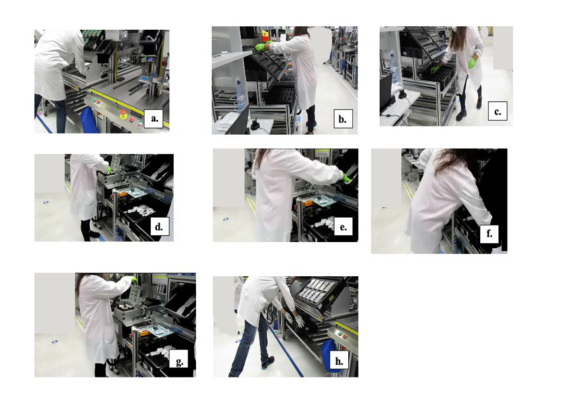
The current study was centered in a WMSD multi method risk assessment of a workstation in an automotive industry in Portugal. The selection of the workstation was made by the company managers considering the nature of the tasks (repetitiveness and awkward body postures) and due to workers’ complaints. This workstation consists of reaching electronic boards at diffe- rent levels of height, to the left of the worker, placing them in front of the worker and then reaching plastic parts that are to the right of the worker. The assembly of these pieces also requires application of considerable force. Sometimes the worker has to reach boxes with material that is at a very low height and return the empty boxes to an even lower height. To apply the dif- ferent methods and then compare the results obtained, the work activity was subdivided as presented in Figure 1.
In order to accomplish the objectives, methods that are widely used by ergonomists and are validated for implementation in industry were sele- cted (Pascual and Naqvi, 2015). To perform a multi-method assessment risk, the following methods were selected, based on its characteristics: (i) RULA(McAtamney and Nigel Corlett, 1993); (ii) KIM-MHO(Klussmann et al., 2017); (iii) RSI (Garg, Moore and Kapellusch, 2017b); and (iv) OCRA
Comparison of Observational Ergonomic Methods: A Case Study 231
(Colombini, Occhipinti and Álvarez-Casado, 2017). The use of different methods enables a more comprehensive workstation assessment, since it allows to integrate a wide range of musculoskeletal risk factors.
Since this assessment aims to compare the results of four different meth- ods, four global risk levels were defined, integrating the different risk levels considered by each method (Table 1).
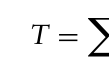
To calculate a weighted average of the workstation score for each method, a time study through video analysis was performed, according to the follow- ing formula:
X
X
Equation reproduced from the original PDF.
(MSi × ti)/
ti (1) MS: method final score of the task; t: task time (s). This formula was only applied to RULA and KIM-MHO, because they allow the assessment of each task performed separately. Regarding the OCRA checklist, it was not necessary to apply the formula since the result is rela- ted to the workstation risk. In the specific case of RSI, the evaluation of the workstation was made using the Composite Strain Index (COSI) (Garg et al., 2017a).
RESULTS AND DISCUSSION
Assembly workers present a steeper increasing high WMSD trend compared with other activities (Spallek et al., 2010). This is associated with productivity losses leading to the relevance of this work. The main results of the applied methods are presented in Table 2.
Table 1. Global risk levels’ definition according to the outputs of the selected methods.
Table available in the original PDF paper.
RULA KIM-MHO RSI OCRA Meaning Global Risk level Final Score Meaning Final Score
Meaning Final Score
Meaning Final Score ≤10 Safe Job < 7.5 Acceptable
risk
<20 Physical overload is
I 1 or 2 Posture is acceptable if it unlikely.
is not maintained or repeated for long periods.
7.6 − 11.0 Very low risk
20 − <50
II 3 or 4 Further investigation is
Physical overload is possible for less resilient
needed, and changes may persons.
be required.
III 5 or 6 Investigation
11.1 − 14.0 Medium-
50 − <100
Physical overload is
low risk
and changes are required
also possible for soon.
normally resilient persons.
> 10 Hazardous Medium/
IV 7 Investigation
≥100 Physical overload is Job
14.1 − >22.5 high risk
likely.
and changes are required immediately.
The scores calculated for each task indicate that Tasks 1 and 8 present a higher value of RULA score, which indicates a higher musculoskeletal risk when compared with the other tasks. However, in Tasks 5 and 6 the arm is more affected due to the vertical reaching of the pieces. Additionally, in Task 4 the wrist is the body segment that is more affected due to the posture main- tained during the placing of the pieces. The score attributed to the remaining tasks is mostly caused by the awkward postures of the trunk (flexion) and neck (extension) maintained during the reaching of the pieces at the lowest level. This leads to an uneven balance of body weight. Regarding the RULA score, the weighted average of the tasks performed shows that the worksta- tion has level III (classified as medium risk), which means that investigation and changes are required soon.
KIM-MHO findings pointed out to the fact that Task 4 is associated with a higher physical workload, indicating that the redesign of the workplace is necessary to prevent WMSD. In addition, task 8, despite having a lower KIM-MHO score, presents the same level of risk as task 4. However, all the tasks present a significant risk, being the hand/arm posture position and trunk posture the main contributors. Regarding the KIM-MHO risk level for the workstation, it seems that can be classified as a moderate load situation. This global risk level, compared to the results of RULA, it is at a low level. This may be since the KIM method is not very rigorous about the detail of the angular variation of the different body segments.
Comparison of Observational Ergonomic Methods: A Case Study 233
Table 2. Summary of RULA, KIM-MHO, RSI and scores and risk level for each subtask, workstation scores and the risk level (* means the major scores for each method).
Table available in the original PDF paper.
RULA KIM-MHO RSI OCRA Checklist
Task
Score
Risk Level Score
Risk Level Score
Risk Level Score
Risk Level 7* IV 46 II 6.5 I (Not applicable)
T1 -Reaching boxes
5 III 26 II 1.7 I
T2 - Reaching highest level (left)
6 III 38 II 1.7 I
T3 -Reaching lowest level (left)
4 II 26 II 1.7 I
T4 - Placing 4 II 52* III 38.9* IV T5 - Reaching lowest level (right) 5 III 38 II 5.3 I T6 -Reaching highest level (right)
7* IV 50* III 2.1 I
T7 - Closing unit 4 II 34 II 0.5 I T8 - Returning empty boxes
5 III 48 II 53,71 IV 13,72 III
Risk Level of the Workstation
RSI is a method for assessing physical exposure of the upper extremity (Garg et al. 2017b). Results show that Task 4 is the only one which can be considered a hazardous task. This classification is because Task 4 is the one that presents a greater deviation of the position of the wrist in relation to the neutral position. Regarding all other tasks, they are considered safe jobs. This seems to be since this method is focused on the upper extremities, not considering variations in body postures in the remaining parts of the body. In what concerns the risk level of the workstation, calculated through the COSI, the result points out that this workstation is a hazardous job. According to the authors of the method, this result can’t be related to the arising of WMSD of the upper extremities. Although the different multipliers are based on the principle that increasing values of intensity of exertion (force), duration of exertion, efforts per minute, flexion/extension of the wrist and/or duration of task per day increases strain on the body (Garg et al., 2017b). Globally this result shows that the workers are exposed to a high level of physical exposure of the upper extremity.
Finally, the OCRA Checklist was also applied. This method is a proce- dure for assessing exposure to biomechanical overload of the upper limbs on repetitive manual tasks. This method was only applied globally to the task since this method describe a job and estimate the intrinsic exposure level of the task, as if the worker would be performing that job throughout the entire shift (Colombini, Occhipinti and Álvarez-Casado, 2017). The results point out that the workstation under analysis has medium-low risk level. This
result is mainly due to the lack of recovery time and the posture. This result also predicts that 8.5% to 10.7% of the workers have a WMSD.
Comparing the results of the selected methods, it appears that Task 4 is the one with the highest risk value in two of the selected methods (KIM-MHO and RSI). This task requires a high physical effort from the hand-wrist system and both methods whose risk value is higher for this task have a high focus on this body segment. Task 8 also has a high-risk score for two of the selected methods (RULA and KIM-MHO). These results are mainly because to the handling of loads and the awkward postures of the trunk. Tasks that involve vertical reach at the shoulder level (Task 2 and 6) also have a high-risk value (Level III on RULA and Level II on KIM-MHO). This happens due to the arm posture maintained during the task and the repetition of the same during the work shift.
Regarding the global risk of the workstation 3 on 4 methods present a considerable level of risk. The KIM-MHO is the only one with a relatively lower level (level II), however it is important to note that the assigned score is very close to the highest class of that risk level. These results point out the need to apply improvements to this workstation so that becomes safer for workers.
CONCLUSION
As a conclusion it is important to mention that the selection and application of the observational methods allowed the comparison of the different cha- racteristics of them. Also, it was shown that the workstation under analysis presents a greater level of risk, which justified its selection. Specially, ‘task 4 – placing’ presents the highest risk level in KIM-MHO and RSI, while ‘Task 8 – returning empty boxes’ has a high-risk value in RULA and KIM-MHO. The tasks that involve vertical reach at the shoulder level ‘Task 2 – reaching high- est level (left)’ and ‘Task 6 – reaching highest level (right)’ also have high-risk value (Level III on RULA and Level II on KIM-MHO). These results suggest that a change to the workstation is necessary. A possible solution would be to implement a Human-Robot Collaboration (HRC) solution, to reduce the physical demands associated with repetitive movements to which workers are subjected. Colim et al. (2021), has been shown a reduction of WMSD risk of an assembly workstation with an implementation of a HRC solution when compared with the manual workstation.
Concerning the knowledge acquired when applying the different methods related to risk factors that each method considers, OCRA is the one that considers more risk factors in the process of evaluation WMSD risk. Fol- lowed by KIM-MHO and RSI that consider the same risk factors (posture, frequency, duration, and load/force). RULA only considers two risk factors, namely, posture and load/force. All the selected methods aimed at assessing the WMSD risk of the upper limbs. The RSI focuses only on the upper limb extremities.
The limited sample is the main limitation of this study. The workstation was selected by the company based on their needs and due to workers’ com- plaints. In future work, the authors will extend the proposed methodology to
Comparison of Observational Ergonomic Methods: A Case Study 235
a larger sample and will apply direct measurements to get physiological and biomechanical data to better characterize this workstation.
ACKNOWLEDGMENT
This work is supported by European Structural and Investment Funds in the FEDER component, through the Operational Competitiveness and Inter- nationalization Programme (COMPETE 2020) [Project n° 39479; Funding Reference: POCI-01-0247-FEDER-39479].
REFERENCES
Bannister, F. and Farmer, A. (2004) ‘Ergonomic Guidelines for Common Job Functions Within The Telecommunications Industry’, (April). Berlin, C. and Adams, C. (2017) ‘Ergonomics: Designing Work Systems to Support
Optimal Human Performance’, in Production Ergonomics. London, pp. 139–160. doi: https://doi.org/10.5334/bbe.h. Colim, A. et al. (2021) ‘Lean Manufacturing and Ergonomics Integration: Defining Productivity and Wellbeing Indicators in a Human–Robot Workstation’, Sustainability, 13(4)(1931), pp. 1–21. doi: 10.3390/su13041931. Colombini, D., Occhipinti, E. and Álvarez-Casado, E. (2017) ‘The revised OCRA
Checklist method’. Barcelona, Spain: Editorial Factors Humans, p. 60. David, G. C. (2005) ‘Ergonomic methods for assessing exposure to risk factors for work- related musculoskeletal disorders’, Occupational Medicine, 55(3), pp. 190–199. doi: 10.1093/occmed/kqi082. Garg, A., Moore, J. S. and Kapellusch, J. M. (2017a) ‘The Composite Strain Index (COSI) and Cumulative Strain Index (CUSI): methodologies for quantifying biomechanical stressors for complex tasks and job rota- tion using the Revised Strain Index’, Ergonomics, 60(8), pp. 1033–1041. doi: 10.1080/00140139.2016.1246675. Garg, A., Moore, J. S. and Kapellusch, J. M. (2017b) ‘The Revised Strain Index:
an improved upper extremity exposure assessment model’, Ergonomics, 60(7), pp. 912–922. doi: 10.1080/00140139.2016.1237678. Juul-Kristensen, B. et al. (2001) ‘Assessment of work postures and movements using a video-based observation method and direct technical measurements’, Applied Ergonomics, 32(5), pp. 517–524. doi: 10.1016/S0003-6870(01)00017-5. Klussmann, A. et al. (2017) ‘Risk assessment of manual handling operations at work
with the key indicator method (KIM-MHO) - determination of criterion vali- dity regarding the prevalence of musculoskeletal symptoms and clinical conditions within a cross-sectional study’, BMC Musculoskeletal Disorders, 18(1), pp. 1–13. doi: 10.1186/s12891-017- 1542–0. McAtamney, L. and Nigel Corlett, E. (1993) ‘RULA: a survey method for the investigation of work-related upper limb disorders’, Applied Ergonomics, 24(2), pp. 91–99. doi: 10.1016/0003-6870(93)90080-S. Näf, M. B. et al. (2018) ‘Passive Back Support Exoskeleton Improves Range of
Motion Using Flexible Beams’, Frontiers in Robotics and AI, 5(June), pp. 1–16. doi: 10.3389/frobt.2018.00072. Naik, G. and Khan, M. R. (2020) ‘Prevalence of MSDs and Postural Risk Assessment in Floor Mopping Activity Through Subjective and Objective Measures’, Safety and Health at Work, 11(1), pp. 80–87. doi: 10.1016/j.shaw.2019.12.005.
Pascual, S. A. and Naqvi, S. (2015) ‘An Investigation of Ergonomics Analysis Tools Used in Industry in the Identification of Work- Related Musculoskele- tal Disorders An Investigation of Ergonomics Analysis Tools Used in Industry in the Identification of Work-Related Musculoskeletal Disorders’, Internatio- nal Journal of Occupational Safety and Ergonomics, 3548(2), pp. 237–245. doi: 10.1080/10803548.2008.11076755. Spallek, M. et al. (2010) ‘Work-related musculoskeletal disorders in the automotive
industry due to repetitive work - Implications for rehabilitation’, Journal of Occu- pational Medicine and Toxicology, 5(1), pp. 1–6. doi: 10.1186/1745-6673-5-6. Takala, E. P. et al. (2010) ‘Systematic evaluation of observational methods assessing biomechanical exposures at work’, Scandinavian Journal of Work, Environment and Health, 36(1), pp. 3–24. doi: 10.5271/sjweh.2876. Vink, P., Koningsveld, E. A. P. and Molenbroek, J. F. (2006) ‘Positive outcomes of participatory ergonomics in terms of greater comfort and higher productivity’, Applied Ergonomics, 37(4 SPEC. ISS.), pp. 537–546. doi: 10.1016/j.apergo.2006.04.012.
LISTED IN THE AHFE DIGITAL BOOKSTORE CATALOGUE
Explore the complete digital volume
Safety Management and Human Factors
Read this individual research paper free through the original publisher, or explore the full digital proceedings book.
ISBN 978-1-958651-40-7
Explore this ISBN in the AHFE Bookstore ↗Listed in the July 2026 bookstore catalogue; search by ISBN to confirm current availability · Digital book purchase optional