Abner Del Cid Flores, Dimitrios Ziakkas, Brian G Dillman (2023). Artificial Cognitive Systems and Aviation training. In: Intelligent Human Systems Integration (IHSI 2023): Integrating People and Intelligent Systems. AHFE Open Access, vol. 69, pp. 204–216. https://doi.org/10.54941/ahfe1002838
The research objectives are to (1) provide a complete assessment of extended reality technologies and (2) discuss the viability of these technologies for use in US college aviation training programs.The field of educational services is one of the many that can benefit from utilizing extended reality technology due to its versatility. Learning and general performance of student pilots and flight trainees can benefit from applying extended reality technologies in flight training, which can be advantageous when using these technologies. We examine the utilization of XR technologies by looking at them from an educational theoretical framework and analyzing their applicability across several industries and simulations in Purdue Artificial Intelligence Laboratory. A comprehensive literature review resulted in four subtopics, which are as follows: educational theoretical foundation, XR technologies across industries; XR technologies in education; and XR technologies in aviation.Results show that the use of XR technologies has the potential for enhancing learning and performance in safe flight instruction environments, a possible reduction in student pilot turnover mainly due to the elimination of the fear factor involved during initial training when compared to flying in the actual airplane, and an overall low cost for both flight training organizations and trainees due to the high levels of portability. These findings led us to propose using XR technologies as having the potential to enhance learning and performance in safe flight instruction environments.A comprehensive understanding of the possibilities offered by XR technology is necessary for the continuation of aeronautical psychology research offered in Purdue AI laboratory.
Kaplan et al. (2020) reviewed the available extended reality (XR) technolo- gies and their effectiveness as training tools. They noted that XR technologies are particularly advantageous for training in situations where hazards or cost prevents the utilization of traditional, hands-on training. This study aims to present a selective collection of current literature on XR technologies as a preliminary document for conducting research on the applicability of XR technologies as viable alternatives to, or supplemental to, hands-on flight instruction. The purpose of this study is twofold: (a) conduct a literature review of the current state of XR technologies and their application to instru- ction and (b) determine the challenges and opportunities to the application
Artificial Cognitive Systems and Aviation Training 205
of such technologies in collegiate flight instruction programs. The first part of this study will focus on three distinctive correlated aspects of the literature review. Firstly, this study provides a review of foundational learning theo- ries from a broad educational perspective across the full spectrum, although not exhaustive. Then, it reviews some of the related learning theories within the context of emerging technologies for instruction found in current litera- ture. This first part then ends with a final literature review that is specific to current literature related to the technical aspects of XR technologies, their strengths and weaknesses, and specific challenges and opportunities associ- ated with their use in education as instructional tools. The second part of this study will focus on the literature associated with the application of XR technologies that are specific to the flight instruction environments.
XR technologies have in recent years seen a rapid increase in their use across many industries where novel XR applications are constantly being developed for a wide variety of reasons and applications. Ariso (2017) descri- bes XR technologies as gaining great relevance in fields such as “robotics, engineering, education, entertainment, manufacturing, medicine, archaeo- logy, tourism, the military or urban modeling, among others.”. From its initial birth as a technology in the 1960s to a relative time of “silent” in the first decade of the 21st century, XR technologies seem to be an aggressively pervasive constant everywhere. Three important factors have been largely identified as being responsible for this current trend, those being, the advance of technology in general terms around the world, accessibility to the techno- logy due to novel and more robust networks of communications on a global scale, and cost of acquisition of the technology itself (Wohlgenannt et al., 2020). While most XR technologies’ applications have been focused on ope- rational tasks in their respective industries, XR technologies are starting to show promising applications in training and learning; however, such appli- cations may be ahead of appropriate theoretical foundations and rigorous assessment of their effectiveness, thus the reason for this study. Firstly, from within the overall perspective of the current educational frameworks being used, and their stand and levels of adaptability on the adoption of emerging technologies for educational purposes, where the psychology of man-machine interactions is still undergoing the process of being understood. Second, from a human factors perspective in aviation and the impact of new emerging tech- nologies, specifically XR technologies. And finally, from a perspective that requires a consistent approach regarding newly adopted roles being played by humans because of technological advances and human interaction with novel technologies in a wide variety of human factors’ domains. For insta- nce, Mosier and Fischer (2010) explain that the role of operators has evolved from one which was characterized mainly by sensors and motor skills to one that now delves more into cognitive skills and decision-making processes.
Theoretical Foundation Foundational Learning Theories Rushby and Surry (2016) explain that it took several years of deliberation before The Association for Educational Communications and Technology (AECT) through its Definition and Terminology Committee came to a final
Table 1. A supportive literature review by topic.
Table available in the original PDF paper.
Relevant Contextual Areas (XR) Paper/Book/Conference Education- Theoretical Foundation 10 XR Technologies- Across Industries 23 XR Technologies in Education 20 XR Technologies in Aviation 10
consensus on a single-sentence definition of educational technology: “Educa- tional technology is the study and ethical practice of facilitating learning and improving performance by creating, using and managing appropriate techno- logical processes and resources”(Rushby and Surry, 2016). In a review of key papers related to education theories, Gottlieb et al. (2017) point out several correlated key aspects of educational environments in education, as part of a faculty incubator program within Emergency Medicine academic education. One of those key aspects relates to how educators often hypothesize about the optimal strategies for teaching while making assumptions that may not always be valid or reliable for what is to be the most efficient pathway to learning. A loud complaint resonates throughout the above-referenced arti- cle, regarding how often many academic faculty members, who happen to be educators, lack sometimes familiarity with key education theories, for a better-informed practice (Gottlieb et al., 2017). McInerney (2005) argues that there is a need for establishing a strong link between educational psychology theorizing, research, and teaching-learning processes, in the development of what is to be considered best practices. McInerney (2005) goes on to express that the framing of context and limitations in time for educational constructs is an important practice since in the past other practices have not endured the test of time, have been misguided, or were simply generated upon flawed research. McInerney (2005) explains that such practices have also undergone major transformations. It would only be reasonable to continue to explore and adopt relevant applications that as in the past, have allowed us to better understand our nature across different epochs according to the context in time. In a book written in 1976 called Foundations of Lifelong Education: Some Methodological Aspects, Dave (1976) provides a wonderful capsule time while explaining the significance of the new idea of lifelong education. When placed into our context today, it does sound like a repeat of what the world had already experienced some 45 years ago. Another interesting interpretation centered around the learner-centered model, coming from a broadly comparative international education perspective, is the one descri- bed by Michele Schweisfurth in her book called Learner-Centered Education in International Perspective: Whose Pedagogy for Whose Development? In it, Schweisfurth (2013) explains that how humans learn is a mix of an indi- vidual’s cognitive physiology, and how that individual has learned to learn during formative years. Furthermore, it is argued that human learning is also the product of “policy choices that shape the education we experience, and the practice of the teachers who influence us” plus any contextual realities involved (Schweisfurth, 2013).
Artificial Cognitive Systems and Aviation Training 207
XR Technologies Learning Theories and Emerging Technologies According to Rotolo et al. (2015), five specific attributes must be identified to properly define what is to be considered an emerging technology. More specifically, an emerging technology must present a radical novelty, relatively fast growth, coherence, prominent impact, and uncertainty and ambiguity. Special attention is to be observed on two of the attributes that emerging tech- nologies such as XR technologies present; namely, their prominent impact and grade of coherence across applications and their possible uses. Educa- tional goals in general, are considered as being relatively stable in terms of shifting from the specific emphases they procure (Yawson, 2013). Important issues such as the development of critical thinking skills, problem-solving, and lifelong learning capabilities remain for the most part constant, regard- less of the models, methodologies, or set of tools being used (Yawson, 2013). The prominent impact and coherence of emerging technologies as Rotolo et al., (2015) explains, are both crucial aspects for present and future assi- milation, and further development of not only the theories involved but also their applicability within the education sector. Emerging technologies are also defined as “tools, concepts, innovations, and advancements utilized in diverse educational settings to serve varied education-related purposes” (Veletsianos, 2010). From that perspective, Czerkawski (2013) expresses that these emer- ging technologies do not necessarily facilitate or advance any of the learning processes, instead, it is the integration of teaching strategies, and the incorpo- ration of appropriate methodologies being applied in the learning processes, that do. Overall, emerging technologies are, however, disrupting patterns of teaching and learning that have dominated higher education for many deca- des, if not centuries (Johnson et al., 2015). Two important technology trends are responsible for driving these changes; on one hand is the unpreceden- ted wave of private investment in classroom technology (Burch and Good, 2014), and on the other, the rising public interest in lowering education costs and improving student achievement. An interesting approach for better coping with emerging technologies within the context of educational envi- ronments, that appears best suited when compared to existing models, is the heutagogical approach. Cook and Gregory (2018) argue that learning requi- res believing in the assumption that learning should never be considered a complete full circle through the glass of what educators do, the technolo- gies used, or how one communicates knowledge to students. In exploring the literature related to different models of learning such as that of andra- gogy, a student-centered approach (Knowles, 1988), transformative style learning approaches (Daily-Hebert & Dennis, 2014), and the heutagogical approach to learning (Hase and Kenyon, 2013), several aspects came to light concerning the adoption of newly emerging technologies.
Extended Reality Technologies Across Industries In gathering the literature review related to XR technologies, a solid and growing trend of the theoretical foundation for its different uses and appli- cations was found across most industries. For instance, Aguayo et al. (2021) explain the impact that XR technologies are having in areas such as that
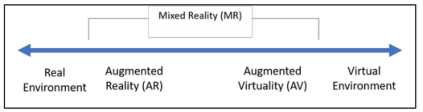
Figure 1: Extended Reality (XR) Full Spectrum of Technologies. Note: “3D telepresence for remote collaboration in extended reality (XR) application” by Fadzli, F. E., Kamson, M. S., Ismail, A. W., & Aladin, M. Y. F. (2020).
clinical simulation, paramedicine, and healthcare education. Anderson et al. (2021) comment on the broad adoption of XR technologies in engineering and design, where the utilization of virtual reality for product design and assembly has been widely explored through the development of virtual versi- ons of physical hardware which, has demonstrated high levels of utility in the design process. Bailenson (2018) author of the book Experience on Demand describes the power behind XR technologies through applications of virtual reality in sports, trauma, and rehabilitation and the profound ways in which XR technologies can be used. Another relevant area of interest where XR technologies are having a profound impact is architecture. Alizadeh Salehi et al. (2020) discuss how construction project simulations in multidimensio- nal digital models while presenting multiple aspects of a project are assisting architects throughout all stages of projects. Fadzli et al. (2020) observe how XR technologies are enhancing capabilities such as those of 3D telepresence in remote collaborations, where mixed reality, a distinctive element within the full spectrum of XR technologies has been found capable of providing interactions between users in the real world while still maintaining images and communication between users and the virtual world.
Extended Reality Technologies in Education XR technologies have been in use for training purposes across a wide spe- ctrum of industries for many years. More recently, XR technologies are showing a wider implementation although in its early stages, for training purposes by the military and in aviation training. In the greater context of the global impact that emerging XR technologies applications across indu- stries represent, is that of the role being played by some powerful enablers at play. Enablers such as machine learning, AI, predictive analytics, quantum computing, and other technologies have a powerful impact on the design, development, and implementation of XR technologies across a broad spe- ctrum of contexts. In essence, the current and future way in which most everything is and will be taking place at a global scale can be at hand. The related implications for the aviation industry in terms of pilot trai- ning, require our full attention moving forward. As of 2018 for instance, Boeing has been experimenting and working in several use cases in this space, including the building, repair, and maintenance of commercial and military aircraft, and pilot training for vehicle and device operations (Laughlin, 2018). An important aspect of recent advances in XR technologies is the drama- tic reduction in overall costs associated with many areas of training when
Artificial Cognitive Systems and Aviation Training 209
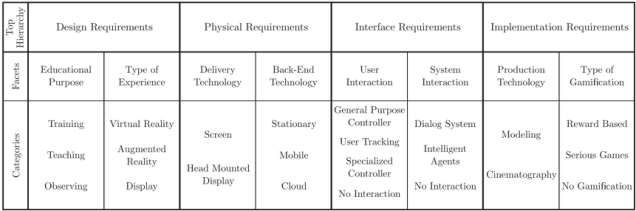
Figure 2: “Taxonomy of Virtual and Augmented Reality Applications in Education” by Motejlek, J., and Alpay, E. (2021).
compared to other systems currently in use. The adoption of virtual rea- lity in flight simulation into the training curriculum for the certification of new pilots is perhaps one of the best examples of how costs can be redu- ced. According to Laughlin (2008), some positive preliminary results suggest that training costs for new pilots could be reduced by as much as 70% when student pilots learn and practice fundamental piloting skills remotely, due to a reduction in the amount of time a student pilot spends training in a full- motion simulator. Ryoo and Winkelman (2021) report that XR technologies have been identified as key emerging technologies in education. XR resources are being praised as having capabilities for enhancing instruction and learning experiences in different environments which extend outside of the common classrooms (Ryoo and Winkelmann, 2021). However, the real power beh- ind XR technologies is in their perceived capability for providing a seemingly solid foundation for the incorporation of new types of learning environments and experiences. A paradigm shift in terms of traditional instructional meth- odologies in use. Another portrayed advantage exists in its inherent ability to create unique communities of inquiry and practice (Ryoo and Winkelmann, 2021). Ziker et al. (2021) state that early evidence exists in interactions with XR applications as being effective in corporate training environments, reaffir- ming what Maxwell and McLennan (2012) had found, which suggested that adult learners experience enhanced transfer, possibly due to being able to experience training where immediate real-world applications are being pro- vided. Although researchers are still in the initial stages of discovering and understanding how the full power of XR can be optimized, the future expe- ctations of a wide array of possibilities for use in educational environments are encouraging (Ziker et al., 2021). Bailenson (2018) brain studies have provided evidence on early data pointing to the fact that the brain is made to believe that while in training, XR activities experienced are happening, ren- dering internal biochemical changes of learning at par with real experiences in the physical environment. Motejlek and Alpay (2021) provide a taxo- nomy of virtual and augmented reality applications in education (see Fig. 2) across different facets and categories, from the design to the implementation requirements of the methodologies and technologies recommended for use.
Extended Reality Technologies in Aviation The present and future use of XR, more specifically, VR training curren- tly being conducted within the context of aviation for training purposes is
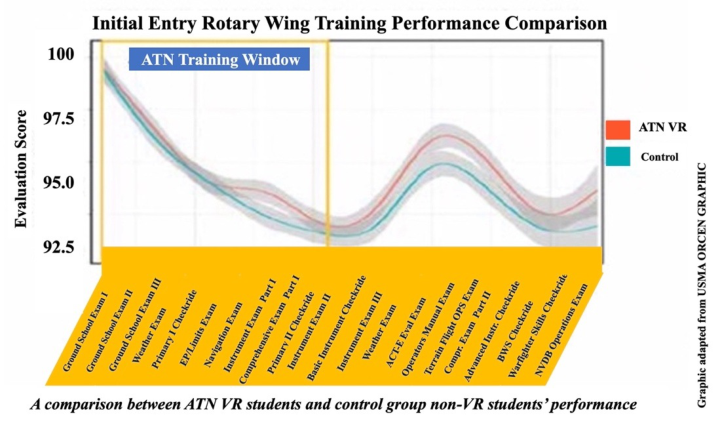
Figure 3: “Initial Entry Rotary Wing Training Performance Comparison” by ARMY AVI- ATION (2020). Training Army Aviators...today and tomorrow, July 31, 2020, Vol. 69, No. 7.
promising. Ongoing and recent experimental training conducted by US mili- tary personnel (USAF, 2021) is showing some positive and relevant insight into the world of virtual reality training for aviation training. The Airfo- rce has found for instance that, ”experimental virtual reality fighter pilot training is working best for students who want to fly the service’s most adva- nced stealth platforms” (USAF, 2021). The US Army through an “Aviator Training Next” experiment that sought to determine if low-cost, low-fidelity commercial-off-the-shelf virtual reality (VR) technologies could be used effe- ctively to train pilots, reported that during the initial phase of flight training for several classes with 296 students using VR devices (See compiled data in Fig. 3), enough evidence was found which indicates that Aviator Training Next (ATN) is a valid training methodology, and continued research is to be expected to better understand the adaptability of the technology into other areas of training (ARMY AVIATION, 2020). Alaska Airlines is perhaps the most recent major airline anywhere in the world to announce its adoption of virtual reality technology for training purposes (VRPILOT, 2022). Alaska Airlines’ Managing Director of Flight Operations Training explains that in most recent training settings for Alaska Airlines “pilot’s basic training typi- cally goes from learning in a classroom to half simulations, then graduating to a full simulation before getting into a real plane” (K5, 2022). With VR however, “now the virtual reality (VR) is being introduced in the first part of textbook training”, which in essence has incorporated not only a new tech- nology into its training, but also, an applied educational paradigm shift for training purposes in aviation.
The aviation industry has been a pioneer in the development and ada- ptation of simulation capabilities that have been profusely utilized across many aviation training environments. However, this has not been the case
Artificial Cognitive Systems and Aviation Training 211
in terms of XR technologies’ applications. Surely there are several factors at play, which are determinants in the perception and adoption of XR techno- logy in education, in general. It is also very likely that many other factors would have to be added to the list on the use of XR technologies in aviation training environments, especially, in aviation training collegiate programs. In prompting the suggested research around XR technologies, our intention is in adding to the current literature and studies that are taking place today, since solutions for furthering the advancement in learning processes and performa- nce related to aviation training are possibly just waiting to be discovered and within reach. A better understanding of the capabilities and possible appli- cations of XR technologies is required. The innate requirements related to safety, and the provision of the best possible training in aviation since its early days for enhancing learning processes and overall performance, demand a more focused and systematic approach to be in place. At Purdue University, and through its Center for Aviation Research and Education (CARE), embra- cing emerging technologies such as VR for aviation training in its search for developing better solutions that provide flight training that constantly meets the requirements of present and future generations of pilots is a constant and a pivotal point, both. Purdue’s aviation ecosystem which includes cross- collaboration around the globe, with stakeholders in academia, the military, governments, and the aviation industry at large, sustainability of the world’s aviation “ecosystem” through discovery and innovation is the main focus. A big part of such effort and essential importance is the ability to recognize associated challenges related to XR technologies. One of many challenges is the relative lack of understanding regarding the potential uses and bene- fits these technologies signify, more specifically, those related to education and training. A truly critical steppingstone in the dynamic environment in which aviation training takes place. Technology diffusion is one of several theories that has been studied for decades and several other prominent theo- ries, including the diffusion model (Rogers, 1962), the technology acceptance model (Davis, 1989), and the technological pedagogical and content know- ledge model (TPaCK) (Mishra & Koehler, 2006), which have been explicitly developed to explain the conditions necessary for educators to integrate new tools into their teaching set of tools, it is surely a critical element applica- ble to the aviation training environment as well. A holistic understanding of these models has helped over the years, in “demystifying” the process of learning for the successful adaptation of new technologies by professors, desi- gners of professional development, university faculty, and researchers in the scholarship of teaching and learning (Sutton and DeSantis, 2017).
CONCLUSION
Lastly, and in looking at the global issue that the aviation industry has been suffering through without an immediate solution in sight, that of a pilot shortage, one possible and unexpected solution to the problem is virtual rea- lity (VR). Recent studies show that VR training in aviation has emerged as an effective learning modality (AIN ONLINE, 2022). The consulting firm “Price Waterhouse Cooper released a study in June 2021 that showed VR
learners mastering content four times faster than in a classroom setting”(AIN ONLINE, 2022). Even with such evidence being available today, the need for an appropriate theoretical foundation and a standardized (certifiable) meth- odology for the review of current and newly emerging XR technologies is needed. Further studies and research are necessary to include experimen- tal testing of various types/levels of technologies and their effectiveness in corresponding levels of learning and performance for flight instruction. Fur- thermore, specific advantages and barriers in terms of learning effectiveness, cost, and time are also in need of being assessed. More specifically, and within the context of this paper, collegiate flight instruction programs should follow a “flight path” that is more in line with the industry as an integral part of the natural development of novel emerging technologies in aviation as dri- vers of change, for both, the military and civilian sectors. Moving forward, a new framework model is required, for determining the relevancy, speci- fic applicability, and rightful place of such technologies for aviation training purposes.
ACKNOWLEDGMENT
The authors thank faculty members of Purdue University for their invaluable feedback contributing to this work.
REFERENCES
Aguayo, C. (2021). Exploring Mixed Reality (XR) in Education. figshare. https://doi.org/10.6084/m9.figshare.14445657 Aguayo, C., Cochrane, T., Aiello, S., & Wilkinson, N. (2021). Enhancing Immersiveness in Paramedicine Education XR Simulation Design. Pacific Journal of Tech- nology Enhanced Learning, 3(1), 39–40. https://doi.org/10.24135/pjtel.v3i1.103 AIN Online (2022). Virtual Reality- The Future of Flight Training. https://
www.ainonline.com/aviation-news/business-aviation/2022-06-01/virtual-reality- future-flight-training. Alizadehsalehi, S., Hadavi, A., & Huang, J. C. (2020). From BIM to extended reality in the AEC industry. Automation in Construction, 116, 103254–. https://doi.org/10.1016/j.autcon.2020.103254 ALMamari, K., & Traynor, A. (2019). Multiple test batteries as predictors for pilot
performance: A meta-analytic investigation. International Journal of Selection and Assessment, 27(4), 337–356. https://doi.org/10.1111/ijsa.12258 Alnagrat, A. J. A., Ismail, R. C., & Idrus, S. Z. S. (2021). Extended Reality (XR) in Virtual Laboratories: A Review of Challenges and Future Training Directions. Jour- nal of Physics. Conference Series, 1874(1), 12031–. https://doi.org/10.1088/1742- 6596/1874/1/012031 Anderson, A., Boppana, A., Wall, R., Acemyan, C. Z., Adolf, J., & Klaus, D. (2021).
Framework for developing alternative reality environments to engineer large, com- plex systems. Virtual Reality : the Journal of the Virtual Reality Society, 25(1), 147–163. https://doi.org/10.1007/s10055-020-00448-4 Ariso, J. M. (Ed.). (2017). Augmented Reality. De Gruyter. https://doi.org/10.1515/ 9783110497656-001 ARMY AVIATION (2020). Training Army Aviators...today and tomorrow, July 31,
2020, Vol. 69, No. 7.
Artificial Cognitive Systems and Aviation Training 213
Bailenson J (2018) Experience on demand: what virtual reality is, how it works, and what it can do. W. W. Norton & Company, New York Bucea-Manea-Toni¸s, R., Simion, V. E., Ilic, D., Braicu, C., & Manea, N. (2020).
Sustainability in Higher Education: The Relationship between Work-Life Balance and XR E-Learning Facilities. Sustainability (Basel, Switzerland), 12(14), 5872–. https://doi.org/10.3390/su12145872 Burch, P., & Good, a. G. (2014). Equal scrutiny: Privatization and accountability in digital education. Boston, Ma: Harvard Education Press. Cook, V. S., & Gregory, R. L. (2018). Emerging Technologies: It’s Not What YOU
Say – It’s What THEY Do. Online Learning (Newburyport, Mass.), 22(3), 121–. https://doi.org/10.24059/olj.v22i3.1463 Czerkawski, B. C. (2013). Strategies for Integrating Emerging Technologies: Case Study of an Online Educational Technology Master’s Program. Contemporary Educational Technology, 4(4), 309–. https://doi.org/10.30935/cedtech/6110 Daily-Hebert, A. & Dennis, K. (2014). Transformative perspectives and processes in
higher education. New York: Springer. Dave, R. H., & Cropley, A. J. (1976). Foundations of lifelong education (First edition.). Pergamon Press. Davis, F. D. (1989). Perceived usefulness, perceived ease of use, and user acceptance
of information technology. MIS Quarterly, 13, 319–339. Fadzli, F. E., Kamson, M. S., Ismail, A. W., & Aladin, M. Y. F. (2020). 3D telepresence for remote collaboration in extended reality (XR) application. IOP Conference Series. Materials Science and Engineering, 979(1). https://doi.org/10.1088/1757- 899X/979/1/012005 FlotynÌski, J. (2020). Knowledge-based explorable extended reality environments
(1st ed. 2020.). Springer. https://doi.org/10.1007/978-3-030-59965-2 Gottlieb, M., Boysen-Osborn, M., Chan, T. M., Krzyzaniak, S. M., Pineda, N., Spector, J., & Sherbino, J. (2017). Academic Primer Series: Eight Key Papers about Education Theory. The Western Journal of Emergency Medicine, 18(2), 293–302. https://doi.org/10.5811/westjem.2016.11.32315 Hase, S. & Kenyon, C. (2013). Self-determined learning: Heutagogy in action. New
York: Bloomsbury Publishing. Hillmann, C. (2021). UX for XR: User Experience Design and Strategies for Immersive Technologies. Apress L. P. Holly, M., Pirker, J., Resch, S., Brettschuh, S., & Gütl, C. (2021). Designing VR Expe-
riences – Expectations for Teaching and Learning in VR. Educational Technology & Society, 24(2), 107–119. https://www.jstor.org/stable/27004935 Ioannou, A., Bhagat, K. K., & Johnson-Glenberg, M. C. (2021). Guest Editorial: Learning Experience Design: Embodiment, Gesture, and Interactivity in XR. Educational Technology & Society, 24(2), 73–76. https://www.jstor.org/stable/ 27004932 Irvin, W., Goldie, C., O’Brien, C., Aura, C. J., Temme, L. A., & Wilson, M.
(2021). A virtual reality aviation emergency procedure (ep) testbed. Virtual, Augmented, and Mixed Reality (XR) Technology for Multi-Domain Operations II. https://doi.org/10.1117/12.2585952 Johnson, L., Adams Becker, S., Estrada, V., & Freeman, a. (2015). NMC horizon report: 2015 higher education edition. Austin, TX: The New Media Consortium. Jones, C. A. (2013). The relationship between academic performance and pilot
performance in a collegiate flight training environment (Order No. 1544342). Available from ProQuest Dissertations & Theses Global. (1437198712). https://www.proquest.com/dissertations-theses/relationship-between-academic- performanceand/docview/1437198712/se-2?accountid=13360
Kang, J., Diederich, M., Lindgren, R., & Junokas, M. (2021). Gesture Patterns and Learning in an Embodied XR Science Simulation. Educational Technology & Society, 24(2), 77–92. Kaplan, A. D., Cruit, J., Endsley, M., Beers, S. M., Sawyer, B. D., & Hancock, P.
A. (2021). The effects of virtual reality augmented reality, and mixed reality as training enhancement methods: A meta-analysis. Human Factors, 63(4), 706–726. https://doi-org.ezproxy.lib.purdue.edu/10.1177/0018720820904229 Knowles, M. (1988). The modern practice of adult education: From pedagogy to andragogy. Englewood Cliffs, New Jersey: Cambridge Publishing. K5 (2022). Alaska Airlines VR Article. https://www.king5.com/article/tech/alaska-
airlines-use-virtual-reality-pilot-training/281-3cb512f2-6539-41af-8d17- addbdaa9d31d Laughlin, B. (2018). XR Drives Aerospace Excellence at Boeing. Manufacturing Engineering, 82. https://www.proquest.com/trade-journals/xr-drives-aerospace- excellence-at-boeing/docview/2164486002/se-2?accountid=13360 Lecci, M., Drago, M., Zanella, A., & Zorzi, M. (2021). An Open Frame-
work for Analyzing and Modeling XR Network Traffic. IEEE Access, 1–1. https://doi.org/10.1109/ACCESS.2021.3113162 Lépinard, P., & Lozé, S. (2019, April 26). XR: Enabling training mode in the human BRAIN XR: Enabling training mode in the human brain. arXiv.org. https://arxiv.org/abs/1904.11704. Mallam, S. C., Nazir, S., & Renganayagalu, S. K. (2019). Rethinking Maritime Edu-
cation, Training, and Operations in the Digital Era: Applications for Emerging Immersive Technologies. Journal of Marine Science and Engineering, 7(12), 428. http://dx.doi.org/10.3390/jmse7120428 Maxwell, D. & McLennan, K. (2012). Case Study: Leveraging Government and Academic Partnerships in MOSES (Military Open Simulator [Virtual World] Enterprise Strategy). In T. Amiel & B. Wilson (Eds.), Proceedings of EdMedia 2012--World Conference on Educational Media and Techno- logy (pp. 1604–1616). Denver, Colorado, USA: Association for the Adva- ncement of Computing in Education (AACE). Retrieved September 27, 2021, from https://www.learntechlib.org/primary/p/40960/. McCoy-Fisher, C., Mishler, A., Bush, D., Severe-Valsaint, G., Natali, M., Riner, B., & Naval Air Warfare Center Training Systems Division. (2019). Student naval aviation extended reality device capability evaluation. DTIC. https://apps.dtic.mil/sti/citations/AD1103227. McInerney, D. M. (2005). Educational Psychology - Theory, Research, and Teaching:
A 25-year retrospective. Educational Psychology (Dorchester-on-Thames), 25(6), 585–599. https://doi.org/10.1080/01443410500344670 Mishra, P., & Koehler, M. (2006). Technological pedagogical content knowledge: a framework for teacher knowledge. The Teachers College Record, 108, 1017–1054. Mosier, K. L., & Fischer, U. M. (2010). Judgment and decision making by individuals
and teams: issues, models, and applications. Reviews of Human Factors and Ergo- nomics, 6(1), 198–256. https://doi.org/10.1518/155723410X12849346788822 Motejlek, J., & Alpay, E. (2021). Taxonomy of Virtual and Augmented Reality Applications in Education. IEEE Transactions on Learning Technologies, 14, 415–429. Nambiappan, & Fillia Makedon. (2020). A Review of Extended Reality (XR)
Technologies for Manufacturing Training. Technologies (Basel), 8(4), 77–. https://doi.org/10.3390/technologies8040077
Artificial Cognitive Systems and Aviation Training 215
Novakova Hana, & ŠTarchoˇn Peter. (2021). Creative Industries: Challenges and Opportunities in XR Technologies. SHS Web of Conferences, 115, 03011–. https://doi.org/10.1051/shsconf/202111503011 Pavlou, M., Laskos, D., Zacharaki, E., Risvas, K., & Moustakas, K. (2021). XRSISE:
An XR Training System for Interactive Simulation and Ergonomics Assessment. Frontiers in Virtual Reality, 2. https://doi.org/10.3389/frvir.2021.646415 Ratcliffe, J., Soave, F., Bryan-Kinns, N., Tokarchuk, L., & Farkhatdinov, I.
(2021). Extended Reality (XR) Remote Research: a Survey of Drawbacks and Opportunities. https://doi.org/10.1145/3411764.3445170 Raybourn, E. M., Stubblefield, W. A., Trumbo, M., Jones, A., Whetzel, J., & Fabian, N. (2019). Information Design for XR Immersive Environments: Challenges and Opportunities. Virtual, Augmented, and Mixed Reality. Multimodal Interaction, 11574, 153–164. https://doi.org/10.1007/978-3-030-21607-8_12 Reneker, J. C., Pannell, W. C., Babl, R. M., Zhang, Y., Lirette, S. T., Adah, F., &
Reneker, M. R. (2020). Virtual immersive sensorimotor training (VIST) in colle- giate soccer athletes: A quasi-experimental study. Heliyon, 6(7), e04527–e04527. https://doi.org/10.1016/j.heliyon.2020.e04527 Rogers, E. M. (1962). Diffusion of innovations. New York, NY: Glencoe Free Press. Rotolo, D., Hicks, D., & Martin, B. R. (2015). What is an emerging technology? Research Policy, 44(10), 1827–1843. https://doi.org/10.1016/j.respol.2015. 06.006 Rushby, N., & Surry, D. (2016). The Wiley handbook of learning technology (Vol. 1).
Wiley Blackwell. Ryoo, J., & Winkelmann, K. (2021). Innovative Learning Environments in STEM Higher Education Opportunities, Challenges, and Looking Forward (1st ed. 2021.). Springer International Publishing. https://doi.org/10.1007/978-3-030- 58948-6 Sangsung Park, Seongyong Choi, & Sunghae Jun. (2021). Bayesian Structure
Learning and Visualization for Technology Analysis. Sustainability (Basel, Swit- zerland), 13(7917), 7917–. https://doi.org/10.3390/su13147917 Schweisfurth, M. (2013). Learner-centered education in international perspective: whose pedagogy for whose development? Routledge. https://doi.org/10.4324/ 9780203817438 Semwal, S. K., Jackson, R., Liang, C., Nguyen, J., & Deetman, S. (2020). Preservers of
XR Technologies and Transhumanism as Dynamical, Ludic and Complex System. Proceedings of the Future Technologies Conference (FTC) 2020, Volume 2, 300– 309. https://doi.org/10.1007/978-3-030-63089-8_19 Siminovich, C., P.E. (2021). Modernize Training with Al, XR, and Microlearning. Chemical Engineering Progress, 117(5), 44–47. https://www.proquest. com/scholarly-journals/modernize-training-with-al-xr-microlearning/docview/ 2522175631/se-2?accountid=13360 Slawomir Nikiel. (2020). XR and Shadow Wars — the Uncanny Valley of Death.
Future Human Image, 14, 36–47. https://doi.org/10.29202/fhi/14/5 Sondre Stai, Kaldahl, E., Kanck, K., & Westermoen, J. (2019). Utilizing XR Technologies as Visual LearningTools for Youth with Autism Spectrum Disorder - Appendix [Data set]. Zenodo. https://doi.org/10.5281/zenodo.2600352 Stals A., & Caldas L. (2020) State of XR research in architecture with a focus
on professional practice – a systematic literature review, Architectural Science Review, DOI: 10.1080/00038628.2020.1838258
Stoynov, V., Ivanov, A., & Mihaylova, D. (2021). Conceptual framework for quality assessment in human-centric 6G XR services. IOP Conference Series. Materi- als Science and Engineering, 1032(1). https://doi.org/10.1088/1757-899X/1032/ 1/012009 Suslov, N. (2021). Implementing Decentralized Virtual Time in P2P Collaborative
Learning Environment for Web XR. 2021 7th International Conference of the Immersive Learning Research Network (iLRN), 1–4. https://doi.org/10.23919/ iLRN52045.2021.9459326 Sutton, K. K., & DeSantis, J. (2017). Beyond change blindness: embracing the technology revolution in higher education. Innovations in Education and Teaching International, 54(3), 223–228. https://doi.org/10.1080/14703297.2016.1174592 USAF (2021). The Air Force’s Virtual Reality Fighter Training is Working Best
for 5th Generation Pilots. https://www.military.com/daily-news/2021/03/26/air- forces-virtual-reality-fighter-training-working-best-5th-gen-pilots.html Vasilchenko, A., Li, J., Ryskeldiev, B., Sarcar, S., Ochiai, Y., Kunze, K., & Radu, I. (2020). Collaborative Learning & Co-Creation in XR. Extended Abstracts of the 2020 CHI Conference on Human Factors in Computing Systems, 1–4. https://doi.org/10.1145/3334480.3381056 Veletsianos, G. (2010). A definition of emerging technologies for education. In G.
Veletsianos (Ed.), Emerging technologies in distance education. Athabasca, AB: Athabasca University Press. VRPILOT (2022). Alaska Airlines was one of the first US Airlines to use virtual reality in pilot training. https://vrpilot.aero/alaska-airlines-to-explore-vr-training- for-pilots/ Wang, W.-T., & Lin, Y.-L. (2021). The Relationships among Students’ Innovati-
veness, Compatibility, and Learning Performance: A Social Cognitive Theory Perspective. Educational Technology & Society, 24(2), 14–27. https://www.jstor. org/stable/27004928 Wohlgenannt, I., Simons, A., & Stieglitz, S. (2020). Virtual reality. Business & Information Systems Engineering, 62(5), 455–461. https://doi.org/10.1007/s12599- 020-00658-9 Yawson, R. M. (2013). Systems Theory and Thinking as a Foundational The-
ory in Human Resource Development—A Myth or Reality? Human Resource Development Review, 12(1), 53–85. https://doi.org/10.1177/1534484312461634 Ziker C., Truman B., Dodds H. (2021) Cross reality (XR): Challenges and opportunities across the spectrum. In: Ryoo J., Winkelmann K. (eds) Innovative learning environments in STEM higher education. SpringerBriefs in Statistics. Springer, Cham. doi: 10.1080/10508414.2017.1313096
LISTED IN THE AHFE DIGITAL BOOKSTORE CATALOGUE
Explore the complete digital volume
Intelligent Human Systems Integration (IHSI 2023): Integrating People and Intelligent Systems
Read this individual research paper free through the original publisher, or explore the full digital proceedings book.
ISBN 978-1-958651-45-2
Explore this ISBN in the AHFE Bookstore ↗Listed in the July 2026 bookstore catalogue; search by ISBN to confirm current availability · Digital book purchase optional