Dimitrios Ziakkas, Debra Henneberry, Abner Del Cid Flores (2023). Competency-Based Training and Assessment (CBTA) Framework in Global Aviation Training. In: Human Factors in Management and Leadership. AHFE Open Access, vol. 92, pp. 1–8. https://doi.org/10.54941/ahfe1003728
One of the most important components of workforce planning in Human Resources Management (HRM) is ensuring that employees have the right skills and competences to do their jobs. The expansion of low-cost and traditional carriers has enhanced the reach, breadth, and frequency of traditional passenger-carrying services. Due to the growing need for highly trained professionals in Intelligence Human Systems, airline recruiters are under pressure to find new ways to attract and communicate with potential candidates. This study intends to include CBTA into aviation personnel planning, training, and management of the Intelligence Human Systems Integration - transformation. Research objectives include a theoretical study of the CBTA framework, an examination of human resources planning, training, and operations, identification of aviation Subject Matter Experts performance gaps, and a recommendation for adopting the CBTA framework in aviation human resources framework and Intelligence Human Systems Integration. When building the worldwide CBTA framework for the aviation industry, the authors studied the governing variables and trends in the industry, suggesting a global strategy to managing HSI-change.The pandemic's effects were addressed when implementing CBTA. According to a recent research, aviation programs should stimulate learning beyond the ab initio basic knowledge requirements, give chances for ongoing education, and stress quality over quantity (e.g., developing pilot hours, integrating new technology) (AI). Organizational culture, opposition to technological progress, and employment laws affect demand. In the following study, a synthesis of the Lean Six Sigma (L6) strategy and CBTA framework is offered as an alternative to the prevailing method in many countries, which inhibits change management and increases organizational pressure. Implementing verified CBTA – EBT / psychological applications during installation and change management can help airlines become an employer of choice in the sector and speed up intelligence human systems integration."Competency" is a human performance attribute used in aviation to predict job success. When a person engages in behaviors that draw on the proper knowledge, abilities, and attitudes to complete activities or tasks within set parameters, they demonstrate and demonstrate a competency. Research follows ICAO's description of knowledge, abilities, and attitude (ICAO, 2022):• "Knowledge is particular information needed to acquire and apply skills and attitudes needed to recall facts, recognize concepts, apply rules or principles, solve issues, and think creatively at work,"• "Knowledge is particular information needed to acquire and apply skills and attitudes to recall facts, recognize concepts, and apply rules or principles (ICAO, 2022)." Attitude is a learned mental state or disposition that determines a person's conduct toward any item, person, or event. Positive or negative attitudes can evolve. Attitudes are affective, cognitive, and behavioral. Aviation SME must "know how to be" in each circumstance to have the "right" attitude.Purdue's professional flying program acknowledged both technical and nontechnical competencies based on IATA requirements. Furthermore, Purdue research employed qualitative and quantitative methods to confirm the idea that combining Competency-Based Training Assessment with a structured recruitment and selection plan increases organizational performance.The chosen inductive research method focuses on reducing delays in pilot hiring and training by incorporating personnel capabilities that reduce performance differences. The study also examines how Lean Six Sigma personnel planning and training effect airline operating expenses. Removing superfluous processes from the recruitment process can help airlines save money and time on recruitment and employee training. Purdue Research roadmap focuses on AI certification (FAA, EASA), AI training following a change management approach, and AI standards in the worldwide AI aviation ecosystem. In conclusion, the outcomes of this study project indicate that the firm must rethink its organizational culture, adopt an integrated CBTA approach, and use the proposed Lean Six Sigma Recruitment process.
people with specific skills and abilities to their immediate and long-term needs and goals (Marchington, 2015). There have been numerous articles and books written on the subject of effective manpower planning, and these provide theoretical and practical guidelines for successful and efficient human resource administration (HRM). Theoretically and practically, organizations are encouraged to consider how they might and should structure their human resources to create strategic differences in their markets (Paauwe & Boon, 2018). On the other hand, many businesses get stuck in a cycle of limiting employee availability day-to-day to meet short-term resourcing needs at the operational and tactical levels, which distracts them from strategic planning and prevents them from meeting their objectives (Armstrong & Taylor, 2014). Furthermore, when viewed in a broader context, the employment process in the aviation industry has several issues, many of which have been documented and may be observed in practice (Taylor & Cotter, 2019).
Several elements might operate as strategic limits for airlines. These include organizational culture, rivalry for strategic goals, and a need for more strate- gic alignment. When looking to fill a position in the aviation business, one of the most significant factors that should be considered is the level of specializa- tion required of the candidate’s previous work experience and qualifications (Lewis et al., 2015). Because the qualifications necessary to work in the flight operations and flight training departments are apparent and can be demon- strated through the use of a certificate, it takes more than generic or blanket passive recruiting methods to find the right people who are competent in Aviation Intelligent Human Systems (Gnanprakash & Kulkarni, 2016).
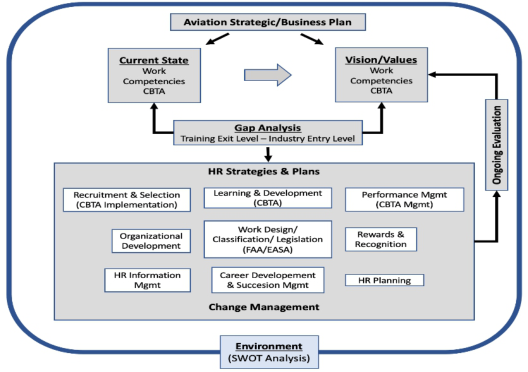
Additionally, Paauwe (2018) proposed a model analogous to the airline HR Planning and Analysis Model, which may be seen below in Figure 1. The model that has been proposed illustrates how a corporation may use its strategic plan to work out how the firm will transition from where it is now to a set of values that will assist it in achieving its objective. As a result, deficiencies in performance (competencies) and human resources (manpower planning) are identified to reach the intended state. Plans and strategies about human resources (HR) emphasize various performance domains, including Aviation Intelligence Human Systems job design, job description, and cate- gorization, in addition to HR information management. Figure 1 illustrates how HR operations contribute to the company’s overall success in achieving its strategic objectives.
Verified CBTA-EBT/psychological applications were implemented during the change management process. The “competency” human performance trait is used to predict job success. Competence is demonstrated when a person exhibits behaviors that rely on the appropriate knowledge, abili- ties, and attitudes to carry out activities or tasks within predetermined boundaries. Purdue’s professional flight program recognized technical and nontechnical competencies following IATA regulations. Furthermore, the Purdue study used qualitative and quantitative techniques to support the idea that incorporating a structured recruitment and selection plan into an AI- driven competency-based training assessment strategy improves organizatio- nal performance. By adding personnel capabilities that reduce performance differences, the chosen inductive research technique aims to reduce hiring
Competency-Based Training and Assessment (CBTA) Framework in Global Aviation Training 3
Figure 1: Aviation performance gap analysis and change management (Ziakkas, 2022).
and training wait times for pilots. The study also examines how Lean Six Sigma training and personnel planning affect airline operating costs. Airlines can save time and money on hiring new employees and employee training by eliminating unnecessary steps from the hiring process. Purdue Research’s roadmap focuses on CBTA standards implementation in the global AI avi- ation ecosystem, AI training with a change management strategy, and AI certification (FAA, EASA).
DEVELOPING CBTA DATABASE TO SUPPORT GLOBAL AVIATION SYSTEMS DESIGN Human Systems Integration (HSI) is becoming an integral component of com- plex systems to assist with design solutions. This represents a substantial possibility for the aviation sector to shorten development cycles, but it also raises questions about the dependability of Machine Learning/Deep Learning ML/DL software. In addition, the Purdue Research road map is centered on the identified obstacles:
“Traditional frameworks for development assurance are not suitable to machine learning.”
Machine learning (ML) highlights several steps in the process, including data preparation, architecture, algorithm selection, hyperparameter tuning, etc. A paradigm shift is required to create learning-specific assurance proces- ses (“learning assurance” building block, EASA, 2020, Selection in Aviation, EAAP, 2022).
Machine learning (ML) is a subset of AI that refers to learning from past experiences (input data) and predicting the future. Statistical learning methods, predictive modeling, data mining, image recognition, and natural language processing are typical applications in the selection industry (Lux- ton, 2016). These methods provide a computational approach to dealing
with uncertainty and can help psychologists and human resource professi- onals optimize selection decisions. The Purdue human systems integration team is developing a test plan with CBTA tools that could be easily incor- porated into the systems engineering test plan to implement AI in aviation training globally and evaluate the results. Moreover, Tippins, Oswald, and McPhail (2021) argue that the effectiveness of ML prediction or clustering in personnel selection settings is more likely to be driven by the availability of high-quality data than by the specific ML algorithm chosen. Justified pre- dictions are dependent on both good measurement processes and valuable data.
“Difficulties in maintaining an exhaustive description of the desired function.”
Artificial Neural Networks (ANNs) are brain-inspired mathematical models important to deep learning algorithms. The selection of relevant psychometric predictors in people selection is crucial to developing parame- tric or nonparametric classification models.
Maroco and Bartolo-Ribeiro (2013) assessed the sensitivity, specificity, and accuracy of traditional parametric classifiers (linear discriminant analy- sis, logistic regression) and four nonparametric neural networks (multilayer perceptron’s, radial bias function, probabilistic neural networks, and linear neural networks) developed for classification tasks in the prediction of pass versus fail pilot candidates on a flight screening program. They discovered that basic, rigid parametric classifiers might need more understanding of the range of interactions and direct effects that delay the link between data points. However, more complicated and flexible models like neural networks tend to overfit the data and demonstrate model instability when extrapolating to new situations. Maintaining a traceability relationship with higher-level needs and ensuring the completeness and accuracy of the data collection may become increasingly difficult. Moreover, the dataset’s quality will be of utmost relevance, as insufficient or inaccurate data may affect the training model’s behavior. The difficulty will also depend on the type of ML process: Unsupervised or reinforcement learning may result in less predictable beha- vior than supervised learning. The Purdue CBTA approach offers a validated global database offering accessible data accepted by ICAO and several civil aviation organizations worldwide.
“The lack of predictability and explicability of the machine learning application’s behavior.”
ML applications are, by definition, probabilistic. Even if a machine lear- ning (ML) model is mathematically deterministic (for example, fixed weights in a neural network), the output for any new input will be influenced by the correlation between that input and the training data set. This can lead to unpredictable and difficult-to-understand outcomes. As a result, more rese- arch into the concept of ‘AI Explainability’ (‘explainability’ building block, EASA, 2020) is required to expand the capability of making the conditions that led to a specific output more accessible. There currently needs to be more data sets to generalize the findings to a larger population. In the ini- tial phase, however, a controlled small sample size research study (Purdue proposed research case study) would satisfy a linear analysis for personnel
Competency-Based Training and Assessment (CBTA) Framework in Global Aviation Training 5
selection. Klokker et al. (1999) discovered that a trained neural network tech- nique could contribute to the meaningful selection of pilots before beginning military flight training by rejecting applicants who are unlikely to succeed in a separate study.
To meet these areas, Purdue University’s current perspective on competency-based training (Keller et al., 2020) and an examination of ongoing technology potential (e.g., AI) in aviation training recommend a simple-to-complex, comprehensive aviation training approach. The sugge- sted shift in training philosophy by the CBTA should not be viewed as merely a replacement for an older, obsolete set of critical events. Instead, the concept is a method for improving and assessing team performance by incorpora- ting human factors elements and clearly defined Artificial Intelligence student learning objectives.
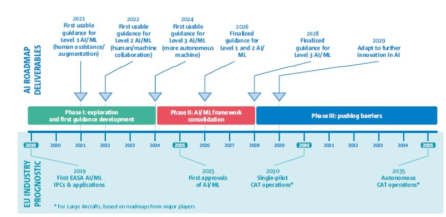
AI in aviation capabilities and standardization is used to apply content efficiency, teaching experience, and aviation market needs as the industry transitions to CBTA; airlines and regulators will need to adopt additional competencies and support for flight schools. SATT modified the AT-38800 course (Large Aircraft Systems), as shown in Figure 2, to familiarize students with Phase I and relate it to Phases II and III.
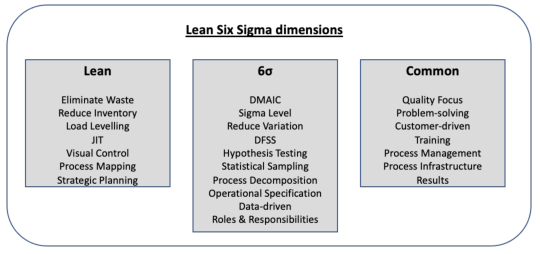
Furthermore, Purdue’s study reveals a strong correlation between lowering operating and training costs and employing the CBTA - lean approach (Ziak- kas, 2022). As a result, strategic goals should be developed and implemented in the firm while maintaining lean processes and reasonable operational expenses, as demonstrated in the following common area (See Figure 3).
Figure 2: Artificial intelligence in aviation roadmap (EASA, 2020).Figure 3: Purdue lean six sigma dimensions (Ziakkas, 2022).
CBTA - A SUPPORTIVE FRAMEWORK In aviation, “competency” refers to a human performance characteristic used to predict successful job performance. The manifestation and observation of competency occur when an individual engages in behaviors that necessi- tate the appropriate knowledge, abilities, and attitudes to carry out activities or tasks within predetermined parameters. The study adheres to the ICAO’s description of knowledge, abilities, and attitude (ICAO, 2022):
“Knowledge is specific information that enables a learner to develop and apply the skills and attitudes required to recall facts, identify concepts, apply rules or principles, solve problems, and think creatively in the workplace.,”
Purdue University’s School of Aviation and Transportation Technology (SATT) professional flying program recognized technical and nontechni- cal competencies based on International Air Transport Association (IATA) guidelines. Purdue University researchers used qualitative and quantitative methods to test the hypothesis that implementing a Competency-Based Training Assessment in conjunction with a structured recruitment and selection plan improves organizational performance.
General aviation flight training has become a common entry point to an air transport pilot career in the United States. The growing demand for fli- ght crews has necessitated recruitment from all industry sectors. Depending on the training path, the Federal Aviation Administration requires pilots to have logged between 1,000 and 1,500 hours to be eligible to fly for the air- lines. While Airmen Certification Standards specify certain types of flights and other criteria to be satisfied within those hours, airline trainees are often recruited directly from a flight training or other general aviation environ- ment. During the past five decades, training curricula have embraced crew resource management and scenario-based training as strategies to improve attitudes and target higher levels of learning starting from the initial stages of training. While these methods are separate from CBTA, they have had efficacy in achieving their goals.
Similarly, CBTA can address needed areas of achievement throughout trai- ning. Including CBTA from the outset of the flight training process benefits students, flight schools, and future employers. Students trained following CBTA will be better prepared as they progress throughout their careers and fly more sophisticated equipment. Flight schools will have a framework that can be used with FAA standards to measure student achievement. Using CBTA from the beginning of private pilot training allows for the achievement of competencies to be measured accordingly as tasks become increasingly complex. In addition, the CBTA model can assist with proactively identifying deficiencies. Future employers will reduce wasted costs and other resources resulting from student washout as their new hires have higher quality fli- ght experiences within their mandatory flight hours and have been assessed consistently during their training.
The inductive research method is used to find ways to accelerate the pro- cess of hiring and training pilots by giving them skills that make them better
Competency-Based Training and Assessment (CBTA) Framework in Global Aviation Training 7
at their jobs. The study also looks at how the Lean Six Sigma planning and training process affects the operating costs of an airline (Figure 3). The rese- arch and the lean mentality are related because removing unnecessary steps from the hiring process can help airlines save money and time on hiring and training employees.
CONCLUSION
In order to help with the resolution of system designs, human systems integra- tion (HSI) is increasingly becoming a crucial part of complex systems. This study aims to develop a plan for integrating the Competency-Based Trai- ning and Assessment (CBTA) framework into the organization, planning, and management of the change in aviation personnel’s intelligence human systems. Lean manpower planning will be used in conjunction with the pro- jected adoption of CBTA to create a uniform and reliable methodology. This method will align with the suggested workforce planning procedure, enabling interactions with candidates while minimizing the recognized workforce planning inconsistency.
As a result of the aviation industry’s globalization, several airlines are forced to adopt cross-border hiring practices. As a result, recruiters must transition from being passive human resource agents to active CBTA profes- sionals who can create a larger pool of competent candidates. There will be a larger need for airlines and regulators to adopt competencies as the industry transitions to CBTA models, as well as support for flight schools.
The Purdue Research roadmap also emphasizes AI certification (FAA, EASA), adopting an AI training curriculum employing a change management strategy, and establishing AI standardized principles in the international AI aviation ecosystem. In order to address the issue of recruiting and selecting new aviation SMEs, airliners must reconsider the organizational culture, esta- blish an integrated CBTA strategy, and put the suggested Lean Six Sigma Recruitment process into practice. This is required to address the issue of new employee recruitment and selection.
ACKNOWLEDGMENT
The authors thank faculty members of Purdue University for their invaluable feedback contributing to this work.
REFERENCES
Armstrong, M. and Taylor, S., (2014). Armstrong’s handbook of human resource management practice. London: Kogan Page Publishers. EASA. (2020). Artificial Intelligence Roadmap: A human-centric approach to AI in
aviation. Gnanprakash, J. & Kulkarni, P. V. 2016. Social CRM in the airline industry: A case study of Indian airline companies. Journal of Marketing Management and Consumer Behavior, 1(1), 1–17. ICAO. 2019. ICAO addresses the shortage of skilled aviation professionals. ICAO, Retrieved from: https://www.icao.int/Newsroom/Pages/ICAO-Addresses- Shortage-of-Skilled-Aviation-Professionals.aspx.
Lewis, A., Thomas, B., James, S. (2015). A critical analysis of the implementation of social networking as an e-recruitment tool within a security enterprise. Cogent Business & Management, 2(1), 1–21. Luxton, D. D. (2016). Artificial intelligence in behavioral and mental health care.
Academic Press: Elsevier. Maroco, J., & Bartolo-Ribeiro, R. (2013). Selection of Air Force pilot candidates: A case study on the predictive accuracy of discriminant analysis, logistic regres- sion, and four neural network types. International Journal of Aviation Psychology, 23(4), 130–152. Marques, E., Carim, G. J., Campbell, C., & Lohmann, G. (2023). Ab Initio Flight
Training: A Systematic Literature Review, The International Journal of Aerospace Psychology, DOI: 10.1080/24721840.2022.2162405 Paauwe, J. & Boon, C., 2018. Strategic HRM: A critical review. In Human Resource Management. London: Routledge. Tippins, N. T.; Oswald, Frederick L.; & McPhail, S Morton (2021) “Scientific,
Legal, and Ethical Concerns About AI-Based Personnel Selection Tools: A Call to Action,” Personnel Assessment and Decisions: Number 7: Iss. 2, Article 1. DOI: https://doi.org/10.25035/pad.2021.02.001. Available at: https://scholarworks.bgs u.edu/pad/vol7/iss2/1
LISTED IN THE AHFE DIGITAL BOOKSTORE CATALOGUE
Explore the complete digital volume
Human Factors in Management and Leadership
Read this individual research paper free through the original publisher, or explore the full digital proceedings book.
ISBN 978-1-958651-68-1
Explore this ISBN in the AHFE Bookstore ↗Listed in the July 2026 bookstore catalogue; search by ISBN to confirm current availability · Digital book purchase optional