Janne Heilala, Paavo Nevalainen, Kristiina Toivonen (2023). AI-based sentiment analysis approaches for large-scale data domains of public and security interests. In: Human Factors in Management and Leadership. AHFE Open Access, vol. 92, pp. 95–108. https://doi.org/10.54941/ahfe1003738
Organizational service learn-leadership design for adapting and predicting machine learning-based sentiments of sociotechnical systems is being addressed in segmenting textual-producing agents in classes. In the past, there have been numerous demonstrations in different language models (LMs) and (naıve) Bayesian Networks (BN) that can classify textual knowledge origin for different classes based on decisive binary trees from the future prediction aspect of how public text collection and processing can be approached, converging the root causes of events. An example is how communication influence and affect the end-user. Within service providers and industry, the progress of processing communication relies on formal clinical and informal non-practices. The LM is based on handcrafted division on machine learning (ML) approaches representing the subset of AI and can be used as an orthogonal policy-as-a-target leadership tool in customer or political discussions. The classifiers which use the numeric representation of textual information are classified in a Neural Network (NN) by characterizing, for instance, the communication using cross-sectional analysis methods. The textual form of reality collected in the databases has significant processable value-adding opportunities in different management and leadership, education, and climate control sectors. The data can be used cautiously for establishing and maintaining new and current business operations and innovations. There is currently a lack of understanding of how to use most NN and DN methods. The operations and innovations management and leadership support the flow of communication for effectiveness and quality.
Natural Language Processing (NLP) has become an amazing tool for new technologies that solve today’s challenges that were absurd fiction at the beginning of the 21st century (Potts 2021). NLP plays a large role in forming cognitive modeling over large datasets: mining social media individuals’ opi- nions, funding applications, politicians’ engagement experiments, hate speech detection, claim verification, music rhythm modulation, automatic headline generation, w3 content preservation, text generation, and millions of other applications among millions of amazing researchers worldwide (The Asso- ciation for Computational Linguistics 2021). However, many advances stay
nonoperational, and many challenges are sidelined – not researched. In addi- tion, the current research applications create a good basis for data processing but end up too late, too much, or too less, and because of slow processing, computation, and integration, usually delaying the knowledge-based, leading when the information can have worthiness to be beneficial. (Newman-Griffis et al. 2021.) In this conference, we conduct a systematic research review of the roots of the entrepreneurial side of human systems interest in NLP to recent technologies to enable scientific understanding of the societal use of translational NLP in human sciences.
Human Sciences Phenomenology is a usual method of conducting qualitative research in human sciences. Within phenomenology, the data analysis is often conducted in the way that the structural entities of reality are factorized and resea- rchers. The data form can vary from structural to non-structural recorded interviews that might or might not be transcribed into text. The data can also be, e.g., web-scraped, database-based, or collected by surveys. Different ways of analyzing the data can be used. Often, they include categorizing the components of the data based on RQs.
Considering phenomena, consider each concept space’s components when analyzing the research data. The researcher’s focus could be on well-being, which is also a research statement for the problem to solve. Other things to be noted in the analysis of object theory are the pedagogical leadership, which can selectively solve illness, whereas building wellness is a more spiri- tual venue. Addenda for effects within the enterprise’s organization on this nausea experienced, and thus offers governing function.
The analysis of social system data acquisition to literature database fin- dings shares similar characteristics. The analysis process by examining all the attached materials (responses, interviews, or articles) one by one and classifying them into different categories based on similarities and differe- nces. Classifying the material is laborious work because manually learning and classifying each text can be interpreted in many ways. The processing of each diffracted component out of the phenomenon also requires a short categorical summary of each material to be attached to the end output text, usually a scientific article.
Since the internet was born, researchers have advanced in computatio- nal techniques to understand the natural language generated by humans. Before the 90s, the algorithms for parsing grammatical and parsing algo- rithms focus enabled research, thus elaborating sentence meaning by the user context. This time, various applications were introduced: Using natural lan- guage and machine translation technologies, generating texts, understanding stories, and implementing computer-aided instructions. (Hirschberg et al. 1998.) Other examples of natural language research applications reached until 20st-century are in the same spheres as different front-end software and as customizable entities in various programming languages. Next, we will determine how to do it automatically by forming initialized artificial intelligence.
AI-Based Sentiment Analysis Approaches for Large-Scale Data Domains 97
Research Questions To cover the study’s objectives, the following research question (RQ) was defined by selecting research on specific NLP applications, What are the important natural language processing models for text analysis? By respon- ding to how NLP applies in use context, it explains how freely natural language processing is construable to general application needs to facilitate innovation.
This literature review positions to review relevant data exploring the com- pany concerning RQ objectives. Research is carried out by conducting a phenomenographical explanatory mobile learning-based “learning in diffe- rent contexts through information and communication technologies” (e.g., Khan et al. 2019). To respond to the RQ, the literature selection had a basis in technology in the healthcare and industrial sector, drew some examples, and will select convenience sampling of recent research papers. The following section discusses the selected conventional to respond to the RQ.
Governing Functions on Social Systems The future of artificial intelligence (AI) is no longer filled with imaginative filmography based on futuristic scenarios. Business and human ecosystem design will be strongly influenced by a reality already impacting different sectors. (Colurcio & Altimari 2021, 75.) Natural language processing (NLP) is classified as a branch of AI that understanding considers human factor input syntax, semantics, and pragmatics within discourse representing the action. The meaning of the sentence is driven by commonly accepted gram- mar syntax forming the phrase to recognize, for instance, English input. In human learning, at the development phase for the simulation, forming different meanings with learning structures out of the real world reflects the state of each worldview of the world. The world of semiotics gives the meaningfulness for “action, life and competence” (adapted to Pikkarainen 2014). The discourse analysis extends the usage of the communication stra- tegies functions into strings of language. Writing structures to describe the phenomenon of two factors has a certain representation way. When A denotes a relationship with B (A →B), the character’s unit indicates that A is non- terminal, and it is terminal or another nonterminal for B. (Hirschberg et al. 1998.) When the variable test beds increase, the textual content reaches high multidimensionality, which is usually a curse for conducting reliable analyses with big data. The curse appears as a damped or interfered, not factorizable or fuzzy frequency domain transform when the dimensionality of a dataset is processed using multifaceted characteristics—optimizing the performance studies mentioned requiring sparsing methods, for example, by spreading the natural language by quantitative research Sparse Principal Component Analysis (SPCA) methods to manage large matrices by algorithms to formu- late fast and accurate results for getting a clue of the big data. (adapted to Drikvandi & Lawal 2020.) From an interaction point of view, assuming all possible entities that instead, A denotes termini over B and each one affects their states, appearing reaching of the new state, can be looked at as another side of the coin. Assuming all likely entries, the interaction can be declared
according to passive or active action, taken when subject causality changes to another state, given customer service interface service demanding customer. When something, such as a customer service event, occurs, it must be suppo- sed that the customer has ‘A competence’ over/with the subject, for instance, something with ‘competence C.’ When we have perspective ‘competence B’, we regard the subject as ‘competency B.’ We regard ‘competency A’ as having ‘competence C.’ if we can presuppose ‘competence A’ as ‘competence C.’ Customer service does not respond to the ‘competence B’ perspective, and the experience becomes harmful in the short- and long-term and eventually faces issues in continuity.
Generative Pre-trained Transformer 3 (GPT-3) is an updated artificial intelligence from Microsoft that uses robust datasets based on the Large Lan- guage Models (LLMs), with which companies take responsibility for business operations and software development in the future (adapted Ye & Durrett 2022). Other modern approaches are GPT-2; XLNET; Bidirectional Enco- der Representations from Transformer (BERT); A Robustly Optimized BERT (RoBERTa); A Lite BERT for Self-supervised Learning of Language Represen- tations (ALBERT); Decoding-enhanced BERT with Disentangled Attention (DeBERTa); Transfer Learning with a Unified Text-to-Text Transformer (T5); and Pathways scaled Language Modeling (PaLM), for business leaders (Yao 2022). Common tasks for the pretraining approaches of transformers shares:
Machine vision screening (e.g., Rhodes 2023): – Foundation of the computer vision, – Labeling on the network, – Detection, and – Segmentation;
A business leader can consider the competency settings in automation to succeed or lose when not considering which technology does not outcome possible solutions but which the ethical use of technology makes possible. Guo et al. (2022) explain that the combined framework of human perce- ption, computation, reconstruction, cooperation, and interaction builds a metaverse.
The political power structure related to GPT artificial intelligence should be addressed more widely in future political discussions so that its use does not increase inequality or increase security risks (adapted to Chan 2022; Agrawal et al. 2018).
GPT-AI-NLP-LMM aims to classify the human factor as unconscious, erroneous, or fictive. The variety of American Psychological Association (APA) models discusses, from broad to narrow models, the systemic sense of human motives in goal setting and approaching and advancing functions of meanings in legislative and educational contexts. In contrast, the meaningful- ness ranges between negative, neutral, and positive correlation (causality in
AI-Based Sentiment Analysis Approaches for Large-Scale Data Domains 99
this context). (adapted to Pikkarainen 2014.) The range of qualitative deter- ministic modeling for anything can be seen as mastering something, according to Pikkarainen (2014, 5). In the leadership context, from the logical agency’s perspective, leadership always has provisional motives. Political level, if a politician sticks with A while B and C are reflections for alternative opti- ons in funding, for instance, then setting logical fixation into the most likely option, When A denotes a similar relationship with B (A > B > C), it can mean in case of the social dilemma, that if others value (A > C > B), the harmonization within the system becomes essential. (Averkyna 2021, 109.) Pikkarainen (2014) suggests that when competence does not change remar- kably, the interaction between, e.g., political activity or customer service, may have had its interference. The subject, induced with strength and falsification, can proceed to the abductive phase of pragmatic learning to gain competence for new induction, for example, in the failure-success of obtaining Hori- zon Europe funding. Converging to the basic level, the special daily need of human explicitly counts for decisions, whether, e.g., eating or sleep is good or bad. Reflection of self-leadership to leading others requires biosemiotics questions if we classify tangible or intangible layers and integrate correla- tions between existences and meaningfulness. Intelligent human integration viewpoint, ontology is relevant for reflecting reality in plain living because it is renewing in daily environments. In contrast, the human social system can develop. The definition of AI becomes relevant in codifying how humans intend to communicate and program by symbolized signs (Pikkarainen 2014, 6–7). Thus, as with all mathematics, also communication begins with basis assumption. Language reflection is modelable in an algebraic system through human language. The given space forms out of modularized inseparable com- ponents that can also be simplified for positioning the rank to the matrix representation. To further declare the enumerates, the importance criterium justifies the setting of interest and defines properties of the matrix; for internal consistency and comparability, the variables consisting of natural language need organizing to the frame modules accordingly, e.g., ranking, lexicogra- phically for processing the signs structured logically for statistical processing. Programming the other symbols, either eliminating or arranging similar string conditions, gives module properties proper interassociations. Each variable, e.g., (A, B, C) defining system accounts for the scientific philosophy by which concept is illogical to intuition but accounts for the concept system space (M). The political system’s general complexity covers professionals, either at the entrepreneurial level or customers from multidisciplinary disciplines, and thus requires considering each system spaces (M1… Mn) corresponde- nce comparison using Lorent’s and Jaccard’s coefficient, for instance. The ranking from economics to considering the impact segment, for instance, transportation, aviation, and maritime, reflected the education level by poli- tical action gives the impact value. System equality is important respectively to the subsystems level to which in this study scope we do not go. At either level, ethical pre-assessment is good practice to evaluate the coefficient on arranging systems equal to each another. Considering which systems have differences with given coefficients, the computing equates the residual of Mn to M. (Averkyna 2021, 111.)
To declare NLP processable variables, building pseudocode algorithmic input from problems (P) to the outcome space of solutions (S).
The processing over (Pi in Nth of the system) on (1 . . .nth subsystem) iterates to explore a (Si for Nth of system) until (Pi ≡Si);
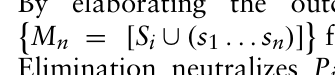
By elaborating the outcome space of (Pi = Si) wherein forms the opposite matrices; and
Equation reproduced from the original PDF.
Elimination neutralizes Pi to give risks of detrimental, opposing, or otherwise fixed system population Mn.
Declaring the generalization segmentation to the system by discipline requires further processing. Within the democratic state, boundaries surface, and the votes or customers’ voices are collected. This forms ingredients that respect the growing clusters of individual agencies as follows.
by testing curiosity outcomes classifying factor can be the location for the measure, whether the operation is a random survey, selective sampling, or based on web-scraping automation of webpages.
To classify city-level impact from another entry for Mcn population, simi- larly to general Mn, by arraying inputs from problems over cities (PC) to the outcome space of solutions for cities (SC).
The processing over (PCi in Nth of the system) on (1 . . .nth the subsy- stem) iterates to explore a (Si for Nth of the system) of X until (PCi≡SCi) by elaborating the outcome space of (PCi = SCiwherein given {Mcn = [XSi ∪(s1 . . . sn)]} forms the inversed matrices.
Transposed to counterbalance Pi risks disadvantageous outcomes or oth- erwise fixed system population Mn of politics The assumed system has customized customer policy foregrounding. (Ada- pted to Averkyna 2021, 113-114.)
Current Methods for Natural Language Extraction Techniques to approach extracting NLP come from basic statistics. Probabi- listic theories, such as the (naïve) Bayesian network. Simulating a randomized sample that is reshaped and fit as the (X, Y) gamma expands the cate- gorization for generative textual models from monotonous possible seeds (adapted from Setzler 2014). Because the textual data is higher dimensio- nal information represented as decoded in binary and coded as numbers in respective textual format, processing models require, on the first hand, a lot of computing performance, and on the other hand, simplified algorithms to outcome anything worthwhile and efficient. For Maximum Likelihood Esti- mation (MLE) using previously defined (X, Y) sample. Forming a distribution based on the functioning beta, exponential sigma, and residuals form the normalized form of the quantified naïve sample, and the sum of the con- tributions of the total boundaries becomes the loglikelihood (adapted from Setzler 2014). MLE generative simulation, among other methods, compile segregated models to try constructs in log-linear models. Probabilistic linear modeling with databases is technically like quantitative analyses, but training
AI-Based Sentiment Analysis Approaches for Large-Scale Data Domains 101
procedure preparations differ because of the textual format transformation and optimization. (Adapted from Zhang & Teng 2022.)
Generative supervised learning on MLE instead of PCA is justified because they cannot consider labeled information. There might be something hidden within enumerates when the PCA is, on the one hand, successful in anonymity. Still, on the other hand, when analysis misses a feature, it processes the num- ber of samples in their naturally occurring principal components for any level variable as linear combinations but the features scaling. Normalizing requires separate operations because otherwise, results will outcome invariant solu- tions. The MLE is the method to which added expectation maximization (EM) is often used to compare and review their dataset processing precision, examining structural paths, systemic intrarelationship, and interconnections.
Machine Processing Deep learning, or processing, usually refers to a machine learning tool to uti- lize external computing power for solving scenarios where humans cannot instantly have deep knowledge without additional deep processing. The deep processing features algorithmic ways to understand latent hidden layers and categorize and structure latent entities. The process approximates variational interference of continuous latent variables for the entities comprehending. The method can use the Expectation Maximization (EM) algorithm. The deep processing goes through parametric or non-parametric elaboration for topic and text modeling entry. Autoencoders, such as Variational Autoenco- ders (VAEs), are used to learn the data encoding from the network. (Adapted from Zhang & Teng 2022.) VAEs use in pruning the dataset, which is only sometimes wanted because interference is usually wanted for elaboration. The usual machine learning model is interpretable because it is gained from measuring a phenomenon in which the acquired method and all related consi- derations interfere with how the phenomenon, for example, from thought-to- text organizes. Given governing function from the beginning, unsupervised learning demonstrates self-supervised data generation. Thus, it has important knowledge production relevance in-depth on reaching associative probabili- ties on how simulation outcome space can be recalled by generating new data points based on deterministic data modeling. The simulation can add a more precise spectral resolution (adopted from Salimans et al. 2015). The automatic learning is not self-evident to perform unsupervised Baum- Welch on Hidden Markov Models (HMMs) tag induction to label sequences; Viterbi algorithm (VA) for decoding Forward-Backward for residuals. (Ada- pted from Zhang & Teng 2022.) HMMs manipulation on modifying model network latent structures considers two phases: posteriors interference and backpropagate to gain maximized likelihood as forementioned in terms of backparsing, whereby integrating latent variables a prediction on the function of the task can be defined better. Forward-backward propagating-parsing decodes and marginalizes the unlabeled whether the variable probability of belonging to another class is higher than the parent variable also can be interpreted (Jurafsky & Martin 2021). Technically, HMM processes transi- ent observations to each other latent variable generatively, not discriminately.
For discriminatory methods for sequence labeling: Maximum Entropy Mar- kov Models (MEMMs), with Conditional Random Fields (CRFs); structured versions of Perceptron Algorithm (PA) and Support Vector Machines (SVMs); Semi-Markow CRFs and beam search with PA training. (Adapted from Zhang & Teng 2022.) MEMMs are the popular choice in tagging by PA on decoding by VA.
For constituting dependency parsing, a generative supervised approach for constituent parsing, Cocke–Younger–Kasami (CKY) algorithm for deco- ding inside-outside algorithm for marginal probabilities with discriminatory techniques for reranking and elaborating further Syntactic tree branches decomposed and regenerative representations. (Adapted from Zhang & Teng 2022.) Parsing for NLP goals is to discover the dependency of each textual input without indiscriminately from the actual context semantics from the parse tree (Han et al. 2020). Parse trees are idealized for grammar checking and representing the intermediate phase for the semanticist goal to respond to the questions by machinery-corrected delivery. (Jurafsky & Martin 2008.) An unsupervised-based method is productive for understanding infinite num- bers of text in corrective-based recognizable real-time topics. The central areas ranking the governing function context for neural machine translation (NMT) enable attention to researching attention mechanisms by CNNs. CKY uses a clustering method that gives recognized a tag for identification. Human research has delved for ages into giving categorical data various descriptive levels of how the phenomena, for instance, is precepted, related to, e.g., custo- mer relationships management. The level of research and method depends on the data about what is required to be solved. Structuring an approach between integrative variables looks for predictive tasks and back parsing. Transition-based models use non-local features addressing the shift-reduced integral parsing. (Adapted from Zhang & Teng 2022.) This has a significant memory-bounding effect on difficult memory-bounded, optimized space-time adaptive processing when the pruned model perceptron is trained to further recognization of its outcome space characteristics. There have been nume- rous examples of how the efficient tagging to assigned supertagging has been successfully characterized in use after pruning while processing speed incre- ases, but also for parts of the parsed input text sentence to select potentially those that may be predicted to be corresponding to increase the machine learning model accuracy on its tasks. (Merity & Curran 2011.) Also, the accuracy of the ML can be improved by this technique; moreover, the gene- rative sampling gives enlarged time granularity to reduce the number of time slices, supporting an integrating number of observation intervals (e.g., one day) for variables to explanatory run the optimized model against time sets. (Wang et al. 2022.) On the parsing through heuristic search, using the seized algorithm for clear resolution has a part at the end where the tag for classifica- tion returns the set of categories solving in which framework the component belongs. Each word in a sentence can be processed categorically for speech recognition. The tags for each lexicalized grammar framework are assigned for relevant lexicalized grammar reference frames based on Combinatory Categorical Grammar (CCG) supertaggers. (Jurafsky & Martin 2008.)
AI-Based Sentiment Analysis Approaches for Large-Scale Data Domains 103
Bayesian Networks Bayesian networks on training and interference techniques associate with conditional independence on MLE. Bayesian-based processing takes Latent Dirichlet Allocation (LDA) to the Bayesian IBM model compiling machine translation. (Adapted from Zhang & Teng 2022.) How do naïve Bayesian Networks and PCA connect by methodical assumptions? The big data fuzzy characteristics require data parsing from the SPCA side (Drikvandi & Lawal 2020), discrimination power of dimension reduction might support the pro- cessability. As mentioned, MLA is a method for estimating that can be applied after confirming feature independence. PCA classifies the set nevertheless of the subspace performing the orthogonal transformation. It helps reduce the dimensionalities, for example, regression, whereas it does not differ much from factor analysis. However, it can be used (incorrectly) to refer to models’ latent constructs defined in exploratory and confirmatory factor analysis pra- xis (Park & Lemus 2006). The sparse principal component analysis performs as well as the ordinary principal component analysis in terms of accuracy and precision. It shows two major advantages: faster calculations and easier inter- pretation of the principal components. These advantages are very helpful, especially in big data situations, because the NNs require high data satura- tion, which overfitting emphasizes unsupervised learning and utilization of convolutional autoencoders (CAEs) (Seyfio˘glu & Gurbuz 2017). NNs mode- ling for text classification, deriving generalized Perceptron model with dense low-dimensional feature extraction shifts paradigm (Adapted from Zhang & Teng 2022). The NNs matrix factorization for (more or less fuzzy) side computation tensor weights are iteratively managed by multilayer perceptron (MLP); when it is dense, the NNs model that connects to SPCA supports narrowing the layer from the MLP.
Other Networks Neural Network (NN) construction well-built can represent the sequence of natural language, and Recurrent NNs (RNNs) work as the principal archi- tect in presenting sequences for attention mechanisms. NNs opportunists to Child-Sum Tree Long Short-Term Memory Networks (LSTMs) with Graph Recurrent Neural Networks (GRNs). (Adapted from Zhang & Teng 2022.) Because MLE/PCA is based on MLP NNs via LSTMs and GRNs associate the governing functions by the intrinsic metrics iterating weight one N-gram after another. Suppose the N-gram deliveries a range of varying Nth mono- grams that can take any string() as text word string or char with position to be presented (preferably, as in Brownlee 2016) as text through telecom- munication delivery through various processes, the electronic encoding set with database-based text prediction today based in NLP since the invention of NNs (read more from ibid).
GRNs and transition-based models cover sequence-to-sequence (S2S) modeling using LSTMs, and this architecture augmentation and attention with copying mechanism extend to self-attention networks. S2S-based self- attention networks extend to address topical issues of semantic matching on
Siamese Networks (SM) and Attention Matching Networks (AMN). (Ada- pted from Zhang & Teng 2022.) Discussed methods in “Governing functions in social systems” challenge of cases A, B, or C, become relationally. Each class of the NNs prediction is because tasks can be automated at a high level to perform tasks, giving humans leverage of highly autonomous processes based on computing paradigms that interact competently. RNNs level pro- cessing domain customizability considers various settings: sentiment analysis, part-of-speech tagging, machine translation, and automatic text generation. Bringing forward the concept of LSMN along with the architecture and meth- odologies is based on random input seed completing simulation (such as Monte Carlo). Thus, we propose visiting Monte Carlo-based SPCA for the next-level governing solution.
Refining Generative Approach For refining, the SPCA-based Monte Carlo model establishing governing function can be seen as the generative and innovative method in solving spar- sely known, narrowly observed, or randomly occurring responses in feature reaction space to draw certainly useful predictions to test information axioms iteratively.
Pre-training and transfer processing are important for neural language modeling to present non-contextualized embedding techniques by-product- based modeling. Semantically contextualized textual format embedding can be beneficial from RNN sources. Embedding for self-attention networks (e.g., Vaswani et al. 2017) directs processing transfer from pre-trained, multitasked processing by parameter sharing. (Adapted from Zhang & Teng 2022.) The LSTM with feature enhancement by Monte Carlo is connected to various practical design domains, such as communication traffic flow (Yang et al. 2018), predicting the lifecycle of aircraft jet engines (Dong et al. 2017), aerodynamic shape optimization (Li et al. 2022) to healthcare cancer scre- ening, to patient behavior disorders (Stoean et al. 2020); to patient care and customer service waiting for time minimization (Daldoul et al. 2018); indices and modelization. However, the quantification to the model level reliability has considerable uncertainty in coding, requiring uncertainty quantification and ethics (Abdar et al. 2021). The ethical consideration arises on using GPTs and other projected, which yields an input embedding matrix on pre- acquired data that source can be inspired on its learnability, for example, the transformer’s taxonomy further explains (Lin et al. 2021).
For evaluating mentioned data formats as in the introduction, research shows promising techniques for training NL-task with MLE-based training. Structuring an approach between integrative variables looks for the predi- ctive task and back parsing. Transition-based models use non-local features addressing the shift-reduced integral parsing.
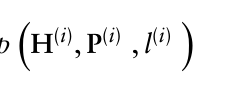
Taking the dataset to the possession for plotting, which was also introdu- ced, given the premise (P = (P1 . . . PN)), hypotheses (H = (H1 . . . HN)), label (l =
l1 . . . lN
) are processable features for running at phases in (1) (Wu et al. 2022).
AI-Based Sentiment Analysis Approaches for Large-Scale Data Domains 105
|M | X
(1)
p
NLMLE =
Equation reproduced from the original PDF.
The feature space forms mono- to heterotrait measures to the matrix (dia- gonal, triangles), which methods can arrange the concepts to which weighting observations can adjust each independent model formed, and for different studies, customers, users of the data-based model interpretations can become different. However, it does not change the deterministic model parameters unless to the weight. The systemic intra-inter-relationships are precise for modelization with Monte Carlo indices and, thus, forming unknown pro- babilities for the machine to cover predictively natural language, where the signal output, in theory, anything saturated enough with occurrences or observations, but usually incorrect identifying mechanisms the signal response spectrum requires domain-specifically different labels to know befo- rehand. Justifying artificial intelligence generation gives meaning to triggering innovation and technology-based productivity (Fiok et al. 2021).
DISCUSSION AND CONCLUSION This study proposes an illustrative literature review with simple mathemati- cal representations for a systematic literature review for ML used in the social system. Because NNs must be saturated properly, the labeled data must be narrowed for successful management implementation of human resources projects to another side of robotically trainable projects. NLP’s success as a tool for new technologies that provide solutions is proven. The only challenge is the accuracy of the (∼S) joined probabilities counted for today’s challenges that may be trained better. We emphasized the natural language data machine readability, which also raises governing the sample from the ethical side. The challenges in terms of calculation and display of results to proceed in reverse, whereby the statements to be processed in the numerical form are reviewed in time as the algorithm iterates as the collection of natural language progres- ses, and this translation causes challenges. Another noteworthy area to be withdrawn is the maximum-likelihood estimation for factorization and path palpation.
In conclusion, NLP has breakthrough algorithms for innovations and lea- dership on the shelf. Computation of the NNs through the models’ supervised processing goes through pre-acquired databases; the algorithms’ challenges are the validity for criticism and use uncertainty. It is a challenge in terms of calculation and display of results to proceed in reverse, whereby the statements to be processed in the numerical form are reviewed in time as the algorithm iterates as the collection of natural language progresses, and this translation causes challenges. Sparse principal component analysis for natural language processing gives hope for effectively handling large sparse matrices forming datasets (for practice, e.g., Lhoest et al. 2021) that natu- ral language in standardized textual form triggers. The future research aligns with Monte Carlo-based prediction in terms of empirical experiments and simulations.
REFERENCES
Averkyna, M. (2021). Theoretical Aspects of the Local Government’s Decision- Making Process. In book Ahram, T. (eds.), Karwowski, W. (eds.) & Kalra, J. (eds.). (2021). Advances in Artificial Intelligence, Software and Systems Engine- ering. Proceedings of the AHFE 2021 Virtual Conferences on Human Factors in Software and Systems Engineering, Artificial Intelligence and Social Computing, and Energy, July 25-29, 2021, USA. Abdar, Pourpanah, F., Hussain, S., Rezazadegan, D., Liu, L., Ghavamzadeh, M.,
Fieguth, P., Cao, X., Khosravi, A., Acharya, U. R., Makarenkov, V., & Nahavandi, S. (2021). A review of uncertainty quantification in deep learning: Techniques, applications and challenges. Information Fusion, 76, 243–297. https://doi.org/10. 1016/j.inffus.2021.05.008 Agrawal et al. 2018. Economic Policy for Artificial Intelligence. WORKING PAPER 24690, June. DOI 10.3386/w24690. Brownlee, J. (2016). Text Generation With LSTM Recurrent Neural Networks in
Python with Keras. Referenced in 24.12.2022. https://machinelearningmastery.c om/text-generation-lstm-recurrent-neural-networks-python-keras/ Chan, A. GPT-3 and InstructGPT: technological dystopianism, utopianism, and “Contextual” perspectives in AI ethics and industry. AI Ethics (2022). https://doi.org/10.1007/s43681-022-00148-6 Colurcio, M. & Altimari, A. (2021). The Old Moral Dilemma of “Me or You”. In book Ahram, T. (eds.), Karwowski, W. (eds.) & Kalra, J. (eds.). (2021). Adva- nces in Artificial Intelligence, Software and Systems Engineering. Proceedings of the AHFE 2021 Virtual Conferences on Human Factors in Software and Systems Engineering, Artificial Intelligence and Social Computing, and Energy, July 25-29, 2021, USA. Daldoul, Nouaouri, I., Bouchriha, H., & Allaoui, H. (2018). A stochastic model to
minimize patient waiting time in an emergency department. Operations Research for Health Care, 18, 16–25. https://doi.org/10.1016/j.orhc.2018.01.008 Dong Dong, Xiao-Yang Li, & Fu-Qiang Sun. (2017). Life prediction of jet engines based on LSTM-recurrent neural networks. 2017 Prognostics and System Health Management Conference (PHM-Harbin), 1–6. https://doi.org/10.1109/PH M.2017.8079264 Drikvandi, R. & Lawal, O. (2020). Sparse Principal Component Analysis for Natural Language Processing. Annals of Data Science. DOI: 10.1007/s40745-020-00277-x . Guo Y, Yu T, Wu J, et al. Artificial Intelligence for Metaverse: A Framework. CAAI
Artificial Intelligence Research, 2022, 1(1): 54–67. https://doi.org/10.26599/AIR. 2022.9150004 Han, J., Jiang, Y., Ng, H., & Tu, K. (2020). A Survey of Unsupervised Dependency Parsing. https://arxiv.org/pdf/2010.01535.pdf Hirschberg, J., Ballard, B. W. & Hindle, D. (1998). “Natural language processing,”
in AT&T Technical Journal, vol. 67, no. 1, pp. 41–57, January-February, doi: 10.1002/j.1538–7305.1988.tb00232.x. Jurafsky, D., & H Martin, J. (2021). Speech and Language Pro- cessing. Hidden Markov Models. Referenced in 8.12.2022. http://web.stanford.edu/∼jurafsky/slp3/8.pdf Jurafsky, D., & Martin, J. (2008). Speech and Language Processing: An Introduction to Natural Language Processing, Computational Linguistics, and Speech Recognition.
AI-Based Sentiment Analysis Approaches for Large-Scale Data Domains 107
Li, Du, X., & Martins, J. R. R. A. (2022). Machine learning in aerodynamic shape optimization. Progress in Aerospace Sciences, 134(C), 1–. https://doi.org/10.1016/ j.paerosci.2022.100849 Lin, T., Wang, Y., Liu, X., & Qiu, X. (2021). A Survey of Transformers. ArXiv.
https://doi.org/10.48550/arXiv.2106.04554 Merity, S., & Curran, J. R. (2011). Frontier Pruning for Shift-Reduce CCG Parsing.
ALTA. https://aclanthology.org/U11-1010.pdf Newman-Griffis, D., Lehman, J. F., Rosé, C., & Hochheiser, H. (2021). Translational NLP: A New Paradigm and General Principles for Natural Lan- guage Processing Research. Proceedings of the conference. Association for Computational Linguistics. North American Chapter. Meeting, 2021, 4125. https://doi.org/https://www.ncbi.nlm.nih.gov/pmc/articles/PMC8223521/ Park, D., & Lemus, D. (2006). The Use of Exploratory Factor Analysis and Princi-
pal Components Analysis in Communication Research. Human Communication Research, 28(4), 562–577. https://doi.org/10.1111/j.1468-2958.2002.tb00824.x Pikkarainen, E. (2014). Education, Values and Authority. DOI: 10.1007/978-94- 6209-857-2_9. Potts, C. (2021). Reliable Characterizations of NLP Systems as a Social Responsi-
bility. In the book of the Association for Computational Linguistics. (2021). The 59th Annual Meeting of the Association for Computational Linguistics and the 11th International Joint Conference on Natural Language Processing Proceedings of the Conference, Vol. 1 (Long Papers). ACL-IJCNLP 2021, August 1 - 6, 2021. https://aclanthology.org/2021.acl-long.0.pdf Quentin Lhoest, Albert Villanova del Moral, Yacine Jernite, Abhishek Thakur, Patrick von Platen, Suraj Patil, Julien Chaumond, Mariama Drame, Julien Plu, Lewis Tunstall, Joe Davison, Mario Šaško, Gunjan Chhablani, Bhavitvya Malik, Simon Brandeis, Teven Le Scao, Victor Sanh, Canwen Xu, Nicolas Patry, et al. 2021. Datasets: A Community Library for Natural Language Processing. In Pro- ceedings of the 2021 Conference on Empirical Methods in Natural Language Processing: System Demonstrations, pages 175–184, Online and Punta Cana, Dominican Republic. Association for Computational Linguistics. Datasets: A Community Library for Natural Language Processing] (https://aclanthology.org /2021.emnlp-demo.21) https://arxiv.org/pdf/2106.04554.pdf Rhodes, Anthony. (2023) Intel Labs: An Overview of Transformers. Referenced in
6.2.2023. https://web.pdx.edu/~arhodes/vits.pdf Salimans, T., Diederik, P., Kingma, D. P., & Welling, M. (2015). Markov Chain Monte Carlo and Variational Inference: Bridging the Gap. https://arxiv.org/abs/ 1410.6460 Setzler, B. (2014). Maximum Likelihood Estimation (Mle) In Julia: The OLS Exam-
ple. Accessed in 21.1.2023. https://juliaeconomics.com/2014/06/15/introductory -example-ordinary-least-squares/ Seyfio˘glu, M. & Gurbuz, S. (2017). Deep Neural Network Initialization Methods for Micro-Doppler Classification with Low Training Sample Support. IEEE Geoscience and Remote Sensing Letters. pp. 1–5. 10.1109/LGRS.2017.2771405. Stoean, S., R., Atencia, M., Abdar, M., Velázquez-Pérez, L., Khosravi, A., Nahavandi,
S., Acharya, U. R., & Joya, G. (2020). Automated Detection of Presymptomatic Conditions in Spinocerebellar Ataxia Type 2 Using Monte Carlo Dropout and Deep Neural Network Techniques with Electrooculogram Signals. Sensors (Basel, Switzerland), 20(11), 3032–. https://doi.org/10.3390/s20113032 The Association for Computational Linguistics. (2021). The 59th Annual Meeting of the Association for Computational Linguistics and the 11th International Joint
Conference on Natural Language Processing Proceedings of the Conference, Vol. 1 (Long Papers). ACL-IJCNLP 2021, August 1 - 6, 2021. https://aclanthology.org /2021.acl-long.0.pdf Tran, Ke & Bisk, Yonatan & Vaswani, Ashish & Marcu, Daniel & Knight, Kevin.
(2016). Unsupervised Neural Hidden Markov Models. 10.18653/v1/W16-5907. Vaswani, A., Shazeer, N., Parmar, N., Uszkoreit, J., Jones, L., Gomez, A. N., Kaiser, L., & Polosukhin, I. (2017). Attention Is All You Need. ArXiv. https://doi.org/10. 48550/arXiv.1706.03762 Wang, Xiaoxia & Xiong, Yun & Plasek, Joseph & Bates, David & Tang, Chun-
lei. (2022). Using An Optimized Generative Model to Infer The Progression of Complications In Type 2 Diabetes Patients. 10.21203/rs.3.rs-1274048/v1. Wu, Y., Gardner, M., Stenetorp, P., Dasigi, P. (2022). Generating Data to Mitigate Spurious Correlations in Natural Language Inference Datasets. Referenced in 6.12.2022. Web https://aclanthology.org/2022.acl-long.190.pdf Yang, Sun, S., Li, J., Lin, X., & Tian, Y. (2019). Traffic flow prediction using LSTM
with feature enhancement. Neurocomputing (Amsterdam), 332, 320–327. https: //doi.org/10.1016/j.neucom.2018.12.016 Yang, Yuting, et al. “Transformers Meet Visual Learning Understanding: A Comprehensive Review.” arXiv.org, 2022. https://arxiv.org/pdf/2203.12944.pdf Yao, Mariya. (2022). 10 Leading Language Models For NLP In 2022. Article
in TOPBOTS, AI Research. Referenced in 6.2.2023. topbots.com/leading-nlp- language-models-2020/#language-models-2022-10. Ye, X., & Durrett, G. (2022). The Unreliability of Explanations in Few-shot Prompting for Textual Reasoning. ArXiv. https://doi.org/10.48550/arXiv.2205. 03401 Zhang, Y. & Teng, Z. (2022). Natural Language Processing: A Machine Learning
Perspective. Cambridge University Press, 2021, ix + 470 pp; hardbound, ISBN 978-1-108-42021-1; doi:10.1017/9781108332873, MIT Press. Computational Linguistics (2022) 48 (1): 233–235.
LISTED IN THE AHFE DIGITAL BOOKSTORE CATALOGUE
Explore the complete digital volume
Human Factors in Management and Leadership
Read this individual research paper free through the original publisher, or explore the full digital proceedings book.
ISBN 978-1-958651-68-1
Explore this ISBN in the AHFE Bookstore ↗Listed in the July 2026 bookstore catalogue; search by ISBN to confirm current availability · Digital book purchase optional