Keisuke Kisu, Keiichi Watanuki, Kozawa Motohiro (2023). Evaluation of the Effect of Viewing Paintings with Different Objects and Methods of Expression on Stress. In: Affective and Pleasurable Design. AHFE Open Access, vol. 71, pp. 11–18. https://doi.org/10.54941/ahfe1003239
1 Graduate School of Science and Engineering, Saitama University 255 Shimo-okubo Sakura-ku, Saitama-shi, Saitama 338–8570 Japan ↗
2 Graduate School of Science and Engineering, Saitama University 255 Shimo-okubo Sakura-ku, Saitama-shi, Saitama 338–8570 Japan; Advanced Institute of Innovative Technology, Saitama University 255 Shimo-okubo Sakura-ku, Saitama-shi, Saitama 338–8570 Japan ↗
This study aimed to evaluate the effects of differences in objects and methods of expression when viewing paintings on stress reduction through the use of biometric measurements. Thirteen subjects were recruited for the experiment, and a multi-physiological sensor, and a tabletop eye-movement measurement device were used in the experiment. The skin conductance response (SCR) and LF/HF ratio were used as the evaluation indices. The results showed that the SCR and LF/HF ratio decreased significantly by viewing paintings irrespective of the objects or methods of expression. This suggests, that viewing paintings may reduce stress irrespactive of the objects or methods of expression. Additionally, the results suggest that even people without a high level of art expertise may be able to classify paintings appropriately in terms of abstraction.
In the present society, with the increasing need for extending healthy life expe- ctancy while reducing stress, art therapy is expected to become increasingly popular owing to its effectiveness in relieving stress and treating psychologi- cal disorders. Painting therapy, which involves stress treatment through active drawing activities, is has garnered increasing attention. However, because some people do not prefer drawing, it is important to examine how the appre- ciation of art in a passive manner can help relieve stress and to distinguish between drawing and appreciation depending on the person and the situation.
In a previous study that investigated the relationship between viewing pain- tings and stress, changes in mood before and after viewing a painting were evaluated using questionnaire, and a relaxing effect was observed regard- less of whether the impression was good or bad (Watanabe and Shimatani, 2004). This suggests that viewing paintings helps reduce stress. Furthermore, compared to the images of natural landscapes or artificial patterns, paintings
depicting natural landscapes have been reported to reduce stress (Taylor, 2006); this suggests that the stress reduction effect may differ depending on the content of the paintings. However, to date, no studies have evaluated the effects of differences in the motifs of paintings, such as landscapes, figure paintings and still lives, and differences in the methods of expression, such as Surreal and Cubist artwork, on stress. In this study, we conducted a pain- ting viewing experiment to evaluate the effects of differences in objects and methods of expression on stress reduction using biometric data and questi- onnaires. This study focused on psychological stressors, such as anger and anxiety.
PAINTING APPRECIATION EXPERIMENT To evaluate the effects of differences in the objects and methods of expression on stress reduction when viewing paintings, we conducted a painting viewing experiment using biometric measurements and questionnaires.
Selection of Paintings The paintings used in the experiment were selected from highly acclaimed western paintings published in the modern and contemporary periods. To avoid any influence on emotional responses due to familiarity with the pain- tings, we selected works that were not well known to the participants. Based on these conditions, 18 realistic figurative paintings (six each of landscape, figure painting and still life), imaginary figurative paintings (nine each of Surreal and Cubist artwork), and 18 abstract paintings (nine each of hot and cold abstractions) were selected to avoid bias among the painters and painting schools. Hot abstractions are lyrical abstractions that evoke warm images, whereas cold abstractions are geometric ones that evoke cold images. Additionally, we classified these paintings as imaginary figurative paintings that focus on the characteristics of Surreal artwork, such as compositions that could not exist in reality, and the process of composing a single painting from multiple angles, which is one of the characteristics of Cubist artwork.
Experimental Method
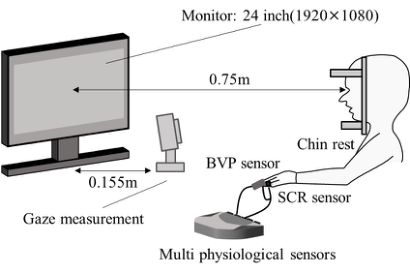
Figure 1 shows the environment used in the experiment. Biometric measure- ments were performed using a multi-physiological sensor (NeXus10 MARKII manufactured by MindMedia company) to measure the fingertip volume- tric pulse wave (BVP) and skin conductance response (SCR), and a tabletop eye-movement measuring device (EyeLink 1000PLUS manufactured by SR Research company) to measure eye movement. The experimenter was seated 0.75 m away from the monitor, with the BVP sensor attached to the middle finger of the non-dominant hand, and the SCR sensors were attached to the index and ring fingers of the experimenter. Moreover, the head was fixed on a chin rest to position it in front of the monitor.
Figure 2 illustrates the flow of one trial. The experiment was conducted on 13 male participants (22.3 ± 1.1 years old). This experiment was conducted
with the approval of the ethics committee on research involving human sub- jects at Saitama University (R4-E-22). Informed consent was obtained from participants.
The participants pre-rested for 1 min, viewed the painting for 1 min and 30s, and post-rested for 1 min, after which they answered a questionnaire regarding their impressions of the painting. This procedure was repeated six times for each set. At the beginning and end of the six sets, a mood que- stionnaire was administered using a shortened version of Profile of Mood States second edition (POMS2) for adults. The participants completed three trials, one trial each for realistic figurative painting, abstract painting, and imaginary figurative painting. In the painting appreciation task, participants viewed six realistic figurative paintings (with two landscapes, figure pain- tings, and still life), six imaginary figurative paintings (with three each of Surreal and Cubist artworks), and six abstract paintings (with three each of hot and cold abstractions), which were randomly selected from among the selected paintings. In the questionnaire regarding their impressions of the paintings, the participants were asked to rate a total of 13 items on a 7-point scale, consisting of 10 adjective pairs (Cho and Haraguchi, 2013), such as “beautiful - ugly” and “good - bad”, and three items, “realistic - abstract”, “thought about the painting - did not think about the painting”, and “concentrated - did not look at the painting”.
ANALYSIS METHOD Because autonomic nervous system activity is related to the state of stress, LF/HF and SCR calculated from the BVP were used as evaluation indices.
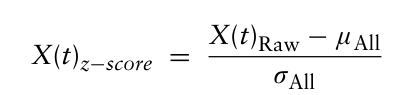
In the SCR evaluation, the Z-score was calculated by standardization using the following equation: (1)
Equation reproduced from the original PDF.
where X(t)Raw, µAll, and σAll are the original data, mean of the entire data, and standard deviation of the entire data set, respectively.
In this study, the t-test or Wilcoxon signed-rank test was used as a stati- stical test. t-test is a parametric method, while Wilcoxon signed-rank test is a nonparametric method, depending on the data to be tested. In the case of multiple group comparisons, Bonferroni’s multiple comparison method was used for correction.
RESULTS
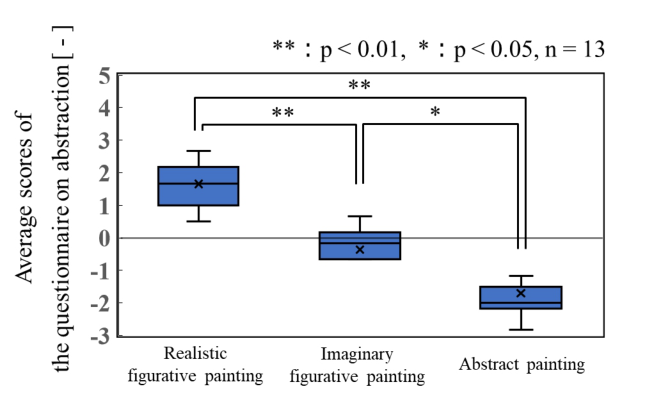
In the subjective evaluation, the means of the six sets of questionnaire items were compared for each trial, and the Bonferroni method was used to test for significant differences at the 1% level of significance between realistic and imaginary figurative paintings and between realistic figurative paintings and abstract paintings for the “realistic – abstract” item. P values were conside- red significant when there was a 5% level of significance between imaginary figurative paintings and abstract paintings. The results are shown in the box-and-whisker diagram in Figure 3. The scores were higher for realistic paintings, indicating that realistic figurative paintings were evaluated as the most realistic; furthermore, abstract paintings were evaluated as the most abstract, indicating that the abstractness of the paintings was appropriately classified.
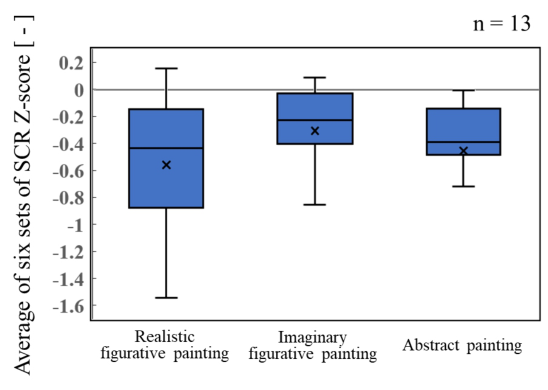
In the SCR evaluation, the difference between the mean during the task and the mean of the previous rest was considered for each set, and the means
Figure 3: Results of the abstraction questionnaire.
Evaluation of the Effect of Viewing Paintings 15
of the six sets were compared among the three trials. The results are shown in the box-and-whisker diagram in Figure 4. The Bonferroni method was used to test the results, and no significant differences were observed.
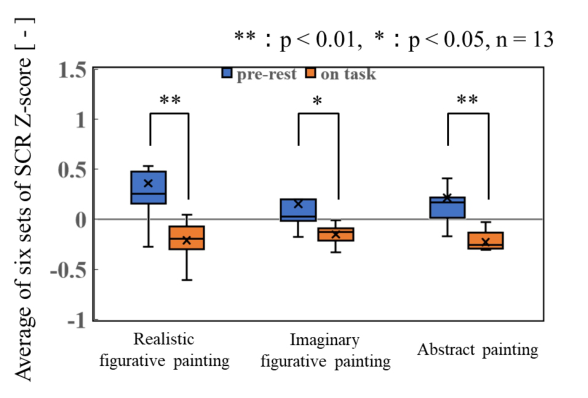
Additionally, we compared the means of the six sets of pre-rest conditions in each trial with the mean values during the task. The results are shown in the box-and-whisker diagram in Figure 5. The results of t-test revealed a significant decrease during the task at the 1% level for realistic figurative painting and abstract painting and at the 5% level for imaginary figurative painting.
In the LF/HF evaluation, to assess the effect of viewing paintings as in the SCR, we compared the means of six sets of pre-rest in each trial with
Figure 4: Comparison of SCR results for different objects and methods of expression.Figure 5: Comparison of pre-rest and on-task SCR on each trial.
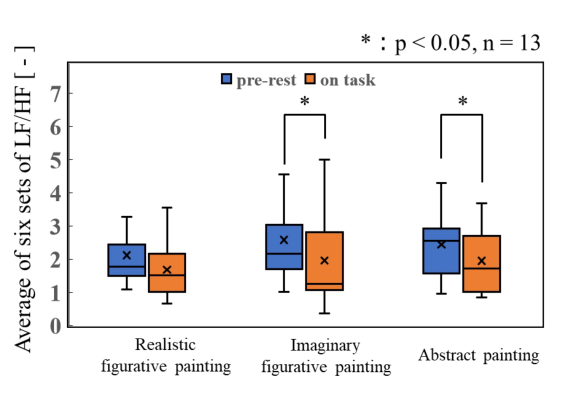
the means obtained during the task. The results are shown in the box-and- whisker diagram in Figure 6. The results of t-test show a significant decrease at the 5% level of significance for imaginary figurative painting and abstract painting.
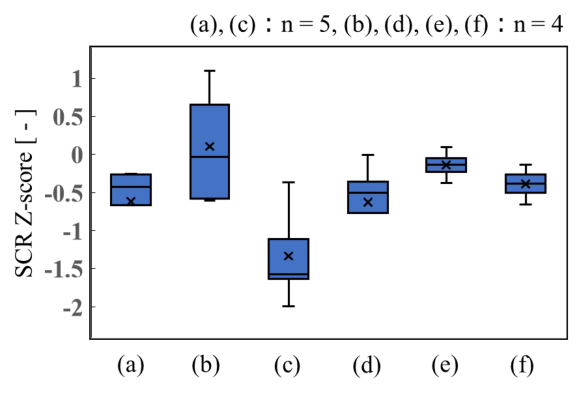
Figure 4 shows that realistic figurative paintings exhibit greater variability in SCR. Therefore, we studied the differences between the means obtained during the task and the mean of the previous rest for SCR and compared them for each painting. We found that the variation for landscapes was particularly large. The results are shown in the box-and-whisker diagram in Figure 7. The artists and titles of the landscape paintings used in this study are listed in Table 1.
Figure 6: Comparison of pre-rest and on-task LF/HF on each trial.Figure 7: Comparison of SCR for landscape.
Evaluation of the Effect of Viewing Paintings 17
Table 1. Author and title of landscape paintings used in the experiment.
Table available in the original PDF paper.
Artist Title (a) Alfred Sisley First Snow at Veneux-Nadon (b) Ernst Ludwig Kirchner Dance Hall Bellevue [obverse] (c) Odilon Redon Breton Village (d) Claude Monet Argenteuil (e) Jean-Baptiste-Camille Corot The Forest of Coubron (f) Vincent van Gogh Flower Beds in Holland
DISCUSSION
Figure 3 shows that the impression of abstraction differs significantly betw- een realistic and imaginary figurative paintings for the same figurative pain- ting. Although the participants in this study were not highly specialized in the field of art, they may have been able to appropriately classify paintings in terms of abstraction. Therefore, it is necessary to examine the effects of subjective classifications, such as differences in the impression of abstra- ction, instead of objective classifications, such as differences in the objects or methods of expression, on stress reduction.
No significant differences were observed among the different objects and methods of expression, as shown in Figure 4. This suggests that differences in the objects and methods of expression may have little effect on stress redu- ction. However, it is possible that, this result was influenced by variations in realistic figurative paintings. Therefore, we compared the results of each pain- ting within the realistic figurative painting and found that the variation was large within the landscape. Figure 7 (b) shows a different tendency from that of the other landscapes. As shown in Table 1, most of the landscapes used in this study are classified as Impressionist paintings, whereas the painting in (b) is classified as Expressionist. As previously mentioned, in this study, realistic figurative paintings (landscape, figure painting and still life) were selected as paintings that differed in terms of their objects of expression, whereas imagi- nary figurative paintings (Surreal and Cubist artwork) and abstract paintings (hot and cold abstraction) were selected as paintings that differed in terms of their methods of expression. However, in reality, there are other catego- ries within the categories of figure painting, still life, and landscape, such as Impressionist and Expressionist landscapes. Because this classification by the methods of expression influences the overall impression of the painting, it can be inferred that the differences in the methods of expression caused the participants to have different impressions of the painting, resulting in a large variation among realistic figurative paintings.
Focusing on the effect of viewing paintings on stress, Figures 5 and 6 show that both SCR and LF/HF decreased significantly during the task. This sug- gests that viewing paintings may reduce stress regardless of the objects or methods of expression. This result is similar to that of a previous study (Wata- nabe and Shimatani, 2004). However, in a new finding, the objective indices of SCR and LF/HF for all the expressive objects and methods suggest that
viewing paintings may reduce stress, confirming that viewing paintings is an effective form of art therapy.
CONCLUSION
In this study, we conducted an experiment using biometric measurements and questionnaires to evaluate the effects of different objects and methods of expression on stress reduction when viewing paintings. These results sug- gest that differences in the objects and methods of expression may have little effect on stress levels. Additionally, it was suggested that the appreciation of paintings may have a stress-reducing effect, regardless of the objects or methods of expression. In the future, we will examine the objective and sub- jective classification of paintings, as well as the influence of location, such as museums and VR spaces, on stress reduction.
REFERENCES
Leder, H., Belke, B., Oeberst, A., Augustin, D. (2004) A model of aesthetic appreciation and aesthetic judgments, British Journal of Psychology, Volume 95 No. 4. pp. 489–508. Taylor, R. P. (2006) Reduction of Physiological Stress Using Fractal Artand Archite-
cture, Leonardo, Volume 39 No. 3. pp. 245–251. Cho, K., Haraguchi, M. (2013) Scale construction of adjective pairs onthe research of impression of paintings, Kurume University Psychological Research, No. 12. pp. 81–90. Watanabe, A., Shimatani, M. (2004) Mental Effect of Picture appreciation-from an
index of the change of feeling, Annual Bulletin of Institute of Psychological Studies, Volume. 7. pp. 39–47.
LISTED IN THE AHFE DIGITAL BOOKSTORE CATALOGUE
Explore the complete digital volume
Affective and Pleasurable Design
Read this individual research paper free through the original publisher, or explore the full digital proceedings book.
ISBN 978-1-958651-47-6
Explore this ISBN in the AHFE Bookstore ↗Listed in the July 2026 bookstore catalogue; search by ISBN to confirm current availability · Digital book purchase optional