Ester Iacono, Alberto Cirulli, Francesca Tosi (2023). Ergonomics and Design: development of a “next generation” NICU portable ventilator. In: Ergonomics In Design. AHFE Open Access, vol. 77, pp. 521–535. https://doi.org/10.54941/ahfe1003412
Nowadays, research and innovation in the pediatric field represent both a challenge and a great development opportunity. The emergence of clinical problems and the convergence of scientific knowledge and multidisciplinary approaches allows us to offer innovative solutions to improve pediatric care. In particular, the new digital technologies represent an important factor of innovation in the field of health care and, above all, in delicate and complex contexts such as Neonatal Intensive Care Units (NICU), where due to the vulnerability of young patients it is necessary to use of ever more straightforward and more efficient care tools.However, in the pediatric field and, above all, in Neonatology, cases of errors in healthcare are increasingly frequent; it is estimated that a child is three times more exposed than an adult to potentially harmful situations of Medication Error because the level of assistance required is higher and the equipment required is more complex. In particular, one of the most common causes of access to the Neonatal Intensive Care Unit is the respiratory difficulty which requires specific mechanical ventilation treatment, which can involve human errors and risks related to its use with possible physiological complications.Sometimes, human error can be attributed to the excessive complexity of using the products/services or the need for more materials suitable for the personnel needs. In the neonatal field, there are frequent problems related to usability, ergonomic characteristics, software and hardware interfaces, the human factor, and the context and methods of use of medical devices that lead to errors.The general objective of this study, conducted at the Meyer Children's Hospital in Florence, was to improve not only the condition of the well-being of the young patient but also the working conditions of the medical and healthcare staff, promoting interaction, simplifying the actions and minimizing the possibility of error in use.This paper reports the main results of the research achieved thanks to the application of the evaluation methods of usability and safety of use typical of Human-Centered Design. These have made it possible to pay attention to the needs of users who interact with the medical system (patients, health professionals) and the different skills of the professionals involved in designing and providing services.Through field surveys and discussions with experts and healthcare professionals (user observation, semi-structured interviews, questionnaires, etc.) conducted at Meyer Children's Hospital in Florence, it was possible to collect data on current critical issues. In particular, the survey made it possible to understand how the user interacts with existing fans and how much these can lead to problems regarding the complexity of assembly, the difficulty of reading the physical and digital interface, the presence of numerous instruments during transport and the issues relating to the organization of the treatment phases.The analysis of the user and the evaluation of the criticality of the existing products/systems have therefore allowed the identification of possible scenarios and intervention solutions, defining the requirements of the new ventilation system. From the results obtained, it was possible to configure new solutions, which gave rise to the design of a new generation lung ventilator for NICU to improve ventilation assistance operations, reduce user errors and make the product versatile and easy to use both in the ward and during neonatal protected transport.
Nowadays, research and innovation in the pediatric field represent both a challenge and a great development opportunity. The emergence of clinical problems and the convergence of scientific knowledge and multidisciplinary approaches offer innovative solutions to improve pediatric care. In particular, the new digital technologies represent an important factor of innovation in the field of health care and, above all, in delicate and complex contexts such as Neonatal Intensive Care Units (NICU), where due to the vulnerability of young patients it is necessary to use of ever more straightforward and more efficient care tools.
Therefore, the role of Healthcare Design is essential by paying attention to the needs of users who come into contact with the medical system (patients, healthcare professionals, and family members) and to the different skills of the professionals involved in the design and provision of services, allows to identify possible scenarios and innovative solutions (Tosi and Rinaldi, 2015;
Iacono et al., 2019). Therefore, the designer’s task is to imagine technological and digital solutions capable of improving people’s quality of life, as well as intervention solutions capable of simplifying the various and numerous areas of healthcare.
In this context, there are many opportunities for development and innova- tion, as the problems associated with risks in using highly complex products and equipment require a design response that guarantees the safety of the patient and healthcare personnel. The goal must be to predict the risk and eliminate any possible errors. Therefore, the Ergonomics for Design appro- ach is fundamental in the healthcare sector as it guarantees a wide-ranging design, combining the principles of Human Centered Design with the man- machine-environment interface system and the issue of Risk Quality and Efficiency Management and Assessment Product Design. The complexity of care systems and flows, from which the incorrect use of products/services and the incorrect reading and interpretation of digital interfaces and manu- als derive, can pose risks to the patient’s health. This paper reports the main research results achieved thanks to applying the usability and safety of use evaluation methods of Human-Centered Design and User Experience. The purpose of this study, conducted at the Meyer Children’s Hospital in Flore- nce, was to improve not only the well-being of the young patient but also the working conditions of the medical and healthcare staff, promoting inte- raction, simplifying actions necessary and minimizing the possibility of error in use.
BACKGROUND
As described in the literature of recent years, a very topical topic is the inte- rest in problems related to risks and damages in healthcare settings (Tartaglia et al., 2012). The theme of medical errors is part of the broader issue of cli- nical risk in healthcare. In fact, according to two researchers at the Johns Hopkins University School of Medicine, medical errors are now the third leading cause of death in the United States of America after the onset of cancer and cardiovascular disease (Makary and Daniel, 2016). The Institute of Medicine (IOM) notes that errors have decreased in industries such as avi- ation and nuclear power plants thanks to the application of human factors engineering, a discipline that designs software, devices, systems, and policies to increase the efficiency of workers and decrease human errors. Conversely, healthcare lags in reporting and error reduction (Brixey et al., 2002). The relevance of this topic is especially notable in the pediatric field and in Neo- natology in particular, where it is estimated that a child is exposed three times more than an adult to potentially harmful cases of Medication Error because the level of care required is higher than others; in fact, the instrumentation and intensive cares required are more complex (Kaushal et al., 2001).
Therefore, the problematic nature of the assistance provided in the Neo- natal Intensive Care Units and the pathophysiological characteristics of the babies significantly increase the risk of errors and adverse events compared to groups of patients of different ages. In particular, among the most com- mon causes of access to the NICU are respiratory diseases which continue to
Ergonomics and Design: Development of a “Next Generation” NICU Portable Ventilator 523
be one of the main factors of neonatal mortality (Jacob et al., 2015; Dyer, 2019). More than 60% of deficient birth weight infants develop oxygen- dependent bronchopulmonary dysplasia (BPD) (Klingenberg et al., 2017). However, despite developing and using sophisticated conventional ventila- tion, some newborns cannot be adequately ventilated, as immature lungs and underdeveloped respiration require extremely gentle ventilation and adva- nced technologies. Whatever the ventilation strategy, the goal is to support the respiratory system of the premature infant while avoiding any damage to the lungs or brain. For example, mechanical ventilation is potentially life- saving for neonatal patients with respiratory insufficiency (Klingenberg et al., 2017). However, receiving this treatment may involve risks related to using the medical device and the human error associated with it or possible physio- logical complications such as infections and lung damage. Most accidents in organisations such as healthcare are generated not only by the human and organisational-management component but also by technology-related factors and the poor design of products and systems. In addition to the dyna- mic error of the medical staff, there are also latent errors, i.e. risky situations deriving from the organisation of the hospital and the wards, from structural or equipment problems. Numerous human errors in the literature are related to using specific medical devices (Ward and Clarkson, 2004; Derrico et al., 2009; Drews, 2012). Numerous research shows that the frequency of dan- gers deriving from medical devices attributable to errors of use far exceeds those following device failures (Brixey et al., 2002). The Center for Devices and Radiological Health (CDRH) reported that a lack of attention to human factors during product development could lead to errors resulting in patient injury or death. Often due to poor design of the devices and environmental factors, we are led to make mistakes. Sometimes, human error can be attribu- ted to the excessive complexity of using the products/services or the need for more materials suitable for the personnel needs. In the neonatal field, there are frequent cases in which problems related to usability, ergonomic characte- ristics, software and hardware interfaces, the human factor, and the context and methods of use of medical devices lead to errors (Iacono et al., 2019). All this requires a great reflection on the importance of a design capable of rethinking the dynamics of the use of the devices through the analysis of the context, the phases of care and the problems related to them to be able to mitigate these risks and trace an innovative path in the field of pulmonary ventilation. For all these reasons, which also emerged within this research, a rethinking of the entire neonatal and pediatric ventilatory assistance system is urgently needed, from ventilation in intensive care to its use during intra- hospital and extra-hospital transport, analysing the complex needs and issues of the entire workflow.
METHODS
The research, conducted at the Meyer Children’s Hospital in Florence, made use of the theoretical and methodological tools of Ergonomics for Design (Tosi, 2020), specifically those of Human-Centered Design (ISO 9241-210: 2019) and the user experience (Garrett, 2010). These tools make it possible
to analyse, evaluate and control complexity by protecting the centrality of the human factor and counteracting possible “adverse effects” resulting from incorrect or improper use on health, safety and performance. Furthermore, by including information collected on and with people in real-life and work contexts, they allow the definition of design solutions. Developed over seve- ral phases, the study envisaged field investigations and the involvement of various figures (neonatologists, paediatricians, neonatal nurses, respiratory therapists) who enter into a relationship with the Neonatal Protected Tran- sport service and, in particular, who use lung ventilators, focusing on their needs and expectations, but also on the skills and points of view of the pro- fessionals involved in planning and designing this product/service. Precisely, the research followed the following operational phases: Phase 1: User identification; Phase 2: Evaluation of current neonatal ventilators; Phase 3: Data analysis; Phase 4: Development of design concepts and intervention scenarios.
Phase 1: User Identification The first research phase allowed the identification of the users involved during the care service, from the beneficiary user (preterm and/or patholo- gical newborn) to the primary users (medical staff: neonatologists, paedia- tricians, neonatal nurses, respiratory therapists), passing for secondary users (volunteer staff, social and health workers), up to indirect users (parents). Furthermore, this phase made it possible to thoroughly analyse their roles, objectives and activities in interacting with the product/service, highlighting the most relevant aspects that emerged from the analysis of the use of the lung ventilator. In particular, it was possible to determine the main activities per- formed by each user: assessment and setting of the necessary ventilation mode (neonatologists); monitoring of respiratory parameters and care of the young patient (paediatricians); drug administration, organisation and setting up of the mechanical ventilator (neonatologist nurses); evaluation and analysis of oxygen levels data to initiate respiratory therapies (respiratory therapists); initiation of treatments that improve the connections and bond between the child and his parents.
Phase 2: Evaluation of Current Neonatal Ventilators The next phase involved evaluating the neonatal ventilation service and the equipment used in the ward and during transport, analysing the current neonatal ventilators and verifying their usability.
The evaluation methods used were those that envisaged the involvement of users (User Trials), such as: i) Direct observations (Stanton et al., 2014) of users during the perfor- mance of neonatal ventilation operations in the actual context. It was possible to film, photograph and write down every action performed by the healthcare personnel involved to obtain helpful information for redesigning the medical device.
Ergonomics and Design: Development of a “Next Generation” NICU Portable Ventilator 525
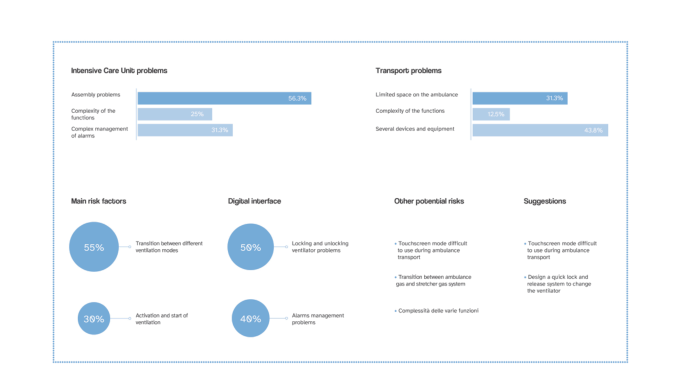
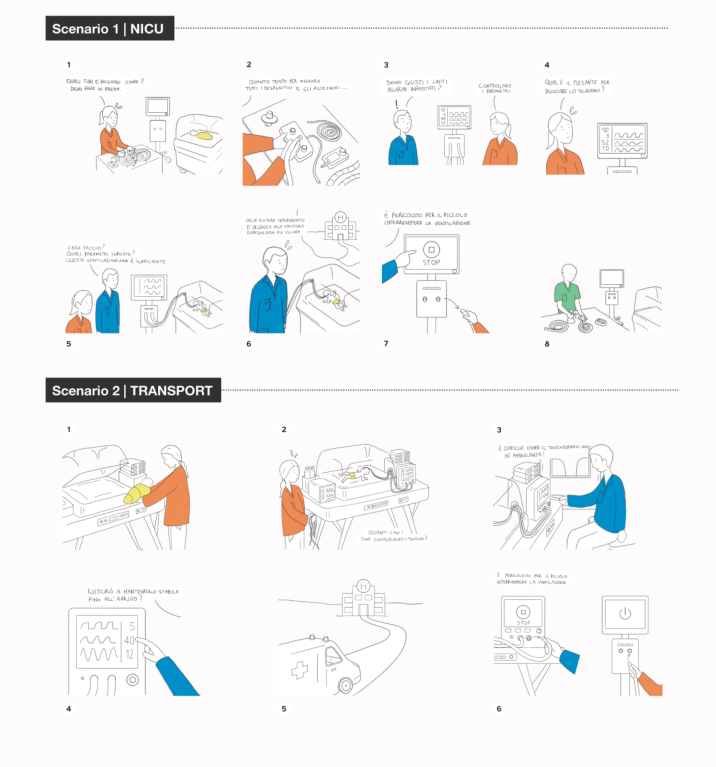
ii) Semi-structured interviews (Wilson and Sharples, 2015) submitted to experts and professional figures, which allowed to enrich the analysis of the activities with further details and to bring out critical issues and unexpressed needs that otherwise would not have emerged. The aim was to obtain helpful information on the user-product/service interaction methods and to identify problems of use and ideas for innovation. Questionnaires (Wilson and Sharples, 2015), elaborated by the research team to evaluate the level of satisfaction and the expectations/opinions of the different categories of users. Therefore, the choice of the refere- nce sample (7 neonatologists and 9 nurses), the data collection method and the evaluation scale to adopt were important. The questionnai- res included closed questions on objective events and behaviours which provided answers on a 5-point Likert scale, and open questions, which asked for an opinion on some aspects of the experience lived in NICU or during transport. By administering predetermined items, it was possible to obtain significant statistical data (see Figure 1). iii) Scenario construction (Hanington and Martin, 2019; Manzini and Jégou, 2004), workflow (Nikookar et al., 2013) and Task Analysis (Tosi, 2020) developed for two different usage scenarios (use in the ward and during transport) were fundamental support tools in the analysis and design phase. In particular, thanks to the construction of personas and scenarios, it was possible to represent the actual situation through sequences (storyboards) that narrate how the operators carry out their activities in NICU and during transport (see Figure 2). The development of the scenario and the workflows, together with the definition of the Task Analysis, have made it possible to accurately analyse the activities carried out by the users involved in the care process to evaluate their objectives and the operational phases of their specific tasks by observing what the users think and they rehearse before, during, and after each
Figure 1: Summary of statistical data deriving from the administration of questionnai- res to healthcare personnel.Figure 2: Development of two different use scenarios (in NICU and during transport).
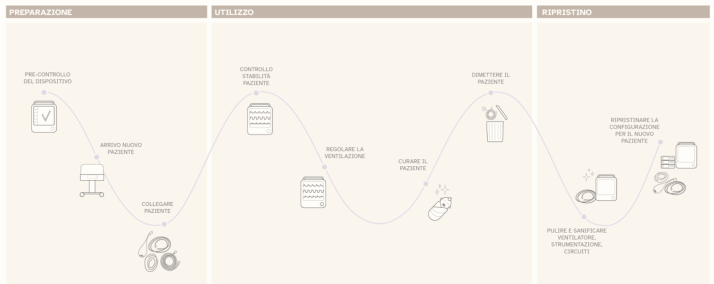
task (Jonassen et al., 1998). For example, the objectives and activities in neonatal ventilation have been summarised in 3 steps: preparation, use, and recovery (see Figure 3). Identifying and describing these tasks, aimed at achieving the users’ objectives, has allowed the recognition of some problems relating to the interaction with the product that affe- cts the workflow, the requirements requested for the product and the possible design solutions. iv) User journey maps (Hanington and Martin, 2019) allowed the visual narration of users’ actions, feelings, and perceptions during interaction with the product/service. This process has made it possible to provide a holistic view of the user experience and reveal weaknesses and new opportunities to improve the user experience.
Phase 3: Data Analysis The data collected in the previous phase was fundamental for assessing the criticalities and defining the requirements. Grasping the correct requirements
Ergonomics and Design: Development of a “Next Generation” NICU Portable Ventilator 527
Figure 3: Summary scheme of the Task Analysis relating to the 3 phases of use of the neonatal ventilator in the NICU.
that lead to problem-solving is the main difficulty encountered during the design process (Norman, 2013). Thus, data collection aimed to obtain sufficient, relevant, and appropriate information to establish robust requi- rements (Preece et al., 2015). The phase following the data collection made it possible to analyse all the material derived from interviews, question- naires and direct observations. These data were summarised and reworked within maps and summary diagrams to identify and highlight the analy- sed system’s critical areas and requirements. Furthermore, to facilitate the reading of the data acquired through the questionnaires, graphs have been created which show the percentages of the answers given by the various users.
Phase 4: Development of Design Concepts and Intervention Scenarios The last phase of this research has allowed, based on the problems that emerged in the previous stages of analysis and evaluation of the current neonatal ventilators, the formulation and development of new design solutions.
Therefore, using design-orienting scenarios (Manzini and Jégou, 2004) was fundamental for elaborating innovative visions and proposals centred on the needs of primary, secondary and indirect users. This tool made it possible to represent the team’s strategic vision regarding the possibility of developing a one-generation lung ventilator for the Neonatal Intensive Care Unit.
RESULTS
Given the complexity and breadth of the research content, only some of the most significant findings from the study have been reported in this paper. Therefore, the results of the main phases described in the previous paragraph are reported here.
Assessment and Analysis of Critical Issues In the data analysis phase, it was possible to find helpful information to understand how current fans interface with users and how much these, while responding to needs, can lead to problems during use. In general, the following critical issues emerged in the use of the fan within the NICU:
difficulty assembling components in the different ventilation modalities;
difficulty switching between different ventilation modes;
shortage/lack of fittings and unshared replacement and upgrades;
possibility of an error during the assembly phase of the Exp valve;
production of too much condensation by the humidifiers;
difficulty recognizing the lock/unlock commands;
difficulty in managing alarms.
On the other hand, concerning the use of the fan during transport, further critical issues emerged, such as:
difficulty of use due to the arrangement of devices and additional instru- mentation;
weight and bulk;
excessive complexity for the needs of the TPN;
challenging to use, especially in danger; ambulance/helicopter, lift;
touch screen is sometimes not very usable in the ambulance;
little space in the ambulance to interact effectively with the fan;
Need to switch from ambulance gas to cradle gas.
Specifically, critical issues related to the various sensors’ connection ports, the graphic interface’s usability and the different ventilation modes were identified. Criticalities related to the connections:
redundancy of connection ports (many not used);
problematic legibility of the icons;
complex recognition of the connection ports;
lack of differentiation of door types;
lack of hierarchy in the layout;
ineffective positioning (on multiple sides);
non-optimal arrangement (messy).
Criticalities related to the graphical interface:
lack of a hierarchy of information;
complicated reading ventilation graphs;
complex recognition of selectable keys;
invisible ventilation graphs;
failure to optimize the spaces present;
organization of sections ineffective;
colours that limit legibility and contrast.
Criticalities related to ventilation with a humidifier:
specific device for setting and monitoring;
Ergonomics and Design: Development of a “Next Generation” NICU Portable Ventilator 529
long assembly times;
numerous components.
Ventilation issues iNO (nitric oxide):
specific device for setting and monitoring;
not very practical to use;
inability to detect ambient gas (dangerous for users).
Overall, therefore, various problems are encountered which concern, for example, the assembly and assembly phase of the multiple components neces- sary for ventilation, which differ for each specific ventilation mode; moreover, there are problems with the portability of the product, difficulties in using the physical and digital interface, issues in displaying the information and in setting the necessary parameters and settings; as well as the presence of numerous instruments during transport and the difficulties relating to the organization of the treatment phases. Furthermore, problems have emerged concerning actions considered by healthcare personnel to be potentially dan- gerous for the patient, such as the passage between the different ventilation modes and, in particular, the patient’s disconnection if the need arises for transport inside or outside the hospital. All these factors increase the possi- bility of incurring accidental errors, potentially harmful to the patient and the healthcare staff. Identifying these problems, which results in a low level of satisfaction on the part of users, has therefore made it possible to identify design solutions, discussed with the experts in the sector involved (biomedical engineers, doctors and healthcare professionals).
Design Solutions The critical issues that emerged through the analysis of the data received in the study have allowed the configuration of new solutions that aim to sim- plify each phase of patient care. In particular, thanks to the development of a “new generation” transport lung ventilator, it has been possible to improve the operations of ventilatory assistance, reducing the possibility of error and making the product versatile and easy to use in NICU and during transport.
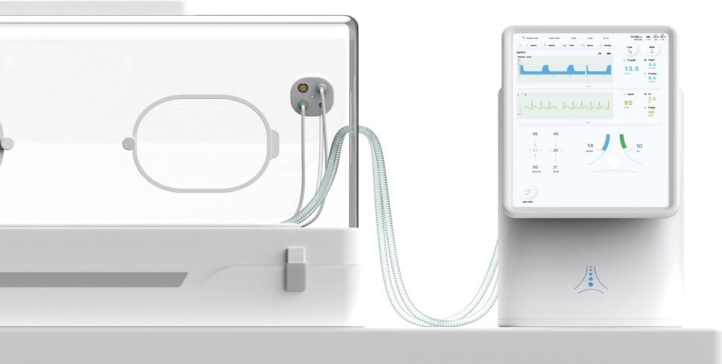
Andy, the new medical device, makes it possible to reformulate the dyna- mics of ventilatory assistance, reducing risk factors and allowing continuous use without disconnecting the patient and replacing the lung ventilator when passing from one context to another (from NICU to transport).
The project of the new fan has the following objectives:
development of a single product that can be used in NICU and during transport;
simplification of the maintenance and replacement phases in the event of a fault;
reduction in the number of devices used during transport;
standardization of housing space during transport;
simplification of pipe and cable management;
facilitation of switching to different ventilation modes without any discon- nection of the patient;
development of an intuitive and easily understandable digital interface;
versatility of use based on needs and the environment of use.
The development of this new product will determine benefits for the workflow, the patient, and the entire hospital.
Workflow benefits:
ventilator always ready for transport
reduction of preparation and assembly times
error reduction and ease of use
orderly and less crowded environment Benefits for the patient:
transport without interruption of ventilation
orderly and less crowded environment Benefits of the hospital structure:
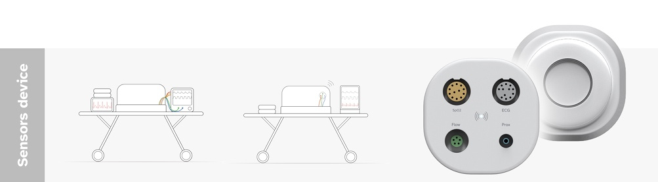
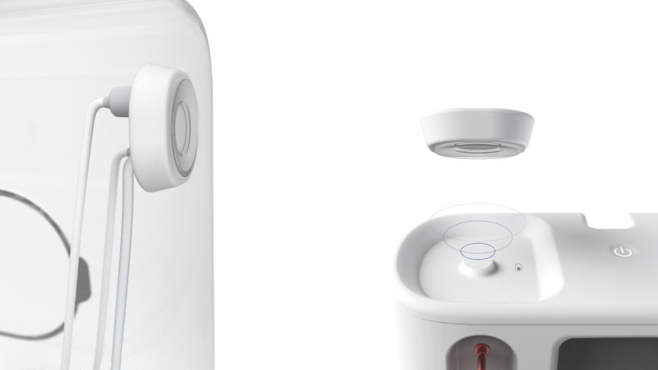
optimization of resources for maintenance and healthcare personnel trai- ning (single ventilator) Therefore, the key concepts that guided the design were: a) Morphology and physical interface of the new device were redesigned to make the operations of ventilatory assistance simpler, faster and more effective, reducing the possibility of incurring errors considered fatal for the patient. Furthermore, to simplify the care workflow and reduce the excessive number of devices used (the humidifier and the nitric oxide delivery device (iNo)), especially in emergencies and during transport, the new ventilator incorporates it contains various devices that are currently complex, difficult to use and located in a dysfunctional way within a high-risk environment. This integration within the device makes the assembly/assembly of the com- ponents and monitoring of the fan parameters simple and intuitive without additional control devices. Furthermore, to solve the connection problems of the sensors, which have redundant ports that are difficult to recognize and position, a small device has been developed capable of accommodating all the sensors necessary for detecting the parameters. This device, therefore, guaran- tees immediate identification of the connection ports and, thanks to wireless technology, greater flexibility of use. Furthermore, when positioned inside the incubator, it reduces the excessive concentration of cables connecting the patient to the ventilator, simplifying an already quite complex system (see Figures 4-5).
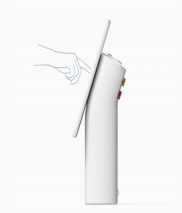
b) More intuitive and more straightforward digital interface through a reclining and removable tablet that can be easily disconnected from the ven- tilator, guaranteeing flexibility during reading and modifying the ventilator parameters (see Figure 6).
The level of complexity and the user’s cognitive load has been minimized by keeping only the helpful information for the activity being performed.
Therefore, the aim is to summarize the information in easily interpretable graphic displays to speed up the operations of the medical staff, facilitating them in the evaluations of care. Another critical factor that has guided the
Ergonomics and Design: Development of a “Next Generation” NICU Portable Ventilator 531
Figure 4: Streamline your care workflow and reduce excessive device usage.Figure 5: Wireless sensors device, which can be positioned inside the incubator, in order to reduce the excessive concentration of cables connecting the patient to the ventilator.
creation of an effective digital interface concerns the reduction of visual stress through the exact use of colours and contrast, the legibility of words and numbers, the clarity of the icons and the correct signalling of the buttons. To differentiate the selectable buttons from the data that can only be viewed,
Figure 6: Reclining and removable tablet to facilitate the reading and modification of the ventilator parameters.
the so-called “neomorphic” style was used, which simulates extruded ele- ments, giving a touch interface at least a visual physicality, making the user experience more pleasant and tangible.
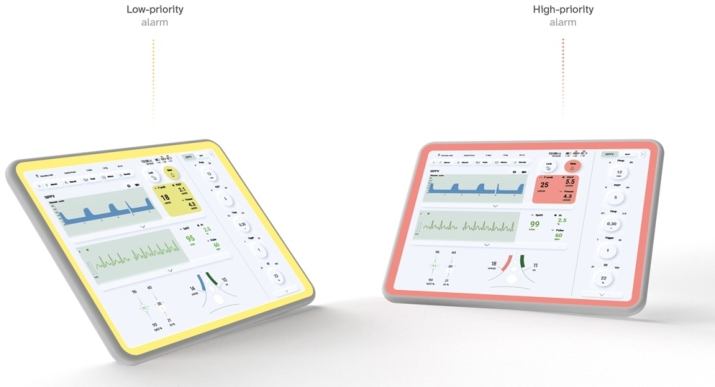
Furthermore, through various visual and audible feedbacks (yellow: low priority; red: high priority), the ventilator informs the user of the detected problem, limiting the margin of error (see Figure 7).
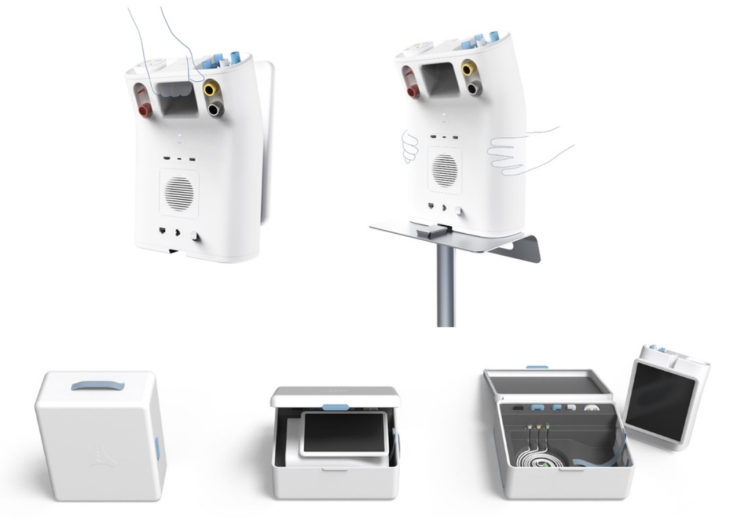
c) Versatility and portability were the elements that characterized the new product, which can be used both in the NICU and during transport. The fan is extremely compact and light, thanks to the choice of “Tecapro MT”, a high-performance biocompatible material with excellent mechanical resista- nce. Furthermore, a practical handle makes the ventilator easily transportable and manoeuvrable by the medical staff. On the other hand, pushing it along an anchor base is necessary to lock it firmly to a surface, guaranteeing its fixing and facilitating a simple and quick release. For transport, a bag with housings has also been prepared to keep the ventilator and all the components and accessories (see Figure 8).
Figure 7: Digital interface of the new ventilator, which communicates the detected problem to the user through visual and audio feedback.
Ergonomics and Design: Development of a “Next Generation” NICU Portable Ventilator 533
Figure 8: Product versatility and portability.
CONCLUSION
The results achieved and reported in this article have demonstrated the poten- tial and the advantages of applying the methodologies of Ergonomics for Design and Human-Centred Design for the design of solutions aimed at the healthcare world. Furthermore, the user analysis and the evaluation of the cri- tical issues of the existing products/systems have allowed the identification of possible scenarios and intervention solutions, defining the requirements of the new ventilation system.
Overall, the research has made it possible to propose the redesign of the neonatal ventilator, proposing an entirely new vision of the device that allows for improvement not only in the morphology but, above all, the usability.
Naturally, future developments could lead to the prototyping of this device with the possibility of further improving it and testing it with users.
Currently, on the market, different types of fans perform specific functions and subject the child to the stress of being disconnected during the transition from one ventilator to another. The proposed scenario, on the other hand, places the new ventilator as the solution to actions that are currently conside- red extremely dangerous for the patient, reducing the use error deriving from the use of numerous ventilators with different characteristics and interfaces and making the product versatile and easy to use both in NICU and during neonatal protected transport (see Figure 9).
Figure 9: Andy - NICU portable ventilator.
ACKNOWLEDGMENT
The authors would like to thank all the medical staff of the Meyer Children’s Hospital in Florence who contributed in the analysis phase to identifying the critical issues and formulating new design solutions. In particular, thanks go to Claudio Mondovecchio, Marco Moroni and Maurizio Ginepro for their availability and valuable suggestions in all phases of the development of the research work.
AUTHOR CONTRIBUTIONS Conceptualization, E.I., F.T. ; methodology, E.I., A.C.; infographics, rende- ring and data curation, A.C.; writin–original draft preparation, E.I., A.C.; writing–review and editing, E.I., A.C., F.T. Supervision, F.T and E.I. All authors have read and agreed to the published version of the manuscript.
REFERENCES
Brixey, J., Johnson, T. R., and Zhang, J. (2002). “Evaluating a medical error taxonomy”, in: Proceedings of the AMIA Symposium. American Medical Informatics Association, p. 71. Derrico, P., Ritrovato, M., and Faggiano, F. (2009). Il rischio tecnologico in
sanità, PRATICA MEDICA & ASPETTI LEGALI, 3(1), 9–15. Drews, F. A. (2012). “Human error in health care”, in: Handbook of human factors and ergonomics in health care and patient safety, second edition, Carayon, P. (Eds), CRC Press, Taylor and Francis group, Boca Raton, FL, pp. 323–340. Dyer, J. (2019). Neonatal respiratory distress syndrome: tackling a worldwide
problem. PHARMACY AND THERAPEUTICS, 44(1), 12. Garrett, J. (2010). The elements of user experience design. NEW RIDERS: BERKLEY, CALIFORNIA. Hanington, B., and Martin, B. (2019). Universal methods of design expanded and
revised: 125 Ways to research complex problems, develop innovative ideas, and design effective solutions. Rockport publishers.
Ergonomics and Design: Development of a “Next Generation” NICU Portable Ventilator 535
Iacono, E., Tosi, F., and Rinaldi, A. (2019). “Ergonomics and Design: Neonatal Transport Incubator for Premature or Pathological Newborn Transportation”, in: Proceedings of the 20th Congress of the International Ergonomics Association (IEA 2018) Volume VII: Ergonomics in Design, Design for All, Activity Theories for Work Analysis and Design, Affective Design 20 (pp. 1259–1273). Springer International Publishing. ISO 9241–210 (2019). Ergonomics of human-system interaction - Part 210: Human-
centred design for interactive systems. Ginevra: International Standard Organiza- tion (ISO). Jacob, J., Kamitsuka, M., Clark, R. H., Kelleher, A. S., and Spitzer, A. R. (2015).
Etiologies of NICU deaths. PEDIATRICS, 135(1), e59–e65. Jonassen, D. H., Tessmer, M., and Hannum, W. H. (1998). Task analysis methods for instructional design. Routledge. Kaushal, R., Bates, D. W., Landrigan, C., McKenna, K. J., Clapp, M. D., Federico,
F., and Goldmann, D. A. (2001). Medication errors and adverse drug events in pediatric inpatients. JAMA, 285(16), 2114–2120. Klingenberg, C., Wheeler, K. I., McCallion, N., Morley, C. J., and Davis, P. G. (2017).
Volume-targeted versus pressure-limited ventilation in neonates. COCHRANE DATABASE OF SYSTEMATIC REVIEWS, (10). Makary, M. A., and Daniel, M. (2016). Medical error—the third leading cause of death in the US. BMJ, 353. Manzini, E., and Jégou, F. (2004). “Design degli scenari”, in: Design multiverso:
appunti di fenomenologia del design. Milão: Edizioni POLI. design, 189–207. Nikookar, A., Jahanshah, S., and Tavakkol, S. (2013). Heuristic evaluation method: A proposed workflow. INTERNATIONAL JOURNAL OF INNOVA- TION, MANAGEMENT AND TECHNOLOGY, 4(1), 80. Norman, D. (2013). The design of everyday things: Revised and expanded edition.
Basic books. Preece, J., Sharp, H., and Rogers, Y. (2015). Interaction design: beyond humancomputer interaction. John Wiley & Sons. Stanton, N. A., Young, M. S., and Harvey, C. (2014). Guide to Methodology in
Ergonomics: Designing for Human Use. CRC Press. Tartaglia, R., Albolino, S., Bellandi, T., Bianchini, E., Biggeri, A., Fabbro, G.,... and Sommella, L. (2012). Eventi avversi e conseguenze prevenibili: studio retrospettivo in cinque grandi ospedali italiani. EPIDEMIOL PREV, 36(3-4), 151–161. Tosi, F. (2020). Design for Ergonomics. Cham: Springer. Tosi, F., and Rinaldi, A. (2015). Il design per l’home care: l’approccio human-centred
design nel progetto dei dispositivi medici. DIDA Press. Ward, J. R., and Clarkson, P. J. (2004). An analysis of medical device-related errors: prevalence and possible solutions. JOURNAL OF MEDICAL ENGINEERING & TECHNOLOGY, 28(1), 2–21. Wilson, J. R., and Sharples, S. (Eds.). (2015). Evaluation of human work. CRC press.
LISTED IN THE AHFE DIGITAL BOOKSTORE CATALOGUE
Explore the complete digital volume
Ergonomics In Design
Read this individual research paper free through the original publisher, or explore the full digital proceedings book.
ISBN 978-1-958651-53-7
Explore this ISBN in the AHFE Bookstore ↗Listed in the July 2026 bookstore catalogue; search by ISBN to confirm current availability · Digital book purchase optional