Renxuan Liu, Duan Wu (2023). Re-establishing the balance: A New Community-based Chronic Disease Management Service Model in China. In: Healthcare and Medical Devices. AHFE Open Access, vol. 79, pp. 233–243. https://doi.org/10.54941/ahfe1003492
As China's aging process accelerates, chronic diseases such as diabetes and high blood pressure gradually become hidden dangers that endanger the health of the elderly. Based on this, China has formulated a hierarchical medical system for chronic diseases and proposed a community-based chronic disease management plan. However, there are some problems, such as insufficient service resources and unreasonable satisfaction of patients' needs in the actual implementation process. Based on the Kano model, this study analyzes the demands of patients with chronic diseases in the Chinese community at this stage. It matches their existing service subjects according to the priority of demands and then constructs a community-based chronic disease management service model. This study aims to accurately identify the demands of patients with chronic diseases, redistribute and reuse existing facilities and resources, and balance the supply and demand relationship among service subjects and patients. It can provide more humane health management services for chronic disease patients in the community context.
Population aging is recognized as one of the world’s significant global chal- lenges (De Luca et al., 2021). According to the Seventh Chinese Census Announcement in 2021, the number of people over 60 in China has reached 191 million, accounting for 13.50% of the national population. Compared with the sixth national census, the proportion of the population aged 60 and over has increased by 5.44 percent (Chen and Sun, 2023). As China enters into an aging society, many challenges brought by aging to China’s social economy, medical care, elderly care, and other fields are becoming more and more apparent.
The most significant challenge is that the number and proportion of chronic disease patients are increasing yearly (Li et al., 2020). In China, chronic diseases account for an estimated 80% of deaths and 70% of disability-adjusted life years lost (Wang et al., 2005). Chronic diseases and their complications seriously harm patients’ physical and mental health and bring a huge burden to the Chinese medical system. In 2017, the General
Office of the State Council of China issued a notice on “China’s Medium- and Long-Term Plan for the Prevention and Treatment of Chronic Diseases (2017-2025)”, which proposed a chronic disease prevention and manage- ment strategy. It closely integrates home, community, and institutions, emph- asizing the vital role of the community as primary medical care. However, in the actual implementation of the policy, problems such as “single service content,” “unresolved patient needs,” and “chaotic resource management” were encountered.
In order to improve the deficiencies of community health management of chronic disease patients in China, this study constructed a community-based chronic disease management service model. Its main contribution is, firstly, through in-depth interviews with different types of community chronic dise- ase patients and their caregivers in Shanghai, using the method of grounded theory to obtain the factors of their demands. Secondly, based on the Kano model, explore the different levels of demands of patients with chronic dis- eases at this stage. Review the existing policies, and summarize the service providers and their service elements. Finally, build a community-based chro- nic disease health management model to provide more targeted service types and methods for chronic disease patients in the community. The research hypothesis is that a community-based chronic disease management service model can meet the needs of chronic disease patients in a more dynamic and balanced manner and reintegrate existing community resources. More- over, this new model may also provide feasible recommendations for future policymaking.
LITERATURE REVIEW
Community-Based Chronic Disease Management Since adopting the Alma-Ata Declaration on primary health care, commu- nity engagement has been increasingly recognized as necessary in improving health outcomes, especially among poor and underserved populations in developing countries (Lawn et al., 2008). Many countries are developing Chronic Disease Management (CDM) plans, mainly aimed at shifting the provision of chronic disease medical services from the original large hospi- tals. As early as 1995, Goodman, Wheeler and Lee (1995) have shown that community-based chronic disease interventions have produced positive benefits to a certain extent and promoted the connection between local heal- thcare services. The study by Kim et al. (2016) showed that interventions by community-based primary health workers are effective, especially when working with communities of vulnerable groups such as low-income groups. Xiao et al. (2014) analyzed China’s current challenges and future directions of community-based chronic disease management. These studies all point to the importance of community-based chronic disease health management.
Kano Model The attractive quality theory and its Kano model emerged in a gradual shift in corporate management from focusing on market share to a strategy for
Re-Establishing the Balance: A New Community-Based Chronic Disease Management 235
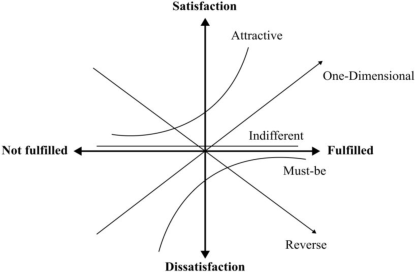
customer satisfaction. Inspired by Herzberg’s theory, Noriaki Kano (1984) proposed the attractive quality theory and theoretical analysis model, namely the Kano model, as shown in Figure 1.
The attractive quality theory usually divides the quality characteristics of different products or services into five attributes. First, Must-be qua- lity (M) is the most basic attribute of demands and is usually the element that customers do not clearly express. The Must-be quality is the first to be guaranteed. Second, One-dimensional quality (O) is usually the expe- cted and clearly expressed demands of customers. The satisfaction of the One-dimensional quality will increase the satisfaction; this “linear” rela- tionship also reflects the “customer satisfaction to the same extent as he expected.” Third, Attractive quality (A) is a high-quality attribute that custo- mers are unaware of, exceeds expectations, and is also the most attractive demand element. Fourth, Indifferent quality (I) is considered an insignificant attribute of demand, whether satisfied or not, and will not impact satisfa- ction. Fifth, Reverse quality (R) is the attribute that can cause customers to resent, the provision of Reverse quality will lead to a decline in satisfaction, so it should be avoided in demand satisfaction. The traditional Kano model ignores the impact of service elements on overall satisfaction. Therefore, on this basis, Berger et al. (1993) introduced two indicators, the customer sati- sfaction coefficient and customer dissatisfaction coefficient, to distinguish the impact of the satisfaction of different elements of demand.
Equation reproduced from the original PDF.
SI = (F(A) + F(O))/(F(A) + F(O) + F(M) + F(I)) (2) The value of the dissatisfaction coefficient is between [-1,0]. When the dissatisfaction coefficient value is closer to -1, it indicates that the lack of this element leads to a more severe decline in satisfaction. The satisfaction coefficient value is between [0,1]. The value of the satisfaction coefficient is closer to 1, the more significant the effect on improving satisfaction.
In the field of healthcare, people use the Kano model to understand the services of the healthcare system and the satisfaction of patients.
Figure 1: Kano model.
236 Liu and Wu
Al-Sayyari et al. (2009) compared Arab (Saudi Arabia, Syria, and the United Arab Emirates) and Austrian patients’ service expectations for hemodialy- sis treatment using the Kano model. Gustavsson, Gremyr, and Sarenmalm (2016) explore the roles of multiple stakeholders, such as suppliers, actors, recipients, and co-designers, that can be considered in the Kano model analy- sis to improve healthcare and identify different patient demands. This study attempts to introduce the method of the Kano model into the demand analysis of community-based chronic disease management in China. After identifying the service provider, the service model of community-based chronic dise- ase health management is proposed by analyzing the factors that affect the patient’s initiative.
ANALYSIS OF THE DEMANDS OF PATIENTS WITH CHRONIC DISEASES In-Depth Interview Survey
This study carried out in-depth interviews with patients with chronic dise- ases through fieldwork. In qualitative research, random sampling may lack representativeness, affecting the experimental results. Therefore, to consider the diverse medical options of patients with different chronic diseases, this study selected three types of places in Shanghai, large hospitals, community health service centers, and communities for interviews. The interviewees were patients with at least one chronic disease older than 60. During the interview, patients with pre-chronic diseases were also considered. In addition, the study will also interview their primary caregivers to understand the demands of patients with chronic diseases more comprehensively.
The survey interviewed 12 patients and their caregivers (usually their family members), and the interview time for each person was about 30–40 minutes. Before the interview, the background and purpose of the study were explained to the interviewee. After the interview, using the grounded theory method, the interview manuscript was coded “bottom-up” inductively with the qualitative analysis software Nvivo.
Summary of Demand Factors The interview recordings were transcribed to form a total of about 63,000 words. Since most interviewees do not want to disclose personal information, serial numbers are written according to the interview sequence to represent each interviewee. The patient’s representative expressions and coding methods are as follows, as shown in Table 1.
Based on the interview text, this study obtained 24 free nodes to form a first-level code after summarizing the demand factors of patients with chro- nic diseases. A total of 8 secondary codes were obtained by associating these similar free nodes, including chronic disease prevention, medical resources, medical services, medical access platform, chronic disease archives, conveni- ence agencies, daily activities, and in-home services. At the same time, nodes with similar expressions are integrated, duplicate expressions are deleted, and finally, a framework of 24 demand factors in two categories of “health management services” and “daily life services” is constructed, as shown in Table 2.
Re-Establishing the Balance: A New Community-Based Chronic Disease Management 237
Table 1. Interview content and open coding example.
Table available in the original PDF paper.
Interviewee Interview content Open coding example
1. Sufficient and diverse medicine reserves in the community 2. Establish a green channel for chronic diseases to seek medical treatment
3 Yesterday I went to the community health service center to get medicine for high blood pressure, but the nurse there told me to go to Xinhua Hospital to get the medicine, saying that now this medicine is gone, but I used to be able to get it directly here, and I had to queue for several hours to go to Xinhua Hospital.
Table 2. Framework of demand factors.
Table available in the original PDF paper.
Selective Coding Axial Coding Open Coding Health Management Services Chronic disease prevention A1 Health knowledge publicity A2 Health information exchange A3 Medical policy publicity Medical resources B1 Adequate medical equipment B2 Community medicine diversity B3 Green channel for medical treatment Medical services C1 Open and transparent service prices C2 Community doctor ability training C3 Contract family doctor Medical access platform D1 Elderly-oriented medical platform D2 Medical history D3 Electronic equipment training Chronic disease archives E1 Community health records E2 Electronic contact card E3 Regular telephone return visit Daily Life Services Convenience agencies F1 Community canteens F2 Senior activity center Daily activities G1 Outdoor activity areas G2 Fitness facilities In-home services H1 In-home cooking H2 In-home care H3 Home delivery service of medicine H4 Home delivery service of food H5 In-home cleaning
Kano Model Analysis Participants The study uses online and offline methods to conduct Kano model questi- onnaire surveys. Random questionnaires are distributed offline in different types of communities in Shanghai, and questionnaire data are collected online using the Wenjuanxing platform. Participants were eligible if they were over 60 and diagnosed with at least one chronic medical condition.
Questionnaire The questionnaire includes two parts. The first part is the basic information of patients with chronic diseases, including the collection of demographic
238 Liu and Wu
information; the second part is the Kano model questionnaire designed based on the demand factors of chronic diseases. In this part of the questionnaire, positive and negative questions are set for the same demand, and the form of the Likert five-point scale is adopted. For participants to understand the questionnaire’s content more quickly, the meaning of the five dimensions in the scale is explained before the questionnaire. For example, for the factor “Medical policy publicity,” the specific question setting of the questionnaire is shown in Table 3. A total of 44 questionnaires were collected, 41 of which were valid. The other three questionnaires were considered invalid due to incomplete answers.
Results According to the questionnaire survey results, this study used the Kano model to divide the attributes of the community-based chronic disease management demand. Furthermore, we calculated each demand factor’s satisfaction and dissatisfaction index, as shown in Table 4.
Table 3. Kano model question example.
Table available in the original PDF paper.
1. If they can provide medical policy publicity, do you feel: Like Must-be Neutral Live with Dislike
2. If they cannot provide medical policy publicity, do you feel: Like Must-be Neutral Live with Dislike
Table 4. Classification of demand factors.
Table available in the original PDF paper.
Category Factor Attribute Better(%) Worse(%) Chronic disease prevention A1 Health knowledge publicity A2 Health information exchange A3 Medical policy publicity
I I O
30.00% 22.50% 67.50%
−20.00% −20.00% −52.50% Medical resources
B1 Adequate medical equipment B2 Community medicine diversity B3 Green channel for medical treatment
O O O
70.00% 66.67% 67.50%
−70.00% −79.49% −80.00% Medical services
C1 Open and transparent service prices C2 Community doctor ability training C3 Contract family doctor
O O I
72.50% 50.00% 35.00%
−92.50% −72.50% −37.50% Medical access platform
D1 Elderly-oriented medical platform D2 Medical history D3 Electronic equipment training
O I I
70.00% 27.50% 27.50%
−77.50% −35.00% −22.50% Chronic disease archives
E1 Community health records E2 Electronic contact card E3 Regular telephone return visit
H1 In-home cooking H2 In-home care H3 Home delivery service of medicine H4 Home delivery service of food H5 In-home cleaning
I I A A I
40.54% 37.50% 62.50% 67.50% 50.00%
−27.03% −20.00% −37.50% −40.00% −17.50%
Re-Establishing the Balance: A New Community-Based Chronic Disease Management 239
The results found that among the factors related to the prevention of chro- nic diseases, medical policy publicity (A3) is a one-dimensional factor. This is because medical policies often involve issues that the public is most concer- ned about, such as medical insurance, so patients will be more hopeful of getting publicity about this content. Health knowledge publicity (A1) and health information exchange (A2) are indifferent factors, which is different from the original assumption of the study. However, from user interviews, it can be found that most communities cannot provide the above services com- pletely, so many patients have no related experience. At the same time, many patients said they had accumulated relevant health knowledge alone for a long time. The relevant factors of medical resources and medical services are all one-dimensional except the contract family doctor (C3), which shows that patients are still very concerned about tangible and intangible services in the medical treatment process. Especially the medical equipment’s accessibility in different levels of health care institutions.
Among the demand factors related to the medical access platform, it is evi- dent that the elderly-oriented medical platform (D1) is a one-dimensional factor. This is because, with the rapid development of China’s digitaliza- tion process, smartphones have replaced most offline services, and many elderly still face enormous digital challenges. Medical history (D2) and ele- ctronic equipment training (D3) are indifferent factors, which shows that elderly patients are still afraid of complex medical access procedures. At the same time, the community’s one-time teaching of phone usage cannot let the elderly use it easily. Establishing an electronic contact card (E2) is one-dimensional among the related factors of chronic disease archives. Through semi-structured interviews, it can be found that many family mem- bers hope that the community can establish electronic contact cards for the elderly with chronic diseases so that the community staff can keep in touch at all times. Community health records (E1) and regular telephone return visits (E3) are mentioned in the existing policy. However, due to the lack of implementation in many communities, many patients do not even know this service exists.
For the demand categories for convenience agencies and daily activities, community canteens (F1), outdoor activity areas (G1), and fitness facili- ties (G2) are the one-dimensional factors. This is because patients with chronic diseases emphasize diet and exercise interventions to manage the dis- ease, and most expect the relevant agencies to provide services. Among the factors related to in-home services, home delivery service (H3, H4) was attra- ctive, suggesting that delivery services related to daily medication and food could increase patient satisfaction. While the other three factors are one- dimensional, it is clear from the interviews that many patients are mainly constrained by other factors, such as high employment costs and too little home space.
By dividing the demand factors, we can prioritize meeting the needs of the one-dimensional factors in the subsequent service model-building pro- cess while enhancing the accessibility of some one-dimensional factors so that more patients can enjoy high-quality services. Patients can be satisfied as much as possible with sufficient local resources for the attractive factors.
240 Liu and Wu
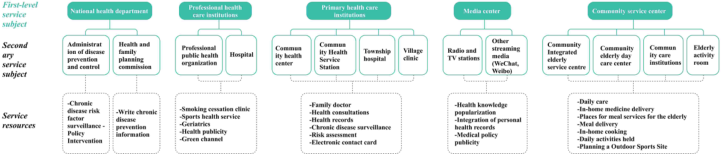
Figure 2: Service subjects and resources.
RESEARCH ON THE CONFIGURATION OF COMMUNITY-BASED CHRONIC DISEASE MANAGEMENT SERVICES Due to the rapid development of China’s public health services, service provi- ders are diversified. In order to better clarify the service subjects that can meet the needs of patients at this stage, this study selects the policies at the national and provincial levels in the past five years as the screening scope. We select Shanghai, the leading chronic disease health management service in China, as the screening area. On the official websites of the national government and the Shanghai Municipal Government, by entering keywords such as “chronic disease” or “community-based medical care” to search, a total of 105 rele- vant policies were obtained, and policies with low relevance were screened out. Then the remaining policy texts were analyzed by using Nvivo. As far as this study is concerned, the demand factors obtained through the Kano model will be used as the primary considerations for screening service sub- jects. The service resources they can provide will be clarified by determining the relevant service subjects.
Figure 2 shows that related service subjects can be divided into first-level and secondary. First-level service subjects include the national health depar- tment, professional healthcare institutions, primary healthcare institutions, media centers, and community service centers. Due to differences in economic development and medical service levels in different regions, each secondary service subject is established based on local conditions. For example, for pri- mary health care institutions, secondary service entities can be divided into community health centers in the center of the city, community health service stations in each community, township hospitals, and village clinics in rural areas.
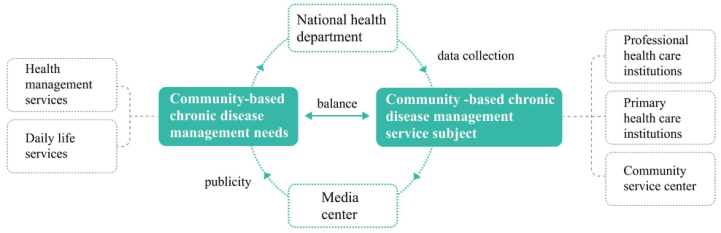
This study constructs a demand-service balanced framework (as shown in Figure 3) to help stakeholders view the provision and acceptance of chronic disease management services more dynamically. Among them, the National health department, as a national agency, has played an essen- tial role in preventing chronic diseases and monitoring risk factors. It regularly collects relevant information in different provinces and cities to assess chronic disease risk factors to compile relevant disease preven- tion and control policies. Media center publicizes related chronic disease medical policies through central, provincial, and municipal TV stations and uses streaming media (WeChat, Weibo, etc.) to popularize relevant knowledge.
Re-Establishing the Balance: A New Community-Based Chronic Disease Management 241
Figure 3: Demand-service balanced framework.
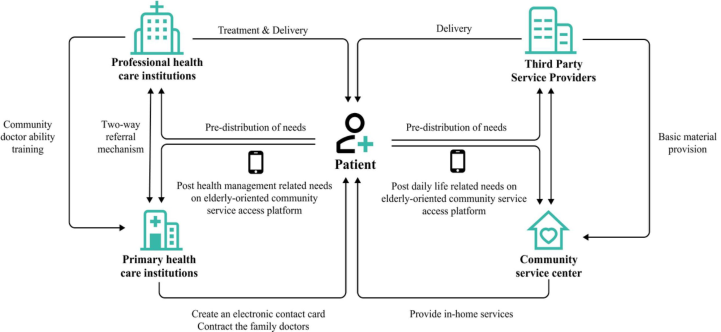
CONSTRUCTION OF CHRONIC DISEASE HEALTH MANAGEMENT SERVICE MODEL Combined with the current status of community-based chronic disease mana- gement in China, the demands of patients, and the identification of service subjects, this study constructed a chronic disease management service model (as shown in Figure 4). The demands of patients include two categories: health management services and daily life services. Patients can publish rele- vant needs on the elderly-oriented community service access platform for health management, such as seeking medical treatment and buying medici- nes. The platform makes judgments based on the needs and uploads needs to primary or professional healthcare institutions. Professional healthcare insti- tutions will also regularly train community doctors to improve their service capabilities. At the same time, primary healthcare institutions will esta- blish electronic contact cards in the community for emergency contact with patients and their families and promote the family doctor contract system.
Patients with daily life services need to post them on the platform. When the resources in the community can meet the demand, the corresponding staff will provide in-house service. If there is no such resource, the third-party
Figure 4: Community-based chronic disease health management service model.
242 Liu and Wu
service provider will provide the resource to the community or directly deliver it to the patient’s home. In order to ensure the regular operation of this model, the following three principles need to be followed: First, the systematic princi- ple: for the demands of patients, the availability of existing resources should be fully considered, and other stakeholders in the system should coordinate and allocate these resources. Second, the liquidity principle: if the services provided cannot meet the demands of patients, more High-level service pro- viders should provide service. Thirdly, the sustainability principle: taking into account the changes in patients’ conditions and the expansion of the potential population of chronic diseases, the model should also be dynami- cally adjusted according to the actual situation of each community to achieve sustainability.
CONCLUSION
Based on the Kano model, this study first divided the community-based health management demands of patients with chronic diseases and propo- sed a bottom-up demand content framework. At the same time, review the existing policies, identify the service subjects and their service elements accor- ding to the demand strategy, and build a demand-service balanced framework to provide more targeted services for patients with chronic diseases. This study also provides a reference for the future formulation of China’s chronic disease policy. Since the study focuses on identifying patient demands and service subjects and elements in the model of chronic disease health manage- ment, the sustainability of the service supply are places where future research can continue to advance.
REFERENCES
Berger, C., (1993). Kano’s methods for understanding customer-defined quality.
Center for quality management journal, 2(4), pp. 3–36. Chen, Y. and Sun Y., (2023). The Concealed Facts of China’s Aging Population: Improving Indicators and Rethinking Theory in China’s Aging Research. Population research, 47(01), 3–22. De Luca, V., Tramontano, G., Riccio, L., Trama, U., Buono, P., Losasso, M., Bracale,
U. M., Annuzzi, G., Zampetti, R., Cacciatore, F. and Vallefuoco, G., (2021). “One Health” Approach for Health Innovation and Active Aging in Campania (Italy). Frontiers in Public Health, 9, pp. 658959. Goodman, R. M., Wheeler, F. C. and Lee, P. R., (1995). Evaluation of the Heart to Heart Project: Lessons from a community-based chronic disease prevention project. American Journal of Health Promotion, 9(6), pp. 443–455. Gustavsson, S., Gremyr, I. and Sarenmalm, E. K., (2016). Using an adapted approach
to the Kano model to identify patient needs from various patient roles. The TQM Journal. 28(01), pp. 151–162. Hejaili, F. F., Assad, L., Shaheen, F. A., Moussa, D. H., Karkar, A., AlRukhaimi, M., Barhamein, M., Al Suwida, A., Al Alhejaili, F. F., Al Harbi, A. S. and Al Homrany, M., (2009). Culture-related service expectations: A comparative study using the Kano model. Quality Management in Healthcare, 18(1), pp. 48–58. Kano, N., (1984). Attractive quality and must-be quality. Journal of the Japanese
society for quality control, 31(4), pp. 147–156.
Re-Establishing the Balance: A New Community-Based Chronic Disease Management 243
Kim, K., Choi, J. S., Choi, E., Nieman, C. L., Joo, J. H., Lin, F. R., Gitlin, L. N. and Han, H. R., (2016). Effects of community-based health worker interventions to improve chronic disease management and care among vulnerable populations: A systematic review. American journal of public health, 106(4), pp. e3–e28. Lawn, J. E., Rohde, J., Rifkin, S., Were, M., Paul, V. K. and Chopra, M., (2008).
Alma-Ata 30 years on: Revolutionary, relevant, and time to revitalise. The Lancet, 372(9642), pp. 917–927. Li, X., Krumholz, H. M., Yip, W., Cheng, K. K., De Maeseneer, J., Meng, Q., Mossialos, E., Li, C., Lu, J., Su, M. and Zhang, Q., (2020). Quality of primary health care in China: Challenges and recommendations. The Lancet, 395(10239), pp. 1802–1812. Wang, L., Kong, L., Wu, F., Bai, Y. and Burton, R., (2005). Preventing chronic
diseases in China. The lancet, 366(9499), pp. 1821–1824. Xiao, N., Long, Q., Tang, X. and Tang, S., (2014). A community-based approach to non-communicable chronic disease management within a context of advancing universal health coverage in China: Progress and challenges. BMC Public Health, 14(2), pp. 1–6.
LISTED IN THE AHFE DIGITAL BOOKSTORE CATALOGUE
Explore the complete digital volume
Healthcare and Medical Devices
Read this individual research paper free through the original publisher, or explore the full digital proceedings book.
ISBN 978-1-958651-55-1
Explore this ISBN in the AHFE Bookstore ↗Listed in the July 2026 bookstore catalogue; search by ISBN to confirm current availability · Digital book purchase optional