Hannah Biermann, Gian Luca Liehner, Ralf Philipsen, Martina Ziefle (2023). Autonomous shuttle or conventional cab? Investigating users’ decision to share a ride. In: Human Factors in Transportation. AHFE Open Access, vol. 95, pp. 88–98. https://doi.org/10.54941/ahfe1003795
Private motorized transport poses a major challenge for traffic and the environment. Shared mobility might increase traffic efficiency and reduce traffic-related environmental pollution. The use of autonomous shuttles is conceivable for the future, opening further opportunities, e.g., road safety. From the user's point of view, not having their own vehicle can mean a loss of flexibility. Skepticism may arise, e.g., regarding the reliability of a service provider. Research is needed on the general willingness to share a ride, considering individual motivations for or against shared mobility. Regarding autonomous shuttles, there are gaps in knowledge about the extent to which the lack of a human driver on board affects trust and the willingness to use them compared to conventional driving services.MethodWe designed a two-step empirical research approach. Our aims were to investigate 1.perceptions of autonomous shuttles compared to conventional cabs in terms of safety and reliability,2.trust towards and intention to use autonomous shuttles,3.decisions to use an autonomous shuttle or a conventional cab, considering human factors (e.g., personality traits, mobility behavior).In a preliminary qualitative study, guided interviews (language: German) were conducted to explore reasons behind people' s choice to share a ride and to identify factors that influence their well-being and trust. To evaluate how differences in the level of automation might affect attitudes, conventional cabs and autonomous shuttles (both on-demand mobility services) were compared. In sum, 17 adults of different age groups (19 to 58 years) participated. The interviews were transcribed verbatim and analyzed using content analysis. Results were operationalized and measured in an online questionnaire survey (N=182). ResultsIn general, passengers' feeling of safety is relevant for their decision to share a ride. However, safety is perceived and evaluated differently regarding different means of transport. In a conventional cab, safety perception is enhanced by a human driver, especially in emergencies. In the case of autonomous shuttles, road safety is the key in achieving a high sense of security, since it is assumed that the autonomous shuttle, unlike cab drivers, always adheres to the applicable traffic regulations. Participants would prefer a ride in the autonomous shuttle to a cab ride and indicate a high willingness to use it for people other than themselves. For children or care-dependent people, special booking options, e.g., on board-monitoring, are requested. The general willingness to share a ride seems to depend on the perceived importance of car ownership.OutlookOur results contribute to a deeper understanding of attitudes towards novel mobility services. Results clarify which factors determine the general willingness to use shared mobility and which are specific to new and autonomous driving services. They also strengthen the knowledge of predictors for technology trust and acceptance in this context. The practical relevance of our study lies in the possibility to derive design and action recommendations for the user-centred development of autonomous shuttles considering individual needs and demands of different target groups.
Private motorized transport is a major challenge for transport and the envi- ronment. In Germany, the number of cars in households and emissions from private motorized transport are steadily increasing (Nobis and Kuhnimhof 2018, Umweltbundesamt 2022). Shared electric autonomous vehicles offer great benefits and solutions for improving transport efficiency, road safety, and environmental protection (Greenblatt and Shaheen 2015, Zhu et al. 2022). Potential barriers to their use may be related to a lack of willin- gness to give up a private car and to concerns about the use of autonomous driving. Research is needed on the general willingness to share mobility servi- ces, especially those that operate without a human driver on board, i.e., autonomously.
Driving and car ownership occupy a special position, especially in Ger- many. Although the use of car sharing and alternatives to the car, such as e-bikes, is increasing, it still lags far behind private car use (Umweltbunde- samt 2022). It is therefore not surprising that a high need to own a car was identified as a major barrier to the use of new mobility services (Alonso- González et al. 2020). From the driver’s point of view, not owning a car may be a drawback because of a perceived lack of flexibility, limited personal
Autonomous Shuttle or Conventional Cab? Investigating Users’ Decision 89
freedom or driving pleasure. Also, sharing a vehicle with strangers may limit the acceptance (Clayton et al. 2020, Dolins et al. 2021). In addition, when the human driver is removed from the vehicle and becomes a passenger, as is the case with autonomous driving, perceived risks and concerns, such as about privacy and fear of loss of control, may limit the willingness to adopt (Biermann et al. 2019, Chen et al. 2020, Schmidt et al. 2015).
Whether and to what extent people are willing to use new mobility services depends on individual factors and is not always the same. For example, it has already been shown that human factors such as socio-demographics, attitu- des towards climate change, and car access influence the willingness to use shared mobility options (Mouratidis 2022). Also, personality factors (e.g., propensity to trust) are related to attitudes towards autonomous mobility services (Biermann et al. 2020, Paddeau et al. 2020). Gender differences have been studied in relation to autonomous electric shuttle buses, showing that men tend to be more curious and interested in such a novel service (Philipsen et al. 2018).
The aim of this study was to better understand mobility behaviour and mode choice with a focus on on-demand shared mobility. To assess how diffe- rent levels of automation might affect attitudes, conventional transportation means (e.g., taxi) and autonomous shuttles were compared. Our research questions and the methodology used to answer them are explained in the following chapter, including a description of our sample.
METHOD
We designed a two-stage empirical exploratory research approach. In a pri- mary interview study (language: German; N = 17), we explored the reasons why people choose to share a ride and identified factors that influence their well-being and trust. Interviews were transcribed verbatim and analyzed using content analysis. The results of the interviews were operationalized and measured in an online questionnaire survey that addressed the following research questions (RQ): RQ1: What is the mobility behaviour of the participants and what determines their choice of transport?
RQ2: How do participants think and feel about taking a traditional taxi versus an autonomous shuttle?
RQ3: Which mobility service will they choose in the future (conventional or autonomous)?
RQ4: How do user groups differ from each other, e.g., in terms of demographics, personality, mobility attitude, use intention, and trust?
The questionnaire consisted of three parts: I. First, personal data was collected, including demographics (age, gender, education) and personality traits such as interpersonal trust (Beierlein et al. 2014), technology trust (Jessup et al. 2019, Schneider et al. 2017), and privacy disposition (Xu et al. 2008). II. Second, mobility behaviour (driving licence ownership, perceived importance of car ownership, experience with semi-automated and
autonomous driving) and mode choice were evaluated, as well as seven items asking about people’s attitude towards a taxi ride in terms of safety and reliability (e.g., “A taxi driver obeys the traffic rules”), which were self-developed based on the results of the pre-study (see Figure 2). III. The third part was introduced by a textual scenario description of a novel on-demand shuttle service using shared autonomous vehicles (SAV). Participants were provided with the following information: The new shuttle service will be used as a complement to existing public tran- sport and is designed for small groups. Passengers can customize their journey, i.e., they can choose the pick-up point and destination, time, route, and equipment. As regards the technical description of the scena- rio, the participants were informed that the vehicles perform all driving tasks in road traffic autonomously and are connected to their environ- ment (e.g., traffic infrastructure, other vehicles) supported by intelligent systems. Subsequent questions asked about the intention to use (inspi- red by Davis 1989), trust (Pöhler et al. 2016, Jian et al. 2000), and people’s attitude towards riding in an autonomous shuttle (correspon- ding items were mirrored from the second block on attitudes to taking a conventional taxi). Finally, there was a decision task in which partici- pants were asked to rate which mobility service they would book in the future (conventional or autonomous).
We used different scales, including multiple choice and fully verbalized 6-point Likert scales. Cronbach’s alpha (α) was checked for scale reliability, which was good (>.7), except for the self-developed scale measuring attitudes towards riding in a SAV (.669), which was included in the analysis due to the exploratory nature of the overall research design. Descriptive and inferential statistical methods were used to analyze the data. A significance level of .05 was used.
The survey was distributed through a variety of channels, including direct approaches within the research team’s social network (e.g., personal text messages), as well as posting the survey link and encouraging participation in topic-specific forums and relevant social media. The response time was estimated at 20 minutes.
Sample A total of 182 people took part in the survey. After quality control and data cleaning, i.e., elimination of incomplete data sets and speeders (response time less than 50% of the median), N = 112 data sets were included in the analyses. Of these, 59.8% were female and 40.2% were male. Age ranged between 18 and 64 years (M = 30.2; SD = 13.6). The participants were highly educated with 45.5% high school graduates and 39.3% having com- pleted university. On average, the participants were rather trustful towards other people (M = 4.1; SD = 0.8) and technology (M = 4.3; SD = 0.6). The mean privacy disposition score was below the scale mean (M = 3.2; SD = 1.0), indicating that on average participants were not too concerned about data protection and online privacy, for example.
Autonomous Shuttle or Conventional Cab? Investigating Users’ Decision 91
RESULTS
In the following, the results obtained are described in terms of the mobi- lity behaviour and mode choice of the sample, the general attitudes towards conventional cabs and shared autonomous shuttles, and the decision to use either conventional or autonomous mobility services in the future.
Mobility Behaviour and Mode Choice All of the participants hold a driver’s licence. On average, car ownership was perceived as rather important (M = 4.3; SD = 1.5). Most of the participants had experience of using driver assistance systems (69.6%), 17% had been passengers in a semi-automated car, 12.5% had no experience, and <1% said they did not know whether they had driven in a semi-automated car or not. With regard to self-driving cars, more than half of the respondents (54.5%) had no experience.
In terms of mode choice, private cars were used by the majority (54.5%) on a daily basis. Sharing services (i.e., ride-sharing or car-sharing) were never used by the majority (86.6%). Use of public transport (e.g., bus or train) was varied and relatively evenly distributed (ranging from daily, weekly, mon- thly to never). Taxis were used by most respondents either less than monthly (43.8%) or never (46.4%).
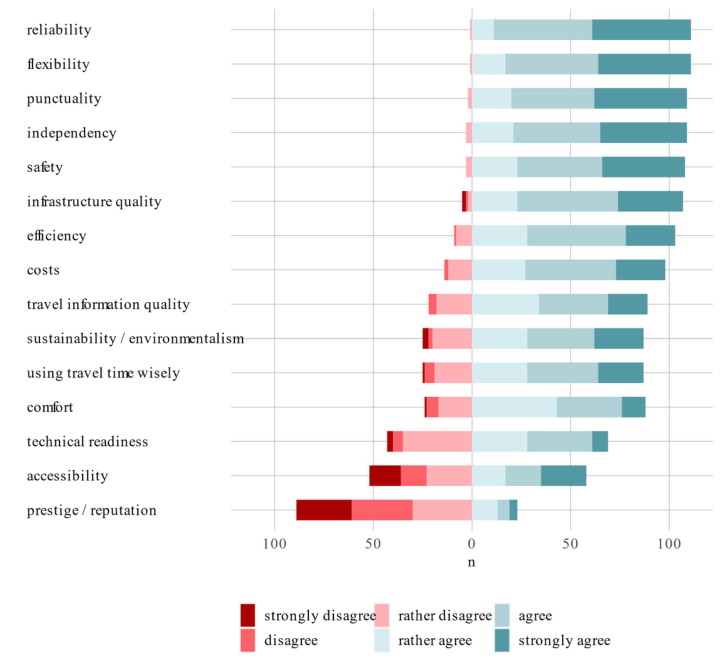
Figure 1 illustrates the reasons given for the choice of transport mode. In general, there was a broad consensus that aspects such as reliability, fle- xibility, punctuality, independency, and safety were crucial to the choice of transport mode, whereas prestige and reputation were considered less relevant. A mixed picture of responses emerged with regard to technologi- cal readiness and accessibility for people with reduced mobility, the latter possibly due to the relatively young age of the sample.
Attitudes Towards Conventional Cabs vs. Autonomous Shuttles
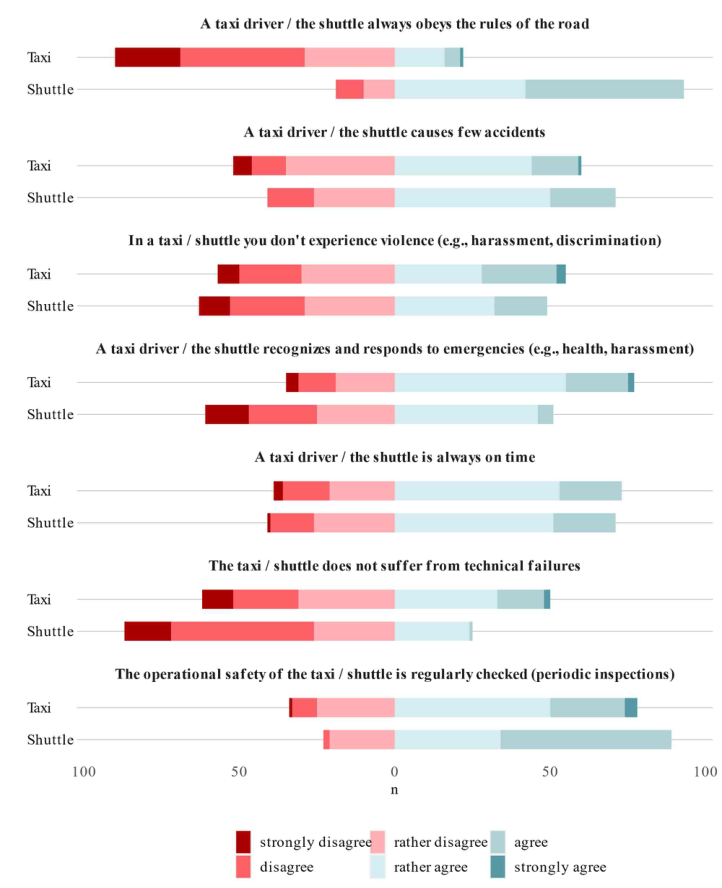
Figure 2 compares attitudes towards a conventional taxi ride (i.e., with a human driver) and a ride in an autonomous (i.e., driverless) shuttle. On ave- rage, the ratings differed only slightly, with a mean for taxi rides of M = 3.4 (SD = 0.8) and a mean for shuttle rides of M = 3.5 (SD = 0.6). The dif- ferences were in the detail. In particular, compliance with traffic rules was judged differently: Participants were more likely to believe that the autono- mous driving service would obey traffic rules than a taxi driver. In turn, they were more likely to assume that a human driver would recognize and react to an emergency than an autonomous shuttle, and that an autonomous shuttle would be more error-prone than a conventional taxi.
User’s Decision: Conventional or Autonomous Shared Mobility?
When asked whether they would book a conventional shared mobility service (e.g., taxi, bus, or train) or an autonomous shuttle in the future, 43.8% of the participants said they would use the traditional service, while the majo- rity (56.3%) said they would book the novel shuttle service. This positive basic attitude towards SAV is reflected in the average values of the general
Figure 1: Reasons for mode choice.
usage evaluation (willingness to use, perceived usefulness, etc.) (M = 4.2; SD = 0.9) and the perceived trust in the SAV (M = 4.0; SD = 0.7). Based on the decision task, participants were divided into two groups in order to assess user-specific characteristics in terms of demographics, personality traits, beh- avioural intention to use and trust in SAV. For simplicity, the traditionalists are referred to as “taxi user” and the pioneers as “shuttle user”. An overview of group characteristics is given in Table 1.
Mann-Whitney-U-Tests were calculated to determine if there were gender and education differences between taxi and shuttle users. There was a stati- stically significant difference in gender distribution between the two groups (U = 1225.000, Z = −2.200, p = 0.028), indicating that taxi users were more likely to be female. Regarding education, no statistically significant difference was found. A one-way MANOVA showed a statistically signifi- cant difference between the two groups on the combined dependent variables (i.e., all other user factors), F(9, 102) = 7.856, p <0.001, partial η2 = 0.409, Wilk’s ∧=0.591. Post-hoc univariate ANOVAs were conducted for every dependent variable. Results show a statistically significant difference betw- een the two groups for technology trust, F(1, 110) = 16.237, p < 0.001,
Autonomous Shuttle or Conventional Cab? Investigating Users’ Decision 93
Figure 2: Attitudes towards a ride in a conventional taxi vs. a ride in an autonomous shuttle.
partial η2 = 0.129, attitude towards SAV, F(1, 110) = 8.812, p = 0.004, partial η2 = 0.074, intention to use SAV, F(1, 110) = 53.910, p < 0.001, par- tial η2 = 0.329, and trust in SAV, F(1, 110) = 17.065, p < 0.001, partial η2 = 0.303, but not for age, perceived importance of car ownership, pri- vacy disposition, interpersonal trust, and attitude towards taking a taxi. In summary, the attitude of shuttle users towards the new mobility service was overall more optimistic in terms of safety and reliability. Shuttle users also showed a higher willingness to use SAV and were generally more trusting of technology and the SAV.
Table 1. Taxi user vs. shuttle user: comparison of group characteristics.
Table available in the original PDF paper.
Equation reproduced from the original PDF.Equation reproduced from the original PDF.
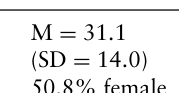
Gender 71.4% female 28.6% male 50.8% female 49.2% male 0.028 Education1 51% high school 34% university 41.3% high school 42.8% university n.s.
Equation reproduced from the original PDF.
Importance of car ownership Privacy disposition M = 3.2 (SD = 0.9) M = 3.3 (SD = 1.0) n.s. Interpersonal trust M = 3.9 (SD = 0.8) M = 4.2 (SD = 0.8) n.s. Technology trust M = 4.1 (SD = 0.6) M = 4.5 (SD = 0.6) <.001 Taxi attitude M = 3.4 (SD = 0.7) M = 3.5 (SD = 0.8) n.s. SAV attitude M = 3.3 (SD = 0.5) M = 3.7 (SD = 0.6) .004 SAV use intention M = 3.6 (SD = 0.8) M = 4.6 (SD = 0.6) <.001 SAV trust M = 3.5 (SD = 0.7) M = 4.3 (SD = 0.5) <.001
Factors on which the groups differ significantly are shown in bold.
DISCUSSION
The aim of this study was to better understand mobility behaviour and mode choice, as well as attitudes towards conventional and novel autonomous mobility services. The focus was on public and shared transport (not private cars). For reasons of comparability, two on-demand mobility services were compared: conventional cabs (with a human driver on board) and driverless shuttles. The results show a high level of interest in SAV and confirm previous research findings. The initial trust of the user seems to make the difference in the evaluation and willingness to use and can be considered as a critical acceptance parameter based on our results. The results of this study and the methodology used are critically reflected upon below. Input for follow-up studies is derived.
Regarding our first research question (RQ1), the mode choice of the sam- ple was mainly car use. Mobility sharing was hardly used. The majority were experienced in using semi-automated cars, but were inexperienced in auto- nomous driving. Relevant reasons for mode choice were identified, mainly related to reliability, flexibility, punctuality, independency, and safety. These should certainly be taken into account when designing new mobility servi- ces. Relevant questions could be, for example, which aspects of reliability and flexibility play a role. For example, is it the reliability and flexibility of the service and the service provider, or the reliable functioning of the vehicle, and what do potential users want, such as a reliable service centre, flexible booking options, regular maintenance? Follow-up studies should look at the conditions under which car users might consider giving up private transport, and focus more on users of sharing services to understand their reasons for choosing this mode and their attitudes towards traditional and new mobility services. It should also be assessed what knowledge gaps and information
Equation reproduced from the original PDF.
Autonomous Shuttle or Conventional Cab? Investigating Users’ Decision 95
needs exist in relation to autonomous driving and how information and communication strategies need to be designed accordingly.
In line with previous findings (Biermann et al. 2023, Philipsen et al. 2018), we found a high level of interest and intention to use a novel autonomous shuttle service. Differences in attitudes towards conventional taxis versus autonomous shuttles were in the detail (RQ2). Autonomous shuttles were more likely to be associated with road safety, whereas a human taxi driver was more likely to be associated with the ability to recognize and respond to emergency situations. Follow-up studies should identify the perceived bene- fits and risks associated with the use of autonomous shuttles (e.g., in terms of human personnel on board and perceived susceptibility to error), as these may be potential barriers and motives for use, i.e., relevant drivers of acceptance.
When asked which mobility service they would like to use in the future (RQ3), the majority of participants expressed a preference for the auto- nomous shuttle, despite the fact that conventional shared and on-demand services were hardly or rarely used in the sample. This suggests and supports the high level of interest and curiosity of the public in an autonomous and novel mobility service such as the shuttle bus described. However, it also contrasts with usage decisions in other studies (Clayton et al. 2020), possi- bly due to the selection and presentation of different scenarios. User group differences (RQ4) were found with regard to gender, mobility attitude, use intention, and trust. There were more women than men in both user groups, which can be explained by the overall gender distribution in the sample (pro- portionally more women). However, the taxi user group was predominantly female, while the shuttle user group was only slightly more female. This is consistent with previous findings that men tend to be more interested in novel mobility solutions than women (Philipsen et al. 2018). As might be expected, the shuttle user group generally showed a more open attitude towards auto- nomous shuttles and also a higher usage intention. It was interesting to see that the users’ perception of trust seemed to make a difference in the evalua- tion, which supports previous research (Paddeau et al. 2020, Nordhoff et al. 2021). The shuttle user group was more trusting of the technology in general and of the novel autonomous shuttle service. The taxi user group showed a lower level of trust overall. While their reported trust in technology was still high, their initial trust perception towards the autonomous shuttle was tow- ards the middle of the scale (i.e., undecided). This suggests that the taxi users did not have a substantial distrust of technology, but were sceptical of the novel (unfamiliar) shuttle service. Follow-up studies should investigate what drives perceptions of trust and distrust in this context, and which factors and conditions are use-case-related (i.e., related to autonomous driving and the novel shuttle) and which are generic (e.g., explainable by general atti- tudes towards innovation). Against this background, recommendations for action can then be made for the technical design and implementation of a new driving service, and for innovation management in general.
Issues for discussion and reflection on the results and methods, beyond those already mentioned but relevant to follow-up studies, are as follows: First, the sample was rather small, young, and well educated. Future studies should validate the results obtained in a larger and broader (i.e., more diverse)
sample. Secondly, the data was collected in Germany or in German-speaking countries. As the car has a very special position in Germany and attitudes may be conditioned by cultural influences, it is necessary to mirror our results in a cross-national study in order to identify any cultural differences in the evalu- ation of novel and autonomous mobility services, mode choice, and people’s willingness to switch from private to shared cars. Another point relates to the use case description in our study, which was scenario and text based. As the evaluations are based on the imagination of the individual respondents, it remains essential to interview them again in real-life test situations, such as test drives, as user experience might influence acceptance ratings (Bernhard et al. 2020, Chinen et al. 2020).
CONCLUSION
Car use is high and car ownership is perceived as important. Nevertheless, there is interest in SAV and a willingness to use them for on-demand passenger transport in the future. A crucial factor for acceptance seems to be the users’ initial perception of trust, which needs to be further investigated in follow-up studies regarding relevant influencing factors and conditions as well as indi- vidual differences in perception and evaluation. From this, recommendations for practical trust building can be derived.
ACKNOWLEDGMENT
The authors thank all participants for sharing their opinion on shared autonomous vehicles. Special thanks is given to Michelle Reuters for rese- arch assistance. Our research interest in the perception and evaluation of innovative and sustainable mobility services was inspired by the Cities in Charge project (reference no. 01MZ18005C). The authors would like to thank the Federal Ministry for Economic Affairs and Climate Action for the opportunity to develop further ideas of infrastructure electrification.
REFERENCES
Alonso-González, M. J., Hoogendoorn-Lanser, S., van Oort, N., Cats, O., & Hoogendoorn, S. (2020). Drivers and barriers in adopting Mobility as a Service (MaaS)–A latent class cluster analysis of attitudes. Transportation Research Part A: Policy and Practice, 132, 378–401. Beierlein, C., Kemper, C., Kovaleva, A. J. & Rammstedt, B. ‘Interpersonales Ver-
trauen (KUSIV3). Zusammenstellung sozialwissenschaftlicher Items und Skalen (ZIS). ZIS - GESIS Leibniz Institute for the Social Sciences, 2014. Bernhard, C., Oberfeld, D., Hoffmann, C., Weismüller, D., & Hecht, H. (2020). User acceptance of automated public transport: Valence of an autonomous minibus experience. Transportation research part F: traffic psychology and behaviour, 70, 109–123. Biermann, H., Philipsen, R., Brell, T., & Ziefle, M. (2019). Rolling in the deep: User
perspectives, expectations, and challenges of data and information distribution in autonomous driving. Human-Intelligent Systems Integration, 1(2-4), 53–70. Biermann, H., Philipsen, R., Brell, T., & Ziefle, M. (2020). Shut up and drive?
User requirements for communication services in autonomous driving. In HCI in
Autonomous Shuttle or Conventional Cab? Investigating Users’ Decision 97
Mobility, Transport, and Automotive Systems. Automated Driving and In-Vehicle Experience Design: Second International Conference, MobiTAS 2020, Held as Part of the 22nd HCI International Conference, HCII 2020, Copenhagen, Den- mark, July 19–24, 2020, Proceedings, Part I 22 (pp.3–14). Springer International Publishing. Biermann, H., Philipsen, R., & Ziefle, M. (2022). Crazy Little Thing Called Trust—User-Specific Attitudes and Conditions to Trust an On-Demand Auto- nomous Shuttle Service. In Human-Automation Interaction: Transportation (pp. 235–252). Cham: Springer International Publishing. Chen, J., Li, R., Gan, M., Fu, Z., & Yuan, F. (2020). Public acceptance of dri-
verless buses in China: an empirical analysis based on an extended UTAUT model. Discrete Dynamics in Nature and Society, 2020, 1–13. Chinen, K., Sun, Y., Matsumoto, M., & Chun, Y. Y. (2020). Towards a sustainable society through emerging mobility services: A case of autonomous buses. Sustai- nability, 12(21), 9170. Clayton, W., Paddeu, D., Parkhurst, G., & Parkin, J. (2020). Autonomous veh-
icles: who will use them, and will they share?. Transportation planning and technology, 43(4), 343–364. F. D. Davis, “Perceived usefulness, perceived ease of use, and user acceptance of information technology,” MIS Q., vol. 13, no. 3, pp. 319–340, 1989. Dolins, S., Strömberg, H., Wong, Y. Z., & Karlsson, M. (2021). Sharing Anxiety Is
in the Driver’s Seat: Analyzing User Acceptance of Dynamic Ridepooling and Its Implications for Shared Autonomous Mobility. Sustainability, 13(14), 7828. Greenblatt, J. B., & Shaheen, S. (2015). Automated vehicles, on-demand mobility, and environmental impacts. Current sustainable/renewable energy reports, 2, 74–81. Jessup, S. A., Schneider, T. R., Alarcon, G. M., Ryan, T. J., Capiola, A.: The Mea-
surement of the Propensity to Trust Automation. In: Chen, J., Fragomeni, G. (eds.) Virtual, Augmented and Mixed Reality. Applications and Case Studies. HCII 2019. LNCS 11575. pp. 476{489. Springer Nature, Switzerland (2019). Jian, J. Y., Bisantz, A. M., & Drury, C. G. (2000). Foundations for an empirically determined scale of trust in automated systems. International journal of cognitive ergonomics, 4(1), 53–71. Mouratidis, K. (2022). Bike-sharing, car-sharing, e-scooters, and Uber: Who are the
shared mobility users and where do they live?. Sustainable Cities and Society, 86, 104161. Nobis, C., & Kuhnimhof, T. (2018). Mobilität in Deutschland- MiD: Ergebnisbericht. Nordhoff, S., Malmsten, V., van Arem, B., Liu, P., & Happee, R. (2021). A structural
equation modeling approach for the acceptance of driverless automated shuttles based on constructs from the Unified Theory of Acceptance and Use of Technology and the Diffusion of Innovation Theory. Transportation research part F: traffic psychology and behaviour, 78, 58–73. Paddeu, D., Parkhurst, G., & Shergold, I. (2020). Passenger comfort and trust on first-time use of a shared autonomous shuttle vehicle. Transportation Research Part C: Emerging Technologies, 115, 102604. Philipsen, R., Brell, T., & Ziefle, M. (2019). Carriage without a driver–user requi-
rements for intelligent autonomous mobility services. In Advances in Human Aspects of Transportation: Proceedings of the AHFE 2018 International Confere- nce on Human Factors in Transportation, July 21-25, 2018, Loews Sapphire Falls Resort at Universal Studios, Orlando, Florida, USA 9 (pp. 339–350). Springer International Publishing.
Pöhler, G., Heine, T., & Deml, B. (2016). Itemanalyse und Faktorstruktur eines Fragebogens zur Messung von Vertrauen im Umgang mit automatischen Syste- men. Zeitschrift für Arbeitswissenschaft, 3(70), 151–160. Schmidt, T., Philipsen, R., & Ziefle, M. (2015). Safety First?. In V2X–Percived bene-
fits, barriers and trade-offs of automated driving. Full paper submitted to the International Conference on Vehicle Technology and Intelligent Transport Systems (Vehits 2015). Schneider, T., Jessup, S., Stokes, C., Rivers, S., Lohani, M., McCoy, M.: The infuence of trust propensity on behavioral trust. In: Poster session presented at the meeting of Association for Psychological Society. Boston (2017). Umweltbundesamt (UBA): Mobilität privater Haushalte (2022). https://www.umweltbundesamt.de/daten/private-haushalte-konsum/mobilitaet- privater-haushalte#verkehrsleistung-im-personentransport. Xu, H., Dinev, T., Smith, H. J., & Hart, P. (2008). Examining the formation of
individual’s privacy concerns: Toward an integrative view. Zhu, J., Xie, N., Cai, Z., Tang, W., & Chen, X. (2022). A comprehensive review of shared mobility for sustainable transportation systems. International Journal of Sustainable Transportation, 1–25.
LISTED IN THE AHFE DIGITAL BOOKSTORE CATALOGUE
Explore the complete digital volume
Human Factors in Transportation
Read this individual research paper free through the original publisher, or explore the full digital proceedings book.
ISBN 978-1-958651-71-1
Explore this ISBN in the AHFE Bookstore ↗Listed in the July 2026 bookstore catalogue; search by ISBN to confirm current availability · Digital book purchase optional