Yen Chen Pan, Hsi-Jen Chen (2023). Effects of reflective writing for students in the design project. In: Application of Emerging Technologies. AHFE Open Access, vol. 115, pp. 481–489. https://doi.org/10.54941/ahfe1004347
In the field of design, experts employ flexible design methods and resources to solve problems, which would be the learning goal that learners might be able to accomplish step by step by reflection. Efficient learning requires more than just accumulating knowledge. It necessitates proper organization, internalization, and reflection. In this study, we integrated the adjusted empathy maps as reflection tools into the "Archaeology and Design" course to assess the students‘ reflective states in the design process. This course involves a design project centered around indigenous culture, guided by the four stages of the Double Diamond design model (2003). The research focused on the students' thinking process and their reflective abilities. With the aims mentioned above, this study used qualitative data based on the empathy maps on students' reflections on the design process and their own reflection status on the four design stages from the Double Diamond design model (2003). We instructed students to journal down the circumstances they encountered and the feelings they experienced. They had to do the reflection by answering the questions on the empathy map at every stage of the design process. Aside from that, we also did the reflection questionnaires having been designed by Kember et al.(2000) and Sobral( 2001), which could demonstrate the change before and after the 4 stages of reflection. For the analysis, the reflective texts were analyzed based on the model created by Terry Borton (1970), which consisted of three key questions: what, so what, and now what. And, the results of the questionnaires would be analyzed with Wilcoxon signed rank test by using SPSS 19.After the analysis, we not only observed an increase in the amount of reflective content, but also identified three main points that appeared in the texts of the reflective writings. These points included the integration of information, fostering more creative thinking, and developing a heightened awareness of student designers themselves and their peers. Based on these ascertainments, we concluded that through this form of reflective writing, students are able to retrospect the past and contemplate their next steps. By engaging in reflective practices, students not only enhance their design and reflective abilities, but also develop a deeper understanding of themselves and others throughout the design project, which are significant in the process of becoming an expert. Additionally, the study aims to promote design reflection and extend the impact of this research by sharing its results.
To deal with increasingly complicated issues, designers require the skills, the knowledge, and the abilities to draw on various design methods. However,
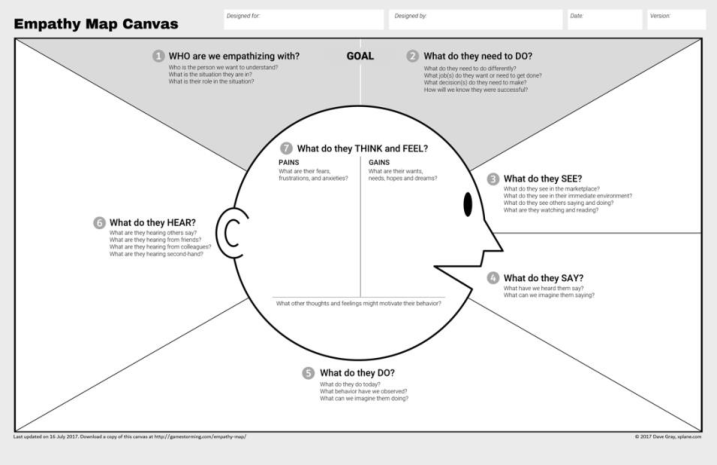
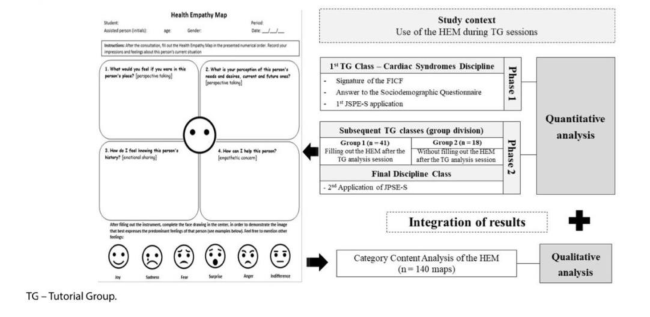
if one would like to be adept in a skill, learning skill efficiently, high-quality practice is indispensable in the process of owning the skill (Ericsson and Pool, 2016). For instance, reflective thinking is an approach to efficiently gain knowledge and insights, as it comprises different axial direction, like looking back from the past to the present, transitioning from rationality to sensibil- ity, and shifting focus from the self to interactions within society, etc. This direction of viewpoints might form a mental landscape with a multidimen- sional space (Chang, 2019). This sort of method really help students to “deep learn”, which enables efficient and meaningful knowledge acquisition, while it also necessitates proper organization, and internalization, which reflective thinking facilitates. And, how to execute reflective thinking? Writing might serve as a suitable method for implementing reflective thinking in education (Harvey et al., 2019). Many scholars had studied about reflective writing frameworks (as Table 1 shows) for learners, also having a great impact on learning process for them. Empathy map, (shown as Figure 1) updated by Gray (2018) and commonly used in design, is a key tool in our research. It can help us gain various perspectives and feeling to the condition. There is an example for reflective writing with empathy maps in education, which was research by Souza et al. (2021) in medical education. They chose to change the original empathy map into the “Health Empathy map” (HEM) (shown as Figure 2), which was applied to help students observe their own condi- tion. By utilizing the modified empathy map, we aimed to gain insights into students’ individual experiences, thought processes, and personal growth, rather than solely emphasizing empathy towards others. With several times of retrospective thinking, students could improve design skills, thinking, and learning abilities simultaneously in the process of reflective writing, which is the purpose the research would like to accomplish.
Effects of Reflective Writing for Students in the Design Projection 483
Figure 2: HEM (health empathy map) (Souza et al., 2021).Table 1. Organization about reflective writing frameworks corresponding to empathy maps (a rough categorization based on the general nature the corresponding accuracy will depend on the content of the writing for further assessment).
Table available in the original PDF paper.
Empathy map See, Say, Hear, Do Think and Feel (gain and pain) Goal Borton (1970) What So What Now what Kolb (1984) Abstract conceptualization, Concrete experience
Reflective observation Active experimentation Gibbs (1988) Initial experience description, feelings/ reactions Learning Johns (1993) Describe the experience Reflection, Influencing, Can I have dealt with it better?
Learning
Bain et al. (1999) Reporting, Responding Relating, Reasoning, Reconstructing Bass et al. (2017) Self-awareness, Description Reflection, Influences Knowing, Evaluation Actions Griffin (2003) Incidents description Emotions, Why, Classification, General meaning, Professional Standard, Position
Re-evaluating experience
Boud et al. (1985) Behavior ideas feelings, Returning to experience
Critical reflection( CR)
Max Van Manen et al. (1977)
Technical Rationality(TR), Practical action( PA)
INTEGRATING THE ADJUSTED EMPATHY MAPS AS REFLECTION TOOLS INTO COURSE In this study, our main objective was to unveil valuable insights into stu- dents’ reflections, self-discovery, and personal growth as they engaged with the design project. And we focused on junior students, having been studying industrial design for two years, and selected an interdisciplinary curriculum called “Archaeology and Design,” spanned one semester, for our study. The schedule and content are shown in Table 2. The main theme of this class was for students to design projects based on indigenous cultures. To achieve the goal, we adjusted the empathy map to align with the goals of each stage in
484 Pan and Chen
the Double Diamond design model (2003). Additionally, we utilized ques- tionnaires developed by Kember et al. (2000) and Sobral (2001). As the research commenced, we asked the design students to observe and reflect on themselves, the environment, and the design process. Their responses to the questions on the empathy maps and questionnaires were crucial in gathering data and insights for our study.
Table 2. Introduction of the design course with reflective writing.
Table available in the original PDF paper.
Week Contents Assignments Research Organization 1 Introduction - Questionnaire–Pre- test
2-4 Stage 1 Discovery
Project execution Reflective writing of Discovery(Writing1)
Coding/ Organization 5 Analysis result discussion 6-8 Stage 2 Definition
Project execution Reflective writing of Definition(Writing2)
Coding/ Organization 9 Analysis result discussion 10-12 Stage 3 Develop
Project execution Reflective writing of Develop(Writing3)
Coding/ Organization 13 Analysis result discussion 14-16 Stage 4 Deliver
Project execution Reflective writing of Deliver(Writing4) Organization
Coding/ Organization 17 Analysis result discussion 18 Final Presentation and discussion
- Questionnaire –Posttest
The empathy map serves as the primary tool after the four phases of the design process, and it has been tailored to suit the specific requirements of each phase. The map has three parts: “Goal,” “Observation,” and “Think and Feel.” The “Goal”section focuses on the students’ objective. The “Obser- vation” section demonstrates their observations and experiences throughout the design project. The central part “Thinking and Feeling” section helps stu- dents explore their emotions and thoughts related to the incidents and events that occur during the design process. By using the modified empathy map, we can gain insights into how students perceive and think about the design project’s progress and experiences.
To objectively analyze the reflection of the design learning, we have two kinds of questionnaires in the study. The two questionnaires are Question- naire for Reflective Thinking (QRT) from Kember et al. (2000), and the scales of Reflection in Learning (RLS) from Sobral (2001). QRT can measure the ability of reflection and learning effectiveness, and RLS can test the students’ response to the learning of the whole course, and their own self-discipline. By utilizing 2 kinds of questionnaires, the researchers could realize the impact and change after the curriculum of the design process and the practice of reflective writing (Kalk et al., 2014; Kember et al., 2000; Ooi et al., 2021).
To examine the influence among the four writings, we decided to utilize Terry Borton’s 3W model (1970) for data analysis. Table 3 contained the criteria and topics that were organized accordingly. We gathered content from empathy maps’ answer sheets and categorized them based on the stages of
Effects of Reflective Writing for Students in the Design Projection 485
Table 3. The interpretation of code (ModelThinkers - What? So What? Now What?, no date).
Table available in the original PDF paper.
Code Possible Questions what What was your experience? What happened, focusing on the actual facts only? What did you particularly notice? What worked well and what didn’t? Who else was involved? What did you do? What was the related data or information? so what How did you feel when it happened? What might have been behind your response? Was this event part of a broader pattern? What caused this event? Why might other people act the way they did? What other insights or hypotheses might be drawn from the experience and data? now what What lessons can you take forward in similar and other contexts? How might you prevent negative outcomes or problems in a similar situation? What would you do differently if a similar situation arose? How might you better prepare and resource yourself for a similar situation? How might you test out your understanding or hypotheses through tests or experiments?
the design process from the Double Diamond approach and seven specific questions. By tallying the number of students who met the criteria outlined by the 3W model in their paragraphs, we assigned codes (What, So What, and Now What) to each paragraph. Through these three points, we anticipated observing students’ deeper reflections and thoughts on their design projects, the design process itself, and their interactions with peers and themselves.
The QRT and RLS questionnaires mentioned earlier will undergo anal- ysis using the Wilcoxon signed rank test, which is a non-parametric test suitable for paired samples with small sample sizes. This analysis will be conducted using SPSS 19. Since the enrollment in the course did not reach 30 students, which is the recommended sample size for large sample analysis, and there may be some incomplete or out-of-timeframe responses that need to be excluded, the sample size might be reduced. Thus, the researchers opted to use the Wilcoxon signed rank test for small samples to minimize errors.
DISCOVERY IN THE STUDENTS’ REFLECTION TO THE DESIGN PROJECTS After the answer sheets and writings collected and analyzed, we observed two key points from the QRT and RLS results:
1. the students thought that they must follow what instructors say and know the content of the course to execute the project. 2. they found that they have changed the way I look at myself.
486 Pan and Chen
Interplaying with the first point, the students’ writings also state that they had to do additional commitments during the same period, leading them to prioritize following the instructors’ guidance and comprehending the course content.
And we also could associate the second point with the writings, which states that they could know about their personalities, physical condition, working style through the design project. In essence, we could say that this kind of writing “highlights” the students’ characters and shed light on the fundamental issues they were grappling with.
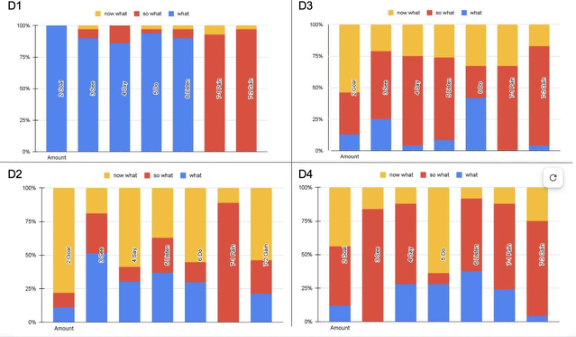
Apart from that, the survey shows a clear trend: more students focus more on “so what” and “now what” than “what” in their writing. As the figure 3 showed, the phenomenon pointed out that students gained their insight to the meaning, feeling, and thinking of the design projects, helping them think how to do better work if the same situation came up.
Figure 3: Reflection situations in different stages and questions.
Note:
1. The chart demonstrates the amount of the reflection: the amount of the reflection= The number of people who have responded in accordance with the requirements of “what, so what, now what” on a cumulative basis/ the number of valid participants in this stage 2. 2 Goal - What do they need to do; 3 See - What do they see; 4 Say - What do they say; 5 Do - What do they do; 6 Listen - What do they listen?; 7–1 Pain - What do they feel and think; 7–2 Gain - What do they feel and think? 3. D1- Discover; D2- Define; D3- Develop; D4- Deliver.
With A closer look at the writings, we observed the writings incorporated three points: integration of information, fostering more creative thinking, developing a heightened awareness of student designers themselves and their peers, which are crucial in the design process. The following examples illustrate the application of three points:
Effects of Reflective Writing for Students in the Design Projection 487
During group discussions, I expressed my thoughts on various aspects such as script, camera angles, and interview arrangements. We also dis- cussed multiple camera angles and audio-related issues. When discussing interviews, I thought about how to approach the core issues rather than just superficially exploring the topics. Perhaps based on my experience in video production, I had more ideas and input regarding video con- tent and interviews. Therefore, during the discussions, I shared more thoughts on video content-related matters.
The student made connections between the tasks and his experience to make arrangement ideas and shared it with his teammates. He also expressed what they needed with a microscopic perspective, as he gave a wealth of details, and consideration into the discussion and writing. We could find that the reflec- tion he built helps him to integrate information of experience and observation and be willing to explore different perspectives (Liang, 2015).
I didn’t have many ideas initially; each time, it was during discussions with my teachers and classmates that I suddenly derived my own unique and unconventional ideas from their thoughts. Then, I tested and refined them, leading to unexpectedly successful outcomes.
By rethinking others’ ideas, the student was able to come up with novel and innovative concepts. That is, when defining a problem, we cultivate reflec- tive ability simultaneously, which can stimulate creativity to pop out due to the thinking connection between problem space and solution space.(Schön, 2013; Dorst, 2001) And the statements led us to think that reflection could play a crucial role to foster more creative thinking.
We noticed that our exhibition panel has too much text compared to other groups, which mostly used visuals for presentation. However, I believe our group’s strengths lie in the presence of actual models and objects from field surveys, interactive exhibits, and abundant interview data. It’s just a matter of rethinking our presentation format, not limit- ing ourselves to exhibition panels, but considering other ways, such as incorporating audio presentations like some other groups did.
Aside from aware of the strength of others teams, this student also noticed their drawback of the works from their team without being frustrated, which could be concluded that reflection enlightened students to develop a heightened awareness of student themselves and their peers (Chang, 2019) For the foundation of the instances above and the studies from About — Stanford d.School (2023) and Ma et al. (2022) (Table 4 shows the abilities and attitudes design thinking necessitates), we can find that there are some abilities and attitude that would cultivate by reflective writing and empathy map, like: ability of problem reframing, Consider the problem as a whole, multi- / inter- / cross- disciplinary collaboration, creative confidence and inno- vation, open to different perspectives, and so on. These are significant in design abilities cultivation.
488 Pan and Chen
Table 4. The 10 core abilities and 8 attitudes of design thinking (Ma et al., 2022).
Table available in the original PDF paper.
Ability Attitude
Human centeredness
Ability of critically Questioning Being comfortable with Ambiguity Ability of problem reframing Creative confidence and innovation Ability of problem solving Desire and Determination to Make a Difference Ability of abductive reasoning Experimentation or learn from mistake or from failure Ability to visualize Growth Mindset Able to carry out Iteration and experimentation Consider the problem as a whole. Open to different perspectives Empathetic Towards People’s Needs and Context Taking Action Deliberately and Overtly Multi- / inter- / cross- disciplinary collaboration Mindfulness and awareness of process
CONCLUSION
For the sake of enhancing the students’ comprehension and impression of the design learning process, we attempted to have reflective writing and empathy map added in the course. By using the adjusted empathy map as a guide, students could gradually expand their perspectives, having their observation, ideas, and reasons demonstrated in greater detail, and know how to build connection with themselves and others, leading to improved clarity in their design projects. We hope that this approach could help learners deepen their knowledge and skills, particularly for those aiming to excel in the design field.
ACKNOWLEDGMENT
This research was supported by grants from MOE Teaching Practice Research Program, Ministry of Education, Interdisciplinary Integrated Research Project from Research Center for Humanity and Social Science, National Cheng Kung University, and the students from Department of industrial design National Cheng Kung University.
REFERENCES
About — Stanford d.school (no date). Available at: https://dschool.stanford.edu/about/#about-8-core-abilities (Accessed: 15 August 2023). Bass, J., Fenwick, J. and Sidebotham, M. (2017) ‘Development of a Model of Holistic Reflection to facilitate transformative learning in student midwives’, Women and Birth: Journal of the Australian College of Midwives, 30(3), pp. 227–235. Borton, T. (1970) Reach, touch, and teach: student concerns and process education.
New York: McGraw-Hill. Boud, D., Keogh, R. and Walker, D. (1985) ‘Promoting Reflection in Learning: a Model’, p. 23.
Effects of Reflective Writing for Students in the Design Projection 489
Chang, C.-W. (2019) ‘Teaching Practice of Applying Reflective Writing to Art History Course in University Art Education’, Research in Arts Education [Preprint]. Dorst, K. (2001) ‘Creativity in the design process: co-evolution of problem– solution’, 22(5), p. 13. Ericsson, A. and Pool, R. (2016) Peak: Secrets from the new science of expertise.
Boston, MA: Houghton Mifflin Harcourt (Peak: Secrets from the new science of expertise), pp. xxiii, 307. Framework for Innovation - Design Council (2003). Available at: https://www.desi gncouncil.org.uk/our-resources/framework-for-innovation/ Gibbs, G. (1988) Learning by doing: A guide to teaching and learning methods.
Edited by null. (null). Gray, D. (2018) ‘Updated Empathy Map Canvas’, The XPLANE Collection, 21 July.
Available at: https://medium.com/the-xplane-collection/updated-empathy-mapca nvas-46df22df3c8a Griffin, M. L. (2003) ‘Using Critical Incidents to Promote and Assess Reflective Thinking in Preservice Teachers’, Reflective Practice, 4(2), pp. 207–220. Harvey, M., Baumann, C. and Fredericks, V. (2019) ‘A taxonomy of emotion and cog-
nition for student reflection: introducing emo-cog’, Higher Education Research & Development, 38(6), pp. 1138–1153. Kalk, K. et al. (2014) ‘Validity and Reliability of Two Instruments to Measure Reflection: A Confirmatory Study’, Trames. Journal of the Humanities and Social Sciences, 18(2), p. 121. Kember, D. et al. (2000) ‘Development of a Questionnaire to Measure the Level
of Reflective Thinking’, Assessment & Evaluation in Higher Education, 25(4), pp. 381–395. Kolb, D. (1984) Experiential Learning: Experience As The Source Of Learning And Development, Journal of Business Ethics. Liang (2015) ‘The Roles of Reflection in Medical Education’, Taiwan J Fam Med,
25(3), pp. 165–173. Available at: van Manen, M. (1977) ‘Linking Ways of Knowing with Ways of Being Practical’, Curriculum Inquiry, 6(3), p. 205. ModelThinkers - What? So What? Now What? (no date). Available at: https://mode lthinkers.com/mental-model/what-so-what-now-what Ooi, S. M., Fisher, P. and Coker, S. (2021) ‘A systematic review of reflective prac-
tice questionnaires and scales for healthcare professionals: a narrative synthesis’, Reflective Practice, 22(1), pp. 1–15. Professional supervision - JOHNS - 1993 - Journal of Nursing Management - Wiley Online Library (1993). Available at: https://onlinelibrary.wiley.com/doi/abs/10. 1111/j.13652834.1993.tb00177.x Schön, D. A. (2013) The reflective practitioner: how professionals think in action.
Farnham: Ashgate. Sobral, D. (2001) ‘Medical students’ reflection in learning in relation to approaches to study and academic achievement’, Medical Teacher, 23, pp. 508–513. Souza, L. et al. (2021) ‘The Health Empathy Map as an instrument of reflection in a
noncare teaching scenario’, Revista Brasileira de Educação Médica, 45, p. e195.
LISTED IN THE AHFE DIGITAL BOOKSTORE CATALOGUE
Explore the complete digital volume
Application of Emerging Technologies
Read this individual research paper free through the original publisher, or explore the full digital proceedings book.
ISBN 978-1-958651-91-9
Explore this ISBN in the AHFE Bookstore ↗Listed in the July 2026 bookstore catalogue; search by ISBN to confirm current availability · Digital book purchase optional