1 Graduate School of Science and Engineering, Chuo University, 1-13-27 Kasuga, Bunkyo-ku, Tokyo 112-8551, Japan ↗
2 Artificial Intelligence Research Center, National Institute of Advanced Industrial, Science and Technology (AIST), 2-4-27 Aomi, Koto-ku, Tokyo 135-0064, Japan ↗
3 Human Augmentation Research Center, National Institute of Advanced Industrial, Science and Technology (AIST), 6-2-3 Kashiwanoha, Kashiwa, Chiba 277-0882, Japan ↗
4 Faculty of Science and Engineering Chuo University, 1-13-27 Kasuga, Bunkyo-ku, Tokyo 112-8551, Japan ↗↗
Sympathy for helping other people influences motivation and performance in communication tasks and collaborative work. To promote interactive sympathy within a team, this study aims to elucidate the relationship between moral consciousness and self-construal inclination by measuring brain activity. In our experiment, participants watch video stimuli, which display moral-related scenes involving helping/disturbing behavior. We found the moral consciousness of feeling good impression was associated with the significant decrement of brain activities in the left-region, particularly dorsolateral prefrontal cortex (DLPFC), and Broca’s area. For the participants who had inclination of interdependent self-construal, brain activity decreased significantly in the left-region during watching helping behavior. This finding holds potential for assessing objectively social tendencies based on cultural and value diversity by measuring prefrontal cortex.
Needless to say, good social relationship and communication within a team are crucial for the success and efficiency of a team’s collaborative work. Roberson et al. (2017) claimed that diversity of personalities within a team improves task performance because the variety of personalities enhances shar- ing and exchanging information. The diversity of personalities stems from cultural backgrounds and values. Hence, the expression and perception of emotional behavior should be different and uncertain among people. Our objective is to elucidate the difference in people’s social emotions, especially sympathy for other people. Sympathy is the most direct factor to maintain a good and warm atmosphere, however, we do not have enough technology to measure this emotion.
Brain Activity Difference During Watching Social Behavior Helping Other People 387
Previous research has employed questionnaire surveys to reveal the per- sonality regarding sympathy for other people. To assess differences in social behavior patterns, Kiuchi (1995) defined the concepts of independent and interdependent construal of the self as follows:
Independent Construal: Viewing the self as autonomous and distinct, separated from specific others and social contexts, and recognizing self- behavior is organized and controlled to express unique internal character- istics regardless of others and contexts.
Interdependent Construal: Viewing the self as interconnected and holistic, linked to specific others and social contexts, and recognizing self-behavior is organized and controlled to maintain the relationship with others and contexts.
People inclined toward Independent Construal and Interdependent Con- strual are respectively insusceptible and susceptible to others and contexts, hence influencing how they evaluate the external situation and express social behavior. According to Kiuchi (1995), people have both cognitive com- ponents of self-construal, and their personality develops based on which component is relatively more active. Kiuchi (1995) also created a psychologi- cal scale for assessing self-construal inclination. Consequently, people’s social emotion of sympathy for others could be predicted by evaluating their self- construal inclination, thus probably contributing to improving performance and motivation in communication tasks and collaborative work.
In general, questionnaire survey is insufficient to assess people’s state of mind such as emotion and thinking. Personality inclination should be clari- fied by brain activity because objective measurement is necessary to evaluate mental response. In terms of neuroscience, Ichi et al. (2017) illuminated the connection between moral consciousness and social behavior. When their participants chose legal or illegal bicycle parking areas, they were respec- tively assigned to the group of “cooperative behavior” or “non-cooperative behavior”. Ichi et al. (2017) found the difference between these groups’ brain activities by employing fMRI: the dorsolateral prefrontal cortex (DLPFC) exhibited higher activation in “cooperative behavior” group rather than “non-cooperative behavior” group. However, their study focused on clas- sifying people by the consequence of social behavior; hence, not reporting the relationship between brain activity and people’s personal characteristics. Therefore, our study aims to clarify moral-related behavior by corresponding self-construal inclination to social emotion.
To reveal social emotion towards sympathy, we adopt near-infrared spec- troscopy (fNIRS) which can measure the brain activities in the DLPFC and its vicinity. Balconi and Fronda (2020) reported a significant difference in pre- frontal cortex activity between conditions of providing profit for participants or for others. They indicated that the left DLPFC activity increased under the condition of providing profit for participants rather than for others. Regard- ing the self-construal, Li et al. (2023) disclosed that Interdependent Construal is linked to both left and right prefrontal cortex activation compared to Inde- pendent Construal during generating ideas. However, these previous studies
conducted the complex task to research moral consciousness. In our study, we sought to test and explore the relationship between self-construal inclina- tion and brain activity using fNIRS through simpler tasks designed to evoke moral consciousness of feeling naturally good and bad impression towards social behavior.
METHODS
We assigned participants’ personalities as the groups of Independent Con- strual or Interdependent Construal using Kiuchi’s psychological scale (1995), consisting of 16 items (four points numerical scale) such as “Claiming own opinion to others” — “Adapting own opinion to other people’s one” and “Acting based on own value and decision” — “Acting considering other people’s value and decision”.
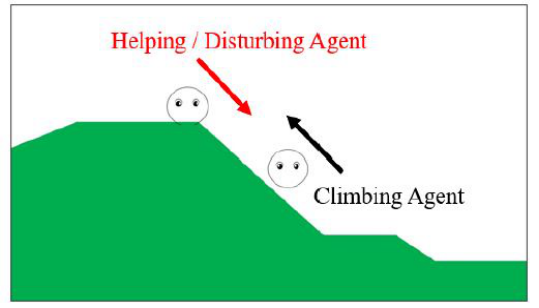
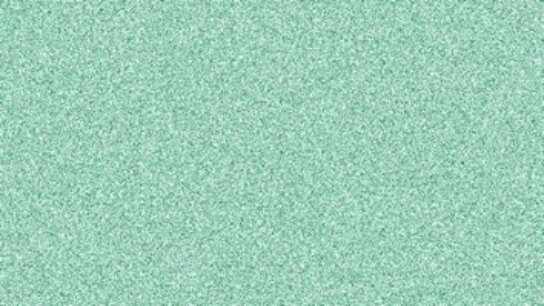
To elicit moral consciousness related to sympathy, we employed video stim- uli based on Surian et al. (2018), which investigated the helping or disturbing agent’s behavior developing respectively feelings of naturally good or bad impression. We represented videos depicting that one agent helps or disturbs another agent climbing a hill (Figure 1), and we named their stimuli as Help- ing or Disturbing. We also created the control stimulus as Control having the same color information as their experimental stimuli, which is a sequence of mosaic images with randomized pixel values (Figure 2). All video stimuli were a length of 44 sec.
Figure 1: The experimental stimulus with climbing and helping or disturbing agents.
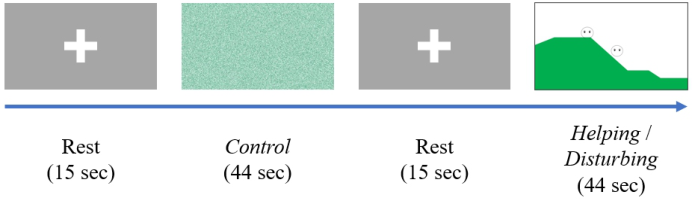
We represented the experimental stimuli based on the procedure (Figure 3). Each participant watched the video of Helping and Disturbing in random order, each repeated three times. A total of six times stimulations were included in each experiment with a total experiment duration of 708 sec. After the experiment, participants were asked to answer the questionnaire (two items; five points scale) regarding the impression towards helping and disturbing agents respectively as follows:
Good behavior — Bad behavior
Like image — Dislike image
Brain Activity Difference During Watching Social Behavior Helping Other People 389
Figure 2: The control stimulus of mosaic images.Figure 3: The procedure of representing experimental stimuli.
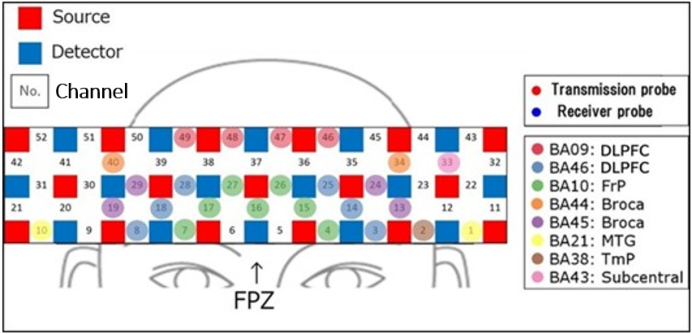
We employed optical topography (ETG-4000, Hitachi, Ltd.) to measure the brain activity of moral consciousness related to sympathy. Optical topog- raphy observed the concentration of oxygenated hemoglobin (Oxy-Hb) using fNIRS, enabling neural activity assessment in the brain’s superficial layers. We measured participants’ brain activity during watching the video stimuli in the experiment. The number of electrodes was 52 channels, and their place- ment were based on the international 10–20 system (Figure 4). To reduce data artifact, we applied the high-pass (0.01 Hz) and low-pass (0.8 Hz) filters, removing the amplitude and their concentration changes exceeding 0.4 mm × mm. We calculated the moving average of data, and we set the epoch as the center of showing experimental and control stimuli from −5–59 sec and the baseline as that from −5–0 sec. Thus, we obtained the averaged brain activity data when participants watched Helping and Disturbing video stimuli respectively. Then, we set the significance level as α = 0.05, perform- ing a two-paired t-test for brain activity data to compare the experimental stimuli with the control stimuli, and to compare the experimental stimuli of Independent Construal group with that of Interdependent Construal group. We also performed a test of no correlation to clarify the relationship between self-construal inclination and questionnaire response regarding helping and disturbing agents’ behavior impressions.
Figure 4: The location of channels measuring brain activity by fNIRS.
RESULTS
Japanese university students (seven men and two women; nine right-handed; aged 21–22 years) participated in our experiment. All participants were in good mental condition. We obtained informed consent from them to comply with the rules of the ethics committee of Chuo University. Utilizing Kiuchi’s psychological scale (1995) of self-construal inclination, we assigned five par- ticipants who had the summarized questionnaire score less than 40 points as Independent Construal group, whereas assigned four participants who had the summarized questionnaire score more than 40 points as Interde- pendent Construal group. Consequently, we found no significant correlation between self-construal inclination and the agent’s behavior impression on both conditions of Helping and Disturbing.
We obtained 27 brain activity data from nine participants. Performing t-test, we found significant results between brain activity data and experi- mental condition of the video stimuli and the participant groups respectively (Table 1). In our experiment, the brain activity decreased significantly in the Left-DLPFC, Right-Broca, and Left-region when participants watched Help- ing video stimuli. This showed that the decrement of these brain activities was associated with feeling good impression towards helping other peo- ple. Furthermore, the brain activity decreased significantly in the Left-region for Interdependent Construal participants rather than that of Independent Construal participants on the condition of Helping. This indicated that Left- region brain activity was different from participants’ self-construal during feeling good impression towards helping other people. Moreover, the brain activity increased significantly in the Center-region for Interdependent Con- strual participants rather than that of Independent Construal participants on both conditions of Helping and Disturbing. This exhibited the difference in brain activity from the participants’ self-construal during evaluating social behavior.
Brain Activity Difference During Watching Social Behavior Helping Other People 391
Table 1. The significant relationship between brain activity data and experimental conditions.
Table available in the original PDF paper.
Comparison Channel Location
6, 22 Left-region (+), Center-region (−)
Helping vs. Control 3, 12, 19, 23 Left-DLPFC (−), Right-Broca (−), Left-region (−) Disturbing vs. Control None Helping vs. Disturbing None Independent Construal vs. Interdependent Construal during watching Helping 37 Center-region (−) Independent Construal vs. Interdependent Construal during watching Disturbing
Legends: (+) Brain activity of a former condition was stronger than that of a latter condition. (−) vice versa.
DISCUSSION
We found brain activities connected with the moral consciousness of feel- ing good behavior. Our results revealed that Left-DLPFC activity decreased significantly during watching the helping agent’s behavior. This result is similar to Balconi and Fronda’s result (2020), in which Left-DLPFC activ- ity decreased on the condition of providing profit for others. Ichi et al. (2017) also reported that DLPFC activity increased in the participants who chose a good behavior rather than a bad behavior considering morality. In our study, participants dealt with the moral-related task regarding pro- viding others’ profit rather than their own one. Therefore, we suggested that Left-DLPFC was associated with the activation of moral consciousness regarding sympathy; moreover, the relationship may be complex for feel- ing good impression towards a situation providing profit for the self or for others. On the other hand, we found the participants’ Left-region and Right- Broca activity decreased significantly during watching the helping agent’s behavior. Left-DLPFC activity may influence mutually the entire Left-region due to proximity, however Right-Broca is not nearby the Left-region. Bal- coni and Fronda (2020) discussed about the asymmetry between left and right brain activity stemming from estimating emotion by electroencephalo- gram measurement. Hence, the decrement in Right-Broca activity may imply the relative increment of Left-Broca activity by Oxy-Hb measurement. We claimed that Left-region brain activity may be linked to the social emotion for good behavior, and different activity may be developed in the specific brain regions such as DLPFC and Broca’s area.
We found different brain activities between the types of self-construal incli- nation. We successfully evoked moral consciousness by employing the simpler task created by Surian et al. (2018). Compared to previous moral conscious- ness studies such as Li et al. (2023), we could more clearly elucidate the brain activity reflecting social emotion regarding sympathy for other peo- ple. Our findings indicated that people having interdependent self-construal inclination responded weakly to helping other people. Interdependent self- construal inclination was significantly correlated with the decrement of brain activity in the Left-region, which was consistent with the above discussion
for the relationship between Left-DLPFC activity and moral consciousness of providing others’ profit. Based on Kiuchi’s definition (1995), the interde- pendent self-construal people may dishonestly feel good and bad impression towards social behavior because they probably tend to view other people’s social behavior with connecting their own moral consciousness regarding sympathy. In addition, our result revealed that interdependent self-construal inclination was significantly linked to the increment of brain activity in the Center-region during watching the helping and disturbing agent’s behavior. Regardless of comparing the stimuli evoking social emotion of sympathy, we might discover the intermediate variable of the other personality corre- lated with the interdependent self-construal. Their people may deeply pay attention to external stimuli to view and maintain the relationship of the self with other people and social context. Hence, we claimed that the interdepen- dent self-construal inclination may be more strongly related to development of the moral consciousness of evaluating helping other people, and the self-construal inclination may indirectly influence the brain activity during evaluating the external stimuli.
Our study had a limitation of only revealing the brain activity with moral consciousness of evaluating helping other people. We could find no signif- icant brain activity associated with social emotion during disturbing other people. We employed the disturbing video stimuli based on Surian et al. (2018), focusing on creating a simpler task to assess infants’ moral con- sciousness. If moral consciousness is developing along with the growth of the brain, the stimuli should be rearranged with age, particularly in feeling bad impression towards disturbing other people.
CONCLUSION
We measured brain activities by using fNIRS when participants watched the behavior of helping and disturbing other people. Our study employed a simpler task evoking moral consciousness of feeling naturally good and bad impression towards social behavior. We classified participants by self- construal inclination, clarifying their different brain activity patterns from personality regarding sympathy. For the situation of helping other people, we elucidated that the moral consciousness was associated with the decrement in Left-region brain activity, particularly DLPFC, and Broca’s area. Addition- ally, we found Interdependent self-construal participants had a decrement in Left-region brain activity during feeling naturally good impression towards helping other people. Our study contributes to investigating the personality regarding social emotion by measuring brain activity, enhancing to organize a variety of workers in communication tasks and collaborative work. Social emotion should be researched through brain activity measurement to assess objectively diverse cultural backgrounds and values.
ACKNOWLEDGMENT
We would like to thank deeply to Dr. Atsushi Maki, Hitachi, Ltd. for his guidance in the measurement and analysis of brain function. We would also thank to the members of the Human Media Lab.
Brain Activity Difference During Watching Social Behavior Helping Other People 393
REFERENCES
Aki Kiuchi 1995, “Construction of a scale for independent and interdependent construal of the self and its reliability and validity”, The Japanese Journal of Psychology, vol. 66, no. 2, pp. 100–106. Balconi, M. & Fronda, G. 2020, “Morality and management: an oxymoron? fNIRS
and neuromanagement perspective explain us why things are not like this”, Cognitive, affective, & behavioral neuroscience, vol. 20, no. 6, pp. 1336–1348. Kengo Ichi & Yasunori Muromachi 2017, “Nokino keisoku deta wo riyo shita dotoku ishiki to kodou tono kankeisei ni kansuru kenkyu”, Doboku gakkai ronbunshu D3 (Doboku keikakugaku), vol. 73, no. 5, pp. 1251–1258. Li, X., Tong, W., Li, Y., Lyu, Y. & Hu, W. 2023, “The effects of social comparison
and self-construal on creative idea generation: An EEG study”, Behavioural brain research, vol. 436, p. 114084. Roberson, Q., Ryan, A. M. & Ragins, B. R. 2017, “The evolution and future of diversity at work.”, Journal of Applied Psychology, vol. 102, no. 3, pp. 483–499. Surian, L., Ueno, M., Itakura, S. & Meristo, M. 2018, “Do Infants Attribute Moral
Traits? Fourteen-Month-Olds’ Expectations of Fairness Are Affected by Agents’ Antisocial Actions”, Frontiers in Psychology, vol. 9.
LISTED IN THE AHFE DIGITAL BOOKSTORE CATALOGUE
Explore the complete digital volume
Emerging Technologies in Healthcare and Medicine
Read this individual research paper free through the original publisher, or explore the full digital proceedings book.
ISBN 978-1-958651-92-6
Explore this ISBN in the AHFE Bookstore ↗Listed in the July 2026 bookstore catalogue; search by ISBN to confirm current availability · Digital book purchase optional