Monica Daniela Gomez Rios, Kerlly Araujo, Felipe Castro, Miguel Angel Quiroz Martinez (2024). Evolution in videogame graphics: an approach between reality approach and user perspective. In: Intelligent Human Systems Integration (IHSI 2024): Integrating People and Intelligent Systems. AHFE Open Access, vol. 119, pp. 706–713. https://doi.org/10.54941/ahfe1004535
Technological progress in the video game industry has become increasingly visible at the time of consuming games, these tend to try to be more realistic either by the ambition of the developers or by request of the community of each video game; this approach to reality can be in various forms, the main one that we study in this work is in the graphic section, in-game mechanics, history and interaction with the game. Based on the existing intrigue of how video games today can be indistinguishable from life itself in their technical and graphical section, as well as being able to create emotional, immersive, and exciting stories; in this article, we analyze how these games can approach reality through everything they can offer us, analyzing the technologies that are currently used to make this possible and how we as users can perceive it as accurate. We use an analytical-descriptive methodology, using Scopus, IEEE, IGN, Google Scholar, and WoS databases. Thus, the purpose of this study is to review how video games increasingly come to resemble reality both in the technical/graphic section and in how users perceive that approach through the coherent narrative of the game. The results of this article show how the graphics engine has perfected the details such as particles, photo illumination, and environments; while artificial intelligence works with great support and improvement for greater power in the frames in addition to helping to refine the hyperrealism achieved by the graphics engine; for its part also the analysis of the behaviour of players when interacting with video games and that these transmit that immersive and authentic feeling at the time of consuming them. Concluding that the technologies of the games have had a significant advance in their graphical sections that now to see a scanned photo of nature is very complicated to differentiate it from an actual photo of some landscape.
We are currently living a golden age in the subject of video games. We are reaching such graphic levels that it is challenging to tell briefly if we are seeing a video or a photorealistic simulation. If we get analytical, we are reaching the eternal dream of humanity to create worlds that, in certain aspects, are indistinguishable from ours. In a few decades, we have gone from seeing 8 pixels moving from one side to the other to seeing color, then perspective,
Evolution in Videogame Graphics: An Approach Between the Approach to Reality 707
then 3D, then destruction in real-time, and now even hair or leaves with their physics (Reimer, 2005).
The interest in conducting this study is to present the technological advances for the development of video games; in addition to analyzing the aspects that influence the players’ immersion, we do this using an analytical- descriptive methodology. The video game is considered a simulation tool, narrative, which dramatically influences behavior psychology, considering its ludic dimensions to tell the story through the game mechanics. The narrative goes according to the genre of the video game to generate a good atmosphere and progression in the story, being subject to the conditions and parame- ters imposed by the player deciding the course of the story (Carstensdottir et al., 2019) in its beginnings the narrative was irrelevant, with the time it was entered little by little from a brief story either with images giving a lit- tle more motivation to the player, until reaching the interaction with several characters solving the different enigmas, here greater importance is given to the story, and later with a more immersive character for the player making it more attractive to feel the intercommunication of the video game with audio- visual language as in the use of a first-person perspective camera making it more immersed in the story with new narrative techniques giving the viewer a better gaming experience.
Although no advances are without challenges, this process has led to today’s advances. At this point, the graphics are so realistic that we begin to simulate reality, but how is this possible? The most significant breakthrough in our days we are seen with the graphics engine Unreal Engine 5, owned by Epic Games; this incorporates a new technology called Nanite, which is a real revolution of the technique, taking the rendering based on poly- gons to the next level, among other tools we see the DLSS and Ray Tracing, both properties of Nvidia, which through the use of artificial intelligence increase the performance in frames of the games creating new frames of the AI and increasing the tracing and refactoring of light in the environments of the games making them even more realistic to the eye of the users (Newell et al., 2021).
The truth is that graphics in video games have always been one of the main objectives of development. Unlike the gameplay mechanics, art direc- tion, or the story of the video game, graphics is something you can excel with investment. Thanks to this technical development in the graphic section of the games, we have seen dizzying progress in the world of video games. This dynamic has made the graphic quality essential to sell a AAA video game, and in turn, this can look realistic (Ivanov et al., 2021).
MATERIALS AND METHODS
METHODOLOGY / DEVELOPMENT PROPOSAL This study is based on an analytical-descriptive literature review, applying a query to the primary databases (Scopus, WoS, IEEE, E3, IGN, STEAM, and Google Scholar) about the graphical section of video games and their approximation to reality to determine the changes and improvements in the
graphical section of video games and their relationship in resembling reality and immersion for the user, through the fulfillment of the following phases: Phase 1 This article is a review of the graphic section of video games and their approx- imation to reality, it is of scientific-analytical analysis, which is determined using a review of conditions, changes, and improvements in the graphic section of video games with their relationship in resembling reality and immersion for the user.
Phase 2 A review is made about the most famous technologies of the moment, it is of scientific-analytical analysis, its operation is reviewed, to which it is oriented, and how it increases the performance and the graphic quality in the games.
Phase 3 A review is made about the psychology behind the narration in video games so that the user can consider the product he is consuming as accurate. It is of scientific analytical analysis, and it determines the visual aspects, the aspects of narration in the story of the game, and the interactive section in contrast with the visual and narration.
THEORETICAL FRAME OF REFERENCE The video game is considered as a simulation tool, narrative, which greatly influences the psychology of behavior, considering its ludic dimensions to tell the story through the game mechanics. The narrative goes according to the genre of the video game to generate a good atmosphere, the course of the story, being subject to the conditions and parameters imposed by the player deciding the course of the story (Carstensdottir et al., 2019). In its beginnings it was small or invalid without telling a plot, with the passage of time it went into little by little from a brief story either with images giving a little more motivation to the player, until reaching the interaction with several characters solving the different riddles, here they are more dedicated to the narrative as in an adventure video game, and later with a more immersive character for the player making it more interesting to feel the intercommunication of the video game with audiovisual language as in first person making it more immersed in the story with new narrative techniques giving the viewer a better gaming experience.
TECHNOLOGIES MOST USED IN VIDEO GAMES FOR THE APPROXIMATION OF REALITY Within the world of games, the first time a machine was taught to play against us was in 1950 when Alan Turing managed to get an algorithm to play chess more or less correctly; the first time he tried it, he had to print each move of the algorithm in a process that took 30 minutes per turn, all this effort resulted in a defeat for the machine in a total of 29 moves (Turing, 2012).
Evolution in Videogame Graphics: An Approach Between the Approach to Reality 709
AIs have many uses, and within video games, they are essential since, with- out them, there would be nothing within video games, referring to enemies, challenges, interactive NPCs, or rivals (Skinner & Walmsley, 2019).
PRESENT AND FUTURE IN VIDEO GAMES Modern video games can create scenarios indistinguishable from life itself, all this is accessible to anyone who has a PC capable of managing it. It is not necessary to use the most potent commercial graphics engine of the moment to achieve this since, with a lot of patience and community tools, many people have made it their hobby to make graphical improvements to existing games, the most famous case of this is GTAV which is an 8-year-old game that with MODS made by the community looks like a movie (McCauley, 2016).
Photorealism and scanning techniques are currently we have them quite fine-tuned for environments, landscapes, vegetation, etc. But what we still struggle with is ourselves. Today, we make realistic human faces, but we can still quickly notice something about them. We can be impressed if we are told that the landscape is not natural but a rendering, but that still does not happen with human characters because the graphic advance has run into a big problem: our evolution. Humans have the innate ability to recognize others of our species, so we have the innate ability to recognize others of our species.
So that is why when we see a simulation of our humanity that is not real, we tend to reject what we see.
Technology advances relatively fast, and artificial intelligence is something that surprises more and more to the point that today we have an “e-celebrity” as the profile of lilmiquela on Instagram or this person does not exist on Twit- ter, also the function of Deep Fakes that consists of emulating the appearance of other people, we have artificial intelligence as Dali or Stable Diffusion that can visually interpret the descriptions that are given in a text box (Rodrigo Martín et al., 2021).
Nowadays, AIs can create entirely new worlds in each game that is started, called procedural progress. They can create almost infinite worlds, as in the game No Man’s Sky. In principle, they can automate creativity many newspaper articles and other media are written by an AI, as is the case of The Washington Post; there are also musical pieces created by these as the song “I am AI” by AIVA, that are indistinguishable from the human product (Mihailova, 2021).
The power of these new technologies opens possibilities that were unimag- inable just a few years ago, both creatively and technically.
RESULTS AND DISCUCCION Question 1. Do you consider that video game graphics have evolved over the years?
Analysis. All the people who carried out the survey think that video game graphics have evolved significantly over the years due to their graphic advances, forms of creation such as textures, and more realistic details (see Fig. 1).
Table 1. Graphics over the years.
Table available in the original PDF paper.
Indicators Quantity Percentage Have worsened 0 0% Significantly improved 80 100% Have not changed much 0 0%
Figure 1: Graphs over the years.
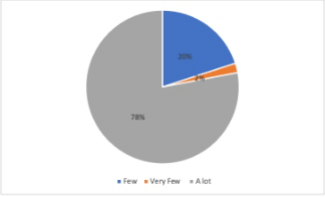
Question 2. How close are current video games to reality?
Table 2. Approximation of video games to reality.
Table available in the original PDF paper.
Indicators Quantity Percentage Little 16 20% Very Little 2 2% A lot 62 78% Total 80 100%
Figure 2: Approximation of video games to reality.
Analysis. All the people who carried out the survey think that video game graphics have evolved significantly over the years due to their graphic advances, forms of creation such as textures, and more realistic details (see Fig. 2).
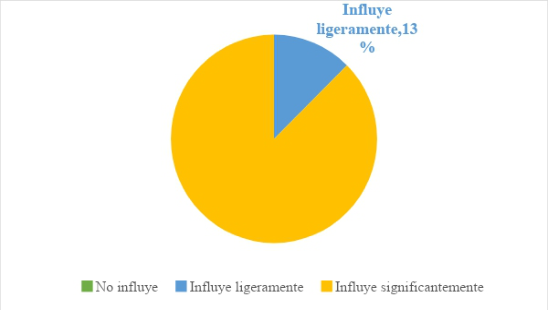
Question 3. To what extent does the graphic quality influence the user experience?
Evolution in Videogame Graphics: An Approach Between the Approach to Reality 711
Table 3. Graphical quality in the user experience.
Table available in the original PDF paper.
Indicators Quantity Percentage No influence 0 0% Influences slightly 10 12% Significantly influences 70 88% Total 80 100%
Figure 3: Graphic quality in the user experience.
Analysis. Of the total respondents, 88% of users state that graphic quality significantly influences the user experience. In comparison, 12% of these people consider that it only slightly influences the experience (see Fig. 3).
CONCLUSION
Technological advances show that video game development techniques have been perfected, either by having a powerful graphics engine that allows excel- lent management in the pixels of the games to improve the care in the details, use of artificial intelligence in the GPUs to improve the lighting in the envi- ronments allowing to have refractions, occlusions, reflections, shadows, and transparencies, and the ability to learn from the frames of the game to create entirely new ones to lighten the load on the computer when running the games to obtain a better frame rate.
The analysis of the three factors of immersion in games has denoted that these become important now in which the player must interact with the game, either for its mechanics or its story. Feeling that what we are doing in the game has some kind of repercussion and that it is developing coherently to the narrative or some historical fact if it is the case, helps the player feel part of the game and not an external agent.
In the surveys, the technological advance has been very well received by the users, making them feel a more incredible experience, being more realistic nowadays due to the industry’s changes. In the interview, both experts agree that one of the leading tools in the market is Maya, for its way of modeling, considering the details, being fundamental to give it a more realistic look.
ACKNOWLEDGMENT
This work has been supported by the GIIAR research group of the Universi- dad Politécnica Salesiana.
REFERENCES
Berner, C., Brockman, G., Chan, B., Cheung, V., Dennison, C., Farhi, D., Fischer, Q., Hashme, S., Hesse, C., Józefowicz, R., Gray, S., Olsson, C., Pachocki, J., Petrov, M., Pondé de Oliveira Pinto, H., Raiman, J., Salimans, T., Schlatter, J., Schneider, J.,... Zhang, S. (2021). Dota 2 with Large Scale Deep Reinforcement Learning. https://www.facebook.com/OGDota2/ Bonillo Fernández, C. (2020). Hacia una nueva era de los videojuegos japone-
ses. Superando el “valle inquietante” con Devil May Cry 5. 4, 87-98. https://doi.org/10.5209/mira.67180Bruna, C. S., Bienvenido, H. P., & Ruiz, M. F. (2022). Persuasión en los videojuegos: La construcción de identidades. Teknokul- tura. Revista de Cultura Digital y Movimientos Sociales, 19(1), 33–41. https: //doi.org/10.5209/TEKN.78260 By, P., Guerra, L., Directors, R., Scarani, S., & Sastre, J. (2021). Subjective personalization in interactive music systems in video games. In search of a game experience tailored to the individual. https://doi.org/10.4995/THESIS/10251/172545 Carstensdottir, E., Kleinman, E., & El-Nasr, M. S. (2019). Interacción del jugador en
juegos narrativos: Mecánicas de Estructura y Progresión Narrativa. Actas de la 14a Conferencia Internacional sobre Fundamentos de los Juegos Digitales. https: //doi.org/10.1145/3337722.3337730 El-Wajeh, Y. A. M., Hatton, P. v., & Lee, N. J. (2022). Unreal Engine 5 and immersive surgical training: translating advances in gaming technology into extended-reality surgical simulation training programmes. British Journal of Surgery, 109(5), 470– 471. https://doi.org/10.1093/BJS/ZNAC015 Fernández, D. T., Moya, E. B., & Sánchez, R. P. (2021). Inmersión y arousal emo-
cional con videojuegos de realidad virtual. Revista de Psicologia (Perú), 39(2), 531–551. https://doi.org/10.18800/PSICO.202102.002 Games, E. (s.f.). Unreal Engine. Obtenido de Nanite Virtualized Geometry: https:// docs.unrealengine.com/5.0/en-US/nanite-virtualized-geometry-in-unreal-engine/. García-Naveira Vaamonde, A., Toribio, M. J., Molero, B. T., & Suárez, A. (2018). Beneficios cognitivos, psicológicos y personales del uso de videojuegos y deportes electrónicos: una revisión. 3, 1–14. https://doi.org/https://doi.org/10.5093/rpadef2022a8Im, J., Choi, N., & Joo, H. G. (s/f). Flexible Geometry Treatment in PRAGMA Using NVIDIA® Ray Tracing Engine OptiX TM. Ivanov, M., Wittenzellner, H., & Wardaszko, M. (2021). Video Game Monetization
Mechanisms in Triple A (AAA) Video Games. Lecture Notes in Computer Science (incluidas las subseries Lecture Notes in Artificial Intelligence y Lecture Notes in Bioinformatics), 11988 LNCS, 389–404. https://doi.org/10.1007/978-3-030- 72132- 9_33/TABLES/5 Liu, J., Snodgrass, S., Khalifa, A., Risi, S., Yannakakis, G. N., & Togelius, J. (2020).
Aprendizaje profundo para la generación de contenido procedimental. Neural Computing and Applications 2020 33:1, 33(1), 19–37. https://doi.org/10.1007/ S00521-020-05383- Luo, W. (2018). Juego PAC-MAN basado en el algoritmo SAPF. Proceedings - 3rd International Conference on Intelligent Transportation, Big Data and Smart City, ICITBS 2018, 2018-enero, 686–689. https://doi.org/10.1109/ICITBS.2018.00178
Evolution in Videogame Graphics: An Approach Between the Approach to Reality 713
Maldonado Nolivos, V. D. (2022). El uncanny valley, su ejecución y cómo evitarlo en animaciones 3D. REVISTA ODIGOS, 3(3), 9–26. https://doi.org/10.35290/ro.v3n3.2022.675 María Garrido García, Á., Martín Testón, R., & María Garrido García Roberto Martín Testón, Á. (2020). Death in the video game: A Mortician’s Tale and the positive vision of death. Barataria. Revista Castellano-Manchega de Ciencias Sociales, 29(29), 101–120. https://doi.org/10.20932/BARATARIA. V0I29.546 McCauley, J. (febrero de 2016). Nvidia. Obtenido de https://www.nvidia.com/en-us
/geforce/news/ten-must-have-mods-for-grand-theft-auto-v/. McKissack, F., & May, L. (2019). Running With the Dead: Speedruns and Generative Rupture in Left 4 Dead 1 and 2. 15(5), 544–564. https://doi.org/10.1177/ 1555412018821528 Mihailova, M. (2021). To Dally with Dalí: Deepfake (Inter) faces in the Art Museum.
27(4), 882–898. https://doi.org/10.1177/13548565211029401 Newell, K., Patel, K., Linden, M., Demetriou, M., Huk, M., & Mahmoud, M. (2021).
Evolution of Software Development in the Video Game Industry. Proceedings - 2021 International Conference on Computational Science and Computational Intelligence, CSCI 2021, 1989–1996. https://doi.org/10.1109/CSCI54926.2021. 00367. Reimer, J. (15 de diciembre de 2005). arstechnica. Obtenido de Total share: 30 años de cifras de cuota de mercado de ordenadores personales: https://arstechnica.co m/features/2005/12/total-share/7/. Rodrigo Martín, L., Rodrigo Martín, I., & Muñoz Sastre, D. (2021). Los Influencers
Virtuales como herramienta publicitaria en la promoción de marcas y productos. Estudio de la actividad comercial de Lil Miquela. Revista Latina de Comunicación Social, ISSN-e 1138-5820, No. 79, 2021, 79, 40. https://doi.org/10.4185/RLCS -2021-1521 Roth, C., van Nuenen, T., & Koenitz, H. (2018). Hermenéutica ludonarrativa: Una salida y la paradoja narrativa. Lecture Notes in Computer Science (Incluyendo las subseries Lecture Notes in Artificial Intelligence y Lecture Notes in Bioinformat- ics), 11318 LNCS, 93–106. https://doi.org/10.1007/978-3-030-04028-4_7/FIGU RES/1 Sab˘au, A. (s/f). Explorando distopías virtuales. A study of architectural stagecraft
and narrative in video games. Estudio de caso: Half-Life 2 de Valve. Utopia E Distopia Nel Progetto Digitale, 69. Skinner, G., & Walmsley, T. (2019). Inteligencia artificial y aprendizaje profundo en videojuegos una breve revisión. 2019 IEEE 4th International Conference on Computer and Communication Systems (ICCCS), 404–408. turing, a. (12 de julio de 2012). El país. Obtenido de Turing y el ajedrez: https:
//blogs.elpais.com/turing/2012/07/turing-y-el-ajedrez.html Vista de Kaspárov contra Deep Blue. (s/f). Recuperado el 28 de noviembre de 2022, a partir de https://www.cosmosandhistory.org/index.php/journal/article/view/989/ 1625 Watson, A. (1975). Deep Learning Techniques for Super-Resolution in Video Games.
https://www.nvidia.com/en-
LISTED IN THE AHFE DIGITAL BOOKSTORE CATALOGUE
Explore the complete digital volume
Intelligent Human Systems Integration (IHSI 2024): Integrating People and Intelligent Systems
Read this individual research paper free through the original publisher, or explore the full digital proceedings book.
ISBN 978-1-958651-95-7
Explore this ISBN in the AHFE Bookstore ↗Listed in the July 2026 bookstore catalogue; search by ISBN to confirm current availability · Digital book purchase optional