Monica Daniela Gomez Rios, Eduardo Alvarado, Daniel Mora, Miguel Angel Quiroz Martinez (2024). Streaming applied to entertainment: analysis of the constant evolution of a perpetual industry. In: Intelligent Human Systems Integration (IHSI 2024): Integrating People and Intelligent Systems. AHFE Open Access, vol. 119, pp. 773–782. https://doi.org/10.54941/ahfe1004542
This article explores the evolution of the entertainment industry driven by streaming technology, from its inception in 1993 to the impact of platforms like RealAudio Player, RealPlayer, YouTube, Twitch, and Netflix. The research aims to promote the use of streaming platforms for accessing entertainment content, considering the ease of accessibility but limited awareness among some users. The study employed a descriptive methodology with cross-sectional online surveys conducted via Google Forms, sampling 200 participants aged 18 and older to encompass generational diversity. Interestingly, the generation gap doesn't significantly affect the recognition of these services and their attributes. The results indicate that around 93% of respondents either use or are interested in these platforms, with 84% acknowledging the variety of content as the primary advantage. Nearly 50% expressed concerns about the need for an internet connection, even with the availability of alternatives. The study underscores the importance of further exploration and promotion of streaming platforms to unlock their full potential, making users aware of their various entertainment options.
The entertainment industry has leveraged technology, especially streaming, to reach a global audience through internet access. The industry has trans- formed content consumption from the early music show transmissions in the 90s (Pérez, 2021) to the rise of major streaming platforms like Netflix and Twitch for live content creators, including services like Xbox Cloud Gaming (Truong, 2021). Despite the availability of diverse streaming plat- forms accessible on various devices, such as computers, Smart TVs, phones, and game consoles, some individuals are hesitant to embrace these ser- vices. Reasons include misconceptions about high costs, device compatibility issues, or the preference for more familiar methods of content consumption. However, streaming platforms continually update and aim to enhance user- friendliness. This study highlights the significant impact of streaming services on multimedia content consumption and the untapped potential within the entertainment realm. It underscores the unique advantages of streaming, like portability and content variety, which are increasingly appealing to diverse
audiences, even considering generational differences and knowledge gaps that may hinder their adoption.
STREAMING Streaming refers to the real-time transmission of video, audio, or interactive content without downloading it, preserving device storage (Torres, Arteño, Ortiz & Zabala, 2021). This encompasses video-on-demand platforms like Netflix, Disney+, and HBO+, offering vast content libraries (Wayne, 2018). Additionally, “social videos” are live video content streamed on platforms like YouTube, Facebook, and Twitch, where content creators are known as “streamers,” and viewers are the “audience.” Twitch, designed for live streaming, witnessed an 83% increase in user engagement in 2020 (Castro, Pérez, Torres, Carballeda & De Aguilera, 2022).
HISTORY OF STREAMING IN THE ENTERTAINMENT INDUSTRY Streaming started in 1993 with Xerox PARC’s live transmission, providing a new way to reach broader audiences with audio-visual content (Arnum, E., 2000). Technological advancements like fiber optics and DSL made stream- ing accessible to the masses (López Delgado, D., 2018). YouTube, founded in 2005, revolutionized content sharing, accumulating billions of visits and video uploads (Medina Salgado, C., 2016). Originally a dating platform, it transitioned into a public access platform (Ibarra, C. D. B., & Pabón, L. C. O., 2017). Spotify addressed high album costs and unauthorized content sharing, offering music via subscriptions (Umaschi, S., 2019). Netflix trans- formed how we watch series and movies, impacting physical format sales and DVD rental companies like Blockbuster (Giner Fernández, A., 2018). Gaming streaming, represented by Google Stadia, faces challenges, while platforms like Xbox Game Pass and GeForce Now offer video game streaming via subscriptions (Cachorro Regidor, V. M., 2019).
RELEVANCE OF STREAMING IN EVERYDAY LIFE Streaming services offer the possibility of having at our fingertips a large num- ber of music albums, movies, series, documentaries, video games, and many other content formats for a subscription fee whose price is quite reasonable considering the content available to us. All this represented a drastic change in the daily lives of users who consume this type of content, since thanks to the portability that these services allow, being able to access a series, movie or album wherever we are, has made these activities part of our daily lives, continuing a series during lunchtime at work, listening to one of the albums of the moment on the commute to work or back home, activities that help users to lighten or make the routine more enjoyable and that previously was not possible due to the limitations of the time.
Streaming has facilitated the consumption of these audiovisual contents, which have led us to experience endless options and moments of both learning and growth (Rodríguez Uscátegui, M., 2019).
Streaming Applied to Entertainment: Analysis of the Constant Evolution 775
ADOPTION OF NEW ENTERTAINMENT SERVICES THAT MAKE USE OF STREAMING Streaming has significantly impacted the entertainment industry, especially during the COVID-19 pandemic (López and Peñalosa, 2022). It has diversi- fied content formats, including podcasts, live events, and on-demand gaming. In Hungary, e-theatre, a service allowing movie show transmissions without in-person attendance, gained popularity during the pandemic (Aranyossy, M., 2021). Aranyossy used the Unified Theory of Acceptance and Use of Technology (UTAUT) to study theatre’s reception, considering factors like performance expectancy and hedonic motivation (Venkatesh et al., 2003; Venkatesh et al., 2012). E-theatre attracted people of various age groups, including those less familiar with streaming services. Many who explored streaming during the pandemic found it convenient and expressed interest in continuing to use e-theatre post-pandemic if pricing and the user experience align (Aranyossy, M., 2021).
METHODOLOGY
The present research work will use the descriptive method with a cross- sectional approach through online surveys. The descriptive method focuses on the collection, analysis and presentation of data, with the purpose of iden- tifying patterns, trends and relationships between variables, obtaining a more complete understanding of the phenomenon in question (Carazo, P. C. M., 2006). This phenomenon in this research will be the impact that stream- ing services have had on society. The use of the cross-sectional approach will allow an analysis of one or more variables in a specific time (Rumaldo Calderón, C. B., & Tupayachi Torres, Y. M., 2019), besides offering addi- tional advantages such as efficiency in terms of time and costs, ease of analysis and data comparison due to its nature.
The surveys will be conducted to a sample of 200 people with age ranges from 18 years and older. The questions were formulated according to the study variables presented in order to facilitate the analysis and synthesis of the results.
Methods and Data Collection Techniques Employed Data collection will be carried out through the use of online surveys, thanks to the ease of analysis provided by their systematic and structured nature in obtaining information directly from people. For the elaboration of the surveys, the Google Forms platform will be used, which stands out for being a free and easy to use platform that allows creating customized surveys with different types of questions and response options, as well as the possibility of sharing and collecting responses efficiently (Simanjuntak, B., and Limbong, T., 2018).
To develop the survey, a basis of research questions should be determined to answer the objectives proposed at the beginning of the survey. In this way, there will be a better approach to the problem in order to establish the bank of questions that will be answered by the sample (see Table 1).
DEVELOPING HUMAN SYSTEMS INTEGRATION TOOLS TO SUPPORT SYSTEMS DESIGN HSI experts contribute by ensuring that human capabilities and limitations are considered. It has become clear that treating the system as separate from the users results in poor performance and potential failure in the operational setting. Continued growth in technology has not delivered desired results. Systems engineers and others are beginning to understand the role humans play in technology systems. The core challenge is to balance successful hard- ware and software solutions with human friendly implementations. To define the requirements of humans as a fundamental system component, it is essen- tial to understand the inherent capacity of user populations and their typical operational environment (Booher, 2003). A description of a population’s capacity incorporates more than the basic anthropometrics or the cognitive capability of the average member of the user population (Chapanis, 1996).
HSI as a Supportive Framework for Design and Modeling HSI experts work within the systems engineering framework to ensure successful human systems integration. Current methodologies focus on func- tional and nonfunctional requirements, but the lack of taxonomy linkage to SE needs and domain languages hinders integration (Meilich, 2008). HSI requirements relate to performance, efficiency, environmental, operational, maintenance, and training, often interconnected with mechanical and elec- trical requirements. A challenge is the absence of clear human engineering requirements in the Statement of Work (SOW) and a lacking HSI software or architecture framework. Verification and validation within the HSI plan are crucial and should be integrated into the systems engineering test plan. Standalone HSI testing should be closely integrated with systems engineering (Meilich, 2008).
Table 1. Research questions.
Table available in the original PDF paper.
Information components Questions to answer Social impact How has streaming affected the way people consume multimedia content? Application trends What are the main advantages that streaming services offer to both the entertainment industry and the consumer? Main problems What limitations and issues exist in the use of streaming services?
The next step will be to determine the target sample to which the survey will be addressed: the people who use streaming entertainment services. A stratified random sampling strategy will be used to select the sample, dividing the target population into different strata according to age. Due to the limited resources available when conducting this research, it was determined that the sample would be 200 people within Guayaquil. In this way, it will be possible
Streaming Applied to Entertainment: Analysis of the Constant Evolution 777
to obtain relevant information on the perceptions and behaviors of users of streaming entertainment services according to their age (see Table 2).
Table 2. Age ranges used to conduct the survey.
Table available in the original PDF paper.
Age range(years old) Nombre del grupo 18–25 Youth 26–35 Young adults 36–45 Young adults 46–55 Middle-aged adults
The survey results offer an in-depth understanding of user preferences, enabling the enhancement of streaming services to cater to a broader audi- ence. Additionally, these findings can help identify industry trends for decision-making related to marketing strategies, product development, and other relevant aspects. The collected survey data aims to provide valuable insights into the use and perception of entertainment streaming services and pinpoint barriers that deter specific population segments. Through anal- ysis and interpretation, recommendations can be formulated to improve accessibility usability and expand the services’ reach to a more extensive audience.
Data Analysis Methods and Techniques A quantitative analysis of the data collected via Google Forms and exported to Google Sheets will be performed to assess the impact and trends in streaming services (Oualline, S., Oualline, G., Oualline, S., & Oualline, G., 2018). The survey aimed to gather insights on subscription preferences, platform usage, device preferences, potential displacement of traditional media consumption, purchasing behavior, internet dependence, interest in new streaming services, and critical factors for service selection (Gil Buetto, R., 2018). This analysis will unveil patterns and relationships in the data, potentially influencing the entertainment and media consumption industry (Al-Abbas, L. S., Haider, A. S., & Saideen, B., 2022).
RESULTS
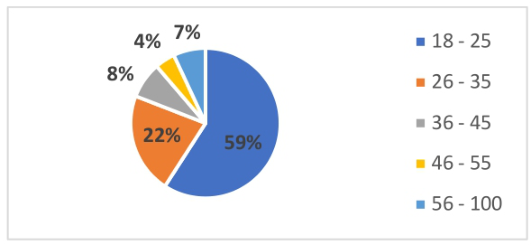
In the following graph, it can be observed that the users surveyed predominate whose age range is between 18 and 25 years, representing 59% of the total, followed by those between 26 and 35 years with 22%, while those between 36 and 45 years have 8%, and surprisingly the age range of 56 years and older exceeds with 7% of presence, those between 46 and 55 years which remain with 4%, (see Fig. 1).
How Has Streaming Influenced How People Currently Consume Multimedia Content?
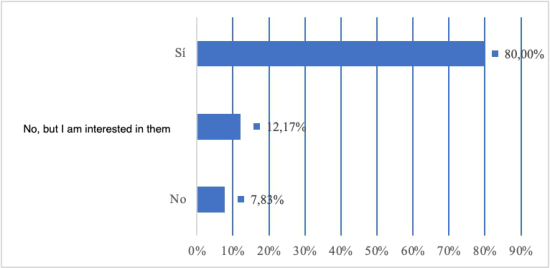
In response to this question, we can see that 80% of respondents currently have a streaming service, 12.17% are interested in them, and only 7.83% are indifferent to this type of service (see Fig. 2).
Figure 1: Percentage of people surveyed according to age range.Figure 2: Percentage of people who use or are interested in streaming services.
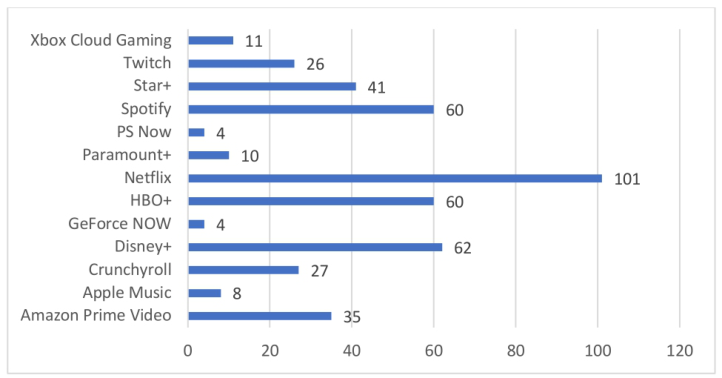
We can see that the predominant platform above all others is Netflix, pre- senting the most significant number of users and people interested in hiring the service, followed by similar services such as Disney+ and HBO+, the lat- ter being overtaken by the music platform Spotify, thus also demonstrating that the content that is most in demand are series, movies, documentaries, etc. And the services that lag are those related to video games (see Fig. 3).
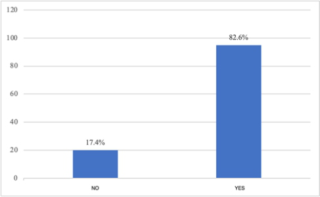
When asked whether streaming services might eventually replace tradi- tional content consumption, 82.6% of respondents expressed the view that technology’s constant advancement will lead to the demise of conventional methods. Only 6% believed traditional content purchase would endure, compared to 17.4% who remained undecided (see Fig. 4).
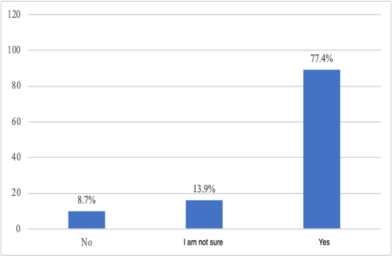
When asking about people’s interest in new streaming services, includ- ing movie shows, concerts, plays, and other in-person events, we found that 77.4% of respondents were surprised by the existence of these services and expressed a willingness to try them. Only 13.9% were somewhat reluctant, and a mere 8.7% had no interest in such services.
The influence of streaming in the way we consume multimedia content today is notorious; the reach of these services is undeniable, to the point that even people who are not familiar with the technology are aware of these services and their usefulness, even considering them as an alternative for activities that were initially performed in person.
Streaming Applied to Entertainment: Analysis of the Constant Evolution 779
Figure 3: Number of people who use these services or are interested in using them.Figure 4: Percentage of opinion on whether streaming will replace the conventional form of multimedia content consumption.Figure 5: Percentage of interest in new proposals for streaming services.
What are the Main Advantages of Streaming Services to the Entertainment Industry and the Consumer?
In response to the question, the main advantages of these services and their percentage of acceptance according to the results obtained are: First, the vari- ety of content, counting with 84.3% of acceptance by people, followed by
the ease of use and accessibility on a wide variety of devices with 42.6% and 38% of acceptance respectively, the excellent price counts with 30.6% of acceptance, the recommendation system based on tastes 26.9% and finally the portability has an acceptance of 25.9% (see Table 3).
Table 3. Benefits of streaming services.
Table available in the original PDF paper.
Benefits Quantity (approximate thousands) Variety of content 84,3% Ease of use 42.6% Accessibility 38% Cheap, Affordability 30.6%
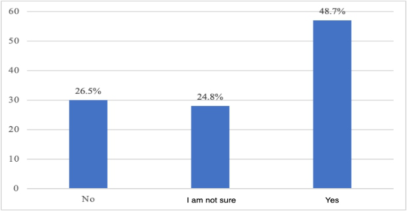
What limitations and problems exist in the use of streaming services? 48.7% find the main issue with streaming services is the dependence on internet connectivity, while 24.8% are unsure due to widespread internet access. However, 26.5% agree that services offering offline content access mitigate this concern (see Fig. 6).
Figure 6: Percentage of opinion on whether dependence on an Internet connection a severe problem for is the streaming service.
DISCUSSION
Streaming platforms have significantly transformed how people consume multimedia content. Surveys indicate strong interest in both popular and innovative platforms. Netflix’s enduring popularity and adaptability distin- guish it from conventional models like Blockbuster (Mier and Kohli, 2001, 2021). Streaming services stand out for their content variety, device accessibil- ity, affordability, and personalized recommendation systems, offering users unmatched convenience. Many streaming services offer offline content down- loads with limitations, such as download limits and expiration times. For example, Netflix allows 100 downloads with a 30-day expiration (48 hours for some content), Disney+ allows 24 downloads with a 30-day expira- tion, and HBO+ allows 30 downloads with a 48-hour expiration. Renewing downloads requires a brief internet connection. Users often misunderstand these features, making them think the service is useless without an internet
Streaming Applied to Entertainment: Analysis of the Constant Evolution 781
connection, influencing their choice. People are interested in streaming ser- vices for experiencing events like concerts and plays, especially when they can’t attend in person due to location or mobility limitations (Liu, D., Liu, A., & Tu, 2020).
CONCLUSION
The evolution of the entertainment industry propelled by streaming technol- ogy is undeniable. From its early roots in 1993 to the current dominance of major platforms like Netflix and Twitch, streaming has reshaped how global audiences access multimedia content. Despite the accessibility of diverse plat- forms across devices, there persists hesitancy among some individuals, driven by misconceptions about costs, device compatibility, or a preference for tradi- tional consumption methods. This study sheds light on the significant impact of streaming services, emphasizing their unique advantages, such as porta- bility and content variety, which appeal to diverse audiences, transcending generational differences and knowledge gaps. The findings underscore the untapped potential within the entertainment realm, emphasizing the need for further exploration and promotion of streaming platforms to maximize their benefits and make users aware of their diverse entertainment options.
ACKNOWLEDGMENT
This work has been supported by the GIIAR research group of the Universi- dad Politécnica Salesiana.
REFERENCES
Al-Abbas, L. S., Haider, A. S., and Saideen, B. (2022). A quantitative analysis of the reactions of viewers with hearing impairment to the intralingual subtitling of Egyptian movies. Heliyon, 8(1), e08728. Aranyossy, M. (2022, September). Technology Adoption in the Digital Entertain-
ment Industry during the COVID-19 Pandemic: An Extended UTAUT2 Model for Online Theater Streaming. In Informatics (Vol. 9, No. 3, p. 71). MDPI. Arnum, E. (2000). Digital flashback: beating the Rolling Stones to the web. MTV.
Medina Salgad. Carazo, P. C. M. (2006). The case study method: methodological strategy of scientific research. Thought & Management, (20), 165–193. Fernández-Sánchez, H., King, K., & Enríquez-Hernández, C. B. (2020). Exploratory
Systematic Reviews as a methodology for the synthesis of scientific knowledge. University Nursing, 17(1), 87–94. García Peñalvo, F.J.(2022). Developing robust statements of the question: Systematic Literature Reviews. Education in the knowledge society: EKS. Gil Buetto, R. (2018). What streaming took away: changes in series and movie
consumption patterns with the emergence of Netflix. Gil Rubio, J., & Rivera Núñez, F. O. R. (2019). Quantitative study of series and movie consumption habits of Millennials in Lima Moderna. Giner Fernández, A. (2018). The model of disruptive innovation. Netflix case study
(Doctoral dissertation, UPV). Higueras, A. C., Rufí, J. P. P., Martín, J. L. T., Camacho, M. R. C., & de Aguilera Moyano, M. (2022). Streaming video, how platforms condition users’ behavior and expressive uses of their apps. Revista Latina de Comunicación Social, (80), 20.
López Celis, D. M., & Peñalosa, M. E. (2022). Face-to-face entertainment activities and traditional media contact vs. use of streaming platforms during Covid 19 in Colombia. López Delgado, D. (2018). Study of streaming platforms (Unpublished Final Degree
Project). University of Seville, Seville. Lescano, J. P. T., Ramos, R. A., Coloma, H. P. O., & Machado, M. E. Z. (2021).
Education via streaming: an alternative for the socialization of research during the Covid-19 pandemic. Revista Boletín Redipe, 10(9), 358–370. Martínez-Ezquerro, J. D., & Rendón-Macías, M. E. (2019). Searching and retrieval of scientific literature. Mier, J., & Kohli, A. K. (2021). Netflix: reinvention across multiple time periods,
reflections and directions for future research. AMS Review, 11, 194–205. Navarro Robles, M., and Vázquez-Barrio, T. (2020). The audio-visual consumption of Generation Z. The predominance of online video over traditional television. Ambitus: International journal of communication, 50, 10–30. Oualline, S., Oualline, G., Oualline, S., and Oualline, G. (2018). Using Google Sheets.
Practical Free Alternatives to Commercial Software, 389–404. Páez García, G. J. (2019). Application of data analysis techniques to obtain specific research lines for Ecuador. Case study: Computer Science in Scopus. Rodríguez Uscátegui, M. (2019). Streaming and new forms of consumption in video
games. Rumaldo Calderón, C. B., & Tupayachi Torres, Y. M. (2019). Effects of social media content on engagement behavior within the video streaming services industry. Serrano, S. S. S., Navarro, I. P., & González, M. D. (2022). How to do a systematic
review following the PRISMA protocol: Uses and fundamental strategies for its application in the educational setting through a case study. Bordón: Revista de pedagogía, 74(3), 51–66. Sim, J. J., Loh, S. H., Wong, K. L., & Choong, C. K. (2021). Do we need trust transfer mechanisms? An M-commerce adoption perspective. Journal of Theoretical and Applied Electronic Commerce Research, 16(6), 2241–2262. Simanjuntak, B., & Limbong, T. (2018). Using Google form for student worksheet
as learning media. International Journal of Engineering & Technology, 7(3.4), 321–324. Truong, D. (2021). Evaluating Cloud-Based Gaming Solutions (Doctoral dissertation). Useche, M. C., Artigas, W., Queipo, B., & Perozo, E. (2019). Quali-quantitative data
collection techniques and instruments. Venkatesh, V., Morris, M. G., Davis, G. B., & Davis, F. D. (2003). User acceptance of information technology: Toward a unified view. MIS quarterly, 425–478. Venkatesh, V., Thong, J. Y., & Xu, X. (2012). Consumer acceptance and use of
information technology: extending the unified theory of acceptance and use of technology. MIS quarterly, 157–178. Walther, K., and Sörhammar, D. (2021). Reaching new heights in the cloud: The digital transformation of the video games industry. In Management and Information Technology after Digital Transformation (pp. 53–62). Routledge. Wayne, M. L. (2018). Netflix, Amazon, and branded television content in subscrip-
Intelligent Human Systems Integration (IHSI 2024): Integrating People and Intelligent Systems
Read this individual research paper free through the original publisher, or explore the full digital proceedings book.
ISBN 978-1-958651-95-7
Explore this ISBN in the AHFE Bookstore ↗Listed in the July 2026 bookstore catalogue; search by ISBN to confirm current availability · Digital book purchase optional