Miguel Angel Quiroz Martinez, Daniela Claudett Villalba, Monica Daniela Gomez Rios, Maikel Yelandi Leyva Vázquez (2022). Feasibility Study of the Implementation of IR Technology for the Recognition of Covid-19 Carriers in Public Places. In: Intelligent Human Systems Integration (IHSI 2022): Integrating People and Intelligent Systems. AHFE Open Access, vol. 22. https://doi.org/10.54941/ahfe1001083
Identifying COVID-19 carriers has become the first need worldwide, especially in crowded airports, stores, etc. There are systems based on infrared vision that can help recognize one of the most common symptoms of this pandemic disease: body temperature. The study presented here aims to analyze the feasibility of implementing infrared (IR) technology in public places for the effective and efficient recognition of people with symptoms of elevated temperature or fever. As a result, the best solution (IR) was obtained in terms of time, accuracy, and ergonomics, depending on the user. Sampling was also conducted to measure the feasibility, with a sample of approximately 400 users who visited the COVID-19 vaccination center, located at the Salesian University of Guayaquil-Ecuador. A percentage of time and error is presented, using 2 of the most used technologies in the technological market, thermographic technology and thermopile, considering the proposal as very feasible.
On November 17, 2019, the world first discovered covid-19 through a patient named O in Wuhan, China. Since those days, the world has changed from its controls at airports, shopping malls, factories, and everywhere where there are possible covid-19 infected people. Today, great technological advances have been made in medicine and other areas. Where temperatures are taken in most public places, and 70% alcohol is offered to disinfect hands, in addition to recommending social distancing to prevent the spread of the pandemic. Many countries have seen the need to rely on IR infrared radiation technology to recognize people with the more classic symptoms of covid-19, such as fever, and have implemented stringent controls at the entrance of such public places[1].
Today, many electronic devices use IR radiation technology supported by Artificial Intelligence (AI) algorithms to recognize body temperature. Thermographic technology is a technique that helps to monitor the temperature without physical contact through thermal cameras or thermovision, capturing infrared radiation from the electromagnetic spectrum of each person. [2].
The problem lies in the lack of precision and knowledge for the accuracy of taking the body temperature of the body. The person taking the temperature does not make the respective control and measurement of external factors, which may yield erroneous data.
Define what technology is recommended to be used in public places such as airports, shopping malls, or educational institutions, where it is difficult to place one person or guard to take the temperature 1 to 1 at the entrance, as it would cause too much congestion at the entrance of the mentioned places.
Thermography technology is a non-contact passive measurement method in which the temperature allocation at the surface is measured with a thermographic camera that allows measuring the long-wave infrared radiation that focused in the field of view and used these
Intelligent Human Systems Integration (IHSI 2022): Integrating People and Intelligent Systems https://openaccess.cms-conferences.org/#/publications/book/978-1-7923-8988-7 results to calculate the temperature of the focused object. [3]. These results are captured in a colored virtual image (dominated thermal image). Each pixel representing a thermal image will show a temperature point on the surface of the object.
The processing of the colored virtual image takes into account the emissivity (e) of the surface of the measured object and the reflected temperature. Both variables can be adjusted manually on the thermal imaging camera. Thermography is a state-of-the-art measurement technology in terms of image production [4].
A thermal imaging camera records the radiation intensities measured in the infrared region of the electromagnetic spectrum and converts them into a visible image. Any other type of electromagnetic radiation, such as infrared radiation, is invisible to the human eye, so those responsible for obtaining infrared temperature measurements are called microbolometers, designed to measure electromagnetic radiation and high-energy subatomic particles. They are especially effective for measurements in the spectral range between 200 micrometers and 1-millimeter wavelength [5].
Infrared lies midway between the visible spectrum and the microwaves of the electromagnetic spectrum, where heat, which is the main cause of infrared radiation, causes any object whose condition has a temperature above absolute zero (-273.15 degrees Celsius) to emit radiation in the infrared region. There are currently technological algorithms for body temperature recognition that can almost imperceptibly help the user recognize these sources of infection[6].
PREVIOUS BIBLIOGRAPHY The key objective of the technologies applied to non-contact temperature detection (NCTD) is to use them to rapidly diagnose diseases or possible health anomalies and thus avoid future tragic consequences such as massive contagion in the case of a pandemic as we are currently experiencing. In addition, this non-contact temperature detection technology (NCTD).
This method of examination and diagnosis is generally very well received in the healthcare sector. It is also a non-invasive method, which does not cause pain to the patient and, above all, does not expose the patient to radiation.
In addition, thermopile-based infrared thermometers are widely used devices. However, this device can often be misused, as it usually depends on a person who knows how to use it correctly. In addition to this, people often find it uncomfortable to have such devices pointed at their face, forehead, or neck. In addition, the measurement is taken on the wrist or arm,
Intelligent Human Systems Integration (IHSI 2022): Integrating People and Intelligent Systems https://openaccess.cms-conferences.org/#/publications/book/978-1-7923-8988-7 giving false temperatures, allowing infected people to circulate freely, and infecting many more people[7].
MATERIALS AND METHODS
In physical and electrical terms, a thermopile is composed of several thermocouples connected in series. Together, they can generate a voltage proportional to the temperature difference between two points; this difference provides a relative temperature measurement[8].
A thermocouple is a sensor that will allow the temperature to be calculated and is made of two dissimilar metals joined at one end. When the connection of these two meta-les is heated or cooled, it produces a voltage that can be related to the temperature of the target to be measured. Thermocouple alloys are commonly manufactured in wire form[9].
A MEMS (Microelectromechanical Systems) thermopile sensor uses a thin, thermally insulated membrane. Since it contains a low thermal mass, it is rapidly heated by the incoming heat flux, thus creating a temperature differential that the thermopile can report as a temperature difference. In addition, by attaching a reference thermistor in the MEMS system, it will be able to generate an absolute temperature measurement [10].
The following materials were used to carry out the sampling for feasibility analysis:
Thermometer (Thermopile technology) ROHS brand -model: DT-8826.with a commercial value of $35.00 plus VAT.
Thermal camera (thermographic technology) Hikvision brand Model DS- 2TD2617B-6/PA. With a commercial value of $2090.69 plus VAT.
Special tripod for Hikvision thermal camera, Model DS-2907ZJ, with a retail value of $255.00 plus VAT.
This equipment was installed at the main entrance of the vaccination point located in the facilities of the Salesian University in the city of Guayaquil -Ecuador.
Temperature readings were taken from 400 people who entered on Tuesday, June 22, and Wednesday, June 23, 2021, for the anti-covid vaccine provided by the Ministry of Public Health of the National Government of Ecuador.
The readings were taken sequentially with the two technologies for each user. The survey variables are:
Intelligent Human Systems Integration (IHSI 2022): Integrating People and Intelligent Systems https://openaccess.cms-conferences.org/#/publications/book/978-1-7923-8988-7
No
Thermographic camera
Thermographic capture time
Thermopile gun
Thermopile capture time
Age
Sex
Context
When taking your temperature in a public place by pointing it at your forehead or hand, how comfortable do you feel?
How necessary do you think it is to take each person's temperature at the entrance of a public place?
The questions asked were to evaluate the degree of user acceptance of the different technologies (Thermopile or Thermographic). In addition to this format, the average time per person it took to take the temperature in both technologies was validated[11][12].
The general hypothesis of the research is that the measurement by infrared camera technology is more reliable with respect to the measurement by Thermopile (Table 3).
The variables identified were as follows:
Variable (X): Temperature is taken by heat gun.
Variable (Y): Temperature is taken by infrared technology camera.
Data analysis is performed using the Python distribution for data science Anaconda to describe the behavior of both variables (descriptive statistics) and hypothesis testing (inferential statistics) using the Shapiro-Will test to demonstrate normality and the Wilcoxon test to show that significant differences exist [10][13][14] .
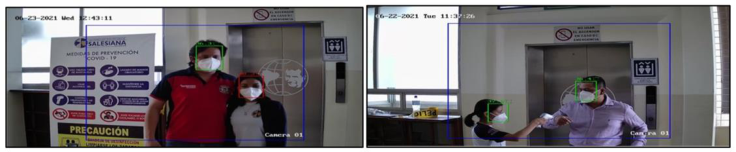
Figure 1. Shows how the thermographic camera sensor indicates when it detects people with high temperatures and displays the value taken.
Intelligent Human Systems Integration (IHSI 2022): Integrating People and Intelligent Systems https://openaccess.cms-conferences.org/#/publications/book/978-1-7923-8988-7
RESULTS
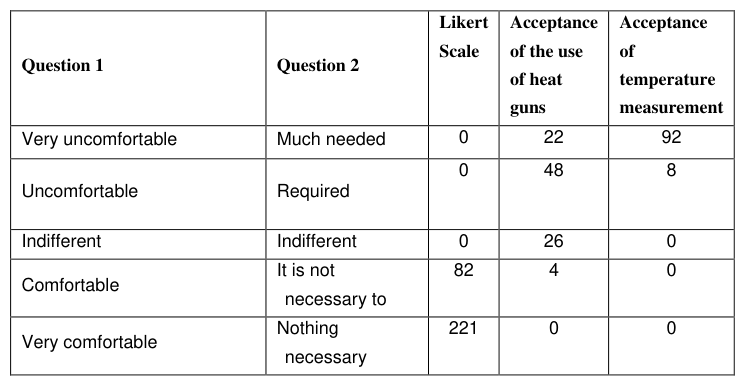
Regarding questions 1 and 2 with the Likert scale, the results are analyzed, taking into account the users' satisfaction with each technology.
Table 1. Levels of satisfaction Likert Acceptance
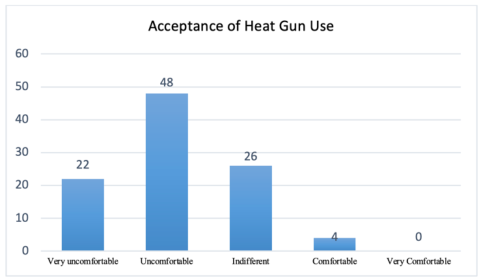
Fig. 2. Acceptance of the use of heat guns
Fig 2. Approximately 70% of the people surveyed in taking the temperature was 400 people. They find it very uncomfortable or inconvenient to take the temperature manually with a heat gun, mainly because it is pointed at each person's forehead.
Intelligent Human Systems Integration (IHSI 2022): Integrating People and Intelligent Systems https://openaccess.cms-conferences.org/#/publications/book/978-1-7923-8988-7
Fig 3. This graph shows the importance of measuring the temperature of all people who need to enter a public place. More than 90% of the sample surveyed wanted this control to be maintained in places with a large influx of people.
Figure available in the original PDF paper.
Figura 3. - Acceptance of temperature measurement Based on the time of temperature data capture per user, we analyze the results in Table3.
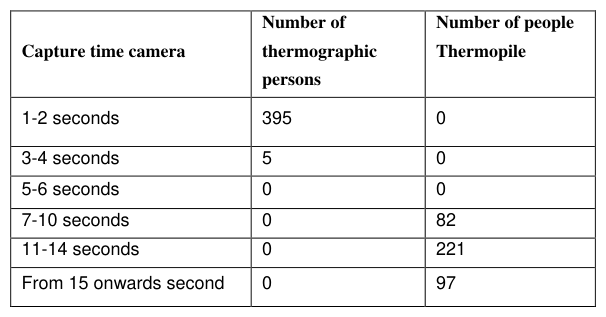
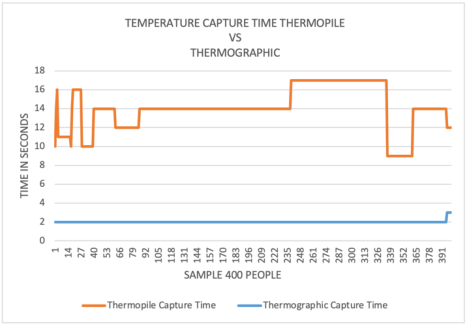
Table 2. Temperature data capture by the user.Fig 4. It is observed that the average time required to measure the temperature with thermographic technology is stable and remains almost unchanged (Blue Line). In contrast, the time required to measure temperature with thermopile technology is variable and much longer. These differentiating factors are associated with the predisposition of the persons to
Figure available in the original PDF paper.
Intelligent Human Systems Integration (IHSI 2022): Integrating People and Intelligent Systems https://openaccess.cms-conferences.org/#/publications/book/978-1-7923-8988-7 be censored and the good application of this technology by the operator. Many times, the operator performs erroneous measurements.
Figura 4. Temperature capture time vs. thermographic thermopile.
Fig 5. The graph shows and compares the times used to measure the temperature with both technologies. Less time used with thermographic technology (blue color), more time used with thermopile technology (orange color).
NUMBER OF PEOPLE VS TEMPERATURE
CAPTURE TIME
395
221
97 0 50 100 150 200 250 300 350 400
5 0 0 0 0 0 0 0 82
1-2 seconds
3-4 seconds
5-6 seconds
7-10 seconds
11-14 seconds
from 15 onwards second
Number of people thermographic Number of People Thermopile
Figura 5. Thermopile vs. Thermographic Temperature Capture Time Distribution
Intelligent Human Systems Integration (IHSI 2022): Integrating People and Intelligent Systems https://openaccess.cms-conferences.org/#/publications/book/978-1-7923-8988-7
HYPOTHESIS TESTING To analyze the hypothesis, we took a confidence level of 95% and a significance level α = 5% = 0.05.
The decision rule in each case is to accept H0 if Sig. (p-value) ≥ α and reject H0 if Sig. (p- value) < α. For verification, working hypotheses are proposed in each case, wherein H1, the variables show significant differences, and, in H0, the variables do not show significant differences.
The application of the Wilcoxon test with a value of p=0.000, the preliminary test demonstrates the normality of the variables, accepts the researcher's hypothesis (H1), and rejects the null hypothesis (H0). The existence of significant differences between the variables was demonstrated, with thermopiles being the technology that did not present erroneous readings [10][15][16][17].
CONCLUSIONS
The analyzed results show that the analyzed thermographic technology has greater advantages than its thermopile counterpart for the following reasons: Temperature readings are more reliable and faster since the distance between the equipment and the target to be inspected is 1.5 to 2.5 meters. This allows a sampling area of approximately 2 square meters and a capture rate of approximately 1 to 2 seconds, in addition to taking temperatures of up to 20 persons simultaneously, with video and photo recording. In addition to this, the advantage over thermopile technology is that people are not intimidated by placing the infrared thermometer on the forehead or hand at a distance of approximately 5 cm. This can also cause a false reading due to human failure. Since the thermometer operator could mistakenly point the thermometer at an inadequate distance or over accessories such as watches that users have on the wrists of the needles where they are censored. In addition to the inconvenience, normally, users in public places lose between 7 to 15 seconds of their time waiting for the temperature capture and can cause columns or rows of people to enter and accumulate in the public access, also losing the proper distance to avoid any type of contagion.
The error range according to the technical specifications of the equipment is ±0.3°C. in thermographic cameras and up to ±1 degrees in heat guns. In addition to this, infrared thermometers depend a lot on the operator to take the temperature on the forehead, and there
Intelligent Human Systems Integration (IHSI 2022): Integrating People and Intelligent Systems https://openaccess.cms-conferences.org/#/publications/book/978-1-7923-8988-7 can be a difference between the internal temperature of people and the forehead because environmental problems can alter it. That is why, in the attached table of temperature capture samples, we were able to observe captures of values that we consider erroneous (they are shaded with red color) of values below 35 degrees Celsius, which by medical standards would be considered hypothermia. Hypothermia occurs when body temperature drops below 95°F (35°C).
Artificial intelligence algorithms in thermal imaging cameras have now developed values in addition to temperature, such as distance. This is very useful for being able to control crowds in times of pandemics.
The application of the Wilcoxon test with a value of p=0.000, the previous test demonstrates the normality of the variables, accepts the researcher's hypothesis (H1), and rejects the null hypothesis (H0). Significant differences between the variables were demonstrated. The thermopile technology did not present erroneous readings.
ACKNOWLEDGMENTS
This work has been supported by the GIIAR research group and the Universidad Politécnica Salesiana.
REFERENCES
V. Zarikas, S. G. Poulopoulos, Z. Gareiou, and E. Zervas, “Clustering analysis of countries using the COVID-19 cases dataset,” Data Br., vol. 31, p. 105787, 2020, doi: 10.1016/j.dib.2020.105787. Y. Zhao et al., “Multispectral radiometric temperature measurement algorithm for turbine
blades based on moving narrow-band spectral windows,” Opt. Express, vol. 29, no. 3, p. 4405, 2021, doi: 10.1364/oe.414844. A. Casas-Alvarado et al., “Advances in infrared thermography: Surgical aspects, vascular changes, and pain monitoring in veterinary medicine,” J. Therm. Biol., vol. 92, no. July, 2020, doi: 10.1016/j.jtherbio.2020.102664. A. Martínez-Torteya, G. Dieck-Assad, S. O. Martínez-Chapa, and S. Camacho-León,
“Modeling and Simulation of a CMOS-MEMS Infrared Thermopile for Biomedical Applications,” Rev. Mex. Ing. Biomédica, 2012. X. Feng and F. Xue, “Characterization of 3D printed bolts based on digital image correlation and infrared thermography,” Mater. Des., vol. 191, p. 108641, 2020, doi: 10.1016/j.matdes.2020.108641. B. Gardner, “The physics of temperature,” South. African J. Anaesth. Analg., vol. 26, no. 6,
pp. S55–S58, 2020, doi: 10.36303/SAJAA.2020.26.6.S3.2538.
Intelligent Human Systems Integration (IHSI 2022): Integrating People and Intelligent Systems https://openaccess.cms-conferences.org/#/publications/book/978-1-7923-8988-7
A. Putrino, M. Raso, M. Caputo, V. Calace, E. Barbato, and G. Galluccio, “Thermographic control of pediatric dental patients during the sars-cov-2 pandemics using smartphones,” Pesqui. Bras. Odontopediatria Clin. Integr., vol. 21, pp. 1–14, 2021, doi: 10.1590/pboci.2021.099. Y. Jiang and J. Xu, “The association between COVID-19 deaths and short-term ambient air
pollution/meteorological condition exposure: a retrospective study from Wuhan, China,” Air Qual. Atmos. Heal., vol. 14, no. 1, 2021, doi: 10.1007/s11869-020-00906- 7. A. F. Santos, S. C. Ulhoa, E. P. Spaniol, and F. C. Khanna, “On gravitational Stefan- Boltzmann law and Casimir effect in FRW universe,” Gen. Relativ. Gravit., vol. 53, no. 5, pp. 1–12, 2021, doi: 10.1007/s10714-021-02826-y. C. F. Chen, C. H. Shen, and Y. Y. Yeh, “A thermopile device with sub-wavelength hole
arrays by cmos-mems technology,” Sensors (Switzerland), vol. 21, no. 1, pp. 1–22, 2021, doi: 10.3390/s21010180. R. Dielectric and F. Black, “Performance Enhanced Thermopile With,” vol. 41, no. 4, pp.
593–596, 2020. Y. He, Y. Wang, and T. Li, “Improved Thermopile on Pyramidally-Textured Dielectric Film,” IEEE Electron Device Lett., vol. 41, no. 7, pp. 1094–1097, 2020, doi: 10.1109/LED.2020.2993954. T. Jamil, I. Alam, T. Gojobori, and C. M. Duarte, “No Evidence for Temperature-
Dependence of the COVID-19 Epidemic,” Front. Public Heal., vol. 8, no. May, pp. 1– 6, 2020, doi: 10.3389/fpubh.2020.00436. A. Putrino, M. Raso, M. Caputo, V. Calace, E. Barbato, and G. Galluccio, “Thermographic control of pediatric dental patients during the sars-cov-2 pandemics using smartphones,” Pesqui. Bras. Odontopediatria Clin. Integr., vol. 21, no. May, 2021, doi: 10.1590/pboci.2021.099. E. María and C. González, “Robust statistical inference for one-shot devices based on
divergences,” 2021. Rohana Yunika and Lestaria Ningsih, “Students’ Statistical Reasoning in Statistics Method Course, Online Submission,” J. Pendidik. Mat., vol. 14, no. 1, pp. 81–90, 2020, [Online]. Available: https://eric.ed.gov/?id=ED604161. J. Torres, “Reflexiones sobre el uso de la estadística inferencial en investigación didáctica
Reflections on the use of inferential statistics in data analysis during a didactic research Reflexões sobre o uso de estatísticas inferenciais na análise de dados durante uma investigação didática.”
Intelligent Human Systems Integration (IHSI 2022): Integrating People and Intelligent Systems https://openaccess.cms-conferences.org/#/publications/book/978-1-7923-8988-7
LISTED IN THE AHFE DIGITAL BOOKSTORE CATALOGUE
Explore the complete digital volume
Intelligent Human Systems Integration (IHSI 2022): Integrating People and Intelligent Systems
Read this individual research paper free through the original publisher, or explore the full digital proceedings book.
ISBN 978-1-7923-8988-7
Explore this ISBN in the AHFE Bookstore ↗Listed in the July 2026 bookstore catalogue; search by ISBN to confirm current availability · Digital book purchase optional