Lena Wirtz, Emirhan Sever, Lutz Eckstein (2024). Adaptive Human-Machine Interfaces and Inclusivity in the Automotive Field: A Review. In: Accessibility, Assistive Technology and Digital Environments. AHFE Open Access, vol. 121, pp. 46–60. https://doi.org/10.54941/ahfe1004613
With advances in automated driving, the importance of the vehicle interior continues to grow. However, the growing number of functions leads to a large amount of information on automation or infotainment systems. To create an individual customer experience and not to overwhelm the driver with the growing amount of information, an adaptive human-machine interface (HMI) can be a solution. (Amditis et al., 2011) With the help of adaptive HMI, it is possible to display contextual and user-specific information and to adapt the interaction with the vehicle. Inclusion is a form of adaptation focusing the needs of the respective users. Thereby, adaptive HMI addresses, among other things, the enhancement of driving safety and empathy in the vehicle. (Rittger et al., 2022) This paper provides an overview of the current state of the art with respect to adaptive and inclusive HMI in the automotive context and facilitates the identification of open research questions. A systematic literature search was conducted to facilitate this scoping review.
Currently, the variety of functions in automobiles is constantly increasing due to the rapid development of automated driving functions. A distinction is made between 6 levels of automation ranging from 0 (no automation) to 5 (complete automation) (SAE International, 2021). Acceptance of handing over control to the vehicle has been low, with 60-79% of respondents in the Continental mobility study stating that they would prefer to be in control of the vehicle themselves (Continental, 2020). When the driver is no longer an active part of the driving task, it can lead to overestimation of assistance systems (Saffarian et al., 2012).
The automation of the driving function also enables groups of people with disabilities to participate in individual mobility. From the results of the study by Young et al. it was concluded that the design of today’s HMI excludes certain groups of people from independent mobility because they are aimed at the public and not at specific groups of people. Current design guidelines for HMI design do not sufficiently consider the physical and mental limita- tions of elderly or disabled drivers. It is concluded that insufficient research data on specific groups of people and a lack of a legal and policy framework
Adaptive Human-Machine Interfaces and Inclusivity in the Automotive Field: A Review 47
for implementing guidelines are the reasons for the lack of inclusivity in the design of current HMI (Young et al., 2017).
These challenges can be addressed with an adaptive HMI. Adaptivity refers to the ability of a system to adapt to new conditions or to react to changes in a context. (Feigh et al., 2012) introduces a “Taxonomy of Adaptions” in HMI systems. It contains four types of modifications:
Who: Modification of Function Allocation,
When: Modification of Task Scheduling,
How: Modification of Interaction,
What: Modification of Context.
In both semi-automated and highly automated driving, adaptive HMIs offer the possibility of adapting displays and interactions to specific contexts and users in order to avoid distracting or overloading humans with too much information (Heigemeyr and Harrer, 2013). Also in the context of takeover requests, these adaptations can be used to ensure adequate driver attention and prepare for taking over the driving task (Diederichs et al., 2022). The Level of Adaptive Sensitive Responses (LASR) classification provides a frame- work for evaluating the adaptability of HMIs in vehicles (Rittger et al., 2020; Rittger et al., 2022).
The following research questions were derived for this research: RQ1: What are existing concepts and requirements for adaptive and inclusive HMIs in the automotive context?
RQ2: What are the gaps and challenges in current research? The aim of this paper is to provide an overview of the state of the art in the field of adaptive HMI. Furthermore, research gaps in this area will be identified and recommendations for further investigations will be given.
METHOD AND MATERIALS A scoping review using the PRISMA strategy was chosen to conduct a sys- tematic literature search. The scoping method is used to create an overview of the contents of a research area. The PRISMA template enables a consistent documentation of the search (Page et al., 2021).
To identify relevant research articles, Scopus and Web of Science (WoS) were selected as databases because articles published there are subject to peer review and search terms are supported (Elsevier, 2023; Web of Science Group, 2021). The search was conducted on 14.12.2022 and updated on 24.08.2023. Four key concepts were used to narrow the search: Automotive, Adaptivity, Inclusivity, and Human-Machine Interfaces (HMI) (see Table 1) Publications prior to 2002 were excluded from the search.
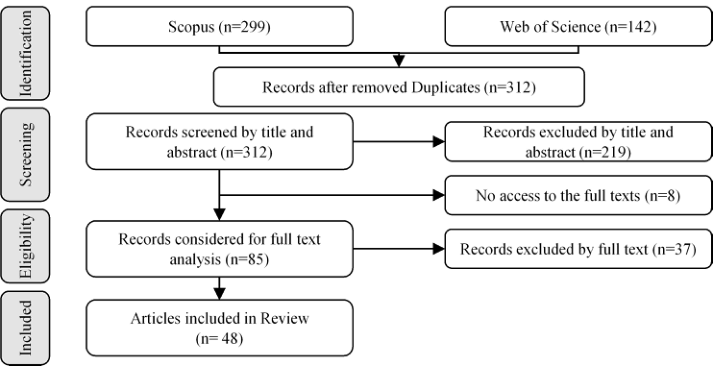
The search for the described keywords resulted in a total of 441 results. Figure 1 shows the PRISMA flow chart of the scoping review performed. After removing duplicates, 312 articles remained for subsequent screening.
The screening process excluded articles that did not address the research topic after examining the title, abstract, and content. The exclusion crite- ria are External Road Users (eHMI), Takeover Request, Gesture recognition, Other Fields (e.g. military, industrial or medical).
A total of 219 articles were excluded during screening by title and abstract. The remaining 85 articles were then screened for eligibility within the previ- ously defined inclusion and exclusion criteria. Finally, 48 relevant articles remained as a result of the scoping review.
Figure 1: The prisma flow chart.
RESULTS
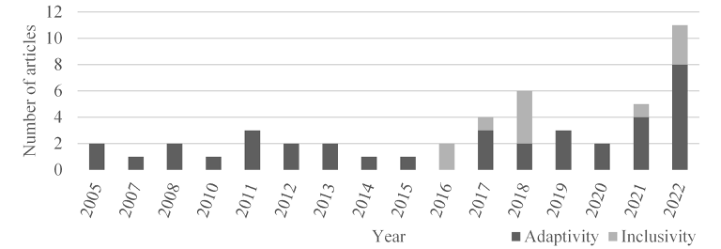
48 articles were examined in this scoping review, whose temporal distribu- tion is shown in Figure 2. These articles were divided into the main categories of adaptivity and inclusivity, with inclusivity being a specific form of adap- tivity. 11 (22.92%) of the articles involve research on inclusive HMI and 37 (77.08%) can be attributed to adaptive topics. Overall, there is an upward trend of research in both areas from 2017. Figure 2 indicates that the topic of inclusivity has become more important since 2016 and is gaining relevance.
The higher the level of automation, the greater the interest in inclusiv- ity in automotive HMI. Inclusivity is particularly important for SAE Level 5
Adaptive Human-Machine Interfaces and Inclusivity in the Automotive Field: A Review 49
because it provides an individual transportation for everyone, regardless of whether they would be able to drive a vehicle themselves. In the context of adaptivity, the articles found have medium to high levels of automation (SAE Level 2 to 5).
Figure 2: Number of articles over time.
INCLUSIVE DESIGN More than 500 million people worldwide have limitations that affect their interaction with the environment and thus their mobility (Whittington and Dogan, 2016). Limitations can be permanent, temporary, situational or context-dependent (Stephanidis, 2021). A central problem related to the inclusivity of vehicle HMI is the increasing number of controls, displays, and functions (Bradley et al., 2016). The increasing complexity and unfamiliar- ity of such interfaces exclude some groups of users, whereby a distinction can be made between different limitations, such as visual, auditory, cognitive and physical limitations. Elderly people represent a separate category, as they sometimes present several limitations in different degrees and thus have dif- ferent learning requirements and expectations (Martelaro et al., 2022). The results of the study by (Skrypchuk et al., 2018) show that there are differences between older and younger drivers during driving-related and non-driving- related activities (NDRAs). For example, the older participants in the study had a higher difficulty in lane keeping and required more button presses to perform NDRAs. In this context, the degradation of cognitive and physical abilities can be identified as one of the main causes why it comes to safety concerns regarding older drivers (Bradley et al., 2016; Young et al., 2017).
The introduction of automated vehicles results in many opportunities in new mobility solutions (Amanatidis et al., 2018; Fraboni et al., 2018; Voinescu et al., 2018). One opportunity arises in the area of inclusivity, which allows everyone to have access to individual mobility, even if they were previously excluded from it (Angeleska, Pretto, Sidorenko, 2022; Fraboni et al., 2018). In order to address every individual, it is necessary to align the operation of the HMI in autonomous vehicles with the diverse require- ments of different user groups. In this context, people with visual disabilities are increasingly considered (Angeleska, Aleksovska et al., 2022; Angeleska, Pretto, Sidorenko, 2022). The most common categories of visual impairments
that affect screen use are visual acuity or blur, light and contrast sensitiv- ity (World Wide Web Consortium, 2016). As a result, there is no single solution for the visually handicapped, but they have a variety of different requirements. The development of an adequate HMI for people with visual disabilities is a challenge, since up to now the majority of information in vehicles has been conveyed primarily via visual channels (Angeleska, Pretto, Sidorenko, 2022). To obtain a driver’s license, an eye test must be passed to determine aptitude with respect to visual acuity, field of vision, twilight or contrast vision, glare sensitivity, and other visual disorders. Therefore, in the past, until the use of automated driving, it was not necessary to adapt driver displays to visual disabilities, but it is now becoming increasingly important.
The SmartAbility application of (Whittington et al., 2022; Whittington and Dogan, 2016) is intended to recommend assistive technologies based on the user’s physical and cognitive abilities. To do this, the application uses sen- sors integrated in mobile devices, such as accelerometers and gyroscopes, as well as application programming interfaces (APIs) to detect physical abilities such as head movements and blowing. Using a MySQL database, appropri- ate assistive technologies are mapped to the physical abilities and selected accordingly.
Furthermore, (Stephanidis, 2021) states that regarding universal access, systems must be planned together with adaptions rather than deciding an implementing retrospectively. They provide an overview of existing tools and approaches to facilitate the design of the user interface.
User Needs In an interview with a wheelchair user and a visually disabled person, (Amanatidis et al., 2018) found out that above all a lower dependence on others and a higher sense of security were desired by the test persons. In addition, multimodal interfaces were discussed to address different needs.
In another study, the needs of people who were excluded from individual transportation options were identified. The participant group of 20 people in total included both blind people and people in wheelchairs. Respondents expressed a desire for greater control and flexibility over their mobility options. Furthermore, user needs were identified depending on the timing for fully autonomous driving for people with low vision and in wheelchairs. Participants wished to be able to set preferences before starting their jour- ney to ensure that the vehicle met their individual needs. When boarding, participants with visual disabilities in particular showed concerns about finding the right vehicle independently. One recommended solution was to be able to operate the vehicle’s horn or lights via cell phone. Wheelchair users wanted reassurance regarding the proper securing of their wheelchair during boarding. During the ride, it was emphasized that it is important to provide sufficient information about the current route and the loca- tion of the vehicle. After the ride, the main interest of the respondents was to find out whether the exit points are accessible without barriers (Martelaro et al., 2022).
Adaptive Human-Machine Interfaces and Inclusivity in the Automotive Field: A Review 51
Design Recommendations Four articles in the search give design recommendations for people with visual disabilities, two of which are also for people in wheelchairs. Five articles deal with older people, four of which give design recommendations for this group.
In the context of highly automated driving, takeover prompts can become a challenge due to declining cognitive abilities of older drivers if they are not adapted to individual needs. It is therefore recommended to combine different display channels according to the situation to convey important informa- tion to the driver. In addition, display channels should be provided that are adapted to the limited visual or hearing abilities of older people (Fraboni et al., 2018). For interaction, small-radius or low-power movements should be sufficient. When providing warnings, it is useful to consider different response times (Skrypchuk et al., 2018; Young et al., 2017).
In the studies by (Amanatidis et al., 2018; Voinescu et al., 2018), it is recommended for both elderly and visually disabled people to provide adapt- able visual display channels. In both studies, subjects desired customization options for brightness, contrast, and font size. However, people with visual disabilities additionally preferred the option of zooming. Current guidelines provide recommendations on text size, text type, contrast, colour, and layout (Angeleska, Pretto, Sidorenko, 2022).
It is recommended to keep the design simple and to use different dis- play channels as for older people. To increase usability, text displays should be limited to the most necessary and instead mainly use icons or graphics with sufficient contrast to the background (Angeleska, Aleksovska et al., 2022). In addition, a strong location awareness plays an important role in the independent mobility of visually disabled people. This can be supported by the human-machine interface, e.g., by acoustic navigation instructions or highlighting special landmarks in the immediate vicinity (Martelaro et al., 2022).
ADAPTIVE DESIGN The increasing variety of functionalities and applications in vehicle sys- tems poses a major challenge for both inclusion issues and general usability (Amditis et al., 2005; Boelhouwer et al., 2019). The information and inter- action possibilities provided by the progressive development of driver assis- tance and entertainment systems, as well as presented information, on the one hand offer advantages for the driver, but on the other hand also pose poten- tial risks such as loss of attention, limited situational awareness, and high mental load (Boelhouwer et al., 2019; Hoedemaeker and Neerincx, 2007). An adaptive HMI concept offers the possibility to adapt information and interactions according to the user’s individual preferences and the situation in order to reduce distraction, overload and even emissions (Dannheim et al., 2013; Heigemeyr and Harrer, 2013; Tchankue et al., 2011). This results in a better user experience and safer driver-vehicle interaction (Frison et al., 2019; Graefe et al., 2021). Artificial intelligence (AI) is also becoming a focus of HMI development and can help to collect and interpret relevant information (Diederichs et al., 2022). Thereby, the HMI has to consider the context in
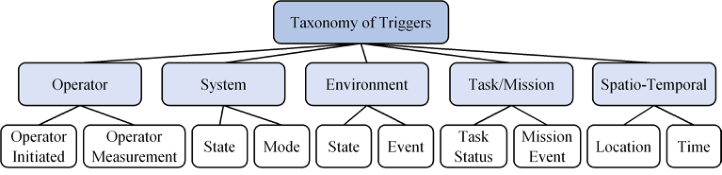
which the user is located (Hemant Sharma et al., 2008). The context includes both the user’s external world, such as the traffic situation, weather, or route, and his or her internal experiences, expectations, and needs. This context can change over time and influences the interaction between user and system (Masuhr et al., 2008). In the context of vehicle systems, context aware- ness is defined as the ability to interpret information and act accordingly (Fernandez-Rojas et al., 2019). In this framework, a taxonomy of the con- text of the driving situation is presented in (Feigh et al., 2012) to classify the different triggers for an adaptation of the HMI (s. Figure 4). The analysis of the contexts and the adaptation of the HMI to these input data as well as to the individual differences of the users is the central challenge in designing an appropriate User Experience (Lavie and Meyer, 2010; You et al., 2022).
Figure 3: Taxonomy of triggers (Feigh et al., 2012).
In the context of the introduction and development of adaptive HMI, var- ious articles point out the relevance of UX principles. In summary, (Rittger et al., 2022) separated the UX Principles in Intuitive Design, Transparency, Proactivity, Intelligence and Empathy (Masuhr et al., 2008; Meiser et al., 2022; Schölkopf et al., 2021; Schölkopf et al., 2022; Wintersberger et al., 2021). Using the triggers from (Feigh et al., 2012), the adaptive HMI concepts included in this review are divided and considered in more detail.
System and Task/Mission Adaptation to recurring tasks requires the ability of an HMI to learn from user interactions. This allows the HMI to adapt to people’s preferences, habits and needs. In (Sarala et al., 2018) the system alters are presented as voice alterts and adapt to the users emotional state.
Another way of customization is processing past user interactions to detect certain patterns (Garzon, 2012; Garzon and Schutt, 2011). These relation- ships can be used to propose shortcuts or automatic executions to the user that reduce interaction times (Garzon and Poguntke, 2012). This reduces operation steps and therefore can reduce driver distraction (Heigemeyr and Harrer, 2014; Walter et al., 2015). For example, the same interactions can also be detected multiple times at certain locations where the triggers envi- ronment and operator are also considered. Another possibility is to adjust the size of the buttons on the touch screen depending on the probability of actuation (Garzon and Schutt, 2011).
Adaptive Human-Machine Interfaces and Inclusivity in the Automotive Field: A Review 53
The adaptation of the proposed interaction modality is presented by (Wolf et al., 2021). There, machine learning is used to predict the appropriate modality for each driving situation based on the user’s previous interac- tions and the current environmental conditions. The modalities vary between voice, touch, or button inputs. For example, at night, the system may dim the display when voice or key inputs are predicted to avoid blinding the user. Alternatively, in heavy traffic or bad weather, voice inputs are suggested so as not to distract the user from driving.
Environment and Spatio-Temporal When adapting to the driving situation, information from the vehicle envi- ronment, such as weather and traffic data, is used as input variables for the selection and application of suitable adaptation strategies. (Heigemeyr and Harrer, 2013) describes a possible clustering for situational information, with clusters like “Ego Vehicle”, “Operating Environment”, “Traffic Regulations” and “Driver”.
The concept of Galarza et al. (2017) uses a predictive model to calculate a complexity level of the driving situation, the HMI menu is adapted based on this. Depending on the complexity, certain interactions are deactivated, and the display is simplified to reduce user distraction and stress. To increase the transparency of the adaptation, the applied adaptation level are indicated to the user by a symbol.
Operator One type of adaptation to different user groups has already been described in the chapter of inclusive design. When considering inclusivity, the human- machine interface can consider the individual needs and abilities of the users and thus enable barrier-free and user-friendly interaction.
Driver state recognition is an important prerequisite for adapting the human-machine interface to the needs and capabilities of the driver (Héléne et al., 2005). Most driver state recognition methods are based on modalities related to driver inputs to the vehicle, such as steering wheel angle, brake pedal pressure, or accelerator pedal position (Stampf et al., 2022). How- ever, these modalities will become less important as automation increases. Therefore, alternative approaches are needed that can capture the driver state independently of the vehicle input, for example camera-based meth- ods (Sburlan et al., 2020). (Gomaa et al., 2022) demonstrates a method for determining driver mental demands from physiological and behavioural measurements.
One of the challenges in designing a human-machine interface is to con- sider different user types. A culturally sensitive HMI is a concept that adapts the human-machine interface to the user’s cultural background by analysing their interaction patterns and making appropriate personalization (Heimgärtner, 2018). Differences in response behaviour, system acceptance, and processing effectiveness were found. In addition, the need for infor- mation also varies over time; people who use the system more frequently and are thus more familiar with it need different information than users at
first contact with automated systems (Ulahannan et al., 2022). In the study of (Ulahannan et al., 2020) a difference was found in which information received the most glances from subjects on the first and last days of the experi- ment. Information on system transparency was viewed less frequently on the last day than on the first day of the experiment, whereas information on technical competence received more attention (Ulahannan et al., 2020).
DISCUSSION
Regarding the first research question “What are existing concepts and requirements for adaptive and inclusive HMIs in the automotive context?” several findings could be obtained from the scoping review. Based on the triggers of adaptation, concepts were presented that analyse their context and adapt the UI of the HMI based on the states of the driver, system and environ- ment. By adapting the HMI not only to the particular driving situation, but also to the driver, the increasing complexity, distraction, and mental work- load caused by advancing automation can be effectively counteracted (Walter et al., 2015). One example is the prioritization of information so that display elements are highlighted, hidden or moved depending on the current context. Another example is the individualization of the output modality, allowing the user to choose the most appropriate form of information delivery, such as visual, auditory, or haptic (Wolf et al., 2021). Another adaptation strategy relates to learning interactions. This includes the ability to disable or auto- matically execute interactions to minimize the number of interaction steps required. Providing keyboard shortcuts and function recommendations has also been identified as a useful measure (Garzon, 2012; Walter et al., 2015). Personalizing in-vehicle interactions and displays to meet different user needs not only enhances driving safety, but also the user experience.
The challenges of inclusive HMI design make the use of adaptive HMI an optimal solution. The possibilities that an adaptive HMI offers for per- sonalizing and accommodating a wide range of user requirements, together with advancing automation, open new opportunities to provide independent mobility for the first time to people who were previously excluded.
So far, research has focused on people with visual impairments or wheelchair users as a subgroup of physically disabled persons. In addition, older users are also considered in current concepts. It was found out that multimodal information modality for input and output play an important role for the participants (Angeleska, Aleksovska et al., 2022; Fraboni et al., 2018; Martelaro et al., 2022). The interface and interaction may include visual, auditory, and haptic channels, or a combination of these. Addition- ally, to enhance the user experience, visual display options should provide a high degree of customizability. Free adjustment of contrast, brightness, and font size enables an increase in inclusivity (Angeleska, Aleksovska et al., 2022; Fraboni et al., 2018). The number and depth of information needs can also vary by individual and should be customized to the user, especially with disabilities (Martelaro et al., 2022; Ulahannan et al., 2022).
Despite the many advantages, customizations and adaptive HMI elements are programming-intensive and thus expensive and difficult to implement
Adaptive Human-Machine Interfaces and Inclusivity in the Automotive Field: A Review 55
and maintain (Stephanidis, 2021). It is not trivial to find a way to implement adaptive HMI so that it works satisfactorily for all users and all possible scenarios.
Future Research The second research question addresses potential future research topics in the studied area. The following research gaps could be identified, including the measurability of UX principles for adaptive systems, the use of physi- ological data, the holistic consideration of handicapped groups of people, the personalization options of display content, and the use of AI in HMI development.
The UX principles of (Rittger et al., 2022) are a good approach to con- ceptualizing adaptive HMI. However, the principles are formulated in a rather abstract way. To make them applicable and measurable, concrete criteria are required that describe the success of a criterion.
Many methods for recording physiological data have recently been intro- duced, like mood and stress detection. In addition, driver monitoring will be mandatory in new vehicles in Europe from 2026. However, it has still not been investigated which adaptations or settings result from these phys- iological data or how they can be effectively used for interaction design and information presentation.
The identified articles focused only on a small part of handicapped groups of people. Elderly people, wheelchair users and people with a visual dis- ability are important target groups, but they are not the only ones with special needs and requirements for individual mobility. Other groups of people who should also be considered are people with a hearing disability, cognitive handicap, other physical limitation, or chronic illness.
The topic of personalization options is not only relevant for handicapped groups of people, but for every user, since they also differ in their personal- ity and previous experience with the systems under investigation. Research is still needed to determine the extent to which interventions, for example in the density of displayed information, are desired and accepted by users and which personality factors have an influence on their wishes.
Artificial Intelligence is a trend in many areas of technology. It should continue to be explored how it can also support developers and users of adaptive HMIs.
CONCLUSION
In summary, the overall goal of this scoping review was to give an overview of automotive HMI concepts and guidelines for adaptive and inclusive HMI. Using the PRISMA Method, 48 articles relevant to this topic were identified.
It was figured out that adaptive HMI systems have the potential to address challenges such as the increasing complexity of HMI. By addressing different triggers of adaptation, such as the driving situation and the operator himself, distractions and mental workloads caused by the number of HMI functions can be minimized. Personalization of interactions and displays in the vehicle
not only contributes to driving safety, but also improves the user experience and the inclusiveness of the HMI for all levels of automation. Adaptive HMI systems offer the opportunity to meet different user requirements and provide independent mobility to people who were previously excluded.
There were some fields of action for further research identified. Automated systems offer the possibility of making mobility accessible to previously excluded user groups. For this purpose, persons with disabilities should also be considered, and it is important to personalize content and interaction modalities for users. In addition, the UX principles for adaptive systems should be extended with measurable variables to fulfil the UX criteria. Addi- tionally, the use of Artificial Intelligence to complement adaptive HMIs should be explored.
In summary, adaptive HMI systems offer a promising opportunity to improve mobility for people with different needs and to increase road safety and user experience in vehicles.
ACKNOWLEDGMENT
The authors would like to acknowledge the consortium of the research project AUTOtech.agil and the Federal Ministry of Education and Research of the Federal Republic of Germany for support and funding.
REFERENCES
Amanatidis, T., Langdon, P. M. and Clarkson, P. J. (2018) “Inclusivity Considerations for Fully Autonomous Vehicle User Interfaces”, Breaking Down Barriers. CWUAAT 2018, pp. 207–214. Amditis, A., Andreone, L., Polychronopoulos, A. and Engström, J. (2005) “Design
and Development of an Adaptive Integrated Driver-Vehicle Interface: Overview of the Aide Project”, IFAC Proceedings Volumes, vol. 38, no. 1, pp. 103–108. doi: 10.3182/20050703-6-CZ-1902.01196. Amditis, A., Pagle, K., Markkula, G. and Andreone, L. (2011) “Towards an Integrated Adaptive Automotive HMI for the Future”, Universal access in human- computer interaction. UAHCI 2011, pp. 253–262. Angeleska, E., Aleksovska, A., Avramov, N., Sidorenko, S., Rizov, T. and Jankovic,
A. (2022) “Design and Evaluation of an Inclusive Autonomous Vehicle User Inter- face Developed for Persons with Visual Acuity Loss”, Proceedings of the Design Society, pp. 2035–2044. Angeleska, E., Pretto, P. and Sidorenko, S. (2022) “Inclusive User Interface for Autonomous Vehicles: Developing an Interface that Can Be Independently Used by Persons with Visual Acuity Loss”, HCI International 2022 Posters. HCII 2022, pp. 141–146. Boelhouwer, A., van Dijk, J. and Martens, M. H. (2019) “Turmoil Behind the Auto-
mated Wheel”, HCI in mobility, transport, and automotive systems. HCII 2019, pp. 3–25. Bradley, M., Langdon, P. M. and Clarkson, P. J. (2016) “An Inclusive Design Perspective on Automotive HMI Trends”, Universal Access in Human-Computer Interaction. Users and Context Diversity, UAHCI 2016, pp. 548–555. Continental (2020) “Vom Fahrer zum Passagier: Einstellungen zur technologischen
Entwicklung des Autos”, Continental-Mobilitätsstudie 2020.
Adaptive Human-Machine Interfaces and Inclusivity in the Automotive Field: A Review 57
Dannheim, C., Mader, M., Icking, C., Loewenau, J. and Massow, K. (2013) “A novel approach for the enhancement of cooperative ACC by deriving real time weather information”, 16th International IEEE Conference on Intelligent Transportation Systems (ITSC 2013), pp. 2207–2221. Diederichs, F., Wannemacher, C., Faller, F., Mikolajewski, M., Martin, M.,
Voit, M., Widlroither, H., Schmidt, E., Engelhardt, D., Rittger, L., Hashemi, V., Sahakyan, M., Romanelli, M., Kiefer, B., Fäßler, V., Rößler, T., Großerüschkamp, M., Kurbos, A., Bottesch, M., Immoor, P., Engeln, A., Fleis- chmann, M., Schweiker, M., Pagenkopf, A., Mathis, L.-A. and Piechnik, D. (2022) “Artificial Intelligence for Adaptive, Responsive, and Level-Compliant Interac- tion in the Vehicle of the Future (KARLI)”, HCI International 2022 Posters. HCII 2022, pp. 164–171. Elsevier (2023) Why choose Scopus. Available at https://www.elsevier.com/solutions/scopus/why-choose-scopus. Feigh, K. M., Dorneich, M. C. and Hayes, C. C. (2012) “Toward a characterization of adaptive systems: a framework for researchers and system designers”, Human Factors, vol. 54, no. 6, pp. 1008–1024. Fernandez-Rojas, R., Perry, A., Singh, H., Campbell, B., Elsayed, S., Hunjet, R.
and Abbass, H. A. (2019) “Contextual Awareness in Human-Advanced-Vehicle Systems: A Survey”, IEEE Access, vol. 7, pp. 33304–33328. Fraboni, F., De Angelis, M., Plesnik, D., Altini, A., Depolo, M., Zani, B., Prati, G.
and Pietrantoni, L. (2018) “Human-automation interaction in automated vehi- cles: An innovative HMI design approach. The case of elderly and cyclists”, HCI International 2018 - posters’ extended abstracts. HCI 2018, pp. 359–366. Frison, A.-K., Wintersberger, P., Liu, T. and Riener, A. (2019) “Why do you like to drive automated?: a context-dependent analysis of highly automated driving to elaborate requirements for intelligent user interfaces”, Proceedings of the 24th International Conference on Intelligent User Interfaces (IUI’ 19), pp. 528–537. Galarza, M. A., Bayona, T. and Paradells, J. (2017) “Integration of an Adaptive
Infotainment System in a Vehicle and Validation in Real Driving Scenarios”, International Journal of Vehicular Technology, vol. 2017, no. 4531780, pp. 1–10. Garzon, S. R. (2012) “Intelligent In-Car-Infotainment Systems: A Contextual Personalized Approach”, 2012 Eighth International Conference on Intelligent Environments, pp. 315–318. Garzon, S. R. and Poguntke, M. (2012) “The Personal Adaptive In-Car HMI: Integra-
tion of External Applications for Personalized Use”, Advances in User Modeling. UMAP2011, pp. 35–46. Garzon, S. R. and Schutt, K. (2011) “Road-based Adaptation of In-Car-Infotainment Systems”, ACHI 2011 - 4th International Conference on Advances in Computer- Human Interactions. Gomaa, A., Alles, A., Meiser, E., Rupp, L. H., Molz, M. and Reyes, G. (2022)
“What’s on your mind? A Mental and Perceptual Load Estimation Framework towards Adaptive In-vehicle Interaction while Driving”, Proceedings of the 14th International Conference on Automotive User Interfaces and Interactive Vehicular Applications (AutomotiveUI’ 22), pp. 215–225. Graefe, J., Engelhardt, D. and Bengler, K. (2021) “What does Well-Designed Adaptivity Mean for Drivers? A Research Approach to Develop Recommendations for Adaptive In-Vehicle User Interfaces that are Understandable, Transparent and Controllable”, 13th International Conference on Automotive User Interfaces and Interactive Vehicular Applications (AutomotiveUI’ 21 Adjunct), pp. 43–46.
Heigemeyr, A. and Harrer, A. (2013) “An integrated method for Adaptive automotive Human Machine Interfaces”, 16th International IEEE Conference on Intelligent Transportation Systems (ITSC 2013), pp. 558–564. Heigemeyr, A. and Harrer, A. (2014) “Information Management for Adaptive
Automotive Human Machine Interfaces”, Proceedings of the 6th International Conference on Automotive User Interfaces and Interactive Vehicular Applications (AutomotiveUI’ 14), pp. 1–8. Heimgärtner, R. (2018) “Culturally-Aware HCI Systems”, in Fauler, C. Advances in Culturally-Aware Intelligent Systems and in Cross-Cultural Psychological Studies, pp. 11–37. Héléne, T. V., Thierry, B., Serge, B., Matti, K., Jouko, V., Evangelos, B., Maria,
P., Johan, E. and Anders, A. (2005) “Development of a Driver Situation Assess- ment Module in the Aide Project”, IFAC Proceedings Volumes, vol. 38, no. 1, pp. 97–102. doi: 10.3182/20050703-6-CZ-1902.01195. Hemant Sharma, Dr. Roger Kuvedu-Libla and Dr. A. K. Ramani (2008) “ConFra: A context aware human machine interface framework for in-vehicle infotainment applications”, Proceedings of the International MultiConference of Engineers and Computer Scientists. IMECS 2008. Hoedemaeker, M. and Neerincx, M. (2007) “Attuning In-Car User Interfaces to the
Momentary Cognitive Load”, Foundations of augmented cognition. FAC 2007, pp. 286–293. Lavie, T. and Meyer, J. (2010) “Benefits and costs of adaptive user interfaces”, International Journal of Human-Computer Studies, vol. 68, no. 8, pp. 508–524. doi: 10.1016/j.ijhcs.2010.01.004. Martelaro, N., Carrington, P., Fox, S. and Forlizzi, J. (2022) “Designing an Inclu-
sive Mobile App for People with Disabilities to Independently Use Autonomous Vehicles”, Proceedings of the 14th International Conference on Automotive User Interfaces and Interactive Vehicular Applications (AutomotiveUI’ 22), pp. 45–55. Masuhr, J., Klompmaker, F., Reimann, C. and Nebe, K. (2008) “Designing contextaware in-car information systems”, 5th International ICST Conference on Mobile and Ubiquitous Systems: Computing, Networking and Services. Meiser, E., Alles, A., Selter, S., Molz, M., Gomaa, A. and Reyes, G. (2022) “In-Vehicle
Interface Adaptation to Environment-Induced Cognitive Workload”, Proceed- ings of the 14th International Conference on Automotive User Interfaces and Interactive Vehicular Applications (AutomotiveUI’ 22), pp. 83–86. Page, M. J., McKenzie, J. E., Bossuyt, P. M., Boutron, I., Hoffmann, T. C., Mulrow, C. D., Shamseer, L., Tetzlaff, J. M., Akl, E. A., Brennan, S. E., Chou, R., Glanville, J., Grimshaw, J. M., Hróbjartsson, A., Lalu, M. M., Li, T., Loder, E. W., Mayo-Wilson, E., McDonald, S., McGuinness, L. A., Stewart, L. A., Thomas, J., Tricco, A. C., Welch, V. A., Whiting, P. and Moher, D. (2021) “The PRISMA 2020 statement: an updated guideline for reporting systematic reviews”, BMJ (Clinical research ed.), vol. 372, n71. Rittger, L., Engelhardt, D. and Schwartz, R. (2022) “Adaptive User Experience in
the Car—Levels of Adaptivity and Adaptive HMI Design”, IEEE Transactions on Intelligent Transportation Systems, vol. 23, no. 5, pp. 4866–4876. Rittger, L., Engelhardt, D., Stauch, O. and Muth, I. (2020) “Adaptive User Experience und empathische HMI-Konzepte”, ATZ - Automobiltechnische Zeitschrift, vol. 122, no. 11, pp. 16–21. doi: 10.1007/s35148-020-0332-4. SAE International (2021) SAE Levels of Driving Automation™Refined for Clar-
ity and International Audience. Available at https://www.sae.org/blog/sae-j3016- update.
Adaptive Human-Machine Interfaces and Inclusivity in the Automotive Field: A Review 59
Saffarian, M., Winter, J. C. F. de and Happee, R. (2012) “Automated Driving: Human-Factors Issues and Design Solutions”, Proceedings of the Human Factors and Ergonomics Society Annual Meeting, vol. 56, no. 1, pp. 2296–2300. Sarala, S. M., Sharath Yadav, D. H. and Ansari, A. (2018) “Emotionally Adap-
tive Driver Voice Alert System for Advanced Driver Assistance System (ADAS) Applications”, 2018 International Conference on Smart Systems and Inventive Technology (ICSSIT 2018), pp. 509–512. Sburlan, D. F., Bautu, E., Puchianu, C. M. and Popovici, D. M. (2020) “Adaptive Interactive Displaying System for In-Vehicle Use”, Procedia Computer Science, vol. 176, pp. 195–204. doi: 10.1016/j.procs.2020.08.021. Schölkopf, L., Gatto von der Heyde, Camilla, Sprung, A. and Diermeyer, F. (2022)
“Reducing the Gap between Mental Models of Truck Drivers and Adaptive User Interfaces in Commercial Vehicles”, Multimodal Technologies and Interaction, vol. 6, no. 2, p. 14. doi: 10.3390/mti6020014. Schölkopf, L., Wolf, M.-M., Hutmann, V. and Diermeyer, F. (2021) “Conception, Development and First Evaluation of a Context-Adaptive User Interface for Com- mercial Vehicles”, 13th International Conference on Automotive User Interfaces and Interactive Vehicular Applications (AutomotiveUI’ 21 Adjunct), pp. 21–25. Skrypchuk, L., Mouzakitis, A., Langdon, P. M. and Clarkson, P. J. (2018) “The Effect
of Age and Gender on Task Performance in the Automobile”, Breaking Down Barriers. CWUAAT 2018, pp. 17–27. Stampf, A., Colley, M. and Rukzio, E. (2022) “Towards Implicit Interaction in Highly Automated Vehicles - A Systematic Literature Review”, Proceedings of the ACM on Human-Computer Interaction, pp. 1–21. Stephanidis, C. (2021) “Design for all in Digital Technologies”, in Salvendy, G. and
Karwowski, W. Handbook of human factors and ergonomics, pp. 1187–1215. Tchankue, P., Wesson, J. and Vogts, D. (2011) “The impact of an adaptive user interface on reducing driver distraction”, Proceedings of the 3rd International Conference on Automotive User Interfaces and Interactive Vehicular Applications (AutomotiveUI’ 11), pp. 87–94. Ulahannan, A., Jennings, P., Oliveira, L.and Birrell, S.(2020) “Designing an Adaptive
Interface: Using Eye Tracking to Classify How Information Usage Changes Over Time in Partially Automated Vehicles”, IEEE Access, vol. 8, pp. 16865–16875. Ulahannan, A., Thompson, S., Jennings, P. and Birrell, S. (2022) “Using Glance Behaviour to Inform the Design of Adaptive HMI for Partially Automated Vehi- cles”, IEEE Transactions on Intelligent Transportation Systems, vol. 23, no. 5, pp. 4877–4892. Voinescu, A., Morgan, P. L., Alford, C. and Caleb-Solly, P. (2018) “Investigat-
ing Older Adults’ Preferences for Functions Within a Human-Machine Interface Designed for Fully Autonomous Vehicles”, Human Aspects of IT for the Aged Population. Applications in Health, Assistance, and Entertainment. ITAP 2018, pp. 445–462. Walter, N., Altmüller, T. and Bengler, K. (2015) “Concept of a reference architecture for an extendable in-vehicle adaptive recommendation service”, Adjunct Proceedings of the 7th International Conference on Automotive User Interfaces and Interactive Vehicular Applications (AutomotiveUI’ 15), pp. 88–93. Web of Science Group (2021) Web of Science Platform. Available at https://clarivate.com/webofsciencegroup/solutions/webofscience-platform/. Whittington, P. and Dogan, H. (2016) “A SmartDisability Framework: Enhancing
User Interaction”, 30th British HCI Group Annual Conference on People and Computers: Fusion.
Whittington, P., Dogan, H., Phalp, K. and Jiang, N. (2022) “Detecting physical abilities through smartphone sensors: an assistive technology application”, Disability and rehabilitation. Assistive technology, vol. 17, no. 8, pp. 974–985. Wintersberger, P., Janotta, F., Peintner, J., Löcken, A. and Riener, A. (2021) “Eval-
uating feedback requirements for trust calibration in automated vehicles”, it - Information Technology, vol. 63, no. 2, pp. 111–122. Wolf, J., Wiedner, M., Kari, M. and Bethge, D. (2021) “HMInference: Inferring Multimodal HMI Interactions in Automotive Screens”, 13th International Con- ference on Automotive User Interfaces and Interactive Vehicular Applications (AutomotiveUI’ 21), pp. 230–236. World Wide Web Consortium (2016) Accessibility Requirements for People with
Low Vision. Available at https://www.w3.org/TR/low-vision-needs/#scope-of- low-vision. You, F., Yao, J. and Wang, J. (2022) “Context-Triggered Factor of an In-vehicle Adaptive Human-Computer Interface Architecture Based on Context-Awareness and Multi-agent”, 14th International Conference on Computer and Automation Engineering (ICCAE), pp. 157–162. Young, K. L., Koppel, S. and Charlton, J. L. (2017) “Toward best practice
in Human Machine Interface design for older drivers: A review of current design guidelines”, Accident Analysis & Prevention, vol. 106, pp. 460–467. doi: 10.1016/j.aap.2016.06.010.
LISTED IN THE AHFE DIGITAL BOOKSTORE CATALOGUE
Explore the complete digital volume
Accessibility, Assistive Technology and Digital Environments
Read this individual research paper free through the original publisher, or explore the full digital proceedings book.
ISBN 978-1-958651-97-1
Explore this ISBN in the AHFE Bookstore ↗Listed in the July 2026 bookstore catalogue; search by ISBN to confirm current availability · Digital book purchase optional