Adviti Atluri, Brenna Phelps, Yi Qin, Corinne Cutts, Brian Jones (2024). Exploring AI Smart Home Aging-in-Place: Use Cases to Empower Individuals with MCI and Their Carepartners. In: Human Factors in Aging and Special Needs. AHFE Open Access, vol. 133, pp. 1–11. https://doi.org/10.54941/ahfe1004888
Mild Cognitive Impairment (MCI) presents a critical juncture between normal cognitive aging and dementia, necessitating tailored interventions for individuals and their informal caregivers (carepartners). As cognitive decline progresses, individuals with Mild Cognitive Impairment (MCI) often require greater assistance with everyday tasks and increased support from their carepartners through prompts and shifting of task responsibility. This evolving dynamic often leads to a heightened burden on caregivers. In order to understand these challenges and how they may be addressed, we employed commercially available smart home technologies with an integrated, AI-powered mobile application as a technology probe in n =13 homes. The dyads consisted of carepartners as spouses, siblings, and adult children with different caregiving arrangements (i.e. cohabitating, adjacent living, remote). Technologies to infer daily activities, such as hygiene, sleep, and meal prep, were installed in homes prior to introducing the smarthome app, providing time for the system to learn. Dyads were then trained on key features of the AI smarthome app and notifications were customized based on individual needs and preferences. Multiple follow-up interviews were conducted at intervals of at least a month to assess app usability, usefulness, user preferences, perceived safety at home and unsupported needs. Results indicated nuanced patterns of app usage based on factors such as caregiver proximity in relation to living arrangements, extent of MCI progression, and individual tech proficiency. The AI smarthome application effectively addressed some concerns for both individuals with MCI and their carepartners around home safety, specifically in relation to exterior doors left open and wandering, as well as medication adherence. The study also demonstrated where AI-driven insights can go wrong, for example, frustrations arose from inaccuracies around the system's inability to distinguish occupants and accurately assess home occupancy. This paper describes use cases underscoring the potential of AI-driven smart home technologies to address the unique challenges faced by individuals with MCI and their carepartners in order to foster independence and enable safe aging-in-place. These use cases were derived from both the analysis of feedback sessions as well as dyad-specific observational data that contextualizes interview findings by providing a deeper understanding of participants’ preferences and concerns.This research contributes to the field by offering practical implications and future considerations for AI-based interventions, including: unique user needs necessitating greater personalization, dyad living arrangements, and seamless integration with existing technologies. Future work will involve codesigning and developing such interventions with dyads.
Mild Cognitive Impairment (MCI) is a clinical syndrome involving subtle changes in cognitive function that are beyond normal aging, but not yet dementia. (Winblad, 2004). MCI is characterized by a decline in cognitive functions, such as: “memory, attention, language, visuospatial skill, percep- tual speed and executive functioning” (Winblad, 2004), which affect Instru- mental Activities of Daily Living (IADLs), including: managing finances and medication, keeping appointments, finding items, using technology, prepar- ing meals, and performing household chores. (Ahn, 2009). Individuals with
early MCI can perform most home-related tasks without issue, but the effects of their cognitive decline may result in less awareness, slower performance, and engagement in unsafe tasks (Vogel, 2004). To ensure the safety of the individual with MCI (iwMCI) as cognitive status declines, informal care- givers (carepartners), such as a spouse, adult child, or other family member, often take over more responsibilities and provide increased oversight and prompting of the iwMCI. In turn, both carepartner and iwMCI may expe- rience decline in mental, social, and physical health, as well as relationship challenges (Carlozzi, 2018; Paradise, 2015, Lu, 2009).
Past studies involving technology solutions intended to address the needs of carepartners and iwMCI at home have focused on monitoring one or more of the iwMCI’s activities, such as hygiene, toileting, eating, medica- tion adherence, social interaction, and technology use to detect changes in patterns using multimodal sensing (wearables, smarthome sensing, cameras, etc) and to intervene in some way based on that information. In some stud- ies, insights from monitoring are shared with carepartners to inform when intervention may be necessary, while in other studies, the insights drive a technology intervention. Examples include: conversational assistant medi- cation reminders (Mathur, 2022), intelligent pillboxes, lost object finding, handwashing hygiene reminders, smart stove alerts and control, and holistic health monitoring (Demris 2008, Thapliyal, 2017).
With a goal of identifying additional opportunities for tech to assist iwMCI and carepartners at home, this research explores the home support needs of 13 dyads, each consisting of an older adult with MCI and their carepartner, using an AI-powered smart home solution and app as a probe (Hutchin- son, 2003). This paper presents multiple use cases underscoring the potential of AI smart home technologies to address the unique challenges faced by iwMCI and their carepartners and offer future considerations for AI-based interventions, including: unique user needs necessitating greater personal- ization, dyad living arrangements, and seamless integration with existing technologies.
METHODOLOGY
Smart Home System For this study, commercially available smarthome devices monitored by an AI-powered Software-as-a-Service (SAAS) and smartphone apps developed by People Power Co. dba Care Daily (referred to as AISmartHome) was deployed in 13 homes. The Care Daily platform with app was selected due to its ability to provide insights valuable for older adults and carepart- ners, along with its flexibility in deployment and remote adjustments. The integrated app was designed to deliver essential insights to users, offering information such as medication adherence reminders and notifications for daily activities, to enhance caregiving support and promote independence for the iwMCI. Such insights were supported by the placement of sensors and cables within the home (see Table 1). The application functioned as a tech- nology probe, providing insights into potential use cases for similar systems and the considerations necessary for developing future systems.
Exploring AI Smart Home Aging-in-Place: Use Cases to Empower Individuals 3
Table 1. Set of sensors available to be deployed in homes.
Table available in the original PDF paper.
Sensor Placement in Home Supported Inferences Sleep, activity levels, occupant presence and whereabouts Motion Sensor Kitchen, master bedroom & bathroom, entrance areas, commonly used spaces (living rooms, informal dining, gym, office)
Showering
Temperature & Humidity Sensors
Kitchen (above stove/rangehood), showers used by iwMCI, central room in home, bedroom Vibration Sensors Inside toilet tank, medication boxes Toileting, medication adherence Entry Sensors Perimeter doors (front, back, garage, etc.), fridge & freezer doors, microwave door
Electronics use, energy consumption, meal-time activities
Beyond the base system, some homes were selected for additional feature tests, such as pet care monitoring, or lighting control with a wireless button or voice control using Google Home or Alexa. The decision to install in these homes was based on feedback from the dyads and discussions on potential usefulness. Due to the diversity of homes, some sensors were not possible to install. For example, smart cables would shut off with some microwave models and stove venting system designs hindered placement of temperature and humidity sensors.
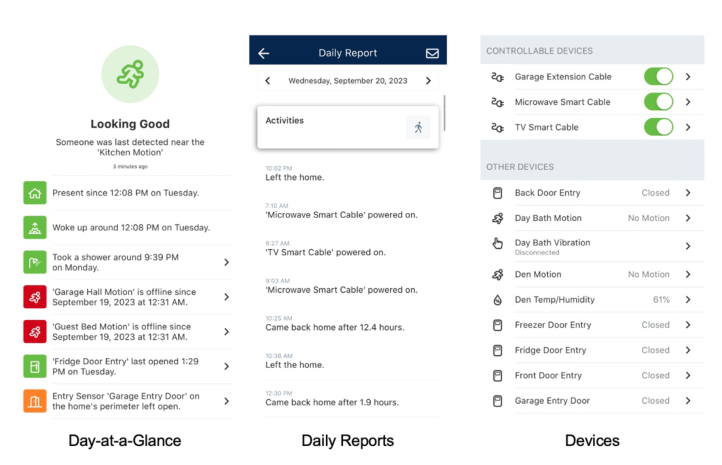
Figure 1: Smart home application key features.
The application allowed participants to view sensor insights through 3 main features referred to as: Day-at-a-Glance, Daily Reports, and Devices
(see Figure 1) as well as Notifications. With Day-at-a-Glance, users could view a summary of recent activities within the home, highlighting any areas of concern, including offline sensors or doors left open. If information of interest was not shown in Day-at-a-Glance, users could use Daily Reports to view a full breakdown of all activity within the home. Daily Reports divided information by day and by activity type (e.g. Meals, Medication, Bathroom), enabling users to scroll through previous days. With the Devices page, users could remotely control lights and view the real-time status of sensors, checking for open doors and offline sensors.
The application provided updates to users primarily through customizable notifications. Users could opt into app or SMS alerts based on their individual needs, for example, enabling alerts for wandering, medication adherence, or late-night activity.
Participants Thirteen dyads (n = 13), consisting of an older adult diagnosed with MCI (iwMCI) and their carepartner, were introduced to the app. Carepartner rela- tionship varied per dyad, presenting as spouses, siblings, or adult children with different caregiving arrangements in relation to the iwMCI (i.e. cohab- itating, adjacent living, remote). All carepartners were given access to the application, while iwMCI were given the option to use the app (either full app access, or SMS notifications only). Table 2 details participant information.
Table 2. Dyad information.
Table available in the original PDF paper.
Dyad Who Had App Carepartner Relation Living Arrangement
Procedure Smarthome sensing technologies were installed in participants’ homes during the first in-person visit. This installation process was guided by information from initial phone interviews to optimize sensor quantity and placement for enhanced system efficiency. Sensors were installed at least a month before the app introduction to allow the system to learn patterns and behaviors
Exploring AI Smart Home Aging-in-Place: Use Cases to Empower Individuals 5
within the home. The app introduction involved a walkthrough of key fea- tures including Day-at-Glance, Daily Reports, Devices, and Notifications. Users were encouraged to explore additional features as desired.
The feedback protocol employed a mixed-methods, user-centered approach, combining qualitative and quantitative feedback through System Usability Scale (SUS) scores, Likert scales, and open-ended questions. Inter- views, conducted at least twice for most dyads, were scheduled at least a month apart. The first feedback interview served a dual purpose: collecting feedback and reintroducing the app’s functions, prompting user engagement and value discovery. Questions focused on app usage, perceived usefulness, and challenges related to MCI goals.
Researchers fostered relationships with dyads to encourage honest feed- back through established rapport. Semi-structured interviews conducted with lead researchers captured information around dyad living situations, observed progression, and unique challenges. Insights were gathered through built relationships and observations during home visits, providing a unique contextualization of interview feedback.
FINDINGS Results highlighted a range of use cases for AI-powered smart home systems in supporting aging-in-place for iwMCI and their carepartners. However, they also pointed to limitations in the current system. Findings obtained from a thematic analysis of feedback sessions are summarized below.
Use Cases for Carepartners Use cases of the system for carepartners of iwMCI were categorized across several themes (see Table 3).
Security (Door Status): AISmartHome was most frequently used by dyads to monitor door status, with 11 out of 13 homes utilizing the app for this pur- pose. Door opening alerts proved beneficial for both remote and in-person carepartners, aiding in tracking the movements of the iwMCI and preventing wandering. Two homes specifically employed the app for wandering preven- tion. The immediate door opening alerts, especially when not in the same room as the iwMCI, prompted these carepartners to take action in ensuring the safety of the iwMCI. In eight homes, concerns around entry doors being left open were addressed through customized alerts, notifying carepartners when doors remained open for a self-selected duration.
Daily Routine Check: AISmartHome aided carepartners in ensuring daily routine adherence, addressing activities such as medication intake, mealtime adherence, showering, sleep, and pet care. The application was utilized by carepartners to verify the completion of specific daily tasks based on dyad concerns. 5 out of 13 carepartners used the app for tracking morning and evening medication. Additionally, 3 out of 13 homes employed the applica- tion to monitor fridge openings and microwave usage as potential indicators of mealtime adherence. However, one home noted the limitations of using such activities as evidence of actual meal consumption.
Daily Routine Analysis: AISmartHome provided carepartners with both reminders and the ability to analyze daily tasks. Cohabitating carepartners utilized motion sensor data to track the whereabouts and activities of the
iwMCI in the home, while remote carepartners monitored their presence at home. Two carepartners found the app useful for non-intrusive safety checks. Sleep quality and duration were also concerns, particularly for remote carepartners, with three reporting it as a use case. AISmartHome facilitated the assessment of night-time activity, allowing one carepartner to identify instances of night-time confusion.
General Household Maintenance: Through smart cables, humidity sen- sors, and door sensors attached to appliances and devices, AISmartHome facilitated remote household management for carepartners. In three house- holds, the app ensured fridge and freezer doors were closed. An app alert also prompted one carepartner to remind the iwMCI to retrieve food left in the microwave, contributing to meal-time adherence.
Table 3. Use cases of smart home systems for care partners (CPs) and iwMCI.
Table available in the original PDF paper.
Theme Use Case # of Users (CPs)
# of Users (iwMCI) Security Entry Door Left Open 9 Entry Door Opened 6 1 Security Alarm Armed 1 1
3 2
Daily Routine Check (Did iwMCI or I do x task today?)
5 3 2 1 1 1
Medication Taken Ate (Fridge/Microwave Opened) Showered Oven Used Napped Pet Fed Complete Task List
1
7
Daily Routine Analysis (When did I or iwMCI do x task? What are the details of x task?)
4 3 3 3 2
Details Around Movements (Is iwMCI home? Where in home?) Open Fridge/Microwave Quality of Sleep Sleep & Wakeup Times Bathroom Visits Monitoring Activity Level Monitoring
1
General Household Maintenance
1 2
Microwave/Fridge Left Open Food Left in Microwave Turn Lights On/Off Monitor Humidity Levels
3 1 2 2
5
Detect out of the Norm Activity
Understand MCI Progress through Changes in Living Patterns Identify Problem Spots/Events Fall Detection
2 1
Social Prompt Check-in with iwMCI Provide Topics of Conversation
3 1
Detect out of the Norm Activity: AISmartHome facilitated the establish- ment of a baseline of normal activity for iwMCI through the Daily Reports. Carepartners compared activities across multiple days, identifying changes in living patterns that may signify further progression of MCI. One carepart- ner noted that the app prompted adjustments to these changes and enabled sharing insights with their doctor when concerned.
Social: AISmartHome sends social alerts as reminders for users to reach out to the iwMCI. In three dyads with remote carepartners, these social alerts prompted check-ins with the individual. Furthermore, one iwMCI noted the
Exploring AI Smart Home Aging-in-Place: Use Cases to Empower Individuals 7
app’s information facilitated conversations with family members with access, prompting questions about daily activities.
Use Cases for iwMCI Use cases for iwMCI with app or SMS notification access centered around specific daily activities of concern including security, daily routine check, daily routine analysis, and general household maintenance (see Table 3).
Daily Routine Check: For iwMCI, AISmartHome served as a reminder for daily events, allowing them to answer the question, “Did I complete this task today?”. Of the five iwMCI with app or notification access, three found the app beneficial for medication adherence. One participant, who often forgets medication while in the garden, was successfully reminded through AIS- martHome. Another participant appreciated the ability to verify medication adherence, eliminating the need to check with their carepartner.
Daily Routine Analysis: AISmartHome enabled iwMCI to collect addi- tional, detailed information about their daily activities, fostering a sense of independence and control. Two participants used the app for analyzing sleep quality, considering sleep length and nighttime wakeups. The app also sent SMS alerts for low activity levels, encouraging occupants to be active, which one participant found useful.
General Household Maintenance: AISmartHome enhanced awareness of the household environment and deviations from the norm for iwMCI. For example, one iwMCI, who also served as caregiver for their spouse, appre- ciated the app for providing greater home awareness, ensuring closed fridge and entry doors. Reminders of food left in the microwave also facilitated mealtime adherence.
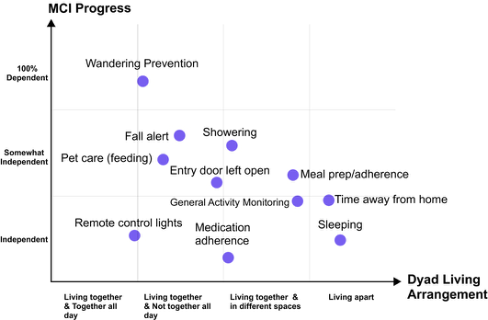
Factors Influencing Use Analysis of the AISmartHome system pointed to nuanced patterns of usage influenced by three variables: carepartner proximity, MCI progression, and tech proficiency of the user. Figure 2 demonstrates how two of these factors - MCI progression and carepartner proximity - impact use cases.
Figure 2: AISmartHome use cases based on caregiver proximity and MCI progression.
In four homes, cohabitating carepartners who were with the iwMCI for most of the day found app information redundant, as they were already aware of most activities, while six homes stated the level of monitoring was unnec- essary for the iwMCI’s current condition. Despite fewer observed use cases in situations where caregivers and iwMCI cohabitated, entry door sensors remained valuable for addressing wandering and enhancing general security. In these homes, the app was also often useful for managing daily chores and tasks such as medication adherence, showering, and pet care, particularly when the iwMCI had higher independence.
For iwMCI under remote caregiving arrangements, a relatively higher level of independence was observed. However, concerns arose with remote caregivers around quality of sleep, night-time activity, and medication adher- ence. Medication adherence also emerged as a concern when cohabitating iwMCI and their carepartners were not in close proximity throughout the day. In instances of more pronounced decline, cohabitating carepartners often assumed the responsibility of managing medications, making app use unnecessary for this purpose.
Technology proficiency was another factor that was consistently seen as an influence on dyad app use for both iwMCI and their carepartners. Carepartners and iwMCI with lower proficiency were more likely to face frustrations and discouragement in using the app due to system inaccuracies and limitations.
Usability & Usefulness The System Usability Scale (SUS) was administered during each round of feedback sessions to gather a quantitative understanding of AISmartHome’s usability. The average SUS score for both the first round (16 responses SUS = 70.47) and subsequent sessions (13 responses, SUS = 76.54) was 73.19 out of 100, indicating “good” usability on Bangor’s adjective rating scale. This increase in score may be attributed to the inherent reintroduction of features during the first session.
During feedback sessions, participants systematically evaluated the use- fulness of each application feature, providing ratings on a scale ranging from “not at all useful”(1) to “very useful”(4) based on their usage experience. The participants’ assessments of the key app features are synthesized in Table 4. All participants engaged with app notifications, assigning an average useful- ness rating of 3.21. This highlights the perceived efficacy of these notifications in the context of participants’ interactions with the application.
Table 4. Usefulness of key AISmartHome features (1 = not at all useful, 4= very useful).
Table available in the original PDF paper.
App Feature Usefulness # of Responses Day at a Glance 3.09 23 Daily Report 2.88 16 Devices 3.08 15 Notifications 3.21 29
Exploring AI Smart Home Aging-in-Place: Use Cases to Empower Individuals 9
System Limitations While the findings highlight promising use cases of smart home interventions, it is imperative to acknowledge the limitations of the system.
One notable limitation pertains to the system’s inability to distinguish between occupants of the home and pets. Wearables were considered, but not implemented, thus activity inferences (e.g. sleep, meal prep, door openings) were for the home, not the iwMCI alone.
Challenges from sensing failures due to sensors falling, varying signal strength, water intrusion (toilet tank), or just incompatibility with appli- ances resulted in frustratingly inaccurate alerts, such as closed garage doors appearing left open (3 homes) or falsely reporting food left in the microwave (4 homes). A carepartner also noted the AI inferred the home was empty when the iwMCI was napping and the carepartner went out, but noted that a notification indicated when the iwMCI awoke. Six homes reported receiving notifications that exceeded the level of information needed for the iwMCI’s current condition, raising concerns about the relevance of the information provided.
The system’s inability to accurately distinguish between occupants, cou- pled with issues of information overload and sensor or AI inaccuracies, under- scores the need for further refinement in the development and deployment of AI-based interventions for this population.
DESIGN IMPLICATIONS Drawing from dyad feedback and described challenges with the app, sev- eral design implications for future AI-based interventions were identified to enhance the effectiveness of smart home systems in supporting iwMCI and their carepartners.
Customization and Personalization: Dyads emphasized the need for greater customization across the app, particularly in addressing unique infor- mation needs dependent on MCI progress. The ability to tailor the frequency and types of notifications and highlight information of interest within the application is essential in enhancing the relevance of the system in daily caregiving routines.
Detailed Information around the Kitchen: Dyads expressed the need for real-time detailed monitoring of kitchen activities and enhanced safety fea- tures, lacking in the current system, to address potential hazards (e.g. stove left on or something left on stove) effectively. Providing detailed informa- tion about kitchen events would enable carepartners to respond promptly to safety concerns and mitigate risks associated with meal-prep.
Greater Precision: Dyads requested greater precision in monitoring activ- ities and events within the home that would, for example, allow them to distinguish medication taking from filling the med box or patterns of meal prep versus just opening the fridge. Enhancing precision in activity detec- tion, distinguishing occupants, and reporting presence in and away from the home would provide dyads with more accurate insights into daily rou- tines and enable better decision-making regarding caregiving tasks and safety measures.
Integration with Existing Technologies: Dyads suggested integrating the smart home system with wearables like Apple Watch and voice assistants like Google Home to precisely track behaviours such as wandering and provide timely reminders for tasks like meal-time or medication adherence, offering expanded capabilities and support for users. In this study, only a few homes received integrated voice assistants.
CONCLUSION
This case study underscores the diversity of use cases of smart home systems for individuals with MCI and their carepartners. System use is influenced by factors such as the progression of MCI, technological proficiency, and carepartner proximity. Medication management and door activity monitor- ing emerged as common use cases across dyads, with medication reminders being particularly helpful among iwMCI with app access. The findings emphasize the need for future smart home systems to accommodate vary- ing needs and preferences of dyads, allowing for a level of customization that can adapt to their specific challenges. By incorporating such flexibility, these systems can better support individuals with MCI and their carepart- ners in managing daily tasks and maintaining independence in their living environments.
ACKNOWLEDGMENT
This work was performed as part of the Cognitive Empowerment Program which is supported by Emory’s Brain Health Center, Georgia Institute of Technology, and a generous investment from the James M. Cox Foundation.
REFERENCES
Ahn, I. S., Kim, J. H., Kim, S., Chung, J. W., Kim, H., Kang, H. S. and Kim, D. K.,
2009. Impairment of instrumental activities of daily living in patients with mild cognitive impairment. Psychiatry investigation, 6(3), p. 180. Caregiver burden in mild cognitive impairment. Aging & mental health, 19(1), pp. 72–78. Carlozzi, N. E., Sherman, C. W., Angers, K., Belanger, M. P., Austin, A. M. and
Ryan, K. A., 2018. Caring for an individual with mild cognitive impairment: a qualitative perspective of health-related quality of life from caregivers. Aging & mental health, 22(9), pp. 1196–1204. Demiris, G. and Hensel, B. K., 2008. Technologies for an aging society: a systematic review of “smart home” applications. Yearbook of medical informatics, 17(01), pp. 33–40. Hutchinson, H., Mackay, W., Westerlund, B., Bederson, B. B., Druin, A., Plaisant, C.,
Beaudouin-Lafon, M., Conversy, S., Evans, H., Hansen, H. and Roussel, N., 2003, April. Technology probes: inspiring design for and with families. In Proceedings of the SIGCHI conference on Human factors in computing systems (pp. 17–24). Lu, Y. F. Y. and Haase, J. E., 2009. Experience and perspectives of caregivers of spouse with mild cognitive impairment. Current Alzheimer Research, 6(4), pp. 384–391. Mathur, N., Dhodapkar, K., Zubatiy, T., Li, J., Jones, B. and Mynatt, E., 2022,
October. A Collaborative Approach to Support Medication Management in Older Adults with Mild Cognitive Impairment Using Conversational Assistants (CAs). In Proceedings of the 24th International ACM SIGACCESS Conference on Computers and Accessibility (pp. 1–14).
Exploring AI Smart Home Aging-in-Place: Use Cases to Empower Individuals 11
Paradise, M., McCade, D., Hickie, I. B., Diamond, K., Lewis, S. J. and Naismith, S. L., 2015. Thapliyal, H., Nath, R. K. and Mohanty, S. P., 2017. Smart home environment for
mild cognitive impairment population: Solutions to improve care and quality of life. IEEE Consumer Electronics Magazine, 7(1), pp. 68–76. Vogel, A., Stokholm, J., Gade, A., Andersen, B. B., Hejl, A. M. and Waldemar, G.,
2004. Awareness of deficits in mild cognitive impairment and Alzheimer’s dis- ease: Do MCI patients have impaired insight?. Dementia and geriatric cognitive disorders, 17(3), pp. 181–187. Winblad, B., Palmer, K., Kivipelto, M., Jelic, V., Fratiglioni, L., Wahlund, L. O., Nordberg, A., Bäckman, L., Albert, M., Almkvist, O. and Arai, H., 2004. Mild cognitive impairment–beyond controversies, towards a consensus: report of the International Working Group on Mild Cognitive Impairment. Journal of internal medicine, 256(3), pp. 240–246.
LISTED IN THE AHFE DIGITAL BOOKSTORE CATALOGUE
Explore the complete digital volume
Human Factors in Aging and Special Needs
Read this individual research paper free through the original publisher, or explore the full digital proceedings book.
ISBN 978-1-964867-09-0
Explore this ISBN in the AHFE Bookstore ↗Listed in the July 2026 bookstore catalogue; search by ISBN to confirm current availability · Digital book purchase optional