Paulo Eduardo Tonin, Elton Nickel (2025). Shaping the Future of Physical Retail: Insights into Global Consumer Experiences. In: Intelligent Human Systems Integration (IHSI 2025): Integrating People and Intelligent Systems. AHFE Open Access, vol. 160, pp. 668–677. https://doi.org/10.54941/ahfe1005873
This study investigates the global relevance of 14 consumer experience guidelines originally developed in Brazil using the “Experience Compelling Map,” a Design Thinking tool applied to physical retail. By observing 30 retail locations across Tokyo, Osaka, Kyoto, and Seoul, this research explores how sensory stimuli, personalization, and technology shape the shopping journey in Asia's leading markets. Findings indicate strong parallels between Brazilian insights and Asian practices, with personalization emerging in over half of the observed sites and visual and auditory stimuli enhancing brand connection. These results suggest that while consumer experiences are influenced by cultural contexts, they increasingly reflect shared global expectations shaped by digital and sensory-driven engagement. This analysis underscores the importance of human-centered innovation in retail, supporting the theme of integrating human and intelligent systems to create immersive, emotionally resonant consumer experiences.
In the current era of digital transformation and rapidly evolving consumer expectations, which has been significantly accelerated by the Covid-19 pandemic, the role of sensory stimuli, technology and personalization in retail environments has gained substantial importance. As consumers increasingly seek immersive and meaningful experiences that go beyond mere product transactions, sensory branding, for instance, has emerged as a powerful strategy to create value and reinforce brand identity. This approach extends beyond traditional marketing efforts, using sensory cues such as sight, sound, and smell to foster emotional connections between consumers and brands. Such connections not only enhance the consumer’s immediate experience but also build long-term loyalty, which is beneficial for companies seeking to establish themselves in a competitive marketplace (Lindstrom, 2010; Hulten, 2017). Sensory branding, therefore, represents a shift towards experience-based retail models where consumer satisfaction and emotional engagement are prioritized. By understanding how sensory stimuli influence consumer behaviour, brands can create environments that resonate deeply with their
Shaping the Future of Physical Retail: Insights Into Global Consumer Experiences 669
audience, facilitating a sense of connection that is often lacking in digital- only interactions. This shift is aligned with the growing demand for personalization and differentiation within physical spaces, as consumers increasingly value experiences that evoke a sense of novelty, comfort, and emotional resonance. The use of sensory branding thus positions brands to meet contemporary expectations, where the consumer’s journey is as important as the product itself (Mehrabian & Russel, 1974; Malnar & Vodvarka, 2004; Lindstrom, 2010; Manzano et al., 2012; Hulten, 2017; Matsumura, 2021).
Furthermore, analysing current consumer behaviour patterns is essential to comprehending broader trends in experience design for built environments. The fusion of sensory elements with technological innovation is reshaping retail spaces, transforming them into interactive hubs that encourage exploration and engagement. In this context, Asia, and in particular East Asia, serves as an influential reference point in global retail. Brands in this region have pioneered innovative approaches to integrating sensory and technological elements in physical environments, reflecting a deep understanding of consumer psychology and preferences.
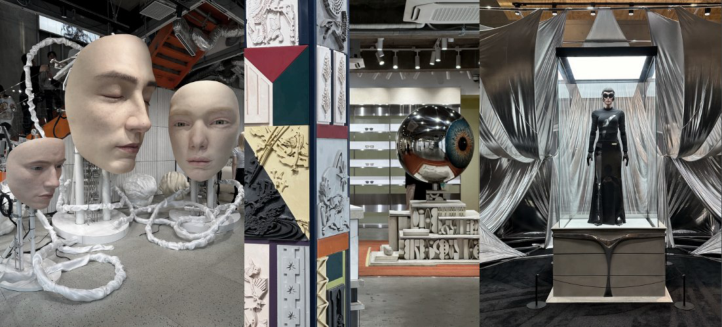
A prominent example (Figure 1) of this is the South Korean brand Gentle Monster, renowned for its avant-garde approach to retail design. Gentle Monster’s physical stores transcend conventional shopping spaces, offering a curated, sensory-rich experience that emphasizes art and technology as core components of its brand identity. Through immersive installations, distinct visual aesthetics, and the use of unconventional materials, Gentle Monster creates spaces that not only showcase products but also evoke specific emotions and narratives. These stores are designed to appeal to consumers on multiple sensory levels, facilitating a memorable and engaging experience that reinforces brand loyalty.
Figure 1: Gentle monster stores in Tokyo and Seoul (author, 2024).
The case of Gentle Monster illustrates how sensory branding can be successfully integrated with technology to create a cohesive and compelling brand experience. The use of augmented reality, interactive installations, and thematic spaces within Gentle Monster’s stores demonstrates a sophisticated
670 Tonin and Nickel
understanding of how digital and physical elements can be harmoniously blended to enhance customer engagement. By setting a new standard for experiential retail, Gentle Monster and similar brands are influencing global trends, offering valuable insights into the future of retail environments where sensory and technological elements converge.
The present study continues the research initiated by Tonin et al. (2024), further analysing an experiment involving the application of a tool known as the “Experience Compelling Map”, derived from the “Design Thinking” (Brown, 2009) methodology, used to support the focus group method. This tool was initially accessed by the researcher Paulo Tonin during a workshop held at The New School/Parsons in 2018, led by Prof. Dr. Melissa Rancourt. In the experiment, volunteers were invited to share emerging perceptions and insights through a structured exercise that mapped the user experience in five stages: 1) Attraction – what happens before the individual enters the establishment (e.g., advertisements and external communication); 2) Entry – what happens when the user arrives at the location; 3) Engagement – what occurs during the primary interaction with the store’s offerings; 4) Exit – perceptions and actions when preparing to leave the site; and 5) Extension – what occurs after the experience that keeps the user engaged with the brand or store.
The primary objective of this experiment was to map the different consumer touch points with the physical store, from the moment before entry until returning home, in order to identify the solutions consumers seek in physical retail after the Covid-19 pandemic. As a result, Tonin et al. (2024) grouped the collected insights into 14 categories that serve as guidelines for directing strategic actions at the point of sale. The identified guidelines are as follows: 1) Visual Stimulation (VS) – elements such as shop window, product arrangement, colors, focal points, and visual media (screens and TVs); 2) Olfactory Stimulation (OS) – overall aromas and specific scents; 3) Auditory Stimulation (AS) – ambient music and related sounds; 4) Gustatory Stimulation (GS) – provision of food and beverages as “treats”; 5) Tactile Stimulation (TS) – opportunity to touch and test products, as well as furniture textures; 6) Spatial Arrangements (SA) – aspects of circulation, accessibility, logical zoning, organization, spaciousness, and layout; 7) Customer Service (CS) – empathy, information accuracy, accessibility, feedback solicitation, and receptiveness; 8) Technology (TC) – quick payments, pre- and post-sale contact, social media integration, use of facilitating technological devices, and creation of “Instagrammable” spaces; 9) Environmental Quality (EQ) – lighting, visual and thermal comfort, cleanliness, and availability of spaces for staying; 10) Product Quality (PQ) – quality of materials and product sourcing; 11) Packaging (PK) – care in packaging, material innovation, and reusability; 12) Surprise Factor (SF) – gifts, samples, and unexpected elements that break the monotony; 13) Sustainability and Social Concern (SS) – donation initiatives, use of recycled materials, and sustainable packaging; and 14) Personalization (PR) – product customization, personalized customer service, and availability of diverse sizes.
Although the experiment was conducted in Brazil with 25 volunteers from different generations (Silent Generation, Baby Boomers, Generation X,
Shaping the Future of Physical Retail: Insights Into Global Consumer Experiences 671
Generation Y, and Generation Z), it is essential to recognize that in the current globalized context, where information spreads rapidly via the internet, the solutions desired by Brazilian consumers may reflect global trends. In order to verify the applicability of the guidelines and categories identified by Tonin et al. (2024) in the Asian market. The choice of Asia, particularly Japan and South Korea, as a field of investigation is justified by the fact that these countries are leaders in developing innovative solutions for global retail. Asia is often considered a benchmark for trends that later spread to other markets. Thus, analysing how the guidelines identified in Brazil apply in this context enables a broader understanding of global consumer dynamics.
METHODOLOGY
This qualitative research included a field survey to numerous commercial establishments in Tokyo, Osaka, Kyoto (Japan), and Seoul (South Korea). Employing the passive observation methodology—a data collection approach that entails systematically recording phenomena, behaviours, and interactions in natural settings without directly interacting with or influencing those observed (Stanton, 2004)—allowed for a nuanced view of how and where the 14 categories identified in the study are explored within Asian retail environments. By closely examining these categories in situ, the study captured insights into how global retail trends manifest in these vibrant markets, illuminating the subtle but powerful ways that consumer engagement is shaped by these environments.
A total of 30 establishments from diverse market segments were selected, spanning from apparel to cosmetics, all presented in alphabetical order: 1) Ader (Apparel, Seoul); 2) Born to Stand Out (Perfumes and Cosmetics, Seoul); 3) Butter (Accessories and Memorabilia, Seoul); 4) Cow Books (Used Bookstore, Tokyo); 5) Dear Dracena (Cosmetics, Seoul); 6) Fueguia Ginza Six (Perfumes, Tokyo); 7) Gentle Monster (Eyewear, Tokyo and Seoul); 8) Glanta (Jewelry, Kyoto); 9) Itoya (Stationery, Japan); 10) K’Way (Apparel, Seoul); 11) Kith (Apparel and Accessories, Tokyo); 12) Kodak Corner Shop (Apparel and Accessories, Seoul); 13) Le Labo (Perfumes, Kyoto); 14) Line Friends (Accessories and Memorabilia, location unspecified); 15) Maison Kitsuné (Apparel and Café, Kyoto); 16) Muji (Various, Tokyo); 17) Nintendo Store (Games and Memorabilia, Kyoto); 18) Nishiki Market (Various, Kyoto); 19) Onitsuka Tiger (Footwear, Tokyo); 20) Replica Maison Margiela (Perfumes, Tokyo); 21) Shiseido Ginza (Cosmetics, Tokyo); 22) Skin 1004 (Cosmetics, Seoul); 23) Sulwhasoo (Cosmetics, Seoul); 24) Tamburins (Perfumes and Cosmetics, Seoul); 25) The Flavor Design (Perfumes, Kyoto); 26) The Matcha (Food, Tokyo); 27) Tsutaya Books (Bookstore, Seoul); 28) Uniqlo (Apparel, Osaka); 29) Visvim (Apparel, Tokyo); 30) 45 R (Apparel, Kyoto) (Figure 2).
This extensive analysis of commercial spaces across Japan and South Korea has provided a richer understanding of how the categories outlined by Tonin et al. (2024) are actively embedded within and influencing the retail landscape in Asia. The findings emphasize the importance of a holistic approach to the consumer experience that integrates sensory stimulation
672 Tonin and Nickel
with the evolving expectations of today’s global shoppers. By observing how retailers strategically blend local cultural nuances with international trends, the study reveals key insights into the adaptive nature of retail in one of the most dynamic retail regions in the world.
RESULTS
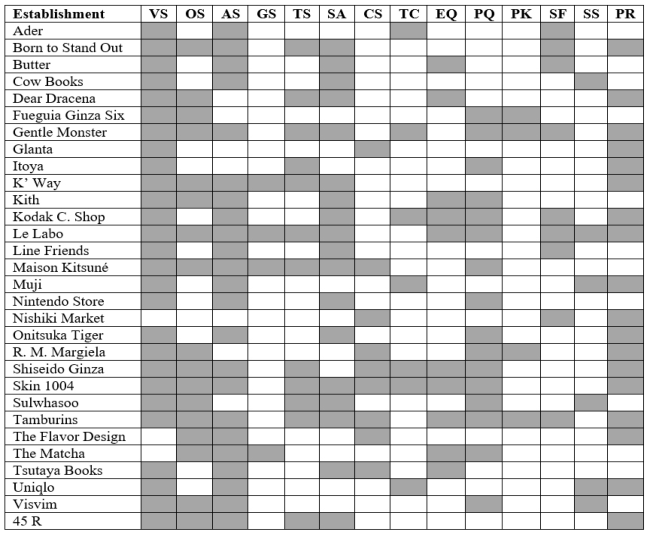
During analysis of results, the category of “Personalization”emerged as a key focus in the analysis, observed in 18 out of the 30 establishments investigated. This finding underscores a growing global trend in which consumers increasingly seek products with unique characteristics that differentiate them from others, adding individualized value to the shopping experience. The concept of personalization now extends beyond the simple choice of colors or styles; it includes a wide array of options, such as selecting numbers, letters, and even images that can be embroidered, engraved, or printed on purchased items. A notable example of this is found at the Itoya store, where customers have the opportunity to assemble a completely personalized mechanical pencil, selecting each of its components, such as colors and finish, resulting in a product uniquely tailored to the buyer’s preferences. From a psychological standpoint, personalization is closely linked to identity formation and differentiation in a society characterized by product standardization. The pursuit of individuality increasingly influences buying behaviour, and retailers are responding by offering options that allow consumers to create unique products. Figure 2 shows the distribution of the 14 categories across each of the 30 establishments.
Figure 2: Distribution of categories by establishment (author, 2024).
Shaping the Future of Physical Retail: Insights Into Global Consumer Experiences 673
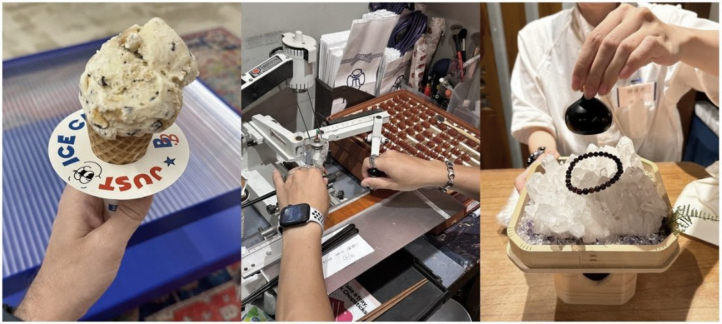
Sensory stimuli also stood out significantly during the observations, aligning with behavioural psychology studies that suggest approximately 80% of impressions formed in interpersonal interactions are sensory rather than verbal. As Lindstrom (2012) explains, people experience and interpret the world largely through their senses, which act as powerful connectors between the present moment and memory, evoking emotions and memories. From birth, individuals begin building an extensive library of sensory memories, which is continually updated and reinterpreted throughout their lives. Visual stimuli were the most prominent among the solutions introduced by the companies visited, showing a concerted effort to attract and retain customer attention through colors, lighting, window displays, and other visual elements. Auditory stimuli, often linked to store ambiance, were the second most utilized, followed by olfactory stimuli, which, though less common, have a powerful impact on emotional evocation and the creation of warm, memorable atmospheres. Tactile stimulation was subtler, primarily evident in stores that offer products with distinct textures or hands-on sensory experiences. Gustatory stimulation, the least utilized of the five senses in the analysed establishments, is beginning to gain traction in places that do not necessarily sell edible products. For example, the Korean clothing store K’Way (Figure 3), in partnership with a local ice cream vendor, provides a basement rest area where customers can enjoy ice cream while relaxing.
Spatial organization also proved to be a vital component in creating unique experiences. Many observed retail spaces displayed meticulous planning of customer movement to maximize engagement with products and available experiences. Some stores, for instance, incorporate elements of surprise, such as interactive sculptures and robots, which both delight customers and encourage photo taking and sharing on social media. This practice not only strengthens brand recall but also fosters organic promotion, extending brand reach. Even simpler establishments, such as those in Kyoto’s traditional Nishiki Market (Figure 3), demonstrated innovative and accessible solutions, reinforcing the notion that creativity does not necessarily require significant financial investment. For example, the customization of chopsticks with engraved letters and icons reflects how value and exclusivity can be added to a product with minimal resources. Additionally, the market offers small rituals, such as symbolically “energizing” a bracelet before handing it to the customer, enhancing the shopping experience with emotional and cultural significance.
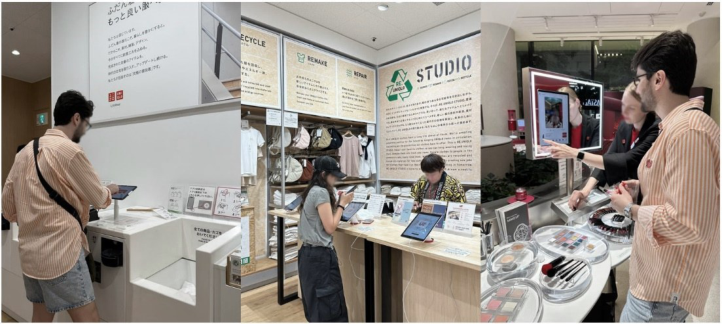
Technology has profoundly influenced the shopping experience, transforming it in numerous ways. At Uniqlo (Figure 4), self-checkout stations, for instance, streamline purchase completion and improve efficiency while customizable embroidery machines and invite the customer to be part of the creative process when designing a personalized piece. At Shiseido Ginza (Figure 4), sophisticated equipment performs customer skin readings and, using front-facing cameras and artificial intelligence, simulates product application directly onto the consumer’s face. This interactive and personalized experience enables customers to see the results practically and instantly. In the literature, the use of technology, especially mnemonic
674 Tonin and Nickel
devices, is defended by Norman (2013) as an agent for improving usability, directly linked to user satisfaction.
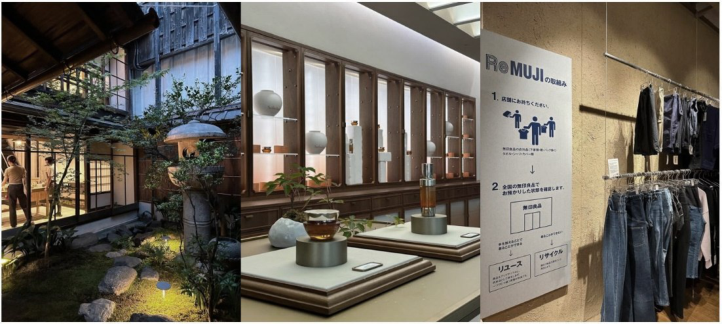
While sustainability and social responsibility did not feature as prominently as other categories, these considerations still warrant attention. Brands like Le Labo show a commitment to heritage preservation by operating in historic buildings and contributing to their conservation. Sulwhasoo educates customers on the origins of the natural ingredients in its products, emphasizing the production process and the significance of the communities involved. Muji, through its reuse policy, dedicates a store section exclusively to repurposed products, underscoring its commitment to sustainability (Figure 5). Overall, it is clear that modern retail trends emphasize delivering not only products but also sensory, interactive, and personalized experiences that go beyond mere purchase. These experiences, enriched by technology and creative design, build an emotional connection between brand and customer, fostering distinctive and lasting memories.
Shaping the Future of Physical Retail: Insights Into Global Consumer Experiences 675
Figure 5: Le Labo (left), Sulwhasoo (center) and Muji (right) (author, 2024).
CONCLUSION
The study aligns with the theme of the International Conference on Integration of Human-Intelligent Systems by underscoring the importance of connecting people with intelligent systems in retail. It contributes to advancing the field by exploring how sensory stimuli and personalization shape consumer expectations, emphasizing the need to integrate technological innovation with a human-centered approach. This integration aims to create experiences that go beyond transactions, engaging consumers in profound and meaningful ways.
The methodological approach provided a detailed perspective on how these guidelines are implemented and shape consumer experiences within Asian retail environments. The findings confirmed the global relevance of the guidelines obtained through experiments conducted by Tonin et al., 2024. Personalization, observed in 18 of the 30 establishments analysed, reflects the growing demand for customized products and experiences that add individualized value to the consumer journey. Sensory stimuli— particularly visual, olfactory, and auditory—play a central role in creating memorable shopping experiences and strengthening the emotional bond between consumers and brands.
The strategic use of sensory stimuli in retail spaces represents a crucial area of innovation in the post-pandemic landscape. As consumers increasingly seek experiential engagement, understanding and implementing sensory branding techniques in retail environments not only meets contemporary consumer demands but also strengthens brand identity and customer loyalty. For professionals working with innovation in retail, particularly in culturally influential markets such as Asia, examining the intersection of sensory branding, consumer behaviour, and technology is essential for shaping future retail experiences that are both emotionally engaging and commercially successful.
The analysis supports the premise that while consumer needs and expectations are influenced by cultural factors, they also reflect global
676 Tonin and Nickel
patterns shaped by digitalization and the globalization of consumption practices. Although the participants in the original study on the 14 categories were from Brazil, their needs and desires in physical retail experiences resonate within Asia, a significant reference point for global trends.
Integrating the presented categories and trends into the built retail environment holds significant importance in transforming these spaces into tourist attractions that benefit cities socially and economically. By adopting innovative practices that resonate with global consumer expectations—such as sensory branding, personalization, and cutting-edge technologies—retail environments can evolve beyond commercial hubs into immersive destinations that draw visitors from diverse backgrounds. This transformation not only fosters cultural exchange and community engagement but also drives economic growth through increased tourism, job creation, and business opportunities. As a result, strategically designed retail spaces become integral to urban development, reinforcing the city’s identity while serving as vibrant centers for cultural and economic activity (Figure 5).
Future investigations could delve deeper into the impact of cultural nuances on the consumer’s perception of sensory stimuli and personalization across diverse retail markets. Comparative studies between regions, such as Asia and Latin America, could reveal how cultural expectations and technological adoption levels influence consumer engagement. Additionally, future research could explore the role of emerging technologies, such as augmented reality (AR) and artificial intelligence (AI), in further personalizing and enhancing sensory experiences within physical retail environments. Examining these technologies’ potential to bridge online and offline experiences may provide insights into creating cohesive, hybrid shopping models that address evolving consumer preferences. Finally, longitudinal studies could assess how shifts in global trends, including sustainability and ethical consumption, influence consumer expectations and retailer strategies over time.
REFERENCES
Brown, T. (2009). Change by design: How design thinking transforms organizations and inspires innovation. New York: Harper Collins. Hulten, B. (2017). Branding by the five senses: A sensory branding framework.
Journal of Brand Strategy. 6. 1–12. Lindstrom, M. (2010). Brand sense: Sensory secrets behind the stuff we buy. New York: Free Press. Malnar, J. M., Vodvarka, F. (2004). Sensory Design. Minneapolis: University of
Minnesota Press. Manzano, et al. (2012). Marketing sensorial: Comunicar con los sentidos en el punto de venta. Madrid: Pearson. Matsumura, N. (2021). Shikake: The Japanese art of shaping behavior through
design. New York: Liveright Publishing, 2021. Mehrabian, A., Russell, J. A. (1974). An approach to environmental psychology.
Cambridge: The MIT Press. Norman, D. (2013). The design of everyday things: Revised and expanded edition.
New York: Basic Books.
Shaping the Future of Physical Retail: Insights Into Global Consumer Experiences 677
Stanton et al. (2004). Handbook of human factors and ergonomics methods. Boca Raton: CRC Press. Tonin et al. (2024). “The impact of sensory branding and technology on consumer
behavior in physical retail experience design: A multi-generational experimental study.” The International Journal of Design Management and Professional Practice 19 (1): 87–110, 2024.
LISTED IN THE AHFE DIGITAL BOOKSTORE CATALOGUE
Explore the complete digital volume
Intelligent Human Systems Integration (IHSI 2025): Integrating People and Intelligent Systems
Read this individual research paper free through the original publisher, or explore the full digital proceedings book.
ISBN 978-1-964867-36-6
Explore this ISBN in the AHFE Bookstore ↗Listed in the July 2026 bookstore catalogue; search by ISBN to confirm current availability · Digital book purchase optional