Jiaxin Shi, Le Chang, Yujia Du, Haining Wang (2025). Design Tool for Smartwatch Form Aesthetics Evaluation Based on Principal Component Regression. In: Ergonomics In Design and Kansai Engineering. AHFE Open Access, vol. 170, pp. 106–113. https://doi.org/10.54941/ahfe1006172
This study presents an aesthetic evaluation system for smartwatches based on Principal Component Regression (PCR). User reviews and product parameters were collected from platforms like Taobao and JD.com using web scraping techniques, and 38 attributes related to form aesthetics were extracted through literature review and interviews. Using card sorting, these attributes were reduced to six core evaluation attributes: style, color, material, dial, strap, and overall feel. A predictive model for form aesthetics evaluation was developed, along with a visualization system. The results show that design style and overall feel have the most significant impact on the aesthetic score, and the model effectively reflects the core aesthetic preferences of users. This system provides designers with a scientific tool from the user’s perspective and can be extended to optimize the design of other wearable devices. Future research will expand the sample size and introduce multidimensional evaluations to further enhance the system’s functionality.
In the process of product design, aesthetic evaluation often relies on designers’ professional expertise and subjective judgment (Wu et al., 2016). However, there are significant differences between designers and users in aesthetic assessment, which may result in design outcomes that fail to fully meet user aesthetic needs. As the field of design increasingly transitions toward a user- centered approach, identifying and quantifying key attributes that influence user perception—particularly those related to product form aesthetics—has become a crucial issue for improving design quality (Qi et al., 2015).
With the rapid development of the wearable device market, smartwatches have emerged as a key consumer electronics product, and their form aesthetics have gradually become a core factor in users’ purchasing decisions. Studies have shown that product appearance directly impacts consumers’ emotional preferences and purchase intentions (Lyons, 2016). However, there is often a significant gap between designers’ professional aesthetics and users’ needs (Bruseberg et al., 2001; Mamaghani et al., 2014). Traditional design processes rely heavily on designers’ subjective experience
Design Tool for Smartwatch Form Aesthetics Evaluation 107
for aesthetic evaluation, lacking a systematic, quantifiable analysis of user perception, which can lead to a disconnect between design proposals and market acceptance. Although existing research has focused on functional optimization and human-computer interaction in smartwatches (Jeong et al., 2017), how to scientifically quantify the impact of form aesthetics attributes on user evaluation remains an unresolved challenge.
In the existing literature, Principal Component Regression (PCR) has shown distinct advantages in multivariate data analysis, effectively solving multicollinearity issues and extracting key variables (Jin et al., 2011). However, its application in smartwatch form aesthetic evaluation has not been fully explored. This study aims to fill this gap by proposing a smartwatch form aesthetics evaluation tool based on PCR. By integrating user review data with design parameters, this tool extracts key attributes influencing aesthetic perception (such as style, dial design, material, etc.), constructs a quantitative model to reveal the contribution weights of these attributes to user ratings, and develops a visualization system to support designers in making more scientifically informed decisions in the early design stages.
METHODS
Data Collection and Processing This study collected user review data from the top ten selling smartwatches on platforms like Taobao and JD.com using web scraping technology, with reviews posted before June 2023. After data collection, we performed cleaning, tokenization, and deduplication. Additionally, through literature review and open-ended interviews, we gathered as many attributes related to smartwatch form aesthetics as possible, continuing until no new attributes emerged. This phase resulted in 38 basic attributes describing smartwatch form aesthetics.
To ensure the attributes were both reasonable and accurate, we applied the Card Sorting method (Lin et al., 2015) to reduce the number of attributes. An 8-member group (4 members with product design experience and 4 non- design background users with smartwatch/fitness tracker usage experience) was formed. Each card represented one attribute, and group members categorized the cards based on similarity until all attributes were grouped. Any attribute that did not fit any category was placed into its own category. Finally, one representative attribute was selected from each category, resulting in six core evaluation attributes: Style, Color, Material, Dial, Strap, and Overall Feel (see Table 1).
Table 1: Basic attributes and evaluation attributes for smartwatch form aesthetics evaluation.
Table available in the original PDF paper.
Evaluation Attributes Basic Attributes Style Body Size, shape, size, profile, dial ratio, dial size, profile aspect ratio Color Strap colour, dial colour, colour scheme
Continued
Table 1: Continued Evaluation Attributes Basic Attributes
Table available in the original PDF paper.
Material Texture, material matching, material type, material visual perception Dial Screen, transition surface, dial size, dial
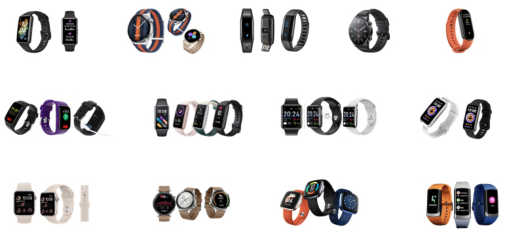
PCR Modeling To establish a product appearance evaluation model and obtain consumer preference data, we first conducted a literature review to identify the top 20 selling smartwatch brands. From this, 12 smartwatches with varying price ranges were selected as samples (see Figure 1). A simple random sampling method was used to select 20 users (average age: 23 years, with smartwatch usage ranging from 1 to 12 years) from university students and young faculty members. Users with backgrounds in industrial design or art design were excluded, as their aesthetic perceptions would differ significantly from those of “non-professional” users. Young users were selected for testing because they represent the core consumer group for smartwatches, and their aesthetic preferences have a significant impact on market trends. Additionally, young users tend to have heightened sensitivity to design details, which provides more distinctive data for form aesthetics evaluation.
Figure 1: Smartwatch samples.
Testers were asked to evaluate the 12 smartwatches using a Likert scale to measure the overall aesthetic score and evaluation attributes of each smartwatch. This resulted in 240 completed questionnaires. The scores were then converted into percentage scores for the total aesthetic score and each evaluation attribute.
This study referenced existing principal component analysis methods (Vidal, 2016), using the overall aesthetic score of the smartwatch (dependent
Design Tool for Smartwatch Form Aesthetics Evaluation 109
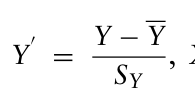
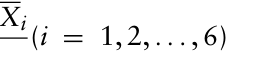
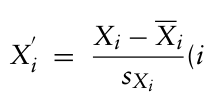
variable Y) as the core indicator, and selected style (X1), color (X2), material (X3), dial (X4), strap (X5), and overall feel (X6) as independent variables. Data analysis was conducted using SPSS 26.0 and MATLAB, with the following steps: Variable Selection and Standardization Bivariate correlation analysis (Pearson’s test, significance level α = 0.05) was performed to select the independent variables. As shown in Table 2, all independent variables showed significant correlations with the dependent variable Y (p < 0.001), indicating that these variables significantly affect the aesthetic score. All variables were retained for further analysis. The original data (Table 3) were then standardized to eliminate dimensional differences:
Y
Equation reproduced from the original PDF.
, X
Equation reproduced from the original PDF.Equation reproduced from the original PDF.Table 2: Results of the correlation analysis between the overall quality of the smartwatch’s aesthetic appeal and the measured attributes.
Table available in the original PDF paper.
Parameters Style Color Material Dial Strap Overall Feel Correlation
0.768 0.676 0.583 0.706 0.685 0.793
coefficient P value <0.001* <0.001* <0.001* <0.001* <0.001* <0.001* Sample size 240 240 240 240 240 240
* is statistically significant at the 0.05 level.
Table 3: Mean and standard deviation of independent and dependent variables.
Table available in the original PDF paper.
Parameters Style Color Material Dial Strap Overall Feel Form Aesthetics Sample
Factor Analysis and Principal Component Extraction Factor analysis was performed on the standardized data (Kline 2014), yielding eigenvalues and factor loadings for each principal component (see Table 4, Table 5), and a mathematical model for the principal components was established. The first three principal components explained 88.61% of the variance, capturing the majority of the information from the original variables. The principal component expressions were as follows: C1 = 0.423X′ 1 + 0.399X′ 2 + 0.372X′ 3 + 0.398X′ 4 + 0.395X′ 5 + 0.457X′ 6 C2 = −0.315X′
Principal Component Regression Modeling The first three principal components (C1, C2, C3) were used as independent variables to establish the regression equation: Y′ = 0.851C1 + 0.192C2 + 0.163C3 (R2 = 0.763, adjusted R2 = 0.731)
The model passed the significance test (p < 0.001), and all regression coefficients had p-values less than 0.05 (see Table 6). By substituting the principal component expressions into the regression equation, the standardized predictive model was derived: Y′ = 0.702 + 0.251X1 + 0.098X2 + 0.042X3
+ 0.141X4 + 0.155X5 + 0.174X6
Table 6: Significance test of regression coefficients.
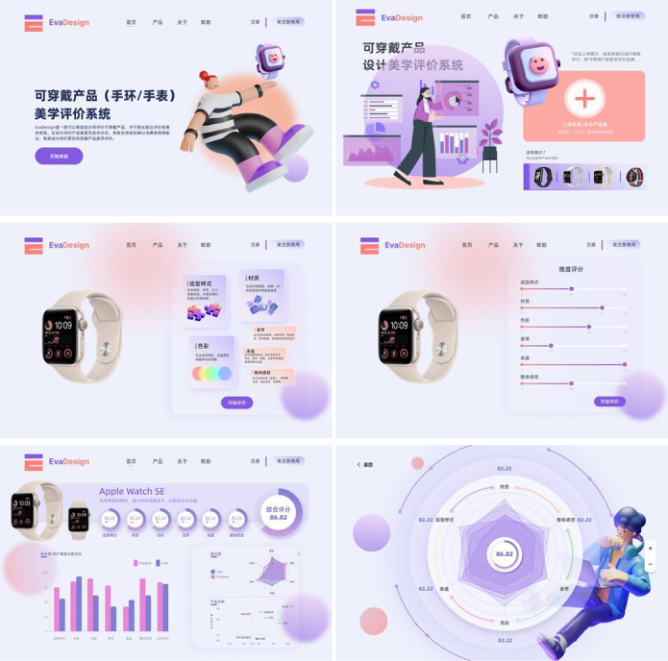
Visualization System Development To validate the feasibility and practical utility of the proposed system and its value for product design guidance, a visualization system for smartwatch
Design Tool for Smartwatch Form Aesthetics Evaluation 111
form aesthetics evaluation was developed. Designers can input scores for smartwatch attributes into the system (style, color, material, dial, strap, and overall feel), which automatically uses the predictive model to calculate an overall aesthetic score and display the form aesthetics results from the user’s perspective. This tool enables designers to quickly receive user feedback based on professional evaluations.
Figure 2: Smartwatch form aesthetics evaluation design tool system.
DISCUSSION
This study utilized PCR analysis to quantify the impact of smartwatch form aesthetics attributes on the overall aesthetic score, developed an aesthetics evaluation model, and created a visualization system. The results indicate that design style and overall feel of the smartwatch have the most significant impact on aesthetic ratings, with weights of 0.265 and 0.169, respectively, while the impact of material design is comparatively smaller. This finding aligns with the user survey results, demonstrating that the model effectively captures users’ core concerns regarding smartwatch form aesthetics and provides valuable data support for design decision-making.
In comparison to existing studies, the innovation of this research lies in the toolization of the PCR model, bridging the gap between theoretical analysis and practical application. The visualization system allows designers to quickly obtain user feedback in the early stages of the design process, significantly improving design efficiency and decision-making precision. However, there are some limitations in this study, particularly the relatively small sample size used in the computational model, which may impact its accuracy. Therefore, future research could enhance the reliability and accuracy of the model by increasing the user sample size.
Additionally, the system has significant potential for expansion. Future applications could extend beyond smartwatches to other wearable products, with evaluation dimensions expanding from 2D to 3D, incorporating virtual fitting, dynamic interactions, and further enriching user experience evaluation criteria. These improvements would contribute to the comprehensiveness and accuracy of the system, providing broader support for product design.
CONCLUSION
This study utilized PCR analysis to quantify the impact weights of smartwatch form aesthetics attributes, developed an aesthetics evaluation model, and created a visualization system. The main conclusions of the study can be summarized as follows. First, in terms of model construction, the study employed bivariate correlation analysis to identify the key attributes that significantly influence the form aesthetics of smartwatches, and developed a prediction model for evaluating the aesthetic appearance of smartwatches based on these attributes. Second, regarding the value of the tool, the study constructed a visualization system for smartwatch products based on the PCR model. This system enables designers to quickly obtain user feedback from a user’s perspective in the early stages of design, thereby optimizing design decisions and improving design efficiency. Additionally, the system exhibits good scalability and could be extended to other wearable devices. By introducing 3D evaluation and user experience dimensions, the system’s comprehensiveness and practical utility can be further enhanced.
Despite some limitations, such as a small sample size and a single- dimensional evaluation, this study provides a new methodological framework and tool support for evaluating the form aesthetics of smartwatches and other wearable devices. Future research will expand the sample size, extend the application scenarios, and incorporate multidimensional evaluation to further refine the system’s capabilities, providing a more comprehensive scientific foundation for product design optimization.
REFERENCES
Balint, T. S., & Melchiorri, J. P. (2014). Making the Venus Concept Watch 1.0. Acta Astronautica, 101, 138–150.
Design Tool for Smartwatch Form Aesthetics Evaluation 113
Bruseberg, A., & Mcdonagh-Philp, D. (2001). New product development by eliciting user experience and aspirations. International Journal of Human - Computer Studies, 55(4), 435–452. Jeong, H., Kim, H., Kim, R., & et al. (2017). Smartwatch wearing behavior analysis:
A longitudinal study. Proceedings of the ACM on Interactive, Mobile, Wearable and Ubiquitous Technologies, 1(3), 1–31. Jin, T., Xue, C., Wang, H., & Wu, W. (2011). Product appearance evaluation based on an improved principal component regression analysis method. Journal of Southeast University (Natural Science Edition), 41(4), 5. Kim, S. Y., Ban, K., Choe, J., & et al. (2015). Usability evaluation of the touch keys
for the smart watch. Journal of Korean Institute of Industrial Engineers, 41(3), 225–232. Kline, P. (2014). An easy guide to factor analysis. Routledge. Lin, T., Wu, Z., Hua, L., & et al. (2015). Improvement of campus portal website information architecture based on card sorting method. Experimental Technology and Management, 32(10), 136–138. Lyons, K. (2015). What can a dumb watch teach a smartwatch?: Informing the design
of smartwatches. Acm International Symposium on Wearable Computers. ACM. Mamaghani, N. K., Dalir, A., & Soleimani, B. (2014). Designing a watch using semiotics approaches. In KEER2014: Proceedings of the 5th Kanesi Engineering and Emotion Research; International Conference (pp. 527–533). Linköping University Electronic Press. Poulin, M. (2017). Implementing a mass customization business model in the health
industry. In Leadership, Innovation and Entrepreneurship as Driving Forces of the Global Economy (pp. 131–139). Springer, Cham. Qi, J., Hu, J., Zhu, G., & Peng, Y. (2015). Automatically synthesizing principle solutions in multi-disciplinary conceptual design with functional and structural knowledge. Vidal, R. (2016). Generalized principal component analysis (gpca). Springer,
New York. Wu, Y., Cheng, J., & Kang, X. (2016). Research on the functional relation between kansei evaluation and smart watch. IEEE.
LISTED IN THE AHFE DIGITAL BOOKSTORE CATALOGUE
Explore the complete digital volume
Ergonomics In Design and Kansai Engineering
Read this individual research paper free through the original publisher, or explore the full digital proceedings book.
ISBN 978-1-964867-46-5
Explore this ISBN in the AHFE Bookstore ↗Listed in the July 2026 bookstore catalogue; search by ISBN to confirm current availability · Digital book purchase optional