Maurice Meyer, Thinh To Cong, Devarsh Pankajbhai Upadhyay, Roland Jochem (2025). Human-Centered Knowledge Base for Enhancing Problem Solving in Supply Chain Quality Management. In: Human Dynamics, Product Evaluation and Quality. AHFE Open Access, vol. 172, pp. 48–58. https://doi.org/10.54941/ahfe1006269
Supply Chain Quality Management (SCQM) plays a pivotal role in ensuring resilience and efficiency across global networks. However, challenges such as data inconsistencies, cultural barriers, and technological limitations hinder effective problem-solving and knowledge transfer. These issues are compounded by the lack of standardized frameworks for managing and disseminating problem-solving knowledge effectively. This paper introduces a human-centered Problem-Solving Knowledge Base (PSKB) framework designed to systematically capture, validate, and reuse knowledge to address recurring quality issues. The framework integrates structured problem-solving methods, such as the 8D methodology and Failure Mode and Effects Analysis (FMEA), with human factors, emphasizing collaboration, trust, and transparency across supply chain stakeholders.The PSKB framework adopts a two-phase approach encompassing knowledge acquisition and application processes, ensuring accurate and actionable insights. Knowledge acquisition involves structured data extraction, validation, and codification using tools like FMEA, focusing on root cause identification and preventive actions. Knowledge application facilitates retrieval, matching, and application of past experiences to current challenges, ensuring organizational learning and continuous improvement. By leveraging human factors, such as aligning incentives, addressing cultural barriers, and mitigating information asymmetry, the framework fosters proactive collaboration and effective knowledge sharing.Validation through case studies highlights the framework's practicality and adaptability in real-world SCQM scenarios. For instance, it successfully addresses recurring defects and supplier-driven process changes, preventing costly failures and improving operational efficiency. The findings underscore its role in bridging knowledge gaps, enhancing decision-making, and creating a resilient supply chain ecosystem.This paper contributes to the field of applied human factors by emphasizing the integration of ergonomics, collaborative principles, and structured methodologies into knowledge management practices for SCQM. It provides actionable strategies for organizations to enhance supply chain resilience, prevent quality failures, and optimize knowledge reuse. Future research opportunities include exploring scalability, advanced technological integration for automated knowledge matching, and cross-industry applications of the PSKB framework to address complex supply chain challenges.
In today’s global economy, supply chains serve as the backbone of production and distribution systems, connecting entities across diverse geographies and industries. Ensuring quality throughout the supply chain is critical for maintaining operational resilience, satisfying customer demands, and sustaining competitive advantages. The increasing complexity of supply chains, driven by globalization and technological advancements, necessitates robust quality management practices to harmonize supplier performance and align it with organizational goals (Dust et al., 2021; Silbernagel et al., 2021).
However, traditional approaches to supply chain quality management (SCQM) often fall short due to a one-size-fits-all mentality, which fails to address the unique challenges posed by diverse supplier networks. As the
Human-Centered Knowledge Base for Enhancing Problem Solving 49
competition shifts from firm-versus-firm to supply-chain-versus-supply- chain, optimizing quality across the entire network has become imperative for organizational success (Dust et al., 2021; Silbernagel et al., 2021).
Challenges in Problem-Solving and Knowledge Management Despite advancements in methodologies and technologies, supply chains often encounter recurring quality issues, inefficiencies, and operational disruptions. These challenges stem from barriers such as fragmented knowledge, data inconsistencies, and technological limitations (Mellat-Parast, 2019; Dust, 2018). Human factors, including cultural and organizational barriers, exacerbate these issues, leading to miscommunication, mistrust, and resistance to change (Burnes, 2017).
Effective problem-solving is further hindered by the lack of structured mechanisms to capture and reuse valuable insights from past experiences. The absence of a centralized knowledge base results in repetitive mistakes, resource wastage, and lost opportunities for continuous improvement. While existing problem-solving approaches like 8D and DMAIC offer structured methods, their integration with knowledge management systems remains underexplored (Realyvásquez-Vargas et al., 2020; Sokovic et al., 2010).
Research Objectives Extensive research has focused on problem-solving methods and knowledge management frameworks in supply chain contexts. However, there is a lack of frameworks that systematically integrate human-centric approaches with problem-solving methodologies. Current practices often overlook the critical role of collaboration, trust, and transparency among stakeholders in achieving effective quality management (Raweewan and Ferrell, 2018; Zu and Kaynak, 2012).
This paper addresses these gaps by proposing a human-centered framework for problem-solving in SCQM. The primary objective is to develop a structured approach to capture, validate, and reuse problem-solving knowledge while incorporating human factors to enhance collaboration and decision-making.
STATE OF THE ART Problem-Solving Methods in Supply Chain Quality Management
Problem-solving within SCQM has evolved into a critical capability to address complex and recurring challenges. Various structured methods have been developed to systematically identify, analyze, and resolve quality issues within supply chains. Prominent among these are methodologies like DMAIC, A3, 5S, and the Eight Disciplines (8D), each tailored to specific types of problems (Chojnacka-Komorowska and Kochaniec, 2019; Sokovic et al., 2010). The 8D Problem-Solving Method is widely recognized for its effectiveness in resolving recurring and complex supply chain issues. Its eight steps, ranging from team formation to root cause analysis and preventive action,
emphasize collaboration and systematic learning (Realyvásquez-Vargas et al., 2020; Barosani et al., 2017). Similarly, DMAIC (Define, Measure, Analyze, Improve, Control), derived from Six Sigma, offers a data-driven approach that excels at addressing systemic issues but demands significant time and resources (Jochem et al., 2015).
Other methods like the A3 Problem-Solving Method, with its concise one-page documentation, and the 5S Methodology, focusing on workspace organization, serve complementary roles in addressing specific aspects of problem-solving (Sá et al., 2021; Kamiske, 2015). While these methods are rarely deployed in isolation, their integration ensures a holistic approach to SCQM challenges, blending preventive and corrective actions.
Knowledge Management and Existing Knowledge Base Frameworks Knowledge management plays a pivotal role in SCQM by enabling organizations to systematically capture, store, and reuse valuable insights. Effective problem-solving hinges on the ability to transfer and reuse knowledge efficiently, ensuring consistent decision-making across dispersed teams and geographies (Lai et al., 2022; Davenport and Prusak, 1998).
Existing knowledge base frameworks emphasize the separation of knowledge acquisition and knowledge application phases. In the acquisition phase, knowledge is created, codified, and stored in a shareable format, ensuring consistency and accessibility. Knowledge codification transforms tacit knowledge into explicit forms, such as documents, databases, and standardized procedures. During the application phase, this knowledge is utilized to solve specific problems, make informed decisions, and foster continuous improvement (Lai et al., 2022; Vollmar and Pfeifer, 2021).
Frameworks like Failure Mode and Effects Analysis (FMEA) have demonstrated their utility in capturing and storing failure modes, root causes, and corrective actions, providing actionable insights for future scenarios. However, many existing frameworks lack robust mechanisms to validate and update knowledge regularly, leading to outdated or irrelevant information (Kilic et al., 2023; Lai et al., 2022; Curkovic et al., 2013).
Human Barriers to Effective Problem-Solving Human factors such as cultural and organizational barriers, as well as resistance to change, significantly impede effective problem-solving in supply chains. Cultural diversity within global supply chains often leads to communication gaps, misalignment of objectives, and mistrust among stakeholders. Organizational barriers, including hierarchical silos and conflicting priorities, further hinder collaboration and information sharing (Burnes, 2017).
Burnes (2017) highlights how employees resist new methodologies due to fears of workflow disruptions or perceived loss of control. Similarly, Zu and Kaynak (2012) emphasize the role of Agency Theory in understanding principal-agent conflicts, such as information asymmetry and misaligned incentives, which exacerbate these challenges. Addressing these barriers requires fostering a culture of trust, aligning incentives, and
Human-Centered Knowledge Base for Enhancing Problem Solving 51
implementing transparent communication mechanisms to build collaborative relationships across the supply chain.
Integrating Human Factors in Knowledge Management The integration of human factors into SCQM frameworks is essential to bridge the gap between technical methodologies and practical implementation. In this regard, the guiding principles of problem-solving draw upon Construal Level Theory (CLT) and Agency Theory to optimize collaboration and knowledge sharing (Zu and Kaynak, 2012; Cantor and Macdonald, 2009).
CLT explains how individuals process information at different levels of abstraction. It ranges from concrete (specific details) to abstract (general patterns). In the context of the 8D methodology for supply chain quality management, CLT emphasizes shifting between concrete and abstract thinking for effective problem-solving. Early stages, such as data collection, require a concrete focus on specific defect details, while root cause analysis requires a more abstract approach to identify systemic factors like supplier performance and design issues. This flexible mindset helps address both symptoms and root causes for sustainable improvement (Cantor and Macdonald, 2009).
Agency Theory, on the other hand, focuses on the principal-agent relationship, particularly in supply chains where different parties (principals and agents) work together but may have diverging interests or unequal access to information. To improve the effectiveness of the 8D method, Agency Theory suggests (Zu and Kaynak, 2012):
Aligning incentives: Ensure all stakeholders have clear goals and rewards for participation, knowledge sharing, and problem resolution.
Mitigating information asymmetry: Reduce imbalances in information between stakeholders by promoting transparent data sharing.
Fostering trust and accountability: Build trust through transparency, open communication, and clear accountability measures for effective collaboration and problem-solving.
By addressing these human-centric dimensions, SCQM frameworks can enhance stakeholder engagement and ensure the effective transfer and application of knowledge.
CONCEPTUAL FRAMEWORK DEVELOPMENT Methodology for Framework Development
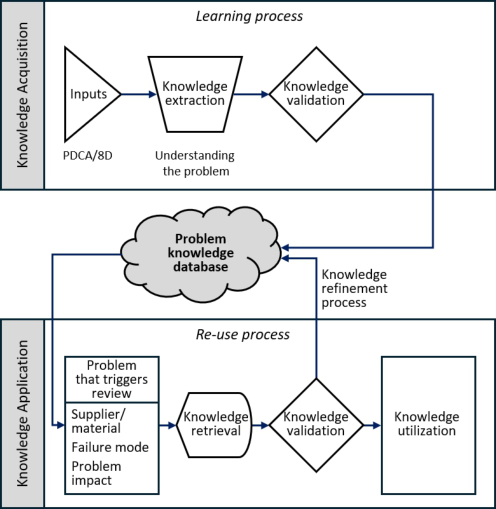
The development of the Problem-Solving Knowledge Base (PSKB) framework (see Figure 1) was guided by a systematic methodology that integrated structured problem-solving approaches with effective knowledge management practices. The 8D problem-solving methodology, known for its structured approach to addressing complex issues, was chosen as the foundational structure for the framework due to its comprehensive coverage of problem definition, root cause analysis, corrective actions, and
preventive measures (Realyvásquez-Vargas et al., 2020; Barosani et al., 2017). Furthermore, the FMEA methodology was incorporated to ensure that the framework could identify, document, and analyze failures and their associated risks. This integration facilitated the systematic extraction of critical knowledge elements such as failure modes, root causes, and actions for prevention and correction, which were subsequently codified into a centralized knowledge repository (Kilic et al., 2023; Camarillo et al., 2018).
Figure 1: Conceptual framework for PSKB.
The methodology also integrated theoretical principles from CLT and Agency Theory to address the human factors critical to problem-solving. CLT provided a cognitive framework for managing abstract and concrete thinking during different stages of problem-solving, while Agency Theory highlighted the importance of aligning stakeholder incentives, mitigating information asymmetry, and fostering trust across the supply chain (Cantor and Macdonald, 2009; Zu and Kaynak, 2012). These elements were essential for developing a human-centered framework that not only leveraged technical methodologies but also facilitated effective stakeholder collaboration and decision-making.
Core Components of the Problem-Solving Knowledge Base Knowledge Acquisition Process The knowledge acquisition process focuses on the collection, validation, and storage of problem-solving knowledge in a centralized repository. It begins with the creation of knowledge through structured problem-solving
Human-Centered Knowledge Base for Enhancing Problem Solving 53
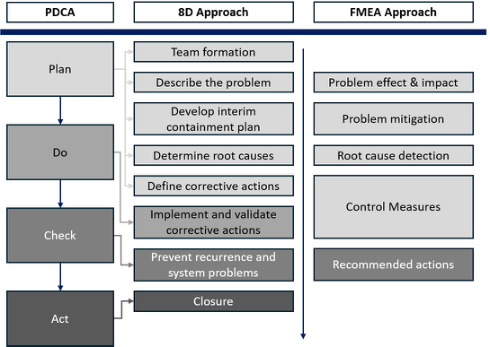
methodologies such as PDCA or 8D, which extracts key details including failure description, problem impact (effects), root cause identification, and corrective and preventive actions from specific problem scenarios (see Figure 2).
Figure 2: PDCA/8D and FMEA integrated approach for PSKB.
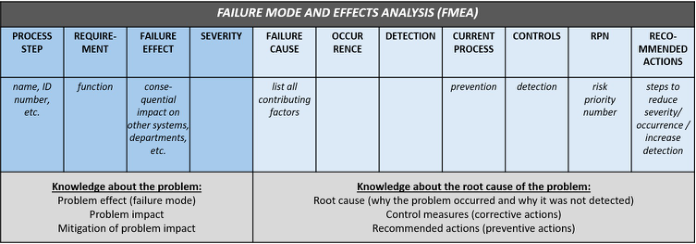
For further knowledge extraction, these insights are linked with FMEA to capture descriptions of failure modes, analyze their impacts, and identify associated risks. For each failure, the extraction model documents root causes, control measures and corrective actions (see Figure 3), ensuring that valuable insights are retained in an accessible and reusable format. Integration of FMEA into knowledge extraction provides a systematic approach to prioritizing failure modes based on their severity, occurrence, and detectability. Thus, this allows supply chain stakeholders to focus on high-risk issues and enhance overall quality and efficiency.
Figure 3: FMEA knowledge extraction model for PSKB.
By structuring the extracted knowledge in a consistent manner, the model guarantees that organizations can draw actionable insights from historical experiences. The structured documentation also facilitates the validation
and refinement of extracted knowledge, confirming its relevance to future applications and promoting problem prevention through a well-organized knowledge base.
A critical component of the acquisition process is the validation of captured knowledge. This involves reviewing and approving knowledge contributions to ensure their accuracy and relevance. Validation mechanisms include expert reviews, iterative feedback loops, and alignment with organizational goals. Once validated, the knowledge is stored in a centralized repository, where it remains readily accessible for retrieval and application.
Knowledge Application Process The knowledge application process is designed to enable the efficient reuse of stored knowledge to address current supply chain challenges. This process begins with problem matching, which involves identifying similarities between current issues and historical cases based on attributes such as failure mode, supplier, or process. By leveraging these similarities, the framework retrieves relevant corrective and preventive actions from the repository.
Once retrieved, the knowledge is applied to resolve the current issue, providing actionable solutions based on proven approaches. The application process emphasizes continuous improvement by integrating new insights from resolved cases into the repository, ensuring that the knowledge base remains up-to-date and aligned with evolving organizational needs. This knowledge refinement ensures that the repository remains a dynamic and reliable resource. The iterative feedback loop enhances the utility and relevance of the PSKB framework, making it an indispensable tool for decision-making and problem-solving.
Role of Human Factors in the Framework The integration of human factors into the PSKB framework was a critical consideration to enable its practical applicability in real-world supply chain contexts. Drawing from CLT and Agency Theory, the framework addresses the cognitive and behavioural dimensions of problem-solving by aligning stakeholder incentives and promoting trust and collaboration. This approach mitigates common barriers such as information asymmetry and misaligned objectives.
The framework prioritizes open communication and transparency, creating an environment conducive to effective knowledge sharing. By fostering a collaborative culture, the framework ensures that stakeholders actively engage in problem-solving activities and contribute to the knowledge base. This human-centered focus enhances the adaptability and sustainability of the framework, making it valuable for organizations striving to improve supply chain resilience and operational efficiency.
VALIDATION THROUGH EXEMPLARY USE CASES Case Study 1: Repeated Occurrence of the Same Failure Mode
A persistent defect in a critical electrical component, specifically cracking in the cover, highlighted the need for a systematic knowledge management
Human-Centered Knowledge Base for Enhancing Problem Solving 55
framework. Detected during final visual inspection, the defect posed significant risks, including potential arc flashes. Investigation revealed a similar issue had occurred with another supplier two years earlier, but the lack of a centralized knowledge base prevented leveraging past lessons during new supplier qualification.
The PSKB framework addressed this gap by enabling retrieval of historical data, proactive root cause identification, and corrective actions. Its collaborative processes ensure shared, updated knowledge, preventing recurrence, reducing waste, and promoting continuous improvement.
Case Study 2: Supplier Improvement Action Went Wrong A supplier’s process change to increase production capacity inadvertently caused surface contamination on a metal component due to increased lubricant usage. This compromised adhesive properties, leading to failures during reliability testing. A similar issue at a regional subsidiary had gone undocumented, preventing the identification of critical risks.
The PSKB framework systematically captures and reuses historical knowledge, enabling organizations to anticipate and mitigate risks from process changes. It supports collaborative corrective actions and improves supplier qualification by leveraging insights into past performance and risks. This case underscores the framework’s role in bridging knowledge gaps and enhancing knowledge transfer.
DISCUSSION AND LIMITATIONS Effectiveness in Capturing and Reusing Knowledge
The PSKB framework demonstrated significant effectiveness in capturing and reusing knowledge to address supply chain quality challenges. The structured processes for knowledge extraction, validation, and application facilitated the systematic collection of insights from problem-solving activities. By integrating methodologies such as 8D and FMEA, the framework ensured that historical knowledge, including root causes, corrective actions, and preventive measures, was codified in a reusable format.
This systematic approach enabled stakeholders to access valuable lessons from past experiences, expediting the resolution of recurring issues and mitigating potential risks. The case studies validated the framework’s capability to bridge knowledge gaps across geographically dispersed teams, ensuring that insights gained in one part of the supply chain were accessible and actionable across the organization. This functionality underscores the framework’s role in fostering a culture of continuous improvement and collaborative problem-solving.
Limitations of the Proposed Framework Despite its effectiveness, the PSKB framework has certain limitations that need to be addressed. The quality and comprehensiveness of the knowledge base heavily rely on the accuracy and relevance of the data captured. Incomplete or outdated information within the repository can lead to
suboptimal decision-making, highlighting the need for robust validation mechanisms.
Additionally, the implementation of the framework requires a significant investment in resources, including time, infrastructure, and training. This may pose challenges for small and medium-sized enterprises (SMEs) with limited budgets. The framework also risks overreliance on historical data, which may hinder its adaptability to novel or emerging challenges. Biases in the knowledge capture process, where successful practices are overemphasized, could lead to alternative solutions or innovative approaches being neglected.
SUMMARY AND OUTLOOK Key Findings
The PSKB framework provides a structured and systematic approach to addressing challenges in SCQM. By integrating established problem-solving methodologies such as 8D and FMEA, the framework facilitates the capture, validation, and reuse of knowledge to enhance decision-making processes. The framework effectively bridges knowledge gaps across geographically dispersed teams, enabling organizations to leverage historical insights to prevent recurring issues and reduce operational inefficiencies.
The knowledge acquisition process captures and validates problem-solving knowledge using 8D and FMEA, emphasizing failure modes, impacts, root causes, and corrective actions. Structured documentation and expert reviews ensure accuracy and reliability. The knowledge application process focuses on reusing stored knowledge through problem matching and retrieval of corrective actions, ensuring continuous improvement with an iterative feedback loop.
The case studies validated the framework’s capability to mitigate supply chain disruptions and improve operational resilience. The framework’s dual-phase approach, encompassing knowledge acquisition and application, ensures that organizations not only capture valuable lessons but also apply them effectively to current challenges. Moreover, the human-centric elements of the framework, inspired by CLT and Agency Theory, enhance collaboration, trust, and transparency among supply chain stakeholders.
Directions for Future Research The PSKB framework offers a solid foundation for managing supply chain knowledge; however, its evolution requires addressing key areas to overcome existing limitations as discussed above. First, refining validation processes with machine learning and expert reviews can enhance accuracy. Second, expanding the framework with additional methodologies like Six Sigma and Design Thinking could enrich the knowledge repository and address a broader range of challenges. Third, incentivizing supplier participation through mechanisms such as gamification as well as non- disclosure agreements could foster trust and knowledge sharing. Advanced features, including natural language processing for search queries or
Human-Centered Knowledge Base for Enhancing Problem Solving 57
predictive analytics, would enhance user experience and proactive risk management. All in all, these tasks highlight the future direction for refining the framework and broadening its industrial applicability. By focusing on these strategic areas, the framework can even better respond to the complexities of SCQM in dynamic global environments.
REFERENCES
Barosani, S., Bhalwankar, N., Deshmukh, V., Kokane, S., Kulkarni, P. R. (2017).
A Review on 8D Problem Solving Process. International Research Journal of Engineering and Technology (IRJET) 4(4), pp. 529–535. Burnes, B. (2017) Managing Change. 7th ed. Harlow, England: Pearson Education Ltd. Camarillo, A., Ríos, J., & Althoff, K.-D. (2018). Knowledge-based multi-agent
system for manufacturing problem-solving process in production plants. Journal of Manufacturing Systems, 47, pp. 115–127. Cantor, David E.; Macdonald, John R. (2009): Decision-making in the supply chain: Examining problem solving approaches and information availability. Journal of Operations Management 27 (3), pp. 220–232. Chojnacka-Komorowska, A. and Kochaniec, S. (2019) Improving the quality control
process using the PDCA cycle. Uniwersytetu Ekonomicznego We Wrocławiu, 63(4). Curkovic, S., Scannell, T., Wagner, B. (2013) Using FMEA for Supply Chain Risk Management. Modern Management Science & Engineering 1, pp. 251–265. Davenport, T. H., Prusak, L., 1998. Working Knowledge: How Organizations
Manage what They Know. Harvard Business Press. Dust, Robert (2018): Total Supplier Management. Lieferantenmanagement zukunftsfähig gestalten, umsetzen und anwenden. Munich: Hanser. Dust, Robert; Grastat, Martin; Heinze, Jan Nicolas (2021) Total Supplier Management. Risikoprävention durch Digitalisierung im Lieferantenmanagement. Jochem, Roland; Herklotz, Henrik; Giebel, Michael (2015) Six Sigma leicht gemacht.
2nd ed. Düsseldorf: Symposion. Kamiske, Gerd F. (2015) Handbuch QM-Methoden. 3rd ed. Munich: Hanser. Kilic, H. S., Canbakis, S. K., Karabas, M., Koseoglu, S., Unal, E., & Kalender, Z. T.
(2023) Integrated supply chain risk assessment methodology based on modified FMEA. Journal of Risk Analysis and Crisis Response, 13(2), pp. 93–116. Lai, J.-Y., Wang, J., Ulhas, K. R., & Chang, C.-H. (2022) Aligning strategy with knowledge management system for improving innovation and business performance. Technology Analysis & Strategic Management, 34(4), pp. 474–487. Mellat-Parast, Mahour (2019) A learning perspective of supply chain quality
management: Empirical evidence from US supply chains. In: SCM 25 (1), pp. 17–34. Raweewan, M., & Ferrell, W. G. Jr. (2018) Information sharing in supply chain collaboration. Computers & Industrial Engineering, 126, pp. 269–281. Realyvásquez-Vargas, A., Arredondo-Soto, K. C., García-Alcaraz, J. L., & Jiménez Macías, E. (2020) Improving a manufacturing process using the 8Ds method: A case study in a manufacturing company. Applied Sciences, 10(7).
Sá, J. C., Manuel, V., Silva, F. J. G., Santos, G., Ferreira, L. P., Pereira, T.
and Carvalho, M., (2021) Lean Safety-assessment of the impact of 5S and Visual Management on safety. In IOP conference series: Materials science and engineering. 1193 (1). Silbernagel, Rainer; Arndt, Tobias; Peukert, Sina; Lanza, Gisela (2021) Process Quality Improvements in Global Production Networks. In: Thomas Friedli, Gisela Lanza, Dominik Remling (Ed.): Global Manufacturing Management. 1st ed. Springer International Publishing; pp. 167–177. Sokovic, M., Pavletic, D., Pipan, K. (2010) Quality improvement methodologies –
PDCA cycle, RADAR matrix, DMAIC and DFSS. Journal of Achievements in Materials and Manufacturing Engineering 43. Vollmar, Gabriele; Pfeifer, Tilo (2021): Wissensmanagement. In: Tilo Pfeifer und Robert Schmitt (Ed.): Masing Handbuch Qualitätsmanagement. 7th ed. Munich: Hanser. Zu, X., Kaynak, H., 2012. An agency theory perspective on supply chain quality
management. International Journal of Operations & Production Management 32, pp. 423–446.
LISTED IN THE AHFE DIGITAL BOOKSTORE CATALOGUE
Explore the complete digital volume
Human Dynamics, Product Evaluation and Quality
Read this individual research paper free through the original publisher, or explore the full digital proceedings book.
ISBN 978-1-964867-48-9
Explore this ISBN in the AHFE Bookstore ↗Listed in the July 2026 bookstore catalogue; search by ISBN to confirm current availability · Digital book purchase optional