Alexander Thomas Kühn, Marc Ritter, Manuel Heinzig, Christian Roschke (2025). Virtual Mittweida - Creating a game-based approach to teach artificial intelligence for games. In: Metaverse, Virtual Environments and Game Design. AHFE Open Access, vol. 178, pp. 1–7. https://doi.org/10.54941/ahfe1006339
With the proliferation of computing technologies and an ongoing trend of introducing digital and blended learning aspects into higher education, innovative approaches to teaching complex topics like artificial intelligence (AI) have emerged. Of particular interest is the use of game-based learning approaches. According to problem-based learning theory, providing students with an interactive problem and encouraging them to independently find solutions promotes deeper understanding and skill acquisition. Thus, game-based approaches offer an engaging way for students to explore challenging concepts. However, despite the growing use of game-based methods in fields like economics, their application in computer science - especially in teaching game AI - remains under-explored.Understanding AI is increasingly critical for game development, as modern games emulate human-like behaviour in areas such as decision-making, character routines, and adaptive strategies. While many mechanisms and approaches of agent-level decision-making and planning are well understood, their application in video games poses unique challenges, such as accommodating unpredictable player interactions and ensuring performance efficiency without degrading the player experience. While strategy games like StarCraft or multiplayer online battle arenas like DotA 2 have been of interest as proving grounds for advanced AI training methods, their use in education has been limited due to their high complexity and associated learning curve.This work proposes the development of a novel interactive application to fill this niche. Taking inspiration from city building and management games, the application simulates the campus of the University of Applied Sciences Mittweida, where students are given control of agents acting as archetypal roles of students. The agents' goal is the acquisition of knowledge, an abstract resource gained by participating in courses, requiring the agent to navigate the campus. Students interact with the system through an API that provides information on the state of the simulation and allows issuing commands to specific agents. For example, agents who continuously acquire knowledge over a prolonged period do so at decreasing efficiency. To remedy this, a student implements a routine checking the learning efficiency of all agents, commanding "tired" agents to take a break. Alternatively, the student could train a machine learning algorithm to do the same task, albeit more adaptive. Additionally, the application enables dynamic changes to the environment at runtime, such as adding or removing courses or buildings, simulating player-driven alterations to the game world. By designing decision-making algorithms for these agents, students gain hands-on experience with fundamental AI concepts, i.e. decision trees, bridging the gap between theoretical knowledge and practical application.To evaluate the effectiveness of the application, a comparative study with undergraduate students is planned. Over the course of two semesters, two groups of students will be taught the basics of game AI - one using traditional teaching methods (primarily lectures), the other using a game-based method incorporating the new application. The learning progress of both groups will be monitored using assignments, with students being given a sample project and tasked to develop a game AI solution, i.e. for a non-player character in a first-person shooter.
Video games represent a continuously expanding sector of the entertainment industry. With an increasing number of new titles released each year, the demand for innovative and engaging gaming experiences remains high. According to Newzoo’s Global Games Market Report (2024), the video game industry was projected to generate $187.7 billion in revenue in 2024,
marking steady year-over-year growth. Other market analyses support this projection, indicating continued expansion in the coming years (Statista, 2024). As gaming technology evolves, one of the key drivers of innovation— alongside advancements in graphics and hardware—is artificial intelligence (AI).
AI plays a crucial role in modern game development, powering essential interactive elements such as non-player characters (NPCs), procedural content generation, and adaptive difficulty systems. While some popular multiplayer games emphasize player-versus-player (PvP) interactions, many influential single-player and hybrid multiplayer experiences rely on AI to create dynamic and immersive environments. A notable example is Alien: Isolation (Creative Assembly, 2014), where the game’s AI-controlled antagonist, the alien, adapts to player behaviour by countering frequently used tactics, such as hiding in lockers. To enhance the illusion of intelligence, a secondary “game director” system monitors player progress and orchestrates the alien’s appearances accordingly (Gomez-Alvarez et al., 2024). More recent advancements have leveraged large language models (LLMs) to create AI-driven interactive narratives. In AI Dungeon (Latitude, 2024), an AI functions as a virtual game master, responding dynamically to player- generated text prompts to generate an evolving role-playing adventure. Such developments illustrate the growing potential of AI in gaming, where machine learning and neural networks enable increasingly sophisticated, player-responsive experiences.
However, as AI-driven game systems are becoming more advanced, their complexity presents a significant challenge. Developing such systems requires a deep understanding of AI concepts, yet current academic approaches often emphasize theoretical foundations without providing practical, hands-on experience. This research addresses that gap by developing an interactive learning application designed to teach AI for games through a game-based approach. By integrating AI education with interactive gameplay mechanics, this study aims to provide students with a more engaging and applied understanding of AI, better preparing them for the evolving demands of modern game development.
BACKGROUND
Game-based learning (GBL) has garnered significant interest in educational research due to its potential to enhance student engagement and learning outcomes. Various frameworks have been proposed and tested to facilitate the development of serious games for educational purposes. Foundational models, such as the Game-Based Learning Foundation (Plass et al., 2015), have influenced subsequent research. For example, Roedavan et al. incorporated these principles into a comprehensive framework covering the entire development cycle of serious games (Roedavan et al., 2021). Despite ongoing gaps in these frameworks—such as the role and involvement of educators in the design process (Dimitriadou et al., 2021)—the substantial body of research on GBL underscores its pedagogical significance.
Virtual Mittweida—Creating a Game-Based Approach to Teach Artificial Intelligence 3
The effectiveness of GBL has been demonstrated across various educational fields. Studies have shown that incorporating game-based elements can improve student comprehension and motivation. For instance, the use of the quiz application Kahoot has been linked to increased student understanding (Saputri, 2024), while comparative analyses indicate that game-based approaches often yield superior learning outcomes compared to traditional methods (Hafeez, 2022). In the context of this study, GBL is particularly relevant for AI education, where prior research has explored its potential to enhance student engagement and conceptual understanding (Zhan et al., 2024).
At the same time, AI is transforming game development itself, enabling advancements in areas such as procedural content generation and the use of large language models (LLMs) to create dynamic non-player characters (NPCs) (Dablander, 2024). As AI-driven technologies continue to evolve, future game developers must be equipped with the necessary skills to leverage these advancements effectively. However, traditional AI education often emphasizes theoretical instruction, lacking practical, hands-on approaches that reflect real-world game development challenges. To address this gap, this study proposes an interactive learning application that integrates AI education into a game-like environment. The application, structured as a sandbox for programmable agents, offers several key advantages:
Students can observe the immediate impact of their AI systems within a simulated game environment, making abstract AI concepts more tangible.
Unlike static assignments, an interactive system allows students to iteratively refine AI behaviour, learning through experimentation.
By embedding AI programming within a dynamic, interactive framework, students gain practical experience directly applicable to game development.
Game-based simulations enhance student engagement by providing an immersive and interactive learning experience.
This approach aims to bridge the gap between theoretical AI instruction and practical application, preparing students to develop AI-driven solutions in the evolving landscape of game development.
USING A VIRTUAL UNIVERSITY TO TEACH AI Inspired by city-building and management games, the proposed application is designed as a sandbox environment that simulates the campus of the University of Applied Sciences Mittweida. While this game style differs from genres such as first-person shooters or multiplayer online battle arenas, it offers a scalable framework in which the number of active agents can be dynamically adjusted to accommodate a wide range of test scenarios. The application consists of three key pillars:
Environment: A virtual simulation of the university campus, including its buildings, academic structures, and processes, transformed into interactive game mechanics.
Agents: Programmable entities representing different archetypal university roles, primarily students, who navigate the environment and interact with its mechanics.
Interface: A dedicated API that allows users to retrieve information about the environment and agents, as well as issue commands to guide agent behaviour.
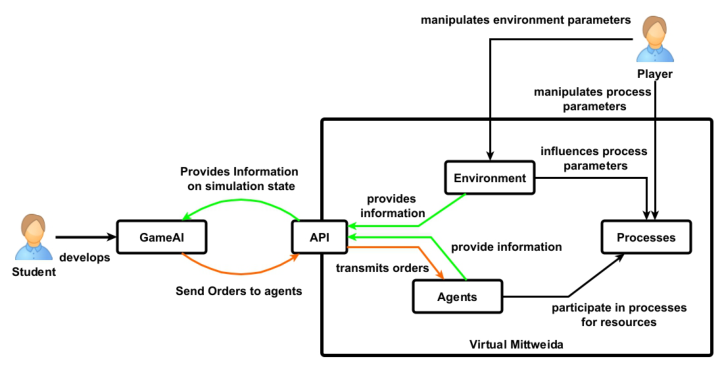
Figure 1: Schematic overview of the interactive learning application.
Figure 1 visualizes the internal workings of the interactive learning application. The green arrows mark the flow of information used by the games’ AI. Based on this information, orders for individual agents are generated and transmitted via the interface (red arrows). To underline the game-like character of the application, parameters of the environment and the internal processes can be changed during runtime by a player.
By providing a structured yet dynamic environment, the application enables students to design, test, and refine AI systems in a controlled, interactive setting. The sandbox environment is modelled after the University of Mittweida, including its physical layout and academic workflows. However, real-world processes are streamlined and transformed into game mechanics to create understandable routines. For example, for students to enrol in a course, the course itself must first be created by the player. This involves selecting parameters that influence its attractiveness, affecting the number of agents who choose to enrol. By introducing mechanics that define how various parameters interact, the simulation provides an engaging framework in which students must develop AI solutions that operate within predefined constraints. The decision to base the environment on the University of Mittweida is intentional, as it provides a familiar structure for students, allowing them to intuitively relate to the simulated processes.
Agents within the simulation represent different university members, primarily students. Their overarching objective is to acquire knowledge, represented as an abstract resource gained through participation in lectures.
Virtual Mittweida—Creating a Game-Based Approach to Teach Artificial Intelligence 5
However, the amount of knowledge acquired varies based on a set of procedurally generated parameters unique to each agent, simulating individual differences in learning capacity. To attend lectures and gain knowledge, agents must navigate the campus, finding their way to designated locations. Additionally, external factors such as lecture quality— modifiable by the player—can influence knowledge acquisition, allowing for optimization strategies. Beyond academic pursuits, agents also possess basic needs, such as energy, which depletes over time and must be replenished. This introduces additional constraints, requiring agents to balance study- related tasks with self-maintenance activities, such as resting at designated locations. These mechanics create a more complex and realistic simulation, challenging students to develop AI solutions that account for multiple interacting variables.
The simulation includes an API-based interface that allows users to monitor both the environment and individual agents. The interface provides detailed real-time data on agent states, environmental conditions, and course parameters. Additionally, it enables users to issue commands to agents, guiding their behaviour based on the AI algorithms they develop. A key advantage of this system is its flexibility—students can interact with the application using different programming languages and frameworks, allowing them to work with technologies they are most familiar with. This accessibility ensures that students of varying skill levels can engage with the simulation effectively, focusing on AI development rather than software compatibility issues.
RESEARCH GOALS As demonstrated in the preceding text, game-based learning could be highly beneficial to teach the development of game AI. To evaluate this possibility, this research aims to answer the following research questions:
1. Does the use of a game-based learning approach promote the understanding of AI development for video games? 2. How do students interact with an interactive sandbox in which changes in the simulated environment have an impact on the AIs they develop? 3. How do students tackle the limitations imposed on the AI by the environment and its mechanics?
RESEARCH METHODOLOGY The research is structured into three distinct phases: In Phase 1, an interactive application will be developed using established models for serious game design. This application forms the core of the new game-based learning approach, providing a simulated environment in which students can experiment with AI development for games.
Phase 2 involves the creation of a series of assessments designed to evaluate the effectiveness of the learning approach. These tests are structured to present a series of increasingly complex problems—from basic condition checks (e.g., verifying that a specific value is reached) to more
complex challenges involving state management. These assessments will be administered throughout the semester, allowing for continuous evaluation of the students’ understanding as they progress through the curriculum.
In Phase 3, the assessments will be applied over the course of two consecutive semesters. Two groups of students will be involved:
The first group will receive instruction through traditional, lecture-based methods.
The second group will be taught using the new GBL approach, centred around the developed application.
The learning outcomes of both groups will be compared through quantitative measures (e.g., average test scores) and qualitative analyses (e.g., the strategies employed in problem-solving). This comparative analysis will focus not only on overall performance but also on the methods students use to tackle the presented challenges, thereby providing a comprehensive evaluation of the new approach’s impact on learning success.
CONCLUSION
This study proposes the development and evaluation of an interactive learning application designed to address the evolving demands of AI technology in game development. By providing students with a structured, game-based environment modeled after the University of Mittweida, this application offers a familiar and interactive setting in which to develop and test AI systems within defined game mechanics. To assess the effectiveness of this approach, a comparative study will be conducted in which two groups of students will engage with progressively complex AI development tasks. One group will be taught through traditional instructional methods, while the other will utilize the game-based learning application. The findings of this study will contribute to the ongoing discourse on AI education, exploring the potential of interactive learning environments to enhance both theoretical understanding and practical proficiency in game AI development.
ACKNOWLEDGMENT
This measure is financed in part by the European Union and from tax revenue based on the budget adopted by the Saxon state parliament.
REFERENCES
Dablander, Markus (December 18, 2024). “Future Research Avenues for Artificial Intelligence in Digital Gaming: An Exploratory Report”, arXiv (ID: arXiv:2412.14085) Website: http://arxiv.org/abs/2412.14085. Dimitriadou, Anastasia, Djafarova, Naza, Turetken, Ozgur, Verkuyl, Magaret, Ferwron, Alexander (April 1, 2021). “Challenges in Serious Game Design and Development: Educators’ Experiences”, Simulation & Gaming, Volume 52, No. 2.
Virtual Mittweida—Creating a Game-Based Approach to Teach Artificial Intelligence 7
Gomez-Alvarez, Dariana, Lopez Franco, Michel, Lopez Franco, Carlos, Carranza, David Bonilla, Lopez Franco, Lilibet (December 2024). “The Future of Gaming: How Artificial Intelligence is Revolutionizing the Industry”, ReCIBE, Revista electrónica de Computación, Informática, Biomédica y Electrónica, Volume 13, No. 3. Hafeez, Muhammad (May 31, 2022). “Effects of game-based learning in comparison
to traditional learning to provide an effective learning environment—A comparative review”, Contemporary Educational Researches Journal, Volume 12, Nr. 2. Latitude (2024). “AI Dungeon”, AI Dungeon Website: https://play.aidungeon.com/. Newzoo (August 13, 2024). “Free Report: Newzoo’s Global Games Market Report 2024” Newzoo Website: https://newzoo.com/resources/trend-reports/newzoos- global-games-market-report-2024-free-version. Plass, Jan L., Homer, Bruce D., Kinzer, Charles K. (October 2, 2015). “Foundations
of Game-Based Learning”, Educational Psychologist, Volume 50, No. 4. Roedavan, Rickmann, Pudjoatmodjo, Bambang, Siradj, Yahdi, Salam, Sazilah, Hardianti, BQ Desy (2021). “Serious Game Development Model Based on the Game-Based Learning Foundation”, Journal of ICT Research & Applications, Volume 15, No. 3. Sega, Creative Assembly (2014). “Alien: Isolation” (Video Game), Official Website:
https://www.sega.com/de/alien-isolation/alien-isolation. Statista (November 12, 2024). “Global video games market revenue growth from 2020 to 2029 [Graph]”, Statista Website: https://www.statista.com/forecasts/ 1391724/video-gaming-market-global-growth Zhan, Zehui, Tong, Yao, Lan, Xixin, Zhong, Baichang (March 15, 2024). “A
systematic literature review of game-based learning in Artificial Intelligence education”, Interactive Learning Environments, Volume 32, No. 3.
LISTED IN THE AHFE DIGITAL BOOKSTORE CATALOGUE
Explore the complete digital volume
Metaverse, Virtual Environments and Game Design
Read this individual research paper free through the original publisher, or explore the full digital proceedings book.
ISBN 978-1-964867-54-0
Explore this ISBN in the AHFE Bookstore ↗Listed in the July 2026 bookstore catalogue; search by ISBN to confirm current availability · Digital book purchase optional