Population ageing is among the most consequential demographic shifts of the twenty-first century, with the share of adults aged 65 and over rising rapidly across Europe and particularly in Italy. This transition is accompanied by increasing multimorbidity, chronic disease burden, and long-term care needs that strain traditional hospital-centred systems, which are ill-equipped to address the complex, multidimensional needs of older populations. Consequently, policymakers are advancing innovative socio-healthcare models that prioritize community-based services, integration of health and social care, prevention, and person-centred approaches. These reforms promote multidisciplinary pathways, home-based assistance, digital health solutions, and new organizational structures aimed at improving sustainability and quality of care.Despite their growing adoption, evaluating the effectiveness of these models remains challenging. Existing performance assessment frameworks focus largely on clinical outputs and financial metrics, overlooking broader outcomes such as quality of life, accessibility, social participation, and system resilience. Addressing this gap requires multidimensional evaluation tools capable of capturing the full value generated by integrated socio-healthcare systems. This study responds by systematically identifying indicators proposed in the scientific and grey literature to assess innovative care models for ageing populations. Through a structured review of evaluation frameworks across healthcare, social services, and integrated care contexts, the research highlights fragmentation in terminology and methodologies that limits comparability and decision-making. The resulting indicator system incorporates measures of accessibility, workforce capacity, environmental impact, social inclusion, well-being, clinical effectiveness, and cost efficiency. This comprehensive framework supports balanced performance appraisal, continuous monitoring, and evidence-informed policy decisions to enhance care delivery and outcomes for ageing societies
Population ageing represents one of the most significant demographic transformations of the twenty-first century, particularly in Europe and Italy, where the growing proportion of individuals aged 65 and over is associated with increasing multimorbidity, chronic conditions, frailty, and long-term care needs. This structural transition challenges traditional hospital-centered healthcare systems, which have historically been designed for acute and episodic care rather than for complex, chronic, and socially embedded health trajectories. In response, innovative socio-healthcare models have emerged, emphasizing community-based services, integration between healthcare and social care sectors, multidisciplinary collaboration, prevention-oriented strategies, and person-centered approaches supported by digital infrastructures and organizational redesign aimed at enhancing sustainability, resilience, and accessibility.
Despite their growing diffusion, the assessment of these models remains methodologically fragmented. Healthcare performance has traditionally been evaluated through clinical and economic indicators, such as mortality, readmissions, and cost containment, which, while essential for accountability, provide only a partial representation of value generation within complex socio- healthcare ecosystems. The evolution from the Triple Aim to the Quadruple Aim reflects a conceptual shift toward incorporating patient experience and provider well-being into performance assessment (Bodenheimer and Sinsky, 2014), while more recent Health System Performance Assessment (HSPA) frameworks further integrate resilience, equity, and long-term sustainability (OECD, 2024).
Empirical evidence from integrated care research confirms substantial heterogeneity in outcome domains and measurement tools. A scoping review of integrated healthcare programs for chronic diseases reports significant variability in indicators and conceptual definitions, limiting comparability across initiatives (Pinter et al., 2021). Similarly, evaluations of innovative integrated health and social care models demonstrate improved quality of care and patient outcomes when coordination and continuity mechanisms are strengthened, yet standardized and multidimensional performance metrics remain underdeveloped (Gavaldà-Espelta et al., 2023).
Digital health technologies, such as telemedicine, remote monitoring, electronic health records, and assistive tools, act as key enablers of innovative care pathways. However, their effectiveness depends not only on technological capabilities but also on usability, accessibility, and alignment with users’ cognitive and physical characteristics. Human factors research highlights that user-centered usability assessment significantly influences adoption, engagement, and perceived quality of life among older adults (Brunzini et al., 2023). Furthermore, systematic evaluations of telehealth interventions confirm positive effects on access and clinical management while underscoring the importance of tailored implementation strategies (Kruse et al., 2017). Economic and performance analyses of e-health before and after the COVID-19 pandemic reveal potential cost efficiencies and organizational improvements, yet also demonstrate methodological fragmentation in evaluation approaches (Biancuzzi et al., 2023). Within ageing contexts, digital innovation must therefore be assessed through multidimensional lenses integrating clinical, economic, and human-centered
usability indicators, as further emphasized in recent contributions on digital transformation and special needs contexts (Caragiuli et al., 2026).
In parallel, environmental sustainability has emerged as a fundamental dimension of healthcare performance. Healthcare systems significantly contribute to greenhouse gas emissions, energy consumption, and waste production. A recent scoping review on hospital performance management systems stresses the importance of integrating environmental indicators— such as energy efficiency, emissions reduction, sustainable procurement, and waste management—into evaluation frameworks (Dolcini et al., 2025). Sustainability-oriented performance models similarly advocate for systemic approaches combining economic, social, and environmental dimensions within unified assessment structures (Cosenz et al., 2024). However, environmental metrics remain rarely incorporated into evaluation systems for innovative socio-healthcare models addressing ageing populations, despite the long-term resource intensity of chronic care pathways.
Overall, the literature reveals persistent fragmentation across healthcare management, digital health, sustainability science, and integrated care research, with each domain adopting distinct terminologies and indicator systems. This heterogeneity constrains benchmarking capacity, policy comparability, and evidence-based scaling of successful models (Kruse et al., 2017; Pinter et al., 2021). Although extensive research addresses integrated care, digital health evaluation, and healthcare sustainability individually, there is no consolidated and systematically derived multidimensional framework that simultaneously integrates clinical, economic, social, environmental, and human factors indicators specifically tailored to innovative socio-healthcare models for ageing populations.
This study responds to this gap by identifying, classifying, and synthesizing multidimensional performance indicators into a unified integrated measurement framework. The proposed system combines accessibility, workforce capacity, clinical effectiveness, cost efficiency, environmental sustainability, social inclusion, and well-being dimensions, thereby advancing comprehensive and human-centered performance assessment aligned with sustainable healthcare transformation in ageing societies. The framework is developed in the context of the Smart Village project, an innovative healthcare model dedicated to elderly people based on an initial screening assessment by healthcare professionals and a continuous physiological parameters telemonitoring for acute events prevention together with the provision of social services for the entertainment and the improveness of social inclusion.
MATERIALS AND METHODS
This methodological study developed a generalizable assessment framework as a design artefact for evaluating innovative socio-healthcare models in ageing contexts. The development followed a structured, multi-step approach inspired by systematic design methodologies (e.g., problem identification, synthesis, instantiation, and preliminary demonstration), ensuring rigor, reproducibility, and adaptability.
A structured literature review through academic databases (i.e., Scopus) and grey literature was done to identify established conceptual
Assessing Innovative Healthcare Models: An Integrated Measurement Framework 255 models of healthcare performance evaluation, integrated care models, and telemonitoring interventions. Sources were examined to identify recurrent domains, indicator types, and classification criteria relevant to complex health service innovations. Recurrent domains (clinical, economic, social, environmental) and classification schemes were extracted. The Donabedian Structure-Process-Outcome (SPO) model was adopted as the core organizing principle, as it is widely validated for linking capacities (structure), delivery (process), and results (outcome) in complex healthcare systems. This ensured comprehensive coverage while addressing fragmentation in existing HSPA approaches.
Candidate indicators were synthesized and classified into a preliminary taxonomy using a matrix approach:
Domains: clinical effectiveness, economic efficiency, social impact (including well-being and inclusion), and environmental sustainability.
SPO Categories: structure (e.g., workforce capacity, digital infrastructure), process (e.g., adherence, coordination), outcome (e.g., QoL changes, emissions reduction).
Indicators were prioritized for relevance to ageing populations and digital-enabled models (e.g., telemonitoring adherence, frailty reduction via Sunfrail tool). The framework was designed as a modular, configurable system supporting role-specific (patients, caregivers, clinicians, general practitioners, digital mediators etc.), time-stratified (T0 baseline, T1 6-month follow-up), group- comparative (Intervention Group (IG) vs. Control Group (CG)), and multi- source data (telephone/in-person surveys, device telemetry, operational records). Qualitative information can be assessed via Likert scale (3-5-points); quantitative information can be directly assessed based on total scores of questionnaires, numerical answers to specific questions, or device data extraction.
The data extraction and processing were guided by the research team with the aim of selecting, within the standardized questionnaires, the most discriminating items for measuring the multidimensional (physical, emotional, psychological) effectiveness of the model on GI compared to GC. The selected items were classified according to primary impact axes: clinical, social, economic, and environmental.
Indicators can be assessed in terms of: a. Intra-group assessment at a specific time point (T0 or T1) b. Intra-group variation assessment: by comparing data collected at T1
in a specific group with respect to the data collected at T0; c. Inter-group assessment at a specific time point (T0 or T1): it refers to comparing data between CG and IG at baseline (T0) or at follow-up (T1); d. Inter-group variation assessment: by comparing data between CG
and IG collected at T1 with respect to the data collected at T0; e. Age levels: by identifying specific range of age, indicators findings can show the influence of age;
The statistical analysis architecture involves a scalar approach:
1. Low-level analysis: focused on exploring general indicators. For example, the overall rate of new tests recommended during screening; 2. High-level analysis: oriented towards defining more specific and stratified indicators (by type). For example, the breakdown of the rate analyzed in the first level by exploring the number of tests recommended by type (instrumental tests, laboratory tests, specialist visits, or other investigations), calculated proportionally to the total volume of prescriptions.
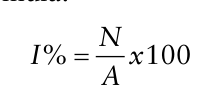
From a mathematical formalization perspective, the results extracted from the questionnaires were normalized using proportional indicators. Each response of interest was formulated as a percentage ratio calculated according to the following formula:
Equation reproduced from the original PDF.
Where N is the frequency of target response, and D is total valid reference population (net of missing data).
Variation or comparison analyses can be performed intra-groups or inter- groups (IG vs CG) via the following equations:
− ∆=
0 0 ITi IT I IT
_ 1 00 _ I CG I x I IG ∆ = ∆
Concerning the environmental sustainability assessment, a carbon footprint estimation can be made via prevented emissions from avoided travel (av_distance), by measuring the reduction rate of in-person accesses to ambulatory visits (V_red) over the sample of patients (Np) considering a transport emission factor (Tf), and the device consumption rate (DCR).
Equation reproduced from the original PDF.
Where i refers to each device assuming the monitoring devices, the smartphone, the home gateway. Then DCR can be converted to CO2 using the national electricity emission factor.
In fact, the proposed telemonitoring approach encourages home measurement of parameters (blood pressure, oxygen saturation, ECG, blood glucose, etc.), data transmission to the platform, doctor’s review, and appointment only if necessary, conversely to a traditional in-person healthcare model which includes regular visits to the GP, the patient travel, and any unnecessary follow-up visits.
Assessing Innovative Healthcare Models: An Integrated Measurement Framework 257 This protocol supports both longitudinal (between T0 and T1) and cross- sectional (between the IG and the CG) comparisons, with the aim of rigorously verifying whether the adoption of the Smart Village model resulted in a statistically significant improvement not only in clinical outcomes but also in the psychological, relational, and experiential dimensions of the participants.
RESULTS AND DISCUSSION
The primary output is the proposed multidimensional assessment framework comprising more than 40 first level indicators across clinical, social, economic, and environmental domain. Most indicators are process- and outcome- oriented (Table 1).
Table 1: llustration of the performance indicators classified based on SPO category and domain of investigation.
Table available in the original PDF paper.
Domain SPO Category Example Indicators Data Sources Clinical Effectiveness Structure Workforce/digital infrastructure readiness Operational records, GF
Process Monitoring intensity and adherence, alert response time
Social Impact Structure Access disparities (based on geographic location, age, digital skills), availability of new roles to support users (caregivers or digital mediators) Process Monitoring protocol or service adherence rate (i.e., compliance to guidelines for monitoring or service participation continuity) Operational records, device telemetry diaries
KPI.A, KPI.C, QS2, UEQ, SUS
Outcome Socialization, perceived inclusion, caregiver burden and productivity loss, residential transitions, technology related impact (e.g., stress, nervousness, digital literacy, usability etc.)
Economic Efficiency
Operational, EPM
Structure IT infrastructure costs (server, licensing, databases), technology costs (HW, SW, training, and maintenance), Training cost per staff member (telehealth skills) Process/ Outcome Operational, KPI.G, KPI.G, EPM, SS Cost per monitored patient per month, avoided hospitalizations, drop-our rate, avoided emergency room access rate, reduction in in-person visits
Environmental Sustainability
Outcome Travel reduction (avoided CO₂ emissions), device energy consumption
Travel logs, DCR, EPM
The tools were classified into Table 2 according to the following macro-areas:
Tools administered to both groups (IG and CG);
Tools administered exclusively to the Intervention Group (IG) or to specific model targets;
Data extraction, operational, and model tools.
Although the Smart Village project is ongoing (full empirical results pending), the framework advances beyond fragmented approaches by integrating SPO with multidimensional domains, enabling robust comparisons across heterogeneous contexts (e.g., IG vs CG variations, age effects). It aligns with integrated care principles (person-centered, community-based) and addresses gaps in digital/sustainability assessment for elderly models providing modularity and mixed-data handling. Future work will validate via full trial data, aggregated function (e.g., weighted multi-domain index), and extension to LCA/full carbon footprint.
Table 2: Description of the proposed tools to collect data.
Table available in the original PDF paper.
Macro Area Name Description
FA is administered at the end of the screening phase, while SS is the equivalent administered at the end of the follow-up period.
Tools administered to both groups (IG and CG)
Final Assessment (FA) and Social Health Surveillance (SS) Sunfrail A synthetic tool composed of 9 items that allows for the identification of risk factors for functional decline, cognitive decline, and social isolation to implement proactive prevention interventions It promotes social and health integration by monitoring the biological (weight, falls, general health), cognitive, and social domains (loneliness, closeness, financial difficulties).
SF-12 A validated multidimensional psychometric questionnaire for measuring perceived health and quality of life. It is structured into 12 items that explore physical and mental health across eight dimensions: general health, physical activity, role and physical health, emotional state, physical pain, mental health, vitality, and social activities. Output is two summary health indices (physical and mental).
ADL (Activities of Daily Living)
Observational scale for assessing the degree of independence of the elderly individual in the basic functions of daily living. Independence is defined as the absence of supervision, guidance, or active assistance. The observer quantifies the level of disability in six macro-areas: washing, dressing, toileting, transferring, continence, and feeding (Continued)
Table 2: Continued.
Table available in the original PDF paper.
Macro Area Name Description KPI.A (Key Performance Indicator for Elderly)
Investigates the presence of anxiety, nervousness, stress, or worry associated with the use of technological monitoring devices. It captures the overall assessment of the experience within the Smart Village model and quantifies the impact on the elderly person’s social relationships.
Tools administered exclusively to the Intervention Group (IG) or to specific model targets
KPI.C (Key Performance Indicator for Caregiver)
Explores the caregiver’s perceived burden, both physical and psychological and emotional. It also assesses any reduction in time dedicated to other activities, particularly work-related activities.
KPI.G (General Key Performance Indicators)
Documents the methods used to reach the screening site, the average annual number of specialist visits performed by the patient, and the travel times required to access the service delivery facilities.
QS2 Satisfaction questionnaire on social activities designed to systematically measure the perceived quality of services, in order to align the offering with user needs. Evaluation areas include satisfaction with activities, impact on well-being, and organizational factors (e.g., content, appropriateness, accessibility, adaptability, interest, mood, inclusion, and promotion of the service).
EPM (Effective patient management) &GF
EPM is administered to general practitioners of the final users to investigate the reduction in in-person ambulatory visits and the spent time, the effectiveness of the remote monitoring in identifying acute events and the related impact (e.g., hospital or emergency room access, therapy modification, new drug introduction, specific tests of disease investigation etc.). GF assesses the technology related overload perceived by general practitioners.
IM (Model Indicators)
Data extraction, operational, and model tools
Structured metrics to verify the overall validity of the experimental model (i.e., the number of spaces revitalized for screening provision; the variety of professional profiles involved; the number of specialists trained in the use of new technologies; the user and professional participation rate; the degree of innovation of the activated service; and the cost of the resources employed).
DM (Medical Data)
This tool is used to download clinical information transmitted from monitoring devices to the platform (e.g., oxygen saturation, heart rate, blood pressure, body temperature, weight, and fall events). The system also quantifies the volume of alerts generated by clinical values outside of their thresholds.
DO (Operator Diary / Activity Diary)
Operational tool for recording ongoing activities and assessing individual and group participation. It allows for qualitative and quantitative monitoring of the social journey. It is divided into two sections: the Diary (for organizational and content data) and the Register (focusing on individual attendance). Collected data include: number of participants, service performance, regularity of attendance, reasons for absences, and reasons for dropout.
CONCLUSION
This study presents a methodological contribution in developing a multidimensional performance assessment framework for innovative socio- healthcare models targeting ageing populations, specifically exemplified by the Smart Village project. While empirical results are ongoing, the proposed protocol demonstrates feasibility and adaptability to different settings and resource conditions. Future research will further expand the environmental sustainability component, through structured LCA methodology or carbon footprint assessment, which is currently limited. Overall, the framework offers a practical tool to support evidence-informed decision-making and the continuous improvement of socio-healthcare interventions for ageing populations.
ACKNOWLEDGMENT
The authors would like to acknowledge Eng. Chiara Massera for her valuable contribution.
REFERENCES
Biancuzzi, H., Dal Mas, F., Bidoli, C., et al. (2023). Economic and Performance Evaluation of E-Health before and after the Pandemic Era: A Literature Review and Future Perspectives. International Journal of Environmental Research and Public Health, 20(5), 4038. https://doi.org/10.3390/ijerph20054038 Bodenheimer, T., & Sinsky, C. (2014). From triple to quadruple aim: care of the
patient requires care of the provider. Annals of Family Medicine, 12(6), 573–576. https://doi.org/10.1370/afm.1713 Brunzini, A., Caragiuli, M., Atzori, F., et al. (2023). Digital technology for elders better living: A usability and user-experience assessment. ACM Proceedings. https://doi.org/10.1145/3594806.3594846 Caragiuli, M., Brunzini, A., Massera, C., Germani, M. (2026). An Adaptive Mixed-
Methods Approach for the Sustainability Assessment of Innovative Healthcare Models. In: ADM 2025. Lecture Notes in Mechanical Engineering. https://doi. org/10.1007/978-3-032-14950-3_8 Cosenz, F., Noto, G., Cavadi, G., Bivona, E., & Scirè, G. (2024). Pursuing sustainable performance in healthcare organizations: A sustainable business model perspective. Journal of Health Organization and Management, 38(5), 741–759. doi: 10.1108/ JHOM-12-2023-0369 Dolcini, M., Ferrè, F., Brambilla, A., & Capolongo, S. (2025). Integrating
environmental sustainability into hospitals performance management systems: A scoping review. BMC Health Services Research, 25, 764. https://doi.org/10.1186/ s12913-025-12928-x Gavaldà-Espelta, E., Lleixà-Fortuño, M. M., Baucells-Lluis, J., Ferré-Ferraté, M., et al. (2023). Innovative Health and Social Integrated Care Model Effectiveness to Improve Quality Care for Chronic Patients: A Single Group Assignment Clinical Trial. International Journal of Integrated Care, 23(4). doi: 10.5334/ijic.6759 Kruse, C. S., Krowski, N., Rodriguez, B., Tran, L., Vela, J., & Brooks, M. (2017).
Telehealth and patient satisfaction: a systematic review and narrative analysis. BMJ Open, 7(8), e016242. doi: 10.1136/bmjopen-2017-016242 OECD (2024). Rethinking Health System Performance Assessment: A Renewed Framework. OECD Publishing. https://doi.org/10.1787/107182c8-en Pinter, K. A., Zhang, H., Liu, C., et al. (2021). Elements and Performance Indicators
of Integrated Healthcare Programmes on Chronic Diseases: A Scoping Review. International Journal of Integrated Care, 19(3). https://doi.org/10.5334/ijic.5439
LISTED IN THE AHFE DIGITAL BOOKSTORE CATALOGUE
Explore the complete digital volume
Healthcare and Medical Devices
Read this individual research paper free through the original publisher, or explore the full digital proceedings book.
ISBN 978-1-964867-87-8
Explore this ISBN in the AHFE Bookstore ↗Listed in the July 2026 bookstore catalogue; search by ISBN to confirm current availability · Digital book purchase optional