Manila Caragiuli, Agnese Brunzini, Alessandra Papetti, Michele Germani, Chiara Mazzoni, Pietro Scendoni (2022). Multidimensional assessment of elderly people’s health for the development of a fall risk index. In: Human Interaction & Emerging Technologies (IHIET 2022): Artificial Intelligence & Future Applications. AHFE Open Access, vol. 68, pp. 666–673. https://doi.org/10.54941/ahfe1002791
As life expectancy increases, the likelihood of more falls and fall-related hospitalizations increases with a significant impact on the health system. Given the high incidence of falls in healthy elderly people, in order to prevent them, it is necessary to identify predisposing risk factors, analyze the specific needs of the subjects and use a targeted preventive strategy. This paper investigates the influence of multidimensional health parameters on the fall risk of community-dwelling older people, living in inner areas of Marche Region (Italy). Multidimensional data on the global health of each individual has been collected among several health domains (i.e., mobility, psychological, nutritional, cardiological, social). Statistical analysis has been applied for the assessment of the relationship among the defined health variables and the influence on the fall risk. The binary logistical regression analysis has produced a statistical model with good characteristics of fit and good predictability. The following features have been proven to be strong predictors of fall: female (OR for Gender, 5.526; 95% CI, 1.49–20.53), limited range of movement (OR 3.278; 95% CI, 1.01-10.68), diabetes (OR 4.487; 95% CI, 1.02-19.80), previous syncope (OR 7.686; 95% CI, 1.01-58.55), and body mass index (OR 1.176; 95% CI, 1.03-1.35). Future work will allow the development of a fall prediction index to have a framework of the elder’s global health status and to define a personalized intervention strategy for any adverse event prevention.
INTRODUCTION AND RESEARCH BACKGROUND Population ageing represents a great challenge for the sustainability of the healthcare systems. The population of older people in the EU-27 is predi- cted to increase significantly, rising from 90.5 million (20.3%) at the start of 2019 to reach 129.8 million (29.4%) by 2050 (Eurostat, 2020). Falls are a major health concern of older people resulting in injuries, disability, additio- nal morbidity, and even death. Falls-related injuries require rehabilitation or surgical treatment resulting in functional dependence loss and poor quality of life for elders. Besides physical consequences, psychological effects such
Multidimensional Assessment of Elderly People’s Health 667
as loss of confidence, hesitation, and fear of falling contribute to the phy- sical and social isolation (Pin and Spini, 2016) of the elders leading to the need for institutional households, such as retirement or nursing homes. As life expectancy increases, the likelihood of more falls and fall-related hospi- talizations increases with a significant impact on the health system. Indeed, this leads to the highest direct costs, which account for about 50% of the total share in the case of falls (World Health Organisation, 2008). Many epi- demiological studies have reported a 28-35% fall frequency in adults aged 65 and over increasing with age and frailty level (World Health Organisation, 2008), (Sharifi et al., 2018), (Moreland, Kakara and Henry, 2020), highligh- ting the need to develop efficient and cost-effective methods to predict and prevent risk factors. While some falls are likely unavoidable, most of them are due to a combination of intrinsic and extrinsic risk factors (Bueno-Cavanillas et al., 2000). Intrinsic risk factors are related to the individual’s characteristics including a sedentary lifestyle, the concomitant presence of medical conditi- ons and drug use, age-related changes such as cognitive impairment, changes in gait pattern, poor muscle strength, and inability to maintain postural stability. Extrinsic factors include environmental, ergonomic, and organiza- tional aspects (inadequate housing, insufficient housing, risks in domestic and public places, lack of social and health services, and limited social inte- raction). A plethora of validated clinical tools exists for assessing fall risk (Strini, Schiavolin and Prendin, 2021), (Meekes, Korevaar and Leemrijse, 2021). However, these tools generally focus on the investigation of features commonly associated with falls such as impaired balance and gait, deterio- rating postural stability, neurological impairments (e.g., Parkinson’s disease), and muscle-skeletal deterioration. This paper aims to identify the influence of unconventional health domain variables on the elders’ fall risk to deve- lop a predictive multidimensional index. In this manner, it is possible to have a framework of the elder’s global health status and to give individual and customised suggestions about specific clinical, social, and behavioural interventions for any adverse event prevention.
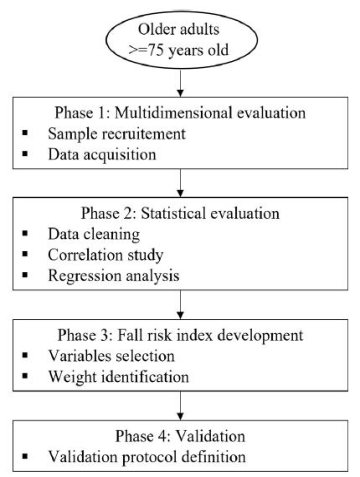
METHODOLOGICAL APPROACH FOR THE DEFINITION OF THE FALL RISK INDEX The current study aims to develop a fall risk index for elderly people starting from a multidimensional evaluation of the elders’ health through a multidi- sciplinary team. The relevance of the acquired variables to the fall event and the relationship to each other is then investigated through statistical analysis. Eventually, a validation protocol will assess the consistency and the robu- stness of the index. The overall workflow is described in Figure 1. This paper will focus on the first two steps of the prediction algorithm development.
Multidimensional Health Assessment One hundred community-dwelling elderly subjects (aged ≥75 years) were enrolled by their general practitioner according to specific eligibility criteria. The inclusion criteria included (a) subjects aged 75 years or older, (b) resi- dency in small municipalities (< 5000 inhabitants) of inner areas of Marche
Figure 1: Workflow for the development of a fall risk index for elderly people.
Region in the province of Fermo and Macerata (Italy), (c) levels 1, 2, 3 of the Modified Rankin Scale (Banks and Marotta, 2007). Respondents were excluded if they experienced any cognitive impairment.
Participants were evaluated through an extended multidimensional eva- luation by a multidisciplinary team of doctors specialized in cardiology, physiatry, nutrition, psychology, and sociology. The staff acquired anamne- stic data on the user’s health by deeply investigating the health domain of competence. A nurse helped the staff to acquire anthropometric and clini- cal data and perform physical tests (e.g., TUG and Walk test for gait quality assessment).
The study variables included socio-demographic information (e.g., age, gender, living alone, environmental barriers), anthropometric assessment (weight, height, and Body Mass Index (BMI)), functional independence (Modified Barthel Index (Shah, Vanclay and Cooper, 1989)), mobility and equilibrium (Timed-up and Go test (Podsiadlo and Richardson, 1991), gait disorders, limited range of motion (ROM), Berg Balance Scale (Berg, Wood- Dauphine, Williams and Gayton, 1989), Walking Handicap Scale (Perry, Garrett, Gronley and Mulroy, 1995)), and clinical data (e.g., hypertension, orthostatic hypotension, diabetes, hypercholesterolemia, previous syncope, exertional dyspnoea, hearing impairments, visual impairments, depression, neurological deficit, nycturia, previous falls, walking aids use).
All the data has been collected in a digital platform according to GDPR standards respecting privacy and security. All participants signed an informed consent form.
Multidimensional Assessment of Elderly People’s Health 669
Statistical Analysis The overall dataset contained some missing values in the acquired variables following a missing at random mechanism. By applying a listwise deletion of the data only the participants with no missing values on any items were kept, resulting in a total of 83 participants enrolled in the study. To develop the statistical analysis, dichotomous variables (i.e., gender, living alone, envi- ronmental barriers, gait disorders, limited range of motion, hypertension, orthostatic hypotension, diabetes, hypercholesterolemia, previous syncope, exertional dyspnoea, hearing and visual impairments, depression, neurologi- cal deficit, nycturia, previous falls, walking aids use) were managed so that the presence of a deficit was coded as 1 in binary values through dummy vari- ables. Walking Handicap Scale (WHS) was assumed as an ordinal variable since it determines the mobility quality in the home and the community con- texts across 6 categories. Age, weight, height, BMI, Modified Barthel Index (BIM), Berg Balance Scale (BBS), and Timed-up and Go (TUG) were handled as continuous variables due to the continuous nature.
Descriptive analysis provided a general description of the study sample. In particular, the continuous variables were examined by means and standard deviation (SD), and categorical variables were described using frequencies and percentages.
The study of the correlation between data allowed to select the fall-related risk factors for the development of statical models by excluding collinearity among the acquired variables. The Pearson correlation coefficient allowed evaluating the correlation between continuous variables. Spearman correla- tion coefficient was used whenever linearity and normality assumptions did not hold. The statistical significance was set at 5%. The additional dich- otomous variables were tested for association through the Chi-square test. The effect size of the association was assessed through Cramer’s V value. If Chi-square test assumptions were violated (expected frequency counts are <5) Fisher’s test was used. A logistic regression analysis followed to evaluate the relationships between potential fall predictor variables and the outcome ‘previous falls’ by computing the Odds Ratios (ORs) and 95% confidence intervals (CIs). Variables with p-value < .05 were considered to be statistically significant.
All analyses were performed through the open-source software Jamovi version 1.6.23.
Results and Discussion
83 people out of the entire sample were analysed (48 women: 82.6 ± 5.28 years; 35 men: 80.2 ± 4.66 years). Table 1 details the participants’ characteristics.
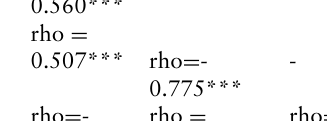
By studying correlation (Table 2), it appears a high, significant correla- tion between BBS and TUG, and BMI and weight. A moderate correlation exists between TUG and BIM, BBS and BIM, height and age, height and wei- ght, height and BBS, height and TUG, height and BIM, and age and BBS. A low correlation appears between BMI and height, and age and TUG. Thus,
Table 1. Characteristics of participant population.
Regarding dichotomous variables Table 3 reports the most relevant associ- ations in terms of p-value (<0.05). The strongest correlations occur between orthostatic hypotension and previous syncope gait disorders and walking aids, gait disorders and visual impairments, gender and walking aids, envi- ronmental barriers and hypercholesterolemia, and hypercholesterolemia and exertional dyspnoea.
Multidimensional Assessment of Elderly People’s Health 671
Table 3. Correlation analysis between dichotomous variables.
To develop a logistic regression model without any collinearities, the dependent variables to be discarded from the analysis were selected based on their association with previous falls. It was found a significant association between previous falls and gender (X2 (N = 83, df = 1) = 9.26, p = 0.002, Cramer’s V = 0.33), previous falls and previous syncope (p=.007), previous falls and visual impairments (X2 (N = 83, df = 1) = 4.24, p = 0.04, Cra- mer’s V = 0.23), previous falls and hearing loss (X2 (N = 83, df = 1) = 4.79, p = 0.029, Cramer’s V = 0.24), previous falls and gait disorders (X2 (N = 83, df = 1) = 4.93, p = 0.026, Cramer’s V = 0.24), and previous falls and WHS (p=.006).
A binomial logistic regression model was developed assuming previous falls as dependent variable and gender, previous syncope, BMI, Age, Limited ROM, diabetes, environmental barriers, and exertional dyspnoea as inde- pendent variables (McFadden’s R2=0.316, p<.001). Table 4 summarises the model coefficients.
The following ORs predicted a higher risk of falls: female (OR for Gender, 5.526; 95% CI, 1.49–20.53), limited ROM (OR 3.278; 95% CI, 1.01-10.68), diabetes (OR 4.487; 95% CI, 1.02-19.80), previous syncope (OR 7.686; 95% CI, 1.01-58.55), and BMI (OR 1.176; 95% CI, 1.03-1.35). Age, exerti- onal dyspnea, and environmental barriers were not associated with a risk of fall. Furthermore, the area under the receiver operating characteristic (ROC)
Table 4. Multivariable logistic regression analysis for fall risk assessment.
curve (AUC), induced by the predicted probability of the logistic model was 0.86. The overall prediction accuracy rate is 82% (Sensitivity = 77%, Specificity = 85%).
PERSPECTIVES AND FUTURE WORKS The statistical analysis to study the variable correlations for a fall predi- ction index was conducted for this study in line with the limited sample size (n = 83). Future studies based on a larger sample of elders would improve the prediction algorithm for the development of a fall risk index for community- dwelling elders. Additional multidimensional variables will be accounted for the fall risk index development by defining different weights based on the strength of the association with a previous fall event. The effectiveness of the fall risk index in reducing falls will be assessed at one-year monitoring of par- ticipants through ICT technologies (such as wearables, fall detection devices, telemedicine…) and periodic multidimensional health assessment.
CONCLUSION
Falls present a significant threat to the well-being of elderly people being a cause of morbidity and mortality. Thus, it is very important to assess the concurring fall factors and estimate the current risk of falls for preventive action plans. The current study investigated multiple health domain vari- ables and identified the fall prediction factors (i.e., gender female, limited ROM, diabetes, previous syncope, and BMI) for community-dwelling older people. Findings report a high prediction accuracy with higher specificity. Future works will allow the development of a fall prediction index based on a larger sample of elderly people and health-related variables. The validity of the index will be assessed at one-year follow-up.
ACKNOWLEDGMENT
The authors would like to acknowledge all the Project’s partners for their valuable work in the project development. [Italian National Project “MOSAICO - Models, products and services to make the life of frailty
Multidimensional Assessment of Elderly People’s Health 673
people socially active and inclusive in communities spread across the terri- tory”, funded by the Ministry of Economic Development under the tender for Innovation Agreements].
REFERENCES
Banks, J.L., Marotta, C.A. (2007) ‘Outcomes validity and reliability of the modified Rankin scale: implications for stroke clinical trials: a literature review and synthesis’, Stroke, 38(3), pp. 1091–6 Berg, K., Wood-Dauphine, S., Williams, J.I., Gayton, D. (1989) ‘Measuring bala-
nce in the elderly: preliminary development of an instrument’, Physiotherapy Canada, 41(6), pp. 304–31 Bueno-Cavanillas, A., Padilla-Ruiz, F., Jiménez-Moleón, JJ., Peinado-Alonso, CA., Gálvez-Vargas, R. (2000) ‘Risk factors in falls among the elderly according to extrinsic and intrinsic precipitating causes’, Eur J Epidemiol., 16(9), pp. 849–59 Eurostat (2020) Ageing Europe-looking at the lives of older people in the EU.
Luxembourg: Publications Office of the European Union, 2020. Meekes, W.M., Korevaar, J.C., Leemrijse, C.J., van de Goor, I.A. (2021) ‘Practical and validated tool to assess falls risk in the primary care setting: a systematic review’, BMJ Open, 11(9): e045431 Moreland, B., Kakara, R., Henry, A. (2020) ‘Trends in Nonfatal Falls and Fall-
Related Injuries Among Adults Aged ≥65 Years - United States, 2012–2018’, Morbidity and Mortality Weekly Report, 69, pp. 875–881 Perry, J., Garrett, M., Gronley, J.K., Mulroy, S.J. (1995) ‘Classification of walking handicap in the stroke population’, Stroke, 26(6), pp. 982–9 Pin, S., Spini, D. (2016) ’Impact of falling on social participation and social support
trajectories in a middle-aged and elderly European sample’, SSM Popul Health, 26(2), pp. 382–389 Podsiadlo D., Richardson, S. (1991) ‘The timed ‘Up & Go’: A test of basic functional mobility for frail elderly persons’, Journal of the American Geriatrics Society, 39(2), pp. 142-8 Shah, S., Vanclay, F., Cooper, B. (1989) ‘Improving the sensitivity of the Barthel Index
for stroke rehabilitation’, J Clin Epidemiol, 42, pp. 703–709 Sharif, SI., Al-Harbi, AB., Al-Shihabi, AM., Al-Daour, DS., Sharif, RS. (2018) ‘Falls in the elderly: assessment of prevalence and risk factors’, Pharm Pract (Granada), 16(3), pp. 1206 Strini,V., Schiavolin, R., Prendin, A. (2021) ‘Fall Risk Assessment Scales: A Systema-
tic Literature Review’, Nurs Rep., 11(2), pp. 430–443. World Health Organisation (2008) WHO global report on falls prevention in older age. Available at: http://www.who.int/ageing/publications/Falls_prevention7Mar ch.pdf (Accessed: 17 Mar 20)
Read this individual research paper free through the original publisher, or explore the full digital proceedings book.
ISBN 978-1-958651-44-5
Explore this ISBN in the AHFE Bookstore ↗Listed in the July 2026 bookstore catalogue; search by ISBN to confirm current availability · Digital book purchase optional