Fred J. Schoeffler (2026). How and Why Did the Lack of LCES Contribute to Fatal Outcomes in the June 1990 Dude Fire, July 1994 South Canyon, and June 2013 Yarnell Hill Fire?. In: Human Factors in Design, Engineering, and Computing. AHFE Open Access, vol. 238, pp. 1849–1860. https://doi.org/10.54941/ahfe1008413
This paper examines a controversial issue in wildland firefighting: institutional responses to wildland firefighter fatalities and the role of fire-shelter safety reform. The analysis focuses on three major fatal incidents spanning 1990 to 2013: the June 1990 Dude Fire in Arizona, the July 1994 South Canyon Fire in Colorado, and the June 2013 Yarnell Hill (YH) Fire in Arizona. Particular attention is given to recurring issues identified in official investigative reports, independent analyses, and subsequent institutional policy responses. Using human factors, situational awareness, communication failures, training adequacy, and organizational culture as analytical lenses, the study examines whether fundamental safety elements – including escape-route planning, fire-behavior prediction, and adherence to established operational protocols – were adequately addressed. The paper also explores the gap between prescribed safety procedures and actual field conditions, while comparing post-incident recommendations with the underlying causal factors identified in these events. The Yarnell Hill Fire serves as a contemporary reference point for assessing whether lessons from earlier tragedies were effectively incorporated into training, policy, and operational practice. In addition, the analysis considers the phenomenon of risk compensation and the possibility that perceived protection from fire-shelter technology may influence tactical decision-making under extreme conditions. This human-factors investigation does not dismiss the legitimate protective value of fire shelters; rather, it questions whether an institutional emphasis on equipment performance may have limited a more comprehensive examination of preventable causal factors. Although fatalities cannot be eliminated entirely in inherently hazardous occupations, their likelihood may be reduced through rigorous investigations, accurate identification of causal human factors, and effective organizational learning. The paper therefore proposes a broader framework for incident analysis that extends beyond equipment evaluation to include organizational culture, training effectiveness, situational awareness, communication, and systemic risk-management practices. Recognizing and addressing potential institutional biases in wildland firefighter safety investigations remains critical to reducing future tragedies and honoring those who lost their lives.
From the perspective of a retired U.S. Forest Service Hot Shot Crew Superintendent with experience in wildland fire weather, fire behavior, human factors, and psychology, it is commonly accepted that all alleged “officially” documented fatal and near-fatal wildland fires rarely result from a single catastrophic event; rather, they are often the tragic culmination of compounding errors, environmental triggers, human factors, and allegedly inaccurate or incomplete “lessons learned” (Wildland Fire Lessons Learned Center, WLF, LLC, 2026); Yarnell Hill Fire Revelations (YHFR) website, 2013–2026).
Renowned human factors author/researcher Sidney Dekker wisely avows “Underneath every simple, obvious story about ‘human error,’ there is a deeper, more complex story about the organization” (Dekker, 2006). The Southwest Area Hot Shot Crews had been using the following “concept” that eventually would become LCES - a foundational wildland fire safety protocol signifying Lookouts, Communications, Escape Routes, and Safety Zones - for several years before its “official” 1991 status following the June 1990 Dude Fire, based on former Zig Zag Hot Shot Superintendent Paul Gleason’s “LCES and Other Thoughts” (Gleason, 1991). LCES was basically derived from the tried-and-true Rules of Engagement and Entrapment Avoidance Principles that had already been in place for many years. With truly whole-hearted emotion, Gleason in good conscience stated: “The afternoon of June 26, 1990, as I knelt beside a dead Perryville firefighter, I made a promise to the best of my ability to help end the needles fatalities, and alleviate the near misses, by focusing on training and operations pertinent to these goals.”
The June 1990 Dude Fire in Arizona, the July 1994 South Canyon Fire in Colorado, and the June 2013 Yarnell Hill (YH) Fire (WLF, LLC) in Arizona share a hauntingly similar root cause: among other factors, the failure to establish and maintain a functional LCES system on every wildfire, every time prior to engagement. LCES serves as a critical buffer between wildland firefighters [hereinafter WFs, although firefighter and WFs are used interchangeably] and rapidly changing fire behavior and the resulting tactical demands. When one or more of these elements are compromised or ignored, the margin for human error can rapidly diminish.
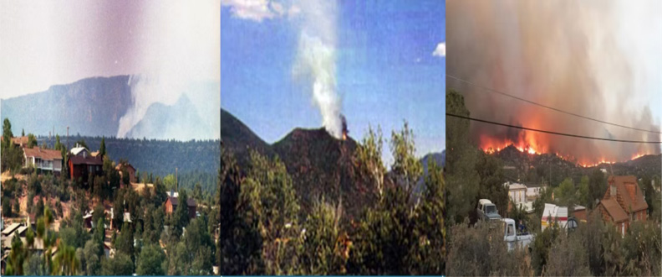
Figure 1: Dude, South Canyon, and Yarnell hill fires (left to right) schoeffler.
How and Why Did the Lack of LCES 1851 A detailed analysis of these three fatal wildfires reveals how the ostensible degradation of LCES fatally influenced tactical decision-making and [WF] survivability: (1) According to the three applicable “official” Investigation Reports, the June 26, 1990, Dude Fire, near Payson, Arizona, six firefighters lost their lives in a sudden, high-intensity blowup caused by an approaching thunderstorm outflow and a horizontally aligned topographic chute. Lookouts & Communications: The complex, rugged topography obscured the main fire front, rendering lookouts unable to see the fire’s progression, and unreliable communication lines prevented critical weather updates from reaching Crews on the ground. Escape Routes & Safety Zones: Wildland firefighters were caught in steep, unburned drainages without pre-designated or adequate escape routes or safety zones. Without a clear path to safety, the Crews had no tactical alternative when the fire made a rapid, wind-driven run down Walk Moore Canyon (WLF, LLC). (2) The South Canyon Fire (July 1994) was initially reported to be on Storm King Mountain near Glenwood Springs, CO, where 14 Wildland firefighters, primarily Smokejumpers (SJs), Hot Shots, and two Helitack personnel were entrapped when a cold front brought erratic 45 mph winds that caused the clearly recognized critically dry Gambel oak brush to ignite and spread at up to 18 mph. The primary lookout lost visual contact with the active fireline as it moved into an adjacent ravine. Poor communication meant that Crews working lower down the steep slopes were completely unaware that the fire had breached critical trigger points. Escape Routes & Safety Zones: Fire Crews were working on a steep, continuous-fuel slope without identified or cleared escape routes. When the fire made its rapid uphill run, the steep terrain prevented Crews from outpacing the flames, forcing them to deploy fire shelters in non-survivable locations (WLF, LLC). In a surprising impending twist of fate, the GMHS and their Prescott Fire Dept. [PFD] Wildland Battalion Chief Willis made a site visit to the South Cyn. Fire site in 2012, in hindsight, making the clearly shortsighted statement: “This will never happen to us” (Stanton 2014). This author participated in an annual USFS Redding Hot Shot-sponsored Staff Ride and one of the former Prineville HS sawyers, serving as a Subject Matter Expert (SME), adamantly claimed they failed to utilize LCES on this fire because “That was in 1991” and this author grasped that comment as possibly implying it that it was merely a Southwest Area and/or less than nationally endorsed “official” sanctioned edict. (3) Awkwardly, the Yarnell Hill (YH) Fire (June 2013) would claim the lives of 19 members of the Prescott Fire Dept. Granite Mountain Interagency Hotshot (GMHS) Crew. The Crew abandoned a relatively safe, previously burned area (“the black”) to hike through dense, unburned brush in an attempt to reach a private ranch, ostensibly designated as a “Bomb Proof Safety Zone.” Lookouts & Communications: The Crew’s primary lookout was positioned in a location where the lookout was unable to safely or effectively monitor the approaching thunderstorm outflow winds. However, the GMHS communication breakdowns led to a critical lack of situational awareness regarding the fire’s speed and multidirectional shifts. Escape Routes & Safety Zones: The Crew descended into a box canyon to reach a designated safety zone. However, this route was never adequately
1852 Schoeffler scouted, and the intended safety zone was compromised. Once the rapidly advancing fire shifted, the Crew was trapped without a viable escape route or a survivable deployment zone, ultimately perishing when the fire overran their position (WLF, LLC). This author alleges there were as many as three rogue firing operations in the Sesame-Shrine Corridor (YHFR website). In all three of these clearly preventable tragedies, the lack of a proper LCES framework trapped WFs in environments where the “alignment of forces” (CPS, 2010) of extreme topography, dry fuels, and erratic weather; and the human and psychological “causal factors” - rapidly outpaced their tactical operations. LCES pillars and environmental indicators such as erratic wind shifts, approaching thunderstorm outflows, and heavy fuel loads were either misread, underreported, or communicated too late for Crews to extract themselves safely. Like a perfect storm, everything fatally aligned against them. These disasters underscore the reality that wildland firefighters must avoid relying solely on assumptions or prior successful “seat-of-the- pants” experiences when the critical implications of LCES are absent. These disasters stress the need for wildland agency supervisors and individual wildland firefighters to enforce strict LCES compliance, prioritize dynamic risk assessment over task completion, apply lessons from historic failures, and continually improve human factors training and wildland firefighter survivability.
This author has consistently been and will remain committed to helping others improve in the legally defined “inherently dangerous” wildland fire realms of human factors, psychology, safety, and revealing the ongoing alleged revelations of truth, lies, and cover-ups of the fatal and near-fatal wildland fires for the sake of accurate and truthful lessons learned. According to the following “official” SAIT-SAIRs, the 1990 Dude Fire (AZ) investigation reported that, during a significant fire run, the Perryville Department of Corrections Crew was entrapped in Walk Moore Canyon. Eleven Crewmembers were cut off and deployed fire shelters. Six Crewmembers and the Asst. Crew Boss perished during the entrapment, and five other FFs suffered burn injuries. This fatal, historic wildfire was the genesis of the wildfire safety procedure required on all wildfires: LCES, e.g. Lookouts, Communications, Escape Routes, & Safety Zones. On July 6, 1994, a wildfire overran 49 Firefighters, Wildland Firefighters, and Smokejumper at the South Canyon Fire in CO. There were 35 survivors and 14 fatalities. Many investigators believe the two events are connected and ask how much we have learned in the intervening 45 years. A trip to Mann Gulch (MT, 1949) has been planned to explore that connection and foster further workshop dialogue in a “real-life” setting described as a “guided tour” (Putnam, 2015). Researchers Gleason & Robinson intuitively warn: “... failing to learn the lessons of the past dooms us to reliving those lessons, then we must either impress indelibly into the minds of Firefighters the lessons of the South Canyon Fire or we will again experience its tragic outcome” (Close, 2005). During the 1994 South Canyon Fire (CO), local area Firefighters from multiple modules initially engaged in the fire, with Smokejumpers, the Prineville Hot Shots, and a Helitack module. As these firefighting resources
How and Why Did the Lack of LCES 1853 were disparately organized around the fire perimeter, a dry cold front moved through the area, producing strong winds. Spot fires ignited below the main fire made rapid uphill runs, entrapping multiple groups of Wildland Firefighters, Smokejumpers, and two Helitack Crewmembers, many of whom deployed fire shelters while others attempted uphill escape or retreated into the adjacent unburned canyon. A group of twelve Prineville Hot Shots and several Smokejumpers on the west-flank handline were overrun by fire and perished. Two Helitack Crew Members were entrapped further upslope and perished. The USDA USFS-funded, infamous, bewildering, frustrating, and logic-defying alleged ‘Factual’ Yarnell Hill (YH) Fire Serious Accident Investigation Team and Serious Accident Investigation Report (SAIT-SAIR) addressed the entrapment and deaths of 19 of the 20 GMHS members (Karels et al., 2014). All are included in the WLF LLC Incident Reviews. Thus, this author and other experienced and knowledgeable Firefighters, Wildland Firefighters, and curious others engaged in similar accurate and truthful wildland fire “lessons learned” research confidently allege that these investigations are summarily predetermined with the “conclusion” established first, and then the “facts” to prove it; with the 2013 YH Fire being the most egregious one with this declaration: “The [Serious Accident Investigation] Team found no indication of negligence, reckless actions, or violations of policy or protocol” fundamentally emasculating the tried- and-true Rules of Engagement and Entrapment Avoidance Principles. Ask yourselves this question: Based on that “conclusion” how, then, is it possible to do everything right and yet kill 19 Prescott Fire Department GMHS in one fell swoop? In a word, it’s impossible! “This is an A Priori Argument logical fallacy: A corrupt argument from logos, starting with a given, pre-set belief, dogma, doctrine, scripture verse, ‘fact’ or conclusion and then searching for any reasonable or reasonable-sounding argument to rationalize, defend or justify it” (Williamson, 2026). Indeed, by ethically and steadfastly steering clear of this deceptive pitfall you will almost certainly earn the truth-seeking wildland fire realm’s admiration and trust. Based on their required training, annual refresher training, and accumulated operational experience, supervisors have a fundamental, solemn responsibility to protect the health, safety, and welfare of the personnel under their command, regardless of external pressures or conflicting directions from higher levels of supervision; reinforced by the tried-and-true Ten Standard Firefighting Orders (Rules of Engagement) and the Watch Out Situations (Entrapment Avoidance Principles), as well as by the experienced-based guidance of wildland fire leaders and supervisors.
In a 2002 Fire Management Today (FMT) article, former USFS Fire Director Jerry Williams emphasized the critical importance of adhering to the Fire Orders. Drawing on his presentation at the 2002 National Fire and Aviation Management Meeting in Scottsdale, AZ, he stated: “Firm Rules of Engagement - the Ten Standard Firefighting Orders … cannot be simple guidelines, and they cannot be ‘bargained.’ They are the result of hard-learned lessons. Compromising one or more of them is a common denominator of all tragedy fires. On the Dude, South Canyon,
1854 Schoeffler and Thirtymile Fires, Fire Orders were ignored, overlooked, or otherwise compromised. ... [They] mean little after we are in trouble. …. We know that no fire shelter can ensure survival all of the time under all circumstances. Entrapment avoidance must be our primary emphasis and our measure of professional operational success. ... We must embrace [them] because we owe it to one another. … [They] must become a shared obligation, where the leader’s situational awareness depends on participation by the entire Crew and where the Crew’s participation is tempered with respect for the leader’s responsibility. Borrowing from the aviation … model of Cockpit/ Crew Resource Management, we must focus fireline operations more on what is right than on who is right.”
This emphasis on Crew Resource Management highlights its value as a force multiplier for improving critical decision-making, communication, shared situational awareness, and accountability within the fire service. Specifically with regard to the South Canyon Fire, the avatar “Abercrombie” similarly, and significantly more emphatically, emphasizes the responsibility of individual firefighters and crew supervisors to comply with established safety principles: “The failure of a firefighter, all firefighters, any firefighters, regardless of rank, to follow established rules or guidelines have little to do with weather forecasters, district managers, or dispatch centers. … Most of the dialogue, interviews, and conclusions fail to address the primary responsibility of each firefighter to comply with the fundamental rules already existing to govern their actions and behavior. … It doesn’t matter and has absolutely no bearing on why the firefighters died. Do you get it? The primary responsibility for a crew’s safety lies with their crew supervisor. Period. It doesn’t matter who the IC is, who the Division Supervisor is, nor the Branch Director, nor any other person in an observing status. It’s the crew supervisor!” (Abercrombie, (1997–2005) Wildlandfire.com).
Together, these perspectives underscore the importance of continually evaluating the potential consequences of operational decisions, challenging assumptions and established beliefs, and remaining attentive to intuitive concerns that arise from experience (Mustafa, 2025). When one firefighter senses that conditions or decisions may be unsafe, others may share similar concerns. This dynamic is reflected in several Firefighter, Wildland Firefighter, and Smokejumper witness statements documented in the off-the-record version of the South Canyon Fire SAIT-SAIR (Domebeck, Thomas, et al., South Canyon Fire, SAIT-SAIR, 1994) before released to the public, heavily redacted with broad felt pen swipes blotting out those specific discussions.
Wildland Fire Weather, Fire Behavior, Human Factors, Investigations, and Truth Unfortunately, so many in the wildland firefighting culture have strayed far and wide from Williams’ sage counsel. His germane wildland fire information and these valued lessons learned offered in 2002 were clearly available to all [FFs] and WFs engaged in wildland firefighting in 2013, including the Granite Mountain Hot Shots (GMHS). Apparently, all others on the Yarnell Hill Fire that day followed his sage advice. Literally tens of thousands of
How and Why Did the Lack of LCES 1855 Firefighters and Wildland Firefighters engaged in wildland firefighting use them effectively and safely every fire season - a fact far removed from hindsight bias and reality. There are specific rules for fighting fires, and the fire always signals its intentions! The fire is an inanimate entity; however, it always tells you what it’s going to do and where it’s heading. It follows the scientific principles of fluid dynamics, so it flows like water. We also hear about all the alleged wildfires where FFs and WFs followed all the Rules of Engagement, and they were still burned over, deployed fire shelters, entrapped, or perished. First off, if someone deploys their fire shelter, then someone really failed, because the fire signals its intentions every time. All we and/or our lookout(s) must do is pay attention and act accordingly This author and similarly experienced and trained others challenge you to search the WLF LLC (1910–2026) and provide the name of one wildfire where a Firefighter or Wildland Firefighter followed all the tried-and-true Rules of Engagement, acknowledged, heeded, and mitigated the Entrapment Avoidance Principles and was burned over, deployed a fire shelter, or died. You will find none! It is this author’s professional opinion that when you hear that Firefighter and Wildland Firefighters were supposedly “forced to deploy their fire shelters,” in reality they failed to recognize the changing wildland fire weather and resultant fire behavior. Even worse, those you read about who allegedly “willingly gave their lives” should be and would be more accurately described as having their lives taken from them by their alleged inattention, the hazardous attitude and behavior of the Normalization of Deviance (Accord, 2025), and/or Groupthink (Wilcut, Bell, Vaughan, 2014; Johnson, 2000) and/or their alleged careless, inept, inexperienced, unsafe, and/or dangerous supervisors and decision-making Overhead! This is generally referred to in the well-known and accepted semi-official vernacular Watch Out No. 19 Death From Above, e.g. Overhead, Gravity issues, power lines, Aircraft, Aerial Ignition, etc. introduced by the USFS Payson Hot Shots after their harrowing near-death July 1985 Wheeler Fire (CA, LPNF) and August Butte Fire (SNF, ID) (WLF, LLC) experiences.
“Key evidence that could explain why the [GMHS] moved from a safe location into a treacherous box canyon where 19 men died on June 30, 2013 was in the possession of the Office of the Maricopa County Medical Examiner but was not provided to the state-contracted investigation into the tragedy, autopsy records recently obtained by InvestigativeMEDIA show” (Dougherty, 2015). The GMHS autopsy reports are linked within the article (viewer discretion is strongly advised). In the Hot Shot Crew and other highly experienced Wildland Firefighter worlds, it is fairly common knowledge that if you have to deploy your fire shelter or rely on air support, e.g. airtankers and/or helicopter bucket drops to “save you” then you have really failed! This author and other experienced Wildland Firefighters maintain that these autopsy reports should be required reading for the annual Firefighter/Wildland Fighter RT-130 Refresher Training to reveal the likely results of the “inherently dangerous” wildland firefighting, failing to know, acknowledge, heed, and utilize the proven Rules of Engagement and Entrapment Avoidance Principles.
“Irving Janis introduced the theory of groupthink in his classic study Victims of Groupthink in 1972. … to determine why groups, often consisting of individuals with exceptional intellect and talent, made irrational decisions. He concluded that groups often experienced groupthink, a mode of thinking that people engage in when they are deeply involved in a cohesive group, … striving for unanimity override their motivation to realistically appraise alternative courses of action. … groups that … more likely to produce poor decision outcomes. His initial works sparked an explosion of research into how group behaviors, biases, and pressures affect group decision-making. [It’s] become a widely studied and accepted phenomenon. … a widely utilized theory in social psychology, organizational theory, group decision-making sciences, and management fields. … is a pertinent area of study that involves understanding how group processes influence the making of decisions. This includes the analysis of [the] conditions under which miscalculations; faulty information processing, inadequate surveys of alternatives, and other potentially avoided errors are most probable. Groupthink is preventable and recommends giving Leader’s Intent first, and then asking for comments and suggestions from the group rather than voicing his opinion or solution initially, which he feels leads to Groupthink because of the tendency of others to rely on the Leader’s choice and/or judgement based on experience, position, rank, etc. (Johnson, 2000). He also posits the highly effective and highly successful Israeli Defense Force (IDF) “Tenth Man Rule,” also referred to as being “The Devil’s Advocate” (Meyer, 2025), suggesting that, if nine people in a group of ten agree on an issue, the tenth member must take a contrarian viewpoint assuming the other nine are wrong. Remember that gut feelings mean little unless based on a lot of experience, so the bottom line is learn to make decisions based on the facts. Prevent groupthink; know and avoid its symptoms. Appoint people to represent opposing views or ask everyone to voice their opinion before discussion” (Wilcut, Bell, Vaughan, 2014).
Former USFS SJ and wildland fire investigator Dr. Ted Putnam bravely and steadfastly refused to sign the fatal 1994 (CO) South Canyon Fire SAIR because he “found it inaccurate and incomplete, ignoring too many pertinent human factors, ... Historically, wildland fire fatality investigations focus on external factors like fire behavior, fuels, weather, and equipment. Human and organizational failures are seldom discussed. When individual firefighters and support personnel are singled out, it’s often to fix blame in the same way we blame fire behavior or fuels. This is wrong-headed and dangerous, because it ignores … an underlying cause of firefighter deaths - the difficulty individuals have to consistently make good decisions under stress” (Stanton, 2014). In his germane, ground-breaking paper Putnam writes in part: “What follows is an exploration of USA wildland fire accidents, accident guides, stories and the truth. These issues are further detailed to learn how they can produce excellent products, or deteriorate into partial truths and sometime lies. Historical fires are cited to demonstrate the actual processes and reporting involved. Central to this analysis is the need to consider how our own minds
How and Why Did the Lack of LCES 1857 tell us stories and make errors, which in turn affect our actions and outcomes. With mindfulness training we can learn the skill of non-attachment, stress reduction and to be mindful in our present environments. This reduction of mental errors is a learnable skill. Since the human mind and mental events are common to all people, cultures and organizations the relevancy of cited concerns extends beyond wildland firefighting to safety in other contexts” (Putnam, 2011).
Borrowing from Univ. of CA human factors researcher Jody L. S. Jahn, in her paper titled: Learning by doing: “Wildland firefighters’ stories about their pivotal fireline learning experiences, This interrupts chains of errors and forces Wildland Firefighters to re-evaluate their observations and decisions. However, this process is inhibited when Wildland Firefighters are not able to trust the importance of their experience - when they doubt their assessments. The story themes presented in this study extend Barton and Sutcliffe’s work by highlighting the kinds of enacting the tasks of firefighting. As a result of their ‘slides,’ Firefighters talk about coming to deeper understandings of fireline situations and reflect on ways to act knowledgeably and decisively in the future. Their ‘slides’ become the foundation on which they build a sense of trust in their enacted experiences. … Wildland firefighter come to trust themselves by developing techniques for managing details, evaluating other Firefighters’ logic and thought processes, recognizing the value of their previous experiences, and perfecting the ways that they have made sense of fireline experiences through reflection on the ways they fulfilled various objectives” (Jahn, 2011).
“Naked Truths - there are no easy answers. One thing we can be sure of is that moments of learning are short-lived. A perfect example comes from battlefields. ‘In the chaos of the battlefield, there is the tendency of all ranks to combine and recast the story of their achievements into a shape which shall satisfy the susceptibilities of national and regimental vainglory. … On the actual day of battle, naked truths may be picked up for the asking; by the following morning they have already begun to get into their uniforms...’ If all goes well on the staff ride, we’ll be able to recapture enough of the actual day of the tragedy to learn some naked truths. In doing so, hopefully we’ll get scared enough to have the lessons stick, but not so scared that we miss details. In those details lie the truths that belie the simplistic conclusion” (Weick, FMT, 2002). Therefore, it is imperative to investigate and interview affected participants and/or victims early, earnestly, honestly, and thoroughly for best results. Firefighting is ultimately a social process that plays out in an ambiguous and complex environment. … one mechanism for maintaining reliably safe operations includes [FFs] voicing their concerns—experiences that have helped [FFs] to trust themselves as knowledgeable contributors to firefighting processes” (Jahn, 2011).
Gordon Graham, a CA Highway Patrol Officer for twenty years, started giving talks to public safety personnel and over the last 40 years has spoken around the world, and has run a law practice since 1982 as the Founder of Lexipol - a company designed to standardize policy and training in public safety agencies around America (Lexipol, 2026), including his summary
1858 Schoeffler remarks of the father of the nuclear Navy, Admiral Rickover’s seven principles of risk management, at the 2011 Missoula Safety Summit, providing a note of optimism and illustrating each principle with colorful anecdotes and plain talk about the importance of public safety leaders stepping up to challenges facing the profession that will only be solved with strategic change. His keynote address stated that: “There are no new ways to get in trouble. There is always a better way to stay out of trouble. Things that go wrong in life are predictable and predictable is preventable” … “if we are in tune with our fire environment and activate appropriate safeguards to mitigate unwanted events before they spin out of control” (Mutch, 2011).
Graham’s “What’s predictable is preventable” is a verifiable well-known truism and used by Firefighters and Wildland Firefighters alike, yet the USFS- funded YH Fire SAIT-SAIR, short of specifically utilizing his phrase, declared it as: “Hindsight Bias refers to the tendency people have to view past events as more predictable than they really were before the events took place. After an event occurs, people often believe they could have predicted the outcome of the event before it actually happened.” At a 2022 Southern CA Foresters & Fire Wardens (SC FFW) Conference (Beaumont, CA), Graham was one of the keynote speakers on “The 5 Concurrent Themes for Success,” and his classic “Gordon Graham here” was his familiar greeting to us. This author broached the subject of the YH Fire SAIT-SAIR “Hindsight Bias” and his “what’s predictable is preventable” implications. He straight away boldly confirmed his maxim, still verifiably alive and well: “Risk Management is the cornerstone. … Here are three statements that have guided me through most of my adult life. First is a quote, albeit paraphrased, from the great risk management guru of the 40’s, Dr. Archand Zeller. (1) The Human does not change. During the period of recorded history, there is little evidence to indicate that man has changed in any major respect. … We have not figured out any new ways to screw things up. We are making the same mistakes over and over again. ... [FFs] have not figured out new ways to get in trouble. … Risk Management is the process of looking into the future (short or long term) and asking what can go wrong and then doing something about it to prevent it from going wrong” (Lexipol, 2026).
Research psychologist Gary Klein states: “The objective of this study was to examine the way in which decisions are made by highly proficient personnel, under conditions of extreme time pressure, and in environments where the consequences of the decisions could affect lives and property. The domain of fire-fighting was selected, and the research focused on the decisions made by fire ground commanders (FGCs). … A total of 156 decision points were probed in this way. … In over 80% of the decision points, the strategy was for the FGCs to use their experience to directly identify the situation as typical of a standard prototype and to identify a course of action as typical for that prototype. In this way, the FGCs handled decision points without any need to consider more than one option. A recognition-primed decision (RPD) model was synthesized from these data, which emphasized the use of recognition rather than calculation or analysis for rapid decision making” (Klein et al., 2010). We eventually adopted this concept and referred
How and Why Did the Lack of LCES 1859 to them as “slides.” His conclusions would again and again bear out on almost all fatal and near-fatal wildfires.
Below is the Otter app transcription of the Wildland Fire Safety Training Annual Refresher (WFSTAR) Weather Channel video clip featuring the then WLF LLC Center Manager Brit Rosso discussing the South Canyon Fire and the YH Fire, emphasizing the essential importance of addressing anger, concerns, emotions, fears, and frustrations while discussing the YH Fire and the GMHS: “My name is Brit Rosso, Center Manager with the [WLF LLC]. Quick fire background, I spent about 21 years on a Hot Shot Crew, spent a few years as a District FMO, been working with the Lessons Learned Center for the last three or so. I’m here today talking about the Yarnell Fire. We’re all struggling with how to process what happened on June 30, 2013. I know we’re all struggling out in the fire community about where are the lessons? What are the take home messages? What can we learn from this incident? What I want to share with you is how important it is to talk about it. Not only to talk about it, to let you know that it’s okay to talk about it. And it’s important that you do talk about it. Share what you’ve learned by reading the reports and watching the videos and have open, honest, respectful dialogue. Be willing to listen to other people’s opinions and have that respectful dialogue with your fellow firefighters. By having this dialogue, by facilitating these conversations about Yarnell, this is where the learning is going to happen, is with you and your brothers and sisters out there in the field. It’s the 20th anniversary of South Canyon. We’re still learning from South Canyon 20 years later. Yarnell just happened eight months ago. We’ll be learning about the Yarnell incident for years to come. Time and patience are going to be key for learning from this incident, by asking you to just take the time and be patient as we work through this together.”
ACKNOWLEDGMENT
The author wishes to acknowledge the deceased AZ Dept. of Corrections Asst. Crew Leader and six Perryville Inmate Crewmembers; YH Fire’s “two local residents, avid hikers who are familiar with the area;” the 19 deceased GMHS members; former USFS HS Supt. and Criminal Investigator Gary Olson; Dr. Ted Putnam; WantsToKnowTheTruth (WTKTT); and all informed individuals who wish to remain anonymous. Their contributions inspired this writing in support of healing and more complete lessons learned.
REFERENCES
Abercrombie, (1997–2005) Wildlandfire.com. Abercrombie. (1997–2005). WildlandFire.com. Internet Archive Wayback Machine.
(https://web.archive.org/). Accord, C. (2025) When Cutting Corners Becomes the Norm: How Normalizing Deviance Can Lead to Disaster. Workplace Safety Div, Directorate of Analysis and Prevention, U.S. Army Combat Readiness Ctr., AL. Risk Mgmnt. online magazine. Campbell, D. Campbell Prediction System (CPS) (2010). Close, K. (2005) Fire Behavior vs. Human Behavior: Why the Lessons from Cramer
Matter. Eighth Intl. Wildland Fire Safety Summit, April 26–28, 2005, Missoula, MT.
1860 Schoeffler Dekker, S. (2006) Field Guide to Understanding ‘Human Error’ 3rd Edition, p. 5. Dougherty, J. (2015) InvestigativeMEDIA (IM). Key evidence in [YH] Fire tragedy
never provided to official investigators. Fire Management Today (FMT) (2002) Dude Fire Staff Ride 62. Re: Human Factors in Fire Behavior Analysis: Reconstructing the Dude Fire. Karl E. Weick and Next Steps in Wildland Fire Management, Jerry Williams. pp. 31–25. Gleason, P. (1991). LCES and Other Principles. Wildland Fire Leadership Blog
(2016). Graham, G. (1998–2026) Lexipol. Policy Management for Public Safety Professionals. Jahn, J. (2011) Learning by doing. WF Stories about their pivotal fireline experiences.
Proc. of 11th Intl. Wildland Fire Safety Summit, Missoula, MT. Johnson, P. (2000) Effects of Groupthink on Tactical Decision-Making. Advanced Military Studies. p. 50. Karels, J; Dudley, M. et al (2013) Yarnell Hill Serious Accident Investigation Report
(SAIT-SAIR). Arizona State Forestry Division. p. 116. Klein, G. (1998) Sources of Power: How People Make Decisions. Semantic Scholar. Meyer, C. (2025) Mind Collection. The Tenth Man Rule: How to Take Devil’s Advocacy to a New Level. Mustafa, T. (2025) Experts Say Your Gut Instinct Is Real, Stop Second Guessing It.
Refinery 29. Mutch, R. (2011) 2005–2006 OK and TX grass fires: 25 lives lost, lessons learned - and re-learned. Proc. of 11th Intl. WFSS, Missoula, MT. National Wildfire Coordinating Group (NWCG) Wildland Fire Safety Training
Annual Refresher (WFSTAR) Yarnell Hill Fire Weather Channel Video Putnam, T. (2011) Accidents, accident guides, stories and the truth. Putnam, T. (2015) Improving Wildland Firefighter Performance Under Stressful, Risky Conditions: Toward Better Decisions on the Fireline and More Resilient Organizations. Scrib (accessed 2026 ) Campbell Prediction System (CPS) https://www.scribd.com/
document/962722545/Campbell Stanton, B. (2014) 20 Years After the South Canyon Fire. Twin Falls Magic Valley Thomas, et al (1994) U.S. Dept. of Agriculture (USDA) U.S. Forest Service (USFS) Rocky Mtn. Report of the South Canyon Fire Investigation Team (SAIT-SAIR) p. 250 Wilcut, Bell, Vaughan, (2014) The Cost of Silence: Normalization of Deviance and
Groupthink. p. 7 Wildland Fire Lessons Learned Center (WLF, LLC). (2006–2026). Williamson, O. (2006) Univ of TX, (UTEP) Master List of Logical Fallacies. Yarnell Hill Fire Revelations (YHFR) website. (2013–2026); https://www.
yarnellhillfirerevelations.com/blog-1.
SEARCH THE AHFE DIGITAL BOOKSTORE BY ISBN
Explore the complete digital volume
Human Factors in Design, Engineering, and Computing
Read this individual research paper free through the original publisher, or explore the full digital proceedings book.