Noemi Bitterman, Ariel Bonen (2022). Hyperbaric Chambers: A Human-Environment-Machine Approach. In: Advances in Ergonomics In Design, Usability & Special Populations: Part I. AHFE Open Access, vol. 18. https://doi.org/10.54941/ahfe100800
Hyperbaric chambers are pressure vessels capable of accommodating one or more persons with the purpose of providing medical treatment. Therapeutic hyperbaric chambers have been in use from the mid-20th century, yet apparently their design has not reached its full potential and they are not compatible with current healthcare facilities design. This paper will investigate therapeutic hyperbaric chambers from a human-environment-machine perspective in order to highlight their specific problems and requirements, and suggest design concepts that may improve the function of the staff, the quality of treatment provided and patient satisfaction. Data were collected from personal observations, a literature review and a market survey. Main design solutions include personal space and privacy, ease and comfort of walking into the chamber, mobility, stress- and anxiety-reducing environment, re-arrangement of seating and equipment locations, personalized (user-tailored) entertainment systems, and more. It is suggested that adopting a user-centered design rather than an engineering focus will improve workload and functionality of the staff, alleviate psychological issues, and increase satisfaction and the overall "user experience" of the patients. This study could be applicable and easily adapted to other confined environments.
A hyperbaric therapeutic chamber is a pressure vessel capable of accommodating one or more persons with the purpose of providing medical treatment (for acute and chronic indications) (Haux, 2000; Kindwall, 1999) by breathing high oxygen pressures according to well-structured predetermined protocols (Gill and Bell, 2004).
The main indications of hyperbaric oxygen (HBO) treatment are : air or gas embolism, carbon monoxide poisoning, gas gangrene, crush injury, decompression sickness, compartment syndrome and other acute traumatic ischemias, central retinal artery occlusion, healing in selected problem wounds and severe anemia and more ( Gill and Bell, 2004; Guo, Counte, and Romeis, 2003).
The two types of therapeutic chambers are a monoplace chamber – a single-compartment vessel designed for one patient only (Hart, 1999), and a multiplace chamber (Kindwall, 1999) that has two or more compartments for treating several people simultaneously, including observers or support personnel.
A hyperbaric chamber is a pressurized closed environment with specifications and characteristics that might have implications on user needs and chamber design such as: psychological issues resulting from a closed hyperbaric environment, hazard and threat of fire and burning, explosion and contamination, complexity and cumbersome usage of diverse compressed gas breathing apparatuses, limited contact with the exterior, complicated communication due to voice distortion, restricted visibility, mobility constraints, difficulties in inserting and removing patients, temperature changes, air purity, smell regulation, infection control, and more.
Therapeutic hyperbaric chambers have been in use in from the mid-20th century, yet the design of most chambers does not seem to be fully adapted to the users and the task, and are not compatible with current healthcare facilities Ergonomics In Design, Usability & Special Populations I (2022) https://openaccess.cms-conferences.org/#/publications/book/978-1-4951-2106-7 designs.
The aim of this paper is to present therapeutic hyperbaric chambers from a human-environment-machine perspective in order to highlight their specific problems and requirements, and suggest design concepts that may improve the function of the staff, the quality of treatment and patient satisfaction. This approach could also be applicable to other confined environments.
METHODS
Data were collected from personal observations in several hyperbaric chambers, a literature review and a market survey of websites of hyperbaric centers and hyperbaric chamber companies.
Indexed publications in this area are scarce, and most of the data appearing below was gathered from professional reports and publications, as well as Internet sources of websites of commercial HBO chamber companies and hyperbaric centers. The pictures and information (mostly of a commercial and marketing nature) on the websites of hyperbaric centers and chamber companies were used as a “remote” observational study for identifying problems and limitations of the chambers.
The information from major hyperbaric chamber companies was sorted into a table for comparative critical analysis according to the following categories: morphology, pressure range, number of patients, door type, windows, materials, entertainment, interior design, medical equipment, control panel and a picture, without referring to a specific company, type of chamber or facility.
Different design solutions are presented including tradeoff considerations between patients and staff requirements.
RESULTS
Hyperbaric Chamber Users Hyperbaric chamber users can be divided into three groups having different needs:
1. Hyperbaric medical staff – physicians and nurses who work inside and outside the hyperbaric chamber.
2. Technical team – staff who operate the chamber and the equipment, mostly from outside the chamber.
3. Patients – individuals who stay inside the chamber, breathing different gas mixtures with various levels of supportive medical treatment given before, during or after the HBO session(s). Most of the time, the patients are ‘restrained’ to their seats because they are continuously connected to a compressed breathing gas source, apart from short air breaks in between oxygen sessions. Each HBO session may last 2-3 hours.
Patients treated in hyperbaric facilities may be of different age, physical and mental fitness, and language knowledge. They may have restrictions and disabilities in addition to their reason for admission for hyperbaric treatment. They may come to the hyperbaric chamber for a single, unplanned acute emergency treatment, or attend the facility frequently for chronic indications, receiving HBO treatments that are planned according to fixed protocols and mostly extend for several sessions at predetermined time intervals. These regular treatments may last for several weeks and even months.
Ergonomics In Design, Usability & Special Populations I (2022) https://openaccess.cms-conferences.org/#/publications/book/978-1-4951-2106-7
Table 1: Patient characteristics and the implications of hyperbaric chamber design Main Categories Requirements, Implications for Patient Characteristics
Ergonomics In Design, Usability & Special Populations I (2022) https://openaccess.cms-conferences.org/#/publications/book/978-1-4951-2106-7
The Hyperbaric Chamber Hyperbaric chambers are closed and isolated environments characteristic of high pressures, changeable pressures according to fixed compression and decompression protocols, and options of simultaneously supplying different gas mixtures at the same ambient pressure for different patients (sometimes without awareness on the part of the patient or the team when this is done for scientific research protocols). Different patients could be connected simultaneously to several breathing gas sources (mask, hood or intubation).
During treatment, the chamber becomes disconnected from the surroundings for several hours. Communication is therefore important yet deficient due to limited direct visual and eye contact and voice distortion.
Natural light is limited in most situations, and artificial lighting options should be suitable for hyperbaric conditions and for avoiding glare and heat production. Good temperature control is needed because of sharp changes in temperature during compression and decompression. Potential hazards and threat of fire and burning, explosion and contamination are additional concerns for the hyperbaric oxygen environment, leading to strict safety regulations.
Chamber Morphology Curved forms (shell structures) are the most appropriate structures that resist high hydrostatic pressure. It is not surprising, therefore, that cylindrical and spherical shapes are the most common for undersea habitats and pressure vessels for commercial and military operations. Subsequently, classical therapeutic hyperbaric chambers followed this trend and were, by and large, of cylindrical shape along a horizontal axis.
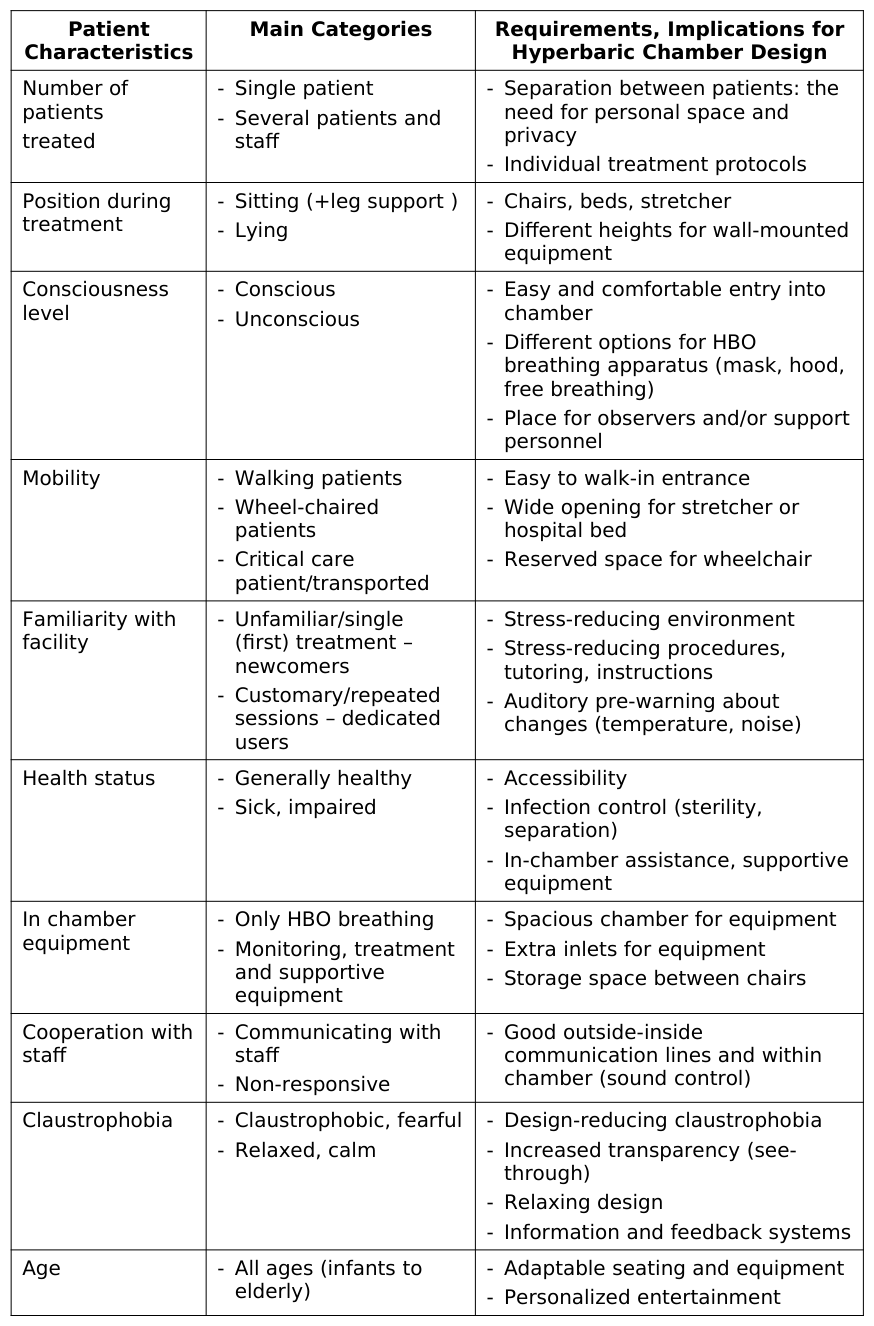
Horizontal cylindrical chambers (Fig. 1, left) use a flat bottom technology; the Ω omega shape increases the horizontal space, supplying a flat and convenient workable platform, but reduces the overall height of the chamber. Moreover, curved walls add constraints on equipment arrangement and seating options of the patients.
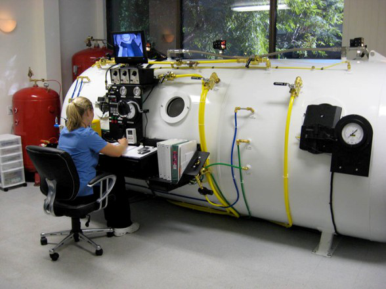
Figure 1. Horizontal cylindrical chamber (left) and rectangular chamber (right)
Rectangular chambers (Fig. 1, right) have started to gain popularity in recent years as hyperbaric therapy is performed at moderate hydrostatic pressures. The rectangular shape provides maximal available areas for patients and equipment, a regulated uniform height, the option for wide walk-in doors, vertical walls and a common appearance of a therapeutic setup. Rectangular chambers are basically designed to be an extension of the hospital’s clinical environment, a fact that improves its ease of use and acceptance by the general healthcare community.
Ergonomics In Design, Usability & Special Populations I (2022) https://openaccess.cms-conferences.org/#/publications/book/978-1-4951-2106-7
Shapes of hyperbaric chambers are related mostly to the materials used. Classical materials of cylindrical hyperbaric chambers are steel for the matrix and glass or acrylic for the windows. Concrete, and recently its advanced version of post-tensioned concrete, has been proposed as an alternative material, enabling the rectangular morphology of the HBO chambers (Maison, 1990; Balogh, 1996; Workman and Buttler, 1997; Haux, 2000). It has been shown that a prototype concrete chamber could be built in less than two months at only 10% of the cost of the steel structure. Moreover, concrete chambers can be erected by a building contractor, making it easier for a hospital architect to incorporate a concrete HBO facility as another room within the facility (Haux, 2000).
Chamber Openings The main requirement for hyperbaric chamber doors is tight closure to the chamber contour to maintain the high pressure and avoid a pressure drop, in addition to ease of opening (staff requirement) and comfort of mobility (patient and staff requirements).
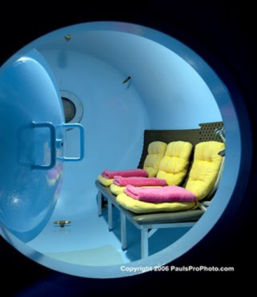
Hyperbaric chamber doors should enable fast and easy entry and exit for mobile patients, people supported by wheelchairs or crutches, and for stretchers and beds pushed by staff on which immobile patients are lying. This requires a wide opening, satisfactory height and walkthrough passage, requirements that are not met regarding most cylindrical hyperbaric chambers, as can be seen in Figure 2.
Rectangular chambers provide much more adaptable opening options: wide doors, the possibility of a straight, comfortable walkthrough passage, and a sliding door that could accommodate standard hospital doors that are easy to open.
Sealed windows, usually of the round ship-style, are distributed around the chamber (see Fig. 1), supplying limited visibility to the patients of the outside environment and to the staff following up on the patients inside. Inner cameras connected to the technician operating the chamber supply enable follow-up of patients.
Figure 2. A view of different openings of a cylindrical omega-type HBO chamber: a round door (left), a walk-in door with a ramp (middle), and a door of limited height (right).
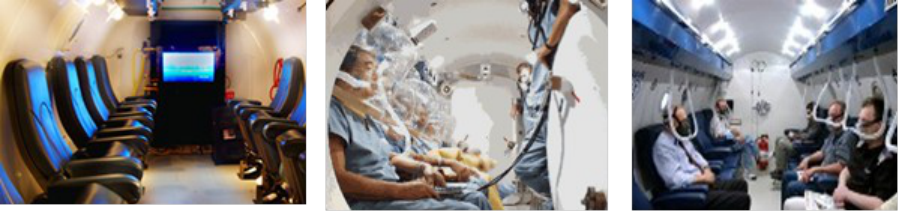
Interior Design The interior design of most chambers is simple and does not seem to be fully adapted to civilian users and continuous daily visits to the chamber. The most common types of seating elements (benches or armchairs) are typical in diving facilities, waiting rooms or airplanes (Fig. 3). No special effort was devoted to design specific seating or lying options to support and alleviate prolonged sitting while being connected to different kinds of gas supply apparatus (mask, hood, etc.), physiological parameters monitoring infusion and other equipment, while trying to pass the time by reading or watching TV.
Spatial seating arrangements is another unsolved issue – observations of working hyperbaric chambers and chambers for buying reveal that the seats and beds are usually located near the walls since the breathing systems are attached to the external chamber envelope (Fig. 3) . The two rows design forces the patients to face each other for prolonged time periods, almost knee to knee (Fig. 3), overlapping the personal space when stretching out legs and Ergonomics In Design, Usability & Special Populations I (2022) https://openaccess.cms-conferences.org/#/publications/book/978-1-4951-2106-7 blocking the movement by staff between patients. Sitting for a prolonged time while facing each other invades the patients’ personal space and does not permit any privacy.
Figure 3. Typical in-chamber seating configurations and a common television screen (left); patients’ positions during treatment (middle and right)
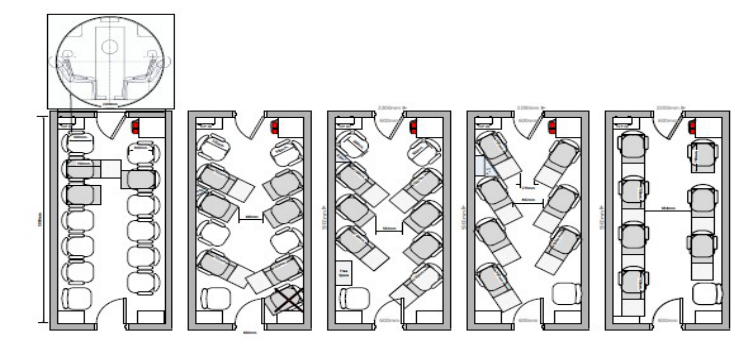
Figure 4 presents various seating configurations in a typical cylindrical hyperbaric chamber. As can be seen on the left, 12 seats for patients and one for the staff are arranged side by side. The serial drawings on the right present different distributions of the seats at angles of 30o, 45o, 60o and 90o.
The 30o arrangement reduces the number of seats by two yet increases the free space between seats and enables convenient passage by the support and treating personnel, increases privacy since patients are not facing each other, improves the ability of the observer to watch the patients and creates a storage space between the seats (Fig. 4). A further increase in seat angles expands the observer’s visual contact with the patient, increases patients’ personal space and privacy, enlarges the width of the corridor, and amplifies walking convenience and storage space. However, it reduces the number of therapeutic seats in the chamber. Thus, the options that would be convenient to staff and patients alike, and still be cost effective for operating the chamber, seem to be the 30o and 45o configurations.
Figure 4. Various configurations of seats in a typical cylindrical hyperbaric chamber. On the upper left, a cross- section of the chamber; on the bottom, the current situation of seats arranged side by side and serial deviations at 30o, 45o, 60o and 90o. Grey denotes the comfort zone area; light grey denotes the area for leg stretching.
Ergonomics In Design, Usability & Special Populations I (2022) https://openaccess.cms-conferences.org/#/publications/book/978-1-4951-2106-7
Psychological Issues Hyperbaric chambers are a closed space in which people are forced to stay together without options of moving or walking out for several hours during each session.
Activities within the chamber while breathing oxygen through a mask or hood are limited; people may doze off intermediately while others can read, listen to music with headphones or watch TV depending on chamber facilities.
Isolation, claustrophobia and anxiety may accompany the stay within the almost windowless hyperbaric chamber.
Summary Morphology, materials and the design of hyperbaric chambers have been derived from the domain of underwater professional and military missions characterized by high pressures and extreme environments. Yet, the therapeutic pressure range is much lower, therefore an innovative and original new design detached from the morphology and visual language of military and commercial underwater objects and compatible with the therapeutic and healthcare promoting environment should be developed.
A rectangular chamber seems to be the most effective configuration adapted for users and the task. The use of innovative technologies such as nanotechnology-based materials and extreme textiles (McQuaid, 2005) (e.g., Kevlar) may even further improve the hyperbaric chamber configuration and design.
Amplifying viewing options by distributing windows all around the chamber, including placing windows on the roof, will reduce feelings of isolation and claustrophobia and may improve health (Ulrich, 1984). Natural light directed into the chamber and the projection of landscape and nature through virtual windowing could even further improve wellness (Ulrich, 1984). Using "smart" technologies such as miniature sensors (e.g., pressure sensors in the chair, motion sensors, etc.) could substitute direct visualization by the patients during treatment.
Arranging the patients’ seats at different angles (30o and 45o are preferred) rather than side by side will, by and large, enhance the "user experience," increase the patients’ personal comfort zone, and improve the patients’ privacy, staff mobility, storage area and observer visibility. However, it will decrease the number of therapeutic seats.
In considering the tradeoffs of these two approaches, one should remember that there is evidence that good design can reduce anxiety, lower blood pressure, reduce the need for pain medication and shorten hospital stay, while poor design was found to be linked to anxiety, delirium and more (Urlich, 1992).
Since patients spend a considerable amount of time at each treatment session in the chamber hooked up to a breathing apparatus, a positive distraction through means of entertainment should be of high priority. Based on patients’ diversity in age, social needs, culture, interests and even lying-sitting positions, a personalized entertainment system should be adapted to the user’s profile. This may include options such as a personal TV screen, video movies, music options through earphones, and even a comfortable setup for reading while breathing through a hood or mask. Special concern should be given to providing accessories and aids for babies and children.
Intermediate dividing walls between seats will provide a more intimate personal space, and the divider walls could house the monitoring devices as well as a panel for personal entertainment options.
Based on population age, special consideration should be given to elderly people who are likely to become a major group of users, and who typically suffer from chronic diseases and a wide array of cognitive and motor disabilities that may significantly disrupt their behavior and treatment outcome.
CONCLUSIONS
It is suggested that adopting a user-centered design rather than an engineering focus in the planning of hyperbaric therapeutic chambers will improve the workload and functionality of the technical and medical staff, as well as alleviate psychological issues, and increase satisfaction and the overall "user experience" of the patients. This study Ergonomics In Design, Usability & Special Populations I (2022) https://openaccess.cms-conferences.org/#/publications/book/978-1-4951-2106-7 could be applicable and easily adapted to additional confined environments.
REFERENCES
Balogh, A. (1996). “Concrete handles the pressure.” Publication #C960847. ETC Biomedical Systems (2012), http://www.etchyperbaricchambers.com/about/etc-biomedical-systems/ [accessed July 10, 2012]. Fink Engineering Pty. Ltd. (2012), http://www.fink.com.au/ [accessed July 10, 2012]. Gil, A.L., Bell CAN (2004). “Hyperbaric oxygen: its users, mechanisms of action and outcomes,” QJMed, 97:385-395. Guo S., Counte, M.A., Romeis, J.C. (2003), “Hyperbaric oxygen technology: an overview of its applications, efficacy, and cost-
effectiveness,” International Journal of Technology Assessment in Healthcare 19:339-346. Hart, G.B. (1999). “The monoplace chamber,” in: Hyperbaric medicine practice, 2nd Edition, Kindwall Eric P., Whelan Harry T.
(eds.), Best Publishing Company Chapter 6, pp 99-126. Haux, G.F.K. (2000). “History of hyperbaric chambers,” Best Publishing Company. Haux-Life-Support (2012), http://www.haux-hbo.de/ [accessed July 10, 2012]. HiperTech (2012), www.hipertech.eu/ [accessed July 10, 2012]. Hyperbaric Options LLC (2012), www.hyperbaricoptions.com [accessed July 10, 2012]. Hyperbaric oxygen providers in the following countries (2012), http://miraclemountain.homestead.com/ProvidersForeign.html#anchor_13045 [accessed July 10, 2012]. Hyperbariclink the independent guide to evidence based hyperbaric oxygen therapy (2012), http://www.hyperbariclink.com/ [accessed July 10, 2012]. Hyperlite (2012), http://www.hyperlite.co.uk/index.php [accessed July 10, 2012]. Kindwall, E.P. (1999). “The multiplace chamber,” in: Hyperbaric medicine practice, 2 nd Edition, Eric P. Kindwall Eric P.,
Whelan Harry T. (eds.), Best Publishing Company, Chapter 7, pp 127-142. Maison, J.R. (1990), “Feasibility of rectangular concrete pressure vessels for human occupancy,” Report, USAF School of Aerospace Medicine, TX. McQuaid, M. (2005). “Extreme textiles: designing for high performance,” New York: Princeton Architectural Press, Mobile
Hyperbaric Centers, LLC, http://www.mhcenters.com/tour.html [accessed July 10, 2012]. Oxicab (2012), www.oxicab.com/ [accessed July 10, 2012]. OxyHealth (2012), www.oxyhealth.com [accessed July 10, 2012]. OXYNET (2012), http://www.oxynet.org [accessed July 10, 2012]. Perlmutter Hyperbaric Center (2012), http://www.perlhealth.com/perlmutter-hyperberic-center/ [accessed July 10, 2012]. Perry Baromedical (2012), www.perrybaromedical.com/ [accessed July 10, 2012]. Sechrist Industries (2012), www.sechristusa.com/ [accessed July 10, 2012]. Submarine Manufacturing & Products Limited (2012), www.smp-ltd.co.uk/ [accessed July 10, 2012]. Ulrich, R.S. (1984). “View through a window may influence recovery from surgery,” Science 27:224(4647):420-421. Ulrich, R.S. (1991) “Effects of interior design on wellness: theory and recent scientific research,” J Health Care Inter Des. 3:97-
109. Ulrich, R.S. (1992). “How design impacts wellness,” Health Forum J.35:20-25. Workman, W.T., Butler W.P. (1997). “Concrete hyperbaric chambers,” USAF Hyperbaric Newsletter, January 1997, p. 3. Workman, W.T. (2000). “What does the future design of clinical hyperbaric chambers look like?” in: G.F.K Haux (ed.) History of hyperbaric chambers, Best Publishing Company, pp. 117-130.
Ergonomics In Design, Usability & Special Populations I (2022) https://openaccess.cms-conferences.org/#/publications/book/978-1-4951-2106-7
LISTED IN THE AHFE DIGITAL BOOKSTORE CATALOGUE
Explore the complete digital volume
Advances in Ergonomics In Design, Usability & Special Populations: Part I
Read this individual research paper free through the original publisher, or explore the full digital proceedings book.
ISBN 978-1-4951-2106-7
Explore this ISBN in the AHFE Bookstore ↗Listed in the July 2026 bookstore catalogue; search by ISBN to confirm current availability · Digital book purchase optional